
Christ the Lord is risen today, Sons of men and angels say. Raise your joys and triumphs high; Sing, ye heavens, and earth reply. -Charles Wesley
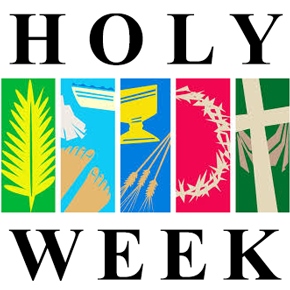
Next week is Holy Week, the final week of Lent, and a week for Christians to re-trace the footsteps of Jesus from Palm Sunday to Easter. Here are seven things that are helpful to know as we prepare for Holy Week:
- Palm Sunday marks the beginning of Holy Week and serves as a day to revisit the “triumphal entry” of Jesus into Jerusalem.
- On Holy Wednesday, two important things happened: First, Judas accepted 30 pieces of silver from the chief priests who enlisted him to betray Jesus. This is the reason Holy Wednesday is often referred to as Spy Wednesday. Second, Jesus was anointed by the woman at Bethany with the expensive jar of alabaster.
- On Maundy Thursday Christians recall Jesus’ mandate “to love one another as I have loved you.” The word “Maundy” is a derivative of the word “mandate.” Thursday is also when Jesus broke bread and shared the cup with his disciples in the upper room. On Maundy Thursday, believers often participate in acts of foot washing or communion.
- Good Friday (also called Sacred Friday, Passion Friday, or Holy Friday) is devoted to remembering and sensing the sacrificial and suffering of Christ on the cross.
- Silent Saturday is a day devoted to waiting. After the crucifixion Jesus was interred in a borrowed tomb. His closest followers were grappling with his death and not anticipating the resurrection.
- On Easter, or Resurrection Sunday, Christians celebrate and proclaim the good news that Jesus arose from the tomb victorious over death. Interestingly, the term “Easter” was originally the name of a pagan spring festival. Some believe it was named after the Teutonic god or goddess of spring. However, the name was seized by Christian believers and converted to a day of worship and feasting to celebrate the resurrection of Christ.
- Easter is observed on the Sunday following the first full moon falling on or after March 21. Therefore, Easter cannot come before March 22 or after April 25. The Council of Nicea, convened by Augustine in A.D.325, affirmed the calculation used to determine the official date of Easter and that calculation is still used today.
Holy Week is an optimal time for followers of Jesus to think about and talk about the significance of Jesus’ life, death, burial, and resurrection. One good way to observe Holy Week is by reading and reflecting on the passion narratives, those passages in the gospels that begin with Jesus’ agony and arrest in Gethsemane and conclude with his burial.
A meaningful Easter is filled with scriptures, songs, and stories. And the central story of God’s incomparable love for us is illustrated in the life, death, and resurrection of Jesus.
Will Willimon aptly affirms, “I am invited by Easter to interpret my story in the light of God’s triumph in the resurrection.”
(Barry Howard serves as the Senior Minister at the First Baptist Church of Pensacola, Florida.)
 Cove Creek Reflections