
Why We Should Encourage Our Pastor to Take an Extra Day Off This Week


church staff.jpg

To bless our ministers and promote their health and well-being, we should encourage our pastor and ministerial staff to take at least one extra day off this week.

Ministry is a unique vocation wherein most pastors are “on call” 24/7. I loved serving as a pastor, but the personal investment of time, thought, and energy required to do ministry well is off the charts, even on normal weeks.

When you factor in a holiday week like Easter that involves additional worship services and requires extra preparation, a pastor’s mental and physical capacity can become depleted quickly, no matter how deeply spiritual they are.

How can a minister maintain a vibrant and energized ministry? In addition to nurturing their own walk of faith, effective ministers must intentionally set aside time for rest and revitalization.

As ministers, there are times we get caught up in the joy and enthusiasm of high and holy days like Easter and Christmas, and the rush of adrenaline can lead us to the false assumption that we are exempt from the need for sabbath rejuvenation.

Rest, recuperation, and rejuvenation are crucial to every sport and every vocation, and ministry is no exception.

You never see a starting pitcher in Major League Baseball pitch in consecutive games, save for the most extreme circumstances in a playoff game. They need to rest their arms.

Your favorite college football team never plays more than one game in a week. They need to mend and heal.

A truck driver is limited by law to driving no more than 8 hours without a 30-minute break, and no more than 11 hours per day, followed by a 10-hour mandatory rest.

Who wants a pilot flying their plan without adequate rest? Who wants a pilot flying their plane without adequate rest? Who wants a surgeon to perform surgery without first having a good night’s sleep? Who wants a pastor who is depleted and fatigued attending to the matters of their soul?  Who wants a pastor who is depleted and fatigued attending to the matters of their soul?

Several years ago at a conference in Gadsden, Alabama, the popular preacher and author Vance Havner challenged each of the participating pastors to prioritize rest. He reminded us that, “The pastor who is always available isn’t worth much when he is available.” It’s true for both men and women who serve in a ministerial role.

Back in the 1980’s, I was in a group of young pastors who had the privilege of spending a couple of hours with Charles Stanley, longtime pastor of First Baptist Church in Atlanta, Georgia, in a hotel lobby after a church growth conference.

As Stanley fielded our questions, one young pastor asked, “Dr. Stanley, what is the best advice you can give a young pastor?” I expected that Dr. Stanley would comment on the importance of “preparing yourself before you preach to others,” or making good eye contact during the sermon or that he would encourage us to “lead like Moses.” Therefore, I was surprised when he replied, “Always remember, sometimes the most spiritual thing you can do is rest.” Through the years, I’ve never forgotten his advice.

Rest is imperative for ministers, especially after a busy season like Easter. Pastors need rest for their voices, minds, bodies and spirits.

Just as a lack of rest can contribute to underperformance, mood changes, depression, burnout, and a general decline in health, so recuperative sleep and rejuvenating rest have many positive benefits that enrich a pastor’s ministry:

Refreshes the mind, body and spirit.
Enriches our relationships.
Restores our joy.
Sharpens our memory.
Makes us more pleasant to be around.
Improves our overall health.
Stimulates creativity and innovation.
Promotes a healthy life-work balance.
Maximizes our capacity to serve effectively.
Enhances our love for doing ministry.

A cumulative overview of the ministerial responsibilities this past week would look something like this:

• Leading Holy Week services on consecutive days.
• Countless hours in the study writing devotionals and preparing sermons.
• Multiple planning sessions to make sure that parking, security and hospitality concerns are covered.
• Nights of mulling over messages as you try to sleep.
• Making hospital visits on Good Friday.
• Doing an unexpected funeral on Silent Saturday.
• Proofreading the bulletin for the third time.
• Attending the children’s annual Easter egg hunt.
• Pouring yourself into the preaching of one, two, three or more services on Easter weekend.

Perhaps the most spiritual thing your ministers can do is rest.

One of our responsibilities as church members is to encourage, or better yet to insist, that our ministers take time to rest. And that may mean giving them our blessing to take an extra day off this week.

(Barry Howard is the retired senior pastor of the First Baptist Church in Pensacola, Florida. He currently serves as a coach, consultant, and columnist with the Center for Healthy Churches. He enjoys golf, reading, and gardening.)

10 Life Lessons from Holy Week

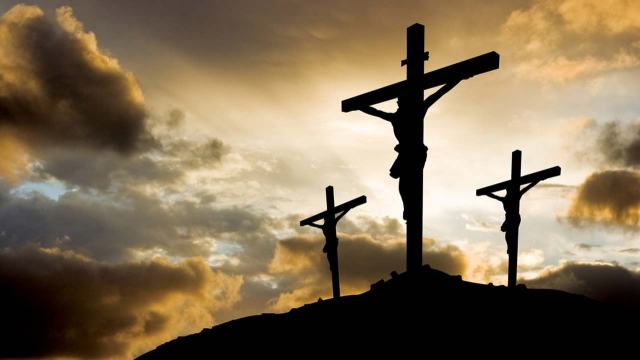
Jesus on the cross

From the waving of the palms to the rolling of the stone, Holy Week invites us to reflect on the deeper matters of faith by revisiting the story of Jesus, especially giving attention to the events that occurred between Jesus’ entry to Jerusalem and his resurrection.

The overarching message of God’s love and forgiveness is demonstrated through the death, burial, and resurrection of Jesus. Interestingly, the story we often refer to as the passion narrative is a composite of mini-episodes which contribute to a central plot, a plot that reaches its crescendo with the cross and the empty tomb.

As I reflect on the daily events that occurred during Jesus’ pivotal week in Jerusalem, I noted a few lessons about life and faith that I want to remember throughout the year:

1. Every temple needs cleansing now and then. That includes those temples built of brick and mortar, and those composed of flesh and blood.

2. Lead with the heart of a servant.  Servanthood and leadership are often expressed in tandem. Taking up the towel and basin is simultaneously an act of service and an expression of leadership.

3. Love one another! This was Jesus’ mandate. A mandate is different than a prerogative or a preference. It is a command to be obeyed, not an option to be considered.

4. Breaking bread around the table is about much more than bread.  Whether we are at the communion table or the dinner table, breaking bread is about sharing life, embracing diversity, and learning to love at a deeper, more sacrificial level.   It leads us toward a common mission, durable community, and eternal gratitude.

5. Pray the “prayer of indifference.” Just as Jesus prayed “Not my will, but your will be done” at least once, we must pray those words continually because our wills are so blatantly stubborn and self-interested.

6. Beware of those who kiss up to you. Like Judas, they either have an agenda of their own, or they are in cahoots with those plotting a coup.

7. Be faithful to God and yourself. We will be tempted daily to betray our God, our values, and our character for much less than 30 pieces of silver.

8. Going along with the crowd is always a risky venture. Politically, socially, or theologically, crowds seldom make wise decisions.

9. Only borrow something when you won’t be needing it very long.  It’s sort of like when Jesus was buried in a borrowed tomb. It was not an extended stay.

10. Peace emerges from a change within us, and not always a change in our circumstances. When appearing to his disciples in the upper room following the resurrection, Jesus first words were “Peace be with you” (John 20:21) These words were spoken while Caesar was still on the throne, conspiracy theories abounded, and many disciples were a bundle of anxiety. God’s peace defies circumstances and surpasses our understanding.

Each of the daily stories that comprise the big story of Holy Week has something to teach us about human nature, about sin, and about transformative faith. The lessons we learn from the life of Jesus encourage and equip us to be more effective followers and more courageous disciples.

(Barry Howard is the retired senior pastor of the First Baptist Church in Pensacola, Florida. He currently serves as a coach, consultant, and columnist with the Center for Healthy Churches. He enjoys golf, reading, and gardening.)
Things Churches Can Learn from The Masters

Masters photo

The first time I walked onto the grounds at Augusta National in 2002, I was overcome by the lush beauty. I have been privileged to attend The Masters several times through the years, and on each visit, I am inspired when I step foot on this immaculately manicured acreage, which is a rare combination of botanical gardens, nature preserve, and golf course.

During my years as a pastor, I gleaned valuable insights about life, business, and ministry from innovative organizations that strive for excellence, companies like Disney, Amazon, Chick-fil-A, and Apple.

This week as I watched the golf tournament on TV and recalled my previous visits to the property, I began to reflect on the lessons the church could learn from The Masters. Here are a few things worth considering:

Hospitality is welcoming and winsome. From the parking attendants, to the ticket takes, to the groundskeepers, Augusta National evokes a friendly vibe as staff members greet patrons with “Welcome to the Masters!” and a hearty smile. A hospitable sense of welcome is a trademark of a healthy congregation.
Not everything has to be high tech. Technology is important. I utilize a smart phone, a laptop, and a tablet. And I served churches through the years that embraced technology, striving to have the most recent computers, the most up-to-date audio technology, the most cutting-edge video screens, and the most elaborate lighting. I am not anti-technology, but it is sort of nice to see thousands of patrons staring at a low-tech manual scoreboard manned by volunteers, which happens to be one of the most iconic scoreboards in the world of golf. Churches should remember that technology is one tool in the toolbox, and if we become co-dependent on technology, it can become a liability rather than an asset in ministry.
Appreciate both silence and celebration. The aura of Augusta alternates between the roar of the crowd and a holy hush. I am always amazed that thousands of golf enthusiasts can cheer with loud enthusiasm, and yet a few moments later they can stand still in focused silence as a golfer is about to putt. A healthy church appreciates and makes space for silent meditation and jubilant celebration.
Simplicity and excellence often work in tandem. The kitchen staff at Augusta has mastered the art of making egg salad and pimento cheese sandwiches. Nothing fancy. Just a simple sandwich. Excellence in the local church doesn’t require glitz and glamour, but often emerges in doing the simple things well.
Spectators cheer for the golfers, not against them. In other sports, and even at other tournaments, fans may boo or jeer the opposing team or their least favorite golfer. Church is a place to “encourage one another” without prejudice.
Golf has a discipleship program that is called “drive, chip, and putt.” This catechism is designed to teach basic skills and disciplines. Healthy churches emphasize and exemplify the basic tenets of the faith, giving opportunities for the next generation to practice “on the course.”
Bad things happen to good golfers. Good putts lip out. The false front causes the ball to release and trickle into Rae’s Creek. Wind direction changes and weather is unpredictable. Yet the best golfers are required to be disciplined enough to put the last shot behind them and focus on the next shot. Likewise, healthy churches help others to put the past behind them, and the future before them, and to “press toward the mark of the high calling of God in Christ Jesus.”
New terms, new rules, and new norms take some getting used to. Did it sound a little different to hear the announcers referring to “patrons” instead of “fans,” and “penalty areas” instead of “hazards”? Or are you still adjusting to seeing players putt with the pin “in” the hole? Were you surprised when no penalty was assessed for knocking the ball off the tee during a practice swing? In church we like to say that our message is timeless, but our methodology is always changing. Churches must exercise patience as our “patrons” adjust to our evolving nomenclature and a rapidly changing culture.
Treasure and maximize diversity. At Augusta National, no two holes are identical. At many golf courses, the trademark characteristic might be big greens or postage stamp greens, lots of undulation or no undulation, elevated greens or elevated tee boxes.  While I wish that there was more diversity in the membership at Augusta National,  certainly the rich diversity in elevation, undulation, and landscape is a part of the appeal. Churches often struggle with embracing and navigating diversity. But healthy congregations perceive diversity as a strength, and they find ways to leverage their diversity for missional purposes.
Everyone loves a good redemption story. This year the tournament was won by a previous champion who had fallen to the wayside due to injuries and poor personal decisions. And yet, through hard work, he rebuilt his swing, rebuilt his game, and is in the process of rebuilding his reputation. Among many other things, church is a place of spiritual redemption, a place where the prodigal is welcomed home, a place where grace covers a multitude of sins, a place where we celebrate recovery, and a place where all stand on level ground before the cross.

The golf club at Augusta National is not a religious place, but in their quest for excellence in facilities and engagement with their patrons, there are a few things we as the church can learn from them.

(Barry Howard is the retired senior pastor of the First Baptist Church in Pensacola, Florida. He currently serves as a coach, consultant, and columnist with the Center for Healthy Churches. He enjoys golf, reading, and gardening.)

Holy Week: A Time for Deeper Reflection

Holy-Week

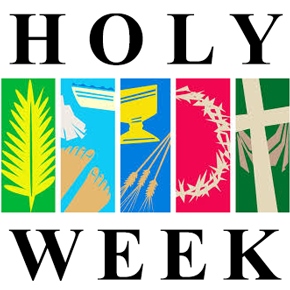
Holy Week is a season for reflection and soul-searching, a week to re-trace the steps of Jesus toward the cross and to contemplate the depth of God’s love. During this week, Christ followers and spiritual inquirers from all around the globe will be focused once again on the events that led to the death, burial, and resurrection of Jesus of Nazareth.

The word “holy” is a healthy and meaningful word, though one of the most misunderstood terms in the English language. It does not nearly suggest “spiritual superiority” or “moral perfection.” The word “holy” refers to people or things set apart for specific, and usually religious, purpose. In the New Testament the Greek word for holy is “hagios” which means “different,” and it is most often used to underscore practices and lifestyles that correlate to a standard different than the cultural norm.

Why is observing Holy Week important to our preparation for Easter? Here’s a bit of history: The traditional observance of Holy Week seems to have originated in the Christian East, emerging out of the practice of pilgrimages to Jerusalem. Each day of Holy Week is important but at least five days call for specific reflection. Palm Sunday is a day to revisit the royal welcome extended to Jesus by the curious crowd as he entered Jerusalem. On Maundy Thursday believers recall the occasion when Jesus washed the feet of the disciples as he gave them a new mandate to love and serve. Good Friday is a day to review the passion and suffering of Christ on the cross. Holy Saturday (or Easter Even) commemorates the day that Jesus lay in the tomb. And Resurrection Sunday, or Easter, is a festive day to celebrate and proclaim that “Christ is risen; He is risen indeed.”

Dr. C. Welton Gaddy, retired senior minister at Northminster Church in Monroe, Louisiana describes the progressive steps in a meaningful pre-Easter journey: “Holy Week services bring into focus dimensions of discipleship that are missed completely by a simple leap from Palm Sunday to Easter. Worship services which take seriously the truths of Maundy Thursday and Good Friday please God because they challenge a greater commitment and a more comprehensive ministry of compassion among the people of God.”

This year as we navigate through each episode of Holy Week, here are few suggestions for honest and healthy soul-searching:
• Read the gospel account in John 12-20.
• Listen to the conflicting voices in the crowd
• Meditate on the cruel injustice of the cross.
• Imagine the passion of Christ’s suffering.
• Think on the hopelessness felt by his disciples.
• Celebrate the hope of the resurrection.
• Renew your commitment to faithfully follow Jesus.

The introspective prayer recorded in Psalm 139:23-24 is extremely relevant and probing during Holy Week:

Search me, God, and know my heart;
test me and know my anxious thoughts.
See if there is any offensive way in me,
and lead me in the way everlasting.

This year, as we read the biblical account with fresh eyes, and listen to the passion of Christ with fresh ears, it may seem as though we are encountering the story for the very first time. An intentional and focused journey through Holy Week may deepen our faith and inspire us to follow Jesus with unrelenting resolve

(Barry Howard serves as leadership coach/consultant with the Center for Healthy Churches. He resides in Pensacola, Florida. You can follow him on Twitter @BarrysNotes.)