

10 Reasons We Are Giving a Little Extra to Our Church This Year

Every year, my wife and I give a few gifts at the end of the year to non-profits, mission centers, and ministry groups with whom we have a close connection. And although we give regularly to our church throughout the year, we usually give an end-of-the-year gift to our church.

This year we are giving a little extra to our church and here are ten reasons why:

  • We believe that the local church is where the action is. While all the ministries to which we contribute are doing good work, the local church is the hub of ministering to the community. The local church has local boots on the ground and through the years we have observed the local church going to extraordinary lengths to be the presence of Christ during tough times.
  • Giving has been down for most churches. Whether it is due to furloughs, layoffs or temporary closures, offerings are down between 10-40% at churches around the country. For those of us who have the capacity to give a little extra, our additional contributions may provide a huge boost to the ministry of the church. As one of my friends said recently, “If you have been saving for a rainy day, this is it.”
  • Expenses are up. Some may wonder why expenses are up when many churches are mostly online. The building still must be cleaned. And this year, most churches have gone the extra mile to perform a “deep clean,” to have their building fogged, or to regularly apply disinfectant. Churches have purchased masks, hand sanitizers, and new signage to help communicate guidelines and to keep us safe. And many congregations have purchased cameras, microphones, and other equipment to provide a livestreaming option.
  • The church has been busy helping others. Our church has adopted neighboring businesses for whom we are providing care packages, notes of encouragement, and snack bags for the staff. Our church has given extra to our local mission center to assist the homeless, the unemployed, and others in transition. Our church has continued to provide support for missionaries around the world during a time when their support is being minimized.
  • A percentage of every gift to our church reaches beyond our church. Most church budgets operate with a formula wherein a percentage of every gift goes toward missions beyond the local church. So, each time we give to the church, we are actually giving through the church to outside organizations.
  • Our gift is given in honor of faithful givers who cannot give at this time. I am aware of many faithful givers who for years have invested in the mission and ministries of the local church through their consistent giving, and now they find themselves unemployed. Most of these persons are tithers, but ten percent of zero is still zero. So, we are giving a little extra to help cover their portion of giving until a time in the near future when they can resume their faithful giving.
  • There is much work to be done in the year ahead.  There will be much work to be done in the year ahead. We are not going to reach a point where someone in leadership declares, “The pandemic is over,” and then we return to the way we did life and church prior to the pandemic. Those days are gone. Churches, like all groups, will need to recalibrate for the next season of life and ministry. We want our gift to help the church retool and reequip for the next chapter.
  • This is a great week to convey a gift of appreciated investments. Of course, this is not the primary reason we give. But since the stock market is up significantly during these closing days of 2020, this is a great opportunity to give a gift of appreciated stock to your local church.
  • Our giving is a testimony of hope. Many wonder when the pandemic will end. Others are concerned about whether their church will survive. We do not give so that our church will simply survive. We give in hopes of helping our church thrive. But to thrive, a church must survive the global pandemic. Our giving is a declaration that we believe the work of the church will be needed more than ever in the days ahead.
  • Our end-of-year gift is an act of thanksgiving. We are blessed to have a steady income. We are blessed to have a comfortable home. We are blessed to be in generally good health. We are blessed to serve in a supportive and encouraging congregation. We are blessed to have a creative and innovative staff team that have implemented safety protocols and adapted their ministry methods for an unprecedented year of ministry. And we believe that we are blessed to be a blessing to others. We are giving a little extra this year as an expression of gratitude for the blessings that have sustained us through a tough season.

The Bible teaches us to give of the first fruits of our income (Proverbs 3:9), to give generously (II Corinthians 9:6), and to give cheerfully (II Corinthians 9:7).  For us, giving is a joyful act of hospitality.

We recognize that not everyone is able to give a little extra. Some of us are barely hanging on, and we should not feel guilty because we cannot give an additional gift. The foundation of Christian giving is that we give in proportion to our income. However, many of us have been tremendously blessed, and this year it is our privilege to give an extra gift.

As you think about your end of year giving, we invite you to join us in giving a little extra to the church this year. A little extra in 2020 can make a huge impact in ministry for 2021.

(Barry Howard serves as pastor of the Church at Wieuca in Atlanta, Georgia. He also serves as a columnist and leadership coach for the Center for Healthy Churches.)

A Prayer for Christmas

by Walter Brueggemann

In our secret yearnings
we wait for your coming,
and in our grinding despair
we doubt that you will.
And in this privileged place
we are surrounded by witnesses who yearn more than do we
and by those who despair more deeply than do we.
Look upon your church and its pastors
in this season of hope
which runs so quickly to fatigue
and in this season of yearning
which becomes so easily quarrelsome.
Give us the grace and the impatience
to wait for your coming to the bottom of our toes,
to the edges of our fingertips.
We do not want our several worlds to end.
Come in your power
and come in your weakness
in any case
and make all things new.
Amen.

— Walter Brueggemann

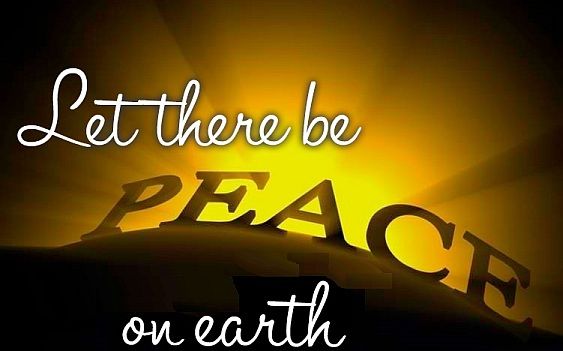
Let There Be Peace on Earth

The quest for peace is universal, whether it be peace in our land or peace in our soul. As a nation we are weary of terrorist threats, campus shootings, human trafficking, schoolyard bullying, workplace conflict, family fragmentation, political turmoil, global pandemic concerns, overall and heightened anxiety.  We have a deep longing for peace.

Weary of disputes, the prophet Isaiah envisioned a future wherein war would be eradicated, and peace would prevail:

He will judge between the nations
    and will settle disputes for many peoples.
They will beat their swords into plowshares
    and their spears into pruning hooks.
Nation will not take up sword against nation,
    nor will they train for war anymore.
(Isaiah 2:4 NIV)

Since childhood, I have been singing and praying, “Let there be peace on earth.” But this prayer has not been fully answered…at not yet. To date, we cannot identify an era in human history when the world was completely devoid of conflict or warfare.

Early in the book of Genesis, the paradise called Eden is contaminated by sin, and then a couple of pages later, a fatal conflict erupts between Cain and Abel. The notion of war is born.

In the Old Testament, not only is there regional conflict between the Israelites and a variety of enemies, but there is also internal conflict between Israel and Judah. This civil war eventually led to the establishment, at least for a few years, of the Southern Kingdom and the Northern Kingdom, often referred to as the Divided Kingdom. That’s what war does. It rouses suspicion, ramps us rhetoric, breeds hostility, and divides people into adversarial camps like the North and the South.

Fast forward to our time:  According to various news agencies there are at least 10 active wars and more than 30 armed conflicts ongoing in the world this year. The most lethal war is the civil war in Syria, an ancient biblical land, where it is reported that over 500,000 have been killed.

But the promise of scripture is that there will come a day when the lion will lay down beside the lamb.  Just not yet! There is coming a day when the nations will transform their instruments of war into tools for agriculture. Just not yet! 

Until then we cannot recline in naïveté. In a world where systemic evil exists, when efforts at negotiation and arbitration have failed, military initiative is often an unfortunate but necessary option to destabilize tyrants, to rescue hostages, or to thwart terrorism. But even then, for civilized nations, the goal is to be protective, not vindictive.

In one of his most well-known sermons, Jesus proclaimed, “Blessed are the peacemakers, for they will be called the children of God” (Matthew 5:9). Especially in these days of escalated fear, let us pray for peace, let us work for peace, let us practice peace-making, and let us keep singing:

Let there be peace on earth
And let it begin with me.
Let there be peace on earth
The peace that was meant to be.”
                     -Jill Jackson Miller and Sy Miller

In one of his most well-known sermons, Jesus proclaimed, “Blessed are the peacemakers, for they will be called the children of God” (Matthew 5:9). Especially in these days of escalated fear and heightened anxiety, let us pray for peace, let us work for peace, let us practice peace-making, and let us keep singing: “Let there be peace on earth and let it begin in me.”

(Barry Howard serves as pastor at the Church at Wieuca in Atlanta. He also serves as a leadership coach and columnist with the Center for Healthy Churches.)

Surviving the Darkest Day of the Year

If today seems even darker than usual, it should. Today is the darkest day of the year.

For those of us who live in the northern hemisphere, the shortest day of the year, the Winter Solstice, usually occurs on December 21. The solstice, which literally means “the sun stood still,” officially marks the beginning of winter. More notably, with the shortest day also comes the longest period of darkness. The Earth’s axial tilt is at its furthest point from the sun, allowing the least amount of daylight to reach the earth.

While it may be merely coincidental that the darkest day arrives just prior to our customary celebration of Christmas, from my experience as a pastor, I am aware that holidays can be dark days emotionally for many of us. While there are a variety of events, experiences, and emotions that cast dark shadows over our lives, some even bleak enough to obscure the joy of Christmas, a prominent culprit is grief.

Grief comes in many shapes and sizes. In the human experience, we grieve over the death of friends and loved ones. We grieve over disintegration of a marriage. We grieve over friction within the family. We grieve over the loss of a job. We grieve over tragic events around the globe. At times we may even grieve over our diminishing health, the loss of our dreams, or the fading of opportunities.

Let me be quick to affirm that grieving is healthy so long as we are progressing through the grief process as opposed to becoming stuck in our grief. The Bible never tells us not to grieve, but it does counsel us not to grieve “as those who have no hope” (I Thessalonians 4:13).

Be aware that the empty chair at the Christmas dinner table, the Christmas card labeled “return to sender,” or the empty pillow on the other side of the bed can all trigger a seemingly overwhelming sense of darkness, loneliness, or grief.

Unprocessed grief is unhealthy and can lead to anger, depression, or even physical illness. During the holidays, rather than being dominated by the darkness of grief, look your grief in the eye and call it by name. Don’t deny it or ignore it. And certainly, don’t let grief dictate or dominate the mood or conversation of your holiday celebration.

I am convinced that because we are “fearfully and wonderfully made” (Psalm 139:14), our faith gives us the capacity to experience the pangs of grief and the peace of God simultaneously. Although our faith does not exempt us from the darkness, our faith does equip us to deal with our grief with deep-seeded hope.

Hinting at what life will be like when the promised Messiah comes, Isaiah 9:2 envisions that, “The people walking in darkness have seen a great light; on those living in the land of deep darkness a light has dawned.”

Walk through the darkness with courage. Just don’t take up residence in the shadows.  Grief does not have the final word. After the long night of darkness, then comes the light.

Don’t let the darkness extinguish the Light of Christmas. 

(Barry Howard serves as pastor of the Church at Wieuca in Atlanta, Georgia. He also serves as a leadership coach and columnist for the Center for the Healthy Churches.)