For 30 of my 40-plus years as a pastor, I have had the privilege of serving in two distinguished military communities: Anniston (former home of Fort McClellan) and Pensacola (home of Pensacola Naval Air Station). I continue to share life with those who currently serve or have valiantly served our country. Over the past three years I have enjoyed conversations with multiple military chaplains, officiated a wedding for a naval aviator, presided over the memorial service of a World War II veteran, shared a eulogy for a retired colonel, and listened to the career story of a former navy pilot, now in his eighties.
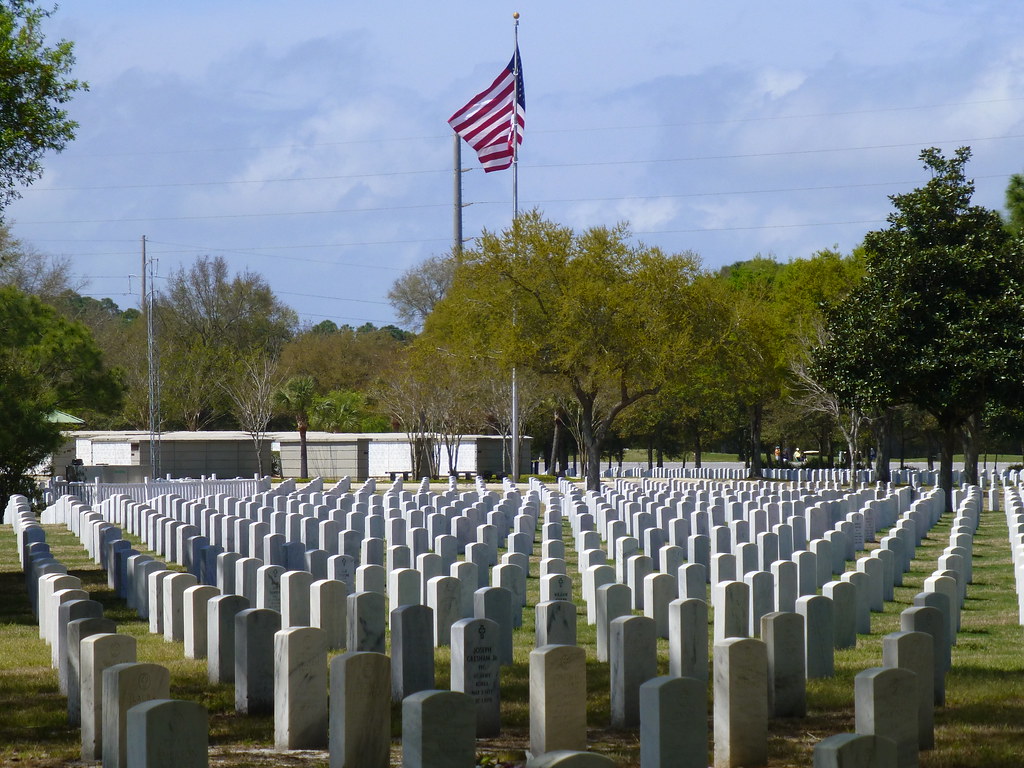
In each of the communities where I have served, an extraordinarily large number of residents have lost a son, daughter, father, mother, brother, sister, friend or neighbor on the field of battle. During my tenure in Pensacola, I shared over one hundred eulogies at the Barrancas…
On any given day the best and the brightest among us can find ourselves enshrouded in whirlwind of emotional turbulence or bombarded by thoughts of darkness and despair. Our motivation may wane, fatigue may set in, and our sense of direction may become uncertain.
May is Mental Health Awareness Month. I am a student, not an expert, of mental, emotional, and spiritual health. I have spent 44 years in ministry. During two of those years, I served as a Pastoral Counselor in a private practice.
Mental health involves the interrelationship of the mind, body, and spirit. We have the capacity to experience joy, peace, happiness, and gratification. But we also have the capacity to experience sadness, melancholy, depression, grief, and anxiety. Sometimes our thoughts and emotions are shaped by life’s circumstances and dilemmas. At other times our thoughts and emotions are affected by changes in our body chemistry or our medications.
On November 10 of last year I received the tragic news that the 35-year-old son of one of my best friends took his own life. This past Monday, I stood with my friend at his son’s graveside as he shared his pain and asked, “What would cause him to do something like this?”
Over the years I have a presided at more than two dozen funerals precipitated by a self-inflicted death. And I have walked alongside hundreds of friends, fellow church members, and ministers as they have navigated the clouds of despair.
Those who struggle with mental and emotional health are in good company. Many years ago, C.S. Lewis observed, “Mental pain is less dramatic than physical pain, but it is more common and also more hard to bear. The frequent attempt to conceal mental pain increases the burden: it is easier to say ‘My tooth is aching’ than to say ‘My heart is broken.’”
The psalmist confessed, “In my distress I called upon the Lord and cried unto my God” (Psalm 18:6), and “Why, my soul, are you downcast? Why so disturbed within me?” (Psalm 45:5).
Here are few facts to consider as we focus on improving our mental and emotional health:
1 in 4 American adults experience some type of mental illness in a given year.
Depression is the leading cause of disability worldwide and one of the largest healthcare expenses.
Each year depression affects 5 – 8 percent of adults in the U.S.
13.6 million adults in the U.S. live with a serious mental illness such as schizophrenia, major depression, or bipolar disorder.
50% of all chronic mental illness begins by age 14.
75% of all chronic mental illness begins by age 24.
People want to talk about mental illness. Family members (65%) and those with mental illness (59%) agree their church should talk openly about mental illness, so the topic will not be taboo.
Men are 4 times more likely than women to commit suicide.
1 million – the number of Americans who receive treatment for suicidal thoughts, behaviors or attempts on a yearly basis.
66% of senior pastors seldom speak to their congregation about mental illness.
Each year suicide claims approximately 40,000 lives in America.
Suicide is the 10th leading cause of death in the U.S. (more common than homicide).
Among young people aged 15 to 24 suicide is the third leading cause of death.
Here are a few pastoral observations about our mental and spiritual health:
Most people of faith, including ministers, experience depression, anxiety, or chronic worry for a season, and sometimes longer.
Our mental health and spiritual health are not identical, yet they inevitably influence each other.
The pandemic and the war in Ukraine have adversely affected the mental health of individuals of all ages including the experiences of heightened anxiety and deeper depression.
If we experience prolonged symptoms of anxiety or depression (more than 4-6 weeks) we should talk with our family physician or schedule an appointment with a counselor or therapist.
Seeing a physician or counselor is a sign of strength, not weakness. We should think of it the same way we think of seeing a mechanic for our car or a dentist to care for our teeth.
Medication for our mental health may be needed to restore balance to our body chemistry. Medication should never be thought of as unspiritual but as one of God’s instruments of healing.
Proactively caring for our mental health is one of the many ways we honor God.
Because we cannot always know which of our friends, co-workers, classmates, neighbors, and fellow church members are contending with the darker emotions of the mental health spectrum, let us extend a little extra grace and space to each other as we proactively address the challenges of life.
(Barry Howard serves as the pastor at the Church at Wieuca in North Atlanta. He also serves as a leadership coach and columnist for the Center for Healthy Churches. He and his wife, Amanda, live in Brookhaven, Georgia.)
Pastors face an assortment of unexpected dilemmas which are not covered in seminary course work. Most of these dilemmas are not about theology, scripture, or parliamentary procedure, but about practice or precedence. For me, one such challenge flared up on Mother’s Day.
In my first pastorate, I inherited that southern tradition I call “the Mother’s Day Flower Awards.” This tradition, which occurred during the morning worship service, called for the pastor to wish all mothers a “Happy Mother’s Day,” and then to recognize the oldest mother, the youngest mother, and the mother with the most children. Those mothers would come forward and the Mother’s Day Committee, an ad hoc committee appointed by the pastor, would pin a corsage on each of these distinguished mothers for them to wear the remainder of the day.
This tradition was not without its complications. Much informal debate surrounded the eligibility of the award-winning mothers. For example, if the oldest mother was a visitor and not a church member, was she eligible? Or, what if the youngest mother was not married? Was the award to the mother with most children to be presented to the mother who bore the most children or the mother with the most children present in the worship service? These questions often generated more lively and passionate discussion than the virgin birth, the trinity, or the second coming.
On the second Mother’s Day at my inaugural pastorate, I was duly fulfilling my pastoral obligation to preside over the Mother’s Day Flower Awards when a bit of a controversy erupted. The Oldest Mother corsage was presented to a 96-year-old matriarch. The Youngest Mother corsage was presented to a 21-year-old newlywed just prior to her first anniversary. But the mother with the Most Children corsage was presented under protest.
The method of determining the mother with the most children entailed an interesting process of elimination. Following the tradition forged by my pastoral ancestors, I would ask all the mothers to stand. Then I would ask mothers with two or more children to remain standing. Those with less than the stated number of children would be seated as they were eliminated from contention for this prestigious honor. Then I would count upwards, three or more children, four or more children, and so forth, until only one or two mothers remained standing. Then I would ask, how many children do you have? And the winner would be determined.
In my orientation to the rules of the Mother’s Day Flower Awards, I learned that on occasions there is a tie for Mother with the Most Children. Therefore, the committee, who always had an extra corsage on hand, would bestow the honor on both mothers.
However, no one had prepared me for the dilemma I faced on that second Mother’s Day. There were two mothers left standing once the count reached eight or more children. So, I asked each mother, “How many children do you have?” and the first replied, “Nine.” When I asked the second mother, she replied, “Eleven.” I spontaneously said to this mother of eleven, “Wow! Congratulations. Come on down to receive your corsage.”
As she was coming forward, another mother who was obviously rooting for the mother with nine children to win, said, “That’s not right. Those are not all her kids!” And another mother, who happened to be a former member of the Mother’s Day Flower Awards committee said, “Pastor, we usually don’t count the husband’s children from a previous marriage. Those eleven kids aren’t all hers.”
What a dilemma! There I stood, alone in the pulpit, a young pastor in the middle of a congregational debate in worship about which mother should get the “most children” corsage. In the heat of the moment I made a Solomonic decision. I simply said, “Since we are blessed to have two mothers with such a large number of children, I am going to ask both mothers to come forward and be recognized with a corsage.”
Thankfully, both mothers smiled, the congregation applauded. And I preached an inspiring Mother’s Day sermon while inwardly pledging never to give Mother’s Day Flower Awards again.
Nowadays, I simply wish all mothers, grandmothers, stepmothers, soon-to-be mothers, wanna-be mothers, and other mother figures a “Happy Mother’s Day” during the welcome prior to worship. Then we worship God with gratitude for all motherly influences without pinning a flower on any mother or putting the pastor on the hot seat.
(Barry Howard serves as the pastor at the Church at Wieuca in North Atlanta. He also serves as a leadership coach and columnist with the Center for Healthy Churches.)




 Cove Creek Reflections