
Holy Trinity: Reflecting on the Character and Mission of God in the World

While visiting the United Kingdom a few years ago, my wife and I were privileged to attend mass in several churches, mostly Anglican but a few Catholic. Although I was generally acquainted with both liturgical traditions, I was surprised at the numerous variations of the “Gloria Patri.” 

Because I was raised in a region heavily influenced by Sandy Creek Tradition, the first time I heard the “Gloria Patri” sung in a Baptist church, I was the pastor, and it was included in worship at my request. The tune to this “new doxology” was unfamiliar to most in our little congregation, but the words affirmed the long-standing Baptist doctrine of the Trinity: “Glory be to the Father, and to the Son, and to the Holy Ghost.”

Explaining in sermon or writing how God revealed God’s self as one God with three manifestations has always proved to be a challenge for me. The triune mystery tends to overload my capacity to comprehend. I identify with Anne Lamott who contends, “I didn’t need to understand the hypostatic unity of the Trinity; I just needed to turn my life over to whoever came up with redwood trees.”

As Jesus attempted to explain his pending departure to his disciples prior to his death, burial, and resurrection, he confessed to them, “I have much more to say to you, more than you can now bear” (John 16:12). This encourages me to assimilate spiritual lessons gradually.

A few years ago an unusual story from the Everglades received international coverage. A Burmese python had tried to swallow a six-foot alligator. As a fan of the National Geographic Channel, I have observed footage of large serpents swallowing other prey like rabbits or a small deer. But I was unaware that even a python would attempt to ingest something so humongous. The photo revealed that as the python attempted to swallow the gator, the python actually exploded and neither creature survived.

That picture has become a parable for me as I grapple with perplexing concepts. While some truths may be simple and easy to understand, other realties are deep and rich in mystery, requiring the wisdom and discernment born in an ongoing daily walk of faith. As we aim to grow in wisdom, which was among God’s first creative works, “formed long ages ago, at the very beginning, when the world came to be” (Proverbs 8:23), we are not alone in the task. For Jesus also promised, “When he, the Spirit of truth, comes, he will guide you into all the truth” (John 16:23b).

Although the word “trinity” is not found in the canon of scripture, most folks influenced by the Christian tradition  are well-versed in the language of the Father, the Son, and the Holy Spirit. While a few have argued that the notion of Trinity leads to a polytheism entailing three different deities, most scholars note the unique solidarity of character and mission among the Father, Son, and Spirit.

Describing this transcendent, yet personal God can be problematic. In a prayer at the beginning a workshop at Columbia Seminary, I recall Walter Brueggemann addressing God as “One who is other than us.”  In the ensuing class lecture Brueggemann referred to God as the divine “Other” for whom we have no comprehensive description or corresponding reality, only a wealth of similes and metaphors.

For this reason, the canon speaks of God anthropomorphically, for human terminology provides our only vocabulary of reference.  While we recognize that God’s realm of being supersedes human emotion and anatomy, we describe the indescribable God in the language we know, even though we confess that God is greater than the confines of our diction. Nevertheless, we probe and we pray and we dig deeper, believing that a more intimate acquaintance with God emerges from a contiguous journey of faith, and not in a single epiphany.

Perhaps it is helpful to think of these three manifestations of God as divine roles. In The Meaning of Jesus, as Marcus Borg addressed the concept of Trinity he explains, “In both Greek and Latin, the word translated ‘person’ means a mask, such as worn by an actor in a theatre—not as a means of concealment, but as a way of playing different roles.  Applying this to the notion of God, the one God is known in three primary ways: as the God of Israel, as the Word and Wisdom of God in Jesus, and as the abiding Spirit.”

Since it is one personality behind the masks, these divine roles are completely correlated and almost synonymic within the Trinity. Romans 5:1-5 emphasizes the three roles of this divine drama: We are justified by faith in Jesus, which enables us to have peace with God, and results in God’s love being infused into our lives by the Spirit. The roles are neither individualistic nor competitive, but interactive toward the Trinitarian goal of life transformation.

The root of the word “trinity” is unity. As I continue to explore what it means to worship and relate to our triune God, I find myself thinking of God as one, manifest in all three roles, without contradiction. I think of God the Father as the divine parent, beyond human gender, who birthed and nurtured all of creation. I think of God the Son, the historical Jesus, as the human portrait of God. I think of the Holy Spirit as the personality of God, both Father and Son, present and interactive in the world today. 

Richard Rohr suggests, “If the mystery of the Trinity is the template of all reality, what we have in the Trinitarian God is the perfect balance between union and differentiation, autonomy and mutuality, identity and community.”

Within this mystery, I continue to discover that the love of God, the grace of God, and the joy of God are all synchronized in the Trinity. The notion of a God who is three in One is more than I can swallow all at once. But it is a concept that I comprehend more and more as God’s story intersects with my life and my world.

(Barry Howard serves as the pastor of the Church at Wieuca in North Atlanta. He also serves as a leadership coach and consultant with the Center for Healthy Churches. He and his wife, Amanda, live in Brookhaven, Georgia.)
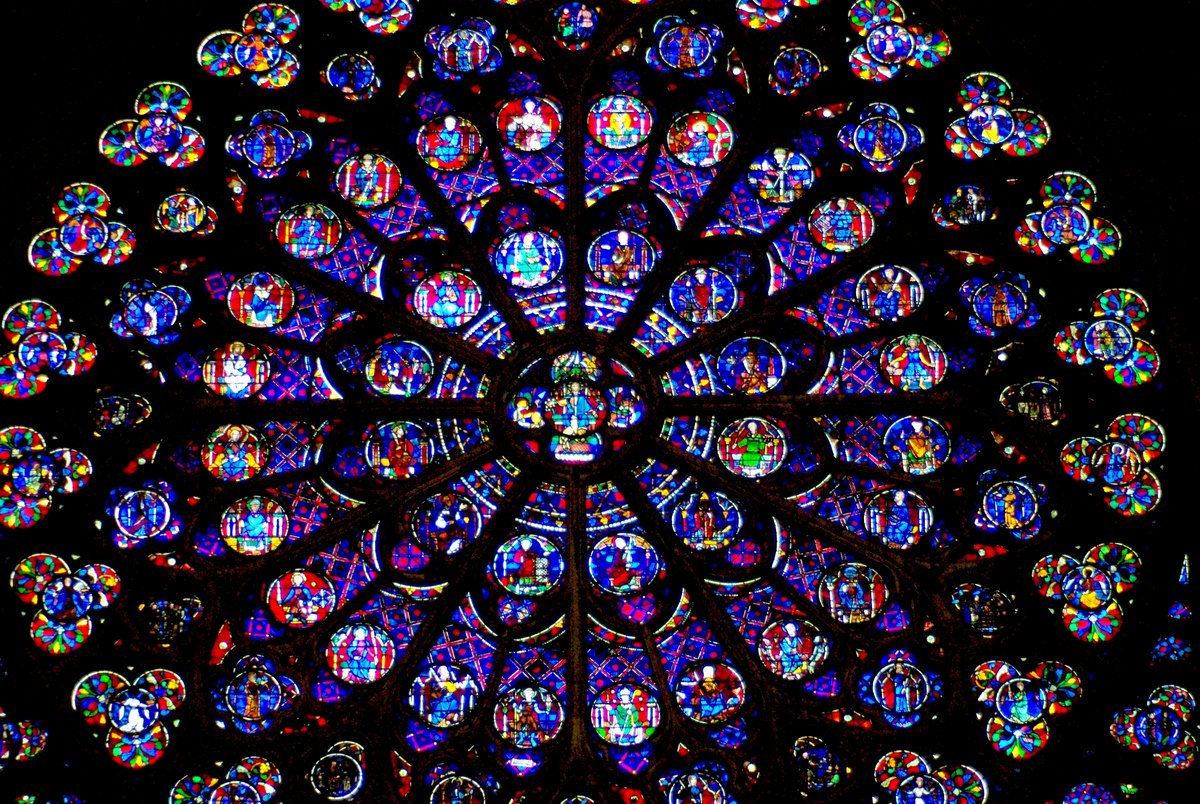

God in Three Persons, Blessed Trinity

Although I would not make a good Jeopardy! contestant and I seldom win at Trivial Pursuit, I tend to remember unusual things about movies. A few facts stick in my mind like where the movie was made, whether the movie was based on a book I’ve read, and who played in the starring role.

I also remember a few movies where a lead actor played in more than one role. Of course, it’s easy to recognize a face when one actor plays the role of twins, as Lindsey Lohan did in The Parent Trap. Eddie Murphy’s face appeared prominently in The Nutty Professor, a movie in which Murphy played seven different characters. Not as obvious is the face that appeared in dual roles in the popular movie Forrest Gump. Sally Fields plays a leading role as Forrest’s mother, but also a minor role as a reporter who asked Forrest a question during his cross-country run.

Recently, as I was channel surfing, partly out of curiosity and partly for nostalgic reasons, I paused to watch a little of Back to the Future II, especially since the future date to which Marty McFly traveled in the movie was 2015, a year now gone by. What I had forgotten about the movie was that the young Michael J. Fox played three characters, all within the same family: Marty McFly, Marty McFly Jr., and Marlene McFly.

In the new TV mini-series, “Moon Knight,” Oscar Isaac stars in a trio of roles including Mark Spector, Steven Grant, and Jake Lockley.

In the biblical drama, perhaps God also engaged in the simultaneous roles of Father, Son, and Spirit. And in each of those roles, which were in the script prior to creation, God gradually appeared on the stage of history.

While there is no literal mention of the Trinity in scripture, the biblical narrative certainly develops the characters of the Father, Son, and Holy Spirit. Since childhood, many of us have lifted our voices in praise to “God in three persons, blessed Trinity.”

In his book Reaching for the Invisible God, Philip Yancey observes that, “God’s image shines through us most clearly in the act of creation – comprising the three stages of Idea, Expression, and Recognition – and by reproducing this act we may begin to grasp, by analogy, the Trinity.”

If the voice of God sounds familiar, perhaps you’ve heard it before in a whirlwind or in a whisper. Or, if the face of God seems familiar, perhaps you’ve seen it before, in a garden called Eden, on a mount called Sinai, or on a cross called Calvary. And if neither the voice nor the face are familiar, maybe it would be worth your time to explore the story again.

(Barry Howard serves as pastor at the Church at Wieuca in North Atlanta. He also serves as a leadership coach and columnist with the Center for Healthy Churches. He and his wife, Amanda, live in Brookhaven, Georgia.)

Translating Groanings Too Deep for Words

The well-spoken prayers of others inspire me. For example, I am deeply moved by the reflective prayers of Walter Brueggemann, the contemplative prayers of Richard Rohr, and the reactive prayers of Nadia Boltz-Weber. Yet the transport of a prayer is not ultimately determined by syntax or intonation. Sometimes the most effective prayers are the ones that go unpronounced.

Back in the dark ages of the 20th century, before the advent of mobile phones and internet search engines, I remember an ad for the Yellow Pages, an antiquated hard print directory of business phone numbers, that urged, “Let your fingers do the walking.”  Nowadays, since texting has surpassed both the phone call and email as a preferred means of communication, it seems our fingers actually do the talking.

I have been thinking about the complexity of communication with God, especially the challenge of praying at times when words are hard to come by. Whether the cause is shock, trauma, doubt, depression, or attention-deficit, there are moments that we cannot find the words to articulate our prayers. In response to such a dilemma, I think Paul’s correspondence to the Romans was something more like “let the Spirit do the talking.”  

The Bible includes a variety of encounters wherein individuals engage in dialogue with God. Whether these encounters are prototypical or literal, that is a topic for another discussion. My point is that in these conversations, God speaks and understands the language of the people.

The Pentecost story emphasizes that language barriers were at least momentarily bridged or suspended. In a miracle attributed to the Spirit, the historian records that “each one heard their own language being spoken” (Acts 2:6).

Writing to the Romans, Paul addresses a unique communication dilemma, a topic I do not see specifically considered by other biblical writers. What happens when you are at a loss for words to formulate your prayer to God?  Paul asserts, “Likewise the Spirit helps us in our weakness; for we do not know how to pray as we ought, but that very Spirit intercedeswith sighs too deep for words” (Romans 8:26 RSV).

What if my grief is so profound, my anxiety is so high, or my depression is so deep that I lose the capacity to speak my prayer to God? Paul proposes that the Spirit bypasses the Broca’s area and the vocal chords and interprets our deepest groanings, translating those groanings into prayers.

In 2005 when my wife and I visited China, our traveling companions brought a digital language translator. We would speak a word in English and the digital device would automatically translate the word into Chinese. The device would also translate into specific dialects including, Mandarin or Cantonese, which enabled us to order meals, ask for directions, and communicate with cab drivers.

As Pentecost approaches and there is so much to pray about, among other things, I am encouraged to know that the Spirit is fluent in my inner dialect and can translate my unspoken prayers with pinpoint precision.

(Barry Howard serves as the pastor at the Church at Wieuca in North Atlanta. He also serves as a leadership coach and consultant with the Center for Healthy Churches. He and his wife, Amanda, live in Brookhaven, Georgia.)