
The Basics: 7 Reasons We Study the Bible as the Word of God

Your word is a lamp to my feet and a light to my path. -Psalm 119:105

Since childhood, I have been taught that the Bible is the word of God. Later I was taught that Jesus is the living word of God and the Bible is the written word of God. From a theological point of view, some might say the Bible contains the word of God.

In whatever terms we describe it, the Bible holds a special place in our faith journey, and numerous factors propel us to delve into its pages with a heart open to receiving God’s wisdom and guidance. Here are 7 reasons we study the Bible as the word of God:

  • We believe that the Bible is divinely inspired. The Bible is considered the inspired Word of God, and it contains God’s revelation to humanity. When we study the Bible, we are opening ourselves up to God’s communication with us. It is through the Scriptures that we learn about God’s character, God’s plan for salvation, and God’s unwavering love for us. By studying the Bible, we are drawn closer to our Creator and gain insight into God’s divine purpose for our lives.
  • The Bible encourages our spiritual growth. Our study of the Bible provides spiritual nourishment. Just as physical food sustains our bodies, the Word of God sustains our souls. Regular study of the Bible deepens our faith, helps us mature in our understanding of God’s will, and equips us to face life’s challenges with a Christ-centered perspective. It provides the spiritual nutrients needed to strengthen our relationship with God.
  • The Bible provides moral and ethical guidance. The Bible provides us with a solid foundation for moral and ethical decision-making. It offers us timeless principles that guide us in living righteous and upright lives. As we study the Word of God, we discover how to align our values and actions with God’s will, contributing to a just and compassionate society.

  • Study of the Bible builds community and fellowship. Studying the Bible is not just an individual endeavor; it’s a communal one as well. Gathering with fellow believers to study the Scriptures fosters a sense of unity and provides opportunities for discussion, mutual encouragement, and accountability. It allows us to learn from one another and grow together in our faith, strengthening our bonds as a church family.

  • The Bible is a catalyst for life transformation. In church we call this process of having our lives transformed to be more like Jesus, discipleship. The Bible is a primary tool of the Spirit to transform our lives. As we meditate on its teachings, the Holy Spirit works in us, bringing about positive changes in our attitudes, behaviors, and character. Studying the Word helps us become more Christlike, equipping us to love others unconditionally, forgive as we have been forgiven, and serve selflessly in the name of our Lord.

  • Many passages in the Bible offer hope and comfort. Life can be challenging, and we all face times of hardship, doubt, and uncertainty. In such moments, the Bible offers us hope and comfort. The promises contained within its pages remind us of God’s steadfast love and God’s unwavering presence in our lives. It assures us that, no matter what we face, God is with us, guiding us through the storms and comforting us in times of sorrow.

  • The Bible, especially the gospels, shapes in us a Jesus worldview. As Christians, we interpret the stories of the Bible through the lenses of Jesus. When we study the life and teachings of Jesus, our worldview shifts from a secular or ego-centric worldview toward a Jesus worldview or kingdom worldview, wherein we begin to interpret life from the perspective of God’s redemptive initiatives in the world.

So, the Bible is not just a book of words but a divine revelation, a source of spiritual growth, a guide for living, a means of building community, and a catalyst for personal transformation. The Bible is not just a historical document; it is a living, breathing testament to the love and grace of our Creator.

The Basics: What Is the Purpose of the Church?

(This is the third column in a 5-part series on The Basics.)

Different people have differing perspectives on the purpose of the church. Some mistakenly think of the church as a social gathering place for the religious elite. Others see the church as a breeding ground for legalist and judgmental personalities. Yet there are many more who experience the church as a place of grace, a community of encouragement, and a safe space for recovery. Dr. Vance Havner often reminded his congregation, “The church is a hospital for sinners, and not a museum for saints.”

Have you ever paused to ponder the purpose of the church? In our busy lives, it’s easy to get caught up in the routines of church activities without fully grasping the profound purpose that unites us as a spiritual family. This week, let’s reflect on the question, “What is the purpose of the church?”

  • A church is a local expression of the body of Christ. Inspired by the life of Christ and guided by the Holy Spirit, we are called to be the hands and feet of Jesus in the world today. We unify around God’s mission, not our particular preferences, to offer things like generous hospitality, an inclusive welcome, an encouraging word, a helping hand, and a healing touch.
  • The church refers to people, not a building. A church is composed of flesh and blood, not brick and mortar. Do you remember the little nursery rhyme about the church many of us were taught as children? As we folded our hands in a prayerful position with fingers turned inward, we would say, “Here is the church and there is the steeple.” Then we would turn our interlocked fingers upward as we said, “Open the doors and see all the people.”
  • We often gather on a church campus for worship. Worship is our time to honor and praise our Creator, to pray together, and to offer our time, talent, and treasure to serve God. Worship is at the heart of our purpose, aligning us with God’s will and nourishing our spiritual lives.
  • The church is a spiritual community for support and encouragement. The local church becomes our primary spiritual family, providing support, encouragement, and love to one another. In Acts 2:42, we read that the early believers “devoted themselves to the apostles’ teaching and to fellowship, to the breaking of bread and to prayer.” Our church community is a source of strength and companionship on our spiritual journey.
  • The church provides resources for spiritual growth and discipleship. We are called to grow in our knowledge of God’s Word, to deepen our relationship with Christ, and to mature in our faith. As Ephesians 4:12-13 tells us, the church equips us for works of service and builds us up “until we all reach unity in the faith and in the knowledge of the Son of God and become mature, attaining to the whole measure of the fullness of Christ.”
  • Each member of the church is commissioned to share the Good News. The church is a beacon of light to the world. It’s not a place to keep our faith hidden but to share it with others. Our purpose extends beyond our church walls to reach out to those who have not yet encountered the love of Christ. We are called to be ambassadors of the gospel, fulfilling Christ’s Great Commission to “go and make disciples of all nations” (Matthew 28:19).
  • A church embodies grace and advocates for justice. Through our church, we actively engage in acts of compassion and service. And through our church, we become the hands and feet of Jesus as we live out our faith by caring for the needy, comforting the brokenhearted, advocating for the underserved, and working to make the world a better place. James 1:27 reminds us that “Religion that God our Father accepts as pure and faultless is this: to look after orphans and widows in their distress and to keep oneself from being polluted by the world.”

It is through the combined work of local churches that I see God most at work in the world to offer hope, share grace, and advocate for justice. Popular author and Atlanta native, Philip Yancey, confessed, “I rejected the church for a time because I found so little grace there. I returned because I found grace nowhere else.”

In his sermon titled, “The Church Is Worth the Effort,” long-time Atlanta pastor Dr. Bill Self, proclaimed: “The church is a solid oak tree, not a fragile tea cup. It has withstood Roman imperialism, Jewish legalism, pagan optimism, medieval institutionalism, the excesses of the reformers, wars and rumors of wars, a youth quake, modern skepticism, southern provincialism, resurgent fundamentalism, and heresies in each generation that seem never to die. It can withstand anything our generation can throw at it. It has been victimized by unprepared and selfish clergy, tone-deaf musicians, manipulative members, argumentative deacons, demanding denominations, unloving reformers and greedy politicians. Still it continues to provide love, affirmation and community to the fallen in the face of alienation. The church is worth the effort.”

As we reflect on the purpose of the church, may we remember that each one of us plays a unique role in fulfilling the mission of the church. It’s not just the responsibility of the leadership or a select few; it’s a collective effort of every member of the body of Christ to do the work of the church.

Despite its imperfections, being a part of a church or spiritual community is the best way I know to become equipped and encouraged to serve God by serving others.

(Barry Howard serves as the pastor at the Church at Wieuca in North Atlanta. He also serves as a leadership coach and columnist with the Center for Healthy Churches. He and his wife, Amanda, currently reside in Brookhaven, Georgia.)

7 Frequently Asked Questions about Baptism

In recent weeks, I’ve been having more conversations about baptism than usual. Some of the conversations are with parents who are asking about baptism on behalf of their children. Other conversations are with adults, most of whom are new to the church and the Christian life. And I have enjoyed conversations with students who are thinking about baptism.

There are many baptism stories in the Bible, including the baptism of John, the baptism of Jesus, and the baptism of the Ethiopian eunuch. My perspectives on baptism are shaped by the Baptist tradition in which I was raised. We practice baptism by immersion, which means we go under the water during baptism. However, the churches I have served respect and appreciate other traditions of baptism.

Some traditions hold that baptism is sacramental while others describe the act of baptism as symbolic. In describing baptism as a bold commitment, Rachel Held Evans advised, “​​In the ritual of baptism, our ancestors acted out the bizarre truth of the Christian identity: We are people who stand totally exposed before evil and death and declare them powerless against love. There’s nothing normal about that.”

As you think more intentionally about baptism, here are some of the questions I’ve been asked over the years, along with the responses I have given:

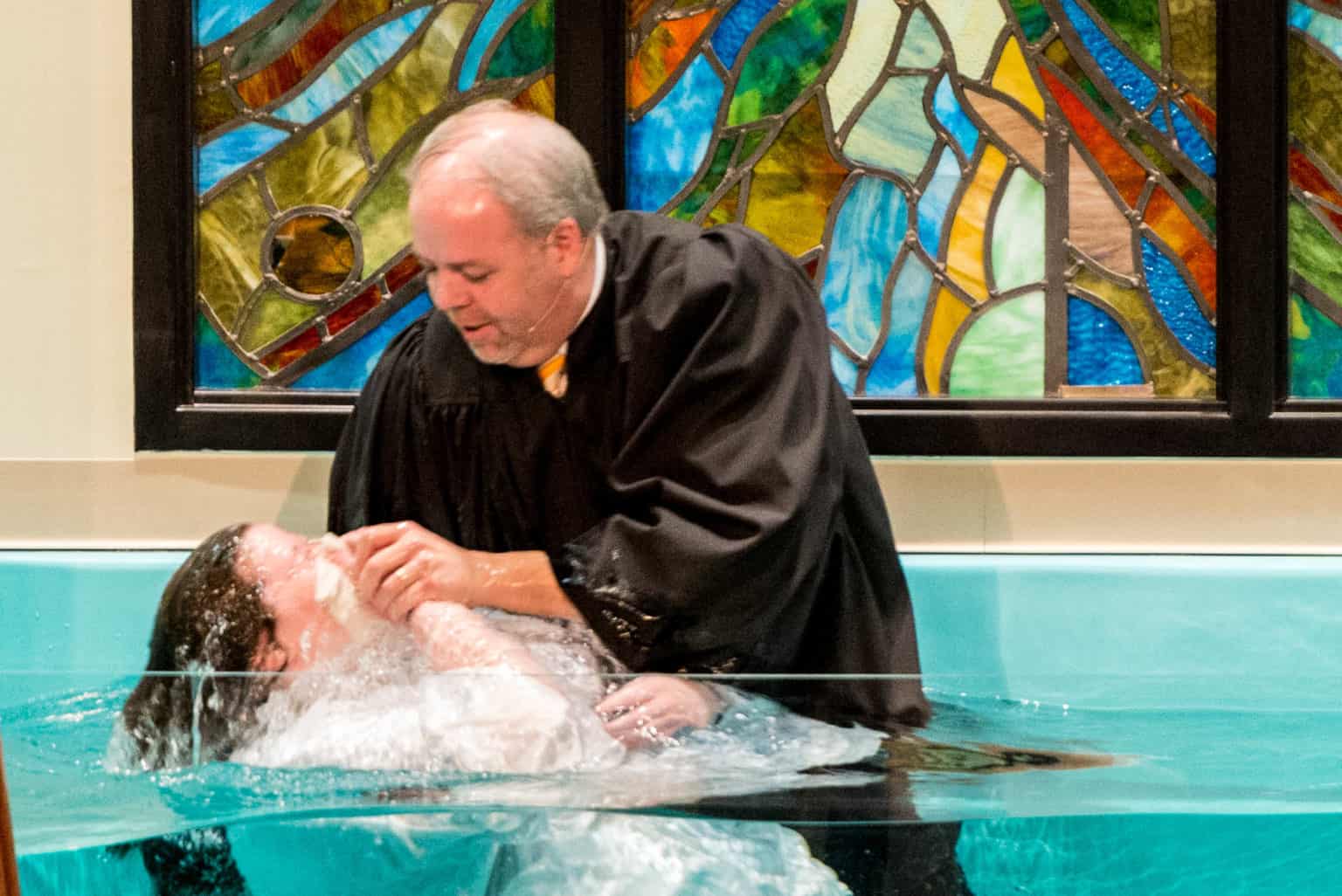
1. What is baptism? A general definition of the word baptism is a rite of washing with water as a sign of religious purification and consecration.” Christian baptism is more specific. Baptism is a visual confession of faith wherein a follower of Jesus is dipped or immersed in water, much like Jesus, as a way of declaring or sharing their faith with others.

2. Who should be baptized? Those who have committed themselves to following Jesus are invited, some say commanded, to be baptized. Sometimes baptism comes at the end of a catechism or discipleship class for young believers. Adults who make a Christian commitment later in life will also find baptism to be meaningful and affirming. As a pastor, I encourage individuals to be baptized soon after they commit their lives to following Jesus.

3. Does being baptized make you a Christian? Although baptism does not make you a Christian, baptism is one of the many ways we let others know we have decided to become a Christian. Just as a wedding ring lets others know you are married, baptism lets others know you are a Christian.

4. Is there a minimal age for a person to be baptized? While some traditions practice infant baptism as an act of dedication and consecration, our Baptist tradition of baptism is to baptize individuals who have reached an age where they can make a willful and conscientious decision to follow Jesus. Some churches have a policy that specifies a minimal age. For example, I know of churches that have a minimal age of 7, 9, and 12 years old.

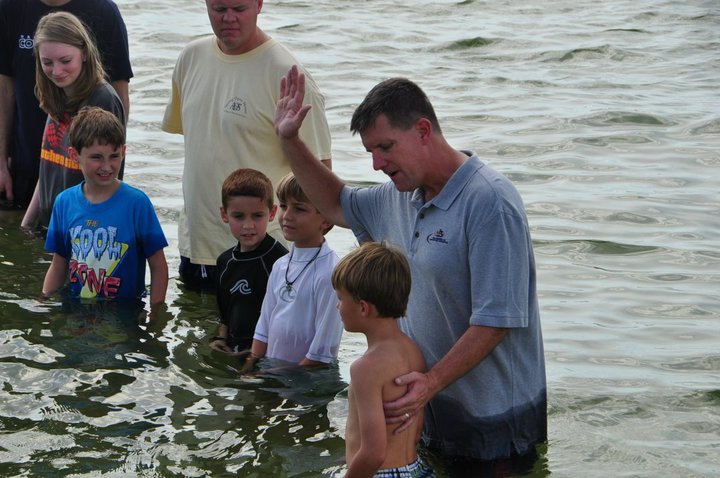
5. Is it necessary to be baptized in a church building? Absolutely not! However, it is often convenient and meaningful to be baptized in the church where you worship. Jesus was baptized in the Jordan River. My home church did not have an indoor baptistery, so I was baptized in a nearby creek. In addition to church baptistries, I have conducted baptisms in lakes, creeks, oceans, and swimming pools. Baptisms can be experienced wherever there is water.

6. Can a person be baptized more than once? Although the Bible does not give an example of someone being baptized multiple times, there are examples in Christian history of believers being baptized more than once. There are three reasons a person might be baptized more than once: 1) Some request a baptism of rededication after they have neglected their faith for a prolonged season. 2) Some churches require new members to be re-baptized if they were baptized in a different faith tradition or by a different method of baptism. 3) Christians may request baptism in an iconic location. For example, Christians who embark on a tour of the Holy Land (Israel) may choose to be baptized in the Jordan River, the iconic location where Jesus was baptized.

7. What is the next step once I decide to be baptized?
If you are an elementary or middle school student, it is important to talk with your parents about your baptism. Then they can join you in speaking with your minister. If you are an adult or teenager, you should contact your pastor or student minister soon after you have made a commitment to Christ, so they can assist you in preparing for baptism and setting a date for your baptism.

My baptism was one of the most meaningful and memorable experiences in my early walk of faith. I hope that your baptism will be meaningful and memorable also.

Just remember that baptism is the starting line of your faith journey, not the finish line. Your baptism marks the beginning of your spiritual walk, not your arrival at full spiritual maturity.

If you have decided to follow Jesus, it is time to be baptized. Popular preacher and author Max Lucado contends, “Baptism separates the tire kickers from the car buyers.”

Baptism is sort of like a watery tattoo on our body and soul, identifying us with the Jesus we follow.

If you have additional questions about baptism, please contact me or a minister in your neighborhood to get more information.

(Barry Howard serves as the pastor at the Church at Wieuca in North Atlanta. He also serves as a leadership coach and columnist with the Center for Healthy Churches. He and his wife, Amanda, currently reside in Brookhaven, Georgia.)

The Basics: What Is the Meaning of Baptism?

(This is the second column on a series about The Basics.)

These are the words I wrote as a fifteen-year-old in the front of my KJV Scofield Reference Bible, Red Letter Edition, just after my baptism: “I was saved on June 26, 1975 at 1:30 a.m. at the Colonial Apartments on Laguna Beach near Panama City, Florida… I was baptized on July 6, 1975 with Mark Smith, Brandon Smith and Mike Tiller by Rev. Tommy Reaves at the creek behind Donald Lloyd’s house.”

After I made my public commitment to Christ and was baptized, my grandmother encouraged me to write the date of those significant events in the front of my Bible so I would never forget them. She said, “If you write it down, it will be easier to remember it and to revisit it.”

Baptism in that cold country creek was a significant moment recorded in my Bible with a pen and in my soul with permanent ink. So, what is the meaning of baptism and why is it significant?

Baptism is a visible testimony of the invisible commitment an individual has made to follow Jesus. It is a watery picture of the death, burial, and resurrection of Christ. That is one of the reasons that we as Baptists practice baptism by immersion. And that is the reason a minister often declares as a candidate is being immersed, “Buried with Christ in baptism, and raised to walk in newness of life, I baptize you in the name of the Father, Son, and Holy Spirit.”

Although baptism is not an act that “saves” us, baptism is an act that identifies us as a follower of Jesus. Popular preacher and author Max Lucado says, “Baptism separates the tire kickers from the car buyers.” In other words, when we are baptized, we are no longer content to hide in the crowd of spectators applauding Jesus.  Rather, we “buy in” to what it means to be a full-fledged follower of Jesus.

Brian McLaren proposes that “Baptism is rich in meaning. It suggests cleansing. When you are a disciple, you understand that you are cleansed by Christ. You understand that Christ died in your place on the cross, paying for your sins, fully forgiving you for all your wrongs. You are cleansed from guilt, and you are becoming a cleaner, healthier, more whole person.”

There’s an old gospel song that says, “I can tell you time, I can show you the place, where the Lord saved me by his wonderful grace.” I certainly do not believe that everyone has to remember the time, date, and location of their conversion and baptism to be considered a genuine Christian. But for me, remembering my baptism has helped me to confirm and reaffirm my faith during some pretty tough times.

Do you remember your baptism?  As followers of Jesus who learn and live out Christ’s teaching in a Baptist community of faith, being baptized is pretty important…not so much to “seal the deal” but to confirm and launch us into a life of grace and growth. Baptism is deeply meaningful and becomes a vital part of our life’s story…a part of the story to be remembered, treasured, and lived forward.

If you or a member of your family is thinking about the possibility of being baptized, please contact me or a minister in your community who can help you plan and prepare for the experience of baptism.

(Barry Howard serves as the pastor at the Church at Wieuca in North Atlanta. He also serves as a leadership coach and columnist with the Center for Healthy Churches. He and his wife, Amanda, currently reside in Brookhaven, Georgia.)

The Basics: What Does It Mean to Be a Christian?

(This the first column in a 5-part series on The Basics.)

In 1966, Peter Scholtes, who served as a parish priest and choral conductor, composed a hymn that declares, “And they’ll know we are Christians by our love, by our love, yes, they’ll know we are Christians by our love.

Love is one of the many distinguishing characteristics of a Christian. Acts 11:26 tells us, “The disciples were first called Christians at Antioch.” But what does it truly mean when we refer to someone as a Christian? In this series of pastoral reflections, I am revisiting the fundamental tenets of our faith, developing responses to questions I am frequently asked about the meaning and mission of Christianity.

So, let’s start at the very beginning with the question: What does it mean to be a Christian? Different people hold various interpretations of what it means to be a Christian, making it important to clarify what we mean by this terminology. In doing so, we not only gain a deeper understanding of our identity as Christians but also equip ourselves to invite others into this transformative journey.

  • A Christian is a follower of Jesus. At its core, being a Christian revolves around a commitment to follow Jesus. The various ways people describe becoming a Christian all lead to this central point. It’s an allegiance to the teachings, values, and path set by Christ. It’s living in such a way that we resemble Jesus.
  • The word “Christian” means “little Christ” or “like Christ.” The disciples were called Christians at Antioch because they resembled Jesus. It is worth noting that in the Bible, the disciples did not refer to themselves as Christians but were called Christians by others who observed the lifestyle of the disciples.
  • Jesus used a variety of metaphors to describe the beginning of the Christian walk. A few examples of the common phrases used in the gospels to describe how one embraces the Christian way of life is to be “born again” (John 3:3), to be “saved” (John 10:9), to drink “Living Water” (John 4:10), to enter “the Door” (John 10:9), and to abide in “the Vine” (John 15:5). Perhaps Jesus used a variety of descriptions because he meets people at their point of need and he communicates in ways they can best understand.
  • There are many cultural expressions that may describe one’s initial Christian commitment. Across the ages, a variety of idioms have been used to describe how one becomes a follower of Jesus. More recently these include “accepting Jesus,” “asking Jesus into your heart,” “being converted,” “making a profession of faith,” or “giving your life to Jesus.” In more liturgical traditions, a candidate for baptism may go through catechism or confirmation to announce their faith commitment. These descriptors may be helpful to us in articulating our commitment, but they should never be used legalistically or superimposed on others who do not understand their frame of reference.
  • Gospel is the word we use to describe the Good News Jesus came to deliver. We must remember that the Gospel is good news. Jesus came to offer forgiveness of sin (Mark 11:25) and to offer us “abundant life” here and now, as stated in John 10:10. While the assurance of heaven after this life is comforting, it is notable that Jesus did not use the promise of heaven to compel others to follow him. Jesus met individuals at their point of need and offered the gift of a full and meaning-filled life. As we invite others to the Christian life, it is important to keep the good news good. It is also important that we invite others not just to believe in the existence of Jesus, but that we invite them to follow Jesus, to learn from Jesus, and to serve Jesus by serving others, especially the “least of the these,” which was Jesus’ reference to the underserved individuals in the community.
  • Jesus assured his followers they would have a home in heaven after this life is over. Jesus told his disciples he was going away to prepare a place for them (John 14:1-6). He even told the thief on the cross, “This day you will be with me in paradise.” Interestingly, Jesus did not use heaven as a lure to entice others to follow him. Jesus invited others to follow him because of the life he offers here and now. In describing the Christian experience to others, we too should focus on the life Jesus gives us in the present, which prepares us for the life hereafter.
  • There are many good ways to describe Christianity to others. A non-Christian is not likely to understand a lot of our coded church language about Christianity. Like Jesus, it is important to talk with others in ways they can understand. When talking to a non-Christian, an inquirer, or a skeptic, I begin with a simple explanation: “To become a Christian is to commit your life to following Jesus.” Then I add, “And we may best learn to follow Jesus by studying his teachings, imitating his lifestyle, and surrounding ourselves with others (small group/church) who have made a similar commitment.”

The common denominator for the variety of descriptions and definitions is that a Christian is committed to following Jesus. In examining the gospel narrative, we find that those who came to follow Jesus, even his first disciples, had unique stories of how they were drawn into a relationship with Jesus. This is still true today. Those from around the globe who embrace Christianity may have differing testimonies but they share a common faith.

The chorus that many of us sang on youth retreats and at church camps during our growing-up years is still valid and relevant in describing the essence of the Christian journey: “I have decided to follow Jesus. I have decided to follow Jesus. I have decided to follow Jesus. No turning back. No turning back.” This timeless refrain still holds true and encapsulates the essence of our Christian journey. We decide to follow Jesus, to be like Christ, and to freely share with others the love and grace we’ve received.

If you are thinking about becoming a follower of Jesus, please contact me or a minister in your community who can provide guidance and encouragement.

(Barry Howard serves as the pastor at the Church at Wieuca in North Atlanta. He also serves as a leadership coach and columnist with the Center for Healthy Churches. He and his wife, Amanda, currently reside in Brookhaven, Georgia.)