
10 Things You Need to Know About Spiritual Gifts

According to Neil T. Anderson, “Your greatest fulfillment in life will come when you discover your unique gifts and abilities and use them to edify others and glorify the Lord.”

While I am not fully sure that discovering your spiritual gifts will lead you to live happily ever after, I am convinced that a deeper understanding of spiritual endowments can help a local church become more missional and less conflictual.

In I Corinthians 12:1, as Paul urges the believers to serve and grow, he writes, “Now about the gifts of the Spirit, brothers and sisters, I do not want you to be uninformed.” Unfortunately, many long-time church attendees are uninformed or misinformed about the gifts of the Spirit.

What is a spiritual gift? A spiritual gift is a God-given potential or ability that enables individuals to work and serve as a team to empower the church to execute its mission on earth.

Here are 10 insights to help us think more deeply about spiritual gifts:

  • Every Jesus follower is given at least one spiritual gift. Everybody has one, and some have two or three. Some gifts are not as obvious, and some gifts surface later in life. Know this for sure: whatever your age or stage in life, you are a gifted follower of Jesus.

  • Spiritual gifts usually come with “some assembly required.” Some spiritual gifts are like the Christmas gifts we get for our children, and we have to spend time putting the parts together. Other spiritual gifts are like precious metal or blown glass, and they need to go through the refiner’s fire to reach their full potential.

  • There are a variety of gifts mentioned in the Bible. Paul specifically mentions the gifts of being an apostle, prophet, evangelist, or pastor/teacher. Other passages allude to the spiritual gifts of leadership, compassion, encouragement, intercession, service, and healing. I would propose, however, that the biblical list is exemplary and not exhaustive.
  • There may be additional gifts given for our time and place. The Bible doesn’t declare that any of the lists of spiritual gifts are complete. Neither does the Bible clearly say that more gifts will be given. From my perspective, there are either new gifts that are given for this era or there are fresh expressions of the gifts mentioned in scripture. For example, the gift of worship planning could be a subset of the gift of leadership, or the gift of end-of-life care could be the gift of compassion 2.0. As I think about the gifts I see being expressed or needed in today’s world, I could include things like peacemaking, worship planning, consensus building, social networking, missional innovation, technology management, and church revitalization.

  • No spiritual gift is more or less important than the other gifts.
    Spiritual gifts are not given to create a class system but to generate a community system. Gifts are not given to entertain the church but to encourage and equip the church. Gifts are not given to rank the saints but to retool the saints.

  • Spiritual gifts are unifying. These gifts of the Spirit are given so “that the body of Christ may be built up until we all reach unity in the faith” (Ephesians 4:12-13). Within each church, which is a local expression of the body of Christ, the utilization of spiritual gifts produces a sense of harmony as the gifts are used cooperatively to advance God’s mission in the world.

  • Spiritual gifts require a spirit of teamwork. No matter which spiritual gifts we possess, the gifts are most effective when used alongside other believers with compatible and complementary gifts. Teams that work together cooperatively and collaboratively can make better decisions and engage in more effective ministry initiatives than any individual. Brené Brown reminds us, “You don’t have to do it all alone. You were never meant to.”

  • Ministers also have one or more spiritual gifts. Some church members mistakenly think that those who are called to serve as ministers have all the spiritual gifts. However, ministers, like other church members, have one or two, maybe three spiritual gifts. This means that when a church calls a minister, they should consider how the spiritual gifts of the minister correspond to the needs and gifts of the congregation. For effective ministry to happen, the spiritual gifts of the members must be activated and leveraged in concert with their minister or ministerial staff to maximize the giftedness of the congregation.

  • Spiritual gifts are to be used for the building up of the body. When the Bible mentions spiritual gifts, the injunction that follows is to equip, encourage, edify, and build up the body of Christ. The directive to build up refers to the maturing of the body, not necessarily a numerical increase within the body. However, in my experience, the maturation of faith within the faith community almost always leads to increased participation within the community.

  • Spiritual gifts are given to the church. Spiritual gifts are not for individual aggrandizement but for congregational empowerment. As individual believers, we are simply the human God uses to deliver the gifts. Spiritual gifts are not given to advocate for a personal agenda but to advance our God-given mission. One litmus test that determines whether we are using our spiritual gifts appropriately is whether we are equipping and encouraging the church. If our efforts create division in the church, we are likely not using our spiritual gifts as God intended.

Rick Warren urges us to remember, “Your spiritual gifts were not given for your own benefit but for the benefit of others, just as other people were given gifts for your benefit.” 

What is your spiritual gift? Some of us need to discover our spiritual gifts while others of us need to recover our spiritual gifts. If you have not completed a spiritual gift assessment recently, I encourage you to visit one of the following websites and complete an evaluation to help you discover and develop your spiritual gifts: Spiritual Gifts Assessment or Free Spiritual Gifts Test & Assessment (lifethrive.com).
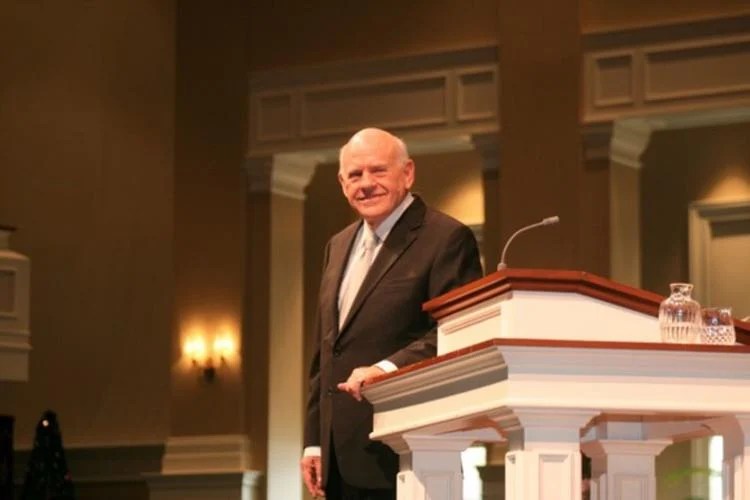
Remembering Bill Self: “The Church Is Worth the Effort”

There are some moments and memories that we never forget. 

One such remembrance is when I first met Dr. Bill Self in 1981 at a banquet on the campus of Samford University. 

I was energized by Bill’s after-dinner speech. He quickly became one of my favorite preachers, not just because he was a captivating and motivating speaker, but because he had a contagious love for the local church. 

As the years unfolded, Bill became not only my colleague, but a friend and a strategic encourager.

We were blessed to have Bill and Carolyn spend a weekend with us in Pensacola in May 2015. For many years, Bill had been a close friend with our iconic pastor emeritus, Jim Pleitz. And Bill had served as the guest “evangelist” for a series of memorable revival services at First Baptist Pensacola during the 1970’s. So, Bill’s visit to Pensacola to be our guest for Heritage Day was filled with visits, stories, and reunions.

On Saturday evening, Amanda and I took Bill and Carolyn to Peg Leg Pete’s, our favorite seafood restaurant on the beach. We laughed and reminisced, but mostly we talked about the future of the local church. And we discussed the many ways that the church is in a season of challenging transition.

Whereas some pundits are prepared to offer a eulogy over the local church, Bill believed that if we seize the opportunity to dialogue poetically and prophetically with our culture, rather than launching hostile verbal missiles at our culture, this could be the church’s finest hour.

From among his many memorable sermons, such as “King for a Day,” “Swimming to the Deep End of the Pool,” and “What Do You Want with Me, Jesus?,” I am glad that Bill chose to preach the sermon, “The Church Is Worth the Effort” for our congregation, a message that continues to be timely and relevant.

Little did we know that our visit with Bill in Pensacola would be our last visit with him this side of heaven. Bill died on January 9, 2016 from complications with ALS.

So, in memory of Bill, each year around this time I give thanks for Bill’s impact on my life and ministry, and I review my notes from his last sermon in Pensacola, a sermon that every pastor and church member needs to internalize as we remind ourselves that the most influential days of the local church can be ahead of us and not behind us:

“I still love the church. I love the church universal, as well as the church local (red brick, white-columned with deacons smoking in the parking lot). With all of its dysfunction and flesh marks, with all of its confusion and humanity, it is still the best thing God has going for Him in this world. We do have a treasure in earthen vessels.

The church is a solid oak tree, not a fragile tea cup. It has withstood Roman Imperialism, Jewish legalism, pagan optimism, medieval institutionalism, the excesses of the reformers, wars and rumors of wars, a youth quake, modern skepticism, southern provincialism, resurgent fundamentalism, and heresies in each generation that seem never to die. It can withstand anything our generation can throw at it.

It has been victimized by unprepared and selfish clergy, tone-deaf musicians, manipulative members, argumentative deacons, demanding denominations, unloving reformers, and greedy politicians. Still it continues to provide love, affirmation and community to the fallen in the face of alienation.

The church is worth the effort!

And it still is today.

24 Books I Plan to Read in 2024

Taking a journey through an engaging book is a soul-nurturing, mind-stretching adventure. Charles W. Eliot contends, “Books are the quietest and most constant of friends; they are the most accessible and wisest of counselors, and the most patient of teachers.”

My appreciation for reading was slow to develop. But when it emerged, it surged. As a teenager, I perceived reading to be a nuisance and somewhat of a necessary evil to attain decent grades in school. However, at some point early in my college experience, I learned to value the gift of reading, not just for assignments or entertainment, but for personal growth and development.

As a pastor, I need to read widely to stay current and to speak with fresh relevance on a variety of topics. More importantly, I need books like I need food, to satisfy cognitive hunger and to probe intellectual curiosity. Books stimulate my thinking, exercise my memory muscles, and challenge my presuppositions.

As I grow older, I continue to find that reading is relaxing, engaging, and often inspirational. The discipline of reading not only exercises my mind, it expands my thinking.

Each year I read a variety of genres including fiction, spirituality, theology, history, and biography. Typically, I keep from three to five books going at the same time, a practice that was recommended by Opal Lovett, one of the most influential faculty members at Jacksonville State from my college years. This approach invites a variety of authors to be conversation partners in my internal dialogue.

I also intentionally read books I can’t entirely agree with. Rather than making me combative, the practice of reading opposing viewpoints challenges me to test my assumptions and it familiarizes me with a variety of perspectives. This discipline equips me to dialogue and debate intelligibly, and not just emotively.

Around the beginning of the year, I make a list of books that I plan to read during the coming year. While I expect to read 30-40 books this year, I have already compiled a list of 24 books for my reading list in 2024:

1. The Little Liar by Mitch Albom (Harper, 2023).
2. Ship Watch: A Savannah Novel by Johnathon Scott Barrett (Moonshine Cove Publishing, 2023).
3. Strengthening the Soul of Your Leadership: Seeking God in the Crucible of Ministry by Ruth Haley Barton (Intervarsity Press, 2018).
4. Hard and Holy Work: A Lenton Journey through the Book of Exodus by Mary Alice Whistell and Tyler D. Mayfield (Westminster John Knox Press, 2024).
5. Love Your Enemies: How Decent People Can Save America from the Culture of Contempt by Arthur Brooks (Broadside Books, 2019).
6. How to Know a Person: The Art of Seeing Others Deeply and Being Deeply Seen by David Brooks (Random House, 2023).
7. The Gifts of Imperfection: Let Go of Who You Think You’re Supposed to Be and Embrace Who You Are by Brené Brown (Hazelden Publishing, 2022).
8. Practicing the Way: Be with Jesus. Become like him. Do as he did by John Mark Comer (WaterBrook, 2024).
9. The Great Dechurching: Who’s Leaving, Why Are They Going, and What Will It Take to Bring Them Back? By Jim David and Michael Graham (Zondervan, 2023).
10. Wresting with Doubt, Finding Faith by Adam Hamilton (Abingdon Press, 2023).
11. Remember Henry Harris: Lost Icon of a Revolution: A Story of Hope and Self-Sacrifice in America by Sam Heys (Black Belt Books, 2019).
12. Anxiety, Depression, and Jesus: Finding Hope in All Things by Aaron Hoover (Westbow Press, 2023).
13. Wounded Pastors: Navigating Burnout, Finding Healing, and Discerning the Future of Your Ministry by Carol Howard and James Fenimore (Westminster John Knox Press, 2024).
14. The Hidden Roots of White Supremacy: and the Path to a Shared American Future by Robert Jones (Simon and Schuster, 2023).
15. Walter Brueggemann’s Prophetic Imagination: A Theological Biography by Conrad Kanagy (Fortress Press, 2023).
16. Searching for Certainty: Finding God in the Disruptions of Life by Shelly Miller (Bethany House Publishers, 2020).
17. All My Knotted Up Life: A Memoir by Beth Moore (Tyndale House Publishing, 2023).
18. Losing Our Religion: An Altar Call for Evangelical America by Russell Moore (Sentinel, 2023).
19. Dancing in the Darkness: Spiritual Lessons for Thriving in Turbulent Times by Otis Moss III (Simon and Schuster, 2024).
20. Good Boundaries and Goodbyes: Loving Others without Losing the Best of Who You Are by Lysa Terkeurst (Thomas Nelson, 2022).
21. When the Moon Turns Blue: A Novel by Pamela Terry (Ballentine Books, 2023).
22. The Narrow Path: How the Subversive Way of Jesus Satisfies Our Souls by Rich Villodas (WaterBrook, 2024).
23. Along the Journey by Mark O. Wilbanks (Wilbanks Books, 2023).
24. What’s So Amazing About Grace? (Revised and updated) by Philip Yancey (Zondervan, 2023).

Whether you are a fast reader or a slow reader, a hard print reader or an e-book reader, read for quality, not quantity. Richard Steele observed, “Reading is to the mind what exercise is to the body.”

I hope your life is enriched by the books you choose in 2024!

(Barry Howard serves as the pastor of the Church at Wieuca in Atlanta. He also serves as a columnist and leadership coach with the Center for Healthy Churches.)