
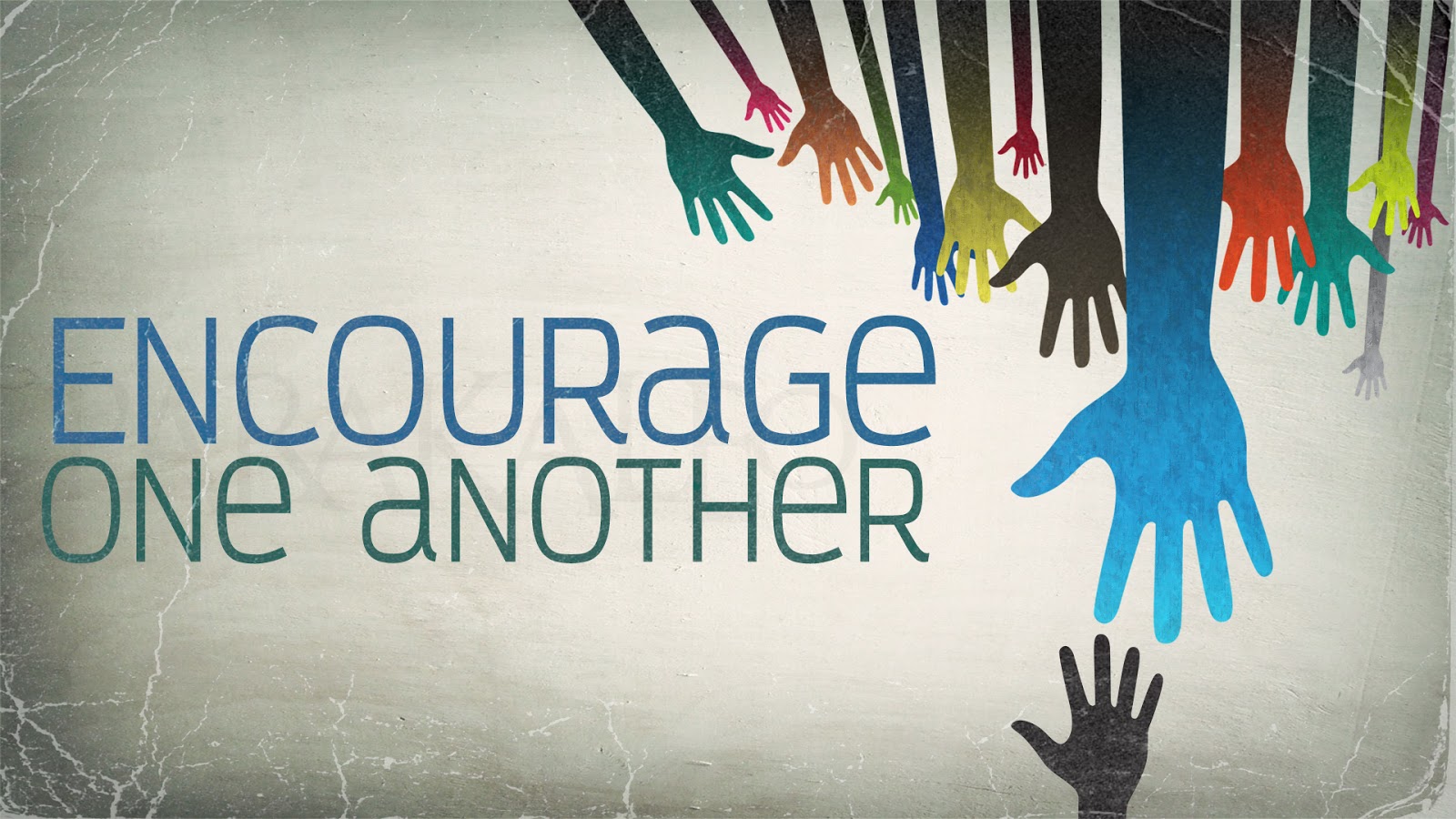
Building Up the Body: 10 Ways to Encourage One Another

People are hungry for encouragement. Life can be extremely discouraging at times.

During this season of wars and rumors of wars, of turbulent and toxic discourse, it’s not the TikTokers or the Tweeters, not the pop culture icons or the politicians, but the encouragers who are the most significant influencers.

William Arthur Ward “Flatter me, and I may not believe you. Criticize me, and I may not like you. Ignore me, and I may not forgive you. Encourage me, and I will not forget you.”

As followers of Jesus, we are called to build each other up and encourage one another daily (I Thessalonians 5:11). In a world filled with challenges, a word of encouragement can brighten someone’s day, restore their hope, or strengthen their faith. Here are 10 practical ways you can encourage those around you:

  1. Pray for each other. One of the most powerful ways to encourage is to pray. Let someone know you’re praying for them and lift them up regularly before God.

  2. Offer a listening ear. Sometimes the best way to encourage someone is simply to listen without judgment or interruption. Let them feel heard and valued.

  3. Speak words of affirmation.  A kind word can go a long way. Affirm someone’s strengths, character, or faithfulness. Proverbs 16:24 reminds us, “Gracious words are a honeycomb, sweet to the soul and healing to the bones.”

  4. Send an encouraging note. Whether it’s a handwritten card, a text message, or an email, a small note of encouragement can brighten someone’s day and remind them that they are loved and appreciated.

  5. Share an inspiring verse of scripture. The Bible is filled with promises and encouragement. Share a meaningful verse that can uplift someone during a difficult time.

  6. Celebrate the accomplishments of others. Acknowledge the milestones and victories in someone’s life, no matter how small. Celebrating with others brings joy and motivation.

  7. Be present. Sometimes just showing up when someone is going through a tough time is the most encouraging thing you can do. Your presence can speak volumes when words aren’t enough.

  8. Be available to provide assistance. Practical support in the form of running errands, providing meals, or lending a hand can encourage someone who is overwhelmed or struggling.

  9. Be patient and forgiving. Encouragement often comes through offering grace and understanding. Be patient with others, knowing we all go through seasons where we need extra kindness.

  10. Speak the truth in love. Encourage others by speaking truthfully but with compassion. Sometimes the most loving thing you can do is help someone see a situation with clarity, rooted in love and grace.

Never underestimate the power and importance of encouragement. George M. Adams writes, “Encouragement is the oxygen of the soul.”

In a world where criticism, negativity, and hopelessness abound, encouragement can be a breath of fresh air. When we offer a word or gesture of encouragement, we may just resuscitate the spirit of one who is on the verge of despair.

10 Things We Need to Know About Joy

Joy is one of the most sought-after qualities in life, yet it often feels elusive.

Romans 15:13 requests, “May the God of hope fill you with all joy and peace in believing, so that by the power of the Holy Spirit you may abound in hope.”

The Bible speaks of joy as something much deeper than momentary happiness—it’s a fruit of the Spirit, a gift from God that sustains us through all circumstances. Here are ten things we need to know about joy:

1. Joy is a gift from God. True joy is not something we manufacture on our own. It comes from a deep relationship with God, flowing from our awareness of God’s presence in our lives.

2. Joy is not dependent on circumstances. Happiness can change based on our situation, but joy remains steadfast. It’s possible to have joy even in difficult seasons because it comes from knowing God’s love and grace.

3. Joy and gratitude go hand in hand. A thankful heart cultivates joy. When we focus on what we have rather than what we lack, we experience a greater sense of joy.

4. Joy is a choice. While joy is a gift, it also requires intentionality. We can choose to focus on God’s goodness and place our trust in God, even when life feels uncertain.

5. Joy energizes us. Nehemiah 8:10 tells us that “the joy of the Lord is your strength.” Joy gives us the inner strength to endure trials and challenges with hope.

6. Joy is contagious. When we live with joy, it impacts those around us. A joyful spirit lifts others and creates an atmosphere of encouragement and positivity.

7. Joy comes through serving others. One of the greatest sources of joy is found in giving to and serving others. When we focus on the needs of others, we experience the joy that comes from living selflessly.

8. Joy and peace are connected. Joy and peace often go hand in hand. When we rest in God’s peace, it paves the way for joy to take root in our hearts.

9. Joy reflects our trust in God. When we trust that God has a plan for our lives and is working in us and through us to accomplish good, we can experience joy, even in uncertain times.

10. Joy is frequently found in the simple things. It’s often the little things and the routine things in life that bring the most joy. Max Lucado reminds us, “Find joy in the ordinary things.”  Likewise, Brene Brown suggests, “We risk missing out on joy when we get too busy chasing down the extraordinary.”

Rather than being a fleeting or situational emotion, joy is an attitude with which we proactively approach life. Joy is a disposition, a mindset that precedes and supersedes the highs and lows of our life experiences.

Henri Nouwen advised, “Joy does not simply happen to us. We have to choose joy and keep choosing it every day.”

(Barry Howard serves as the pastor at the Church at Wieuca in North Atlanta. He also serves as a leadership coach and columnist with the Center for Healthy Churches.)

Remembering September 11, 2001: Finding Faith, Hope, and Resilience in the Face of Tragedy

On September 11, I always take the day off. I want to be in a peaceful quiet place praying. It is a day I both mourn and celebrate.Genelle Guzman-McMillan, 9/11 Survivor

Where were you on September 11, 2001?

Every year on the anniversary of this catastrophic day, my mind goes back to that day when much about the world changed forever. I was sitting with a church member in her home, planning a memorial service for her husband, who had passed the night before. As we discussed details, a family member asked me to step into the kitchen, where she tearfully pointed to the TV. I watched in disbelief as the first plane crashed into the World Trade Center. My heart sank. I returned to the family, led them in prayer, and included our nation in my pleas, not yet aware of the unfolding catastrophe.

I hurried back to the church, where our staff had gathered in my study. Together, we watched as the second plane struck. After a few moments of shock and sorrow, we shifted into ministry mode, strategizing ways to support our congregation and community. As news continued to break, we learned of church members with family in New York or Washington, travelers in the affected areas, and those serving in the armed forces. We were all connected in some way to this tragedy, bound together in grief and prayer.

Twenty-three years later, the memories are still vivid and painful. We remember the fear, the uncertainty, the overwhelming sense of loss. But as followers of Christ, we also remember the source of our strength: our faith in God. Psalm 46:1 reminds us that “God is our refuge and strength, a very present help in trouble.” Though faith doesn’t shield us from tragedy, it guides us through it, giving us hope in a world that so often feels broken.

What can we learn as we navigate the crossroads of our haunting memories and our persistent faith? How do we move forward as followers of Jesus in a post-9/11 world?

  1. Our security is found in God. Our faith serves as an anchor. Psalm 46:1 reminds us that God is our refuge and strength, especially in times of trouble. Even amid disaster, we can trust in God’s sustaining presence.

  2. Refuse to live in fear.  II Timothy 1:7 reminds us that “God has not given us a spirit of fear, but of power, love, and a sound mind.” Fear shouldn’t dictate our actions or hold us back from fulfilling God’s call.

  3. Avoid responding to violence with violence. We cannot allow acts of terror to provoke us into hateful responses. Jesus teaches us to love our enemies and be peacemakers in a world full of conflict.

  4. Express gratitude for first responders. The bravery of firefighters, police officers, and paramedics on 9/11 gave us a new appreciation for those who run toward danger to save others. They remind us of the importance of selfless service.

  5. Learn about other faiths.  As we strive to be salt and light, it’s crucial to distinguish between radicals who commit violence and those of faith groups who reject terror and promote peace.

  6. Resist xenophobia. Fear of people from other countries or cultures only divides us further. We are called to love our neighbors, regardless of their background.Sandy Dahl, wife of Flight 93 pilot Jason Dahl pleads, “If we learn nothing else from this tragedy, we learn that life is short and there is no time for hate.”

  7. Pray for our local, state, and national leaders. Navigating the complexities of terrorism and international relations is no easy task. Let us remember to pray for wisdom and discernment for those in authority.

In the years since 9/11, the world has changed, and we continue to process its impact. But as we remember that day, may we emerge more grateful for the heroes, more respectful of each other, and more grounded in our faith.

A year after the 9/11 attacks, I was asked by reporter, “How has the world changed since September 11, 2001?” The response I gave in 2002 is still relevant in 2020:

I believe the world has changed in so many ways that the majority of those changes are still being realized and processed.   From my perspective, it seems that our nation is going through the various stages of grief (shock, denial, depression, panic, guilt, resentment, and hope), and like any normal family system, not everyone is in the same stage.   Because the assault on 9/11 was a multi-dimensional attack on the spiritual, social, psychological, and economic fabric of our country, our sense of loss is more complex. Not only were thousands of lives lost, but so were many of our presuppositions, especially those regarding personal safety, economic security, and religious superiority. I hope and pray that we will emerge as individuals who are more circumspect, more patient, less acquisitive, and more spiritually grounded than we have previously demonstrated.

More Than a Paycheck: 10 Good Things About Work


Thomas Edison proposed, “The three great essentials to achieve anything worthwhile are, first, hard work; second, stick-to-itiveness; third, common sense.”

Although work is good and essential in both a civilized society and a spiritual community, work is not the essence of life nor is the avoidance of work the key to happiness. However, a positive attitude toward work and a healthy sense of vocation contribute to a meaningful life.

Monday September 2 is Labor Day. According to the Department of Labor, Labor Day is a United States federal holiday observed on the first Monday of September annually. The day celebrates the American labor movement and the contributions and achievements of the American worker.”

Unfortunately, some have misunderstood the story of the fall in Genesis to imply that work is a part of God’s curse on humanity originating in the garden of Eden. (That is a story for another day.) The Bible, however, portrays work as good and godly, an expression of human creativity and divine ingenuity.

In both the marketplace and the church, we need to claim and celebrate work as good and vocation as a valued dimension of life. Here are 10 good things about work to think about and celebrate on Labor Day Weekend:

  1. We are designed to be workers. Genesis 1:27 tells us that “God created human beings in his own image.” In Genesis, God is introduced as a creator or a maker, and likewise, God created us to be makers or workers. Of course, we work to “make a living” and provide for our families. But work is much more than our earning power. Work is an expression of our giftedness and an investment in the common good of our community.

  2. Work gives us a sense of purpose and fulfillment. Whether we are solving problems, creating something new, or serving others, our work allows us to contribute to the world in meaningful ways. It can be incredibly fulfilling to know that what we do makes a difference.

  3. We are wise to establish and maintain a healthy work-life balance. If we are not careful, work can become all-consuming. Genesis 2:2 says, “By the seventh day God finished all the work he had been doing; so on the seventh day God rested from all his work.” Maintaining a work-life is also addressed in the Ten Commandments. Exodus 20:8 commands, “Remember the Sabbath day by keeping it holy.”

  4. We honor God by doing all our work with excellence and integrity. Colossians 3:17 urges, “And whatever you do, whether in word or deed, do it all in the name of the Lord Jesus, giving thanks to God the Father through him.Martin Luther insisted, “The Christian shoemakerdoes his duty not by putting little crosses on the shoes, but by making good shoes, because God is interested in good craftsmanship.” 

  5. Work provides the means to take care of ourselves and our families. It allows us to meet our needs, plan for the future, and enjoy the fruits of our labor. Financial stability brings peace of mind, and it comes from the dedication we put into our jobs.

  6. Work promotes personal growth. Work pushes us to learn new skills, face challenges, and grow as individuals. The obstacles we overcome and the experiences we gain in our jobs often shape us into stronger, more capable people.

  7. We are called to be co-laborers with God and each other as we work to fulfill God’s mission. Throughout the course of our lives, much if not most of our work in the marketplace and in the church will be teamwork. In I Corinthians 3:9 Paul instructs the new believers that, “We are co-workers in God’s service.”

  8. Great things are accomplished when God’s people commit to a strategic vision and mindset. Effective work requires focus and determination. For example, as the wall of the Jewish temple was being rebuilt in 444 B.C., the feat was accomplished, according to Nehemiah 4:6, because the people had “a mind to work.”

  9. We usually find our vocation or our calling as we discover and live out our passion. Frederick Buechner contended, “Your vocation in life is where your greatest joy meets the world’s greatest need.” 

  10. The effectiveness of our work cannot be measured by how quickly we see results. Sometimes we see the fruit of our labor and sometimes we work believing the next generation will be blessed by the fruit of our labor. Robert Louis Stevenson advised, “Don’t judge each day by the harvest you reap but by the seeds that you plant.”

If you have a place to live, food to eat, someone to love, and a good work to do, you are among the most blessed people in the world. Eric Hoffer deduced, “The hardest arithmetic to master is that which enables us to count our blessings.” 

Although it can be frustrating at times, yet rewarding at other times, work is a privilege never to be taken for granted. It’s more than just a paycheck—it’s a source of growth, purpose, and provision.

(Barry Howard serves as pastor of the Church at Wieuca in North Atlanta. He also serves as a leadership coach and columnist with the Center for Healthy Churches. You can follow him on social media at @BarrysNotes.)