

Love, Faith, and Simplicity: Remembering Our Visit in the Home of President and Mrs. Carter

What is it like to visit the home and the church of a former president?

In the spring of 2012, my wife and I were blessed to spend a week in Plains, Georgia, where I had been invited to lead in revival services at the Maranatha Baptist Church. Their most famous members, Jimmy and Rosalynn Carter, were present in every service.

I first met Governor Jimmy Carter in 1975 when I was a sophomore in high school and he was the featured speaker for the Alabama State FFA Convention in Montgomery. Interestingly the delegates at those conventions were seated in alphabetical order according to the school they represented, and since I served as a delegate from Alexandria High School, I had a front row seat.

Then in 2004, Amanda and I made the pilgrimage to Maranatha to attend President Carter’s Sunday School class and to stand in line with the other worshippers to have a photo taken with the 39th president. On that particular Sunday, Mrs. Carter was traveling internationally with an initiative related to the Carter Center.

Never would I have guessed in 1975 that I would become a pastor and someday preach in President Carter’s home church. After the first service in 2012, the worshippers formed a line to greet the guest preacher and his wife and welcome them to Maranatha. The Carters stood in line like every other member, and when they greeted us, Mrs. Carter welcomed us and commended the sermon, while President Carter shook my hand and kissed my wife on the cheek. She was so in awe of President Carter she quipped, “I may never wash my face again.”

The tradition at Maranatha is for the guest preacher to have lunch with the Carter’s during the revival week. We met the Carter’s at Dylan’s Diner on Wednesday, and then accompanied them to their home for dessert and conversation.

Before departing the restaurant, President Carter took me to every table in the restaurant, asked the patrons where they were from, introduced me as the guest evangelist for their revival, and invited every person in the diner to attend the final service that night. Then he added to his invitation, “If you come, you can sit with me and Rosalynn.” That night the attendance peaked, and the Carters were surrounded by the guests he invited from the restaurant.

The Carter’s home is modest and welcoming. President Carter built most of the furniture. We talked about his upbringing in Plains, his career in the Navy, his visits with world leaders, his work with Habitat for Humanity, his love for the Gulf Coast, and the well-being of several of our mutual friends. It was remarkable to hear stories of his recent conversations with Fidel Castro, and I was particularly interested in his recollections of Israeli Prime Minister Menachem Begin and Egyptian President Anwar Sadat.

Mrs. Carter, who insisted that we call her Rosalynn, had prepared sugar-free banana pudding for our dessert. She served it in a Corningware dish much like my grandmother’s. When I went to the kitchen to assist her with the coffee, I noted that she used a white older model Mr. Coffee coffeemaker, just like the one we use at home. Our visit was rich in simplicity and authenticity.

After we finished dessert, President Carter gave us a tour of his study, where he gave us an overview of some of his newest commentaries, followed by a tour of his workshop, where he showed us a few of his paintings and samples of his woodworks.

Then he said to Amanda, an avid tennis player, “Would you like to see our tennis court?” After he shared a few tennis stories, he said, “We normally take a photo of the guest minister on the front porch, but since Amanda loves tennis, we can take a photo of the four of us here on the tennis court.” Then he requested that one of the Secret Service Agents take the picture, a photo that we will continue to treasure for the remainder of our days.

After the photoshoot, we returned to the house to retrieve a few books he had signed for us, and then they walked us to our car, so we could return to the Plains Inn to freshen up before the evening service.

On the casual walk to our vehicle, as the two of them held hands, they shared with us that their home had been given to the National Park Service so that visitors could continue to visit Plains for years to come. Then Mrs. Carter pointed to a gardenesque area in the front yard and said, “And this is where we will be buried.” And President Carter squeezed her hand and said, “But not yet, Rosie. Not yet.”

In his book, A Full Life, President Carter confessed, “Earlier in my life I thought the things that mattered were the things that you could see, like your car, your house, your wealth, your property, your office. But as I’ve grown older I’ve become convinced that the things that matter most are the things that you can’t see — the love you share with others, your inner purpose, your comfort with who you are.”

Before our visit, we knew the Carters were faithful servants and influential advocates for the poor, the persecuted, and the underserved. During our visit, we learned they were gracious, down to earth, and comfortable in their own skin.

Nearly two years ago, the world learned President Carter was beginning hospice care at home, rather than continuing to go back and forth to the local hospital. And then, surprisingly, Rosalyn died before him.

This past week, as President Carter’s completed his journey, I can imagine that his beloved Rosie was there to squeeze his hand and say, “Welcome home, Jimmy! Welcome home!”.

(Barry Howard serves is a retired pastor who serves as a leadership coach and columnist with the Center for Healthy Churches. He and his wife, Amanda, currently reside on Cove Creek in northeast Alabama.)

Navigating Life on the Island of Misfit Toys: 7 Ways to Deal with Loneliness at Christmas

For those of us who grew up watching Rudolph the Red-Nosed Reindeer, the Island of Misfit Toys has become a symbol of being different, overlooked, or left out. Although the toys were not broken, they were misunderstood and longing for a place where they belonged.

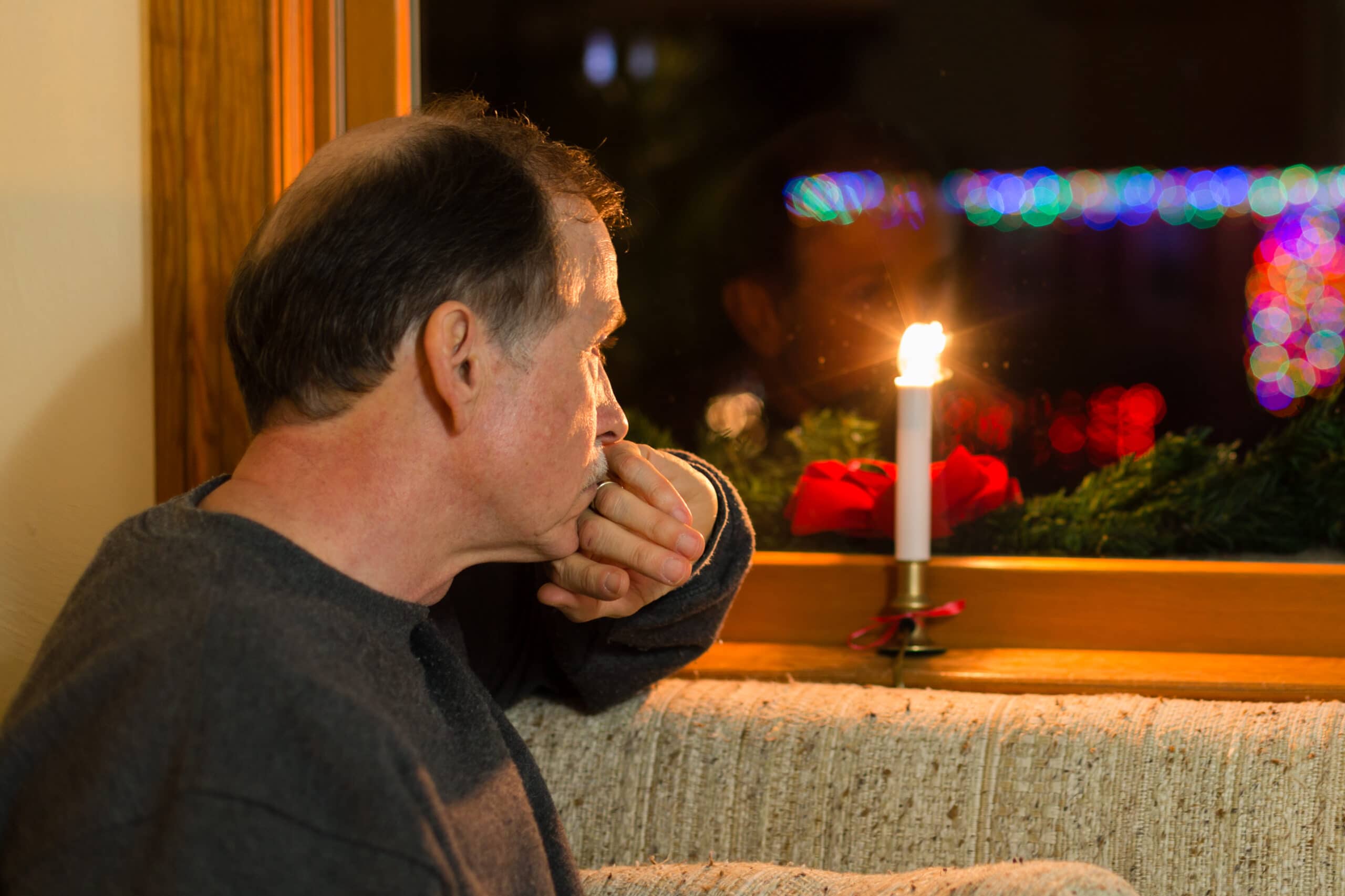
For many individuals, the holidays can feel like that island—a season where everyone else seems to have a place, a purpose, and people to share it with, while loneliness leaves us feeling adrift. In a recent Harvard study, 21 percent of adults indicated they have experienced serious feelings of loneliness.

If you’re feeling like life on the “island” is your reality this Christmas, take heart. Loneliness, though difficult, does not have the final word. Here are some ways to find meaning, connection, and even joy during the holidays, no matter your circumstances:

1. Own your uniqueness. On Rudolph’s journey, Charlie-in-the-Box insisted, “Being a misfit means that you are special. Embrace your uniqueness and celebrate who you are.” Loneliness can stem from feeling out of place or like you don’t measure up to others’ holiday experiences. But the beauty of Christmas is that God didn’t choose perfection to carry out his plan. God chose a humble manger, ordinary shepherds, and a small, overlooked town. Lean into who you are, and remember that you are uniquely and wonderfully made.

2. Come to terms with your feelings. It’s okay to admit that the holidays are hard. Whether you’re grieving a loss, facing a season of change, or simply feeling the ache of solitude, naming those emotions can be a powerful first step toward healing. Even Jesus experienced loneliness and sorrow. He knows your pain and he is near to you, offering comfort and peace.

3. Look for fellow “misfits.” The Misfit Toys didn’t stay isolated. They found each other. Seek out others who may also feel disconnected during this season. Attend a community event, reach out to a friend, or visit a local church. Many people long for connection but don’t know how to take the first step. Your initiative could be a gift not only to you but to someone else.

4. Find joy in serving. One of the most powerful antidotes to loneliness is serving others. Volunteer at a shelter, bake cookies for your neighbors, or send handwritten notes to people who might also be feeling alone. When we shift our focus outward, we often discover new connections and purpose in the process.

5. Lean into the Christmas story. At its core, Christmas is not about parties, gifts, or picture-perfect moments. The Christmas story is about God stepping into our messy, lonely world to be with us. The birth of Christ is a profound reminder that we are never truly alone. Emmanuel, “God with us,” means God is present in your quiet moments, your tears, your laughter, your challenges, and your joys.

6. Create your own traditions. If old traditions bring more pain than joy, don’t be afraid to start new ones. Hermey the Elf advises, “Follow your passion and dreams, even if they don’t fit into the mold. Be true to yourself and find joy in pursuing what you love.” Write a poem, start a jigsaw puzzle, try the new recipe, dance by the light of the tree, or take a peaceful walk under the stars. Simple, meaningful actions can help you reclaim the season.

7. Give yourself the gift of grace. It’s okay to feel lonely, and it’s normal to experience melancholy during the holidays. Don’t be too hard on yourself if your emotions feel a little chaotic. The first Christmas night wasn’t filled with jubilant celebration but with quiet humility. Let yourself rest in the peace of the season, know that your self-worth isn’t determined by how festive you feel.

The story of the Misfit Toys didn’t end with them being forgotten. Rudolph and his friends ensured they were found, loved, and given purpose. Christmas is a reminder that we are never truly left behind. God sees us, loves us, and has a purpose for us—even when at times we feel like misfits.

Dare to step outside your comfort zone this Christmas. As Yukon Cornelius wisely observes, “Adventure awaits those who are willing to take risks. Embrace the unknown and discover the wonders of the world.”

(Barry Howard is a retired pastor who serves as a leadership coach and columnist with the Center for Healthy Churches. He and his wife reside on Cove Creek in northeast Alabama.)
Comfort and Joy: 10 Christmas Carol Lyrics That Speak into Our Grief

Christmas is often a season of joy, but for many, it can also bring waves of grief as we remember loved ones who are no longer with us. Often their absence speaks more loudly at Christmas.

Perhaps you can identify with the person who said, “I see you in the lights on the tree and the ornaments we used to hang each year. I hear you in the carols we loved to listen to together. I miss you so much this year, but I feel you all around.” 

If you are feeling a heavy sense of loss this Christmas season, lines from these 10 carols can remind you of God’s presence and promises even as you navigate your grief:

1. “The thrill of hope, a weary world rejoices.” (from O Holy Night) In moments of weariness and grief, these words remind us that hope can restore and renew our spirits. The birth of Christ is a beacon of renewal, bringing joy even to heavy hearts.

2. “Be near me, Lord Jesus; I ask Thee to stay close by me forever, and love me, I pray.” (from Away in a Manger) A tender prayer for God’s nearness, this stanza offers reassurance that Jesus is with us, even in our deepest sorrow.

3. “Peace on earth and mercy mild, God and sinners reconciled.” (from Hark! The Herald Angels Sing) These words proclaim peace—not just in the world, but in our hearts. They remind us that God’s grace sustains us, offering comfort when grief feels overwhelming.

4. “O rest beside the weary road and hear the angels sing.” (from It Came Upon the Midnight Clear) This carol reminds us to pause and find rest for our weary souls. In our grief, we can find comfort in the message of peace and hope proclaimed by the angels.

5. “The hopes and fears of all the years are met in thee tonight.” (from O Little Town of Bethlehem) Grief often amplifies our anxiety about the future, but this lyric reminds us that Christ’s birth intersects with our hopes and our fears, offering peace and reassurance.

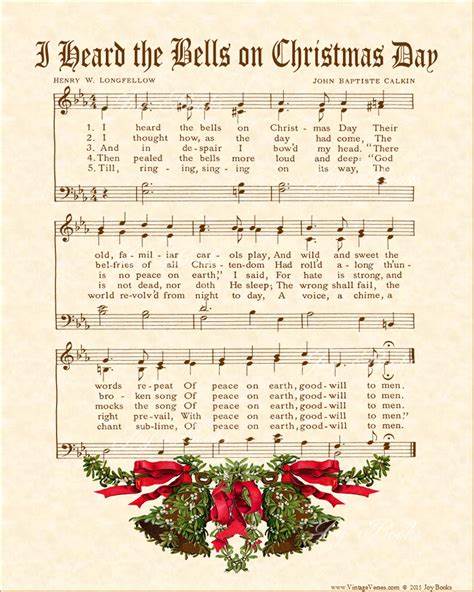
6. “Then pealed the bells more loud and deep: ‘God is not dead, nor doth He sleep.'” (from I Heard the Bells on Christmas Day) Written during a time of personal sorrow, this carol especially speaks to those who feel abandoned in their grief. It reminds us that God is present and actively working for our good.

7. “Silent night, holy night, all is calm, all is bright.” (from Silent Night) The serene imagery of this carol invites us to embrace stillness, trusting in the calm and brightness that God’s presence brings, even in the midst of pain.

8. “Let every heart prepare Him room.” (from Joy to the World) Grief can leave an emptiness in our hearts, but this stanza invites us to make room for Christ, who fills us with peace, hope, and joy.

9. “Born to set Thy people free; from our fears and sins release us, let us find our rest in Thee.” (from Come Thou Long Expected Jesus) This carol expresses a deep longing for freedom from life’s burdens and rest in Christ’s presence.

10. “Rejoice! Rejoice! Emmanuel shall come to thee, O Israel.” (from O Come, O Come, Emmanuel) This ancient carol speaks directly to those in sorrow, promising that God is with us. Emmanuel—God with us—is a powerful reminder that we are never alone.

Christmas carols are not just songs of celebration; they are also prayers, petitions, and promises of God’s love and presence. For those grieving, these words offer a unique blend of comfort and hope, pointing us to the truth that Christ came to bring peace and healing to a broken world.

Don’t hide during the holidays. Light the candles, prepare the meal, and sing the caorls. Alan Wolfelt suggests, “During your time of grief, the very rituals of the holidays can help you survive them.”

This Christmas, may the timeless words of these songs bring you comfort, reminding you that Christ’s light often shines brightest in the shadows.

(Barry Howard is a retired pastor who serves as a leadership coach and columnist with the Center for Healthy Churches. He and his wife reside on Cove Creek in northeast Alabama.)
Reflecting on the Nativity: Finding Meaning in the Manger


One of the first Christmas songs I heard on the radio this year was Anne Wilson’s “The Manger.” Sung as a duet with Josh Turner, the song begins with a story:

They’re putting decorations up in front of my old church
The shepherds and the Wise Men and the hay
There’s Joseph and his Mary lookin’ down at Heaven’s birth
And the angel’s saying don’t you be afraid.

Right after Thanksgiving, my wife began putting up our decorations. A couple of days later, I rose early to savor my first cup of coffee and begin my morning reading, I experienced an unusual sensation: I felt as though I was being watched.

While the coffee brewed, I opened my laptop to check the news headlines. As my eyes scanned the screen, the feeling persisted—an awareness of other eyes observing my every move. After a few moments spent praying for guidance, expressing gratitude, and remembering the poor, the homeless, and those grieving during the holidays, I decided to investigate further. I surveyed the room more thoroughly, and then I saw them: Mary, Joseph, and the baby Jesus—everywhere I turned, they were watching me.

My wife, Amanda, is a Christmas enthusiast. She transforms our home into a holiday wonderland every year. Four themed Christmas trees light up our spaces, battalions of angels stand at attention, and a Dickens-style village invites us to step into another era. Two fluffy stockings, one red and the other green, hang from the mantle beneath wooden block letters that spell out J-O-Y and N-O-E-L. On the entertainment cabinet, other wooden blocks declare M-E-R-R-Y C-H-R-I-S-T-M-A-S!

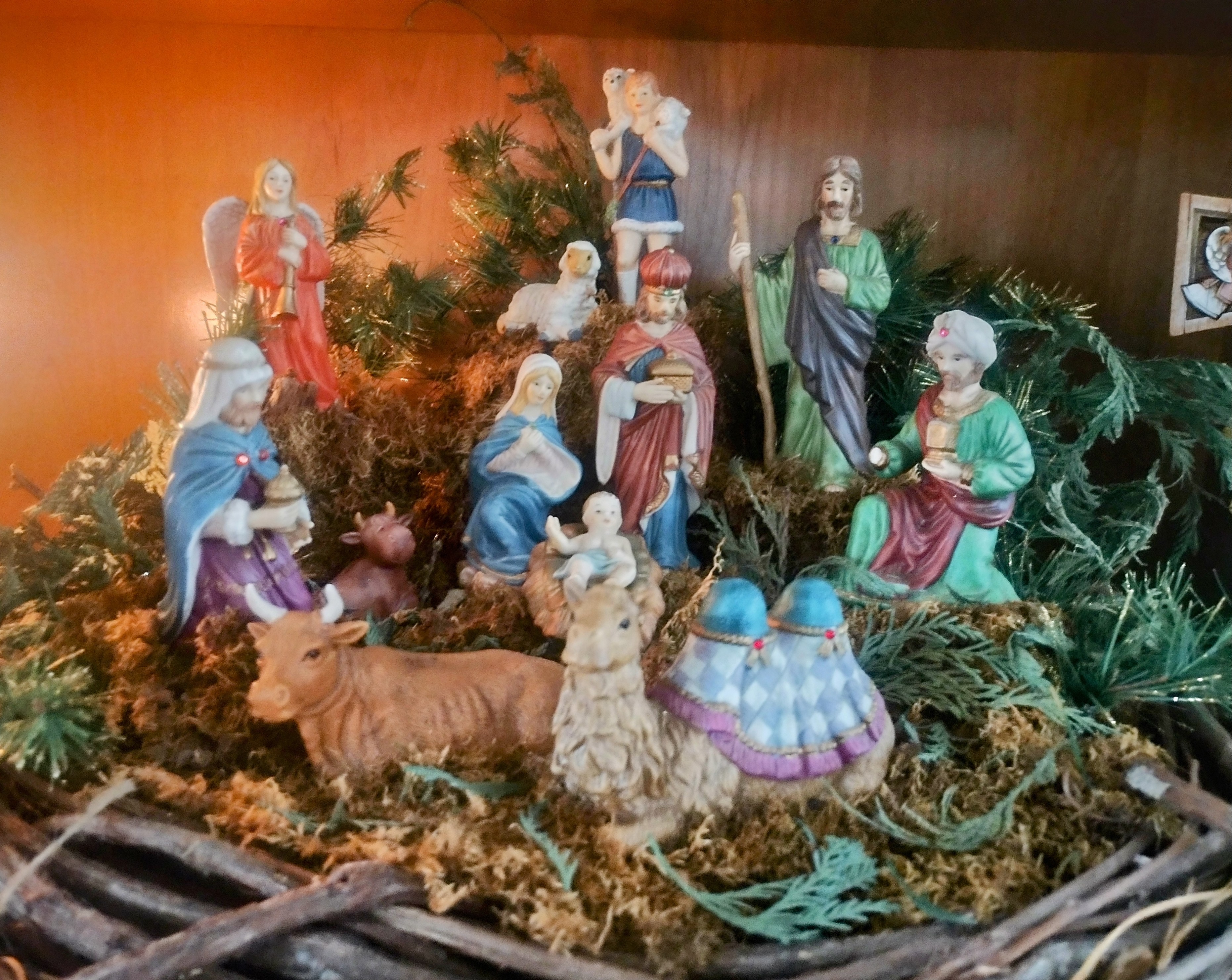
The central theme of our holiday decor is the nativity. In the quiet of the morning, as I surveyed our home to uncover the source of that watching presence, I counted 24 manger sceneseach offering a unique perspective on the true meaning of Christmas. Among them are a delicate blown-glass nativity, a hand-carved wooden set gifted to us by a Jewish craftsman in Birmingham, a camel-bone nativity from Egypt, and a ceramic crèche lovingly crafted by Amanda’s mother and painted by Amanda’s sister, Michele.

Everywhere I look, I am reminded of the Christmas story—24 renditions of the babe-in-the-manger throughout our home.

Why are nativity scenes such an important part of our Christmas celebration?   What message do they convey to us?

As the holiday season unfolds, nativity scenes appear in homes, churches, and public spaces, offering a timeless reminder of the story of Christmas. These simple yet profound displays help center our focus on the birth of Christ, grounding us in the deeper meaning of the season as we navigate the hustle and bustle of holiday shopping and Christmas activities.

A nativity scene represents a story of humility and hope. A manger in Bethlehem becomes the setting for God’s love made flesh, reminding us that unrelenting grace often appears in the most unexpected places. Each figure—the holy family, shepherds, wise men, and even the animals—invites us to reflect on our role in this sacred narrative.

For families, nativity scenes can serve as a tangible way to teach children about the core message of Christmas. As young hands arrange the figures, they begin to understand that Christmas isn’t merely about gifts and festivities but about God’s greatest gift to humanity.

In a broader sense, nativity scenes inspire unity and peace. Regardless of cultural, political, or theological differences, the image of Christ’s birth resonates as a symbol of hope for all. The nativity narrative beckons us to pause, reflect, and rekindle the light of hope, peace, joy, and love.

The refrain to “The Manger” resounds with the good news of the season:

From the highest of the high to the lowest of the low
That stable tells a story of the distance you will go

For the lonely and the lost, there’s no sinner too far gone
To find a Savior lyin’ in the manger.

This Christmas, as you set up or encounter a display of the nativity, take a moment to ponder its message. Let it remind you of the simple, profound truth at the heart of the holiday: For there is born to you this day in the city of David a Savior, who is Christ the Lord. (Luke 2:11 NKJV)

(Barry Howard is a retired pastor who serves as a leadership coach and columnist with the Center for Healthy Churches. He and his wife live on Cove Lake in northeast Alabama.)

When the Holidays Hurt: Navigating Grief During a Season of Joy

The holiday season is often described as “the most wonderful time of the year.” It’s a time for festive décor, family gatherings, and joyful celebrations. But for those who are grieving, this season can feel like a sharp reminder of what–or who–is missing. The colorful lights, cheerful music, and holiday gatherings can be bittersweet, amplifying the ache of loss.

Grief is challenging to deal with at any time of the year, but during the holidays, grief can be deeper, darker, and more unpredictable than at other times. Why does grief seem to turn up the volume during the holiday season?

I think there are at least three reasons that grief is more amplified from Thanksgiving through Christmas. First, the nostalgia surrounding the holidays and other special occasions prompts us to recall memories more readily. Second, these events tend to frame the absence of our loved ones. For example, a chair that was occupied at the family table may be vacant this year. And third, we tend to be more emotive during the holidays. Our sensory capacity is thrust into high gear.

Richard Kauffman suggests, “There is no right or wrong way to handle the holidays. You are in complete control of your plans as to what you will do during this time of the year.”

Since grief is more pronounced during the holiday season, how can we best deal with it? Too often our human tendency is to repress grief under the guise of being strong. However, repressed grief becomes toxic and can lead to depression or illness. It’s better to confront grief head-on. Here are ten helpful ways to navigate holiday grief:

  • Proactively prepare for holiday grief. Don’t avoid it or deny it. Engage it. The best therapy for grief is to grieve. Give yourself permission to feel your emotions, whether it’s sadness, anger, or even moments of unexpected joy. Ignoring grief won’t make it go away, but naming it can help you process it.
  • Do a soft re-set on your holiday traditions. Determine which traditions to keep and which to eliminate. And start at least one new tradition. Since grief has a way of reconfiguring life, relationships, and family, embrace a new configuration by beginning at least one new tradition.
  • Highlight a favorite event or experience of your loved one. Choose something that was a favorite food, game, song, or activity of your departed loved one, and find a way to highlight it during the holidays. For example, if they loved driving around to see Christmas lights, do it this year in memory of them. If they loved coconut cake, make one and have everyone try a bite.
  • Be creative in “work arounds.” Let’s say that Grandpa always read the Christmas story after dinner from his recliner. It may be too emotional for the family to have someone else read the Christmas story from Grandpa’s recliner. Consider having one or more of the grandchildren read the Christmas story before dinner around the dinner table.
  • Plan a strategic holiday memorial gift. For example, if Grandma was in a mission group and supported the Christmas Mission Offering, plan for the family to each give a gift to the mission offering in her memory. If Grandpa served on the Properties Committee at church, consider a gift toward campus improvement in his memory. Plan the gift to correspond to one of the passions of your departed loved one.
  • Tell lots of stories. For years I’ve encouraged families to continue “to treasure the memories and tell the stories” as a way to process grief. Stories are therapeutic, for sure. But they are also formational and nurturing. One reason genealogies are included in the Bible is because stories of our ancestors help shape our identities.
  • Write a letter to your departed loved one. In the letter tell them what you are feeling during the holidays. Then read the letter aloud as though the departed friend or family member is in the room with you. We think and we speak with different sides of the brain. To reflect, write, and then speak what you have written is healthier and more holistic than simply writing it down. It’s your choice whether to keep the letter confidential or to share it with other family members.
  • Continue the conversation. Most of us tend to continue an internal dialogue with our departed loved ones after they are gone. Sometimes it involves a gut-wrenching confession such as, “Daddy, there are so many things I wish I had told you.” Much of the time it is something as simple as, “I sure do miss you.” And of course, such a dialogue may include good humor such as, “The lights at the top of the tree have gone out again, and I suspect you may have had something to do with that.” It is important during the holidays to keep the conversation going, and maybe even rev it up a bit.
  • Designate moments for quiet and solitude. Be careful not to withdraw into a cocoon of isolation. But likewise, be careful not to bury your grief in a flurry of holiday events and activities.
  • Participate in holiday services at your church. The Christmas story itself is one of hope born in the midst of hardship. The birth of Christ is a reminder that God is with us, even in our darkest times. Emmanuel–“God with us”–is a powerful promise for those who are grieving. Lean into the deeper meaning of the season, finding comfort in the assurance that God understands your sorrow and walks with you through it.

Healthy expressions of grief include finding the right balance of tears and laughter, of connecting and disconnecting, and of lamentation and celebration. And remember, not every member of the family grieves in the same way or at the same pace. Allow space for family members to grieve in their own way.

There’s no doubt the weight of grief can be heavier during the holidays. But the holidays also present great opportunities for finding positive and proactive ways to deal with your grief.

Dr. Alan Wolfelt cautions, “Don’t assume that your holidays will be totally miserable this year. Yes, if you are actively mourning, you will experience pain and sadness. But if you spend time in the company of people you love, you may also experience moments of great joy and hope.”

Grieving during the holidays is never easy, but it’s a journey you don’t have to walk alone. Be gentle with yourself, embrace the support of others, and look for ways to honor both your grief and the hope of the season. Even in a time of sorrow, there is room for moments of hope, peace, joy, and love.

This year, as you navigate the holidays, you may discover that you can experience grief and hope simultaneously, and that the light of Christ shines brightest in our seasons of darkness.

(Barry Howard is a retired pastor who currently serves as a leadership coach and columnist with the Center for Healthy Churches. He and his wife reside on Cove Creek in northeast Alabama.)

Taking the Scenic Route to Bethlehem

Although plans for a federal highway system were underway as early as the 1930s, construction of the Interstate Highway System was officially authorized by the Federal Highway Aid Act of 1956. By the time I-20 opened between Atlanta and Birmingham in the 1970s, the residents of my hometown eagerly anticipated faster travel along this new freeway.

For years, my family had driven to Birmingham from Anniston on old Highway 78, a winding two-lane road that meandered across the Coosa River at Lake Logan Martin and over the mountains near Chula Vista. When I-20 finally opened, I was thrilled to accompany my grandparents on our annual Christmas trip to Birmingham’s Eastwood Mall. Our itinerary included shopping, visiting “the real Santa,” riding the escalator in Pizitz Department Store, and dining at Morrison’s Cafeteria.

To my surprise, my grandfather preferred the old two-lane highway over the new expressway. He often remarked, “The freeway is for people in a rush. The scenic route is for those who want to enjoy the trip.”

At the time, I didn’t know anything about Advent, but now I see how it invites us to take the scenic route to Bethlehem. The ethos of our economy pushes us toward Christmas in the fast lane, where the season seems defined by shopping, spending, and acquiring. John Jensen’s quip comes to mind: “The trouble with life in the fast lane is that you get to the other end in an awful hurry.” Advent, in contrast, encourages us to slow down and savor the scenery on the way to the manger.

As a young pastor, I was introduced to the colors and candles of Advent, and my journey toward Christmas changed forever. Now more than ever, I believe that as mission-driven Christians living in a market-driven culture, we need the reflective practices of Advent to help us resist the stealthy influences of materialism, busyness, and greed—forces that obscure the true message of the season and replace it with superficial slogans and commercial clichés.

Advent invites us to listen for a truth bigger than words and to long for a gift beyond material things. It reconnects us with the heart of the Christmas story, challenging us to reject cultural portrayals of a Jesus who promises prosperity, success, and self-fulfillment. Instead, it calls us to follow the biblical Jesus, who offers forgiveness, models simplicity, and teaches self-denial.

For Jesus followers and spiritual seekers alike, Advent is a scenic journey that begins with the promises of the prophets and culminates in the nativity. It’s a season of growing expectation that peaks when the Christ candle is lit and the Christmas star shines over Bethlehem.

Taking the scenic route to Bethlehem means revisiting the timeless stories of the prophets, Mary and Joseph’s journey, and the shepherds in the fields. It means pausing to notice the beauty of God’s work in the world and in our own lives.

By choosing this unhurried path, we open our hearts to both the joyful songs of angels and the mournful cries of a broken world. We make room for God to work in us, preparing us not just for the celebration of Christmas but for a life of following Jesus.

When we choose the scenic route to Bethlehem, avoiding the fast-paced cultural expressway, we create space to hear the still, small voice calling us to follow Jesus. By taking this road less traveled, we just might discover that the journey is every bit as meaningful as the destination.

(Revised article from 2017)

(Barry Howard is a retired pastor who currently serves as a leadership coach and columnist with the Center for Healthy Churches.)

Embarking on Your Advent Journey: 10 Good Options for Online Devotionals

Advent is a sacred invitation to pause, reflect, and prepare our hearts for the coming of Christ, the Light that overcomes darkness and the promised One who brings everlasting hope. As we prepare for a meaningful Advent journey, a reflective series of Advent devotional readings can guide and encourage us along the way.

In a fast-paced and highly commercialized culture, it can be difficult to slow down and focus on the reason for the season. As someone wisely advised, “Let’s approach Christmas with an expectant hush, rather than a last-minute rush.”

Advent summons us to choose an intentional, more contemplative route to Christmas, which includes devotional reading, prayer, and reflection. If you prefer online devotional readings during Advent, there are many inspiring and convenient resources available.

A few years ago, I decided to go “paperless” in my devotional time choosing to utilize online Bible apps and a variety of e-resources for my devotional time. Online resources are especially helpful during holiday travels because the resources can be accessed on any internet computer or digital device. 

In preparation for Advent this year, I previewed several respected online resources to use in my own devotional time and to recommend to friends. I searched for resources that are easily accessible, theologically sound, and culturally relevant.

Like other online devotional resources, Advent E-Devotions may be created by churches, colleges and universities, missional organizations, or individuals. A few of the devotional sites invite you to register your email address and they will send a daily devotional directly to your inbox. Other sites have corresponding “apps” that you can download making access easier on your mobile devices. And all online sites can be bookmarked or added to your favorites list for ease of access.

Here are 10 online Advent devotional options that you might find helpful:

  • The Advent Conspiracy provides a unique approach to the season, focusing on Worship Fully, Spend Less, Give More, and Love All. Engage with their daily devotionals that challenge the consumerist Christmas narrative and encourage a more intentional celebration. The devotionals for adults and youth, as well as children’s resources, are available at The Advent Conspiracy Movement Homepage.

  • Sacred Space is an online prayer site provided by the Irish Jesuits. They provide a guided Advent devotional series and an Advent Retreat option at www.sacredspace.ie.

  • Kate Bowler, a popular Duke professor, podcaster, and author whose mission is “giving you permission to feel human” offers a variety of Advent resources on her personal web site. You can find her reflections at Free Seasonal Devotionals for Advent – Kate Bowler.
  • D365.org offers daily devotionals designed specifically for youth and young adults. These engaging reflections include scripture, prayer, and interactive elements, making it a perfect choice for individuals or families seeking a dynamic Advent experience. (http://d365.org/)

  • Buckner International is a faith-based social service organization based in Dallas that serves hundreds of thousands of people each year across the United States and around the globe. Their Advent guide, written by assorted authors, can be downloaded at 2024 Buckner Advent Guide.
  • Bread for the World is an organization committed to pursuing a world where everyone has food security. Join Bread for the World in observing this Advent season as we reflect on the coming of Christ — Immanuel, God with us, the one who brings hope, peace, joy, and love to our broken world. You may sign up for devotionals at this link: Advent 2024: Seeking Peace in this Advent Season – Bread for the World

  • Pittsburgh Theological Seminary provides an Advent Devotional W-Book written by members of the seminary community. This e-book offers a read option and an audio option, and can be downloaded at http://www.pts.edu/devotional_1.

  • The United Methodist Church provides daily Advent devotionals that are grouped under the themes represented by the four Advent candles: Hope, Peace, Joy, and Love. You can access these resources at Daily Advent devotions: Hope, Peace, Joy and Love | UMC.org.

  • The Advent Project is an online devotional resource provided by the Center for Christianity, Culture and the Arts from Biola University. Each day, there’s a work of visual art to contemplate, a scripture passage, a devotional, a poem, and a piece of music. In all of the variety, there’s sure to be something that speaks to your heart. The Advent Project 

Whether you are new to the practice of a daily devotional experience or a long-time practitioner, you may discover that a daily devotional can guide you on a meaningful Advent journey, helping you to pause, ponder, and prepare for a fresh engagement with the Christmas story.

(Barry Howard is a retired pastor who currently serves as a leadership coach and columnist with the Center for Healthy Churches.)