
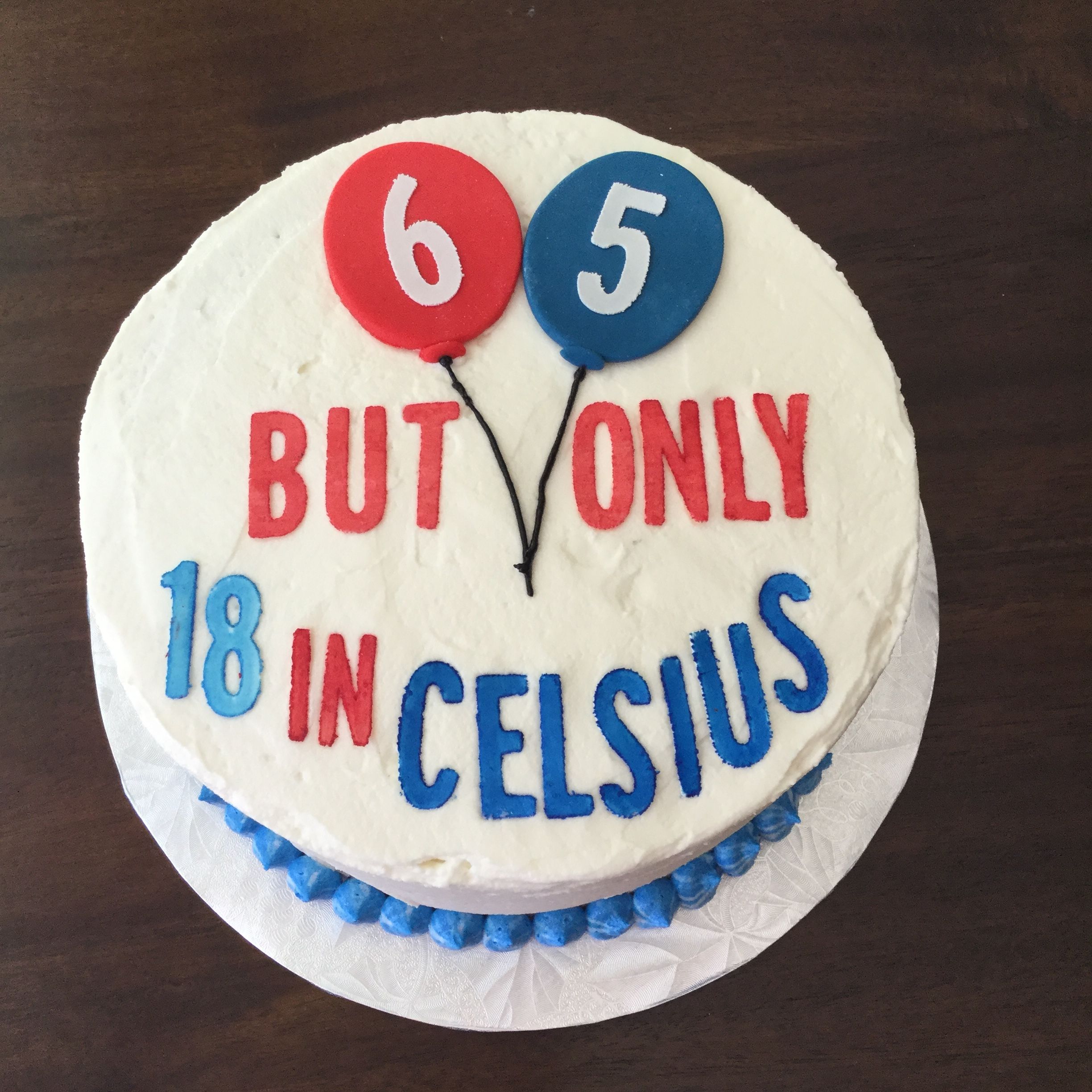
Today I turn 65 years old, and I’m proud of it. Kevan Manwaring suggests, “A birthday is a time to reflect, to take stock and to look ahead.”
Ms. Bertha Boozer, our long-time neighbor in the Williams Community who lived to be 107, always told me, “I don’t understand my friends who complain when they have a birthday. Do they not understand the alternative?” Then she added, “I think every birthday is a blessing.” Amen to that!
I’ve enjoyed most of my birthdays. This year, however, as I celebrate 65 years of life, it feels a little different, a little more contemplative, a little more like a shifting of gears. At age 55 I received my AARP card. As I approached 65 I received my Medicare card. Plus, I’ve retired (again) recently, so I guess this an occasion to reflect on the journey so far, the lessons learned, and the wisdom gained along the way. So, here are some thoughts as I process this milestone birthday:
1. Faith is more of a sail to be raised than an anchor to be dropped. I certainly understand the metaphor of faith as an anchor, but that analogy is best understood in the context of a storm-tossed sea where faith keeps us from being tossed to and fro. Faith is active in the sense that it is continually growing, and we are constantly being re-shaped and “transformed by the renewing of our minds.” Faith is not about staying in one place but about moving forward, trusting the wind of the Spirit to help us navigate life’s uncertainties with confidence and grace.
2. Relationships are more important than stuff. As I’ve aged, it’s become clearer that material possessions pale in comparison to the value of deep, meaningful relationships. I can identify with Jimmy Carter’s assessment that “Earlier in my life I thought the things that mattered were the things that you could see, like your car, your house, your wealth, your property, your office. But as I’ve grown older, I’ve become convinced that the things that matter most are the things that you can’t see — the love you share with others, your inner purpose, your comfort with who you are.” People bring joy and purpose to life in a way things never can.
3. Choose the scenic route rather than the interstate. When possible, choose the backroads rather than the turnpike. Pace yourself and enjoy the scenery. Through the years I’ve even noticed that detours often turn out to be better than the route we originally chose. Life rarely goes as planned, but some of the best experiences and lessons come from unexpected changes in direction. Taking the scenic route and navigating detours has led me to places I never knew I needed to go.
4. Worry is a waste of time and brain cells. Worrying has never solved a problem or changed an outcome. Erma Bombeck was right on target: “Worry is like a rocking chair: it gives you something to do but I never gets you anywhere.” Letting go of worry frees us mental and emotional bandwidth so that we can think creatively, focus on solutions, and do effective problem-solving.
5. The most significant things we do in life we are seldom aware of when we do them. I have been blessed to have opportunities to stand before a handful of people and to more than a thousand to preach sermons, offer eulogies, or officiate weddings. Yet I think the most significant things I’ve done in life were not in the public eye. Some of our greatest impacts on others come from simple, unintentional acts of kindness. It’s humbling to know that what feels small to us may be life-changing for someone else.
6. Time is the real currency of life and we are wise to spend it thoughtfully and intentially. Art Buchwald said “Whether it’s the best of times or the worst of times, it’s the only time we’ve got.” At 65, I’ve learned that time is far more valuable than money. How we choose to spend our time—and with whom—defines the quality of our lives.
7. Mistakes are opportunities for growth. My friend and encourager, Dr. John Harris, a retired pastor from Louisianna who served as a pastoral counselor in Birmingham, continually reminded me, “Never waste a mistake.” Mistakes are not failures; they are stepping stones to greater understanding and strength. Each one teaches us something valuable if we’re willing to learn.
8. Our self-worth is much more than the value of our bank accounts at any given time. True worth is found in character, kindness, and the love we share with others. Money can never define who we are or how much we matter. Adam Grant reminds us, “A stable sense of self-worth stems from putting identity above image: worrying less about what others think of us than what we think of ourselves.”
9. Health is a gift never to be taken for granted. Good health is one of life’s greatest blessings. Denis Waitley underscored, “Time And health are two precious assets that we don’t recognize and appreciate until they have been depleted.” Taking care of our bodies and minds allows us to fully enjoy the time we have and the people we share it with.
10. We discover our purpose as we are engaged in serving. Purpose is discovered in action, not in waiting. I’ve seen it over and over again. Students who are engaged in service projects or who serve on mission trips seem to awaken more to their life’s passion or their sense of calling in life than those who simply make career choices based on projected income. By stepping up to help and serve others, we find deeper meaning and fulfillment in life.
Turning 65 has been a time of reflection and growth. These lessons have shaped who I am and continue to guide me as I embrace the years ahead.
Despite a lifetime of experience, I am not really an expert in anything, but I am an avid student of life. As popular musician David Bowie grew older he observed, “Aging is an extraordinary process where you become the person you always should have been.”
Here’s to continuing the journey with faith, purpose, and gratitude for all that has been and all that is yet to come.

 Cove Creek Reflections