
Honest Conversations About Grief: 7 Suggestions for Navigating the Emotions Associated with Loss

Grief is an inevitable part of the human experience—an emotional upheaval that accompanies loss. Whether it’s the passing of a loved one, the end of a cherished relationship, or the loss of a job or a dream, grief takes many forms throughout our lives. As Orson Scott Card observes, “Life is full of grief, to exactly the degree we allow ourselves to love other people.”

Although grief is a universal emotion, it remains one of the most difficult to discuss. In a culture that often avoids uncomfortable topics, honest conversations about grief are vital. They help foster healing, build understanding, and provide comfort to those navigating the depths of sorrow.

Grief is multifaceted and deeply personal. It can be unpredictable, chaotic, and different for each person. That’s why it’s important to remember: there is no “right” way to grieve.

Some experience intense emotions immediately; others need more time to process. There is no timetable for healing, and individuals should feel free to grieve at their own pace—without judgment or pressure.

Draw on the Strength of Faith and Community

Faith does not exempt us from grief, but it can equip us to grieve in healthy, hope-filled ways. A supportive faith community can offer comfort, presence, and a reminder that we do not walk this path alone. For those without a faith foundation or a circle of support, grief can feel especially devastating.

Acknowledge Your Grief

Don’t bottle it up or push it aside. Our society often suggests that grief should be handled privately, behind closed doors. This mindset can isolate the grieving, leaving them feeling alone and reluctant to seek help. Open dialogue is essential.

As Richard Rohr wisely says, “You cannot heal what you do not acknowledge, and what you do not consciously acknowledge will remain in control of you from within, festering and destroying you and those around you.”

Maintain an Attitude of Empathy and Respect

Empathy is the key to honest conversations about grief. It allows us to acknowledge another’s pain without trying to fix it or explain it away. Grief can feel overwhelming, and sometimes, the most helpful response is simply listening.

Avoid clichés and platitudes. While well-intended, phrases like “time heals all wounds” or “they’re in a better place” can minimize the person’s pain. A sincere “I’m here for you” or the gift of quiet presence often speaks more powerfully.

Give Yourself and Others the Grace and Space to Grieve

One of the greatest gifts we can give someone who is grieving is the grace to grieve in their own way and the space to express it freely. Safe spaces—whether in support groups, counseling settings, or among friends and family—allow individuals to share their grief without fear of criticism or dismissal.

Help Destigmatize Grief

Societal expectations to “stay strong” or “move on” can stigmatize grief, making people feel ashamed of their pain. Honest conversations help dismantle these barriers, reassuring the grieving that they are not alone.

Encourage Professional Support When Needed

While the support of friends and family is crucial, some may need professional guidance to process their grief. Gentle encouragement toward counseling or therapy can be part of a healthy response to grief. Trained professionals can offer tools and perspective to help navigate loss.

Offer Support—Not Fixes

Supporting someone in grief isn’t about offering advice or solutions. It’s about being a steady, compassionate presence. Here are a few practical ways to support someone:

  • Be present: Simply showing up and staying nearby, even in silence, can provide great comfort.
  • Listen actively: Give them space to share memories, emotions, and struggles without interruption.
  • Validate their feelings: Let them know their emotions are normal and that it’s okay to grieve.
  • Offer practical help: Grief can be exhausting. Small acts of service—like preparing a meal or running errands—can ease the burden.
  • Respect the journey: Everyone grieves differently. Avoid imposing timelines or expectations.

Honest conversations about grief are crucial for healing. When we create safe, empathetic spaces for others to speak openly about their pain, we help dispel the stigma around grieving and foster a more supportive, compassionate community.

As Sarah Bessen writes, “Grief can be a burden, but also an anchor. You get used to the weight, how it holds you in place.” Healthy grief doesn’t erase the pain—but over time, it can ground us, gradually guiding us from emotional upheaval toward a place of greater stability.

(Barry Howard is a retired pastor who currently serves as a leadership coach and columnist with the Center for Healthy Churches.)

(Updated column from 2023)

As the Winds of Time Blow: 10 Ways to Navigate the Changing Seasons of Life

Life is full of seasons—some bright and full of joy, others challenging and uncertain. Just as nature moves from spring to summer, fall to winter, we also experience transitions in relationships, careers, health, and faith.

Ecclesiastes 3:1 affirms, “To everything there is a season, A time for every purpose under heaven.”

Change is inevitable, but how we navigate these shifts can shape our growth and resilience. Marie Dee cautions, “If you stay stuck in the past season or fixated on the future season, you will miss the one you’re in.”

Whether you’re entering a season of renewal or walking through a time of hardship, here are 10 ways to navigate life’s changing seasons with wisdom and grace:

1. Learn to be faithful and flexible. Faithfulness and adaptability are not mutually exclusive. Change is constant, and it can be uncomfortable at times. However, resisting it only makes the transition harder. Accepting that life moves in seasons allows us to adapt with greater peace and confidence. Trust that each new chapter holds purpose, even if you can’t see it yet.

2. Lean into your faith. Uncertainty can feel overwhelming, but God is constant. Seek God’s guidance through prayer, Scripture, and quiet reflection. Faith does not exempt us from change, but it can serve as a compass to help us navigate change.

3. Let go of what you no longer need. Not everything (or everyone) is meant to journey with you into the next season. Holding onto outdated habits, practices, relationships, or relics can keep you from growing into who you are meant to be. Just as trees shed their leaves in autumn, sometimes we must release the past to make room for the future.

4. Stay rooted in gratitude. In seasons of uncertainty, gratitude shifts our focus from what we lack to what we have. Take time each day to acknowledge the blessings around you. Even in difficult times, there is always something to be thankful for.

5. Stay connected to spiritual community. Life’s transitions are easier when you’re surrounded by supportive people who offer encouragement and wisdom. Seek out mentors, trusted friends, or faith leaders who can help you navigate unfamiliar territory with clarity and perspective.

6. Continue learning and growing. Each season—whether joyful or challenging—teaches us something valuable. Instead of asking, “Why is this happening to me?” shift the question to, “What is this season teaching me?” Growth happens when we are willing to learn from the experiences life brings our way.

7. Prioritize self-care. Transitions can be exhausting, so take good care of your body, mind, and spirit. Eat well, rest, exercise, and nurture your spiritual life. A well-cared-for heart and mind will help you face change with greater strength.

8. Be patient with yourself and others. Adjusting to a new season takes time. Don’t rush the process or compare your journey to others. Give yourself grace, knowing that transitions are part of life’s unfolding story. And exercise the same patience toward others who may be struggling to adjust to a new season as well.

9. Find joy in the present moment. It’s easy to focus on what’s ahead or dwell on what’s behind, but true peace and joy are always found in the here and now. Look for moments of joy, laughter, and beauty, even in uncertain times. Henri Nouwen reminds us, “Joy does not simply happen to us. We have to choose joy and keep choosing it every day.”

10. Keep moving forward with hope. No season lasts forever. If you’re in a difficult one, live as though brighter days areahead. If you’re in a season of joy, cherish it fully. With faith, resilience, and an open mind, you can step into each new chapter with confidence.

In addressing the impact of cultural shifts and societal changes, Malcolm Gladwell, author of The Tipping Point, contends, “You need to have the ability to gracefully navigate the world.”  

Navigating the changing seasons of life isn’t always easy, but it is always possible—with faith, wisdom, and courage. No matter what season you find yourself in today, make the most of that season, and you will be better prepared to navigate the seasons yet to come.

(Barry Howard is a retired pastor who currently serves as a leadership coach and columnist for the Center for Healthy Churches. He and his wife reside on Cove Lake in northeast Alabama.)

5 Reasons to Reboot: Lessons from a Smartphone

We all know the moment: your phone starts acting strangely—apps freeze, battery drains fast, and everything slows to a crawl. Tech support’s first advice? “Have you tried turning it off and back on again?”

As it turns out, that same principle applies to our faith. As we deal with the multiple influences and pressures of life, Kris Gage reminds us, “Sometimes the best way to move forward is to stop where you are and hit reset.”

Just as our smartphones need an occasional reboot to clear out digital junk and recalibrate, our spiritual lives benefit from periodic resets. Here are five reasons why rebooting your faith is essential—and how it can renew your connection with God.

1. To Clear Spiritual Clutter

Phones accumulate digital debris—temporary files, cookies, cached data. Over time, all that clutter slows down performance.

Our faith can gather clutter too: half-truths, distractions, unchecked assumptions. Rebooting spiritually clears the mental and emotional cache, making room for the teachings of Jesus to flow freely again.

“Create in me a clean heart, O God, and renew a right spirit within me.” — Psalm 51:10

2. To Realign with the Operating System

Every smart device has a central OS that governs how it runs. For the Jesus follower, our operating system is the message and mission of Christ.

When we reboot, we allow God to reset our priorities, renew our minds, and align our hearts with His purpose.

“Do not conform to the pattern of this world, but be transformed by the renewing of your mind.” —Romans 12:2

3. To Remove Corrupt Data

Malware and corrupt files can sneak into our devices quietly—and they do the same in our minds. False narratives, toxic theology, or legalism can distort our view of God and others.

Rebooting invites the Holy Spirit to expose and erase the lies we’ve believed and replace them with grace and truth.
“Test everything; hold fast what is good.” —1 Thessalonians 5:21

4. To Improve Connection

When your Wi-Fi signal drops, it can feel like you’re disconnected from the world. Spiritually, we experience similar moments—when prayer feels dry or God feels distant.

A spiritual reboot can restore connection. Turn things off. Be still. Listen. Reconnect with Scripture. Rest. Refocus. Re-vision. You’ll be surprised how strong the signal comes back.

“Draw near to God, and He will draw near to you.” —James 4:8

5. To Prevent a Crash

We often ignore the warning signs—just like when our phones start lagging. But ignoring your soul’s warning signs can lead to burnout, bitterness, or spiritual apathy.

A regular reboot is a form of soul care. It’s how we stay grounded, avoid a crash, and continue running with purpose and clarity.

“Those who wait on the Lord shall renew their strength…” —Isaiah 40:31

We don’t throw our phones away when they start acting up—we reset them. In the same way, God doesn’t discard us when we drift. Rather, God lovingly invites us to reset, refresh, and reboot.

As the cell phone revolution advanced, Jimmy Fallon quipped, “A new survey out says 64 percent of Americans own a smartphone. Which is interesting because in a related survey, 100 percent of smart phones say they own an American.”

Rebooting is a way to realign with your faith and to keep the spam, the cookies, the conspiracies, and the heresies from owning you.

(Barry Howard is a retired pastor who currently serves as leadership coach and consultant with the Center for Healthy Churches. He and his wife reside on Cove Lake in northeast Alabama.)

Letting Easter Dawn on You

Henry Wadsworth Longfellow observed, “T’was Easter Sunday, the full-blossomed trees filled all the air with fragrance and with joy.”

Easter is more than an event on the calendar—it’s a dawning. A slow, radiant breaking-in of a truth too large, too beautiful, too life-altering to rush in all at once. For Mary Magdalene and the other disciples, Easter didn’t explode into their hearts like fireworks—it crept in like morning light, gradually dispelling the shadows.

Kathryn Turner suggests, “Easter does not arrive as a blinding flash… rather it feels like a series of glimpses until one day we know it to be true… and are willing to stake our life—on the earth and the one hereafter—on it.”

Sometimes in life, we understand a message or get the point the first time it comes our way. But there are other times, it takes a while for truth and reality to soak in.

Regarding the story of the resurrection, some embrace the good news on the first encounter, while others hear the message for years until one day, like a grand epiphany, it dawns on them.

Let’s walk with Mary and the disciples through John 20:1–18 to see what we can learn from their response to the empty tomb:

Avoid jumping to conclusions. “So she came running to Simon Peter and the other disciple… ‘They have taken the Lord out of the tomb, and we don’t know where they have put him!’” (v. 2)

Mary sees the stone rolled away and immediately assumes the worst. She jumps to a conclusion without all the facts—a very human thing to do. How often do we do the same in our faith journey? We face unanswered prayers, pain, or confusion, and assume God is absent, or that hope is lost.

But Easter reminds us—just because we don’t see Jesus doesn’t mean He isn’t present. The tomb was empty, not because something had gone wrong, but because everything had gone gloriously right.

Let Easter dawn slowly. Don’t be so quick to declare the end of the story before God has finished writing it.

Ask good questions. Peter and John race to the tomb. They see the linen and head back home. But Mary stays—and she asks.

She weeps and asks the angels, “They have taken my Lord… and I don’t know where they have put him.” Then Jesus appears—though she thinks he’s the gardener—and again she asks, “Sir, if you have carried him away…

She’s seeking, questioning, longing. And then—He says her name. “Mary.”

And in that moment, her questions find their answer—not in information, but in relationship.

Barbara Brown Taylor puts it this way: “Easter began the moment the gardener said, ‘Mary!’ and she knew who he was. That is where the miracle happened and goes on happening — not in the tomb but in the encounter with the living Lord.”

Ask good questions. Bring your doubts. Voice your grief. Easter has room for all of that.

Act on what you learn.  After Mary recognizes Jesus, he tells her, “Go to my brothers and tell them…” And she goes—becomes the first preacher of the resurrection: “I have seen the Lord!”

Letting Easter dawn on us isn’t just about having a warm feeling inside. It’s about living out the truth of the resurrection.

Easter doesn’t end with an empty tomb—it begins with changed lives.

Phillips Brooks described the message of Easter like this:

Tomb, thou shalt not hold Him longer;
Death is strong, but Life is stronger;
Stronger than the dark, the light;
Stronger than the wrong, the right.
Faith and Hope triumphant say,
Christ will rise on Easter-Day. 

And because He lives, we live differently.

Maybe the greatest evidence of the resurrection isn’t just what happened on that Sunday morning long ago—but how Easter keeps happening in us. Over and over again.

In every moment of forgiveness. In every act of courage. In every step of faith. In every whispered prayer that clings to hope when everything else seems lost.

Easter dawns slowly. It rises through grief, through questions, through encounters.
And when it finally breaks through, it transforms everything.

Brennan Manning, once a skeptic, now confesses, “For me the most radical demand of Christian faith lies in summoning the courage to say yes to the present risenness of Jesus Christ.”

So today, resist the urge to jump to despair. Ask your honest questions and listen for the voice that calls your name. And act on what you discover, living each day as someone who has encountered the risen Christ.

Because Jesus didn’t just rise once. He keeps rising—again and again—even in minds and hearts where the good news of Easter may be gradually dawning.

(Sermon from my first Easter at First Baptist Church of Pensacola, April 10, 2006.)

Love Is a Verb

A Maundy Thursday Reflection

On Maundy Thursday, we remember one of the most intimate and powerful evenings in the life of Jesus. Gathered in an upper room with his disciples, just hours before his betrayal, Jesus told them, “A new command I give you: Love one another. As I have loved you, so you must love one another” (John 13:34).

Love is action-oriented. Stephen Covey contended, “Love is a verb. Love—the feeling—is a fruit of love, the verb.”

It’s one thing to talk about love. It’s another to live it. Jesus didn’t just tell his disciples to love one another—He showed them. He got down on his knees and washed their feet. He broke bread and shared wine. He spoke tenderly of what was to come, even as he prepared to endure suffering on behalf of the very ones seated at the table.

Love Is Humble

The Son of God, the one through whom all things were made, picked up a towel and served. In a culture where washing feet was the job of the lowest servant, Jesus flipped the script. He demonstrated that love doesn’t seek status or recognition. It stoops. It serves. It sees others as worthy of our time, our care, and our compassion.

Love Is Faithful

Jesus knew that Judas would betray him. He knew Peter would deny Him. He knew the others would scatter in fear. Still, he broke the bread. Still, he offered the cup. Still, he washed their feet. His love didn’t waver based on how others treated him. His love remained faithful, even in the face of betrayal and abandonment.

Love Is Sacrificial

As the shadows grew longer that night, Jesus set His eyes on the cross. Not because he was powerless to avoid it, but because he was committed to a love that would redeem the world. Paul David Tripp proposes, “Love is willing self-sacrifice for the good of another that does not require reciprocation or that the person being loved is deserving.” Maundy Thursday reminds us that love costs something. It’s not always easy or convenient. The mandate Jesus gave is action-oriented. In the gospel Jesus preached, love is a verb.

Love Is Commanded

“Maundy” comes from the Latin mandatum, meaning “commandment.” It points to Jesus’ words in John 13:34: “A new command I give you: Love one another. As I have loved you, so you must love one another.” This wasn’t a gentle suggestion—it was a divine directive. It is easy to love God. It is often difficult to love others. Yet one is a reflection of the other. If we call ourselves his followers, then love must be our way of life. Not just love in theory, but love in action.

Love Is a Verb

It’s not just how we feel—it’s what we do. On Maundy Thursday, we’re invited to remember that love is meant to be lived. Whether we are washing feet, sharing a meal, forgiving a wrong, or standing beside someone in their pain, we are called to be people who love with hands and feet, with humility and courage, with grace and truth.

So on this Maundy Thursday, may we do more than recall a sacred meal or a basin and towel. May we recommit ourselves to the path Jesus walked—the path of servant-hearted, sacrificial, unwavering love.

Because love is more than a word.
Love is a verb.

Cleansed from a Guilty Conscience

A Lenten Devotional

15 The Holy Spirit also testifies to us about this. First he says: 16 This is the covenant I will make with them after that time, says the Lord. I will put my laws in their hearts, and I will write them on their minds.”
17 Then he adds: “Their sins and lawless acts I will remember no more.” 18 And where these have been forgiven, sacrifice for sin is no longer necessary.
19 Therefore, brothers and sisters, since we have confidence to enter the Most Holy Place by the blood of Jesus, 20 by a new and living way opened for us through the curtain, that is, his body, 21 and since we have a great priest over the house of God, 22 let us draw near to God with a sincere heart and with the full assurance that faith brings, having our hearts sprinkled to cleanse us from a guilty conscience and having our bodies washed with pure water. 23 Let us hold unswervingly to the hope we profess, for he who promised is faithful. 24 And let us consider how we may spur one another on toward love and good deeds, 25 not giving up meeting together, as some are in the habit of doing, but encouraging one another—and all the more as you see the Day approaching.
Hebrews 10:15-25 NIV

Three of the heaviest elements in the universe are guilt, worry, and fear. And guilt may be the weightiest of them all. Let me illustrate…

Long before mobile phones became the primary means of communication, my landline rang at 2:30 in the morning. Late-night calls usually meant either an emergency or a wrong number. Startled from my sleep, I grabbed the phone, bracing for bad news.

The voice on the other end was both frantic and familiar. It was a church member—let’s call him Tommy—apologizing for calling at such an hour but desperate for help.

I had known Tommy for years. He was a good man—a devoted husband and father—but that night, he was drowning in guilt, overwhelmed by the weight of his past mistakes. His words came in waves of anguish:

“I am undeserving of God’s grace.”
“I’m not sure that Jesus can forgive my sins.”

As a young pastor, I was relieved this wasn’t a trauma call, but I also felt the weight of Tommy’s burden. Half-awake, I silently prayed for wisdom before gently offering three thoughts:

  1. “Feeling undeserving is actually a prerequisite for receiving grace.”
  2. “I don’t know which sin is troubling you most, but if it falls under the Ten Commandments, rest assured—you are covered by Christ’s sacrifice.”
  3. “For thousands of years, God has forgiven the sins of countless people. It would be a little arrogant to assume you’re the exception.”

There was a long pause. Then, in a softened voice, Tommy said, “I’ve never thought about it that way before. I think you’re right. Even my sins can be forgiven.”

Lent is a season of reflection and repentance. As we reflect on the suffering and sacrifice of Christ, Hebrews 10 reminds us that through Jesus’ death, we are cleansed from a guilty conscience, free to draw near to God with full assurance of faith.

Like Tommy, many of us struggle with guilt, questioning whether God’s grace could truly extend to us. But the message of the cross is clear: Jesus bore the weight of every sin—past, present, and future. His sacrifice was not partial or conditional; it was complete.

Because of Christ, we no longer have to live under the shadow of guilt. We can approach God with confidence, knowing that God’s mercy is greater than our mistakes and God’s grace is deeper than our failures.

Reflection:
How do you navigate feelings of guilt? Are there any sins weighing on you that you need to confess? Do you need to remind yourself that the sins of your past have already been forgiven?

Prayer:
Gracious God, thank you for forgiving the worst in us so that you can bring out the best in us. Help us to trust in your mercy and walk in the freedom of your grace. Amen.

Calendaring Easter: Why the Date Changes Every Year

Each spring, folks begin asking a familiar question: “When is Easter this year?”

Unlike Christmas, which is fixed on December 25, Easter is on a flexible date—it can fall as early as March 22 or as late as April 25. In 2024, we celebrated Easter on March 31. This year, it arrives on April 20. Next year, it will be April 5. Why the variation?

The date of Easter is not based on the historical anniversary of the resurrection, but rather on a formula tied to the cycles of the moon and the spring equinox. But why?

This very question stirred considerable controversy in the early church. In the middle of the second century, a dispute arose between Christian leaders in Rome and those in Asia Minor over the correct date for Easter. Churches in the East celebrated Easter based on the timing of the Jewish Passover, regardless of the day of the week. Meanwhile, churches in the West believed it should always be observed on a Sunday—the day Jesus rose from the dead.

The debate came to a head when Bishop Polycarp of Smyrna, a disciple of the apostle John, met with Bishop Anicetus of Rome. Though both leaders held deep respect for one another, they could not reconcile their positions. Each continued to celebrate Easter according to his own tradition. Eventually, the controversy escalated to the point where Bishop Victor of Rome excommunicated those who refused to adopt Sunday as the proper day of celebration.

It wasn’t until the Council of Nicaea in A.D. 325, convened by Emperor Constantine, that a standardized formula was adopted: Easter would be observed on the first Sunday following the first full moon on or after March 21 (the approximate date of the spring equinox). This formula is still in use today, tying Easter to both the lunar calendar and the rhythm of spring.

The connection to Passover is not accidental. Jesus celebrated the Last Supper with his disciples during Passover, and his crucifixion and resurrection occurred within that sacred week. The lunar basis of the Easter calendar is a theological reminder of Christianity’s Jewish roots and of God’s redemptive timeline in history.

Even the name “Easter” has curious origins. While the term itself is thought to derive from a pre-Christian spring festival—possibly named for the Teutonic goddess Ēostre—it was reclaimed by the early church as a name for the highest holy day in the Christian faith: the celebration of Christ’s resurrection.

So whether Easter arrives in late March or late April, its timing reminds us that resurrection does not operate on a fixed human schedule. It breaks through at just the right time—according to divine rhythm—not just to mark a date on the calendar, but to awaken new life in our hearts.

Theologian and author N.T. Wright puts it well:

“The message of Easter is that God’s new world has been unveiled in Jesus Christ—and that you’re now invited to belong to it.”

(Barry Howard is a retired pastor who currently serves as a leadership coach with the Center for Healthy Churches. He and his wife reside on Cove Lake in northeast Alabama.)

Holy Week As a Sacred Symphony

Each year, Christians around the world walk through the sacred rhythms of Holy Week, revisiting the final days of Jesus’ earthly journey before the cross and the resurrection.

Why is observing Holy Week important to our preparation for Easter?  The traditional observance of Holy Week appears to have originated in the Christian East, emerging from the practice of pilgrimages to Jerusalem. Each day of Holy Week is significant to the overall story of the death, burial, and resurrection of Jesus.

Brian McLaren proposes, These special holidays give rise to various liturgical calendars that suggest we should mark our days not only with the cycles of the moon and seasons, but also with occasions to tell our children the stories of our faith community’s past so that this past will have a future, and so that our ancient way and its practices will be rediscovered and renewed every year.”

This year, I’m reflecting on the diverse rhythms of the passion narrative. When perceived through the lens of music, this holy season unfolds like a symphony—a diverse, emotive, and redemptive composition where each day plays its part in revealing the depth of God’s love and the drama of salvation.

Palm Sunday: The March Begins

The symphony opens with Palm Sunday, a bold and festive march. The crowd sings “Hosanna!” as Jesus rides into Jerusalem on a donkey. The beat is steady, the tempo triumphant. Like the opening bars of a grand orchestral procession, it sets the stage with hope and expectation. But even amid the praise, there is a foreshadowing dissonance—this King will reign, but not in the way they imagine.

Monday–Wednesday: An Overture of Tension

The days that follow—Monday through Wednesday—form a complex overture. In classical music, an overture introduces the themes that will appear throughout the performance. In these days, Jesus cleanses the temple, teaches in parables, rebukes hypocrisy, and foretells what is to come. The melodies are filled with warning and wisdom, rising and falling with tension. These are the movements of confrontation and anticipation.

Maundy Thursday: A Song of Love and Friendship

Then comes Maundy Thursday, a tender, sacred love song. In the upper room, Jesus shares the Passover meal with his disciples and washes their feet. He breaks bread and pours wine—symbols of his body and blood. The music here is intimate and hauntingly beautiful. It is the song of servant-hearted love and sacrificial friendship. “A new commandment I give you,” Jesus says, “Love one another as I have loved you.”

Good Friday: The Requiem of Sacrifice

Good Friday enters with a somber and heavy dirge. The tempo slows, the key turns minor, and the instruments echo sorrow. Betrayal. Trial. Crucifixion. The innocent one is condemned. The Son of God is lifted high on a cross. The sky darkens. The earth trembles. It is the day when silence screams and grief is loud. And yet—even in the dirge—there is harmony: a deeper, quieter melody of redemption unfolding beneath the sorrow.

Silent Saturday: The Low Chant of Waiting

Holy Saturday is like a chant sung in low tones. It is the pause in the symphony—the space between agony and triumph. The disciples are disoriented. The tomb is sealed. The world holds its breath. This chant is steady and subdued, wrapped in mystery. Though the music seems muted, heaven is not silent. In the stillness, hope waits.

Easter Sunday: A Triumphant Crescendo

And then… the symphony erupts with Easter Sunday’s triumphant crescendo! The stone is rolled away. The tomb is empty. Christ is risen! The music soars in resurrection glory. Trumpets sound. Choirs rise. The whole earth rejoices. This is the victorious finale of the sacred symphony—sin defeated, death undone, grace poured out like song.

Holy Week is not only something we observe—it is something we experience. Like a symphony, it moves through our hearts and souls, awakening emotion, inviting reflection, and pointing us toward hope.

This year, let us read the biblical account with fresh eyes, and listen to the tunes of Holy Week with fresh ears. As we journey through these sacred days, may we hear the divine music of grace all around us—and may it move us to embrace, or perhaps even rediscover, the core message of our faith.

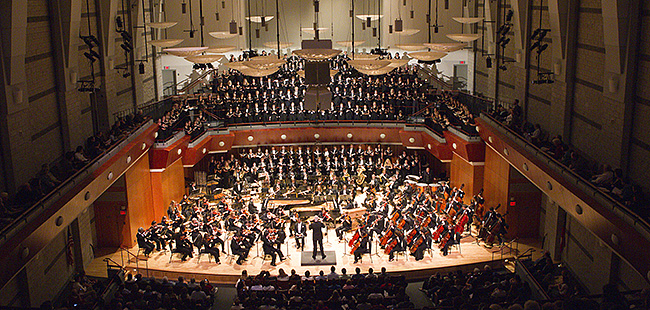
(photo of the Atlanta Symphony )

Exploring the Mystery

A Lenten Devotional

27 To them God has chosen to make known among the Gentiles the glorious riches of this mystery, which is Christ in you, the hope of glory. 28 He is the one we proclaim, admonishing and teaching everyone with all wisdom, so that we may present everyone fully mature in Christ. 29 To this end I strenuously contend with all the energy Christ so powerfully works in me.
Colossians 1:27-29

Neil Armstrong, who had firsthand experience exploring the mysteries of the universe, noted, “Mystery creates wonder and wonder is the basis of man’s desire to understand.”

Everyone loves a good mystery. The twists, turns, and the ultimate revelation can be thrilling.

One morning several years ago, I received a call from the popular TV show “Unsolved Mysteries” asking permission to film an episode on our church campus. At first, I thought the call was a hoax, but as I listened to the inquiry, I realized the caller was referring to a mystery involving a member of our community who had disappeared at sea many years ago while serving in the Navy.

Interestingly, when I saw the episode eventually produced by “Unsolved Mysteries” I noted that the program did not solve the mystery, they only explored the mystery.

In Colossians 1:27, Paul probed a different kind of mystery, one that had been hidden for ages but is now being fleshed out in God’s people: “Christ in you, the hope of glory.” This mystery is not an unsolved riddle but an evolving reality of God’s plan to bring life transformation to all through Christ.

As followers of Jesus, why is our relationship with God a mystery? Perhaps it’s a mystery because the mechanics of how faith brings individuals to life cannot be fully explained. It could be considered a mystery because the work of the Spirit is hidden to the naked eye. Or maybe it’s called a mystery because we are a work in progress, still learning, growing, and maturing, and not yet complete.

In Colossians 2:6-7, Paul urges believers to “walk in him, rooted and built up in him and established in the faith.” We are invited to probe this mystery and live out of the wellspring of our relationship with Jesus each day.

A life rooted and grounded in Christ is not easily shaken. Brenning Manning reminds us, “The more rooted we are in the love of God, the more generously we will live out our faith.”

Reflection:

Where do you sense the divine mystery at work in your life? What are some things that inspire you with awe and wonder? What are some steps we can take to become more rooted and grounded in our faith?

Prayer:

We thank you for the incredible mystery that you have chosen to work in us and through us. As we journey through life, may we always be in tune with your Spirit who is shaping us into your likeness. Root us deeply in your truth and unite us in your love. Amen.

Life Is Short: 7 Reasons to Receive Each Day As a Gift

The famous evangelist Billy Graham confessed, “The greatest surprise in life to me is the brevity of life.”

We’ve all heard the phrase, “Life is short.” It’s often said in passing—when we lose someone too soon, when a moment takes our breath away, or when we’re reminded how fast the years fly by. But what if we took that phrase to heart? What if we allowed it to shape the way we think, speak, love, serve, and live?

Here are seven reasons to live each day as a sacred, unrepeatable gift:

1. Time is a non-renewable resource.

Unlike money, time cannot be earned back or saved up. Every sunrise is a once-in-a-lifetime event. Each conversation, each quiet moment, each new opportunity is here now—and may never come again.

2. Today presents opportunities to grow.

Each day brings lessons, challenges, and opportunities for growth. We’re not the same people we were yesterday. Receive today as a gradual and progressive step forward in your becoming—a place where faith can deepen and character can stretch.

3. Lighten the load someone else is carrying.

When we live with compassion and kindness, we become part of someone else’s healing. A smile, a kind gesture, or an encouraging word may seem ordinary to you but can be life-giving to someone else. Phillips Brooks urged, “Be patient and understanding. Life is too short to be vengeful or malicious.”

4. Joy is often hidden in the present.

When we stop chasing “someday” and start noticing “today,” we discover beauty in the now. The warmth of coffee, the sound of laughter, the kindness of a friend—these are the moments that quietly nourish the soul.

5. Gratitude changes our perspective.

When we live with the mindset that each day is a gift, we begin to see more gifts in our days. Gratitude doesn’t change our circumstances—it transforms our perspective. And that shift is powerful.

6. Regret is too heavy to lug around.

The weight of “I wish I had…” can be heavy. But when we live intentionally—speaking our hearts, showing up for others, and taking courageous steps—we reduce the space for regret and make room for peace.

7. Today is the only day you are promised.

Yesterday is gone. Tomorrow isn’t guaranteed. All we truly have is today—this moment, this breath, this chance. Don’t wait for all the stars to align in your favor to start living fully. Begin now.

Annie Dillard reminds us, “How we spend our days is, of course, how we spend our lives.”

Life is short—a sacred breath between dust and eternity. So love deeply, forgive freely, walk humbly, and live each day as a precious gift not to be wasted.

Let’s not just say life is short—let’s live like it.