
Flour Sifters, Ceramic Bowls, Rolling Pins, and Family Traditions: The Legacy of a Hot Buttered Biscuit

This past weekend, my wife baked homemade biscuits for our houseguests. The warm, buttery aroma drifting from the kitchen stirred up a flood of memories. As we gathered to enjoy biscuits, bacon, and eggs, someone commented that many of our grandmothers used to bake biscuits daily—and how some even had a dedicated “biscuit drawer” to store the extras.

That simple observation took me back.

I remember that my Grandmother Howard had a kitchen cupboard with a built-in flour sifter that matched her yellow Formica table—the very heart of her kitchen. Countless stories and meals were shared around that table. Mawmaw, as we called her, made what we jokingly called “choke biscuits” using Gold Medal flour, buttermilk, and lard. Her biscuits were hearty, rustic, and unforgettable.

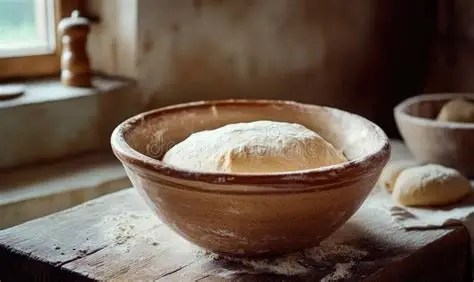
Grandmother Ginn—Big Mama—made hers in a large ceramic bowl with White Lily flour, buttermilk, and Crisco oil. She cut them with a round metal cutter, her motions quick and confident. Neither of my grandmothers had a biscuit drawer, though—because there were rarely any leftovers worth saving.
My grandfather had a deep love for biscuits, often paired with either red-eye gravy or sorghum syrup. He bought syrup in a tin from a mill near Waldo, just outside Talladega, or picked up a jar at Collinsville Trade Day on Saturdays. His red-eye gravy was a Southern classic—made from ham drippings and the last few tablespoons of Red Diamond coffee in the percolator.

History tells us that biscuits weren’t just comfort food—they were survival food. During the Civil War, soldiers often carried “hardtack” biscuits, dry and long-lasting, though lacking flavor. Back home, families learned to stretch their resources, using flour, lard, and buttermilk to make tender biscuits that became a symbol of home and hope. In kitchens across the South, biscuits became both a daily ritual and an expression of care.

When Big Mama later transferred from the Blue Mountain Cotton Mill to the Anniston Army Depot, she started buying Butter-Me-Not biscuits from the IGA on Quintard Avenue. They were okay, but never as good as homemade.

When I reached sixth grade, Big Mama decided it was time I learned the craft. She had me sift flour into a mound, press my finger into the center to form a crater, then fill it with Crisco oil and pour in the buttermilk. I stirred with a fork, kneaded the dough gently on wax paper dusted with flour, flattened it with a rolling pin, and cut out the biscuits. Into the oven they went—350 degrees for 15–20 minutes—rising to golden perfection.

As Rick Bragg reflected on his momma’s biscuits, he reasoned, “Every biscuit does not have to be perfect or uniform on the outside. It was the chemistry not the aesthetics, that mattered. If you had good flour and fresh ingredients and took the biscuits from the oven at just the perfect time, well, ‘it didn’t make much difference if you had a ragged biscuit or two in the batch.’”

It’s been 53 years since those early lessons. Since then, I’ve made thousands of biscuits and even taught a few others how to make them.

These days, when I enjoy a biscuit from Jack’s or the 278 Restaurant—or even from Cracker Barrel, where nostalgia is served alongside sausage gravy—I can’t help but reflect on the sacredness of that biscuit tradition. Food culture has changed, but the hunger for connection and comfort remains the same.

And for me, the best biscuit still comes from Big Mama’s cast iron skillet, topped with either local honey or my wife’s homemade strawberry freezer jam.

Now that’s a feast—and a legacy—worth savoring and passing along.

(Barry Howard is a retired pastor who now serves as a leadership coach and consultant with the Center for Healthy Churches. He and his wife live on Cove Lake in northeast Alabama.)

Resounding Gratitude: A Reflection on Psalm 138

Phoebe Birkhimer, a beloved church member and neighbor of ours during our years serving at the First Baptist Church of Williams, was known for her avid and personal note-writing. In 1992 when I had knee surgery, Phoebe baked cookies and sent them to our home as I was recovering. As an expression of gratitude, I sent hand-written notes to all who had provided food and flowers during my recuperation, including Phoebe. A few days later it happened…I received a “thank you” from Phoebe for the “thank you” note I had sent to her. Now that’s a lot of gratitude!

Psalm 138 is a song of praise and gratitude attributed to David. In The Message, “thanks” or “thank you” occurs six times. That’s a lot of gratitude. This resounds as a chorus of appreciation for God’s love, faithfulness, and strength. Then the psalmist proceeds to thank God for what God has done and for what God is going to do.

This psalm is a reminder that our relationship with God should be marked by gratitude and appreciation for God’s character and God’s actions on our behalf.

In seasons of trial or uncertainty, gratitude can be difficult, but it tends to be life-shaping in all kinds of circumstances.  When we shift our focus from our predicaments to God’s faithfulness, our hearts are infused with hope and courage. David’s experience reminds us that even when the path ahead seems daunting, God walks with us, providing the grace and strength we need to confront each challenge.

Take time to lift your voice in praise and gratitude to God. Alice Walker, author of The Color Purple, says, “’Thank you’ is the best prayer that anyone could say. I say that one a lot. Thank you expresses extreme gratitude, humility, understanding.”

A deeper dive…What are some specific things you want to thank God for? How has God shown steadfast love and faithfulness in your life?

Prayer for today… Thank you, O God, for your goodness and faithfulness in my life. I am grateful for your love, mercy, and grace that strengthen me on my journey. Thank you for hearing my prayers, guiding my steps, and providing for my needs. Now cultivate in me a heart of gratitude as I grow to trust you more. Amen.

(Barry Howard is a retired pastor who now serves as a leadership coach and consultant with the Center for Healthy Churches. He and his wife live on Cove Lake in northeast Alabama.)
(A version of this devotional was first published in Reflections Daily Devotional Guide.)


Everyone Loves a Good Mystery

Everyone loves a good mystery. The twists, turns, and the ultimate revelation can be thrilling.

One morning several years ago, I received a call from the popular TV show “Unsolved Mysteries” asking permission to film an episode on our church campus. At first, I thought the call was a hoax, but as I listened to the inquiry, I realized the caller was referring to a mystery involving a member of our community who had disappeared at sea many years ago while serving in the Navy.

Interestingly, when I saw the episode eventually produced by “Unsolved Mysteries,” I noted that the program did not solve the mystery; they only explored the mystery.

In Colossians 1:27, Paul probed a different kind of mystery, one that had been hidden for ages but is now being fleshed out in God’s people: “Christ in you, the hope of glory.” This mystery is not an unsolved riddle but an evolving reality of God’s plan to bring life transformation to all through Christ.

As followers of Jesus, why is our relationship with God a mystery? Perhaps it’s a mystery because the mechanics of how faith brings individuals to life cannot be fully explained. It could be considered a mystery because the work of the Spirit is hidden to the naked eye. Or maybe it’s called a mystery because we are a work in progress, still learning, growing, and maturing, and not yet complete.

In Colossians 2:6-7, Paul urges believers to “walk in him, rooted and built up in him and established in the faith.”We are invited to probe this mystery and live out of the wellspring of our relationship with Jesus each day.

A life rooted and grounded in Christ is not easily shaken. Brenning Manning reminds us, “The more rooted we are in the love of God, the more generously we will live out our faith.”

Take a deeper dive… Where do you sense the mystery of Christ at work in your life? What are some steps we can take to become more rooted and grounded in our faith?

Prayer: We thank you for the incredible mystery that you are at work in us and through us. As we journey through life, may we always be in tune with your Spirit, who is shaping us into your likeness. Root us deeply in your truth and unite us in your love. Amen.

(This first appeared in “Reflections Daily Devotional Guide.)

Teeing It Up: A Brief History of the Golf Ball

Long before I started playing golf, I collected golf balls as a hobby. Some were gifts from friends and church members. Others I picked up while walking near the local golf course. I kept the ones with interesting logos and gave the others to high school students or local golfers.

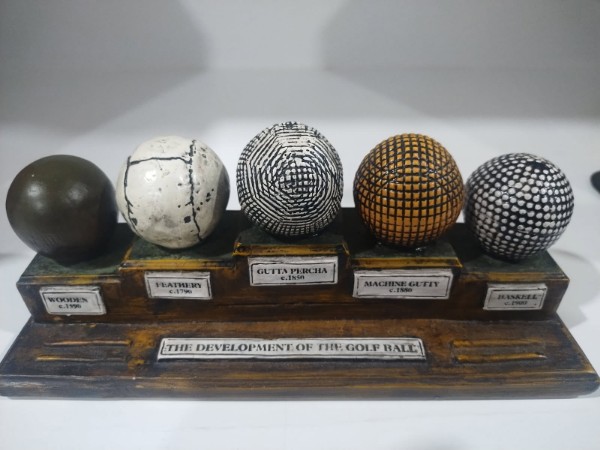
Once I started learning to play golf, the gifts of golf balls increased, as did other golf décor such as artwork, divot repair tools, and ball markers. One of my favorite items is a desktop display of the history of the golf ball. It was presented to me by a dear church member who purchased it at yard sale and said, “When I saw this, I thought of you and your love for golf and for history.” She was right, of course.

Golf is a game of paradox, quiet and contemplative, yet competitive and exacting. It tests patience, precision, and perspective. Among all the tools of the game, the golf ball might be the most underestimated. Small, round, and seemingly ordinary, the golf ball has a rich history that mirrors not only the development of the game, but also the art of resilience, innovation, and persistence.

From hardwood cores to high-tech polymers, the evolution of the golf ball mirrors not only the development of a game but the spirit of persistence, innovation, and redemption.

The Wooden Ball

Before golf was golf as we know it, players in 14th and 15th century Scotland struck solid hardwood balls made from boxwood, beech, or elm. These early golf balls were heavy, durable, and prone to unpredictable bounces. They didn’t fly far, but they rolled, and that was enough to get the game started.

In those early days, the course was the rugged Scottish terrain, the club was a curved stick, and the ball was whatever would move. The simplicity is humbling.

The Feathery

By the 1600s, the feathery emerged as the elite standard. A feathery was a leather pouch hand-stitched and tightly packed with boiled goose feathers. Once dried, it hardened into a compact sphere. These balls were works of art with each one hand-crafted by artisans who could produce only a few per day.

They were expensive and fragile. Wet weather or a mis-hit could ruin them. Still, they flew straighter and farther than wooden balls, and for nearly 200 years, the feathery reigned supreme.

Golf historian David Hamilton wrote, “The feathery was as delicate as it was costly. A single mis-hit could ruin it.”

The Gutta Percha

In 1848, Scottish clergyman Rev. Robert Paterson introduced the gutta-percha ball, made from the hardened sap of Malaysian sapodilla trees. It was moldable, affordable, and much more durable than featheries.

Known as the “gutty,” this ball democratized golf. More people could play. Courses expanded. The game grew.

At first, gutties were smooth, but golfers soon realized that nicked and scuffed balls flew better, straighter, and farther. So they began carving and hammering patterns into the surface, laying the foundation for the dimpled design still used today.

The Machine-Made Gutty

By the late 1800s, manufacturers began mass-producing gutties using metal molds. This introduced consistency and availability at scale. Golf was no longer just for elites. The industrialization of the gutty helped usher in a new era of public courses, amateur leagues, and expanding global interest.

The Haskell Ball

In 1898, American inventor Coburn Haskell, in collaboration with Bertram Work of the B.F. Goodrich Company, revolutionized the golf ball once again by introducing a wound-rubber core ball. It featured a solid rubber core wrapped in rubber thread, encased in a gutta-percha shell.

The Haskell ball flew farther than any ball before it and changed the competitive dynamics of the game almost overnight. Within a few years, it had replaced the gutty and became the new standard.

In the 1960 U.S. Open, a young Jack Nicklaus famously outdrove Arnold Palmer during a practice round. Palmer, never one to be outdone, asked what ball Jack was using. Nicklaus replied, “The same one you are. I just hit it better.”

No matter how good the golf ball becomes, it will always be dependent on the quality of the swing.

Today’s high-tech, dimpled golf balls are marvels of physics and design. But they owe everything to the wooden spheres, feathery stitches, tree sap, and rubber threads that came before.

So, the next time you tee it up with a Titleist, a Callaway, a Bridgestone, or your favorite brand, remember, you are holding a legacy of resilience and adaptation.

Whether your next shot soars down the fairway or sinks into the sand trap, remember that the game goes on, and so do you.

Swing again. Overcome adversity. Learn. Grow. That’s the story of the golf ball. And maybe, that’s the story of life.

(Barry Howard is a retired pastor who now serves as a leadership coach and consultant with the Center for Healthy Churches. He and his wife live on Cove Lake in northeast Alabama.)
7 Organizational Pitfalls That Keep Churches Stuck

A veteran airline pilot once told me, “Even the most advanced aircraft won’t go anywhere without regular course corrections.” The same is true of churches. While rooted in timeless truth, churches must constantly assess whether they’re still aligned with their mission or drifting off course.

Too often, congregations settle into familiar rhythms, mistaking comfort for health and routine for faithfulness. Meanwhile, the world outside their walls changes rapidly.

Churches are meant to be living, breathing reflections of the Kingdom of God—places where faith deepens, lives are changed, and the gospel is shared with enthusiasm and positivity. Yet even vibrant churches can get stuck.

Sometimes it’s slow and subtle. Other times, it’s an abrupt leadership conflict, a cultural shift, or simply a loss of momentum. The good news is that getting stuck isn’t the end of the story. In fact, it may be the beginning of renewal if we’re willing to reflect, reimagine, and respond.

Here are seven organizational pitfalls that can quietly derail even the most faithful of congregations—and what to do about them:

1. Prioritizing tradition over mission.

In 1967, the Swiss watch industry controlled over 80% of the global market. But when electronic watches were introduced (most notably by Seiko), the Swiss dismissed them as a passing fad. Within a decade, they had lost their dominance to competitors who embraced innovation.

The church can fall into the same trap when it values tradition over mission. When beloved customs become untouchable, they may obscure rather than illuminate the Good News.

Respect tradition, but regularly ask: “Does this still serve our mission, or just our memories?”

2. Lack of clear decision-making structures.

Churches often run on trust and familiarity—until a crisis hits. Without defined leadership roles and transparent processes, confusion and paralysis set in. Decision-making by consensus sounds inclusive, but in practice it can result in chronic indecision and burnout.

Clarify roles and lines of accountability. Empower leaders to lead and communicate decisions with transparency and grace. Structure doesn’t stifle Spirit. Rather, it provides space and channels through which the Spirit can move.

3. Avoiding conflict instead of addressing it.

A pastor once said, “In some churches, the goal is not peace—it’s the appearance of peace.” Many congregations avoid conflict to preserve harmony, only to find resentment simmering below the surface.

Thomas Crum cautions, “Conflict avoided is conflict multiplied.”

Encourage a culture where tough conversations happen in love. Teach that healthy conflict—done with grace and truth—is not division but discipleship.

4. Failing to adapt to changing realities.

Imagine a church that prints paper maps of their campus to hand out to first-time visitors, only to discover that no one under 40 uses paper maps anymore. They use electronic navigation through their smart device. Whether it’s communication, worship style, or outreach, churches often cling to outdated methods while the needs around them shift dramatically.

Learn to be faithful and flexible. Stay rooted in Christ, but flexible in your strategies. Evaluate regularly. Innovate prayerfully. Be ready to pivot when the moment calls for it.

5. Neglecting leadership development.

It’s been said that Moses may have led the Israelites out of Egypt, but Jethro’s advice (Exodus 18) kept him from burning out. Churches that rely on a few overextended leaders while neglecting to raise up others risk long-term dysfunction. Churches are wise to nurture and cultivate the young leaders who will become the next Joshua, the next Phoebe, the next Barnabas, or the next Timothy.

Identify and invest in emerging leaders. Offer mentoring, training, and real responsibility. A healthy church plans for the next generation before it’s desperate for one.

6. Measuring the wrong things.

Success in the church is not just about attendance and offerings. It’s about lives transformed, relationships deepened, and love lived out in the community.

William Bruce Cameron reminds us, “Not everything that counts can be counted.”

Don’t let the numbers define the narrative. Reorient your scorecard to emphasize missional engagement, spiritual formation, community influence, and kingdom impact

7. Ineffective internal and external communication.

Even vibrant churches can stall when communication breaks down. Internally, assumptions breed confusion. Externally, outdated websites, unclear signage, or inconsistent messaging can send mixed signals.

Good communication is ministry. Prioritize clarity in announcements, press releases, digital presence, and community relationships. Say what matters and say it well.

Churches are not immune to organizational drift. And while the Spirit of God moves in mysterious ways, the systems we build can either support or suppress that movement. By recognizing and addressing these common pitfalls, we free the church to do what it was always meant to do: live out the Gospel boldly, joyfully, and effectively.

Because when a church gets unstuck, the congregation gains traction and begins to move forward, outward, and upward.

(Barry Howard is a retired pastor who now serves as a leadership coach and consultant with the Center for Healthy Churches. He and his wife reside on Cove Lake in northeast Alabama.)

Building Bridges Across the Great Divide

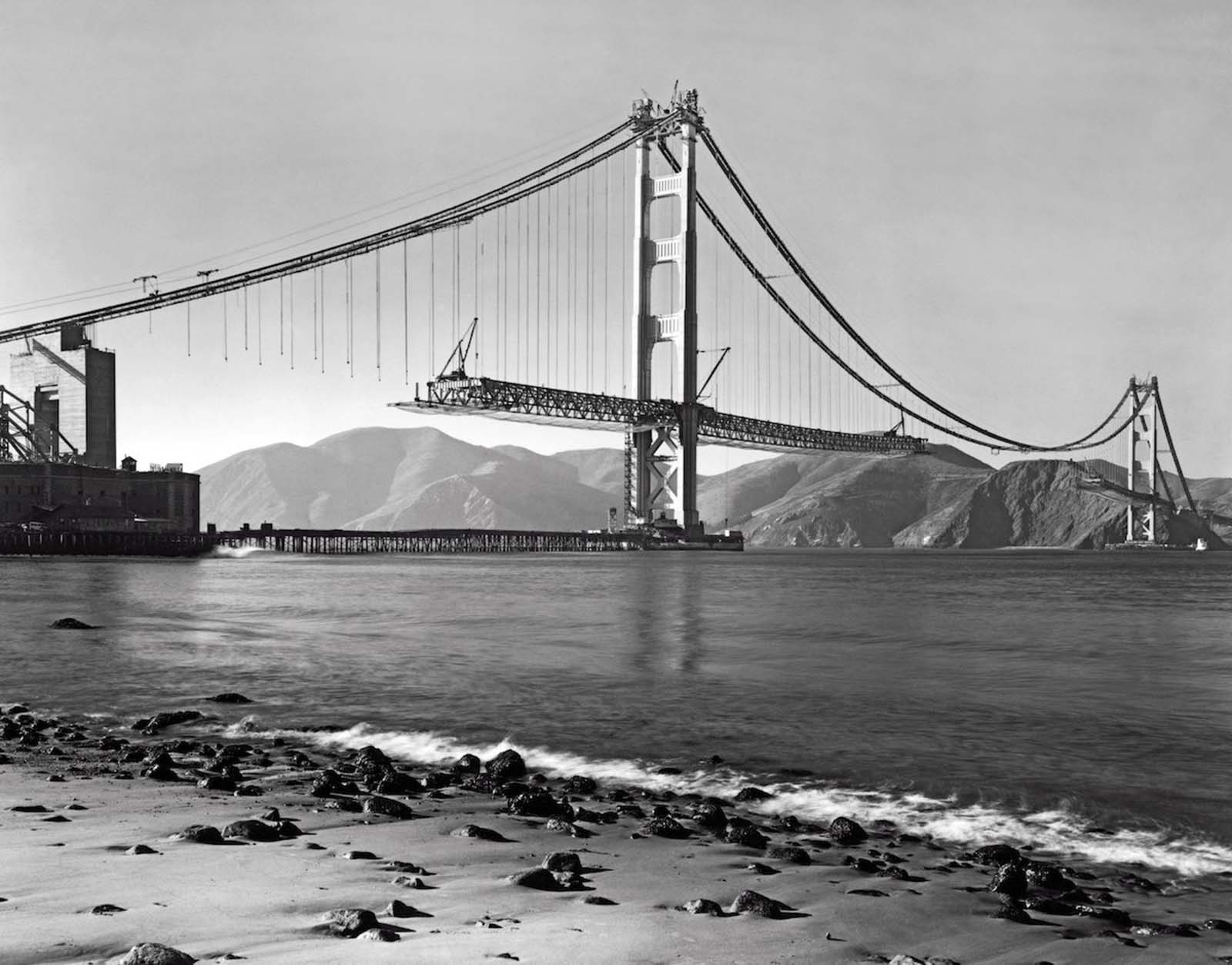
http://www.rarehistoricalphotos.com

When construction began on the Golden Gate Bridge in 1933, skeptics said it couldn’t be done. The winds were too fierce. The fog too dense. The span too long. But through grit, innovation, and vision, workers united across trades and backgrounds to connect two shores that had long been separated. Against enormous odds, the bridge was completed in 1937 and still stands today. It is not just as an engineering marvel, but a symbol of what’s possible when people work together to span what divides them.

Our nation needs that kind of bridge-building again, not with steel and cables, but with courage, empathy, and dialogue.

We are living in a time when division feels more visible and more visceral than ever. Political debates become personal battles. Social media threads unravel into shouting matches. Families gather around dinner tables, uncertain about how to talk about the world without tearing each other apart.

We are, in many ways, a nation of silos, more comfortable in our echo chambers than in conversations that challenge us. But if we want to build a better future, we cannot afford to remain divided. The health of our democracy and the well-being of our families and communities depend on our ability to build bridges across the great divide.

A wise person once remarked, “Unity is not the absence of differences but the presence of mutual respect in the midst of them.”

Division is not new, but it has been amplified. Fueled by polarized media, ideological entrenchment, and the fast-paced spread of misinformation and disinformation, we’ve drifted into a mindset that sees those who disagree with us not as fellow citizens but as threats. That’s a dangerous place for any society to be.

As the late Senator John McCain once warned, “We weaken our greatness when we confuse patriotism with tribal rivalries that have sown resentment and hatred and violence across all the corners of the globe.” Civility isn’t cowardice. It’s a form of courage. And dialogue isn’t defeat; it’s a doorway to understanding.

After the Civil War, President Abraham Lincoln worked not only to reunite the nation politically but to heal it relationally. When criticized for showing kindness to Confederate sympathizers, Lincoln replied, “Do I not destroy my enemies when I make them my friends?” His commitment to unity, even amidst deep division, laid a foundation for national healing, one conversation and one gesture at a time

Recently, I read about a local church and a nearby civic group who hosted a community roundtable with people from across the political spectrum. The conversation was slow and awkward at times, but also honest, respectful, and hopeful. Participants left not with total agreement, but with mutual appreciation and a shared desire to keep the conversation going.

That’s where healing begins: not in uniformity, but in humility and respect.

A shared future requires shared values. Most of us, regardless of political leanings, want similar things: safe communities, healthy families, meaningful work, a stable economy, and a sense of dignity and belonging for all people. When we begin with the values we hold in common, we can face what divides us with greater grace.

To live in unity does not require uniformity of thought, perspective, or conviction. It does require that we build on our common values, even when we don’t share the exact same viewpoint. Rick Warren wisely reminds us, “We don’t have to see eye to eye to walk hand in hand.”

The work of bridge-building is not glamorous. It won’t trend on social media. But it is deeply necessary. It happens in quiet conversations, in community service projects, in choosing curiosity over caricature.

If we want to leave a better world for our children and grandchildren, we must begin not by shouting louder, but by listening deeper. We must become savvy builders who construct bridges, cultivate relationships, and collaborate as problem-solvers. And we must dare to believe that across even the widest divide, bridges can still be built.

Let us be those who build them.

(Barry Howard is a retired pastor who now serves as a leadership coach and consultant with the Center for Healthy Churches. He and his wife live on Cove Lake in northeast Alabama.)
Celebrate Religious Liberty by Exercising Your Freedom to Worship

Fire up the grill. Churn the homemade ice cream. Enjoy the fireworks as you hum a little John Philip Sousa. It’s the Fourth of July weekend.

For many, this holiday brings the joy of parades, cookouts, and patriotic music. But amid the celebration, it’s worth remembering that Independence Day is about more than national pride—it’s about preserving and practicing the freedoms that define us. Among the most vital—and perhaps most often overlooked—is religious liberty.

More Than a Constitutional Clause

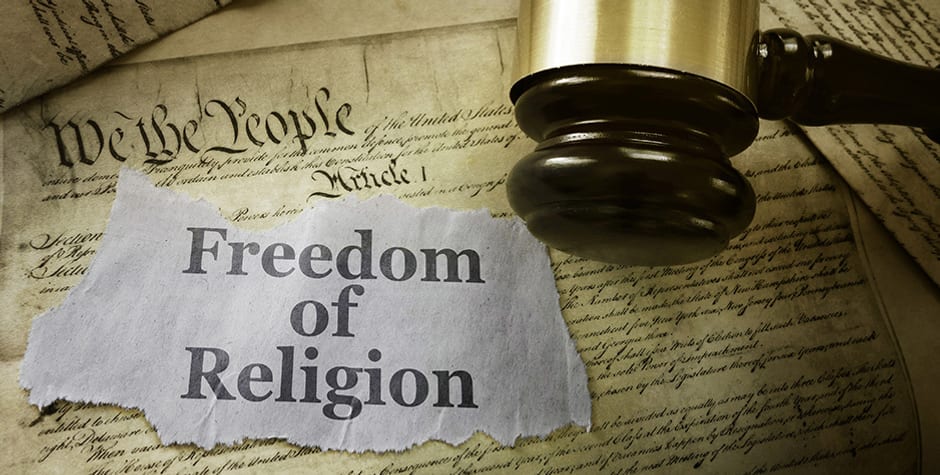
Religious liberty means we are free to worship without fear of persecution, and equally free from government coercion into religious activity. This freedom protects our right to attend the church of our choice—or no church at all. And it also ensures that faith remains a matter of personal conscience, not political control.

The founders of our nation recognized the harm caused when religion and government become entangled. They established, with care and foresight, a “wall of separation” between church and state—not to marginalize faith, but to guard its integrity.

As Isaac Backus, a prominent Baptist minister during the American Revolution, once wrote:  “When Church and State are separate, the effects are happy… but where they have been confounded together, no tongue nor pen can fully describe the mischiefs that have ensued.”

Worship Is a Freedom Worth Using

While many of us will mark Independence Day with fireworks and festivities, I hope we’ll also celebrate by exercising the freedom that sets us apart: the freedom to worship.

Our Baptist ancestors were instrumental in shaping the First Amendment, not only to protect their own practices but to advocate for the religious freedom of all. They believed—deeply and rightly—that no government should compel belief or interfere with the exercise of faith. That principle still holds today.

“Congress shall make no law respecting an establishment of religion, or prohibiting the free exercise thereof…”  –First Amendment to the U.S. Constitution

But freedom requires stewardship. It’s not just a right to defend, but a gift to live out.

A Global Perspective

As we gather for worship this weekend, may we remember the millions around the world who do so in secret, risking their safety for the sake of their convictions. May their courage remind us never to take our freedom for granted.

In my years as a pastor, I’ve seen how worship shapes lives—it forms character, builds community, and fuels compassion. When we gather to pray, sing, listen, and serve, we become more than attendees—we become active participants in the liberty we’ve been given.

That’s why Hebrews 10:25 challenges us: “Some people have gotten out of the habit of meeting for worship, but we must not do that. We should keep on encouraging each other…” (CEV)

To neglect worship is to risk trivializing the hard-fought right to gather without fear or restriction.

More Than a Celebration—A Commitment

So yes—enjoy your celebration. Wave the flag. Cheer the parade. Light the fireworks. But let’s also take time to reflect. Give thanks for the freedoms we enjoy. Pray for those who are still waiting to worship freely. And most importantly, exercise your freedom to worship—not just this weekend, but consistently, gratefully, and respectfully.

Because if even one group loses their right to worship, religious liberty is in jeopardy for us all.

(Barry Howard is a retired pastor who now serves as a leadership coach and consultant with the Center for Healthy Churches. He and his wife live on Cove Lake in northeast Alabama.)
(This is an updated column from 2016.)

Rediscovering Our Belief in “Liberty and Justice for All” — and Living into It

When I was in the 3rd grade, long before our coal-heated elementary school had an intercom, I remember Mrs. Pirkle, our teacher, would lead us to stand at attention, face the flag, and recite the Pledge of Allegiance. For many Americans, these words roll off the tongue as familiar as the melody of the national anthem: “…with liberty and justice for all.”

We often recite this phrase at school assemblies, civic ceremonies, and public gatherings. Yet in a time when division is deep, and trust is fractured, we must ask ourselves: Do we still believe those words? And more importantly, are we truly living into them?

“Liberty and justice for all” is more than a tagline; it’s a guiding principle. It reflects the highest aspirations of a nation committed to freedom, not just for the privileged, but for every citizen. It is both a pledge we recite and a promise we must embody.

The social contract that binds us together as citizens of these United States is based on the common good of the community, and not the advancement of one individual over another, one class of people over another, or one ethnicity of people over another. Woodrow Wilson contended, “America is not anything if it consists of each of us. It is something only if it consists of all of us.”

To reclaim this belief is to recommit ourselves to a shared vision: a society where opportunity is not determined by zip code, and dignity is not dictated by skin tone, belief system, portfolio size, or political affiliation.

“Liberty and justice for all” is more than a theory; it is an ongoing pursuit. One historical moment that illustrates this pursuit is the courageous action of Fannie Lou Hamer, a Mississippi sharecropper who became a powerful voice in the civil rights movement. After being denied the right to vote and facing brutal opposition, Hamer famously testified before the 1964 Democratic National Convention: “I’m sick and tired of being sick and tired.”

Her words ignited the conscience of a nation. Hamer didn’t ask for special treatment. She asked that the promise of “liberty and justice for all” include her, too. Her story reminds us that liberty requires vigilance, and justice demands action.

Justice is more than a courtroom verdict; it is a spiritual mandate. Amos 5:24 demands, “But let justice roll on like a river, righteousness like a never-failing stream.” Justice isn’t confined to verdicts and legislation. It is manifest in the way we provide food, clothing, housing, education, and healthcare to the “least of these.” Justice insists that all people deserve to be seen, heard, and respected, especially the disadvantaged and the underprivileged.

Likewise, liberty is not simply the absence of ethical and moral restraint, but the presence of opportunity coupled with a call to responsibility. It’s the freedom to speak, worship, and live without fear of marginalization.

Coretta Scott King insisted, “Freedom is never really won. You earn it and win it in every generation.”

“Liberty and justice for all” doesn’t end with us; it starts with us. Rediscovering liberty and justice involve both public policy and personal practice. It begins in our homes, our churches, our voting booths, and our daily conversations. It starts when we examine our assumptions, expand our circles, and speak out when the voices of others are silenced.

It begins when a teacher advocates for underserved students. When a community leader ensures fair access to resources. When a neighbor stands up for the rights of an immigrant neighbor. When a local church hosts a refugee family. When your Bible study group or small group gets involved in prison ministry. Or when your mission group sponsors and supports victims of human trafficking.

It continues when we advocate for fair and just legislation to protect and preserve the rights of all individuals, even those with whom we disagree. And when some of our representatives and leaders from both sides of the aisle suffer from rapid-onset constitutional amnesia, we need to vigorously and vehemently remind them that, since we were children, before we knew the difference between a Democrat or Republican, we pledged to pursue liberty and justice for all.

By the way, in the middle of my 3rd grade year, schools in Alabama were integrated. It was a tense time, especially in the Deep South. However, I cannot imagine a teacher doing a better job of introducing new friends of color into our classroom. Although some of us had been cautioned at home about getting too close to our new friends, once we got to school, Mrs. Pirkle led us all in starting the day with the Pledge of Allegiance.

Across the years, I have preached that we all stand on level ground before the cross, a core belief that determines how I treat others. While buses were being burned and churches were being bombed across my home state, in our little classroom, Mrs. Pirkle helped us understand that we all stand on level ground before the flag, because we are a nation that believes in “liberty and justice for all.”

Independence Day calls us to more than celebration. It calls us to conviction. It calls us to remember that our work is not done when the fireworks fade. We are called to build a future where the final words of our pledge aren’t just recited—they are realized.

And if we are bold enough to believe in “liberty and justice for all,” we must also be brave enough to live and serve in ways that make it true.

(Barry Howard is a retired pastor who currently serves as a leadership coach and consultant with the Center for Healthy Churches. He and his wife live on Cove Lake in northeast Alabama