
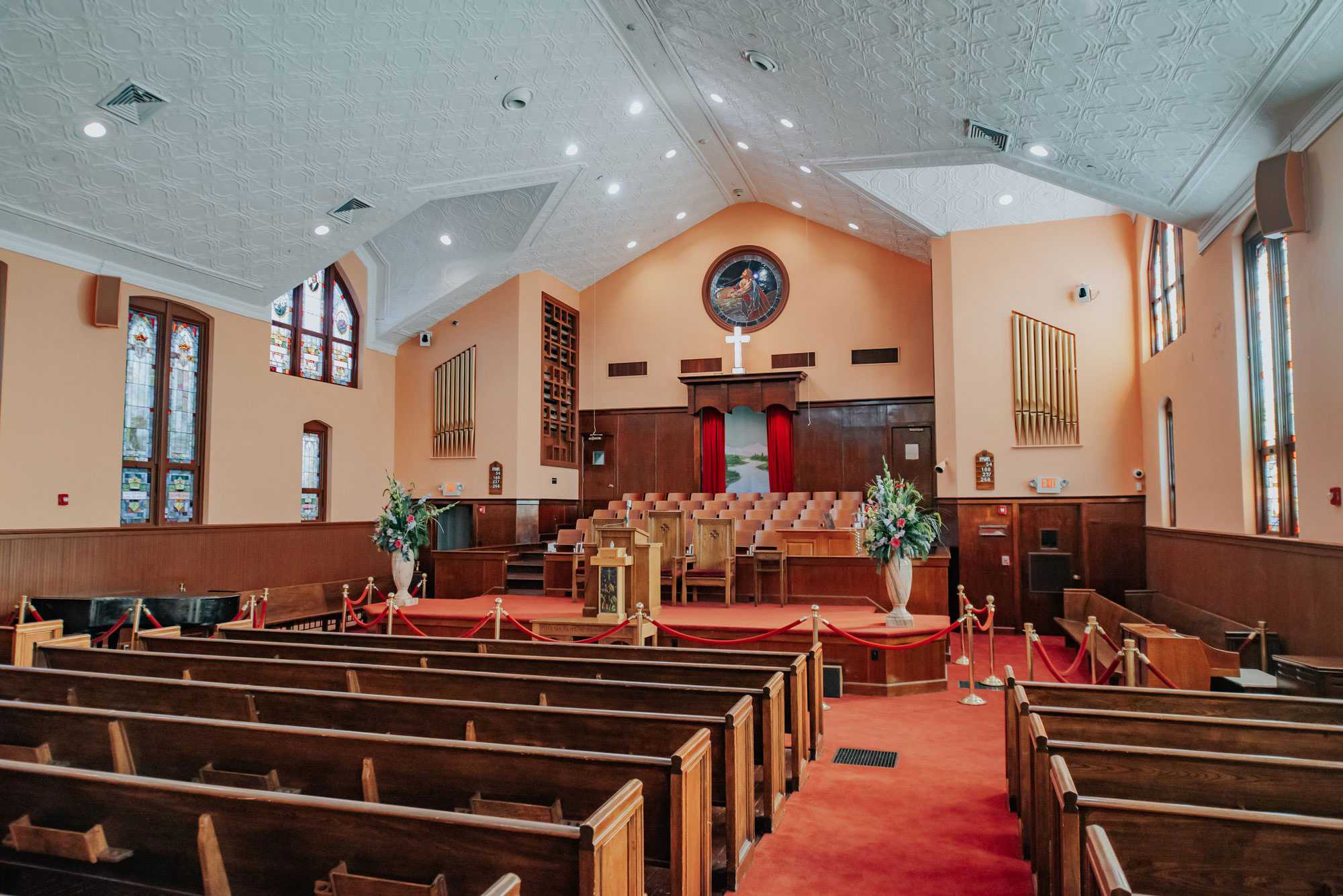
Where Dr. King Stood

I grew up in Alabama at the height of the Civil Rights Movement. Like many people of my generation, I knew the name of Dr. Martin Luther King Jr., but mostly as a headline in The Anniston Star or a grainy image on the evening news—watched on one of our three channels on a black-and-white television. I knew a good bit about the Civil Rights Movement. I did not know much about the man. That changed in 1982.

During my senior year at Jacksonville State University, I traveled with the Sociology Club on a field trip to Atlanta. Our itinerary included places of cultural and historical significance, including the U.S. Penitentiary, Grady Hospital, the King Center, and Ebenezer Baptist Church. While touring the sanctuary of Ebenezer, another student and I briefly stepped behind the pulpit where Dr. King once preached. A hostess quickly reprimanded us, asking us to step away as she explained that only ministers were permitted behind the sacred desk.

When our professor shared with her that we were both young ministers, her tone shifted. She asked a few questions about our knowledge of Dr. King and then invited us to follow her through a set of double doors into what appeared to be a warehouse or storage area. The area was marked Authorized Personnel Only. What awaited us was an expansive room filled with shelves and boxes—hundreds of them.

She opened several boxes and allowed us to examine Dr. King’s personal sermon notes, correspondence, and speeches that were still being processed for archival preservation. Many of the notes were handwritten on hotel stationery, napkins, envelopes, and scraps of paper. It was immediately obvious that while many speakers labor meticulously over manuscripts, Dr. King possessed a remarkable gift for shaping powerful words from simple notes that served as cues for what he wanted to say.

Only years later did I fully realize what a sacred privilege that moment had been—to literally hold the working thoughts of one of the most influential voices in American history.

Dr. King should first be remembered as a passionate Baptist minister. Following seminary, he pastored Dexter Avenue Baptist Church in Montgomery before succeeding his father at Ebenezer Baptist Church in Atlanta. His faith was not ornamental; it was foundational. His preaching carried theological depth, prophetic courage, and pastoral compassion.

He should also be remembered as a disciplined scholar. After graduating from Morehouse College, he pursued theological studies at Crozer Seminary and earned his doctorate in systematic theology from Boston University. Dr. King’s ability to blend biblical conviction, philosophical reasoning, personal passion, and moral clarity gave his voice uncommon credibility across racial, religious, and political lines.

And of course, Dr. King is remembered as a courageous civil rights leader. He championed nonviolent resistance not as a tactic of weakness, but as a discipline of moral strength. He believed injustice could be confronted without surrendering dignity or humanity. He frequently declared, “Injustice anywhere is a threat to justice everywhere.”

That single sentence explains why his legacy refuses to remain confined to history books. It speaks to every community, every generation, and every season when fairness is tested, and human rights are violated.

In 1964, Dr. King was named Time Magazine’s Man of the Year and later that same year received the Nobel Peace Prize. In spite of his flaws, he was a memorable communicator and a catalyst for cultural transformation. Four years later, he was assassinated in Memphis, Tennessee. Yet death did not silence his influence. His vision helped reshape laws, expand voting rights, challenge segregation, and awaken the moral conscience of a nation.

More than that, Dr. King helped America wrestle honestly with its own contradictions—the promise of liberty alongside the reality of inequality. His dream pushed the nation closer to its founding ideals, even when doing so was uncomfortable.

Although the Civil Rights Movement encountered numerous setbacks, Dr. King remained convinced that “The arc of the moral universe is long, but it bends toward justice.” Progress is rarely fast or smooth, but history consistently affirms that courageous truth-tellers leave permanent marks.

As a young college student, I could not have known how deeply that quiet moment among dusty boxes would stay with me. After years of pastoral ministry, I understand more clearly that movements are shaped not only by speeches but by the daily practice of spiritual conviction, disciplined thought, and tenacious courage.

Dr. King’s life reminds us that real change begins in the heart, takes shape in the mind, and finds expression in courageous action. He was not merely a dreamer; he was a visionary. He was not just an orator; he was a doer. He was not merely a leader; he was a servant.

As we remember Dr. King this January, may we do more than quote his words. May we carry his commitment to justice, reconciliation, human rights, and unvanquished hope into our neighborhoods, churches, and everyday conversations.

And every time I think back to those brief moments standing behind the pulpit at Ebenezer where Dr. King once stood, I am reminded that it will take all of us working together to ensure that his vision becomes our reality.

(This is a revision of a column first written in 2003.)

Reflections on Turning 66: Seven Things That Matter Most

Today I turned 66 years old. That number lands differently than others have. Perhaps it’s because this birthday arrives in a season of transition—forty years of marriage, forty-eight years of pastoral ministry, and my first full year retired from full-time church leadership. Milestones have a way of clarifying life. They don’t answer every question, but they do help separate what is essential from what is expendable.

At 66, what matters most is not what I’ve accumulated, but what has shaped me. Here are seven things time has taught me to hold onto.

1. Relationships matter more than results.

For many years, my life was measured by outcomes such as attendance, growth, deadlines met, and goals achieved. Ministry was a privilege, but it also trained me to value results. Yet somehow, for me, relationships are secondary to productivity.

At 66, I’ve learned that results fade, but relationships endure. Programs end, seasons change, and accomplishments are eventually forgotten, but the way we love people leaves a lasting imprint. What matters most now are not the numbers we achieved, but the names we remember.

The relationships that have shaped me—my wife of forty years, family, friends, and the people I’ve been honored to serve—have proven far more significant than any measurable success. Love practiced consistently outweighs results celebrated briefly.

2. Faith is meant to be lived, not just proclaimed.

After decades of sermons, meetings, hospital visits, weddings, and memorial services, I’ve learned to value a quieter faith—one less concerned with having all the answers and more committed to trusting God in the unanswered places.

Faith matters most when it shows up in patience, kindness, humility, and hope. Belief becomes credible when it moves from the pulpit to the kitchen table.

Faith is life-giving, not life-judging.

3. Presence is better than pace.

Younger years are often measured by speed—how much can be done and how quickly. At 66, I’m learning the gift of slowing down. Presence allows me to notice conversations that don’t need fixing, moments that don’t need multitasking, and days that don’t need to be productive to be meaningful.

A full life is not the same as a hurried one. Will Rogers quipped, “The older we get, the fewer things seem worth standing in line for.”

4. Perspective comes with time.

Aging brings clarity that no book or seminar can provide. Studies consistently show that people in their 60s report higher levels of contentment and emotional well-being than many younger adults. That feels true. I worry less about what people think and more about how I treat them.

Not every battle deserves my energy. Not every opinion requires my response. Nont every post requires my feedback. Perspective is one of the quiet gifts of growing older.

We are not wired to resolve every problem or bear the weight of every grief outside our zip code.

5. Calling outlives titles.

Retirement has reminded me that calling does not end when a job does. It simply changes form. Encouraging others still matters. Listening still matters. Showing up still matters.

The difference now is that these things happen without an agenda, a deadline, or a business card, and that may be the truest expression of calling yet.

6. A sense of humor helps you age gracefully.

If you can’t laugh at yourself, aging becomes far more difficult than it needs to be. A good sense of humor keeps perspective intact and pride in check.

Years ago, Henry Ward Beecher suggested, “A person without a sense of humor is like a wagon without springs. It’s jolted by every pebble on the road.”

7. Gratitude is a game-changing life discipline.

If I had to sum up turning 66 in one word, it would be gratitude. Gratitude for years lived, lessons learned, love received, and mercy extended. Gratitude for a God who has been faithful in every season—especially the ones I didn’t understand at the time.

I don’t know how many birthdays remain, but I hope that when my time comes to depart this life, I go in my sleep with a smile on my face and a heart filled with gratitude.

Turning 66 has reminded me that what matters most is surprisingly simple and sufficient: loving well, trusting deeply, and living gratefully, one day at a time.

Practicing the Sacred Discipline of Thinking: Reflections on Philippians 4:8-9

Whatever we spend our time thinking about, plants seeds in our minds, and those seeds eventually grow into actions. Few passages of Scripture capture this truth more clearly than Philippians 4:8–9. Writing from prison, the Apostle Paul does not begin with complaints or escape plans. Instead, he turns our attention inward, to the overlooked but decisive arena of the mind.

“Finally, brothers and sisters, whatever is true, whatever is noble, whatever is right, whatever is pure, whatever is lovely, whatever is admirable—if anything is excellent or praiseworthy—think about such things… And the God of peace will be with you.”

Paul understood what modern science continues to confirm, that our thought life either enhances or diminishes our spiritual life. Though the human brain weighs only about three pounds, physicist Michio Kaku once observed that it is “the most complex object in the solar system.” It can store an estimated 2.5 million gigabytes of information—roughly the equivalent of 300 years of television programming. Yet despite its capacity, Henry Ford famously noted, “Thinking is the hardest work there is, which is probably the reason so few engage in it.”

Thinking is never neutral. Unhealthy thoughts have a way of filling the unclaimed spaces of our minds. Paul does not call believers to empty their minds of everything negative, but to intentionally fill them with what is good. Just as our computers and smart devices are vulnerable to spam, corrupt code, and viruses, so our minds are vulnerable to disinformation, lust, impure motives, and manipulation.

As one pastor aptly put it, “The devil knows that if he can capture our mind, he holds our future.” Paul’s words remind us that mental discipline is not optional for a Jesus follower—it is absolutely essential.

Paul is not naïve. He is not suggesting that positive thinking will eliminate all trouble. Rather, he is proposing that meditating on noble things helps us avoid unnecessary trouble. Eugene Peterson’s rendering in The Message captures Paul’s pastoral wisdom well:

“Fill your minds and meditate on things true, noble, reputable, authentic, compelling, gracious—the best, not the worst; the beautiful, not the ugly; things to praise, not things to curse.”

Paul urges believers to reflect, meditate, contemplate—or, as my maternal grandfather use to say, cogitate. Earlier in Philippians, Paul had already challenged the church, “Let this mind be in you which was also in Christ Jesus.” Before we can walk as Christ walked and talk as Christ talked, we must first learn to think as Christ thought.

Galileo insisted, “I do not feel obliged to believe that the same God who has endowed us with sense, reason, and intellect has intended us to forgo their use.” Faith does not require the abdication or abandonment of thought. Faith teaches us to love God with our minds. This mean that the way we exercise our minds to do problem-solving, conflict resolution, imagining, visioning, strategizing, and discernment are all ways of loving and honoring God.

When we intentionally focus on what is true, right, and admirable, God often synchronizes our thinking—bringing clarity, unity, and spiritual harmony among people of faith.

Paul refuses to separate thinking from living. “Whatever you have learned or received or heard from me, or seen in me—put it into practice.” Thoughts always precede action. When we focus on negative thoughts, we produce negative actions. When we dwell on lustful thoughts, we produce lustful actions. But when we focus on noble thoughts, we produce noble actions. And when we focus on kingdom thoughts, we produce kingdom actions.

Ralph Waldo Emerson captured this progression beautifully: “Thought is the blossom; language the bud; action the fruit behind it.” Right thinking bears visible fruit.

Paul concludes with a promise we desperately need: “And the God of peace will be with you.” Peace is not portrayed as the absence of problems but as the presence of God. When disciplined thinking leads to faithful living, God’s peace steadies us, even in uncertain circumstances.

In the 1960s, excavations at one of Herod the Great’s palaces uncovered 2,000-year-old seeds from the Judean date palm, seeds that were long thought extinct. In 2005, scientists successfully germinated one of those ancient seeds. Today, that tree has produced fruit and pollinating offspring. What was buried and dormant for centuries came to life again.

In much the same way, the thoughts we plant—truthful, noble, beautiful thoughts—can bear fruit far beyond what we imagine.

As we continue growing in faith and friendship, we are invited to keep refocusing our minds on what is good, to meditate on what is beautiful, and to pursue excellence in all things. And because thinking shapes direction, many of us go through seasons of rethinking our faith or our church connection.

For those going through a cycle of deconstruction, especially in religious faith or philosophy of life, don’t despair when your assumptions and presuppositions unravel. Keep thinking and processing as you discern which values to embrace and which baggage to discard.

The Bible never discourages us from thinking. It actually mandates that we “think on these things.”  The sacred discipline of thinking can help us to more fully become the persons we were created to be.

Turning the Page Again: 26 Books I Plan to Read in 2026

When I retired and moved to the lake last year, one of my goals was to engage in more golf, more fishing, more travel, more writing, and more reading. I am making slow but steady progress toward each of these goals, but especially in my practice of reading.

The turning of a new year offers a quiet but meaningful invitation to pause, reflect, and look ahead. For me, one of the most helpful ways to do that is by immersing myself in reading. Books have a way of slowing us down, sharpening our thinking, stretching our faith, and reminding us that we are not alone in our questions or our hope.

Fran Lebowitz advised, “Think before you speak. Read before you think.” When I was a young minister, a wiser and older pastor counseled me to pray regularly, study thoroughly, read widely, and think critically. These disciplines helped me grow as a pastor, a preacher, and most importantly, as a person.

This year’s reading list reflects a desire to read both widely and wisely: books that nourish the soul, illuminate the cultural moment, deepen vocational clarity, and engage my mind with well-told stories. Some books will challenge my assumptions. Others will comfort, provoke, or simply entertain. All, I trust, will help to keep my mind sharp and my perspective fresh.

Here are 26 books I hope to read in the coming year, arranged thematically rather than alphabetically:

Faith, Formation, and the Interior Life

  1. What Grows in Weary Lands: On Christian Resilience by Tish Harrison Warren. A timely reflection on sustaining faith in fragile and exhausting times.
  2. Good News at Rock Bottom: Finding God When the Pain Goes Deep and Hope Seems Lost by Ray Ortlund. A hopeful word of grace for those who find themselves at the end of themselves.
  3. Witness to Belief: Conversations on Faith and Meaning by Russ Levenson Jr. Thoughtful conversations that model gracious, honest engagement with faith written by my former neighboring pastor from Pensacola.
  4. The Body Teaches the Soul: Ten Essential Habits to Form a Healthy and Holy Life by Justin Whitmil Earley. An embodied vision of spiritual formation.
  5. Sacred Attachment: Escaping Spiritual Exhaustion and Trusting Divine Love by Michael John Cusick. A compassionate exploration of spiritual fatigue.
  6. Nervous Systems: Spiritual Practices to Calm Anxiety in Your Body, the Church, and Politics by Sara Billups. Insightful guidance for minimizing anxiety in the important aspects of life.
  7. Slow Theology: Eight Practices for Resilient Faith in a Turbulent World by A. J. Swoboda & Nijay K. Gupta. Speaks into navigating cultural chaos at a healthy pace.
  8. The Speed of Soul: Four Rhythms for Quiet Life in a World of Noise by Tommy Brown. Four rhythms for cultivating quiet amid constant commotion.
  9. Life Is Hard. God Is Good. Let’s Dance: Experiencing Real Joy in a World Gone Mad by Brant Hansen. An honest, hopeful invitation to joy in challenging times..
  10. Winter Grief, Summer Grace: Returning to Life After Loved One Dies by James Miller. A tender companion for those navigating loss and return to life.

Vocation, Ministry, and Leadership

  1. Losership: The Door to a Joyful Life by Bill Shiell. A countercultural vision of leadership rooted in humility and grace.
  2. When Church Hurts by Rose Townsend. Naming pain in the church while holding space for healing.
  3. Some of the Words Are Theirs: The Art of Writing and Living a Sermon by Austin Carty. A beautiful meditation on preaching, writing, and faithful living by my friend and former pastor of the First Baptist Church of Corbin, Kentucky.
  4. You Have a Calling: Finding Your Vocation in the Good, True, and Beautiful by Karen Swallow Prior. A rich exploration of vocation grounded in the positive and virtuous things in life.
  5. The View from the Rocking Chair: Living Intentionally for What Matters Most by Matt McGee. Reflections on living with purpose and significance.

Culture, History, and the Public Square

  1. The American Religious Landscape: Facts, Trends, and the Future by Ryan Burge. Essential insights into faith metrics shaping contemporary America.
  2. American Struggle: Democracy, Dissent, and the Pursuit of a More Perfect Union by Jon Meacham, ed. An anthology examining civic responsibility.
  3. The Tears of Things: Prophetic Wisdom for an Age of Outrage by Richard Rohr.  Spiritual insights for navigating this season of life.
  4. An Unfinished Love Story: A Personal History of the 1960’s by Doris Kearns Goodwin. A historical reflection on the 1960s and community engagement.

Memoir and Story

  1. Surrender by Bono. A candid memoir exploring faith, music, activism, and humility.
  2. Theo of Golden by Allen Levi. A beautifully written novel about grief, faith, and belonging.

Fiction: The Power of Story

  1. The Proving Ground by Michael Connelly. A legal saga exploring the ethics of artificial intelligence and the consequences of its misuse.
  2. Nash Falls by David Baldacci. An FBI agent’s life is turned upside down when he tries to bring down a global crime network.
  3. The Widow by John Grisham. A legal thriller woven with social tension.
  4. The Boomerang by Robert Bailey. Fast-paced storytelling about politics and mountain culture in northeast Alabama.
  5. Gone Before Goodbye by Harlan Coben and Reese Witherspoon. A suspenseful exploration of secrets, loss, and resilience.

Taken together, this list reflects a desire not merely to read more books, but to listen for wisdom, to stay curious, and to live fully. Mortimer Adler aptly observed, “Reading is a basic tool in the living of a good life.”

Turning the page is more than a literary act; it is a spiritual posture. It is a proactive step toward spiritual, emotional, and intellectual growth.

So, here’s to another year of good books and the insights they offer along the way.

The Thomas Confession: Dealing with Honest Questions About Faith

If you have ever experienced doubts or been skeptical about matters of faith and religion, you are not alone. Frederick Buechner said, “Doubts are the ants in the pants of faith. They keep it awake and moving.”

In some religious circles, however, faith and doubt are often treated as opposites, as though one cancels out the other. In such settings, doubt is viewed with suspicion, as though it is sinful, something to be hidden, hurried past, or quietly resolved before it becomes disruptive. Yet the Christian story tells a different truth. Faith is not fragile. It is resilient, examined, and durable. It can withstand questions, doubts, and honest inquiry.

One of the most ancient and instructive examples of this kind of faith is found in John 20:24-29 in the confession of Thomas. Often labeled “Doubting Thomas,” he may be better understood as “Truth-Seeking Thomas.” When the other disciples announce that they have seen the risen Christ, Thomas responds with remarkable honesty: unless he can see and touch the wounds himself, he cannot believe. Rather than rebuking him, Jesus invites Thomas to examine the evidence. The result is one of the strongest confessions of faith in all of Scripture: “My Lord and my God.”

Thomas reminds us that faith does not always arrive fully formed. For many, belief is born through the labor pains of honest inquiry. And, somewhat ironically, once faith takes root, it often generates more curiosity, not less. Authentic faith refuses to settle for slogan-like answers to deep and uncomfortable questions.

In the twentieth century, physicist and theologian Ian Barbour challenged the popular notion that science and faith must exist in conflict. Barbour insisted that his Christian faith made him a better scientist, not a lesser one—more curious, more rigorous, and more attentive to mystery. His work opened space for thoughtful dialogue rather than shallow debate. Like Thomas, Barbour understood that truth does not fear examination.

Consider how we make important decisions today—medical diagnoses, financial investments, or even choosing a school for our children. We do our due diligence. We ask questions. We examine evidence. We seek trusted sources. Rarely do we accept life-altering claims without investigation. Yet when it comes to matters of faith, some are told to suspend curiosity and simply “believe.” Thomas pushes back against that false choice. He models a faith that engages both heart and mind.

The New Testament consistently affirms this kind of integrated faith. Hebrews describes faith as “the substance of things hoped for, the evidence of things not seen.” Substance and evidence belong together. The gospel should never be proclaimed through emotional manipulation or social intimidation, but with truthfulness and grace, trusting the Spirit to do the deeper work of conversion.

Buechner captures this balance well when he suggests, “Faith is not being sure where you’re going, but going anyway.” Thomas did not begin with certainty; he began with courage, the courage to ask, to seek, and to stay in community even when belief felt incomplete.

Importantly, the story does not end in the locked room. Early Christian tradition holds that Thomas carried the gospel far beyond the boundaries of the Roman Empire, eventually reaching India. According to ancient sources, communities of believers there trace their origins to his witness. The disciple who once demanded evidence became a missionary whose faith changed lives across continents. Doubt did not disqualify him; it refined him.

Faith stories are life stories. The chapters already written matter, but the chapters still unfolding may prove the most significant. Like Thomas, we are invited not to silence our questions, but to bring them into the presence of Christ. There, doubt can become confession, and inquiry can give way to trust.

Navigating faith and doubts is a challenge in every generation. Yet Jesus still meets seekers where they are, with all their doubts, wounds, and questions.

If you have trouble believing in God, maybe it’s not God you have trouble believing, but the various misrepresentations of God. If you have problems believing in Jesus, perhaps it’s not Jesus you have a problem with, but the many counterfeit faces of Jesus that appear in the church and in the world. Examine the biblical account. Consider the life and teachings of Jesus. Probe the evidence, and you may just discover what you are seeking.

(This column is based on a sermon titled “The Thomas Confession” that I shared at the First Baptist Church of Pensacola on January 5, 2014.)

A Prayer for the New Year: Form in Us a Jesus-Shaped Worldview

Good and Gracious God,

As this new year begins, we pause to express our gratitude for your guidance and your presence during the past year. We receive this new year as a fresh invitation to live more attentively, love more generously, and trust you more deeply.

Now, as we step into this new year, we ask that you move us beyond our biases and prejudices and lead us more deeply into the pursuit of truth. Where our perspectives are limited, enlarge them. Where our assumptions are flawed, correct them. Where viewpoints are dated or misinformed, refresh them.

Give us a willingness to change our minds as we grow in wisdom and understanding. Teach us to remain humble and teachable, remembering that growth often requires listening more carefully and learning more intentionally.

Form in us a Jesus-shaped worldview, a perspective that sees the world through the lens of compassion, justice, and love. May our convictions be shaped not by fear or ideology, but by the teachings, example, and disposition of Jesus.

Make us discerning and wise, skeptical of easy answers, empty promises, and self-interested voices that seek power rather than the common good. Help us to value truth over convenience and integrity over approval.

Teach us what it truly means to act justly, to love mercy, and to walk humbly with you and with one another. May our words and actions reflect your goodness and your grace.

We acknowledge that we live in challenging and uncertain times. Grant us peace when anxiety threatens to overwhelm us, patience when progress seems slow, and perseverance when the journey grows difficult.

In all seasons and all circumstances, fortify us with hope, guide us with your wisdom, and energize us with your Spirit.


Amen.