
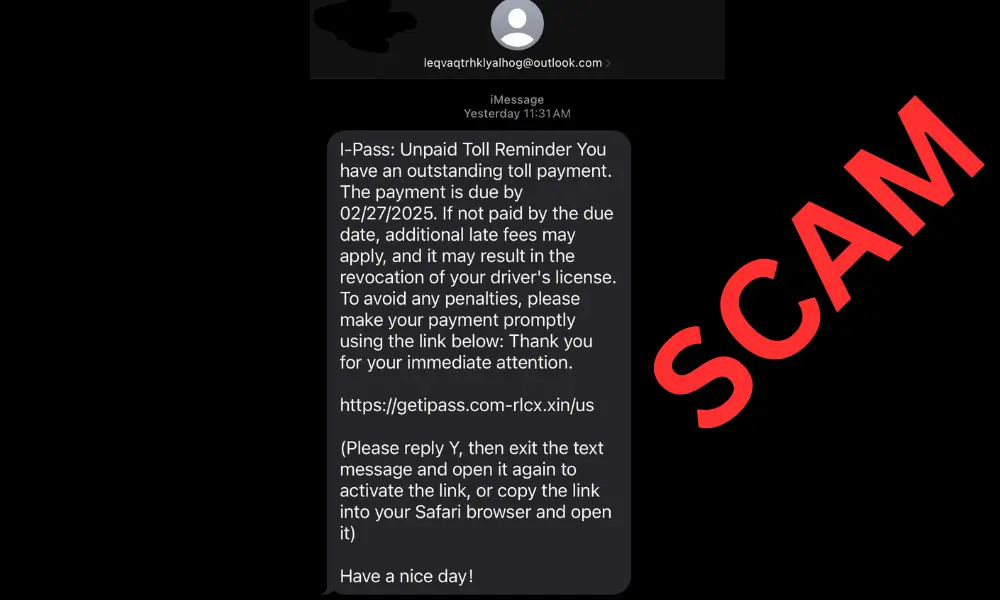
You might receive a text message claiming you owe road tolls in another state that need to be paid or you will incur a late fee. You might get a phone call warning that you are behind on your utility bill and that your service will be disconnected unless you pay immediately over the phone. You may receive a text saying you failed to pay a traffic ticket and that your driver’s license will be suspended unless you act now.
Someone might call claiming to be from the Internal Revenue Service and insist that you have a tax balance that must be paid immediately with a credit or debit card. Or you might receive a call informing that you failed to respond to a jury summons and must post a bond right away to avoid jail.
These represent only a few of the scams circulating in our communities today, and the problem is growing rapidly.
According to the Federal Trade Commission, Americans reported losing more than $12.5 billion to fraud in 2024, a 25% increase from the previous year. The agency received about 2.6 million fraud reports, and the percentage of people who actually lost money jumped significantly from 27% to 38%.
The Federal Bureau of Investigation also reports that cybercrime losses reached $16.6 billion in 2024, showing how sophisticated and widespread scams have become.
Scammers are constantly evolving their tactics. As Christopher Mufarrige of the FTC observed, “Scammers’ tactics are constantly evolving.”
The good news is that with awareness and a few wise habits, you can greatly reduce your chances of becoming a victim.
Below are 10 best practices to help you recognize and avoid scams:
1. Slow down and keep your guard up.
Scammers create urgency so you will react before thinking. If someone insists that you must act “right now,” that pressure is often a warning sign.
Consumer advocate Frank Abagnale once said, “The easiest way to avoid being scammed is to slow down.”
Taking a few minutes to verify information can prevent costly mistakes.
2. Never click suspicious links.
Texts and emails often contain links leading to fake websites designed to capture your personal information. If a message asks you to click a link to verify or pay something, resist the urge.
Instead, go directly to the official website of the organization.
3. Verify. Verify. Verify.
If someone claims to represent a government agency, bank, or utility company, hang up and contact the organization yourself using a verified phone number.
Remember, organizations like the Internal Revenue Service or state traffic departments do not demand immediate payment through phone calls, texts, or social media.
4. Guard your personal information.
Never give out sensitive information to unsolicited callers, including:
- Social Security numbers
- Bank account numbers
- Credit card information
- Passwords or security codes
Legitimate organizations rarely ask for this information unexpectedly.
5. Be wary of unusual payment methods.
Scammers frequently ask victims to pay using:
- Gift cards
- Wire transfers
- Cryptocurrency
- Peer-to-peer payment apps
- Cash payment to be picked up at your home or transferred in parking lots near legitimate government agencies.
The reason is simple: these methods are difficult to trace or reverse.
As cybersecurity author Bruce Schneier notes, “Security is a process, not a product.”
Developing proactive habits is the best protection.
6. Be alert for emotional manipulation.
Scammers often create fear, urgency, panic, excitement, or sympathy. The goal is to override your rational thinking.
When emotions rise, pause. Ask questions. Think cognitively, not emotively.
7. Check the source carefully.
Caller ID and email addresses can be spoofed to look legitimate. Just because a phone number appears to be real does not mean it actually is. We received a call recently from a local Sheriff’s Department, and the caller id had the correct name and number. And the caller gave us the correct address. Rather than deal with the caller, we drove to the Sheriff’s Department, and verified the call was a scam. It looked legitimate, but it was a spoof call.
Always confirm through official channels.
8. Talk to someone you trust.
If something feels suspicious, discuss it with a trusted friend, family member, or advisor. A second set of eyes often spots warning signs you might miss. In our recent experience, I contacted our attorney, who suggested specific ways we could explore the legitimacy of a suspicious call.
9. Keep your devices updated.
Many scams rely on malicious software or compromised devices. Keep your operating systems, browsers, and security software updated to reduce vulnerabilities. Keep your antivirus program up to date and keep your firewall turned on.
10. Report suspicious activity.
Reporting scams helps protect others.
You can report fraud to local law enforcement, to the Federal Trade Commission, or through the Federal Bureau of Investigation Internet Crime Complaint Center. These reports help authorities identify patterns and stop scammers.
Scams succeed because they exploit trust, urgency, and human emotion. But knowledge is a powerful defense.
As Warren Buffett wisely observed, “Risk comes from not knowing what you’re doing.”
The more informed and cautious we are, the harder it becomes for scammers to succeed.
A moment of awareness, or healthy suspicion, today may save thousands of dollars tomorrow.
(Barry Howard serves as a leadership coach and consultant with the Center for Healthy Churches. He and his wife reside on Cove Lake in northeast Alabama.)
 Cove Creek Reflections