
A Fresh Wind Is Blowing: It’s Time to Raise Our Sails

sailboat on the bay

Yesterday, as I was reflecting on Pentecost, I drove across the Tennessee River and happened to catch a glance of a marina with yachts, fishing boats, speedboats, and few sailboats.  And near the marina, I glimpsed a picturesque scene of a few sailboats gliding across the backwater as they were powered by a gentle breeze.

As I reflected on the work of the Holy Spirit, I was reminded of the words of my friend, Reggie McNeal, author of Missional Renaissance: “The Spirit is a work in the world, and it’s the job of the church to get on the same page as the Spirit, not the job of the Spirit to get on the same page as the church.”

As we navigate the chaos of a changing world, including fluctuating church metrics and shifting cultural norms, a fresh wind of the Spirit is blowing.

My first notions of the spirit world did not come from the Bible but emerged from a book about Thirteen Alabama Ghosts and Jeffrey, a southern folklore written by Kathryn Tucker Windham and Margaret Gillis Figh.  Among this collection of stories, there is the tale of Jeffrey, a mischievous spirit who first made his presence known in the Windham home in October 1966. Jeffrey was alleged, “At irregular and infrequent intervals, to clump down the hall, slam doors, rock in a chair, frighten the family cat, move heavy pieces of furniture, cause electronic equipment to malfunction, and hide objects.”

When I was in Mrs. Gibson’s fourth grade class, I chose this book for my first ever “book report.”  This book highlighted thirteen of the best ghost stories from small town Alabama. To this day, when I drive through the square of one of those quaint Alabama communities I look to see if there is a face in the courthouse window.

As a child growing up in the Bible Belt, I associated the ghost in the courthouse with the Holy Ghost in the church house. Evangelists who visited our community preached passionate and lengthy revival sermons alternating almost schizophrenically between asking, “Have you received the Holy Ghost?”, and warning us to, “Beware of quenching the Holy Ghost,” as though this supernatural apparition could invade our bodies or condemn our soul, depending on your extemporaneous emotional response to the sermon.

Growing up in the Baptist church, I learned more about the Holy Spirit from our confessional statement, the Baptist Faith and Message (1963): The Holy Spirit is the Spirit of God. He inspired holy men of old to write the Scriptures. Through illumination He enables men to understand truth. He exalts Christ. He convicts of sin, of righteousness and of judgment. He calls men to the Saviour, and effects regeneration. He cultivates Christian character, comforts believers, and bestows the spiritual gifts by which they serve God through His church. He seals the believer unto the day of final redemption. His presence in the Christian is the assurance of God to bring the believer into the fulness of the stature of Christ. He enlightens and empowers the believer and the church in worship, evangelism, and service.

As I continue to study the Bible and reflect on the Spirit, I think I have grown a little in my thinking and in my understanding of pneumatology. I appreciate my somewhat Bapti-costal childhood, but when it comes to my early impressions of the spiritual things, let’s just say that I still have a lot of unpacking to do. Even the name “Holy Spirit,” which occurs in most English translations except the King James Version, is much more friendly than “Holy Ghost,” the former connoting holiness and the latter evoking more of a sense of spiritual haunting.

When I move beyond the religious folklore and as I deal with my own early ghostly notions of the third person of the trinity, the biblical narrative helps bring much needed clarity to my understanding of the Holy Spirit.  Prior to the unfolding of what we now call “Holy Week,” Jesus began to prepare his disciples for his own departure by acknowledging that he would be going away, and yet he assured them, “I will not leave you as orphans. I will come to you” (John 14:18).  Although the incarnate Jesus had been with them in bodily form, now Jesus was explaining that after the time of his physical departure, his Spirit would come to be present with them in a most fascinating and yet mysterious sort of way. “And I will ask the Father, and he will give you another advocate to help you and be with you forever—the Spirit of truth” (John 14:16-17).

As I revisit the account in John’s gospel of Jesus foretelling of the comforter and encourager yet to arrive, I am consoled that Jesus’ closest followers didn’t “get it” either in the beginning.  I resonate with the anxiety and the perplexity of the disciples when Jesus started talking about a terminal point in his ministry, an unspecified incident yet to come which would alter and transform their relationship.  They must have sensed by Jesus’ veiled hints that some crucial experience was looming in the not-too-distant future, but they could not have imagined the significance of these proceedings. They could not have anticipated the brutality of his eventual execution, and obviously, they were astonished and surprised by his unexpected resurrection.

Prior to his death, Jesus had been their mentor. They even called him, “Rabbi.”  He had shown them a new way to live, a life not based on status or perfection, but a self- worth founded on God’s love and a value system grounded in God’s grace.  Jesus accepted them in their imperfect human condition without prerequisite, and nurtured within them a lifestyle trending toward simplicity and service.

When he spoke of his pending departure, they must have wondered, who will lead us now?  Will we return to “business as usual”?  Who will teach us about God’s ways and expectations?

That to me seems to be the role of the Holy Spirit.  This advocate about whom Jesus spoke is now assigned to Christ followers to navigate our steps, to keep us affirmed by God’s love, to steer us toward a lifestyle of service and simplicity, and to protect us from legalism by keeping us grounded in grace.  Paul so believed in this spiritual linkage, he wrote to the Romans that “The Spirit himself testifies with our spirit that we are God’s children.” (8:16)

Although my early impressions of the Spirit were more ghost-like, I now embrace the Holy Spirit as the spirit or personality or presence of God at work in the world today .  And this Spirit is not floating around obliviously in the cosmos but takes up residence within a temple of human flesh.  The Spirit of God that hovered over the waters in the creation story now occupies a human habitat in the redemption story.

And the Spirit is not a “show-off” with the demeanor of an exhibitionist showcasing bizarre feats. Rather, the Spirit prefers to work clandestinely, deflecting attention while always prompting people toward God and the Jesus-kind-of- life.

The Pentecost event is an integral part of biblical history. And now, we observe Pentecost to celebrate the coming of the Spirit, the birthday of the church, and the globalization of the Christian faith. However, just as we cannot duplicate the resurrection or re-enact the ascension, we cannot recreate the phenomena of Pentecost.  Our God is not the god of repeat performances but is a God who is always seeking to do a new thing. The Spirit is filled with creativity and innovation and persistence.  And just maybe, the Spirit is initiating an original story within you.

In his book, Thinking About God, Fisher Humphreys, describes the Spirit as One who “brings life and vitality into the experience of the Christian and the church. He vivifies us. He makes Christian living dynamic as well as decent.”  I understand the activity of the Spirit to be a work of fostering unity, not division; a work of inspiring creativity, not repressing it; and a work of re-visioning the future, not preserving the status quo.

In Acts 2, Luke describes the advent of the Spirit as “a mighty rushing wind.”  I live on the Gulf Coast where the breeze is continual, but the speed is variable. The Spirit resembles the wind, a force that cannot be conjured or micromanaged. The wind blows and though we cannot dictate its direction or mediate its velocity, we can choose to raise our sails.

(Barry Howard is the retired senior pastor of the First Baptist Church in Pensacola, Florida.  He currently serves as a coach, consultant, and columnist with the Center for Healthy Churches.  He enjoys golf, reading, and gardening.)


Why We Should Encourage Our Pastor to Take an Extra Day Off This Week


church staff.jpg

To bless our ministers and promote their health and well-being, we should encourage our pastor and ministerial staff to take at least one extra day off this week.

Ministry is a unique vocation wherein most pastors are “on call” 24/7. I loved serving as a pastor, but the personal investment of time, thought, and energy required to do ministry well is off the charts, even on normal weeks.

When you factor in a holiday week like Easter that involves additional worship services and requires extra preparation, a pastor’s mental and physical capacity can become depleted quickly, no matter how deeply spiritual they are.

How can a minister maintain a vibrant and energized ministry? In addition to nurturing their own walk of faith, effective ministers must intentionally set aside time for rest and revitalization.

As ministers, there are times we get caught up in the joy and enthusiasm of high and holy days like Easter and Christmas, and the rush of adrenaline can lead us to the false assumption that we are exempt from the need for sabbath rejuvenation.

Rest, recuperation, and rejuvenation are crucial to every sport and every vocation, and ministry is no exception.

You never see a starting pitcher in Major League Baseball pitch in consecutive games, save for the most extreme circumstances in a playoff game. They need to rest their arms.

Your favorite college football team never plays more than one game in a week. They need to mend and heal.

A truck driver is limited by law to driving no more than 8 hours without a 30-minute break, and no more than 11 hours per day, followed by a 10-hour mandatory rest.

Who wants a pilot flying their plan without adequate rest? Who wants a pilot flying their plane without adequate rest? Who wants a surgeon to perform surgery without first having a good night’s sleep? Who wants a pastor who is depleted and fatigued attending to the matters of their soul?  Who wants a pastor who is depleted and fatigued attending to the matters of their soul?

Several years ago at a conference in Gadsden, Alabama, the popular preacher and author Vance Havner challenged each of the participating pastors to prioritize rest. He reminded us that, “The pastor who is always available isn’t worth much when he is available.” It’s true for both men and women who serve in a ministerial role.

Back in the 1980’s, I was in a group of young pastors who had the privilege of spending a couple of hours with Charles Stanley, longtime pastor of First Baptist Church in Atlanta, Georgia, in a hotel lobby after a church growth conference.

As Stanley fielded our questions, one young pastor asked, “Dr. Stanley, what is the best advice you can give a young pastor?” I expected that Dr. Stanley would comment on the importance of “preparing yourself before you preach to others,” or making good eye contact during the sermon or that he would encourage us to “lead like Moses.” Therefore, I was surprised when he replied, “Always remember, sometimes the most spiritual thing you can do is rest.” Through the years, I’ve never forgotten his advice.

Rest is imperative for ministers, especially after a busy season like Easter. Pastors need rest for their voices, minds, bodies and spirits.

Just as a lack of rest can contribute to underperformance, mood changes, depression, burnout, and a general decline in health, so recuperative sleep and rejuvenating rest have many positive benefits that enrich a pastor’s ministry:

Refreshes the mind, body and spirit.
Enriches our relationships.
Restores our joy.
Sharpens our memory.
Makes us more pleasant to be around.
Improves our overall health.
Stimulates creativity and innovation.
Promotes a healthy life-work balance.
Maximizes our capacity to serve effectively.
Enhances our love for doing ministry.

A cumulative overview of the ministerial responsibilities this past week would look something like this:

• Leading Holy Week services on consecutive days.
• Countless hours in the study writing devotionals and preparing sermons.
• Multiple planning sessions to make sure that parking, security and hospitality concerns are covered.
• Nights of mulling over messages as you try to sleep.
• Making hospital visits on Good Friday.
• Doing an unexpected funeral on Silent Saturday.
• Proofreading the bulletin for the third time.
• Attending the children’s annual Easter egg hunt.
• Pouring yourself into the preaching of one, two, three or more services on Easter weekend.

Perhaps the most spiritual thing your ministers can do is rest.

One of our responsibilities as church members is to encourage, or better yet to insist, that our ministers take time to rest. And that may mean giving them our blessing to take an extra day off this week.

(Barry Howard is the retired senior pastor of the First Baptist Church in Pensacola, Florida. He currently serves as a coach, consultant, and columnist with the Center for Healthy Churches. He enjoys golf, reading, and gardening.)

10 Life Lessons from Holy Week

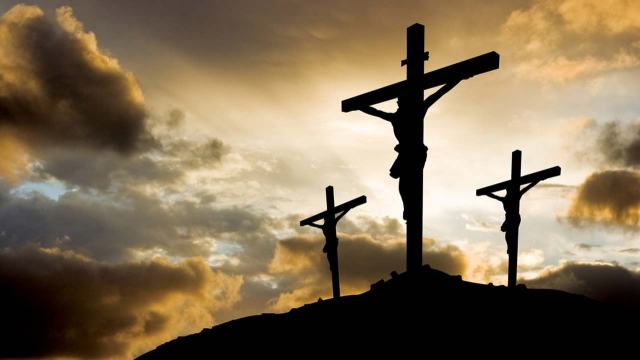
Jesus on the cross

From the waving of the palms to the rolling of the stone, Holy Week invites us to reflect on the deeper matters of faith by revisiting the story of Jesus, especially giving attention to the events that occurred between Jesus’ entry to Jerusalem and his resurrection.

The overarching message of God’s love and forgiveness is demonstrated through the death, burial, and resurrection of Jesus. Interestingly, the story we often refer to as the passion narrative is a composite of mini-episodes which contribute to a central plot, a plot that reaches its crescendo with the cross and the empty tomb.

As I reflect on the daily events that occurred during Jesus’ pivotal week in Jerusalem, I noted a few lessons about life and faith that I want to remember throughout the year:

1. Every temple needs cleansing now and then. That includes those temples built of brick and mortar, and those composed of flesh and blood.

2. Lead with the heart of a servant.  Servanthood and leadership are often expressed in tandem. Taking up the towel and basin is simultaneously an act of service and an expression of leadership.

3. Love one another! This was Jesus’ mandate. A mandate is different than a prerogative or a preference. It is a command to be obeyed, not an option to be considered.

4. Breaking bread around the table is about much more than bread.  Whether we are at the communion table or the dinner table, breaking bread is about sharing life, embracing diversity, and learning to love at a deeper, more sacrificial level.   It leads us toward a common mission, durable community, and eternal gratitude.

5. Pray the “prayer of indifference.” Just as Jesus prayed “Not my will, but your will be done” at least once, we must pray those words continually because our wills are so blatantly stubborn and self-interested.

6. Beware of those who kiss up to you. Like Judas, they either have an agenda of their own, or they are in cahoots with those plotting a coup.

7. Be faithful to God and yourself. We will be tempted daily to betray our God, our values, and our character for much less than 30 pieces of silver.

8. Going along with the crowd is always a risky venture. Politically, socially, or theologically, crowds seldom make wise decisions.

9. Only borrow something when you won’t be needing it very long.  It’s sort of like when Jesus was buried in a borrowed tomb. It was not an extended stay.

10. Peace emerges from a change within us, and not always a change in our circumstances. When appearing to his disciples in the upper room following the resurrection, Jesus first words were “Peace be with you” (John 20:21) These words were spoken while Caesar was still on the throne, conspiracy theories abounded, and many disciples were a bundle of anxiety. God’s peace defies circumstances and surpasses our understanding.

Each of the daily stories that comprise the big story of Holy Week has something to teach us about human nature, about sin, and about transformative faith. The lessons we learn from the life of Jesus encourage and equip us to be more effective followers and more courageous disciples.

(Barry Howard is the retired senior pastor of the First Baptist Church in Pensacola, Florida. He currently serves as a coach, consultant, and columnist with the Center for Healthy Churches. He enjoys golf, reading, and gardening.)

Things Churches Can Learn from The Masters

Masters photo

The first time I walked onto the grounds at Augusta National in 2002, I was overcome by the lush beauty. I have been privileged to attend The Masters several times through the years, and on each visit, I am inspired when I step foot on this immaculately manicured acreage, which is a rare combination of botanical gardens, nature preserve, and golf course.

During my years as a pastor, I gleaned valuable insights about life, business, and ministry from innovative organizations that strive for excellence, companies like Disney, Amazon, Chick-fil-A, and Apple.

This week as I watched the golf tournament on TV and recalled my previous visits to the property, I began to reflect on the lessons the church could learn from The Masters. Here are a few things worth considering:

Hospitality is welcoming and winsome. From the parking attendants, to the ticket takes, to the groundskeepers, Augusta National evokes a friendly vibe as staff members greet patrons with “Welcome to the Masters!” and a hearty smile. A hospitable sense of welcome is a trademark of a healthy congregation.
Not everything has to be high tech. Technology is important. I utilize a smart phone, a laptop, and a tablet. And I served churches through the years that embraced technology, striving to have the most recent computers, the most up-to-date audio technology, the most cutting-edge video screens, and the most elaborate lighting. I am not anti-technology, but it is sort of nice to see thousands of patrons staring at a low-tech manual scoreboard manned by volunteers, which happens to be one of the most iconic scoreboards in the world of golf. Churches should remember that technology is one tool in the toolbox, and if we become co-dependent on technology, it can become a liability rather than an asset in ministry.
Appreciate both silence and celebration. The aura of Augusta alternates between the roar of the crowd and a holy hush. I am always amazed that thousands of golf enthusiasts can cheer with loud enthusiasm, and yet a few moments later they can stand still in focused silence as a golfer is about to putt. A healthy church appreciates and makes space for silent meditation and jubilant celebration.
Simplicity and excellence often work in tandem. The kitchen staff at Augusta has mastered the art of making egg salad and pimento cheese sandwiches. Nothing fancy. Just a simple sandwich. Excellence in the local church doesn’t require glitz and glamour, but often emerges in doing the simple things well.
Spectators cheer for the golfers, not against them. In other sports, and even at other tournaments, fans may boo or jeer the opposing team or their least favorite golfer. Church is a place to “encourage one another” without prejudice.
Golf has a discipleship program that is called “drive, chip, and putt.” This catechism is designed to teach basic skills and disciplines. Healthy churches emphasize and exemplify the basic tenets of the faith, giving opportunities for the next generation to practice “on the course.”
Bad things happen to good golfers. Good putts lip out. The false front causes the ball to release and trickle into Rae’s Creek. Wind direction changes and weather is unpredictable. Yet the best golfers are required to be disciplined enough to put the last shot behind them and focus on the next shot. Likewise, healthy churches help others to put the past behind them, and the future before them, and to “press toward the mark of the high calling of God in Christ Jesus.”
New terms, new rules, and new norms take some getting used to. Did it sound a little different to hear the announcers referring to “patrons” instead of “fans,” and “penalty areas” instead of “hazards”? Or are you still adjusting to seeing players putt with the pin “in” the hole? Were you surprised when no penalty was assessed for knocking the ball off the tee during a practice swing? In church we like to say that our message is timeless, but our methodology is always changing. Churches must exercise patience as our “patrons” adjust to our evolving nomenclature and a rapidly changing culture.
Treasure and maximize diversity. At Augusta National, no two holes are identical. At many golf courses, the trademark characteristic might be big greens or postage stamp greens, lots of undulation or no undulation, elevated greens or elevated tee boxes.  While I wish that there was more diversity in the membership at Augusta National,  certainly the rich diversity in elevation, undulation, and landscape is a part of the appeal. Churches often struggle with embracing and navigating diversity. But healthy congregations perceive diversity as a strength, and they find ways to leverage their diversity for missional purposes.
Everyone loves a good redemption story. This year the tournament was won by a previous champion who had fallen to the wayside due to injuries and poor personal decisions. And yet, through hard work, he rebuilt his swing, rebuilt his game, and is in the process of rebuilding his reputation. Among many other things, church is a place of spiritual redemption, a place where the prodigal is welcomed home, a place where grace covers a multitude of sins, a place where we celebrate recovery, and a place where all stand on level ground before the cross.

The golf club at Augusta National is not a religious place, but in their quest for excellence in facilities and engagement with their patrons, there are a few things we as the church can learn from them.

(Barry Howard is the retired senior pastor of the First Baptist Church in Pensacola, Florida. He currently serves as a coach, consultant, and columnist with the Center for Healthy Churches. He enjoys golf, reading, and gardening.)
Holy Week: A Time for Deeper Reflection

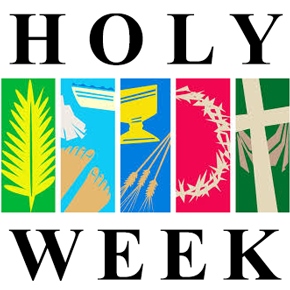
Holy-Week

Holy Week is a season for reflection and soul-searching, a week to re-trace the steps of Jesus toward the cross and to contemplate the depth of God’s love. During this week, Christ followers and spiritual inquirers from all around the globe will be focused once again on the events that led to the death, burial, and resurrection of Jesus of Nazareth.

The word “holy” is a healthy and meaningful word, though one of the most misunderstood terms in the English language. It does not nearly suggest “spiritual superiority” or “moral perfection.” The word “holy” refers to people or things set apart for specific, and usually religious, purpose. In the New Testament the Greek word for holy is “hagios” which means “different,” and it is most often used to underscore practices and lifestyles that correlate to a standard different than the cultural norm.

Why is observing Holy Week important to our preparation for Easter? Here’s a bit of history: The traditional observance of Holy Week seems to have originated in the Christian East, emerging out of the practice of pilgrimages to Jerusalem. Each day of Holy Week is important but at least five days call for specific reflection. Palm Sunday is a day to revisit the royal welcome extended to Jesus by the curious crowd as he entered Jerusalem. On Maundy Thursday believers recall the occasion when Jesus washed the feet of the disciples as he gave them a new mandate to love and serve. Good Friday is a day to review the passion and suffering of Christ on the cross. Holy Saturday (or Easter Even) commemorates the day that Jesus lay in the tomb. And Resurrection Sunday, or Easter, is a festive day to celebrate and proclaim that “Christ is risen; He is risen indeed.”

Dr. C. Welton Gaddy, retired senior minister at Northminster Church in Monroe, Louisiana describes the progressive steps in a meaningful pre-Easter journey: “Holy Week services bring into focus dimensions of discipleship that are missed completely by a simple leap from Palm Sunday to Easter. Worship services which take seriously the truths of Maundy Thursday and Good Friday please God because they challenge a greater commitment and a more comprehensive ministry of compassion among the people of God.”

This year as we navigate through each episode of Holy Week, here are few suggestions for honest and healthy soul-searching:
• Read the gospel account in John 12-20.
• Listen to the conflicting voices in the crowd
• Meditate on the cruel injustice of the cross.
• Imagine the passion of Christ’s suffering.
• Think on the hopelessness felt by his disciples.
• Celebrate the hope of the resurrection.
• Renew your commitment to faithfully follow Jesus.

The introspective prayer recorded in Psalm 139:23-24 is extremely relevant and probing during Holy Week:

Search me, God, and know my heart;
test me and know my anxious thoughts.
See if there is any offensive way in me,
and lead me in the way everlasting.

This year, as we read the biblical account with fresh eyes, and listen to the passion of Christ with fresh ears, it may seem as though we are encountering the story for the very first time. An intentional and focused journey through Holy Week may deepen our faith and inspire us to follow Jesus with unrelenting resolve

(Barry Howard serves as leadership coach/consultant with the Center for Healthy Churches. He resides in Pensacola, Florida. You can follow him on Twitter @BarrysNotes.)

Nineteen Books I Plan to Read in 2019

readinglist2019

I love to read. For me, reading is relaxing, educational, and often inspirational.

However, I haven’t always enjoyed digesting a good book. My affinity for reading was slow to develop.  But when it emerged, it flourished. During my teenage years, I perceived reading to be a nuisance and somewhat of a necessary evil to get decent grades. At some point during my college years, however, I learned to enjoy reading, not just for assignments or entertainment, but for personal growth.

As a minister, writer, and pastoral counselor, I need to read widely to stay current and relevant. More importantly, in my current stage of life, I need books like I need food, to satisfy cognitive hunger and to probe intellectual curiosity. Books stimulate my thinking, exercise my memory muscles, and challenge my presuppositions.

Typically, I read a variety of genres including fiction, spirituality, theology, history, and biography. I concur with Diane Duane who surmised that, “Reading one book is like eating one potato chip.”  Therefore, I usually keep from three to five books going at the same time, a discipline that was recommended by Opal Lovett, one of the most influential faculty members from my college years. This practice involves a variety of authors as conversation partners in my internal dialogue.

And I am careful to read books that I disagree with. One of Tony Campolo’s most underrated books contended, They Are the Enemy and They Are Partly Right.  Reading an opposing viewpoint challenges me to test my own assumptions and it acquaints me with a variety of perspectives, equipping me to dialogue and debate intelligibly, and not just emotively.

For the past several years, around the first of January, I make a list of books that I plan to read during the coming year. While I hope to read 40-50 books this year, I have already compiled a list of nineteen of the books I want to be sure to read in 2019:

  1. Sacred Rhythms: Arranging Our Lives for Spiritual Transformation by Ruth Haley Barton.
  2. Eternity Is Now in Session by John Ortberg.
  3. A Glad Obedience: Why and What We Sing by Walter Brueggemann.
  4. Were You There: Lenten Reflections on the Spirituals by Luke Powery.
  5. The Power of Love by Bishop Michael Curry.
  6. Crazy Christians: A Call to Follow Jesus by Bishop Michael Curry
  7. The Reckoning by John Grisham.
  8. The Civil War as a Theological Crisis by Mark Noll.
  9. Letters to the Church by Frances Chan.
  10. The CEO Next Door by Elena Botelho and Kim Powell
  11. Farsighted by Stephen Johnson.
  12. The Great Alone by Kristin Hannah.
  13. A Crazy, Holy Grace: The Healing of Pain and Memory by Frederick Buechner
  14. The Emotionally Healthy Church: A Strategy for Discipleship That Actually Changes Lives by Peter Scazzero
  15. An Unhurried Leader: The Lasting Fruit of Daily Influence by Alan Fadling.
  16. Irresistible: Reclaiming the News That Jesus Unleashed for the World by Andy Stanley.
  17. Dare to Lead: Brave Work. Tough Conversations. Whole Heart. by Brene’ Brown
  18. Grief Day by Day: Simple Practices and Daily Guidance for Living with Loss by Jan Warner and Amanda Bearse.
  19. The Waiting Room: 60 Meditations for Finding Peace and Hope in a Health Crisis by Elizabeth Turnage.

I find that it is healthy and helpful to read “outside the box” of my personal ideology. In other words, don’t just read the kind of stuff that reinforces what you think you know with certainty. Dare to read something that challenges you to think about life and faith from a different point of view.

Whether you are a fast reader or a slow reader, a hard print reader or a e-book reader, read for quality, not quantity. Mortimer Adler said it best: “In the case of good books, the point is not to see how many of them you can get through, but rather how many can get through to you.”

Enjoy a great year of reading in 2019!


A New Trend Emerging in Pastoral Calls

pastor pic

In the Baptist world, an ecclesial culture that treasures local church autonomy and operates in a “free call” method for pastoral assignments, there seems to be a new trend emerging. More and more pastor search committees are considering associate ministers with no senior pastor experience for senior pastor roles.

Throughout much of my ministry, I have observed pastor search committees limit their pool of candidates to ministers with solo or senior pastor experience. In the past, it has not been uncommon for search committees to limit their search with demographic parameters that are surprisingly narrow, such as seeking candidates “who are 35-55 years of age, who have graduated from a Baptist seminary, and who have 5 or more years of senior pastor experience.”

During a Center for Healthy Churches consultants’ retreat last fall, when asked to provide an update on the church from which I had retired, I shared that the church had called a 36-year-old associate pastor who had no senior pastor experience. And then I added affirmatively, “And he seems to be off to a great start.”

This led to our group recounting and listing the growing number of churches in our circles of acquaintance who have also recently called an associate pastor or a ministry resident to the position of senior pastor. Our team named 16 such churches immediately and continued to add to the list in follow up conversations. We were all surprised at the large number of churches (even those churches some call “big steeple churches,” “flagship churches,” or “legacy churches”) who have called new senior pastors whose only previous experience is as an associate.

One of our team members mentioned that when he started out, it was expected that a pastor would begin serving as a solo pastor in a small church, perhaps even while attending college or seminary, and then move to a larger pastorate soon after graduation. Several of my veteran colleagues recalled that when our generation of ministers moved from a smaller church to a larger church, the biggest challenge was adjusting to a multi-staff culture and providing guidance over a much larger budget.

Then we began to itemize the advantages that associates, who already have experience on a medium or large church staff, bring to a senior pastor role:
• They are familiar and comfortable with how a medium-to-large church operates.
• They are already comfortable and familiar with a multi-staff environment.
• They are acquainted with budgetary designations, parameters, and objectives.
• They bring fresh eyes and ideas to the mission of the church and the role of the senior pastor.
• They usually fall in an age range that makes a long tenure possible.
But there are also challenges for an associate who moves directly to the pastorate of a medium-to-large congregation:
• As an associate, they may have preached periodically, but now they must prepare sermons for 40-46 Sundays per year in addition to midweek services and other special events, a responsibility which requires a relentless discipline of preparation.
• Depending on a candidate’s age, they must overcome the stereotype of “youthfulness.”
• They must adjust to senior leadership. Even though an associate has experience leading large groups of people, senior pastoral leadership can often be more like herding cats than shepherding sheep.
• A senior pastor must show fairness and balance to all the ministries of the church and not be preferential. For example, an associate who has served for years in student ministry cannot give preferential treatment to student ministry.
• An associate who becomes a senior pastor must be patient with the learning curve and not expect to have the wisdom of a veteran pastor overnight.

Dave Snyder recently transitioned from an associate’s role to serve as the new senior pastor at First Baptist Church of Pensacola, a church with 2,600 members. When asked about some of the biggest challenges he has faced, Snyder immediately mentions the learning curve: “My lack of experience as a senior pastor presents some unique challenges. For example, there is no history in my soul when it comes to dealing with major church issues, unexpected tragedies, and overall staff leadership. Each month of my first year tends to be a classroom full of lessons learned. When leading staff meetings, prayer gatherings, ordinances, counseling, and preaching, I don’t have years of experience or expertise to draw on. Although my excitement is there, the lack of history in the role can produce an uneasiness in me if I allow it to.”

Then Snyder adds, “But after 17 years in student ministry, I have discovered new life and excitement in ministry. A senior pastor carries different types of work and labor. I have been excited about my first Christmas Eve service, my first Lord’s Supper, and my first deacon ordination. For veteran senior pastors, these come as normal parts of the call. In my first year, they are all brand new. On top of these, meeting, shepherding, and teaching the people of God creates deeper joy in my call. Multi-generations of people are now under my care. Although this is a huge undertaking, I am being strengthened by God’s grace.”

Pastor search committees who are looking for the best possible senior pastor for their church are discovering that experienced associate pastors and ministry residents are prime candidates for their committee’s consideration.  Associate ministers have a wealth of experience which enables them to adapt to a senior pastor role in a short period of time.  And much like participants in a medical residency program, ministry residents who have served two or more years in a local church residency program usually complete a full rotation in multiple areas of specialization, which gives them more diverse experience than many pastors who have not had the privilege of getting hands-on experience in multiple staff areas.

A healthy church is a community of Jesus followers with shared vision, thriving ministry, and trusted leadership. The team of consultants at the Center for Healthy Churches are available to assist your congregation in facilitating healthy pastoral transition. For more information about our services please contact us.

(Dr. Barry Howard retired in 2017 after spending 39 years in pastoral ministry, the last 12 years as the Senior Pastor at First Baptist Church Pensacola. He completed his coach training at the Pastoral Institute in Columbus, Georgia. He has a passion for the local church and a natural talent for fostering healthy practices among clergy and congregations. He serves as a coach for CHC.)

Don’t Let the Darkness of Grief Eclipse the Light of Christmas

winter-solstice-2015-777x437

Yesterday when my wife and I went for our afternoon walk, it seemed to be getting dark a little earlier than the day before.  And today will be even darker.  And it should be, because today is the darkest day of the year.

For those of us who live in the northern hemisphere, the shortest day of the year, the Winter Solstice, usually occurs on Dec. 21. The solstice, which literally means, “sun stood still,” officially marks the beginning of winter.

More notably, with the shortest day also comes the longest period of darkness. The Earth’s axial tilt is at its furthest point from the sun, allowing the least amount of daylight to reach the earth.

While it may be merely coincidental that the darkest day arrives just prior to our customary celebration of Christmas, from my experience as a pastor, I am aware that holidays can be dark days emotionally for many of us.

While there are a variety of events, experiences and emotions that cast dark shadows over our lives, some even bleak enough to obscure the joy of Christmas, a prominent culprit is grief.

Grief comes in many shapes and sizes.  We grieve over the death of friends and loved ones. We grieve over disintegration of a marriage. We grieve over an unexpected diagnosis. We grieve over friction within the family. We grieve over the loss of a job. We grieve over tragic events around the globe. At times, we may even grieve over our diminishing health, the loss of our dreams or the fading of opportunities.

Let me be quick to affirm that grieving is healthy as long as we are progressing through the grief process as opposed to becoming stuck in our grief.

The Bible never tells us not to grieve, but it does counsel us not to grieve “as those who have no hope” (1 Thessalonians 4:13).

Be aware that the empty chair at the Christmas dinner table, the Christmas card labeled “return to sender” or the empty pillow on the other side of the bed can all trigger a seemingly overwhelming sense of darkness, loneliness or grief.  Grief is a naturally part of life.  However, unprocessed grief is unhealthy and can lead to anger, depression or even physical illness.

During the holidays, rather than being overwhelmed by the darkness of grief, look your grief in the eye and call it by name. Dialogue with your grief. Don’t deny it or ignore it. But just because grief is present, it doesn’t have to be dominant.  Don’t let grief dictate or dominate the mood or conversation of your holiday celebration.

I am convinced that because we are “fearfully and wonderfully made” (Psalm 139:14), our faith gives us the capacity to experience the pangs of grief and “the peace of God, that transcends all understanding” (Philippians 4:7) simultaneously.

Our faith does not exempt us from the darkness, but our faith does equip us to deal with our grief with deep-seated hope.

Hinting at what life will be like when the promised Messiah comes, Isaiah 9:2 envisions that, “The people walking in darkness have seen a great light; on those living in the land of deep darkness a light has dawned.”

Walk through the darkness with courage. Just don’t take up residence in the shadows. Grief does not have the final word.

Today is the darkest day of the year.  But tomorrow, the days start getting longer, bringing a little more light.  The psalmist reminds us that “Weeping may endure for the night, but joy comes in the morning.” (30:5b)

After the long night of darkness, then comes the light, gradually, but certainly.

Be careful not to let the darkness of grief eclipse the Light of Christmas.

(Barry Howard serves as a pastoral counselor who leads Healthy Grief Groups in Pensacola, Florida.)

When God Moved into the Neighborhood

bethlehem

One of my favorite passages to reflect on at Christmas is found in the first chapter of the gospel of John. In The Message, Eugene Peterson translates verse 14 like this: The Word became flesh and blood, and moved into the neighborhood (John 1:14a MSG).  This earthy translation traces the incarnation to our front door.

Often overlooked as one of the biblical Christmas stories, the first chapter of John’s gospel describes the incarnation in philosophical prose. In contrast,  Matthew and Luke composed nativity narratives which chronicle the birth story of Jesus.  John, however, portrays Jesus as the Word who came to bring life and light to all who are willing to receive it (1:4).  And now, over 2000 years later, this Light still guides our steps and this Life continues to infuse our existence with a sense of purpose and direction.

The gospel accounts are compiled from different vantage points. Just as Matthew’s gospel appeals to the historian and genealogist in us, and Luke’s gospel sings to the poet and musician inside of us, perhaps John’s gospel dialogues with the inquirer and logician within us.

John asserts that in the beginning of all things, the Word co-existed with God. Before order was brought out of chaos, the Word was with God. Before light emerged out of darkness, the Word was with God. Before the first breath exhaled through human nostrils, the Word was with God. The Word was, is, and always will be in sync with God.

The Greek term translated and personified as the Word is logos. Logos is a philosophical concept which can be translated as “ultimate meaning” or “reason for being.” During Christmas we may see or hear the familiar slogan that says, “Jesus is the reason for the season.” I think John is actually proposing this Word incarnate informs our reason for being.

According to John, the Word took on human form and moved into the neighborhood. In other words, God not only entered the world as a human being on our behalf, but God has strategically chosen to be near and accessible to us.  In the incarnation, the God of the universe, who transcends our capacity to comprehend or control, has freely and lovingly chosen to relate to us in a personal way and to communicate with us in a language we can understand…an exemplary human life.

Remarkably, God not only invites us to receive light and life; God also calls us to be life and light wherever we live and wherever we go. As we follow the teachings of Jesus and emulate the example of Jesus, we become light and life in our community. As we serve God by serving others, especially the “least among us,” we too, mysteriously, become God’s flesh and blood, God’s hands and feet in our neighborhood.

In all seasons, may we share the Light and the Life with others in the way that we live and serve.

Simple Blessings I Never Want to Take for Granted

simple pleasures 1

I first saw this folk proverb on a sign hanging in one of our favorite Smokey Mountain restaurants: “Simple pleasures are life’s treasures.”  It reminded me of an old tv commercial that proclaimed, “Life’s simple pleasures are the best.” Whatever one’s station or mission in life, little blessings should never be taken for granted.

During this week designated to remind us to count our blessings, I will certainly be giving thanks for faith, family, friends, and freedom. But there are a few things that popped up in my gratitude inventory that some folks might label as minor blessings. For me, however, they are a big deal. Some are simple pleasures, others are personal preferences, and a few are stress relievers.

These twelve represent a longer list of blessings that add richness and meaning to life, simple gifts that I never want to take for granted:

  • A hot cup of coffee on a cool October morning.
  • A multi-colored sunrise over the bay or an autumn sunset over the Gulf.
  • Sticky hugs from nieces and nephews.
  • A timely phone conversation with a friend.
  • Artwork given to me by a child.
  • Immersing myself in a good book…a novel, a biography, or a little theology.
  • Home-made cards or written notes of encouragement.
  • A song emanating from my soul.
  • A refreshing midafternoon nap.
  • A weekly walk between 18 holes.
  • The freedom to gather with others to worship.
  • The privilege of dedicating, encouraging, baptizing, marrying, and even eulogizing others…walking alongside others through all of the seasons of life.

This week, as we give thanks for the big things, let’s also take time to give thanks for the little things that bring joy, fulfillment, and affirmation to our lives.

What would you include on your list of simple blessings?