Memorial Day: A Day to Remember and Reflect

Memorial Day

by Barry Howard

Who kept the faith and fought the fight; The glory theirs, the duty ours.        –Wallace Bruce

As a pastor serving in an active military community, I am privileged to serve alongside those who serve or have valiantly served our country.  But I also serve in a community where an extraordinarily large number of residents have lost a son, daughter, father, mother, brother, sister, friend or neighbor on the field of battle. Over the past twelve years I have shared eulogies at dozens of memorial services for veterans or their family members at the Barrancas National Cemetery at the Pensacola Naval Air Station. So for me, Memorial Day invokes more of a sense of observance than of celebration. The last Monday in May does not usually generate as much holiday enthusiasm as Christmas, Easter, or Independence Day. However, we should be careful that the meaning of this holiday does not become lost in the busyness of our activities.

Memorial Day is not just another “day off” but a day to remember those who have lost their lives in the military service of our country. This is a day to remember those who, according to Henry Ward Beecher, “hover as a cloud of witnesses above this Nation.”

In a culture that is increasingly attention-deficient, remembering is a painful but necessary discipline.  Revisiting stories from the battlefield may keep us consciously aware of the harsh realities of war. Exploring the historical narrative may enable us to learn from both the successes and the failures of our ancestors. When we remember the fallen we keep alive the individual and corporate legacies of valor and courage that inspire and challenge us to be responsible citizens of the free world.

When we fail to remember the sacrifices of those who came before us, we succumb to a convenient amnesia that eventually robs succeeding generations of acquaintance with our national heritage.  To fail to remember creates a contagious apathy that leads to a neglect of both our freedom and our citizenship.   To fail to remember can produce a false sense of security and an inaccurate perception that we are exempt from future warfare.  If for no other reason, we should remember in order to guard against what George Washington called “the impostures of pretended patriotism.”

Perhaps our high tech world is at times too much of a fantasy world.  When we pause our trivial pursuits, daring to focus on our unabridged heritage can stir in us both a gut check and a reality check. The kind of remembering we need to do on Memorial Day is an uncomfortable but necessary discipline, a practice that forges vision from memory and distills wisdom from history.

In The Roadmender  Margaret Fairless Barber suggests that “To look backward for a while is to refresh the eye, to restore it, and to render it the more fit for its prime function of looking forward.”

This year, as we observe Memorial Day, let us take time to remember the men and women who served with distinction and made extraordinary sacrifices to establish and preserve our freedom.  By remembering our heritage, may we be better equipped and motivated to engage the enemies of our day with courage, hope, and determination.

(Barry Howard serves as senior minister at First Baptist Church of Pensacola.)

Keeping Holy Week Holy

p

holy week 3The word “holy” is a healthy and meaningful word, though probably one of the most misunderstood terms in the English language. The concept of holiness does not suggest “spiritual superiority” or “moral perfection.”   The word “holy” means set apart or different. In the New Testament the Greek word for holy is “hagios,” which means “different,” specifically different from the world or different than the cultural norm.
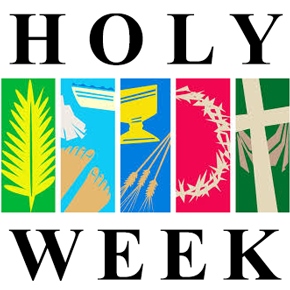

This Sunday is Palm Sunday which marks the beginning of Holy Week, a week that is to be different from a normal week. For me, Holy Week is a season for soul-searching and contemplating the depth of God’s love. During this week, Christians, all around the globe will be reflecting on the events that led to the death, burial and resurrection of Christ.

Why is observing Holy Week important to our preparation for Easter? Here’s a bit of history: The traditional observance of Holy Week seems to have originated in the Christian East, emerging out of the practice of pilgrimages to Jerusalem. Each day of Holy Week is important but at least four days call for specific reflection. Palm Sunday is a day to revisit the royal welcome extended to Jesus by the curious crowd as he entered Jerusalem. On Maundy Thursday believers recall the occasion when Jesus washed the feet of the disciples as he gave them a new mandate to love and serve. Good Friday is a day to review the passion and suffering of Christ on the cross. And Resurrection Sunday, or Easter, is a festive day to celebrate and proclaim that “Christ is risen; He is risen indeed.”

Dr. C. Welton Gaddy, senior minister at Northminster Church in Monroe, Louisiana describes the progressive steps in a meaningful pre-Easter journey: “Holy Week services bring into focus dimensions of discipleship that are missed completely by a simple leap from Palm Sunday to Easter. Worship services which take seriously the truths of Maundy Thursday and Good Friday please God because they challenge a greater commitment and a more comprehensive ministry of compassion among the people of God.”

This year as you navigate through each episode of Holy Week, here are a few suggestions for keeping Holy Week, holy:

        • Read the gospel account in John 12-20.
        • Listen to the conflicting voices in the crowd
        • Meditate on the cruel injustice of the cross.
        • Imagine the passion of Christ’s suffering.
        • Think on the hopelessness at his burial.
        • Celebrate the hope of the resurrection.
        • Renew your vows to faithfully follow Jesus.

Such an intentional journey through Holy Week may deepen our faith and inspire us to follow Jesus with unrelenting resolve.

(Barry Howard serves as Senior Minister at the First Baptist Church in Pensacola, Florida.)

7 Helpful Things to Know As We Prepare for Holy Week

Holy-Week 
Christ the Lord is risen today, Sons of men and angels say. Raise your joys and triumphs high; Sing, ye heavens, and earth reply.     -Charles Wesley
 

Next week is Holy Week, the final week of Lent, and a week for Christians to re-trace the footsteps of Jesus from Palm Sunday to Easter. Here are seven things that are helpful to know as we prepare for Holy Week:

  1. Palm Sunday marks the beginning of Holy Week and serves as a day to revisit the “triumphal entry” of Jesus into Jerusalem.
  1. On Holy Wednesday, two important things happened: First, Judas accepted 30 pieces of silver from the chief priests who enlisted him to betray Jesus. This is the reason Holy Wednesday is often referred to as Spy Wednesday.   Second, Jesus was anointed by the woman at Bethany with the expensive jar of alabaster.
  1. On Maundy Thursday Christians recall Jesus’ mandate “to love one another as I have loved you.” The word “Maundy” is a derivative of the word “mandate.” Thursday is also when Jesus broke bread and shared the cup with his disciples in the upper room. On Maundy Thursday, believers often participate in acts of foot washing or communion.
  1. Good Friday (also called Sacred Friday, Passion Friday, or Holy Friday) is devoted to remembering and sensing the sacrificial and suffering of Christ on the cross.
  1. Silent Saturday is a day devoted to waiting. After the crucifixion Jesus was interred in a borrowed tomb. His closest followers were grappling with his death and not anticipating the resurrection.
  1. On Easter, or Resurrection Sunday, Christians celebrate and proclaim the good news that Jesus arose from the tomb victorious over death. Interestingly, the term “Easter” was originally the name of a pagan spring festival. Some believe it was named after the Teutonic god or goddess of spring. However, the name was seized by Christian believers and converted to a day of worship and feasting to celebrate the resurrection of Christ.
  1. Easter is observed on the Sunday following the first full moon falling on or after March 21. Therefore, Easter cannot come before March 22 or after April 25. The Council of Nicea, convened by Augustine in A.D.325, affirmed the calculation used to determine the official date of Easter and that calculation is still used today.

Holy Week is an optimal time for followers of Jesus to think about and talk about the significance of Jesus’ life, death, burial, and resurrection. One good way to observe Holy Week is by reading and reflecting on the passion narratives, those passages in the gospels that begin with Jesus’ agony and arrest in Gethsemane and conclude with his burial.

A meaningful Easter is filled with scriptures, songs, and stories. And the central story of God’s incomparable love for us is illustrated in the life, death, and resurrection of Jesus.

Will Willimon aptly affirms, “I am invited by Easter to interpret my story in the light of God’s triumph in the resurrection.”

(Barry Howard serves as the Senior Minister at the First Baptist Church of Pensacola, Florida.)

A Bird’s Eye View

bird view

My friend and fellow church member, Bill Harden, went home to be with the Lord in 2010. His beloved wife, Louise, joined him last week. They were quite a pair. Bill inspired his family and friends with his cheerful humor, durable smile, and artistic craftsmanship. Louise loved flowers, good food, and quality time with family and friends. Her life was a bouquet of encouragement, love, and compassion.  At the memorial service for Louise, the family chose to decorate the chapel and atrium of our church with spring flowers and birdhouses. 

Although Bill invested much of his career in the travel planning business, as a retirement hobby Bill carefully constructed birdhouses in a variety of shapes and sizes.  In addition to the dozens of birdhouses Bill gave to others as gifts, an assorted collection of birdhouses adorned the mantle and the hearth in the Harden home.

Around 2008, Dr. Jim Pleitz and I were each honored to receive a unique birdhouse as a gift from Bill.  Built especially for the pastor and pastor emeritus, these church-shaped birdhouses were built from the wood removed from the floor of our former education building, affectionately known as the old library building, which was severely damaged during Hurricane Ivan and eventually demolished a year later. 

I have strategically placed my birdhouse in front of the chair where I have my quiet time early in the morning. During my prayer time over the past several years, this birdhouse has become a wooden parable of how I understand church in the 21st century….not the bricks and mortar of our campus…but our ministry…our mission…our spiritual community.

While most of the wood on this birdhouse came from the old church, Bill also incorporated new lumber into the birdhouse, creating sort of a two-toned effect, a phenomenon that reminds us that our church is a composite of the old and the new, a merger of our heritage and our dreams.  

For the perch, Bill installed an oversized doorknob front and center, which reminds us that a healthy church needs a big door, one that swings both ways, welcoming us to worship and sending out to serve.  And that big door needs to be open wide, perhaps wider than ever, as we welcome old friends and new neighbors with Christian hospitality, else we will become cliquish and stagnant.

Above the door is a cross. Intentionally placed over the entrance in a location similar to the street number or family name on your home, this cross explicitly identifies the occupants as followers of Jesus above all else. 

And finally, Bill went online and ordered a miniature spire which now sits atop the steeple pointing upwards, beckoning us to look heavenward to God for our hope and our strength.

Following the memorial service for Louise, a couple of young family members stood at the chapel door giving to each person in attendance a package of seeds, which they were encouraged to plant in memory of Louise. In ways too numerous to mention, Louise was all about planting seeds for the future and preparing for the next generation. And the seeds she planted will bear fruit for generations to come.

Our friends, Bill and Louise, are now together in their eternal home, but they left behind an ongoing testimony, personified in wooden birdhouses and a few seeds.  Perhaps their story gives us a bird’s eye view of the future, a future wherein a church that merges the best of the old and new, and plants good seeds for the future, flourishes and bursts into full bloom.

(Barry Howard serves as senior minister of the First Baptist Church in Pensacola, Florida.)


Pastor: A Unique, Contextual Calling

15-fbcp

by Barry Howard

While searching for a particular volume in my library, another book caught my attention. The Pastor: A Memoir by Eugene Peterson is an inspiring autobiographical account of what it means to be called to pastoral ministry and to live out that vocation in a unique community. This book has inspired me to reaffirm my calling with fresh perspective.

While Peterson is known to many primarily for his popular Bible translation called The Message, his most significant contribution to my world has been his writings about pastoral work. Years ago I read three of Peterson’s books about pastoral ministry: Five Smooth Stones of Pastoral Work, The Contemplative Pastor, and Under the Unpredictable Plant. In a church world that looks to the pastor to be the CEO, a chaplain-on-demand, or an ecclesial entrepreneur, Peterson reminds ministers and churches that a pastor is more like a spiritual director, a “soul friend” who walks alongside others pointing out what God is doing in their life.

In a fast paced world, where a competitive consumerist culture has invaded the church, pastors are often expected to be an idealistic combination of captivating motivational speaker, savvy executive/administrator, and extraordinary counselor. But the call to be a pastor is unique. There is no other vocation like it.

Veteran pastor Hardy Clemons reminds us that the church is to be “more family than corporation.” Clemons reminds pastors and churches of their peculiar mission:

Our goal is to minister: it is not to show a profit, amass a larger financial corpus or grow bigger for our own security. The ultimate goals are to accept God’s grace, share the good news, invite and equip disciples, and foster liberty and justice for all.”

For Peterson, the call to be a pastor is a call to spiritual discernment and caring within a unique local congregation and community. It is not a “one size fits all” occupation that functions uniformly in cookie cutter churches. The “pastoral intelligence” you glean from ministering to your people becomes a primary tool of the Spirit which informs and inspires how you lead and preach to your people.

In Peterson’s Memoir, he summarizes his understanding of the biblical role of a pastor:

The pastor is “not someone who ‘gets things done’ but rather the person placed in the community to pay attention and call attention to ‘what is going on right now’ between men and women, with one another and with God—this kingdom of God that is primarily local, relentlessly personal, and prayerful ‘without ceasing.

Each of us is responsible to God for fulfilling our calling. Forty-one years ago I confirmed my calling to be a pastor, and I am still learning and growing and understanding more of what it means to provide spiritual direction to a congregation. Being a pastor is more than what I do. It is who I am called to be.

(Barry Howard serves as Senior Minister at the First Baptist Church in Pensacola, Florida.)

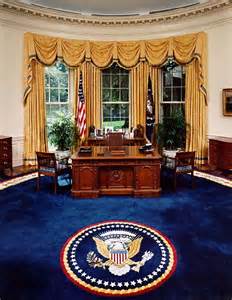
Be a Catalyst for Change by Praying for the President and Other Leaders

oval-office

On Friday January 20, Donald John Trump will be sworn in as the 45th president of the United States. Regardless of who we voted for, it is imperative for people of faith to pray for our new president and for other local, state, and national leaders.

From my perspective, our nation will be recovering for quite some time from one of the most negative and divisive election seasons in history. However, in addition to the negativity, there are other factors that make this election and forthcoming presidency unique and challenging: 1) Voters from both major parties “lacked enthusiasm” in their support of their party’s candidate. 2) Questions linger about hacking, tampering, or outside interference from a foreign government. 3) This election marked the largest disparity between the popular vote and the electoral vote. 4) There is at the minimum an uncomfortable relationship between the incoming president and key leaders within his own party.

These afore mentioned challenges underscore the reasons we need to pray for our newly elected president. Let me be quick to say that, for me, praying for a leader is not the same as affirming or agreeing with his or her policies or character. I believe this is true whether we are praying for the president, the governor, the mayor, or our pastor. To pray for a leader is to affirm the power of God in providing guidance and to intercede for that leader to be receptive to God’s direction, to grow in their moral and ethical conviction, and to govern or lead in the best interest of all people. That is why people of faith from a variety of political perspectives can unite around the common mission of praying for our president.

I believe that the Bible specifically teaches us to pray for those in leadership. I Timothy 2:1-2 may be the most direct instruction: I urge, then, first of all, that petitions, prayers, intercession and thanksgiving be made for all people— for kings and all those in authority, that we may live peaceful and quiet lives in all godliness and holiness.

As the inauguration approaches, I am especially concerned that we commit to pray for our new president. The president needs our prayers, as every leader does. From my observation, and unfortunately, campaigns are focused on rhetoric. Once a leader takes office, they are confronted with reality. I think every president who takes office must have a “sobering moment” when they suddenly feel the weight of responsibility that comes with their charge.

Here are five specific petitions I am including in my prayer for the incoming president:

  1. Pray for the president to become grounded in his faith. Across the years, I have made it a practice to pray for every president to be grounded in his spiritual convictions, primarily because I believe a president will make wiser decisions when guided by his or her faith. Interestingly, our newly elected president was endorsed by multiple religious groups who perceived his agenda to be more closely aligned with their own. However, I am not aware of any of these groups who espouse that our incoming president is a faithful practitioner of his faith, that he is significantly involved in a faith community, or that he regularly reads or understands scripture. In fact, many of these groups are also praying for the new president to solidify or deepen his personal faith. If our incoming president becomes grounded in his professed faith, I think it could revolutionize his leadership style and moral compass, and enable him to serve with greater effectiveness.
  2. Pray for the president’s family. Both during a campaign and during a president’s tenure of service, his or her family undergoes an unimaginable degree of scrutiny. The pressure is immense, even for those accustomed to the limelight. Pray for the president’s family members, and for the president’s family relationships to be fortified by patience, fidelity, and discernment.
  3. Pray for the president to be wise and discerning in making appointments. Every appointment the president makes will be significant, including appointees to his Cabinet and to the Supreme Court. Pray for the president to choose individuals of good reputation and moral courage. Many of these selections, especially those appointed to the supreme court, will serve for years to come.
  4. Pray for the president to be prepared for an unexpected crisis. Every president in my lifetime has not only carried the daily burden of responsibility of leading our great nation, but they have faced more than one abrupt and unanticipated crisis. President Carter dealt with the Iran hostage situation. President Reagan survived an attempted assassination. President George H. W. Bush oversaw Operation Desert Storm. President Bill Clinton addressed the ethnic wars of Bosnia and Kosovo. President George W. Bush presided during the terrorist attacks of September 11. President Obama served during the sequence of revolts and demonstrations called The Arab Spring. Pray that the new president will be prepared to deal with any unexpected crisis that arises during his tenure.
  5. Pray for the president to grow in his capacity to serve. Regardless of their campaign rhetoric, I am convinced that no candidate is adequately prepared to serve when they enter public office, especially the office of president. An effective president must become a student of the office, learning to listen to his advisers, learning the importance of bipartisan cooperation, learning to recover from his or her mistakes, learning when to speak and when to refrain from speaking, learning conflict negotiation and crisis management, and learning to balance confidence and humility. Obviously, our new president has honed and sharpened his skills in the field of business. I pray that he will likewise sharpen his skills of leadership and diplomacy as he serves as our president.

Almost every election cycle, constituents and candidates from each party make “change” a part of their platform and message. Regardless of one’s political slant, I propose that prayer is the ultimate catalyst for change. Although I am not an advocate of bumper-sticker religion, I remember an intriguing progression of slogans or bumper-stickers from a few years ago. The first simply read, “Prayer changes things.” The second advanced the idea by stating, “Prayer changes people. People change things.” I am committed to praying for God to change people, and to empower people to enact change…morally, ethically, socially, and politically… in all the right places.

Not all followers of Jesus will always agree on who we vote for, but we can agree to pray for “all those in authority.” As we approach the upcoming inauguration, join me in praying for our newly elected president, and all of those who are in a leadership role on a local, state, or national level.

(Barry Howard serves as the Senior Minister at the First Baptist Church in Pensacola, Florida.)

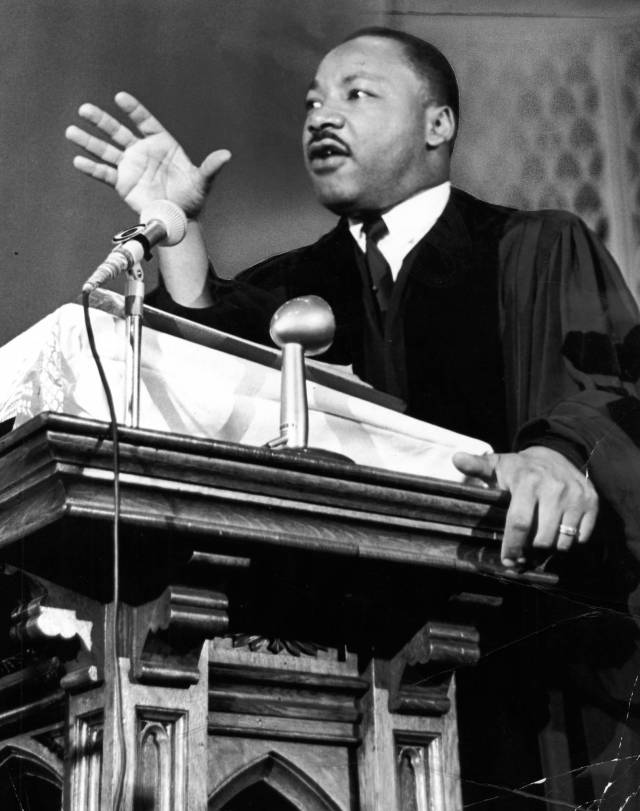
The View from Dr. King’s Pulpit

mlk-pulpit

As a boy growing up in Alabama during the heat of the Civil Rights Movement, I was familiar with the name of Dr. Martin Luther King, Jr., but only as a name in a news headline or a textbook. I was a child when the Freedom Riders’ bus was attacked by a hostile mob and burned a few miles from our home near Anniston. Weeks later, I remember sitting on a curb in front of Wikle’s Drugstore on Noble Street watching my first Civil Rights March. With grandparents who were avid Wallace democrats, I knew a lot about the governor from Clio, but very little about the man who marched in Selma. That is, until 1982.

During my senior year at Jacksonville State University, I participated in a field trip to Atlanta with the Sociology Club. We visited several sites of social and cultural significance including the Atlanta Federal Corrections Facility, the Grady Hospital, the Ebenezer Baptist Church and the King Center.

While touring the sanctuary of the Ebenezer Baptist Church, another student and I ventured into the pulpit and stood briefly where Dr. King had stood to preach. The hostess immediately reprimanded us, informing us that in their church tradition, only ministers of the gospel were allowed to “stand behind the sacred desk.”  I relieved her sense of alarm by informing her that I was a “licensed” Baptist minister and that my friend was preparing to be an Episcopal priest, a claim which our faculty sponsor, Dr. Rodney Friery, confirmed for the hostess.

Upon learning of our ministerial affiliation, the hostess allowed us to take in the view from one of the most strategic pulpits in our nation’s history.  Then she invited us to follow her to the King Center adjacent to the historic church where she led us through the Archives Area, and then through a door that was labeled “Authorized Personnel Only.”

Once inside, we discovered we were in an expansive storage facility with row after row of shelves containing hundreds of boxes. She took a couple of boxes from the shelves, opened them, and allowed us to view the contents. We quickly realized that the hostess was giving us the privilege of examining some of Dr. King’s personal sermon notes, and speeches, and correspondence. This information was being stored temporarily and would soon be processed for the archives.

The notes we scanned were mostly handwritten on hotel stationary, restaurant napkins, used mailing envelopes, and on the backside of “incoming” personal letters. While many respected orators labor intensively over manuscripts, revising multiple drafts in order to arrive at just the right script, it was obvious that Dr. King had a rhetorical gift for rendering a speech extemporaneously and passionately from a few scribbled notes.

After half an hour or so, our time was up and we rejoined the others in our group. Only years later have I come to realize the distinct privilege given to us that day in Atlanta. Since that time, I have read most of Dr. King’s published writings as well as many commentaries and editorials about Dr. King’s life and work.

Dr. King courageously pursued his dream of equal opportunity for all persons, and he employed and encouraged non-violent means to advance a course toward civil rights. The voice and vision from Dr. King’s pulpit helped shape a movement that began transforming our nation and our world, a movement that continues to this day. And we would do well to learn from his prophetic voice, his relentless pursuit of equality, and his strategy for nonviolent protests and peaceful resistance.

(Dr. Barry Howard serves as the Senior Minister at the First Baptist Church in Pensacola, Florida.)

Seventeen Books I Plan to Read in 2017

readingI must confess that my affinity for reading was slow to develop. During my teenage years, I perceived reading to be a nuisance and necessary evil. At some point during my college years, however, I learned to enjoy reading, not just for assignments or entertainment, but for personal growth.

As a pastor, in addition to Bible study and sermon preparation, I need to read widely to stay current and relevant. More importantly, in my current stage of life, I need books like I need food, to satisfy cognitive hunger and to probe intellectual curiosity. Books stimulate my thinking, exercise my memory muscles, and challenge my presuppositions.

Typically, I read a variety of genres including fiction, spirituality, theology, history, and biography. And I usually keep from three to five books going at the same time, a discipline that was recommended by Opal Lovett, one of the most influential faculty members from my college years. This practice invites a variety of authors to be conversation partners in my internal dialogue.

For the past several years, around the first of January, I make a list of books that I plan to read during the coming year. While I hope to read 40-50 books this year, I have already compiled a list of seventeen of the books I want to be sure to read in 2017:

    1. Simplify: 10 Practices to Unclutter Your Soul by Bill Hybels
    2. Gaining by Losing: Why the Future Belongs to Churches that Send by J.D. Greear
    3. Hillbilly Elegy: A Memoir of Family and Culture in Crisis by J. D. Vance
    4. A Way other than Our Own: Devotions for Lent by Walter Brueggemann
    5. An Other Kingdom:  Departing the Consumer Culture by Walter Brueggemann
    6. The Emotionally Healthy Leader: How Transforming Your Inner Life Will Deeply Transform Your Church, Team, and the World by Peter Scazzero
    7. Rediscovering Discipleship: Making Jesus’ Final Words Our First Work by Robby F. Gallaty and Ed Stetzer
    8. The Life You’ve Always Wanted: Spiritual Disciplines for Ordinary People by John Ortberg
    9. The Question That Never Goes Away: Why? by Philip Yancey
    10. Buechner101: Essays and Sermons by Frederick Buechner by Carl Frederick Buechner and Anne Lamott
    11. The Gift of Hard Things: Finding Grace in Unexpected Places by Mark Yaconelli
    12. I Am Malala: How One Girl Stood Up for Education and Changed the World by Malala Yousafsai and Patricia McCormick
    13. Convictions: How I Learned What Matters Most by Marcus Borg
    14. Half-Truths: God Helps Those Who Help Themselves and Other Things the Bible Doesn’t Say by Adam Hamilton
    15. Hallelujah Anyway: Rediscovering Mercy by Anne Lamott
    16. Tired of Apologizing for a Church I Don’t Belong To: Spirituality without Stereotypes, Religion without Ranting by Lillian Daniel
    17. Underground Railroad by Colson Whitehead

Reading books written by authors who write from diverse perspectives stretches my thinking and expands my capacity to relate to variety of people.

This year I would encourage you to read “outside the box” of your personal ideology. In other words, don’t just read the kind of stuff that reinforces what you think you know with certainty. Dare to read something that challenges you to think about life and faith from a different point of view.

Happy reading in 2017!

(Barry Howard serves as the Lead Pastor at the First Baptist Church in Pensacola.)

A Few Goals for 2017…More or Less

2017-goalsTraditionally, the start of a New Year is perceived as a season for clean slates and new beginnings. Depending on your perspective, you might consider New Year’s Day as a time to turn over a new leaf, to start that post-holiday diet, to begin that exercise regimen, or to generally clean up your act and put your life in order.

I am not usually inclined to compose a list of goals for the New Year, but in 2017 there are some specific things I want to work on personally and professionally. As I prepare for 2017, here are ten goals I am targeting…more or less:

  1. Eat a little less and exercise a little more. My physician keeps reminding me that I can increase the probability of enjoying prolonged good health if I begin now to eat a little less and to exercise more.
  2. Talk less and listen more. Several times in children’s sermons I have emphasized that God created us with two ears and one mouth so that we could listen twice as much as we talk. As I grow older, I am discovering the need for me as an adult to limit my speech and to be more intentional and focused in my listening.
  3. Meet less and serve more. Over the past few years, the church I serve has taken some strategic steps to minimize the number of meetings we ask leaders and workers to attend, and to increase the number of ministry opportunities we provide. Even as a church staff member, if I am not careful, my time can be consumed in meetings where my presence is not really needed. In 2017, I want to spend more time engaged in ministry action.
  4. Criticize less and encourage more. Maybe it’s just the after effect of a malicious election year, but I have heard enough criticism and negativity in 2016 to last a life time. While constructive criticism may be of great value, negative and petty criticism tends to be contagious and demoralizing. Our local and national leaders, our ministers, and our neighbors need our prayers and encouragement more than they need darts of non-constructive criticism flying their way.
  5. Spend less and save more. As I strive to be a more effective manager, and as I think about retirement scenarios down the road, I am persuaded that I need to spend a little less this year on frivolous things and to put a little more in savings to provide stability for the future.
  6. Worry less and trust more. I am convinced worry is a genetic trait handed down to me from previous generations. I know that worry is a waste of time and energy, but a little voice in my head is wrongly convinced that worry is productive. This year I want to proactively address those things that are within my realm of responsibility, to cease worrying about those things over which I have no influence, and to trust God for daily guidance and provision.
  7. Hurry less and focus more. Because my task list can get long, I tend to spend a lot of time hurrying from one task to the next. This year I want to slow the pace and focus on the present moment, even if that means I don’t check every task off my to-do list.
  8. Watch TV less and read more. I enjoy good tv shows and good books. I especially enjoy watching Hawaii Five O, NCIS, and Last Man Standing. My personal downfall, however, is reruns. I spend too much time watching shows I’ve already seen, and that cuts into my reading time. Reading exercises and stretches the mind more than watching TV. This year I am determined to spend more time wrapped up in a good book and less time watching repeats.
  9. Connect less and disconnect more. Electronic communication can be a technological blessing and social networking can be the next best thing to being there. However, staying connected 24 hours a day can be counterproductive and may increase stress, reduce productivity, and incite attention deficit. This year I want to maximize the benefits of being connected by strategically choosing times to disconnect.
  10. Reminisce less and engage more. Reminiscing about the past can be inspiring and educational. But when I become preoccupied with the past, I end up becoming a curator of yesterday’s blessings rather than envisioning new possibilities and working toward a positive future. Reminiscing helps me to treasure the experiences of yesteryear. But there comes a time to put the past behind me and the future before me and to engage the challenges and opportunities that are knocking at the door this year.

As I welcome 2017, I want to maximize the opportunities, navigate the obstacles, and “press toward the mark of the high calling” with hope and determination.

(Barry Howard serves as Senior Minister of the First Baptist Church of Pensacola.)

Making Our List, Checking It Twice

globeIn our family, we make a lot of lists, especially in December…the grocery list, the Christmas card list, the gift list, the guest list, the holiday event list, and the end-of-year giving list.  During the week following Christmas, most of the items on those lists have been checked off and completed except for the final list.  This week we are checking off the final items on our end-of-year giving list.

Throughout the year, our tithe, the first tenth of our earnings, goes to the ministries of our church.  For us, this is first and foremost an act of obedience to what we believe the Bible teaches about Christian stewardship.  But through the years we have also observed that the cumulative ministry projects of a local church make the most significant impact in meeting physical and spiritual human needs, locally and globally.  So in addition to the work of our local church, every December we give a gift to our Global Missions Offering, which supports the work of missionaries around the world.

Amanda and I are blessed to be able to contribute to a few other ministries and organizations that we are passionate about.  While there are many agencies that do extremely good work, we tend to support missional entities who aim to equip, inform, or complement the work of the local church because we believe “the local church is where the action is.”

In recent years the process has become much easier due to the advent of electronic giving.   Most ministries and charitable organizations, including our church, now have an “online giving” link that enables us to transfer our gifts directly from our account to the designated recipient.  Of course you can still mail a check or personally deliver a contribution, but we have discovered electronic giving to be safe and immediate, and electronic receipts are provided for good record keeping.

In contrast to high pressured, guilt-riddled solicitations for contributions, the Bible encourages discernment and good cheer in giving: “Each of you should give what you have decided in your heart to give, not reluctantly or under compulsion, for God loves a cheerful giver” (2 Corinthians 9:7).

As you determine and designate your end-of-year gifts, I encourage you to be cheerful, generous and wise.  And remember, as you prepare to submit end-of-year gifts, the IRS requires that all contributions for this fiscal year be received, electronically transferred, or postmarked by December 31.

So this week we are making our list, checking it twice, and then hitting “send.”

(Barry Howard serves as the Senior Minister of the First Baptist Church in Pensacola.)