
Just Hanging Around: The Brown Bat on Our Front Porch

(Stock photo)
A couple of months ago, a family member noticed a brown bat hanging on our front porch. Since then, our new friend has made frequent appearances. But over the past week, the bat has been there almost every afternoon, resting quietly in the shade just above the door. At first, we weren’t sure what to make of this tiny visitor. Was it lost? Was it dangerous? Or was it simply taking a break from its nightly rounds?

Curiosity soon turned into fascination. So, I did what any curious person would do — I looked it up. That’s when I took a deeper dive into chiropterology — the scientific study of bats. It comes from the Greek words cheir (hand) and pteron (wing), meaning “hand-winged.” And it’s an apt description. A bat’s wing is really a modified hand, with long, finger-like bones stretched out under a thin layer of skin. The more I read, the more amazed I became at these misunderstood creatures.

The brown bat on our porch, I learned, is probably an Eastern small brown bat, a species common throughout much of North America. Far from being pests, these bats are actually helpful neighbors. Each night, a single brown bat can eat hundreds of mosquitoes, moths, and beetles, serving as nature’s pest control service, free of charge.

In the 1920s, the Texas farmer Charles Campbell discovered how bats could protect crops from insect infestations. He built the first “bat tower,” inviting bats to roost nearby so they could feast on pests at night. His experiment was successful, and ever since, people have come to view bats not as villains of the night, but as quiet allies in the balance of nature.

Today, bats are even finding a role in technology. Modern scientists study how bats navigate with sonar to improve drone guidance systems and medical imaging. What once seemed mysterious is now inspiring innovation, a reminder that creation itself holds lessons awaiting our discovery.

Still, bats tend to get a bad reputation. They’re often linked with darkness, caves, and spooky stories, unfair associations that miss their real purpose. Watching our little brown bat tuck itself into the same quiet apex of our porch ceiling each afternoon has reminded me that even the most misunderstood creatures have a place in God’s plan.

As one biologist observed, “To study bats is to see beauty where most see only shadows.” God’s creation is full of surprises, and sometimes, the reminder of divine creativity is right at your door.

So now, when I step out on the porch and look up, I’m grateful for our tiny tenant. Bats are stealthy creatures, yet they remind us that there’s fascination in things we often overlook, and purpose in things we often misunderstand, even the eerie things.

Rather than wishing our bat would stay away, we want our friend to hang around a while and feast on our lakeside mosquito population so that they do not feast on us.

10 Life Lessons I Am Learning from Golf

Even in my 30s, I never imagined myself playing golf. Our high school didn’t have a golf team at the time. I didn’t enjoy watching golf on TV. There were only a few courses in our part of the state. Apart from pastoral responsibilities, most of my time was spent on continuing education.

Once we moved to Kentucky and I finished my educational programs, I took an occasional walk at the course near our home. One afternoon, a few friends from my breakfast group put a seven-iron in my hand and challenged me to hit toward the green. I was hooked.

The next morning, my friend, Bob, left a golf bag containing an old set of Power Built clubs and a few golf balls on my porch. I called my friend, Darrell, who had been a high school golf coach earlier in his career, and asked him to give me a few lessons. And I’ve been learning to play the game ever since.

Golf is more than a sport. It’s a mirror of life—frustrating at times, exhilarating at others, and always filled with opportunities to learn. Over the years, I’ve discovered that golf is a surprisingly good teacher, offering lessons that extend far beyond the fairway. Here are ten life lessons golf continues to teach me:

1. Be patient. Progress is gradual. Golf is not a game of instant gratification. The pace is slow, and progress occurs over a prolonged period of time. Bobby Jones once said, “Golf is a game that is played on a five-inch course—the distance between your ears.” Like in life, patience isn’t passive. Patience is the active discipline of steady focus.

2. Every shot counts, but one shot doesn’t define you. One bad swing can feel catastrophic, but the round isn’t lost. Ben Hogan, who came back from a near-fatal car accident to win majors, reminded us: “The most important shot in golf is the next one.” That’s also true in life. Mistakes don’t define us unless we stop moving forward.

3. Practice and preparation matter. Arnold Palmer became famous for his pre-shot routine. He believed consistency in preparation led to consistency in play. The same is true in life: the habits we practice daily—prayer, reflection, study, planning, exercise, visioning, work ethic—shape how we perform when it counts.

4. There are many factors outside your control. A sudden gust of wind, a bad bounce off a tree, or a tricky lie in the rough all remind us of life’s unpredictability. As in faith, the key is learning to let go of what we cannot control and focus on how we respond.

5. Respect the game and the other participants. Golf is built on etiquette, which includes things like replacing divots, being quiet during another’s swing, and respecting the pace of play. This culture of respect is a life lesson we need off the course, too. One of those lessons is to treat others with dignity in all kinds of circumstances.

6. Be flexible and learn to adapt to unfairness. Courses are different, weather changes, and no two rounds are the same. Jack Nicklaus once said, “Golf is not, and never has been, a fair game.” Adaptability, whether on the 18th green or in the twists of life, is the difference between frustration and resilience.

7. The mental part of the game is as important as the physical. Golf legends like Tiger Woods talk often about mental toughness. You can have the best equipment, but without focus and confidence, the game unravels. Our mindset in life can determine our outcome or effectiveness.

8. Relationships enrich the game. While golf can be played alone, it is most often enjoyed with others. I have continued playing golf more for the friendships than the progress of my game. Some of the best conversations happen walking down a fairway. Similarly, life is richer when shared in community with others such as your family, friends, and church. A deep sense of community is what makes life’s journey meaningful.

9. Enjoy the scenery along the way. Another reason I’ve continued playing golf is that I enjoy the outdoor landscape. Golf courses are often constructed in beautiful settings. If all you focus on is your score, you’ll miss the sunrise over the trees or the quiet stillness of a lake or the deer running across the fairway or the eagle soaring overhead. Life, too, is more than deadlines and goals. Life goes better when you take time to notice the beauty of creation.

10. No matter how you start, you can finish well. A round of golf is judged by how you finish, not how you start. Gary Player, known for his determination, once said, “The harder you work, the luckier you get.” The same applies to life. Finishing with integrity, faithfulness, and determination, especially when you’ve experienced a few setbacks, is challenging but rewarding.

Golf, like life, is both humbling and inspiring. It teaches patience, resilience, and gratitude. It sharpens our focus and tests our ability to remain calm under pressure. The next time you step on the course, remember, golf is not just about the score. It’s about enjoying the day and soaking up the lessons learned along the way. And I’m still learning.

Marriage and Stuff: 7 Things I Wish We’d Been Told 40 Years Ago

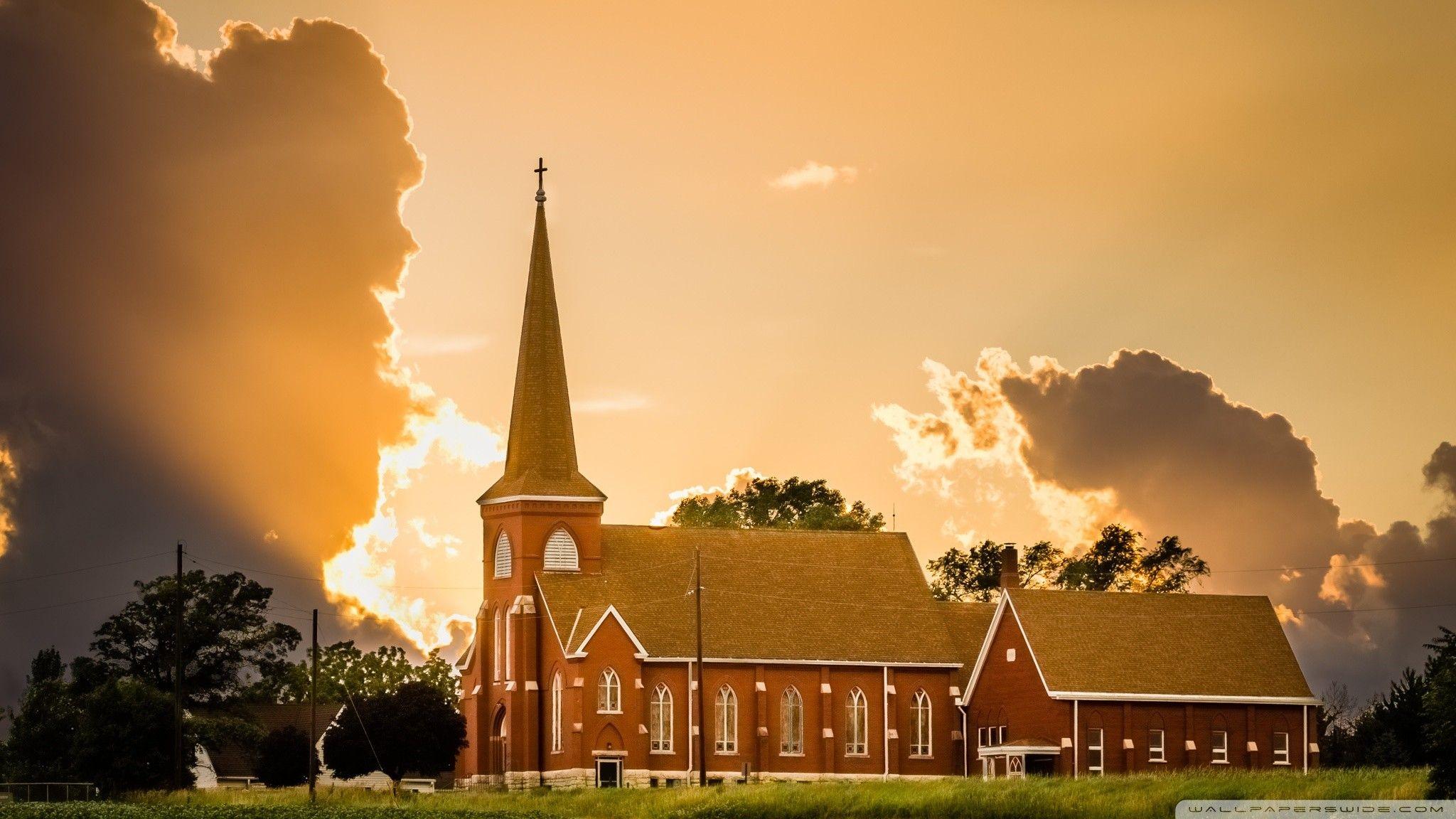
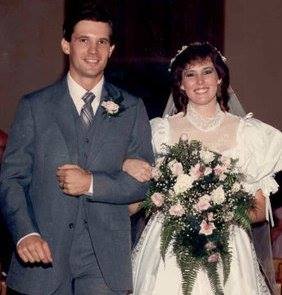
On September 7, 1985, Amanda and I stood in front of the congregation at the Post Oak Springs Baptist Church, exchanged wedding vows, and promised to love, honor, and cherish each other for life. The sanctuary was packed, a garden of ferns filled the choir loft, and the reception consisted of a simple buffet of wedding, nuts, mints, and punch. We were young, hopeful, and ready to face the world together.

Now, 40 years later, we’ve discovered that marriage is the greatest classroom of all. It teaches lessons you never thought you needed, often through life’s pop quizzes you didn’t see coming. Looking back, I sometimes wonder what would have been different if someone had pulled us aside that day and whispered a few of things we were about to learn in the trenches.

Across the years, as I have met with couples for “pre-marriage counseling,” I have shared some of the insights we’ve gleaned from our experiences along the way. Here are a few of those lessons:

1. Love is less about feelings and more about choices. The butterflies fade, the flowers wilt, and the honeymoon ends. But choosing each other every day, especially on the hard days, is what keeps the bond strong.

2. You can’t fix each other. I think every couple thinks they can sand off their spouse’s rough edges. Turns out, each person’s rough edges tend to create a bit of healthy tension that keeps you engaged in the relationship. The truth is, marriage is about helping each other grow, not remodeling each other into your dream spouse.

3. Laughter really is medicine. We’ve learned that a shared laugh can dissolve tension faster than a well-argued point. A good sense of humor is as important as a good budget.

4. You will disappoint each other. Perfection is a myth. Forgiveness is a must. Grace has saved our marriage more times than strategy ever could. So keep making more space for grace.

5. Time is one of your most valuable gifts. Careers, calendars, and commitments will fight for your attention. But nothing nourishes a marriage like time together. Even ordinary moments—a walk, a meal, a quiet evening—become more meaningful when shared.

6. Change is constant. We’re not the same people we were at 21 and 25, and that’s a good thing. Healthy marriages make room for growth, reinvention, and a few gray hairs.

7. Faith anchors you. Storms come—stressful circumstances, health scares, and compounded grief—but faith has been our ballast. As Ecclesiastes reminds us, “A cord of three strands is not quickly broken.”

If I could go back and whisper something to that young couple at the altar, I’d say: “Relax. You won’t have it all figured out. Just keep choosing each other, keep laughing, keep forgiving, and keep leaning on God.”

For your marriage to have durability, you can never put your relationship on cruise control. You will be called on to be focused, faithful, and flexible. Maya Angelou nailed it when she wrote, “Love recognizes no barriers. It jumps hurdles, leaps fences, penetrates walls to arrive at its destination full of hope.” 

Forty years in, our relationship is still growing, not because life has been easy, but because we’ve weathered it together. And if marriage means you have to wade through  “stuff,” as the title suggests, then I’m grateful for every bit of that stuff—because it has shaped us into who we are today.

Here’s to the next chapter of love, laughter, and learning together.

A Tall Tale: A Brief History of Bell Mountain

Tyler Knott insists, “Mountains know secrets we need to learn. That it might take time, it might be hard, but if you just hold on long enough, you will find strength to rise up.”

This year we are spending Labor Day weekend in a cabin in Hiawassee, which is one of our favorite places to visit. Our cabin is high on Bell Mountain, just below the historic park and overlook.

Perched high above Lake Chatuge in the Blue Ridge Mountains, Bell Mountain offers one of the most breathtaking views in North Georgia. But its story is about more than scenery—it’s about scars, preservation, and a community that saw beauty where others saw only rock.

Nowadays, Bell Mountain provides one of the most scenic overlooks in the Appalachian chain. When most travelers think of the peaks of North Georgia, they automatically think of Brasstown Bald, which boasts the highest elevation in the Peach State. However, Bell Mountain, which looms above Lake Chatuge and overlooks the valley to Brasstown Bald, offers a panoramic postcard view of the lake and the North Georgia and Western North Carolina mountainscape.

In the 1960s, Bell Mountain was targeted by the Hiawassee Stone Company, which blasted away at the peak in search of quartzite. The mountain’s once-smooth crown was left jagged and scarred, leading some locals to call it an “eyesore.” Yet others believed that even broken landscapes could hold meaning and purpose.

One such believer was Hal Herrin, a local businessman and conservationist. In 1971, he purchased the mountain and willed it to Towns County so it could be preserved for future generations. For decades, access remained limited, but Herrin’s gift ensured that Bell Mountain would not be lost to industry. In 2016, the county developed the Bell Mountain Park and Historic Site, complete with observation decks and interpretive signs.

Today, visitors can stand where dynamite once shattered stone and instead experience serenity—watching the sun dip behind the peaks or the mist roll across Lake Chatuge. The graffiti that now covers the rock face has become a kind of cultural quirk: while controversial, it is also a reminder of how humans leave their marks, both destructive and creative.

Bell Mountain’s story is one of transformation: what was once blasted and scarred has become a place of reflection and wonder. Standing there, I am reminded that mountains, like people, even wounded ones, still rise to inspire.

Cold Mountain: Where History, Folklore, and Storytelling Meet

It’s been almost 20 years since my first visit to Springdale Golf Course. On my first trip there, the starter pointed toward a nearby mountain peak and said, “That’s Cold Mountain.” Then he cast his hand across the panorama of the community and added, “And this is where the story took place.”

Yesterday, I joined a group of friends at what is now the Springdale Golf Resort. I recalled my first introduction to Cold Mountain, and I revisited the progression of how the story, the novel, and the movie evolved.

Rising over 6,000 feet in the Pisgah National Forest of western North Carolina, Cold Mountain is a peak rich with both natural beauty and cultural significance. Located about 15 miles southeast of Waynesville, its rugged slopes have watched over centuries of Appalachian life. Long before it became famous in literature and film, Cold Mountain was home to Cherokee hunters, later to pioneer families who farmed its foothills, and eventually to soldiers who marched off to fight in the Civil War.

It was that Civil War heritage that inspired Charles Frazier’s 1997 novel, Cold Mountain. Frazier, a native of the region, based the story loosely on family history and local lore. His tale follows W.P. Inman, a wounded Confederate soldier who deserts the battlefield and makes a dangerous trek homeward. His journey mirrors the experiences of many disillusioned soldiers of the time, while his beloved Ada Monroe, left behind to manage her late father’s farm, embodies the resilience of Appalachian women. The novel, steeped in historical detail and place-based authenticity, went on to win the National Book Award and cemented Cold Mountain’s place in American literary imagination.

Hollywood soon took notice. In 2003, director Anthony Minghella adapted the novel into the film Cold Mountain, starring Jude Law, Nicole Kidman, and Renée Zellweger. While the story is set in Haywood County, North Carolina, the filmmakers chose Romania as the primary shooting location. Why Romania? Its unspoiled landscapes better resembled the 19th-century Appalachians than the modernized North Carolina mountains, and the cost of filming abroad was considerably lower. Still, the production team worked hard to capture the spirit of the Blue Ridge, consulting historians and even drawing on Appalachian music traditions for the soundtrack, which featured performances by Alison Krauss and Jack White.

The film proved a success, grossing over $173 million worldwide and receiving seven Academy Award nominations. Renée Zellweger won the Oscar for Best Supporting Actress for her unforgettable role as the feisty Ruby Thewes. Beyond the accolades, the movie rekindled interest in the real Cold Mountain, drawing visitors from around the world who wanted to glimpse the peak that inspired the novel and film.

Today, Cold Mountain remains a powerful symbol. It can be summited only by a strenuous 10.6-mile hike via the Art Loeb Trail, but it can also be admired from overlooks along the Blue Ridge Parkway. Whether encountered on foot, in the pages of Frazier’s novel, on the silver screen, or viewed from the nearby golf course, Cold Mountain continues to evoke themes of perseverance, homecoming, and hope. It is both a real place and an inspiring narrative, a reminder that local folks in local communities have some of the best stories to tell.

Flour Sifters, Ceramic Bowls, Rolling Pins, and Family Traditions: The Legacy of a Hot Buttered Biscuit

This past weekend, my wife baked homemade biscuits for our houseguests. The warm, buttery aroma drifting from the kitchen stirred up a flood of memories. As we gathered to enjoy biscuits, bacon, and eggs, someone commented that many of our grandmothers used to bake biscuits daily—and how some even had a dedicated “biscuit drawer” to store the extras.

That simple observation took me back.

I remember that my Grandmother Howard had a kitchen cupboard with a built-in flour sifter that matched her yellow Formica table—the very heart of her kitchen. Countless stories and meals were shared around that table. Mawmaw, as we called her, made what we jokingly called “choke biscuits” using Gold Medal flour, buttermilk, and lard. Her biscuits were hearty, rustic, and unforgettable.

Grandmother Ginn—Big Mama—made hers in a large ceramic bowl with White Lily flour, buttermilk, and Crisco oil. She cut them with a round metal cutter, her motions quick and confident. Neither of my grandmothers had a biscuit drawer, though—because there were rarely any leftovers worth saving.

My grandfather had a deep love for biscuits, often paired with either red-eye gravy or sorghum syrup. He bought syrup in a tin from a mill near Waldo, just outside Talladega, or picked up a jar at Collinsville Trade Day on Saturdays. His red-eye gravy was a Southern classic—made from ham drippings and the last few tablespoons of Red Diamond coffee in the percolator.

History tells us that biscuits weren’t just comfort food—they were survival food. During the Civil War, soldiers often carried “hardtack” biscuits, dry and long-lasting, though lacking flavor. Back home, families learned to stretch their resources, using flour, lard, and buttermilk to make tender biscuits that became a symbol of home and hope. In kitchens across the South, biscuits became both a daily ritual and an expression of care.

When Big Mama later transferred from the Blue Mountain Cotton Mill to the Anniston Army Depot, she started buying Butter-Me-Not biscuits from the IGA on Quintard Avenue. They were okay, but never as good as homemade.

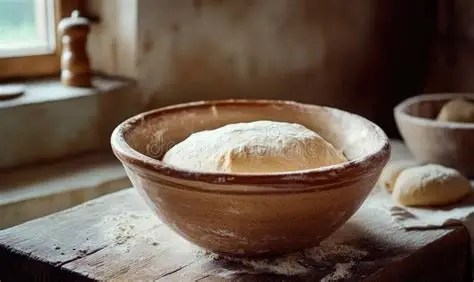
When I reached sixth grade, Big Mama decided it was time I learned the craft. She had me sift flour into a mound, press my finger into the center to form a crater, then fill it with Crisco oil and pour in the buttermilk. I stirred with a fork, kneaded the dough gently on wax paper dusted with flour, flattened it with a rolling pin, and cut out the biscuits. Into the oven they went—350 degrees for 15–20 minutes—rising to golden perfection.

As Rick Bragg reflected on his momma’s biscuits, he reasoned, “Every biscuit does not have to be perfect or uniform on the outside. It was the chemistry not the aesthetics, that mattered. If you had good flour and fresh ingredients and took the biscuits from the oven at just the perfect time, well, ‘it didn’t make much difference if you had a ragged biscuit or two in the batch.’”

It’s been 53 years since those early lessons. Since then, I’ve made thousands of biscuits and even taught a few others how to make them.

These days, when I enjoy a biscuit from Jack’s or the 278 Restaurant—or even from Cracker Barrel, where nostalgia is served alongside sausage gravy—I can’t help but reflect on the sacredness of that biscuit tradition. Food culture has changed, but the hunger for connection and comfort remains the same.

And for me, the best biscuit still comes from Big Mama’s cast iron skillet, topped with either local honey or my wife’s homemade strawberry freezer jam.

Now that’s a feast—and a legacy—worth savoring and passing along.

(Barry Howard is a retired pastor who now serves as a leadership coach and consultant with the Center for Healthy Churches. He and his wife live on Cove Lake in northeast Alabama.)

Resounding Gratitude: A Reflection on Psalm 138

Phoebe Birkhimer, a beloved church member and neighbor of ours during our years serving at the First Baptist Church of Williams, was known for her avid and personal note-writing. In 1992 when I had knee surgery, Phoebe baked cookies and sent them to our home as I was recovering. As an expression of gratitude, I sent hand-written notes to all who had provided food and flowers during my recuperation, including Phoebe. A few days later it happened…I received a “thank you” from Phoebe for the “thank you” note I had sent to her. Now that’s a lot of gratitude!

Psalm 138 is a song of praise and gratitude attributed to David. In The Message, “thanks” or “thank you” occurs six times. That’s a lot of gratitude. This resounds as a chorus of appreciation for God’s love, faithfulness, and strength. Then the psalmist proceeds to thank God for what God has done and for what God is going to do.

This psalm is a reminder that our relationship with God should be marked by gratitude and appreciation for God’s character and God’s actions on our behalf.

In seasons of trial or uncertainty, gratitude can be difficult, but it tends to be life-shaping in all kinds of circumstances.  When we shift our focus from our predicaments to God’s faithfulness, our hearts are infused with hope and courage. David’s experience reminds us that even when the path ahead seems daunting, God walks with us, providing the grace and strength we need to confront each challenge.

Take time to lift your voice in praise and gratitude to God. Alice Walker, author of The Color Purple, says, “’Thank you’ is the best prayer that anyone could say. I say that one a lot. Thank you expresses extreme gratitude, humility, understanding.”

A deeper dive…What are some specific things you want to thank God for? How has God shown steadfast love and faithfulness in your life?

Prayer for today… Thank you, O God, for your goodness and faithfulness in my life. I am grateful for your love, mercy, and grace that strengthen me on my journey. Thank you for hearing my prayers, guiding my steps, and providing for my needs. Now cultivate in me a heart of gratitude as I grow to trust you more. Amen.

(Barry Howard is a retired pastor who now serves as a leadership coach and consultant with the Center for Healthy Churches. He and his wife live on Cove Lake in northeast Alabama.)

(A version of this devotional was first published in Reflections Daily Devotional Guide.)


Everyone Loves a Good Mystery

Everyone loves a good mystery. The twists, turns, and the ultimate revelation can be thrilling.

One morning several years ago, I received a call from the popular TV show “Unsolved Mysteries” asking permission to film an episode on our church campus. At first, I thought the call was a hoax, but as I listened to the inquiry, I realized the caller was referring to a mystery involving a member of our community who had disappeared at sea many years ago while serving in the Navy.

Interestingly, when I saw the episode eventually produced by “Unsolved Mysteries,” I noted that the program did not solve the mystery; they only explored the mystery.

In Colossians 1:27, Paul probed a different kind of mystery, one that had been hidden for ages but is now being fleshed out in God’s people: “Christ in you, the hope of glory.” This mystery is not an unsolved riddle but an evolving reality of God’s plan to bring life transformation to all through Christ.

As followers of Jesus, why is our relationship with God a mystery? Perhaps it’s a mystery because the mechanics of how faith brings individuals to life cannot be fully explained. It could be considered a mystery because the work of the Spirit is hidden to the naked eye. Or maybe it’s called a mystery because we are a work in progress, still learning, growing, and maturing, and not yet complete.

In Colossians 2:6-7, Paul urges believers to “walk in him, rooted and built up in him and established in the faith.”We are invited to probe this mystery and live out of the wellspring of our relationship with Jesus each day.

A life rooted and grounded in Christ is not easily shaken. Brenning Manning reminds us, “The more rooted we are in the love of God, the more generously we will live out our faith.”

Take a deeper dive… Where do you sense the mystery of Christ at work in your life? What are some steps we can take to become more rooted and grounded in our faith?

Prayer: We thank you for the incredible mystery that you are at work in us and through us. As we journey through life, may we always be in tune with your Spirit, who is shaping us into your likeness. Root us deeply in your truth and unite us in your love. Amen.

(This first appeared in “Reflections Daily Devotional Guide.)

Teeing It Up: A Brief History of the Golf Ball

Long before I started playing golf, I collected golf balls as a hobby. Some were gifts from friends and church members. Others I picked up while walking near the local golf course. I kept the ones with interesting logos and gave the others to high school students or local golfers.

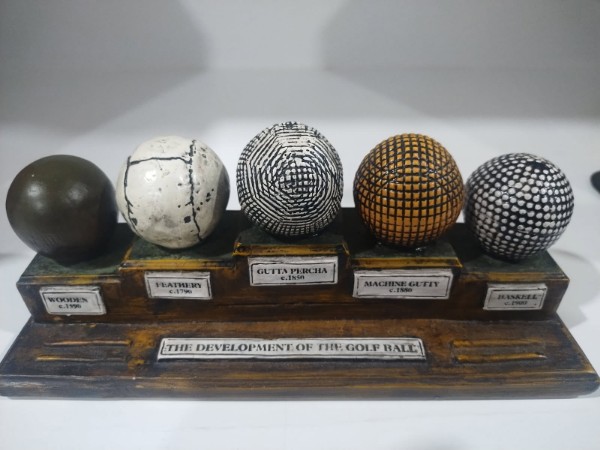
Once I started learning to play golf, the gifts of golf balls increased, as did other golf décor such as artwork, divot repair tools, and ball markers. One of my favorite items is a desktop display of the history of the golf ball. It was presented to me by a dear church member who purchased it at yard sale and said, “When I saw this, I thought of you and your love for golf and for history.” She was right, of course.

Golf is a game of paradox, quiet and contemplative, yet competitive and exacting. It tests patience, precision, and perspective. Among all the tools of the game, the golf ball might be the most underestimated. Small, round, and seemingly ordinary, the golf ball has a rich history that mirrors not only the development of the game, but also the art of resilience, innovation, and persistence.

From hardwood cores to high-tech polymers, the evolution of the golf ball mirrors not only the development of a game but the spirit of persistence, innovation, and redemption.

The Wooden Ball

Before golf was golf as we know it, players in 14th and 15th century Scotland struck solid hardwood balls made from boxwood, beech, or elm. These early golf balls were heavy, durable, and prone to unpredictable bounces. They didn’t fly far, but they rolled, and that was enough to get the game started.

In those early days, the course was the rugged Scottish terrain, the club was a curved stick, and the ball was whatever would move. The simplicity is humbling.

The Feathery

By the 1600s, the feathery emerged as the elite standard. A feathery was a leather pouch hand-stitched and tightly packed with boiled goose feathers. Once dried, it hardened into a compact sphere. These balls were works of art with each one hand-crafted by artisans who could produce only a few per day.

They were expensive and fragile. Wet weather or a mis-hit could ruin them. Still, they flew straighter and farther than wooden balls, and for nearly 200 years, the feathery reigned supreme.

Golf historian David Hamilton wrote, “The feathery was as delicate as it was costly. A single mis-hit could ruin it.”

The Gutta Percha

In 1848, Scottish clergyman Rev. Robert Paterson introduced the gutta-percha ball, made from the hardened sap of Malaysian sapodilla trees. It was moldable, affordable, and much more durable than featheries.

Known as the “gutty,” this ball democratized golf. More people could play. Courses expanded. The game grew.

At first, gutties were smooth, but golfers soon realized that nicked and scuffed balls flew better, straighter, and farther. So they began carving and hammering patterns into the surface, laying the foundation for the dimpled design still used today.

The Machine-Made Gutty

By the late 1800s, manufacturers began mass-producing gutties using metal molds. This introduced consistency and availability at scale. Golf was no longer just for elites. The industrialization of the gutty helped usher in a new era of public courses, amateur leagues, and expanding global interest.

The Haskell Ball

In 1898, American inventor Coburn Haskell, in collaboration with Bertram Work of the B.F. Goodrich Company, revolutionized the golf ball once again by introducing a wound-rubber core ball. It featured a solid rubber core wrapped in rubber thread, encased in a gutta-percha shell.

The Haskell ball flew farther than any ball before it and changed the competitive dynamics of the game almost overnight. Within a few years, it had replaced the gutty and became the new standard.

In the 1960 U.S. Open, a young Jack Nicklaus famously outdrove Arnold Palmer during a practice round. Palmer, never one to be outdone, asked what ball Jack was using. Nicklaus replied, “The same one you are. I just hit it better.”

No matter how good the golf ball becomes, it will always be dependent on the quality of the swing.

Today’s high-tech, dimpled golf balls are marvels of physics and design. But they owe everything to the wooden spheres, feathery stitches, tree sap, and rubber threads that came before.

So, the next time you tee it up with a Titleist, a Callaway, a Bridgestone, or your favorite brand, remember, you are holding a legacy of resilience and adaptation.

Whether your next shot soars down the fairway or sinks into the sand trap, remember that the game goes on, and so do you.

Swing again. Overcome adversity. Learn. Grow. That’s the story of the golf ball. And maybe, that’s the story of life.

(Barry Howard is a retired pastor who now serves as a leadership coach and consultant with the Center for Healthy Churches. He and his wife live on Cove Lake in northeast Alabama.)

7 Organizational Pitfalls That Keep Churches Stuck

A veteran airline pilot once told me, “Even the most advanced aircraft won’t go anywhere without regular course corrections.” The same is true of churches. While rooted in timeless truth, churches must constantly assess whether they’re still aligned with their mission or drifting off course.

Too often, congregations settle into familiar rhythms, mistaking comfort for health and routine for faithfulness. Meanwhile, the world outside their walls changes rapidly.

Churches are meant to be living, breathing reflections of the Kingdom of God—places where faith deepens, lives are changed, and the gospel is shared with enthusiasm and positivity. Yet even vibrant churches can get stuck.

Sometimes it’s slow and subtle. Other times, it’s an abrupt leadership conflict, a cultural shift, or simply a loss of momentum. The good news is that getting stuck isn’t the end of the story. In fact, it may be the beginning of renewal if we’re willing to reflect, reimagine, and respond.

Here are seven organizational pitfalls that can quietly derail even the most faithful of congregations—and what to do about them:

1. Prioritizing tradition over mission.

In 1967, the Swiss watch industry controlled over 80% of the global market. But when electronic watches were introduced (most notably by Seiko), the Swiss dismissed them as a passing fad. Within a decade, they had lost their dominance to competitors who embraced innovation.

The church can fall into the same trap when it values tradition over mission. When beloved customs become untouchable, they may obscure rather than illuminate the Good News.

Respect tradition, but regularly ask: “Does this still serve our mission, or just our memories?”

2. Lack of clear decision-making structures.

Churches often run on trust and familiarity—until a crisis hits. Without defined leadership roles and transparent processes, confusion and paralysis set in. Decision-making by consensus sounds inclusive, but in practice it can result in chronic indecision and burnout.

Clarify roles and lines of accountability. Empower leaders to lead and communicate decisions with transparency and grace. Structure doesn’t stifle Spirit. Rather, it provides space and channels through which the Spirit can move.

3. Avoiding conflict instead of addressing it.

A pastor once said, “In some churches, the goal is not peace—it’s the appearance of peace.” Many congregations avoid conflict to preserve harmony, only to find resentment simmering below the surface.

Thomas Crum cautions, “Conflict avoided is conflict multiplied.”

Encourage a culture where tough conversations happen in love. Teach that healthy conflict—done with grace and truth—is not division but discipleship.

4. Failing to adapt to changing realities.

Imagine a church that prints paper maps of their campus to hand out to first-time visitors, only to discover that no one under 40 uses paper maps anymore. They use electronic navigation through their smart device. Whether it’s communication, worship style, or outreach, churches often cling to outdated methods while the needs around them shift dramatically.

Learn to be faithful and flexible. Stay rooted in Christ, but flexible in your strategies. Evaluate regularly. Innovate prayerfully. Be ready to pivot when the moment calls for it.

5. Neglecting leadership development.

It’s been said that Moses may have led the Israelites out of Egypt, but Jethro’s advice (Exodus 18) kept him from burning out. Churches that rely on a few overextended leaders while neglecting to raise up others risk long-term dysfunction. Churches are wise to nurture and cultivate the young leaders who will become the next Joshua, the next Phoebe, the next Barnabas, or the next Timothy.

Identify and invest in emerging leaders. Offer mentoring, training, and real responsibility. A healthy church plans for the next generation before it’s desperate for one.

6. Measuring the wrong things.

Success in the church is not just about attendance and offerings. It’s about lives transformed, relationships deepened, and love lived out in the community.

William Bruce Cameron reminds us, “Not everything that counts can be counted.”

Don’t let the numbers define the narrative. Reorient your scorecard to emphasize missional engagement, spiritual formation, community influence, and kingdom impact

7. Ineffective internal and external communication.

Even vibrant churches can stall when communication breaks down. Internally, assumptions breed confusion. Externally, outdated websites, unclear signage, or inconsistent messaging can send mixed signals.

Good communication is ministry. Prioritize clarity in announcements, press releases, digital presence, and community relationships. Say what matters and say it well.

Churches are not immune to organizational drift. And while the Spirit of God moves in mysterious ways, the systems we build can either support or suppress that movement. By recognizing and addressing these common pitfalls, we free the church to do what it was always meant to do: live out the Gospel boldly, joyfully, and effectively.

Because when a church gets unstuck, the congregation gains traction and begins to move forward, outward, and upward.

(Barry Howard is a retired pastor who now serves as a leadership coach and consultant with the Center for Healthy Churches. He and his wife reside on Cove Lake in northeast Alabama.)