

Building Bridges Across the Great Divide

http://www.rarehistoricalphotos.com

When construction began on the Golden Gate Bridge in 1933, skeptics said it couldn’t be done. The winds were too fierce. The fog too dense. The span too long. But through grit, innovation, and vision, workers united across trades and backgrounds to connect two shores that had long been separated. Against enormous odds, the bridge was completed in 1937 and still stands today. It is not just as an engineering marvel, but a symbol of what’s possible when people work together to span what divides them.

Our nation needs that kind of bridge-building again, not with steel and cables, but with courage, empathy, and dialogue.

We are living in a time when division feels more visible and more visceral than ever. Political debates become personal battles. Social media threads unravel into shouting matches. Families gather around dinner tables, uncertain about how to talk about the world without tearing each other apart.

We are, in many ways, a nation of silos, more comfortable in our echo chambers than in conversations that challenge us. But if we want to build a better future, we cannot afford to remain divided. The health of our democracy and the well-being of our families and communities depend on our ability to build bridges across the great divide.

A wise person once remarked, “Unity is not the absence of differences but the presence of mutual respect in the midst of them.”

Division is not new, but it has been amplified. Fueled by polarized media, ideological entrenchment, and the fast-paced spread of misinformation and disinformation, we’ve drifted into a mindset that sees those who disagree with us not as fellow citizens but as threats. That’s a dangerous place for any society to be.

As the late Senator John McCain once warned, “We weaken our greatness when we confuse patriotism with tribal rivalries that have sown resentment and hatred and violence across all the corners of the globe.” Civility isn’t cowardice. It’s a form of courage. And dialogue isn’t defeat; it’s a doorway to understanding.

After the Civil War, President Abraham Lincoln worked not only to reunite the nation politically but to heal it relationally. When criticized for showing kindness to Confederate sympathizers, Lincoln replied, “Do I not destroy my enemies when I make them my friends?” His commitment to unity, even amidst deep division, laid a foundation for national healing, one conversation and one gesture at a time

Recently, I read about a local church and a nearby civic group who hosted a community roundtable with people from across the political spectrum. The conversation was slow and awkward at times, but also honest, respectful, and hopeful. Participants left not with total agreement, but with mutual appreciation and a shared desire to keep the conversation going.

That’s where healing begins: not in uniformity, but in humility and respect.

A shared future requires shared values. Most of us, regardless of political leanings, want similar things: safe communities, healthy families, meaningful work, a stable economy, and a sense of dignity and belonging for all people. When we begin with the values we hold in common, we can face what divides us with greater grace.

To live in unity does not require uniformity of thought, perspective, or conviction. It does require that we build on our common values, even when we don’t share the exact same viewpoint. Rick Warren wisely reminds us, “We don’t have to see eye to eye to walk hand in hand.”

The work of bridge-building is not glamorous. It won’t trend on social media. But it is deeply necessary. It happens in quiet conversations, in community service projects, in choosing curiosity over caricature.

If we want to leave a better world for our children and grandchildren, we must begin not by shouting louder, but by listening deeper. We must become savvy builders who construct bridges, cultivate relationships, and collaborate as problem-solvers. And we must dare to believe that across even the widest divide, bridges can still be built.

Let us be those who build them.

(Barry Howard is a retired pastor who now serves as a leadership coach and consultant with the Center for Healthy Churches. He and his wife live on Cove Lake in northeast Alabama.)
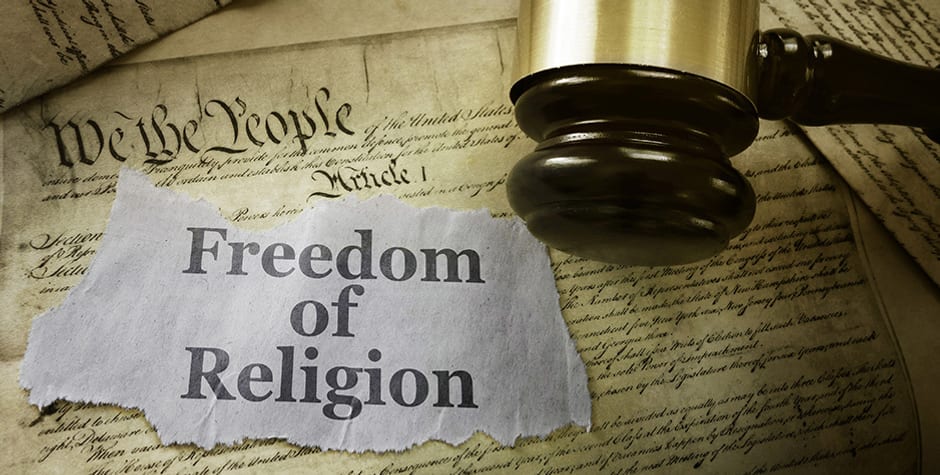
Celebrate Religious Liberty by Exercising Your Freedom to Worship

Fire up the grill. Churn the homemade ice cream. Enjoy the fireworks as you hum a little John Philip Sousa. It’s the Fourth of July weekend.

For many, this holiday brings the joy of parades, cookouts, and patriotic music. But amid the celebration, it’s worth remembering that Independence Day is about more than national pride—it’s about preserving and practicing the freedoms that define us. Among the most vital—and perhaps most often overlooked—is religious liberty.

More Than a Constitutional Clause

Religious liberty means we are free to worship without fear of persecution, and equally free from government coercion into religious activity. This freedom protects our right to attend the church of our choice—or no church at all. And it also ensures that faith remains a matter of personal conscience, not political control.

The founders of our nation recognized the harm caused when religion and government become entangled. They established, with care and foresight, a “wall of separation” between church and state—not to marginalize faith, but to guard its integrity.

As Isaac Backus, a prominent Baptist minister during the American Revolution, once wrote:  “When Church and State are separate, the effects are happy… but where they have been confounded together, no tongue nor pen can fully describe the mischiefs that have ensued.”

Worship Is a Freedom Worth Using

While many of us will mark Independence Day with fireworks and festivities, I hope we’ll also celebrate by exercising the freedom that sets us apart: the freedom to worship.

Our Baptist ancestors were instrumental in shaping the First Amendment, not only to protect their own practices but to advocate for the religious freedom of all. They believed—deeply and rightly—that no government should compel belief or interfere with the exercise of faith. That principle still holds today.

“Congress shall make no law respecting an establishment of religion, or prohibiting the free exercise thereof…”  –First Amendment to the U.S. Constitution

But freedom requires stewardship. It’s not just a right to defend, but a gift to live out.

A Global Perspective

As we gather for worship this weekend, may we remember the millions around the world who do so in secret, risking their safety for the sake of their convictions. May their courage remind us never to take our freedom for granted.

In my years as a pastor, I’ve seen how worship shapes lives—it forms character, builds community, and fuels compassion. When we gather to pray, sing, listen, and serve, we become more than attendees—we become active participants in the liberty we’ve been given.

That’s why Hebrews 10:25 challenges us: “Some people have gotten out of the habit of meeting for worship, but we must not do that. We should keep on encouraging each other…” (CEV)

To neglect worship is to risk trivializing the hard-fought right to gather without fear or restriction.

More Than a Celebration—A Commitment

So yes—enjoy your celebration. Wave the flag. Cheer the parade. Light the fireworks. But let’s also take time to reflect. Give thanks for the freedoms we enjoy. Pray for those who are still waiting to worship freely. And most importantly, exercise your freedom to worship—not just this weekend, but consistently, gratefully, and respectfully.

Because if even one group loses their right to worship, religious liberty is in jeopardy for us all.

(Barry Howard is a retired pastor who now serves as a leadership coach and consultant with the Center for Healthy Churches. He and his wife live on Cove Lake in northeast Alabama.)
(This is an updated column from 2016.)

Rediscovering Our Belief in “Liberty and Justice for All” — and Living into It

When I was in the 3rd grade, long before our coal-heated elementary school had an intercom, I remember Mrs. Pirkle, our teacher, would lead us to stand at attention, face the flag, and recite the Pledge of Allegiance. For many Americans, these words roll off the tongue as familiar as the melody of the national anthem: “…with liberty and justice for all.”

We often recite this phrase at school assemblies, civic ceremonies, and public gatherings. Yet in a time when division is deep, and trust is fractured, we must ask ourselves: Do we still believe those words? And more importantly, are we truly living into them?

“Liberty and justice for all” is more than a tagline; it’s a guiding principle. It reflects the highest aspirations of a nation committed to freedom, not just for the privileged, but for every citizen. It is both a pledge we recite and a promise we must embody.

The social contract that binds us together as citizens of these United States is based on the common good of the community, and not the advancement of one individual over another, one class of people over another, or one ethnicity of people over another. Woodrow Wilson contended, “America is not anything if it consists of each of us. It is something only if it consists of all of us.”

To reclaim this belief is to recommit ourselves to a shared vision: a society where opportunity is not determined by zip code, and dignity is not dictated by skin tone, belief system, portfolio size, or political affiliation.

“Liberty and justice for all” is more than a theory; it is an ongoing pursuit. One historical moment that illustrates this pursuit is the courageous action of Fannie Lou Hamer, a Mississippi sharecropper who became a powerful voice in the civil rights movement. After being denied the right to vote and facing brutal opposition, Hamer famously testified before the 1964 Democratic National Convention: “I’m sick and tired of being sick and tired.”

Her words ignited the conscience of a nation. Hamer didn’t ask for special treatment. She asked that the promise of “liberty and justice for all” include her, too. Her story reminds us that liberty requires vigilance, and justice demands action.

Justice is more than a courtroom verdict; it is a spiritual mandate. Amos 5:24 demands, “But let justice roll on like a river, righteousness like a never-failing stream.” Justice isn’t confined to verdicts and legislation. It is manifest in the way we provide food, clothing, housing, education, and healthcare to the “least of these.” Justice insists that all people deserve to be seen, heard, and respected, especially the disadvantaged and the underprivileged.

Likewise, liberty is not simply the absence of ethical and moral restraint, but the presence of opportunity coupled with a call to responsibility. It’s the freedom to speak, worship, and live without fear of marginalization.

Coretta Scott King insisted, “Freedom is never really won. You earn it and win it in every generation.”

“Liberty and justice for all” doesn’t end with us; it starts with us. Rediscovering liberty and justice involve both public policy and personal practice. It begins in our homes, our churches, our voting booths, and our daily conversations. It starts when we examine our assumptions, expand our circles, and speak out when the voices of others are silenced.

It begins when a teacher advocates for underserved students. When a community leader ensures fair access to resources. When a neighbor stands up for the rights of an immigrant neighbor. When a local church hosts a refugee family. When your Bible study group or small group gets involved in prison ministry. Or when your mission group sponsors and supports victims of human trafficking.

It continues when we advocate for fair and just legislation to protect and preserve the rights of all individuals, even those with whom we disagree. And when some of our representatives and leaders from both sides of the aisle suffer from rapid-onset constitutional amnesia, we need to vigorously and vehemently remind them that, since we were children, before we knew the difference between a Democrat or Republican, we pledged to pursue liberty and justice for all.

By the way, in the middle of my 3rd grade year, schools in Alabama were integrated. It was a tense time, especially in the Deep South. However, I cannot imagine a teacher doing a better job of introducing new friends of color into our classroom. Although some of us had been cautioned at home about getting too close to our new friends, once we got to school, Mrs. Pirkle led us all in starting the day with the Pledge of Allegiance.

Across the years, I have preached that we all stand on level ground before the cross, a core belief that determines how I treat others. While buses were being burned and churches were being bombed across my home state, in our little classroom, Mrs. Pirkle helped us understand that we all stand on level ground before the flag, because we are a nation that believes in “liberty and justice for all.”

Independence Day calls us to more than celebration. It calls us to conviction. It calls us to remember that our work is not done when the fireworks fade. We are called to build a future where the final words of our pledge aren’t just recited—they are realized.

And if we are bold enough to believe in “liberty and justice for all,” we must also be brave enough to live and serve in ways that make it true.

(Barry Howard is a retired pastor who currently serves as a leadership coach and consultant with the Center for Healthy Churches. He and his wife live on Cove Lake in northeast Alabama

Learning the Unforced Rhythms of Grace

In a world that praises hustle and rewards burnout, Jesus offers something profoundly countercultural: rest. Not the kind of rest you squeeze in between meetings or tack onto the end of an overbooked week, but real rest—the kind that restores the soul, quiets the mind, and invites us back into wholeness.

In Matthew 11:28–30 (The Message), Jesus extends an invitation: “Are you tired? Worn out? Burned out on religion? Come to me… Walk with me and work with me—watch how I do it. Learn the unforced rhythms of grace.”

These words, so aptly paraphrased by Eugene Peterson, feel less like a command and more like a gentle hand on the shoulder, drawing us toward something better than exhaustion: grace.

Learning to Rest Is a Strength, Not a Weakness

In her book Invitation to Silence and Solitude, Ruth Haley Barton writes, “Because we do not rest, we lose our way… Poisoned by the hypnotic belief that good things come only through unceasing determination and tireless effort, we can never truly rest.”

It’s easy to assume that if we stop, we’ll fall behind. But Jesus flips the script—he teaches that rest is not an interruption to spiritual formation; it is spiritual formation. It’s how we learn to hear his voice above the noise.

A Gentle Yoke in a Demanding World

Jesus invites us to “take his yoke”—a farming tool once used to link animals for shared work. But his yoke isn’t burdensome. It’s custom-fit, gentle, and shared. We don’t pull alone. We’re yoked with Christ, walking in step with his grace.

Years ago, I met a retired pastor who had served faithfully for five decades. When I asked him his secret to longevity, he said simply, “I finally learned to walk at God’s pace.” That’s what Jesus means by unforced rhythms—it’s grace that moves in time with heaven, not the chaos of the calendar.

Grace for the Weary and Wounded

In times of loss, confusion, or fatigue, grace meets us quietly and consistently. It is:

  • An antidote for anxiety
  • A remedy for restlessness
  • Decompression for depression
  • Antivenom for sin

Grace is what saves us when we can’t save ourselves. It guides when we’re lost, comforts when we’re hurting, and encourages when the odds are stacked against us. It even carries us when we don’t know the way forward.

How Do We Learn These Rhythms?

  • Come to Jesus—not just once, but daily
  • Take his yoke—release the burdens you were never meant to carry alone
  • Learn from him—observe his gentleness, humility, and wisdom
  • Rest in him—receive the peace that only grace can give

This isn’t just self-care. It’s soul care. It’s a way of life Jesus modeled—and a way of life he still invites us to follow.

John Mark Comer reminds us, “Transformation is possible if we are willing to arrange our lives around the practices, rhythms, and truths that Jesus himself did, which will open our lives to God’s power to change.”

So today, let grace interrupt your hurry.
Let grace reframe your expectations.
Let grace teach you how to breathe again.

Because in Christ, we’re not called to hustle harder—we’re called to finish the race at the speed of grace.

(Barry Howard is a retired pastor who now serves as a leadership coach and consultant with the Center for Healthy Churches. He and his wife live on Cove Lake in northeast Alabama.)

(This post is a summary of a sermon I shared in 2023.)

“A Sweet Friendship Refreshes the Soul”

“Just as lotions and fragrance give sensual delight, a sweet friendship refreshes the soul.”
Proverbs 27:9, The Message

There’s nothing quite like a true friend. Not just an acquaintance, not just a name in your contacts list—but someone who lifts your spirits, listens without judgment, and lingers beside you in both celebration and sorrow. According to Proverbs 27:9, that kind of friendship is like a soothing balm—something that restores, heals, and renews the soul.

In a time when loneliness is called a public health crisis, the simple beauty of soul-refreshing friendship becomes even more vital. It’s not flashy. It’s not trending. But it’s life-saving.

C. Raymond Beran described a friend this way: “A friend is someone with whom you dare to be yourself. Your soul can be naked with them. They ask you to put on nothing—only to be what you are.” With them, you can laugh without caution, cry without shame, and speak without filters. You can sit in silence or spill your story. With a true friend, you are not edited, evaluated, or erased. You are simply embraced.

History offers us luminous models of such relationships. When C. S. Lewis and J. R. R. Tolkien met at Oxford, they bonded over stories, ideas, and faith. Over the years, their friendship sharpened their creativity and deepened their convictions. Lewis once wrote, “Friendship is unnecessary, like philosophy, like art… It has no survival value; rather it is one of those things which give value to survival.”

We may not all write epic novels, but each of us needs that kind of sweet, soulful companionship.

How does this relate to our faith and our church? A church ought to be the kind of place where friendship blooms. The early Quakers captured this spirit when they called themselves “The Society of Friends.” Churches aren’t meant to be cold institutions, but communities where friendships in Christ sustain us through joy and heartache, growth and grief.

Yes, maintaining good friendships requires effort—patience, forgiveness, and grace. E.C. McKenzie once noted, “Some people make enemies instead of friends because it is less trouble.” But oh, what a loss. Because when you find that friend who refreshes your soul, you’ve found a rare and sacred gift.

Take time today to reflect about the friends who lighten your load and lift your spirit. Call them. Thank them. Pray for them. And if your soul is weary, open your heart to a new friend. You never know—God may use that sweet friendship to refresh your soul in ways you didn’t expect.

Dancing with the Mystery: 5 Reflections on the Trinity

C.S. Lewis proposed, “In Christianity God is not a static thing … but a dynamic, pulsating activity, a life, almost a kind of drama — almost, if you will not think me irreverent, a kind of dance.”

Every year, the first Sunday after Pentecost invites Christians to linger over the greatest known unknown of the faith: God who is Father, Son, and Holy Spirit. In the church of my upbringing, as we affirmed the holiness of God, we sang, “God in three persons, blessed Trinity!”

1. The word Trinity never appears in Scripture, yet the biblical story keeps naming a tri-personal God who creates, redeems, and indwells the world. The pattern of God’s threefold nature emerges from the core of the biblical message:

  • At creation, God speaks the world into being, the Spirit hovers over the waters, and together they bring life (Gen 1:1–2, 26).
  • At Jesus’ baptism, the heavens open, the Father speaks, the Spirit descends, and the Son stands in the water—an unmistakable picture of divine community (Matt 3:16–17).
  • At the Great Commission, Jesus sends his followers out in the name—not names—of the Father, Son, and Holy Spirit (Matt 28:19).

So while the term came later, the concept of a triune God was there from the beginning.

2. From the beginning, God is introduced as intra-communal in nature. Genesis does more than recount cosmic origins; it unveils a God who is relationship itself. Before mountains were sculpted or stars ignited, Father, Son, and Spirit shared eternal fellowship. Theologian Cornelius Plantinga once put it this way: “The persons within God exalt each other, commune with each other, and defer to one another. Each harbors the others at the center of their being.” In other words, God is a perfect community of mutual love and unity.

3. Metaphors give us a point of reference for the Trinity but are insufficient to fully capture the essence of God’s being. Stories help us speak about the unspeakable, yet every image has limits. Saint Patrick, so legend says, plucked a shamrock to illustrate “three in one” for the Irish clans. It was a winsome start, but the plant cannot convey the depth of divine personhood. Water (steam, liquid, ice) risks modalism; the sun (star, light, heat) flirts with subordinationism. Good metaphors open doors; they are not blueprints of the mystery.

4. The Trinity is best contemplated in the rich diversity of perspectives, not a singularly authoritative definition. Western theology tends to speak of one essence in three persons (think Augustine and the Athanasian Creed); Eastern writers prefer the word perichoresis—an eternal, mutual inter-dwelling. Both vocabularies circle the same fire from different sides.

5. The persons of the Trinity have different roles but one mission. Since the notion of Trinity refers to the intra-communal nature of God, the roles and objectives assumed by the members of the Trinity do not counter of contradict the other. Within the Trinity, the Father creates, the Son redeems, and the Spirit empowers, but they are never in conflict. Every movement of God throughout history flows from one divine source, with each person of the Trinity working in perfect harmony toward the restoration of all things.

In his book, Thinking About God: An Introduction to Christian Theology, Fisher Humphreys concludes his chapter on the Trinity with this summary:

In some wonderful and mysterious way, the one, true, living God is eternally Father, Son, and Holy Spirit. These Three Persons live a life of knowing and being known, of speaking and listening, of trusting and being trusted, of loving and being loved. As astonishing as it may seem, we human beings are called to share in their eternal life. We have already begun to share in the love of the Father, Son, and Spirit, and we will be enfolded in their life and love throughout eternity.

Trinity Sunday is about recognizing that the deepest truths of God are relational, mysterious, and gloriously beyond containment. The Trinity is not a diagram to be drawn, but a mystery to be received.

Let us dance with that mystery, even though we cannot fully comprehend the choreography.

(Barry Howard is a retired pastor who now serves as a leadership coach and consultant with the Center for Healthy Churches. He and his wife live on Cove Lake in northeast Alabama.)

Hearing the Elephant and Seeing the Owl: My Memories of Dr. John Killinger

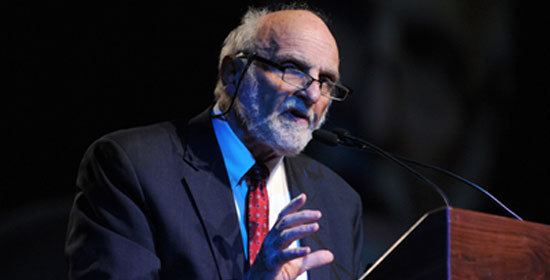
Respected as one of America’s most gifted preachers and scholars, Dr. Killinger was a pastor, professor, theologian, and prolific author whose voice resonated across denominations and generations. But for me, he was more than a public figure. He was a friend, a mentor, and a kindred spirit.

When I learned of Dr. John Killinger’s passing on June 5, 2025, at the age of 91, I found myself reflecting with deep gratitude on a friendship that spanned over 35 years and strongly influenced my life and ministry.

Although I had read Killinger’s books, 365 Simple Gifts from God and Bread for the Wilderness, Wine for the Journey, I did not meet him until our paths first crossed when John and Anne moved to Birmingham. At the suggestion of my pastor friend, Buddy Nelson, I invited Dr. Killinger to preach at First Baptist Church of Williams near Jacksonville State University, where I was serving at the time. That invitation marked the beginning of a long friendship and a continuing theological conversation. He became a frequent and favorite guest preacher at Williams, and I was continually inspired by the craftsmanship, clarity, and pastoral heart of his sermons.

A few years later, I was honored when Dr. Killinger invited me to write an endorsement for one of his books, and afterward, he asked me to contribute a few thoughts to another of his books on preaching. In 2018, when I published a book about the Call Stories of various pastors, Dr. Killinger submitted a few generous promotional lines for the back cover.

Amanda and I treasured the time we spent with John and Anne, whether hosting them in our country home in north Alabama, enjoying one of our favorite restaurants, or visiting their peaceful residence in Warrenton, Virginia. We stayed in touch across the years with occasional phone calls, regular email correspondence, and the exchange of Christmas letters — and wow, could John write a Christmas letter.

A particularly meaningful chapter unfolded during my Doctor of Ministry work at Columbia Seminary. When Columbia’s preaching professor had to take a leave of absence due to a serious illness, I suggested to the dean that Dr. Killinger might be available to lead our preaching intensive. The dean called him, John agreed to the assignment, and for one semester, Dr. Killinger served as my preaching professor as well as my friend and colleague.

In addition to preaching for us at First Baptist Church of Williams, John preached my installation service at the First Baptist Church of Corbin (KY) in 1996. A few years later John and Anne visited us in Florida where he preached at First Baptist Church of Pensacola, and also led a workshop for local clergy. He had a remarkable way of bridging the academic and the pastoral, and he never lost his love for the Church or for pastors, although he did become increasingly frustrated with church bureaucracy and denominational politics.

I frequently looked to Dr. Killinger for counsel and guidance. At a pivotal moment in my life, as I struggled with “analysis paralysis” about a major decision, John offered some simple but life-changing advice: “Make the best decision you can, and then live into it and make it the right decision.”

I’ve not only tried to apply that guidance to my life but have also shared it with others.

One of Dr. Killinger’s most memorable sermons was titled “Hearing the Elephant and Seeing the Owl.” John built the sermon on the foundation of Job 40-42 and illustrated it with stories from James Michener’s Centennial and Margaret Craven’s I Heard the Owl Call My Name. The message captured so much of what John stood for—wonder, wisdom, hope, and a reverent embrace of mystery.

In Craven’s book, the bishop sends Mark, the central character, to serve in a remote village in British Columbia. One of their legends is that when you hear an owl call your name from the top of the pine trees, you are going to die.

I find it ironic that two of my esteemed mentors died the same day: Walter Brueggemann and John Killinger. As one of my friends said upon hearing this news, “The greats are leaving us.” Yet, someday, each of us will hear the owl call our name.

Killinger concluded his notable sermon about the elephant and the owl with these words:

There is a big difference between being resigned to death and accepting it. Resignation means bowing to the inevitable. Acceptance involves claiming life, loving it, celebrating it. That’s what faith in God is all about. It means, when you see the elephant and hear the owl, you don’t moan and cry and recoil from life. You don’t complain about the way things are, that you got a rotten deal. On the contrary, you look at God the way Job did, and you say, “I had heard of thee by the hearing of the ear, but now my eye sees thee; therefore I despise myself, and repent in dust and ashes.” In other words, “I worship thee.”

Last week, Dr. Killinger heard the night bird speak. Throughout his life and ministry, John taught us that preaching was art, pastoring was presence, and faith was more mystery than certainty. I thank God for John Killinger, and I will always remember the grit, grace, scholarship, and creativity with which he shared the good news.

(Barry Howard is a retired pastor who now serves as a leadership coach and consultant with the Center for Healthy Churches. He and his wife live on Cove Lake in northeast Alabama.)
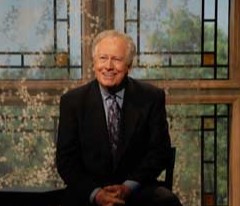
Walter Brueggemann Challenged My Assumptions and Deepened My Faith: Reflections from a Former Student

On June 5, 2025, the world lost one of its most provocative and prophetic theological voices. Walter Brueggemann, Old Testament scholar, preacher, teacher, and esteemed theologian, passed away at the age of 92. His death leaves a significant void in the landscape of biblical scholarship and the life of the Church, but his influence will resonate for generations to come.

My own journey with Brueggemann began in a seminary classroom—not at Columbia Seminary, but at the New Orleans Baptist Theological Seminary in a course on Preaching from the Psalms taught by Dr. Harold Bryson. One of the textbooks for the course was Israel’s Praise, Brueggemann’s exposition on the theological weight of worship. That course was the first of many times Walter would challenge my assumptions, stir my imagination, and deepen my faith.

A few years later in 1995, I ventured outside of the Baptist world and enrolled in the Doctor of Ministry program at Columbia Theological Seminary for one reason: I wanted to study with Brueggemann. I completed the program in 1998. Several other Baptist minister friends also pursued their postgraduate work at Columbia as well, including John Pierce, Elizabeth Thompson, Greg DeLoach, Ron Wilson, Courtney Krueger, and Don Gordon. Each of us was drawn to this doctoral program by the gravitational pull of Walter’s prophetic intellect.

My first class with Brueggemann was listed on the course description “Old Dangerous Texts for New Dangerous Times.” His lecture notes from this course became the foundation for his book, “Theology of the Old Testament: Testimony, Dispute, Advocacy.”

Walter had a warm and humorous demeanor outside the classroom. Occasionally after class, my friend Ron Wilson and I, who Brueggemann fondly referred to as his little Baptist friends, would go to a local pub, grab a bite, and watch Braves baseball while unpacking the theological freight of the day’s lectures. Walter could be spotted at a baseball game now and then, and later would share stories and analogies that were conceived at the ballpark.

Years after my graduation, I invited Walter to lead a pastor’s workshop at First Baptist Church of Pensacola, where I was serving at the time. He was gracious and kind, not only in person but in follow-up. After the event, he sent me a brief yet meaningful note: “Thanks for the invitation. It was great to be in your shop.”

When I published my first book—a collection of call stories from a rich variety of pastors—Walter emailed me an endorsement, specifically emphasizing, “The recovery of a notion of call is urgent among us and your book should help that recovery along.” His words gave affirmation to my work and underscored his constant encouragement of emerging voices in ministry.

Walter had a great appreciation for our Baptist heritage. On one occasion in class, he remarked, “It’s good to have the Baptists here with us. None of us would be here if it were not for the Baptists. They were the freedom fighters who contended for religious freedom for all faith groups because they believed ‘if one of us loses our religious freedom, we all lose our religious freedom.’”

Even into his nineties, Walter remained intellectually vibrant, curious, and connected. In our last correspondence on his 91st birthday in 2024, he responded:  “Dear Barry: I am glad to hear from you and thanks for your kind words. I hope all is well for you. It’s good work to be a bridge builder. I just turned 91 and am hanging in and taking stock. With much appreciation, Walter.”

Though deeply academic, his writing was marked by poetic rhythm and prophetic urgency. His sermons and lectures could unsettle the comfortable and comfort the unsettled, sometimes in the same sentence.

Walter loved the scriptures and encouraged his students to “live in the tension of the text.” When addressing various questions about biblical criticism or historicity, he would often quip, “The text is what we have. Deal with it!” Whether he was teaching at Columbia Theological Seminary or speaking to a room full of pastors and leaders, Brueggemann courageously addressed the juxtaposition of scripture and culture head-on.

While I’m grateful for all of Walter’s writing—from his groundbreaking work on the prophets and Psalms to his cultural critique and homiletical insights—I’m especially thankful for his prayers. In Awed to Heaven, Rooted in Earth and Prayers of a Privileged People, his words become devotional guideposts, grounding us in faith while drawing us into action. One line from his prayer, “No More Sinking Sand,” seems especially fitting as we honor his life and witness:

          God of heavens, Lord of earth,
          hear our resolve, heal our unresolve,
          that we may finish in sure trust and in glad obedience.
          We already know what to do by our careful pondering of you. Amen.

Walter Brueggemann completed his journey in “sure trust” and “glad obedience.” Now it is up to us—those who studied with him, read him, or were influenced by his prophetic voice—to keep pondering, to continue proclaiming, and to work toward the kind of world Brueggemann’s theology dared us to imagine.

(Barry Howard is a retired pastor who now serves as a leadership coach and consultant with the Center for Healthy Churches. He and his wife live on Cove Lake in northeast Alabama.)
Preparing for a Fresh Wind of the Spirit: A Reflection for Pentecost

Reggie McNeal, author of Missional Renaissance, proposes, “The Spirit is a work in the world, and it’s the job of the church to get on the same page as the Spirit, not the job of the Spirit to get on the same page as the church.”

As we navigate the chaos of a changing world, including fluctuating church metrics, shifting cultural norms, and contentious political allegiances, a fresh wind of the Spirit is blowing. Are you willing to risk raising your sails?

My earliest notions of the spirit world weren’t shaped by the Bible but by a mysterious little book titled Thirteen Alabama Ghosts and Jeffrey, a collection of Southern folklore by Kathryn Tucker Windham and Margaret Gillis Figh. Among the eerie tales was the story of Jeffrey, a mischievous spirit who took up residence in the Windham home in 1966. According to legend, Jeffrey would stomp down hallways, rock in empty chairs, startle the family cat, and move heavy furniture when no one was looking.

I was so captivated by the stories that I gave a fourth-grade book report on them in Mrs. Gibson’s class. Even now, when I pass through some of those quiet Alabama towns, I glance toward the courthouse windows, half-expecting to see a face staring back.

Growing up in the Bible Belt, it was only natural for a kid to conflate the “ghost in the courthouse” with the “Holy Ghost in the church house.” Visiting evangelists would shout from revival pulpits: “Have you received the Holy Ghost?” followed quickly by “Beware of quenching the Holy Ghost!”—as if this divine specter might invade your body or condemn your soul depending on your response.

Over the years, I’ve grown—both theologically and spiritually—in my understanding of the Holy Spirit. I still value my “Bapticostal” upbringing, but I’ve had to unlearn a few ghost stories along the way. I now prefer the term “Holy Spirit” over “Holy Ghost.” The former suggests holiness and intimacy. The latter, at least in childhood, sounded more like a spiritual haunting.

When I brush aside those folkloric impressions, I find that Scripture provides much-needed clarity. In John 14, as Jesus prepared for his departure, he told his disciples:

“I will not leave you as orphans. I will come to you” (John 14:18).

Though he would no longer be with them in the flesh, Jesus promised that his presence would remain with them in Spirit. He said,

“I will ask the Father, and he will give you another Advocate to help you and be with you forever—the Spirit of truth” (John 14:16–17).

I take comfort in knowing that even Jesus’ disciples didn’t fully understand at first. Like them, I’ve wrestled with anxiety over God’s nearness, especially in seasons of uncertainty. Jesus had been their mentor, their Rabbi. He had given them a new way to live—grounded in grace, not legalism. So when he spoke of leaving, their obvious question was: What happens now? Who will lead us?

That’s where the Holy Spirit comes in.

The Spirit is not some distant, disembodied force. The Spirit is God’s very presence among us—our comforter, guide, and encourager. As Paul writes,

“The Spirit himself testifies with our spirit that we are God’s children” (Romans 8:16).

I now understand the Spirit not as a showy performer or a supernatural invader, but as the presence of God dwelling within human hearts. The same Spirit that hovered over the waters at creation now inhabits our daily lives, whispering truth, nudging us toward grace, and empowering us to live with simplicity and service.

When I invited Walter Brueggemann—my teacher and friend—to lead a workshop at our church, he once told me that the Spirit doesn’t put on exhibitions. “The Spirit prefers to work quietly,” he said, “always prompting people toward God and the Jesus-kind-of-life.” I’ve found that to be true.

Pentecost reminds us that God’s Spirit is a wind we cannot summon or control—but one we can respond to. As Luke puts it in Acts 2, the Spirit arrived like “a mighty rushing wind.” Living on the coast, I’m familiar with wind: it’s invisible, powerful, and unpredictable. We can’t manufacture it—but we can raise our sails.

And just as we cannot recreate the resurrection or re-enact the ascension, we cannot stage a Pentecost encore. God is not in the business of repeat performances. The Spirit is endlessly creative, constantly innovating, and persistently at work. Perhaps even now, the Spirit is initiating a new story within you.

In his book Thinking About God, Fisher Humphreys wrote:

“The Spirit brings life and vitality into the experience of the Christian and the church. He vivifies us. He makes Christian living dynamic as well as decent.”

Indeed, the Spirit’s work is to foster unity—not division; to inspire creativity—not suppress it; and to re-vision the future—not simply preserve the past.

So this Pentecost, I pray we become more aware of the Spirit’s movement—less haunted by our ghosts, more filled with God’s penchant for creativity, and more responsive to the Spirit prompting us toward unity.

Come, Holy Spirit.
Blow where you will.
Bridge the chasms of division.
Prepare us for a season of adventure.
We’re ready to raise our sails.

(Barry Howard is a retired pastor who now serves as a leadership coach and consultant with the Center for Healthy Churches. He and his wife live on Cove Lake in northeast Alabama.)

Where Is God When the Bad Stuff Happens?

Where is God when bad things happen?

Across the ages, this question has perplexed and haunted those weighed down by grief, suffering, and pain. Theologians and philosophers have wrestled with scripture and reason in search of understanding. Pastors and counselors still search for words that offer hope to hearts broken by tragedy.

The Bible doesn’t sugarcoat the harshness of life. In Psalm 13:1–2, the psalmist gives voice to what it feels like to be forsaken in moments of anguish:

How long, Lord? Will you forget me forever?
How long will you hide your face from me?
How long must I wrestle with my thoughts
and day after day have sorrow in my heart?
How long will my enemy triumph over me?

Chaos wears many faces. A hurricane flattens homes and lives. An earthquake strikes without warning. A disease creeps in uninvited. A drunk driver kills an innocent teenager. And every time, the question echoes again: Where is God in this?

Some respond with platitudes. But trite clichés often feel hollow—or even offensive—to those walking through the valley of sorrow. Answering this question too casually can seem dismissive. But ignoring it would leave too many stranded in silence.

So I won’t pretend to offer a one-size-fits-all answer. Instead, I’ll share what I’ve come to believe—hoping that even a flicker of light might help someone see more clearly in a dark place.

1. Life is not fair.

I used to believe that if I prayed, obeyed, and lived faithfully, God would shield me from life’s storms. But life doesn’t follow that formula. God is good, yes—but God never promised that life would be fair. Life is hard. And faith isn’t an escape hatch—it’s an anchor.

As beloved author Frederick Buechner suggested, “Here is the world. Beautiful and terrible things will happen. Don’t be afraid.”

Faith helps us face the beautiful and the terrible with courage.

2. Suffering does not discriminate.

No one is immune. Tornadoes don’t skip homes based on church attendance. Illness doesn’t scan for spiritual résumés. We live in a world still scarred by sin, and its consequences touch the just and the unjust alike. Faith doesn’t exempt us—it equips us.

3. God is present in the chaos.

God does not orchestrate suffering as punishment or test. God is not the author of chaos, but the Redeemer within it. The Holy Spirit—God’s presence—lives within us to comfort, convict, and guide. God also shows up through the Church—when we bring love, healing, and hope to others.

Holocaust survivor and psychiatrist Viktor Frankl observed, “When we are no longer able to change a situation, we are challenged to change ourselves.”

Faith doesn’t always change our circumstances—but it transforms our response.

4. God invites us to walk by faith, not by sight.

Why do bad things happen to good people? Why are some healed and others not? Why did Jesus raise Lazarus, but not everyone? Maybe those moments of healing are glimpses—previews—of what God will one day do fully and finally. Even Lazarus died again. Earthly healing is temporary. Eternal hope is permanent.

I still believe in prayer. I believe in hope, medicine, community, and grace. But there are no formulas—only an invitation to walk by faith with courage and perseverance.

5. God is at work, but not always in ways we can see or evaluate.

Romans 8:28 assures us, “In all things God works for the good of those who love him.”

God doesn’t cause all things—but God works within all things. Often, God works through us. We are Christ’s hands and feet in a hurting world. When we show up with compassion, we reflect the God who never leaves us.

So, where is God when the bad stuff happens?

God is present. Not with easy answers or magical fixes—but with sustaining grace, resilient hope, and a faithful presence that never lets go.

Especially in the seasons when I wrestle with the unknowns, I hold to the promise that God is here. And even the smallest glimpse of God’s presence encourages me to keep pressing on.

(Barry Howard is a retired minister who currently serves as a leadership coach and consultant with the Center for Healthy Churches. He and his wife reside on Cove Lake in northeast Alabama.)
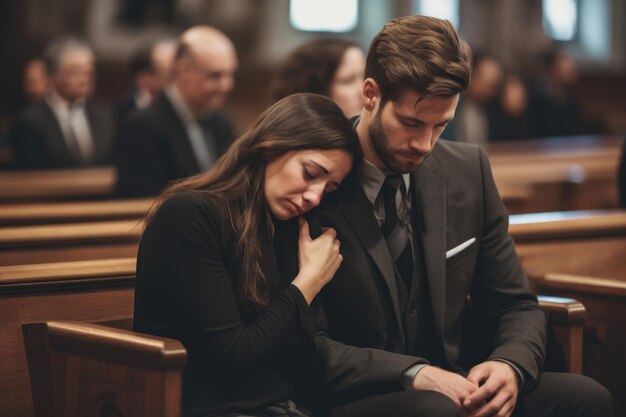
(This column is taken from a message I shared at FBC Pensacola after the community experienced multiple hurricanes, a catastrophic oil spill, and more than a few unexpected deaths.)