“Have mercy on me, O God, according to your steadfast love; according to your abundant mercy blot out my transgressions.” -Psalm 51:1
In my growing-up years, I remember the elderly in our community and in my family saying, “Lawsy mercy!” whenever they heard about an accident or an illness or some sort of tragedy. In Southern Appalachia, “Lawsy mercy” was a common expression of concern or sympathy to surprising or troubling news. The saying was a derivative of the biblical phrase, “Lord, have mercy.”
The biblical version, however, packs a more powerful punch. It is one of the most ancient and enduring prayers of the Church and yet also one of the simplest: “Lord, have mercy” is a cry that rises from deep within the human heart, a prayer offered not from a place of strength, but from a place of need. During Lent, we are invited to slow down long enough to hear ourselves praying these words honestly, without defensiveness or disguise.
Historically, the prayer Kyrie eleison (“Lord, have mercy”) was spoken not only in worship but also in moments of desperation. During the Black Death of the 14th century, entire communities processed through the streets chanting this plea, not as a magical formula, but as an act of trust when answers were few and suffering was overwhelming. The prayer acknowledged a hard truth: human effort has limits, but God’s mercy does not.
Lent helps us rediscover that truth. It reminds us that mercy is not something we earn through self-denial or religious effort. Mercy is something we receive when we finally stop pretending we don’t need it. To ask for mercy is not only to confess our shortcomings, but to practice humility. It is to recognize that grace, not perfection, is the foundation of our relationship with God.
The reformer Martin Luther once wrote, Those words were found scribbled on a scrap of paper after his death. They capture the spirit of Lent beautifully. No matter how accomplished, faithful, or disciplined we may be, we remain people in need of daily, ongoing, and undeserved mercy.
Echoing this posture of trust, Thomas Merton proposed, “Mercy is the kindness that makes sense of our failures.” Lent does not deny our brokenness. It places it gently in the hands of a merciful God who knows us fully and loves us completely.
To pray “Lord, have mercy” is a way to open ourselves to transformation. Mercy does not merely forgive the past; it reshapes the future. As we receive mercy, we are invited to extend mercy to ourselves, to our neighbors, and even to those we struggle to love.
This Lent, let that simple prayer rest on your lips and in your heart. Not as a sign of defeat, but as an act of hope. For the God who meets us in mercy is already at work, healing what is wounded and restoring what feels lost.
So today, as we pray for ourselves and for our world, may we begin “Lord, have mercy!”
17 Be good to your servant while I live, that I may obey your word. 18 Open my eyes that I may see wonderful things in your law. 19 I am a stranger on earth; do not hide your commands from me. 20 My soul is consumed with longing for your laws at all times. 21 You rebuke the arrogant, who are accursed, those who stray from your commands. 22 Remove from me their scorn and contempt, for I keep your statutes. 23 Though rulers sit together and slander me, your servant will meditate on your decrees. 24 Your statutes are my delight; they are my counselors. Psalm 119:17-24 (NIV)
When I visited my optometrist for my annual eye exam, he said, “Your vision has changed a little. We need to update your prescription for your glasses.” I knew it would happen one day. I’ve had the same prescription for almost 7 years.
Sight is extremely important. Maybe that is why the psalmist prayed, “Open my eyes that I may see wonderful things in your law” (v.18). However, I don’t think the psalmist was referring to the ability to see the smallest letters on the vision test chart.
Just as eyesight gives us the capacity to see the physical world around us, things like hindsight, foresight, and insight give us the capacity to better understand God’s word, to shape our faith perspectives, to formulate our worldview, and to exercise wisdom and discernment in our decision-making.
Helen Keller contended, “The only thing worse than being blind is having sight but no vision.”
Lent is an eye-opening season where the Spirit helps us better understand our purpose in life as we revisit the story of Jesus, who fully embodied God’s universal mission.
The psalmist wanted the eyes and minds of worshippers to be wide open as they pursue a deeper understanding of God’s vision for the world. The petitioner prayed, “Cause me to understand the way of your precepts, that I may meditate on your wonderful deeds.”
After the eye exam, my optometrist gave me my new prescription and advised me to upgrade to progressive lenses. For years, I had worn bifocals, mostly for reading. He cautioned that the change from bifocals to progressive lenses would require a period of adjustment. “You need to be especially careful when walking because your depth perception will be a little different.”
I have discovered that every new flicker of insight or morsel of wisdom requires a period of adjustment as I apply it to life. May our understanding of God’s word encourage and equip us to follow God’s ways.
Reflection:
How does God communicate new insights to you? Do you welcome new points of view or are you inclined to resist changes in your understanding? How easily can you move from stale presuppositions and open your mind to fresh insights from God’s word?
Prayer:
Be Thou my Vision, O Lord of my heart; Naught be all else to me, save that Thou art; Thou my best Thought, by day or by night; Waking or sleeping, Thy presence my light. (Eleanor H. Hull, Mary E. Byrne)
If you have ever experienced doubts or been skeptical about matters of faith and religion, you are not alone. Frederick Buechner said, “Doubts are the ants in the pants of faith. They keep it awake and moving.”
In some religious circles, however, faith and doubt are often treated as opposites, as though one cancels out the other. In such settings, doubt is viewed with suspicion, as though it is sinful, something to be hidden, hurried past, or quietly resolved before it becomes disruptive. Yet the Christian story tells a different truth. Faith is not fragile. It is resilient, examined, and durable. It can withstand questions, doubts, and honest inquiry.
One of the most ancient and instructive examples of this kind of faith is found in John 20:24-29 in the confession of Thomas. Often labeled “Doubting Thomas,” he may be better understood as “Truth-Seeking Thomas.” When the other disciples announce that they have seen the risen Christ, Thomas responds with remarkable honesty: unless he can see and touch the wounds himself, he cannot believe. Rather than rebuking him, Jesus invites Thomas to examine the evidence. The result is one of the strongest confessions of faith in all of Scripture: “My Lord and my God.”
Thomas reminds us that faith does not always arrive fully formed. For many, belief is born through the labor pains of honest inquiry. And, somewhat ironically, once faith takes root, it often generates more curiosity, not less. Authentic faith refuses to settle for slogan-like answers to deep and uncomfortable questions.
In the twentieth century, physicist and theologian Ian Barbour challenged the popular notion that science and faith must exist in conflict. Barbour insisted that his Christian faith made him a better scientist, not a lesser one—more curious, more rigorous, and more attentive to mystery. His work opened space for thoughtful dialogue rather than shallow debate. Like Thomas, Barbour understood that truth does not fear examination.
Consider how we make important decisions today—medical diagnoses, financial investments, or even choosing a school for our children. We do our due diligence. We ask questions. We examine evidence. We seek trusted sources. Rarely do we accept life-altering claims without investigation. Yet when it comes to matters of faith, some are told to suspend curiosity and simply “believe.” Thomas pushes back against that false choice. He models a faith that engages both heart and mind.
The New Testament consistently affirms this kind of integrated faith. Hebrews describes faith as “the substance of things hoped for, the evidence of things not seen.” Substance and evidence belong together. The gospel should never be proclaimed through emotional manipulation or social intimidation, but with truthfulness and grace, trusting the Spirit to do the deeper work of conversion.
Buechner captures this balance well when he suggests, “Faith is not being sure where you’re going, but going anyway.” Thomas did not begin with certainty; he began with courage, the courage to ask, to seek, and to stay in community even when belief felt incomplete.
Importantly, the story does not end in the locked room. Early Christian tradition holds that Thomas carried the gospel far beyond the boundaries of the Roman Empire, eventually reaching India. According to ancient sources, communities of believers there trace their origins to his witness. The disciple who once demanded evidence became a missionary whose faith changed lives across continents. Doubt did not disqualify him; it refined him.
Faith stories are life stories. The chapters already written matter, but the chapters still unfolding may prove the most significant. Like Thomas, we are invited not to silence our questions, but to bring them into the presence of Christ. There, doubt can become confession, and inquiry can give way to trust.
Navigating faith and doubts is a challenge in every generation. Yet Jesus still meets seekers where they are, with all their doubts, wounds, and questions.
If you have trouble believing in God, maybe it’s not God you have trouble believing, but the various misrepresentations of God. If you have problems believing in Jesus, perhaps it’s not Jesus you have a problem with, but the many counterfeit faces of Jesus that appear in the church and in the world. Examine the biblical account. Consider the life and teachings of Jesus. Probe the evidence, and you may just discover what you are seeking.
(This column is based on a sermon titled “The Thomas Confession” that I shared at the First Baptist Church of Pensacola on January 5, 2014.)
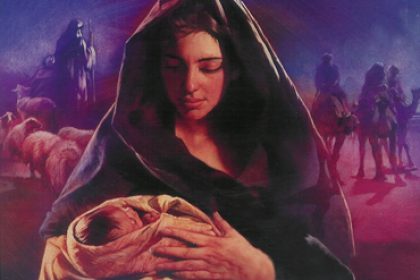
In Luke’s telling of the Christmas story, there is a quiet line that is easy to overlook amid angels, shepherds, and songs of praise. Twice, Luke pauses the action to tell us something about Mary: “Mary treasured all these words and pondered them in her heart” (Luke 2:19; see also Luke 2:51). While others hurried home or returned to their fields, Mary lingered. She pondered.
That single word—pondered—feels almost foreign in our hurried world. We are far more practiced at reacting, scrolling, multitasking, and moving on. We skim headlines, rush conversations, and measure productivity by speed. Pondering, by contrast, requires stillness. It asks us to slow down, to contemplate the significance of an experience rather than rush to explain or resolve it.
Mary’s pondering was not passive or sentimental. It was intentional. She had just given birth under uncertain circumstances, welcomed unexpected visitors, and heard astonishing claims about her child. None of it neatly fit together. Rather than forcing quick conclusions, Mary gathered these moments and carried them within her, trusting that meaning would unfold over time.
In this sense, pondering is an act of faith. It resists the pressure to have immediate answers. It allows mystery to remain mystery. As the poet Rainer Maria Rilke once advised, “Live the questions now. Perhaps you will then gradually, without noticing it, live along some distant day into the answer.” Mary lived the questions.
Scripture suggests this practice. The psalmist urges, “Be still, and know that I am God” (Psalm 46:10). The prophet Isaiah writes, “In returning and rest you shall be saved; in quietness and trust shall be your strength” (Isaiah 30:15). Pondering is not withdrawal from life but a deeper engagement with it—one rooted in attentiveness and trust.
Historically, this kind of reflection was once considered a spiritual discipline. Early monastics spoke of ruminatio, the slow, prayerful chewing on scripture, much like a cow chewing cud. Lectio divina, still practiced today, invites readers not to rush through sacred words but to linger over them until they sink from the mind into the heart. Wisdom, they believed, comes not from volume of information but from depth of attention.
Our fast-paced culture rarely encourages such depth. We are trained to move on quickly, to optimize time, to fill every quiet moment with noise. Even joy is rushed. We snap pictures instead of absorbing the moment, post updates instead of savoring experiences. In the process, we risk missing the meaning woven into our days.
Recovering the lost art of pondering does not require retreating to a monastery. It begins with small, intentional pauses. It might mean sitting with a scripture instead of rushing to the next task, reflecting on a conversation long after it ends, or resisting the urge to explain away an experience that feels unresolved. It means permitting ourselves to say, “I don’t fully understand this yet, and that’s okay.”
Pondering also changes how we listen to others. When we slow down enough to treasure their stories rather than rush to respond, relationships deepen. When we hold moments with care instead of judgment, gratitude grows. Life becomes less about accumulation and more about attentiveness.
Mary’s example reminds us that some truths cannot be grasped in haste. They must be held, revisited, and trusted. The child she pondered would grow, teach, heal, and redeem. But for now, Mary simply treasured what she had been given.
Perhaps this season, and every season, invites us to do the same. To recover the lost art of pondering is to reclaim space for wonder, wisdom, and faith to take root. In a world that urges us to hurry, pondering becomes a quiet act of resistance, and a sacred practice for the living of these days.
(This column is a revision of a Wednesday night devotional I shared at the First Baptist Church of Pensacola in December 2008.)
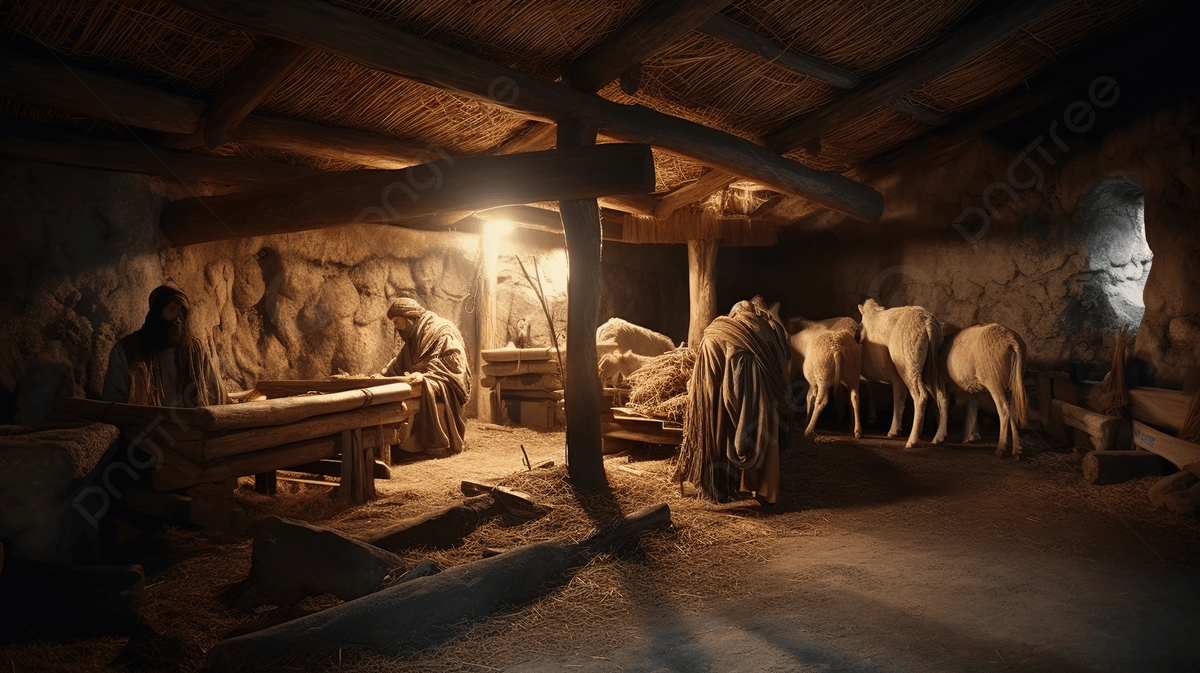
The Christmas story is so familiar that we sometimes forget it comes to us through more than one gospel writer’s perspective. Nativity scenes blend shepherds and angels, wise men and a star, Mary and Joseph and a manger into a single display. Yet when we turn to the Gospels, we discover that each writer tells the story from a distinct perspective, or, in one case, chooses not to tell it at all. These different viewpoints do not compete with one another; they enrich our understanding of the mystery of the birth of Jesus.
Matthew: Christmas Through the Lens of Lineage
Matthew’s Gospel tells the Christmas story with one eye firmly fixed on Israel’s scriptures. Written for a largely Jewish audience, Matthew frames Jesus’ birth as the fulfillment of ancient promises. The genealogy of Jesus traces his lineage back through Abraham and David, anchoring the story in God’s covenant history.
Matthew highlights Joseph’s experience, including the angelic dream, the struggle to do what is right, and the costly obedience that follows. The visit of the Magi, the guiding star, and the flight into Egypt all echo Israel’s past, reminding readers that God is continuing a long and faithful story. Matthew invites us to see Christmas as God keeping promises, even when fulfillment of those promises arrives in unexpected ways.
Luke: Christmas as Music for Those on the Margins
Luke’s Gospel is steeped in joy and wonder. Angels sing, the lowly are lifted up, and good news is announced to those on the margins. By focusing on women, the poor, and the powerless, Luke reminds us that the birth of Jesus is good news for all people. His perspective teaches us that Christmas is not just about God entering history, but about God drawing near to those who feel forgotten.
If Matthew emphasizes heritage, Luke emphasizes inclusion of those on the fringes. Luke’s account is the most detailed and the most tender. He gives voice to Mary’s song, Zechariah’s prophecy, and the angels’ proclamation to shepherds, who were ordinary laborers often overlooked by society.
John: Christmas as Cosmic Mystery
Just as Matthew’s gospel comes from a more Jewish perspective and Luke’s narrative is more melodic, John’s version is more philosophical. The writer offers no manger, no shepherds, and no Bethlehem journey. Instead, he begins his Gospel with a soaring theological hymn: “In the beginning was the Word…” For John, Christmas is not primarily a story about where Jesus was born, but about who Jesus is.
By proclaiming that “the Word became flesh and lived among us” (John 1:14), John invites readers to contemplate the cosmic significance of the incarnation. Christmas, in this telling, is the moment when eternal light enters human darkness.
John’s use of the ”Word,” which is translated from “Logos,” meaning “reason” or “being,” or perhaps “the reason for being.” helps us see the nativity not only as a historical event, but as a divine mystery that reshapes all of reality.
Mark: Christmas Silence That Speaks
Mark, the earliest Gospel, says nothing about Jesus’ birth at all. He begins with Jesus’ public ministry, moving swiftly and urgently toward the cross. This absence is not an oversight; it is a theological choice.
The silence of Mark on the birth narrative invites us to focus not on sentiment, but on essence. Mark’s focus is on the earthly ministry of Jesus and the teachings of Jesus. Christmas, from this angle, calls us not just to wonder, but to follow those teachings and to align our lives with Jesus’ initiatives.
Taken together, the four Gospels offer a fuller, richer portrait of Christ’s coming than any single account could provide. Much like four sportswriters covering an athletic event from four different seats in the stadium, these biblical writers present the story from the view they’ve been given.
Matthew grounds us in God’s faithfulness, Luke draws us into God’s compassion, John lifts our eyes to God’s mystery, and Mark keeps us focused on God’s mission.
In a world shaped by differing viewpoints, the Gospels remind us that truth is often best seen through multiple lenses. The Christmas story is not diminished by its varied tellings; it is deepened. Each voice adds texture, meaning, and insight to the good news that God is with us.
As we revisit the story year after year, perhaps we are invited to listen again with fresh ears. By contemplating each Gospel’s perspective, we discover that the light of Christmas shines more brilliantly when seen from the whole prism.
(This column is a revision of a Wednesday night message I shared at the First Baptist Church of Pensacola in 2009.)
Christmas Eve Services are sacred and joyful occasions. Churches and chapels fill with familiar carols and flickering candles, but they also fill with people carrying complex stories—joy and grief, gratitude and loss, faith and questions. On this holy night, words matter. What people hear can steady a weary heart or open a door to hope.
Over the years, I’ve been a part of dozens of Christmas Eve services, most of which have been inspiring and encouraging. I’ve also been to a few that were…Well, let’s just say they were lacking.
Here are twelve things people need to hear on Christmas Eve—truths that echo from the original Christmas story and still speak powerfully today.
1. You are welcome here. Christmas Eve is not a private gathering for insiders. It is a wide-open invitation. Whether someone comes weekly or once a year, confident or uncertain, hopeful or hurting, the message is the same: You belong.
2. “Unto us a child is born.” Most importantly, we need to hear the scripture story. The Christ who was born in Bethlehem is God’s gift for you, for me, and for all of us. The good news is not for a select group of people, but for all people from all nations, all races, and all walks of life.
3. “Fear not!” The first words spoken by the angel on the first Christmas were not instructions or expectations—they were reassurance. Fear not. Those words still matter in a world anxious about health, relationships, finances, violence, and the future. Christmas begins with comfort.
4. Christmas brings good news…tidings of great joy. This joy of Christmas is not shallow cheer or forced happiness. It is good news that God has not abandoned the world. Joy is possible even when circumstances are difficult because God has “become flesh and moved into the neighborhood” (John 1:14 MSG)
5. It’s okay to feel joy and sorrow at the same time. For many, Christmas is layered with grace and grief. Christmas Eve gives permission to hold both realities at once. You don’t have to choose between honesty and hope. The manger holds space for both.
6. God meets us exactly where we are. The Christmas story unfolds not in a palace, but in borrowed space. God did not wait for ideal conditions. In the same way, God meets us not where we wish we were, but right where we are.
7. You are not alone. Emmanuel means “God with us.” Christmas is the announcement that God has chosen presence over distance. Emmanuel is not an abstract idea; it is a promise that we are accompanied through all of life, including uncertainty, grief, joy, and change.
8. God comes near to us, even in messy and uncertain circumstances. The birth of Jesus happened amid disruption, displacement, and danger. That should comfort us. God is not deterred by our chaos. Divine love enters the world as it is, not as we wish it to be.
9. You can experience the peace of Christ, even if every conflict isn’t resolved. Peace does not require that everything be fixed. The peace Christ brings is deeper than resolution—it is the steady assurance of God’s nearness in the midst of unresolved tensions.
10. The darkness will not have the final word. The Christmas star that guided those seeking the Christ child reminds us that night may surround the nativity, but it does not overcome it. Christmas declares that light shines in the darkness, and the darkness cannot extinguish it. This is not denial of hardship; it is defiance of despair.
11. The birth narrative is just the beginning. The story does not end at the manger. It continues through the life, death, and resurrection of Jesus, and it continues still. God is at work in the world and in our lives, shaping a story not yet finished.
12. Like Mary, we can ponder and treasure these things in our hearts. Christmas Eve does not demand immediate understanding or action. It invites reflection. Wonder. Quiet trust. Sometimes the holiest response is simply to hold the mystery close and let it work on us over time.
Christmas Eve is not about having all the answers. It is about receiving a gift. A child born in humility. A love that embraces us unconditionally. A light that shines gently but persistently into the darkest places.
These are the things people need to hear, not just on Christmas Eve, but in the days that follow as the Light of Christmas helps to navigate the daily grind of life.
Christmas is one of the most beloved and most familiar celebrations in the world. However, some wonder about the cultural and spiritual reasons behind the various traditions we embrace during this season.
Throughout my years of serving as a pastor, I’ve been asked quite a few questions about Christmas. Some were mentioned out of mere curiosity, and others were asked with a profound sense of theological inquiry. I readily knew the answer to a few of the questions, and others I had to investigate.
Here are ten of the more common Christmas questions, with answers that may surprise you.
1. What is the most popular Christmas carol? Across cultures and denominations, “Silent Night” is widely regarded as the most beloved Christmas carol in the world. First sung in 1818 in a small Austrian church, it has been translated into hundreds of languages and is cherished for its simplicity, reverence, and peaceful theology. Its enduring appeal lies in how poetically it tells the Christmas story.
2. When did the celebration of Christmas first begin in the United States? The first Christmas celebration in the US occurred in 1539 in Tallahassee, Florida at Mission San Luis. Christmas was not widely celebrated in early America. In fact, Puritans in New England actively opposed it, viewing it as unbiblical and overly indulgent. Christmas gradually gained acceptance in the 1800s and became a federal holiday in 1870, thanks in part to changing cultural attitudes and waves of European immigrants.
3. When did our current representation of Santa Claus begin? The modern image of Santa Claus emerged in the 19th century. Clement Clarke Moore’s 1823 poem “A Visit from St. Nicholas” (better known as “’Twas the Night Before Christmas”) shaped Santa as a jolly, gift-giving figure. Later, illustrator Thomas Nast and 20th-century advertising (especially Coca-Cola campaigns) cemented the red-suited Santa we recognize today.
4. Are Christmas trees evil? How did the Christmas tree become a part of the celebration? No. Christmas trees are not evil or satanic. The tradition of decorating evergreen trees began in Germany during the 16th century. German immigrants brought the custom to America in the 1800s. Evergreens symbolized life in the midst of winter, which celebrates hope and light entering a dark world.
5. What is the highest-grossing Christmas movie of all time? The highest grossing Christmas movie of all time: When the Grinch Stole Christmas at $260 million. (Jim Carrey version). 2nd is Polar Express at $183 million.
6. When was Jesus born? It is highly unlikely that Jesus was born on December 25. The Bible does not give an exact date for Jesus’ birth. Most scholars agree that Jesus was likely born between 6 and 4 B.C. Jesus was more likely born in the spring. The December 25 celebration developed later, which was a way to emphasize Christ as the “Light of the World” rather than pinpointing a historical date.
7. How many wise men were there? Many assume that there were 3 Wise Men since there were 3 gifts, but the Bible doesn’t provide the number of Wise Men who made the journey. The Wise Men did not see the “babe in a manger” because they arrived after he was presented in the temple…anywhere from 13 days to about 2 years following the birth of Jesus.
8. Why was Jesus born in Bethlehem? Bethlehem was the city of King David, giving the story messianic significance. The prophet Micah foretold that a ruler would come from Bethlehem (Micah 5:2). Jesus’ birth there highlights God’s tendency to work through humble places to accomplish divine purposes.
9. Why do some people use “Xmas” instead of “Christmas”? “Xmas” is not a modern attempt to remove Christ from Christmas. The “X” comes from the Greek letter Chi, the first letter in Christos (Christ). Early Christians used it as a sacred abbreviation long before it appeared on greeting cards.
10. What does the word “holiday” actually mean? The word “holiday” is a good and positive word that comes from holy day. It originally referred to days set apart for religious observance. While the meaning has broadened, Christmas remains a true holy day, a festive occasion marked by carols and candles, worship and wonder, generosity and joy.
Christmas is more than a season of tradition. Our celebration of Christmas originates from a story of good news layered with history, meaning, and mystery. Asking questions doesn’t diminish the celebration. Rather, questions deepen our appreciation and understanding.
And at the heart of every answer is the same enduring truth: “The Word became flesh and moved into the neighborhood.” (John 1:14 MSG)
(This column is a revision of a Wednesday night devotional I shared at the First Baptist Church of Pensacola in December 2015.)
Of all the spiritual disciplines, I think that contentment may be the toughest to learn. The challenge is ongoing.
It isn’t that I don’t want to be content—I do. It’s that we live in a world wired to keep us restless. A consumerist economy whispers that the next upgrade, the newest version, or the latest device will finally deliver satisfaction. At the same time, my own temperament nudges me toward constant evaluation: fix what is broken, mend what is fractured, restore what has fallen apart. Those instincts aren’t wrong, but they can easily pull my soul out of rhythm.
That’s why the apostle Paul’s words feel both comforting and challenging: “I have learned to be content whatever the circumstances” (Philippians 4:11). Contentment, Paul reminds us, is something learned—not instantly acquired, not naturally absorbed, but gradually shaped through trust and practice.
G. K. Chesterton observed, “True contentment is a real, active virtue—not a passive or timid acceptance of things as they are.” His words help me remember that contentment isn’t complacency. It is the courageous decision to embrace this moment with gratitude rather than wait for the perfect one.
Many people now take pictures with their phones using filters—adjusting brightness, warmth, and contrast to create a more polished version of reality. Contentment works in the opposite direction. Instead of filtering our lives to hide imperfections, contentment allows us to see clearly, without distortion. It shifts the focus from what is missing to what is meaningful, helping us recognize beauty in what we already have.
At its core, contentment is a commitment to simplicity. It rearranges my priorities so that my mission becomes primary, and the tangible resources in my portfolio become tools rather than trophies—means rather than measurements. When I practice contentment, life no longer feels like an expanding inventory but an emerging story.
Something transformative happens in that shift. Relationships rise to the forefront, while possessions return to their rightful place. People become essential; stuff becomes expendable. My life becomes more like a conduit than a reservoir—a channel through which blessings flow freely into the lives of others, not a storage unit where blessings are archived, counted, and guarded.
To live with contentment, I must return again and again to one foundational truth: my self-worth is neither inflated nor deflated by my net worth. My value does not hinge on what I own, what I accomplish, or what others think of me. My identity is rooted in something deeper and more enduring—worth that was instilled and endowed by my Creator.
Contentment, then, is not resignation. It is not passive acceptance. It is the steady confidence that God’s grace is sufficient in this moment, this season, this chapter—whatever it may hold. It is the quiet courage to trust that I already have what I need to live gratefully and faithfully today.
I’m still learning this discipline. Perhaps you are, too. But each day offers a new lesson, a fresh reminder, and a renewed opportunity to loosen our grip on accumulation and tighten our embrace of gratitude.
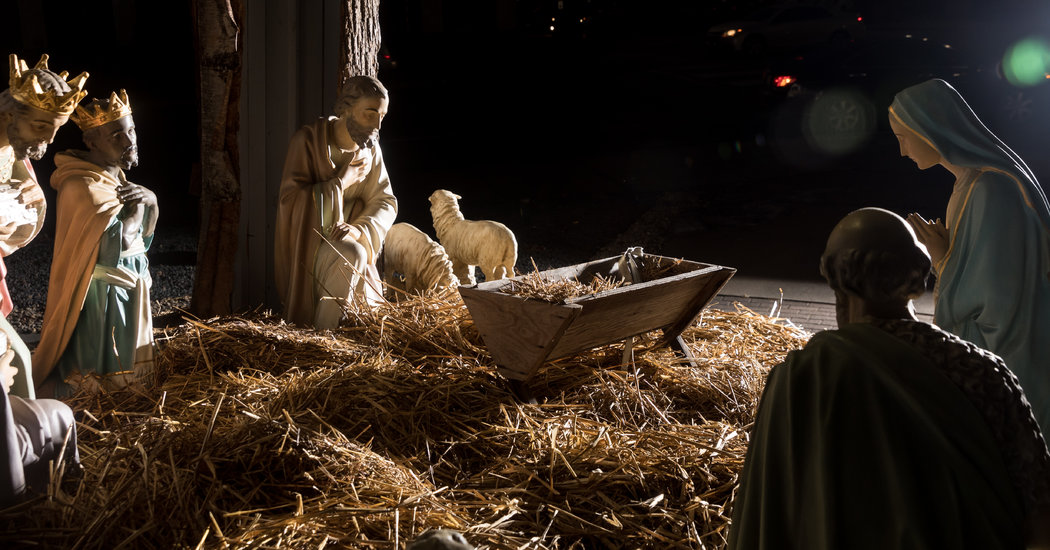
Every year, families, churches, and communities across the country set up nativity scenes in homes, along roadsides, in front of churches, and in town squares. These displays serve as seasonal reminders of the Christmas story, which includes the journey to Bethlehem, the birth of baby Jesus, and the presence of the angels and shepherds.
During my first Christmas serving as pastor of First Baptist Church in Pensacola, I learned that Eliot and Frances Dobelstein, long-time members of the congregation, had faithfully displayed a nativity scene on the southwest corner of the church lawn every Advent since 1972.
One afternoon, Eliot and Frances stopped by my office to share the story behind the display and the challenges they faced in maintaining it. Because the manger scene sat along a busy street, it often became an easy target for mischief. Over the years, various characters were defaced, rearranged, or occasionally went missing. Shepherds and wise men would disappear, only to be discovered days later in odd places. But the most frequent victim was the baby Jesus. More than once, someone had plucked the baby from the manger, leaving only an empty trough between Mary and Joseph.
Despite these frustrations, Eliot never gave up. Whenever a piece went missing, he replaced it. He secured the figures as best he could and made extra trips past the display to discourage would-be pranksters.
But in 2007, to prevent the baby Jesus from being taken yet again, Eliot decided enough was enough. Determined to prevent another “messianic kidnapping,” he wrapped a sturdy chain around the baby Jesus and fastened it with a padlock. To conceal the chain, he draped a worn blanket over the figure, giving the appearance of swaddling clothes.
“No one’s taking Jesus this year,” he thought confidently.
But he was wrong.
A few days before Christmas, Eliot walked into the church office looking more discouraged than I had ever seen him. The baby Jesus was gone—again.
Sam Solomon, our maintenance supervisor, and I followed Eliot to the scene. There, in the empty manger, lay the broken remains of the chain. Someone had come with bolt cutters, snipped through the links, and made off with Jesus once more.
For the first time, Eliot looked genuinely defeated. He sighed heavily and shook his head. “I don’t know what else to do,” he said.
Still unwilling to leave the manger completely empty, he placed a small bundle of hay in the trough and covered it with the same blanket—creating the impression that the baby Jesus was still there. But Eliot, Sam, and a few staff members knew the truth: this year, the manger held no Christ child.
Yet the story wasn’t over.
When Sam arrived at church early on January 2—the first day the office reopened after the New Year’s holiday—he noticed something propped against the glass doors of the atrium. He left it there for me to see when I arrived a short time later.
At first glance, it looked like a forgotten doll. Perhaps a child had dropped it or a neighborhood dog had dragged it there. Maybe one of our homeless friends had slept by the door and left it behind.
But as I approached, I recognized it immediately. It was the missing baby Jesus, with a folded note was taped to its chest.
Scrawled in uneven handwriting were these words:
“I took this before Christmas, and I have not been able to sleep much since then. I am sorry. I shouldn’t have done it. So I am bringing it back home.”
I stood there for a moment, letting the words sink in. I hadn’t expected that.
I hated that Jesus had been stolen, especially after all of Eliot’s efforts to secure the display. Yet somehow, I found comfort in the return of that simple plastic figure—the one meant to represent the Savior of the world.
After sharing the news with our staff, I called Eliot.
“I thought you’d want to know,” I said. “The stolen baby Jesus has been returned.”
I could hear the relief in his voice.
Later that day, as I reflected on what had happened, I found myself wrestling with an unexpected question: What do you do with a stolen Jesus?
And then it struck me. The only thing you can do with a misplaced Jesus is bring him back to his rightful place in your life story.
Perhaps you have mis-taken Jesus, and you need to bring Jesus home to where he belongs.
Or maybe, you are the one who has wandered away, and this year, you are the one who needs to come home.
(This past Sunday, I was privileged to share the homecoming sermon at the First Baptist Church of Williams on the occasion of their 175th anniversary, a church I was blessed to serve from 1987-1995, and a church that is like family to us. Today’s column is the message I shared.)
Good morning, friends! What a blessing and an honor it is to be here with you as we celebrate the 175th anniversary of First Baptist Church, Williams.
Think about that for a moment — 175 years! Generations have been baptized here, taught here, married here, and sent out from here. Families have rejoiced together, grieved together, prayed together, and walked with Christ together in this place.
Today we stand on holy ground — not because of bricks or mortar, but because of the faith that has grounded us here for nearly two centuries. Yet, this anniversary is not simply a moment for nostalgia. It’s a moment to remember why this church exists and to recommit ourselves to the mission of God’s church for the future.
On this occasion, and in the days ahead, I encourage you to treasure the past, embrace the present, and prepare for the future.
Let us begin with the scripture reading from Matthew 16:13-18:
13 When Jesus came to the region of Caesarea Philippi, he asked his disciples, “Who do people say the Son of Man is?” 14 They replied, “Some say John the Baptist; others say Elijah; and still others, Jeremiah or one of the prophets.” 15 “But what about you?” he asked. “Who do you say I am?” 16 Simon Peter answered, “You are the Messiah, the Son of the living God.” 17 Jesus replied, “Blessed are you, Simon son of Jonah, for this was not revealed to you by flesh and blood, but by my Father in heaven. 18 And I tell you that you are Peter, and on this rock I will build my church, and the gates of Hades will not overcome it.”
In this exchange between Jesus and his disciples, Jesus not only promises to build his church on a solid foundation, but he goes further and declares that the Gates of Hades will not prevail against his church.
Let me share a little background on that last phrase: In the first century, Caesarea Philippi, where Jesus spoke these words, was known for its pagan temples and shrines, including a notable cave dedicated to the false god Pan. Ancient sources referred to the cave’s chasm as the “Gates of Hades,” symbolizing a doorway to the netherworld. For Jesus’ disciples, his declaration carried distinct imagery that conveyed the message that even in the face of what many viewed as a literal entrance to the underworld, God’s kingdom would stand strong.
For us today, it means that realities such as principalities and powers, evil motives, conspiracy theories, and deceitful or manipulative political systems are no match for the Church as long as the Church stays focused on Jesus and does not co-opt with them.
By the way, you may have heard that since we retired across the mountain in Hokes Bluff, Mike Duncan, Bruce Boozer, Alan Boozer, and I play golf together at the Twin Bridges Golf Course in Gadsden. What a great group of guys!
At Twin Bridges, there is a senior golf group notoriously known as the “Saints and Sinners.” The group is so well known that when Mike went for his doctor’s visit in Birmingham, his doctor asked him where he plays golf in Gadsden. When Mike told him he plays at Twin Bridges, the doctor asked, “Are you a part of the Saints and Sinners?”
A few weeks later, one of the Saints and Sinners invited us to join their group. We were honored to be asked, but we politely declined. Afterward, as we were preparing to tee off, I asked Mike, “If we had joined the group, which would you be… a saint or a sinner?” I’ve known Mike for over 50 years, and that’s the first time I’ve ever seen him speechless. Just kidding! As the conversation continued, we discussed how there is a little bit of saint and sinner in all of us.
Retired pastor and social worker, Bob Lockhart, was a member at the First Baptist Church of Corbin where I served following my tenure here. Bob was sort of the Will Campbell of Kentucky. Will Campbell, who wrote Brother to a Dragonfly was a minister, civil rights activist, and outspoken advocate for the “least of these.”
During one of Bob’s sermons at First Baptist Church of Corbin, Kentucky, where I served after my tenure at Williams, as he was talking about Paul’s description of the “spiritual man” versus “the carnal man,” Bob offered this poignant illustration: I think that inside of me there are at least 10 voices that are voting members on everything I do. I became a Christian when at least 6 of those voting members formed a majority, leading me to commit my life to Jesus. But I’ve never known a person whose inner constituents voted unanimously to follow Jesus at the same time. In the beginning, it’s almost always a simple majority. However, after our baptism, we spend the remainder of our days convincing the other internal voices and motives to align with Jesus. And we backslide and get in trouble when the prodigal voices within compel one or more of the committed voices to vote with them, which is why even Christians are capable of choosing the wrong path again.
I’ve never forgotten that illustration. If Bob is right, then discipleship is all about getting inner voices and motives in line and in tune with what Jesus teaches. And the work of the church is about inviting people to follow Jesus, and loving them through all the seasons of life as they continue to be transformed into the Jesus way of life..
As we think about the work of First Baptist Church of Williams, let us treasure the memories of the past.
For me and Amanda, some of our best memories are from this church and this community. When I think about the Williams community, I can’t help but smile at the memories that have shaped me, encouraged me, and that continue to inspire me.
I remember Aunt Johnnie’s homemade rolls and her communion bread made from homemade pie crust.
I remember early morning coffee at E.L.’s store with a few grounds still in the bottom of every cup.
I remember Candlelight Christmas Eve services where you could almost hear the baby cry and the angels sing.
I remember a familiar rugged two-tone 1972 Dodge Ram driven by Ralph Green.
I remember Reuben Boozer’s articulate and heartfelt prayers.
I remember Phoebe Birkhimer’s handwritten notes of encouragement, and her sending me a thank-you note for sending her a thank-you note.
I remember outdoor baptisms at Hammonds Farm.
I remember youth mission trips to New Orleans and youth retreats to Gatlinburg.
I remember the Williams Travel Group going to Niagara Falls and the Grand Canyon.
I remember Harold Wallace tickling the keys of the piano with an old gospel classic.
I remember Bob McLeod strumming his guitar as he shared one of his homespun tunes about Green’s Store, missing dentures, or a simple man called Jesus.
I remember Pascal Hamby and Lamar Denkins verbally sparring as they walked around the new track.
I remember the trucks and buses that pulled up to the church cemetery to film an episode of the TV show “Unsolved Mysteries.”
I remember Hubert and Herman telling me for the umpteenth time how they installed these durable ceiling tiles here in the sanctuary.
I remember convincing George McKerley to fill in for us on the organ for a couple of Sundays, and he never departed until his health prohibited him from continuing.
I remember Roy Barker, who Pat still says was the best bass singer to come from the Barker family, defeating almost all the youth and college students in ping pong.
I remember Dean Norton teaching a well-prepared and grammatically correct Sunday School lesson to her professional women’s class.
I remember Ralph Langley’s passionate and personal revival sermons.
I remember Perry Green taking my rough drawings of the proposed new fellowship hall and educational wing, and enlisting one of his students to make a complete architectural design on Auto-Cad.
And I remember Butch Welch, John English, Kevon Green, Ty Green, and so many of you working day in and day out to make that dream a reality.
And the list goes on.
Each memory tells a story — of faith, friendship, laughter, and love. This church has been a place where saints and sinners have gathered side-by-side, learning to follow Jesus and practice his teachings.
We give thanks for those who have gone before us — the faithful men and women who built this church, taught its children, prayed through its challenges, and dreamed of its future. Their faithfulness is the foundation on which we now stand.
As Hebrews 12 reminds us, “Since we are surrounded by so great a cloud of witnesses, let us run with perseverance the race set before us.”
On this momentous anniversary, let us embrace the challenges and opportunities of the present. A church is not just an institution but a community of people sharing life as they better learn to follow Jesus. Jesus didn’t say, “Come, join an organization.” He said, “Follow me.”
The Book of Acts gives us a model of this in the early church: “They devoted themselves to the apostles’ teaching, to fellowship, to the breaking of bread, and to prayer.” They weren’t perfect, but they were learning together what it meant to love God and neighbor.
That’s what this congregation has been for 175 years — a group of disciples who are learning, growing, stumbling, forgiving, and pressing on together. Jesus teaches us to love the Lord with all of our heart, soul, mind, and strength. Here at Williams, we have been taught through the years that intellectual integrity, emotional maturity, physical energy, and biblical fidelity are co-laborers and not adversaries in building God’s kingdom.
Bishop Michael Curry, author of Crazy Christians: A Call to Follow Jesus, wrote, “Let us build a house where love can dwell and all can safely live… built of hopes and dreams and visions, rock of faith and vault of grace. Here the love of Christ shall end divisions: all are welcome, all are welcome, all are welcome in this place.”
Our community needs a church that loves deeply, welcomes broadly, and stands firmly on the teachings of Christ. Our nation needs a church that embodies the grace, truth, and love of Jesus. And our world needs a church that is authentic, compassionate, and proactive.
As we look ahead, let us prepare for a future where God is doing a new thing. Our God does not tend to give repeat performances. Isaiah 43 says, “See, I am doing a new thing! Now it springs up; do you not perceive it?”
I don’t know what the future of the church looks like — but I know it doesn’t look exactly like the past. God is always doing something new. Our loyalty is not to structures or systems, but to the living Lord.
My friend Reggie McNeal, author of Missional Renaissance, persuasively contends, “The Spirit of God is at work doing a new thing in the world, and it’s the job of the church to get on the same page with the Spirit — not the job of the Spirit to get on the same page with the church.”
For 175 years, this church has been the hands and feet of Jesus in this community. As St. Teresa of Ávila observed, “Christ has no body now but yours, no hands, no feet on earth but yours.”
That means the mission continues — but with new tools, new creativity, and new courage.
Here is the good news: God has sent you a minister with a pastor’s heart and a scholar’s mind named Ryan Linkous, who is just the right person for a time such as this.
Ryan, I want you to know that all of us who have served this community (Floyd, Tad, Lamar, me, Mike, and Chris) have all planted and cultivated this pastoral soil to the best of our ability. Now you have inherited the same fertile soil we have tilled. You not only have our support. You have our respect, our admiration, and our prayers. May you and this congregation continue to enjoy a fruitful partnership. You are already nurturing a healthier family of faith in this great community.
I am passionate about helping churches become healthier. A healthy church in the next century will reflect traits like these:
A healthy church embraces and utilizes the full giftedness of both men and women.
A healthy church leverages diversity as a kingdom asset.
A healthy church teaches all ages to love God with heart, mind, and strength.
A healthy church prays, “Not my will, but yours be done.”
A healthy church employs multiple ways to invite people to follow Jesus, and then teaches them how by example.
A healthy church is faithful to the gospel message while being flexible in method.
And yes — a healthy church treasures the past, embraces the present, and prepares for the future.
God is not nearly finished with this church yet. Your reach goes wider and farther than you’ve ever imagined.
Here is just one example: Many of you remember Mike and K.T. Jack. They moved here in the early 1990s and lived on New Liberty Road. K.T. was a drill sergeant at Fort McClellan, and Mike was a contractor. They had one daughter when they arrived here and soon had another on the way. They joined First Baptist Williams soon after moving, and K.T. was baptized at Hammonds Farm. K.T. ran on the track here at the church regularly. In fact, she was seen running just a few days before the birth of their second daughter, and back on the track just a few days after. She was tough. None of us were surprised when she was selected to be the first woman to lead the 4th Regiment of Cadets at West Point.
Near the end of her first year, tragedy struck. Mike called me early on the Saturday after Labor Day in 1996 to report that K.T. had been involved in a motorcycle accident on the base, and she was killed instantly. We were in shock. Later that morning. Chaplain Sonny Moore from West Point called to ask me if I could speak at K.T.’s memorial service in the Chapel at West Point. He further explained that 3 cadets had died earlier in the year, and the West Point community was experiencing compounded grief. Then he added that most of K.T.’s friends and those in her office had seen the photo of me baptizing K.T., a photo which hung proudly above her desk. It was a story she told frequently and a story about First Baptist Williams that I shared at her service.
And there are more stories of grace, influence, and witness to come as we move forward into the future. But we must move forward.
Back in the 1980s and 90s, Ralph Green served as church custodian. Ralph was loyal, good-hearted, and always on time. One morning, as I arrived and was parking, I noticed Ralph pulling up to the stop sign at the store — backward. He came through the intersection and pulled into the church parking lot going in a forward position with the tailgate first, and he had done so all the way from home. When I said, “What’s going on with the truck, Ralph?” he explained that his transmission had locked up, and reverse was the only gear that worked! Then he added, “And I wasn’t about to miss work.”
To this day, Ralph is the only man I’ve ever seen move forward by going backward. But in over thirty years of ministry, I’ve seen a lot of churches try to do the same thing — trying to move forward while looking backward. It just doesn’t work. And when we try, it ends in calamity.
As a church, your transmission still works, and you have multiple gears, so press on toward the high calling of God in Christ Jesus.
So, as we celebrate this 175th anniversary, the call is clear: Let the church be the church.
When storms arise and fears dismay — let the church be the church. When the fields are white unto harvest and the laborers are few — let the church be the church. When politics divides, and friends deride — let the church be the church. When others ridicule you and say unkind things about you — let the church be the church. When tragedy strikes or death invades — let the church be the church. When life throws you a curveball and the unexpected happens — let the church be the church. When times are tough, let the church be tougher — let the church be the church.
The church is not a building, or a program, or an institution. Always remember, the church is the resilient, determined, courageous people of God, redeemed by Christ, empowered by the Spirit, and sent into the world to share the light and love of the Creator of the universe.
This is my word of blessing for you: “As you move forward in faith, may your resolve be clear and your mission sure: Let the church be the church — for the glory of God, for the good of this community, and for the hope of the world. Amen!






 Cove Creek Reflections