7 Organizational Pitfalls That Keep Churches Stuck

A veteran airline pilot once told me, “Even the most advanced aircraft won’t go anywhere without regular course corrections.” The same is true of churches. While rooted in timeless truth, churches must constantly assess whether they’re still aligned with their mission or drifting off course.

Too often, congregations settle into familiar rhythms, mistaking comfort for health and routine for faithfulness. Meanwhile, the world outside their walls changes rapidly.

Churches are meant to be living, breathing reflections of the Kingdom of God—places where faith deepens, lives are changed, and the gospel is shared with enthusiasm and positivity. Yet even vibrant churches can get stuck.

Sometimes it’s slow and subtle. Other times, it’s an abrupt leadership conflict, a cultural shift, or simply a loss of momentum. The good news is that getting stuck isn’t the end of the story. In fact, it may be the beginning of renewal if we’re willing to reflect, reimagine, and respond.

Here are seven organizational pitfalls that can quietly derail even the most faithful of congregations—and what to do about them:

1. Prioritizing tradition over mission.

In 1967, the Swiss watch industry controlled over 80% of the global market. But when electronic watches were introduced (most notably by Seiko), the Swiss dismissed them as a passing fad. Within a decade, they had lost their dominance to competitors who embraced innovation.

The church can fall into the same trap when it values tradition over mission. When beloved customs become untouchable, they may obscure rather than illuminate the Good News.

Respect tradition, but regularly ask: “Does this still serve our mission, or just our memories?”

2. Lack of clear decision-making structures.

Churches often run on trust and familiarity—until a crisis hits. Without defined leadership roles and transparent processes, confusion and paralysis set in. Decision-making by consensus sounds inclusive, but in practice it can result in chronic indecision and burnout.

Clarify roles and lines of accountability. Empower leaders to lead and communicate decisions with transparency and grace. Structure doesn’t stifle Spirit. Rather, it provides space and channels through which the Spirit can move.

3. Avoiding conflict instead of addressing it.

A pastor once said, “In some churches, the goal is not peace—it’s the appearance of peace.” Many congregations avoid conflict to preserve harmony, only to find resentment simmering below the surface.

Thomas Crum cautions, “Conflict avoided is conflict multiplied.”

Encourage a culture where tough conversations happen in love. Teach that healthy conflict—done with grace and truth—is not division but discipleship.

4. Failing to adapt to changing realities.

Imagine a church that prints paper maps of their campus to hand out to first-time visitors, only to discover that no one under 40 uses paper maps anymore. They use electronic navigation through their smart device. Whether it’s communication, worship style, or outreach, churches often cling to outdated methods while the needs around them shift dramatically.

Learn to be faithful and flexible. Stay rooted in Christ, but flexible in your strategies. Evaluate regularly. Innovate prayerfully. Be ready to pivot when the moment calls for it.

5. Neglecting leadership development.

It’s been said that Moses may have led the Israelites out of Egypt, but Jethro’s advice (Exodus 18) kept him from burning out. Churches that rely on a few overextended leaders while neglecting to raise up others risk long-term dysfunction. Churches are wise to nurture and cultivate the young leaders who will become the next Joshua, the next Phoebe, the next Barnabas, or the next Timothy.

Identify and invest in emerging leaders. Offer mentoring, training, and real responsibility. A healthy church plans for the next generation before it’s desperate for one.

6. Measuring the wrong things.

Success in the church is not just about attendance and offerings. It’s about lives transformed, relationships deepened, and love lived out in the community.

William Bruce Cameron reminds us, “Not everything that counts can be counted.”

Don’t let the numbers define the narrative. Reorient your scorecard to emphasize missional engagement, spiritual formation, community influence, and kingdom impact

7. Ineffective internal and external communication.

Even vibrant churches can stall when communication breaks down. Internally, assumptions breed confusion. Externally, outdated websites, unclear signage, or inconsistent messaging can send mixed signals.

Good communication is ministry. Prioritize clarity in announcements, press releases, digital presence, and community relationships. Say what matters and say it well.

Churches are not immune to organizational drift. And while the Spirit of God moves in mysterious ways, the systems we build can either support or suppress that movement. By recognizing and addressing these common pitfalls, we free the church to do what it was always meant to do: live out the Gospel boldly, joyfully, and effectively.

Because when a church gets unstuck, the congregation gains traction and begins to move forward, outward, and upward.

(Barry Howard is a retired pastor who now serves as a leadership coach and consultant with the Center for Healthy Churches. He and his wife reside on Cove Lake in northeast Alabama.)

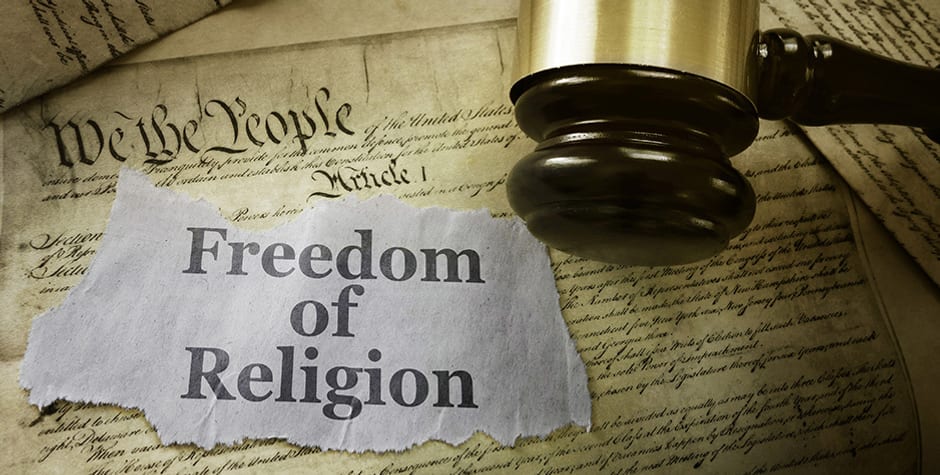
Celebrate Religious Liberty by Exercising Your Freedom to Worship

Fire up the grill. Churn the homemade ice cream. Enjoy the fireworks as you hum a little John Philip Sousa. It’s the Fourth of July weekend.

For many, this holiday brings the joy of parades, cookouts, and patriotic music. But amid the celebration, it’s worth remembering that Independence Day is about more than national pride—it’s about preserving and practicing the freedoms that define us. Among the most vital—and perhaps most often overlooked—is religious liberty.

More Than a Constitutional Clause

Religious liberty means we are free to worship without fear of persecution, and equally free from government coercion into religious activity. This freedom protects our right to attend the church of our choice—or no church at all. And it also ensures that faith remains a matter of personal conscience, not political control.

The founders of our nation recognized the harm caused when religion and government become entangled. They established, with care and foresight, a “wall of separation” between church and state—not to marginalize faith, but to guard its integrity.

As Isaac Backus, a prominent Baptist minister during the American Revolution, once wrote:  “When Church and State are separate, the effects are happy… but where they have been confounded together, no tongue nor pen can fully describe the mischiefs that have ensued.”

Worship Is a Freedom Worth Using

While many of us will mark Independence Day with fireworks and festivities, I hope we’ll also celebrate by exercising the freedom that sets us apart: the freedom to worship.

Our Baptist ancestors were instrumental in shaping the First Amendment, not only to protect their own practices but to advocate for the religious freedom of all. They believed—deeply and rightly—that no government should compel belief or interfere with the exercise of faith. That principle still holds today.

“Congress shall make no law respecting an establishment of religion, or prohibiting the free exercise thereof…”  –First Amendment to the U.S. Constitution

But freedom requires stewardship. It’s not just a right to defend, but a gift to live out.

A Global Perspective

As we gather for worship this weekend, may we remember the millions around the world who do so in secret, risking their safety for the sake of their convictions. May their courage remind us never to take our freedom for granted.

In my years as a pastor, I’ve seen how worship shapes lives—it forms character, builds community, and fuels compassion. When we gather to pray, sing, listen, and serve, we become more than attendees—we become active participants in the liberty we’ve been given.

That’s why Hebrews 10:25 challenges us: “Some people have gotten out of the habit of meeting for worship, but we must not do that. We should keep on encouraging each other…” (CEV)

To neglect worship is to risk trivializing the hard-fought right to gather without fear or restriction.

More Than a Celebration—A Commitment

So yes—enjoy your celebration. Wave the flag. Cheer the parade. Light the fireworks. But let’s also take time to reflect. Give thanks for the freedoms we enjoy. Pray for those who are still waiting to worship freely. And most importantly, exercise your freedom to worship—not just this weekend, but consistently, gratefully, and respectfully.

Because if even one group loses their right to worship, religious liberty is in jeopardy for us all.

(Barry Howard is a retired pastor who now serves as a leadership coach and consultant with the Center for Healthy Churches. He and his wife live on Cove Lake in northeast Alabama.)

(This is an updated column from 2016.)

Learning the Unforced Rhythms of Grace

In a world that praises hustle and rewards burnout, Jesus offers something profoundly countercultural: rest. Not the kind of rest you squeeze in between meetings or tack onto the end of an overbooked week, but real rest—the kind that restores the soul, quiets the mind, and invites us back into wholeness.

In Matthew 11:28–30 (The Message), Jesus extends an invitation: “Are you tired? Worn out? Burned out on religion? Come to me… Walk with me and work with me—watch how I do it. Learn the unforced rhythms of grace.”

These words, so aptly paraphrased by Eugene Peterson, feel less like a command and more like a gentle hand on the shoulder, drawing us toward something better than exhaustion: grace.

Learning to Rest Is a Strength, Not a Weakness

In her book Invitation to Silence and Solitude, Ruth Haley Barton writes, “Because we do not rest, we lose our way… Poisoned by the hypnotic belief that good things come only through unceasing determination and tireless effort, we can never truly rest.”

It’s easy to assume that if we stop, we’ll fall behind. But Jesus flips the script—he teaches that rest is not an interruption to spiritual formation; it is spiritual formation. It’s how we learn to hear his voice above the noise.

A Gentle Yoke in a Demanding World

Jesus invites us to “take his yoke”—a farming tool once used to link animals for shared work. But his yoke isn’t burdensome. It’s custom-fit, gentle, and shared. We don’t pull alone. We’re yoked with Christ, walking in step with his grace.

Years ago, I met a retired pastor who had served faithfully for five decades. When I asked him his secret to longevity, he said simply, “I finally learned to walk at God’s pace.” That’s what Jesus means by unforced rhythms—it’s grace that moves in time with heaven, not the chaos of the calendar.

Grace for the Weary and Wounded

In times of loss, confusion, or fatigue, grace meets us quietly and consistently. It is:

  • An antidote for anxiety
  • A remedy for restlessness
  • Decompression for depression
  • Antivenom for sin

Grace is what saves us when we can’t save ourselves. It guides when we’re lost, comforts when we’re hurting, and encourages when the odds are stacked against us. It even carries us when we don’t know the way forward.

How Do We Learn These Rhythms?

  • Come to Jesus—not just once, but daily
  • Take his yoke—release the burdens you were never meant to carry alone
  • Learn from him—observe his gentleness, humility, and wisdom
  • Rest in him—receive the peace that only grace can give

This isn’t just self-care. It’s soul care. It’s a way of life Jesus modeled—and a way of life he still invites us to follow.

John Mark Comer reminds us, “Transformation is possible if we are willing to arrange our lives around the practices, rhythms, and truths that Jesus himself did, which will open our lives to God’s power to change.”

So today, let grace interrupt your hurry.
Let grace reframe your expectations.
Let grace teach you how to breathe again.

Because in Christ, we’re not called to hustle harder—we’re called to finish the race at the speed of grace.

(Barry Howard is a retired pastor who now serves as a leadership coach and consultant with the Center for Healthy Churches. He and his wife live on Cove Lake in northeast Alabama.)

(This post is a summary of a sermon I shared in 2023.)

Walter Brueggemann Challenged My Assumptions and Deepened My Faith: Reflections from a Former Student

On June 5, 2025, the world lost one of its most provocative and prophetic theological voices. Walter Brueggemann, Old Testament scholar, preacher, teacher, and esteemed theologian, passed away at the age of 92. His death leaves a significant void in the landscape of biblical scholarship and the life of the Church, but his influence will resonate for generations to come.

My own journey with Brueggemann began in a seminary classroom—not at Columbia Seminary, but at the New Orleans Baptist Theological Seminary in a course on Preaching from the Psalms taught by Dr. Harold Bryson. One of the textbooks for the course was Israel’s Praise, Brueggemann’s exposition on the theological weight of worship. That course was the first of many times Walter would challenge my assumptions, stir my imagination, and deepen my faith.

A few years later in 1995, I ventured outside of the Baptist world and enrolled in the Doctor of Ministry program at Columbia Theological Seminary for one reason: I wanted to study with Brueggemann. I completed the program in 1998. Several other Baptist minister friends also pursued their postgraduate work at Columbia as well, including John Pierce, Elizabeth Thompson, Greg DeLoach, Ron Wilson, Courtney Krueger, and Don Gordon. Each of us was drawn to this doctoral program by the gravitational pull of Walter’s prophetic intellect.

My first class with Brueggemann was listed on the course description “Old Dangerous Texts for New Dangerous Times.” His lecture notes from this course became the foundation for his book, “Theology of the Old Testament: Testimony, Dispute, Advocacy.”

Walter had a warm and humorous demeanor outside the classroom. Occasionally after class, my friend Ron Wilson and I, who Brueggemann fondly referred to as his little Baptist friends, would go to a local pub, grab a bite, and watch Braves baseball while unpacking the theological freight of the day’s lectures. Walter could be spotted at a baseball game now and then, and later would share stories and analogies that were conceived at the ballpark.

Years after my graduation, I invited Walter to lead a pastor’s workshop at First Baptist Church of Pensacola, where I was serving at the time. He was gracious and kind, not only in person but in follow-up. After the event, he sent me a brief yet meaningful note: “Thanks for the invitation. It was great to be in your shop.”

When I published my first book—a collection of call stories from a rich variety of pastors—Walter emailed me an endorsement, specifically emphasizing, “The recovery of a notion of call is urgent among us and your book should help that recovery along.” His words gave affirmation to my work and underscored his constant encouragement of emerging voices in ministry.

Walter had a great appreciation for our Baptist heritage. On one occasion in class, he remarked, “It’s good to have the Baptists here with us. None of us would be here if it were not for the Baptists. They were the freedom fighters who contended for religious freedom for all faith groups because they believed ‘if one of us loses our religious freedom, we all lose our religious freedom.’”

Even into his nineties, Walter remained intellectually vibrant, curious, and connected. In our last correspondence on his 91st birthday in 2024, he responded:  “Dear Barry: I am glad to hear from you and thanks for your kind words. I hope all is well for you. It’s good work to be a bridge builder. I just turned 91 and am hanging in and taking stock. With much appreciation, Walter.”

Though deeply academic, his writing was marked by poetic rhythm and prophetic urgency. His sermons and lectures could unsettle the comfortable and comfort the unsettled, sometimes in the same sentence.

Walter loved the scriptures and encouraged his students to “live in the tension of the text.” When addressing various questions about biblical criticism or historicity, he would often quip, “The text is what we have. Deal with it!” Whether he was teaching at Columbia Theological Seminary or speaking to a room full of pastors and leaders, Brueggemann courageously addressed the juxtaposition of scripture and culture head-on.

While I’m grateful for all of Walter’s writing—from his groundbreaking work on the prophets and Psalms to his cultural critique and homiletical insights—I’m especially thankful for his prayers. In Awed to Heaven, Rooted in Earth and Prayers of a Privileged People, his words become devotional guideposts, grounding us in faith while drawing us into action. One line from his prayer, “No More Sinking Sand,” seems especially fitting as we honor his life and witness:

          God of heavens, Lord of earth,
          hear our resolve, heal our unresolve,
          that we may finish in sure trust and in glad obedience.
          We already know what to do by our careful pondering of you. Amen.

Walter Brueggemann completed his journey in “sure trust” and “glad obedience.” Now it is up to us—those who studied with him, read him, or were influenced by his prophetic voice—to keep pondering, to continue proclaiming, and to work toward the kind of world Brueggemann’s theology dared us to imagine.

(Barry Howard is a retired pastor who now serves as a leadership coach and consultant with the Center for Healthy Churches. He and his wife live on Cove Lake in northeast Alabama.)

Where Is God When the Bad Stuff Happens?

Where is God when bad things happen?

Across the ages, this question has perplexed and haunted those weighed down by grief, suffering, and pain. Theologians and philosophers have wrestled with scripture and reason in search of understanding. Pastors and counselors still search for words that offer hope to hearts broken by tragedy.

The Bible doesn’t sugarcoat the harshness of life. In Psalm 13:1–2, the psalmist gives voice to what it feels like to be forsaken in moments of anguish:

How long, Lord? Will you forget me forever?
How long will you hide your face from me?
How long must I wrestle with my thoughts
and day after day have sorrow in my heart?
How long will my enemy triumph over me?

Chaos wears many faces. A hurricane flattens homes and lives. An earthquake strikes without warning. A disease creeps in uninvited. A drunk driver kills an innocent teenager. And every time, the question echoes again: Where is God in this?

Some respond with platitudes. But trite clichés often feel hollow—or even offensive—to those walking through the valley of sorrow. Answering this question too casually can seem dismissive. But ignoring it would leave too many stranded in silence.

So I won’t pretend to offer a one-size-fits-all answer. Instead, I’ll share what I’ve come to believe—hoping that even a flicker of light might help someone see more clearly in a dark place.

1. Life is not fair.

I used to believe that if I prayed, obeyed, and lived faithfully, God would shield me from life’s storms. But life doesn’t follow that formula. God is good, yes—but God never promised that life would be fair. Life is hard. And faith isn’t an escape hatch—it’s an anchor.

As beloved author Frederick Buechner suggested, “Here is the world. Beautiful and terrible things will happen. Don’t be afraid.”

Faith helps us face the beautiful and the terrible with courage.

2. Suffering does not discriminate.

No one is immune. Tornadoes don’t skip homes based on church attendance. Illness doesn’t scan for spiritual résumés. We live in a world still scarred by sin, and its consequences touch the just and the unjust alike. Faith doesn’t exempt us—it equips us.

3. God is present in the chaos.

God does not orchestrate suffering as punishment or test. God is not the author of chaos, but the Redeemer within it. The Holy Spirit—God’s presence—lives within us to comfort, convict, and guide. God also shows up through the Church—when we bring love, healing, and hope to others.

Holocaust survivor and psychiatrist Viktor Frankl observed, “When we are no longer able to change a situation, we are challenged to change ourselves.”

Faith doesn’t always change our circumstances—but it transforms our response.

4. God invites us to walk by faith, not by sight.

Why do bad things happen to good people? Why are some healed and others not? Why did Jesus raise Lazarus, but not everyone? Maybe those moments of healing are glimpses—previews—of what God will one day do fully and finally. Even Lazarus died again. Earthly healing is temporary. Eternal hope is permanent.

I still believe in prayer. I believe in hope, medicine, community, and grace. But there are no formulas—only an invitation to walk by faith with courage and perseverance.

5. God is at work, but not always in ways we can see or evaluate.

Romans 8:28 assures us, “In all things God works for the good of those who love him.”

God doesn’t cause all things—but God works within all things. Often, God works through us. We are Christ’s hands and feet in a hurting world. When we show up with compassion, we reflect the God who never leaves us.

So, where is God when the bad stuff happens?

God is present. Not with easy answers or magical fixes—but with sustaining grace, resilient hope, and a faithful presence that never lets go.

Especially in the seasons when I wrestle with the unknowns, I hold to the promise that God is here. And even the smallest glimpse of God’s presence encourages me to keep pressing on.

(Barry Howard is a retired minister who currently serves as a leadership coach and consultant with the Center for Healthy Churches. He and his wife reside on Cove Lake in northeast Alabama.)

(This column is taken from a message I shared at FBC Pensacola after the community experienced multiple hurricanes, a catastrophic oil spill, and more than a few unexpected deaths.)

“My Head Hurts, My Feet Stink, and I Don’t Love Jesus”

One of Jimmy Buffett’s more unusual song titles has always struck me as confessional:“ My Head Hurts, My Feet Stink, and I Really Don’t Love Jesus.”

At first glance, that may feel jarring—even offensive. But sometimes, brutal honesty says what softer words can’t.

Long before moving to the coast of Florida, I loved the music of Jimmy Buffett. Though many of the lyrics are not Sunday morning pulpit material, I think Buffett may have given voice to something that a lot of people quietly feel: life is overwhelming, I’m exhausted, and if this is what religion is, I’m not buying it.

There’s a sobering passage in the Bible that feels strangely modern. It comes from Paul’s second letter to Timothy, chapter 3, verses 1–9 (The Message):

“Don’t be naive. There are difficult times ahead. As the end approaches, people are going to be self-absorbed, money-hungry, self-promoting, stuck-up, profane, contemptuous of parents, crude, coarse, dog-eat-dog, unbending, slanderers, impulsively wild, savage, cynical, treacherous, ruthless, bloated windbags, addicted to lust, and allergic to God. They’ll make a show of religion, but behind the scenes they’re animals. Stay clear of these people… They get exploited every time and never really learn… But nothing will come of these latest impostors. Everyone will see through them…”

Paul paints a picture of a society unraveling—where people are self-absorbed, cynical, addicted to chaos, and allergic to God. He warns of those who put on a show of religion but live like animals behind the curtain.

And then Paul says: “Stay clear of these people.”

Now that’s a hard line. But maybe it’s not about avoiding people in pain. Maybe it’s about being wise enough to walk away from shallow religion so we can offer something real.

Because here’s the truth: people are hurting. And they’re not looking for performance—they’re looking for peace.

When Your Head Hurts: Life Can Be Heavy

We live in an age of anxiety, distraction, and noise. People are overwhelmed—mentally, emotionally, and spiritually. Church clichés don’t help. Quoting verses out of context doesn’t help. What people long for is honest faith that doesn’t pretend to have all the answers but still clings to hope.

We all know someone (maybe it’s you) who’s tired of the game—tired of pretending everything’s okay. Maybe faith has become foggy. Maybe the pain has been too heavy. And in those moments, the last thing people need is shallow religion.

What they need is a Savior who doesn’t flinch at the truth.

When Your Feet Stink: The journey can be exhausting.

“Feet stink” is just a gritty way of saying: I’m worn out.
Life has been a long journey. Some people are exhausted from walking it alone—or worse, walking it while being judged by those who say they follow Jesus.

But here’s the beauty of the real gospel: Jesus doesn’t keep his distance from the dirty. He kneels. He washes feet. He welcomes the weary. And he still does.

What if the church looked more like a basin and towel, and less like a stage?

“I Really Don’t Love Jesus”: Honest confession is a good place to start.

This may be the most painful line in the song—but also the most honest. Some people don’t feel any affection for Jesus because the version they were shown was twisted, manipulative, or weaponized.

But often, when people say they don’t love Jesus, what they really mean is:
“I’ve never met the real One.”

And that’s where we come in—not to argue or defend, but to embody Christ.
To show them a Jesus who is full of grace and truth. A Jesus who welcomes doubt, heals wounds, confronts injustice, and never stops loving.

Staying Clear and Staying Compassionate

Paul’s warning to “stay clear” wasn’t about cutting off the brokenhearted. It was about stepping away from religious performance—from counterfeit faith that values appearance over authenticity.

Because in a world addicted to the fake, authenticity is the most powerful witness.

Let’s be real. Let’s be honest. Let’s be kind.

So yes—some people’s heads hurt. Some are worn out. And some aren’t sure they love Jesus at all.

But what if they haven’t been rightly introduced? What if their view has been blocked by loud religion and quiet hypocrisy?

Let’s be the ones who live with humble faith.
Let’s create space for hard questions and honest searching.
Let’s love people right where they are.

Because when someone meets the real Jesus—not the bumper-sticker version, not the political mascot, but the crucified and risen Savior—they just might find that their headache eases, their feet find rest, and their heart begins to soften.

And maybe, just maybe, they will grow to genuinely love and follow Jesus.

As the Winds of Time Blow: 10 Ways to Navigate the Changing Seasons of Life

Life is full of seasons—some bright and full of joy, others challenging and uncertain. Just as nature moves from spring to summer, fall to winter, we also experience transitions in relationships, careers, health, and faith.

Ecclesiastes 3:1 affirms, “To everything there is a season, A time for every purpose under heaven.”

Change is inevitable, but how we navigate these shifts can shape our growth and resilience. Marie Dee cautions, “If you stay stuck in the past season or fixated on the future season, you will miss the one you’re in.”

Whether you’re entering a season of renewal or walking through a time of hardship, here are 10 ways to navigate life’s changing seasons with wisdom and grace:

1. Learn to be faithful and flexible. Faithfulness and adaptability are not mutually exclusive. Change is constant, and it can be uncomfortable at times. However, resisting it only makes the transition harder. Accepting that life moves in seasons allows us to adapt with greater peace and confidence. Trust that each new chapter holds purpose, even if you can’t see it yet.

2. Lean into your faith. Uncertainty can feel overwhelming, but God is constant. Seek God’s guidance through prayer, Scripture, and quiet reflection. Faith does not exempt us from change, but it can serve as a compass to help us navigate change.

3. Let go of what you no longer need. Not everything (or everyone) is meant to journey with you into the next season. Holding onto outdated habits, practices, relationships, or relics can keep you from growing into who you are meant to be. Just as trees shed their leaves in autumn, sometimes we must release the past to make room for the future.

4. Stay rooted in gratitude. In seasons of uncertainty, gratitude shifts our focus from what we lack to what we have. Take time each day to acknowledge the blessings around you. Even in difficult times, there is always something to be thankful for.

5. Stay connected to spiritual community. Life’s transitions are easier when you’re surrounded by supportive people who offer encouragement and wisdom. Seek out mentors, trusted friends, or faith leaders who can help you navigate unfamiliar territory with clarity and perspective.

6. Continue learning and growing. Each season—whether joyful or challenging—teaches us something valuable. Instead of asking, “Why is this happening to me?” shift the question to, “What is this season teaching me?” Growth happens when we are willing to learn from the experiences life brings our way.

7. Prioritize self-care. Transitions can be exhausting, so take good care of your body, mind, and spirit. Eat well, rest, exercise, and nurture your spiritual life. A well-cared-for heart and mind will help you face change with greater strength.

8. Be patient with yourself and others. Adjusting to a new season takes time. Don’t rush the process or compare your journey to others. Give yourself grace, knowing that transitions are part of life’s unfolding story. And exercise the same patience toward others who may be struggling to adjust to a new season as well.

9. Find joy in the present moment. It’s easy to focus on what’s ahead or dwell on what’s behind, but true peace and joy are always found in the here and now. Look for moments of joy, laughter, and beauty, even in uncertain times. Henri Nouwen reminds us, “Joy does not simply happen to us. We have to choose joy and keep choosing it every day.”

10. Keep moving forward with hope. No season lasts forever. If you’re in a difficult one, live as though brighter days areahead. If you’re in a season of joy, cherish it fully. With faith, resilience, and an open mind, you can step into each new chapter with confidence.

In addressing the impact of cultural shifts and societal changes, Malcolm Gladwell, author of The Tipping Point, contends, “You need to have the ability to gracefully navigate the world.”  

Navigating the changing seasons of life isn’t always easy, but it is always possible—with faith, wisdom, and courage. No matter what season you find yourself in today, make the most of that season, and you will be better prepared to navigate the seasons yet to come.

(Barry Howard is a retired pastor who currently serves as a leadership coach and columnist for the Center for Healthy Churches. He and his wife reside on Cove Lake in northeast Alabama.)

5 Reasons to Reboot: Lessons from a Smartphone

We all know the moment: your phone starts acting strangely—apps freeze, battery drains fast, and everything slows to a crawl. Tech support’s first advice? “Have you tried turning it off and back on again?”

As it turns out, that same principle applies to our faith. As we deal with the multiple influences and pressures of life, Kris Gage reminds us, “Sometimes the best way to move forward is to stop where you are and hit reset.”

Just as our smartphones need an occasional reboot to clear out digital junk and recalibrate, our spiritual lives benefit from periodic resets. Here are five reasons why rebooting your faith is essential—and how it can renew your connection with God.

1. To Clear Spiritual Clutter

Phones accumulate digital debris—temporary files, cookies, cached data. Over time, all that clutter slows down performance.

Our faith can gather clutter too: half-truths, distractions, unchecked assumptions. Rebooting spiritually clears the mental and emotional cache, making room for the teachings of Jesus to flow freely again.

“Create in me a clean heart, O God, and renew a right spirit within me.” — Psalm 51:10

2. To Realign with the Operating System

Every smart device has a central OS that governs how it runs. For the Jesus follower, our operating system is the message and mission of Christ.

When we reboot, we allow God to reset our priorities, renew our minds, and align our hearts with His purpose.

“Do not conform to the pattern of this world, but be transformed by the renewing of your mind.” —Romans 12:2

3. To Remove Corrupt Data

Malware and corrupt files can sneak into our devices quietly—and they do the same in our minds. False narratives, toxic theology, or legalism can distort our view of God and others.

Rebooting invites the Holy Spirit to expose and erase the lies we’ve believed and replace them with grace and truth.
“Test everything; hold fast what is good.” —1 Thessalonians 5:21

4. To Improve Connection

When your Wi-Fi signal drops, it can feel like you’re disconnected from the world. Spiritually, we experience similar moments—when prayer feels dry or God feels distant.

A spiritual reboot can restore connection. Turn things off. Be still. Listen. Reconnect with Scripture. Rest. Refocus. Re-vision. You’ll be surprised how strong the signal comes back.

“Draw near to God, and He will draw near to you.” —James 4:8

5. To Prevent a Crash

We often ignore the warning signs—just like when our phones start lagging. But ignoring your soul’s warning signs can lead to burnout, bitterness, or spiritual apathy.

A regular reboot is a form of soul care. It’s how we stay grounded, avoid a crash, and continue running with purpose and clarity.

“Those who wait on the Lord shall renew their strength…” —Isaiah 40:31

We don’t throw our phones away when they start acting up—we reset them. In the same way, God doesn’t discard us when we drift. Rather, God lovingly invites us to reset, refresh, and reboot.

As the cell phone revolution advanced, Jimmy Fallon quipped, “A new survey out says 64 percent of Americans own a smartphone. Which is interesting because in a related survey, 100 percent of smart phones say they own an American.”

Rebooting is a way to realign with your faith and to keep the spam, the cookies, the conspiracies, and the heresies from owning you.

(Barry Howard is a retired pastor who currently serves as leadership coach and consultant with the Center for Healthy Churches. He and his wife reside on Cove Lake in northeast Alabama.)

Letting Easter Dawn on You

Henry Wadsworth Longfellow observed, “T’was Easter Sunday, the full-blossomed trees filled all the air with fragrance and with joy.”

Easter is more than an event on the calendar—it’s a dawning. A slow, radiant breaking-in of a truth too large, too beautiful, too life-altering to rush in all at once. For Mary Magdalene and the other disciples, Easter didn’t explode into their hearts like fireworks—it crept in like morning light, gradually dispelling the shadows.

Kathryn Turner suggests, “Easter does not arrive as a blinding flash… rather it feels like a series of glimpses until one day we know it to be true… and are willing to stake our life—on the earth and the one hereafter—on it.”

Sometimes in life, we understand a message or get the point the first time it comes our way. But there are other times, it takes a while for truth and reality to soak in.

Regarding the story of the resurrection, some embrace the good news on the first encounter, while others hear the message for years until one day, like a grand epiphany, it dawns on them.

Let’s walk with Mary and the disciples through John 20:1–18 to see what we can learn from their response to the empty tomb:

Avoid jumping to conclusions. “So she came running to Simon Peter and the other disciple… ‘They have taken the Lord out of the tomb, and we don’t know where they have put him!’” (v. 2)

Mary sees the stone rolled away and immediately assumes the worst. She jumps to a conclusion without all the facts—a very human thing to do. How often do we do the same in our faith journey? We face unanswered prayers, pain, or confusion, and assume God is absent, or that hope is lost.

But Easter reminds us—just because we don’t see Jesus doesn’t mean He isn’t present. The tomb was empty, not because something had gone wrong, but because everything had gone gloriously right.

Let Easter dawn slowly. Don’t be so quick to declare the end of the story before God has finished writing it.

Ask good questions. Peter and John race to the tomb. They see the linen and head back home. But Mary stays—and she asks.

She weeps and asks the angels, “They have taken my Lord… and I don’t know where they have put him.” Then Jesus appears—though she thinks he’s the gardener—and again she asks, “Sir, if you have carried him away…

She’s seeking, questioning, longing. And then—He says her name. “Mary.”

And in that moment, her questions find their answer—not in information, but in relationship.

Barbara Brown Taylor puts it this way: “Easter began the moment the gardener said, ‘Mary!’ and she knew who he was. That is where the miracle happened and goes on happening — not in the tomb but in the encounter with the living Lord.”

Ask good questions. Bring your doubts. Voice your grief. Easter has room for all of that.

Act on what you learn.  After Mary recognizes Jesus, he tells her, “Go to my brothers and tell them…” And she goes—becomes the first preacher of the resurrection: “I have seen the Lord!”

Letting Easter dawn on us isn’t just about having a warm feeling inside. It’s about living out the truth of the resurrection.

Easter doesn’t end with an empty tomb—it begins with changed lives.

Phillips Brooks described the message of Easter like this:

Tomb, thou shalt not hold Him longer;
Death is strong, but Life is stronger;
Stronger than the dark, the light;
Stronger than the wrong, the right.
Faith and Hope triumphant say,
Christ will rise on Easter-Day. 

And because He lives, we live differently.

Maybe the greatest evidence of the resurrection isn’t just what happened on that Sunday morning long ago—but how Easter keeps happening in us. Over and over again.

In every moment of forgiveness. In every act of courage. In every step of faith. In every whispered prayer that clings to hope when everything else seems lost.

Easter dawns slowly. It rises through grief, through questions, through encounters.
And when it finally breaks through, it transforms everything.

Brennan Manning, once a skeptic, now confesses, “For me the most radical demand of Christian faith lies in summoning the courage to say yes to the present risenness of Jesus Christ.”

So today, resist the urge to jump to despair. Ask your honest questions and listen for the voice that calls your name. And act on what you discover, living each day as someone who has encountered the risen Christ.

Because Jesus didn’t just rise once. He keeps rising—again and again—even in minds and hearts where the good news of Easter may be gradually dawning.

(Sermon from my first Easter at First Baptist Church of Pensacola, April 10, 2006.)

Love Is a Verb

A Maundy Thursday Reflection

On Maundy Thursday, we remember one of the most intimate and powerful evenings in the life of Jesus. Gathered in an upper room with his disciples, just hours before his betrayal, Jesus told them, “A new command I give you: Love one another. As I have loved you, so you must love one another” (John 13:34).

Love is action-oriented. Stephen Covey contended, “Love is a verb. Love—the feeling—is a fruit of love, the verb.”

It’s one thing to talk about love. It’s another to live it. Jesus didn’t just tell his disciples to love one another—He showed them. He got down on his knees and washed their feet. He broke bread and shared wine. He spoke tenderly of what was to come, even as he prepared to endure suffering on behalf of the very ones seated at the table.

Love Is Humble

The Son of God, the one through whom all things were made, picked up a towel and served. In a culture where washing feet was the job of the lowest servant, Jesus flipped the script. He demonstrated that love doesn’t seek status or recognition. It stoops. It serves. It sees others as worthy of our time, our care, and our compassion.

Love Is Faithful

Jesus knew that Judas would betray him. He knew Peter would deny Him. He knew the others would scatter in fear. Still, he broke the bread. Still, he offered the cup. Still, he washed their feet. His love didn’t waver based on how others treated him. His love remained faithful, even in the face of betrayal and abandonment.

Love Is Sacrificial

As the shadows grew longer that night, Jesus set His eyes on the cross. Not because he was powerless to avoid it, but because he was committed to a love that would redeem the world. Paul David Tripp proposes, “Love is willing self-sacrifice for the good of another that does not require reciprocation or that the person being loved is deserving.” Maundy Thursday reminds us that love costs something. It’s not always easy or convenient. The mandate Jesus gave is action-oriented. In the gospel Jesus preached, love is a verb.

Love Is Commanded

“Maundy” comes from the Latin mandatum, meaning “commandment.” It points to Jesus’ words in John 13:34: “A new command I give you: Love one another. As I have loved you, so you must love one another.” This wasn’t a gentle suggestion—it was a divine directive. It is easy to love God. It is often difficult to love others. Yet one is a reflection of the other. If we call ourselves his followers, then love must be our way of life. Not just love in theory, but love in action.

Love Is a Verb

It’s not just how we feel—it’s what we do. On Maundy Thursday, we’re invited to remember that love is meant to be lived. Whether we are washing feet, sharing a meal, forgiving a wrong, or standing beside someone in their pain, we are called to be people who love with hands and feet, with humility and courage, with grace and truth.

So on this Maundy Thursday, may we do more than recall a sacred meal or a basin and towel. May we recommit ourselves to the path Jesus walked—the path of servant-hearted, sacrificial, unwavering love.

Because love is more than a word.
Love is a verb.