
“Be Near Me, Lord Jesus”: 10 Christmas Carol Lyrics That Speak into Our Grief

Christmas is often a season of joy, but for many, it can also bring waves of grief as we remember loved ones who are no longer with us. Often their absence speaks more loudly at Christmas.

Perhaps you can identify with the grieving individual who said, “I see you in the lights on the tree and the ornaments we used to hang each year. I hear you in the carols we loved to listen to together. I miss you so much this year, but I feel you all around.” 

Music radiates a therapeutic quality. For those who are grieving, Christmas carols go a step further. These enduring songs can speak comfort, hope, and peace to an aching soul.

If you are feeling a heavy sense of loss this Christmas season, lines from these 10 carols can remind you of God’s presence and promises even as you navigate your grief:

1. “The thrill of hope, a weary world rejoices.” (from O Holy Night) In moments of weariness and grief, these words remind us that hope can restore and renew our spirits. The birth of Christ is a beacon of renewal, bringing joy even to heavy hearts.

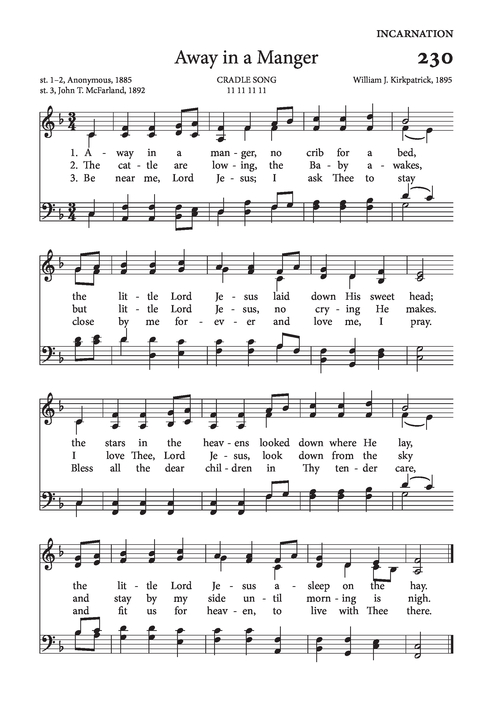
2. “Be near me, Lord Jesus; I ask Thee to stay close by me forever, and love me, I pray.” (from Away in a Manger) A tender prayer for God’s nearness, this stanza offers reassurance that Jesus is with us, even in our deepest sorrow.

3. “Peace on earth and mercy mild, God and sinners reconciled.” (from Hark! The Herald Angels Sing) These words proclaim peace—not just in the world, but in our hearts. They remind us that God’s grace sustains us, offering comfort when grief feels overwhelming.

4. “The hopes and fears of all the years are met in thee tonight.” (from O Little Town of Bethlehem) Grief often amplifies our anxiety about the future, but this lyric reminds us that Christ’s birth intersects with our hopes and our fears, offering peace and reassurance.

5. “O rest beside the weary road and hear the angels sing.” (from It Came Upon the Midnight Clear) This carol reminds us to pause and find rest for our weary souls. In our grief, we can find comfort in the message of peace and hope proclaimed by the angels.

6. “Then pealed the bells more loud and deep: ‘God is not dead, nor doth He sleep.'” (from I Heard the Bells on Christmas Day) Written during a time of personal sorrow, this carol especially speaks to those who feel abandoned in their grief. It reminds us that God is present and actively working for our good.

7. “Silent night, holy night, all is calm, all is bright.” (from Silent Night) The serene imagery of this carol invites us to embrace stillness, trusting in the calm and brightness that God’s presence brings, even in the midst of pain.

8. “Let every heart prepare Him room.” (from Joy to the World) Grief can leave an emptiness in our hearts, but this stanza invites us to make room for Christ, who fills us with peace, hope, and joy.

9. “Born to set Thy people free; from our fears and sins release us, let us find our rest in Thee.” (from Come Thou Long Expected Jesus) This carol expresses a deep longing for freedom from life’s burdens and rest in Christ’s presence.

10. “Rejoice! Rejoice! Emmanuel shall come to thee, O Israel.” (from O Come, O Come, Emmanuel) This ancient carol speaks directly to those in sorrow, promising that God is with us. Emmanuel—God with us—is a powerful reminder that we are never alone.

Christmas carols are not just songs of celebration; they are also prayers, petitions, and promises of God’s love and presence. For those grieving, these words offer a unique blend of comfort and hope, pointing us to the truth that Christ came to bring peace and healing to a broken world.

Don’t hide during the holidays. Light the candles, prepare the meal, and sing the carols. Alan Wolfelt suggests, “During your time of grief, the very rituals of the holidays can help you survive them.”

This Christmas, may the timeless words of these carols bring you comfort, reminding you that light often shines brightest in the shadows.

(Barry Howard is a retired pastor who now serves as a leadership coach and columnist with the Center for Healthy Churches. He and his wife live on Cove Creek in northeast Alabama.)

Even Toys Have a Story to Tell at Christmas

Music is a central part of our Christmas celebration. Carols, concerts, chorales, and cantatas all enhance our journey to the manger. But there’s something extraordinarily uplifting about hearing the voices of children singing.

On Sunday morning, the First Kids Choir of First Baptist Church of Gadsden brought sparkle, color, and childlike joy to the sanctuary as they presented The Carol of the Toys: A Christmas Story, a delightful musical written and published by Semsen Music. With lively melodies, playful characters, and a meaningful storyline, the presentation filled the room with both laughter and reverence.

The sole purpose of the church isn’t to have fun. The church exists to worship God, share the good news, nurture faith, build community, and serve God by serving others. But sometimes we need to be reminded that doing the work of the church—and sharing the good news—can also be a lot of fun.

This musical was fun. It imagines a world where toys come to life—dolls, stuffed animals, candy canes, a robot, a racecar, and more—and each one joins a whimsical search for the true meaning of Christmas. Their journey leads them far beyond the wrapping paper and bows as they search for the missing member of their menagerie: the baby Jesus.

One upbeat number featured the toys realizing there must be more to Christmas than decorations, tapping out the cheerful line, “We’re searching for the meaning—something bright, something true!” Another musical moment offered a gentle reminder as the chorus softly sang, “Follow the star… it will lead you to the King.” These brief refrains helped guide the toys—and the congregation—toward the heart of the nativity story.

Threaded throughout the musical was a theme simple enough for children to grasp yet profound enough for adults to ponder: Even toys have a story to tell at Christmas.

And what a story they told. Through their colorful costumes, energetic voices, and spirited dancing (yes, these Baptists can dance), the children conveyed a message that resonated far beyond the stage. Their performance reminded us that the Christmas story is not bound to a single age group, culture, or generation. It speaks through Scripture and song and—even more delightfully—through a cast of animated toys brought to life by children who believe in the story they’re telling.

The musical reached its apex when the holy family arrived, one by one. First came a melodious Mary, also searching for the baby Jesus. Then a jiving Joseph entered, whose dance steps could put the most devout Pentecostal to shame, joining Mary and the children in their search. When the Christ child finally appeared in a tethered gift box—symbolizing that he had been lost or overlooked in the hustle and bustle of Christmas—the toys celebrated that the child had been found and the nativity was complete.

The musical concluded with the toys gathered around the manger, singing that Christmas is ultimately about God’s love made visible in Jesus. The final moments echoed with wonder as the children sang about the joy found “in a tiny child who changes everything.”

In a season often crowded with shopping lists and schedules, The Carol of the Toys offered a refreshing reset—an invitation to slow down, listen, and rediscover the miracle at the center of it all. It also issued a gentle reminder not to leave Jesus behind in the clutter.

This Christmas, may we remember that even toys have a story to tell—and every good Christmas story leads us to Jesus.

At the First Baptist Church of Gadsden, it was the joyful voices of children who pointed us all toward that hope, that light, and that love.

(Barry Howard is a retired pastor who now serves as a leadership coach and columnist with the Center for Healthy Churches. He and his wife live on Cove Lake in northeast Alabama.)

Parable of the Stolen Baby Jesus

Every year, families, churches, and communities across the country set up nativity scenes in homes, along roadsides, in front of churches, and in town squares. These displays serve as seasonal reminders of the Christmas story, which includes the journey to Bethlehem, the birth of baby Jesus, and the presence of the angels and shepherds.

During my first Christmas serving as pastor of First Baptist Church in Pensacola, I learned that Eliot and Frances Dobelstein, long-time members of the congregation, had faithfully displayed a nativity scene on the southwest corner of the church lawn every Advent since 1972.

One afternoon, Eliot and Frances stopped by my office to share the story behind the display and the challenges they faced in maintaining it. Because the manger scene sat along a busy street, it often became an easy target for mischief. Over the years, various characters were defaced, rearranged, or occasionally went missing. Shepherds and wise men would disappear, only to be discovered days later in odd places. But the most frequent victim was the baby Jesus. More than once, someone had plucked the baby from the manger, leaving only an empty trough between Mary and Joseph.

Despite these frustrations, Eliot never gave up. Whenever a piece went missing, he replaced it. He secured the figures as best he could and made extra trips past the display to discourage would-be pranksters.

But in 2007, to prevent the baby Jesus from being taken yet again, Eliot decided enough was enough. Determined to prevent another “messianic kidnapping,” he wrapped a sturdy chain around the baby Jesus and fastened it with a padlock. To conceal the chain, he draped a worn blanket over the figure, giving the appearance of swaddling clothes.

“No one’s taking Jesus this year,” he thought confidently.

But he was wrong.

A few days before Christmas, Eliot walked into the church office looking more discouraged than I had ever seen him. The baby Jesus was gone—again.

Sam Solomon, our maintenance supervisor, and I followed Eliot to the scene. There, in the empty manger, lay the broken remains of the chain. Someone had come with bolt cutters, snipped through the links, and made off with Jesus once more.

For the first time, Eliot looked genuinely defeated. He sighed heavily and shook his head. “I don’t know what else to do,” he said.

Still unwilling to leave the manger completely empty, he placed a small bundle of hay in the trough and covered it with the same blanket—creating the impression that the baby Jesus was still there. But Eliot, Sam, and a few staff members knew the truth: this year, the manger held no Christ child.

Yet the story wasn’t over.

When Sam arrived at church early on January 2—the first day the office reopened after the New Year’s holiday—he noticed something propped against the glass doors of the atrium. He left it there for me to see when I arrived a short time later.

At first glance, it looked like a forgotten doll. Perhaps a child had dropped it or a neighborhood dog had dragged it there. Maybe one of our homeless friends had slept by the door and left it behind.

But as I approached, I recognized it immediately. It was the missing baby Jesus, with a folded note was taped to its chest.

Scrawled in uneven handwriting were these words:

“I took this before Christmas, and I have not been able to sleep much since then. I am sorry. I shouldn’t have done it. So I am bringing it back home.”

I stood there for a moment, letting the words sink in. I hadn’t expected that.

I hated that Jesus had been stolen, especially after all of Eliot’s efforts to secure the display. Yet somehow, I found comfort in the return of that simple plastic figure—the one meant to represent the Savior of the world.

After sharing the news with our staff, I called Eliot.

“I thought you’d want to know,” I said. “The stolen baby Jesus has been returned.”

I could hear the relief in his voice.

Later that day, as I reflected on what had happened, I found myself wrestling with an unexpected question: What do you do with a stolen Jesus?

And then it struck me. The only thing you can do with a misplaced Jesus is bring him back to his rightful place in your life story.

Perhaps you have mis-taken Jesus, and you need to bring Jesus home to where he belongs.

Or maybe, you are the one who has wandered away, and this year, you are the one who needs to come home.

Wonder as You Wander the Road to Bethlehem

Every December, the world starts rushing as seasonal lights go up, calendars fill up quickly, and Christmas playlists spill from department store speakers before the Thanksgiving leftovers have even cooled. There is a cultural trend to rush in and rush through the holiday season.

But Advent invites a different rhythm. It invites us not to hurry, but to wonder.

Advent beckons us to wander slowly, thoughtfully, hopefully down the long road toward Bethlehem. And somewhere along that road, if we allow it, wonder begins to rise inside us like a sacred warmth.

The old Appalachian Christmas carol “I Wonder as I Wander” captures this spirit fittingly. Its haunting melody and simple lyrics invite us into a posture of awe as we contemplate the mystery of Christ stepping into our world. The song itself echoes Advent’s message: as we wander toward Bethlehem, it is the wondering that prepares our hearts and minds to welcome the Christ child, yet again.

Over a century ago, when crowds gathered in Kitty Hawk, North Carolina, waiting for news of the Wright brothers’ first flight, they lived in a moment thick with anticipation. Before anyone saw an airplane lift off the ground, people gazed at the horizon, holding their breath, wondering if something extraordinary was about to break into the ordinary. That is Advent. It is the pause before the miracle.

Wonder cultivates the fertile soil of our minds, readying us to learn and grow. As Socrates reasoned, “Wonder is the beginning of wisdom.”

Advent isn’t a day trip. It is a progressive journey. Think of Advent as the “loading bar” on your computer or phone. It moves slowly from 6%…to 28%…to 75%. You can’t rush it, and you can’t ignore it. That little bar is doing important behind-the-scenes work—downloading, preparing, aligning things so the device can function as it should.

Advent does the same for the human heart. It prepares us, steadies us, and positions us to receive Christ not with fatigue but with awe.

We are not the first ones to travel this path. Scripture is full of wanderers whose journey shapes our own:

  • The prophets wandered with hope (Isaiah 9:2–7).
  • Mary wandered toward Bethlehem with courage (Luke 1:38).
  • Joseph wandered with obedience (Matthew 1:20–24).
  • The shepherds wandered with expectancy (Luke 2:8–15).

They did not rush. They wandered faithfully, trusting that God would help them navigate the journey.

And so do we.

In December of 1941, with the world engulfed in war, Winston Churchill stood beside President Franklin Roosevelt on the White House lawn for a Christmas Eve service. The future felt frightening, the headlines heavy. Yet together they read John 1:5: “The light shines in the darkness, and the darkness has not overcome it.”

That night, in the shadow of conflict, nations heard a reminder that has anchored believers for centuries: even in the world’s darkest winters, God’s light shines in the dark places and spaces of life, a message we need to hear resoundingly this year.

Perhaps we must learn to wonder again. Advent prompts us to slow down enough to see grace glowing at the edges of our days, sort of like candlelight in a dark sanctuary, gentle yet unignorable.

This season is not about racing toward a date on the calendar. It is about traveling with intention and a spirit of inquiry. About noticing God’s presence in the challenges, in the questions, in the silences, and in the small mercies. It is about recapturing the holy wonder that first stirred in Bethlehem, a holy curiosity that echoes the humble, searching tone of “I Wonder as I Wander.”

Isaiah invites us to walk this road with hope: “The people walking in darkness have seen a great light” (Isaiah 9:2). Mark calls us to prepare the way (Mark 1:3). Mary teaches us to magnify the Lord (Luke 1:46).

As you wander the road to Bethlehem this year, may wonder rise in you again, wonder that steadies your spirit, softens your pace, and opens your heart and mind to the One who is coming.

Don’t rush there. Wander. And wonder.

Because those who wander the road to Bethlehem with wonder do not merely celebrate Christmas—they are ready to welcome the Christ child when they arrive, and then to follow him from the manger to the cross and beyond.

(Barry Howard is a retired pastor who now serves as a leadership coach and consultant with the Center for Healthy Churches. He and his wife live on Cove Lake in northeast Alabama.)

Navigating Life on the Island of Misfit Toys: 7 Ways to Deal with Loneliness at Christmas

For those of us who grew up watching Rudolph the Red-Nosed Reindeer, the Island of Misfit Toys has become a symbol of being different, overlooked, or left out. Although the toys were not broken, they were misunderstood and longing for a place where they belonged.

For many individuals, the holidays can feel like that island—a season where everyone else seems to have a place, a purpose, and people to share it with, while loneliness leaves us feeling adrift. In a recent Harvard study, 21 percent of adults indicated they have experienced serious feelings of loneliness.

If you’re feeling like life on the “island” is your reality this Christmas, take heart. Loneliness, though difficult, does not have the final word. Here are some ways to find meaning, connection, and even joy during the holidays, no matter your circumstances:

1. Own your uniqueness. On Rudolph’s journey, Charlie-in-the-Box insisted, “Being a misfit means that you are special. Embrace your uniqueness and celebrate who you are.” Loneliness can stem from feeling out of place or like you don’t measure up to others’ holiday experiences. But the beauty of Christmas is that God didn’t choose perfection to carry out his plan. God chose a humble manger, ordinary shepherds, and a small, overlooked town. Lean into who you are, and remember that you are uniquely and wonderfully made.

2. Come to terms with your feelings. It’s okay to admit that the holidays are hard. Whether you’re grieving a loss, facing a season of change, or simply feeling the ache of solitude, naming those emotions can be a powerful first step toward healing. Even Jesus experienced loneliness and sorrow. He knows your pain and he is near to you, offering comfort and peace.

3. Look for fellow “misfits.” The Misfit Toys didn’t stay isolated. They found each other. Seek out others who may also feel disconnected during this season. Attend a community event, reach out to a friend, or visit a local church. Many people long for connection but don’t know how to take the first step. Your initiative could be a gift not only to you but to someone else.

4. Find joy in serving. One of the most powerful antidotes to loneliness is serving others. Volunteer at a shelter, bake cookies for your neighbors, or send handwritten notes to people who might also be feeling alone. When we shift our focus outward, we often discover new connections and purpose in the process.

5. Lean into the Christmas story. At its core, Christmas is not about parties, gifts, or picture-perfect moments. The Christmas story is about God stepping into our messy, lonely world to be with us. The birth of Christ is a profound reminder that we are never truly alone. Emmanuel, “God with us,” means God is present in your quiet moments, your tears, your laughter, your challenges, and your joys.

6. Create your own traditions. If old traditions bring more pain than joy, don’t be afraid to start new ones. Hermey the Elf advises, “Follow your passion and dreams, even if they don’t fit into the mold. Be true to yourself and find joy in pursuing what you love.” Write a poem, start a jigsaw puzzle, try the new recipe, dance by the light of the tree, or take a peaceful walk under the stars. Simple, meaningful actions can help you reclaim the season.

7. Give yourself the gift of grace. It’s okay to feel lonely, and it’s normal to experience melancholy during the holidays. Don’t be too hard on yourself if your emotions feel a little chaotic. The first Christmas night wasn’t filled with jubilant celebration but with quiet humility. Let yourself rest in the peace of the season, know that your self-worth isn’t determined by how festive you feel.

The story of the Misfit Toys didn’t end with them being forgotten. Rudolph and his friends ensured they were found, loved, and given purpose. Christmas is a reminder that we are never truly left behind. God sees us, loves us, and has a purpose for us—even when at times we feel like misfits.

Dare to step outside your comfort zone this Christmas. As Yukon Cornelius wisely observes, “Adventure awaits those who are willing to take risks. Embrace the unknown and discover the wonders of the world.”

(Barry Howard is a retired pastor who serves as a leadership coach and columnist with the Center for Healthy Churches. He and his wife reside on Cove Creek in northeast Alabama.)

Comfort and Joy: 10 Christmas Carol Lyrics That Speak into Our Grief

Christmas is often a season of joy, but for many, it can also bring waves of grief as we remember loved ones who are no longer with us. Often their absence speaks more loudly at Christmas.

Perhaps you can identify with the person who said, “I see you in the lights on the tree and the ornaments we used to hang each year. I hear you in the carols we loved to listen to together. I miss you so much this year, but I feel you all around.” 

If you are feeling a heavy sense of loss this Christmas season, lines from these 10 carols can remind you of God’s presence and promises even as you navigate your grief:

1. “The thrill of hope, a weary world rejoices.” (from O Holy Night) In moments of weariness and grief, these words remind us that hope can restore and renew our spirits. The birth of Christ is a beacon of renewal, bringing joy even to heavy hearts.

2. “Be near me, Lord Jesus; I ask Thee to stay close by me forever, and love me, I pray.” (from Away in a Manger) A tender prayer for God’s nearness, this stanza offers reassurance that Jesus is with us, even in our deepest sorrow.

3. “Peace on earth and mercy mild, God and sinners reconciled.” (from Hark! The Herald Angels Sing) These words proclaim peace—not just in the world, but in our hearts. They remind us that God’s grace sustains us, offering comfort when grief feels overwhelming.

4. “O rest beside the weary road and hear the angels sing.” (from It Came Upon the Midnight Clear) This carol reminds us to pause and find rest for our weary souls. In our grief, we can find comfort in the message of peace and hope proclaimed by the angels.

5. “The hopes and fears of all the years are met in thee tonight.” (from O Little Town of Bethlehem) Grief often amplifies our anxiety about the future, but this lyric reminds us that Christ’s birth intersects with our hopes and our fears, offering peace and reassurance.

6. “Then pealed the bells more loud and deep: ‘God is not dead, nor doth He sleep.'” (from I Heard the Bells on Christmas Day) Written during a time of personal sorrow, this carol especially speaks to those who feel abandoned in their grief. It reminds us that God is present and actively working for our good.

7. “Silent night, holy night, all is calm, all is bright.” (from Silent Night) The serene imagery of this carol invites us to embrace stillness, trusting in the calm and brightness that God’s presence brings, even in the midst of pain.

8. “Let every heart prepare Him room.” (from Joy to the World) Grief can leave an emptiness in our hearts, but this stanza invites us to make room for Christ, who fills us with peace, hope, and joy.

9. “Born to set Thy people free; from our fears and sins release us, let us find our rest in Thee.” (from Come Thou Long Expected Jesus) This carol expresses a deep longing for freedom from life’s burdens and rest in Christ’s presence.

10. “Rejoice! Rejoice! Emmanuel shall come to thee, O Israel.” (from O Come, O Come, Emmanuel) This ancient carol speaks directly to those in sorrow, promising that God is with us. Emmanuel—God with us—is a powerful reminder that we are never alone.

Christmas carols are not just songs of celebration; they are also prayers, petitions, and promises of God’s love and presence. For those grieving, these words offer a unique blend of comfort and hope, pointing us to the truth that Christ came to bring peace and healing to a broken world.

Don’t hide during the holidays. Light the candles, prepare the meal, and sing the caorls. Alan Wolfelt suggests, “During your time of grief, the very rituals of the holidays can help you survive them.”

This Christmas, may the timeless words of these songs bring you comfort, reminding you that Christ’s light often shines brightest in the shadows.

(Barry Howard is a retired pastor who serves as a leadership coach and columnist with the Center for Healthy Churches. He and his wife reside on Cove Creek in northeast Alabama.)

Reflecting on the Nativity: Finding Meaning in the Manger


One of the first Christmas songs I heard on the radio this year was Anne Wilson’s “The Manger.” Sung as a duet with Josh Turner, the song begins with a story:

They’re putting decorations up in front of my old church
The shepherds and the Wise Men and the hay
There’s Joseph and his Mary lookin’ down at Heaven’s birth
And the angel’s saying don’t you be afraid.

Right after Thanksgiving, my wife began putting up our decorations. A couple of days later, I rose early to savor my first cup of coffee and begin my morning reading, I experienced an unusual sensation: I felt as though I was being watched.

While the coffee brewed, I opened my laptop to check the news headlines. As my eyes scanned the screen, the feeling persisted—an awareness of other eyes observing my every move. After a few moments spent praying for guidance, expressing gratitude, and remembering the poor, the homeless, and those grieving during the holidays, I decided to investigate further. I surveyed the room more thoroughly, and then I saw them: Mary, Joseph, and the baby Jesus—everywhere I turned, they were watching me.

My wife, Amanda, is a Christmas enthusiast. She transforms our home into a holiday wonderland every year. Four themed Christmas trees light up our spaces, battalions of angels stand at attention, and a Dickens-style village invites us to step into another era. Two fluffy stockings, one red and the other green, hang from the mantle beneath wooden block letters that spell out J-O-Y and N-O-E-L. On the entertainment cabinet, other wooden blocks declare M-E-R-R-Y C-H-R-I-S-T-M-A-S!

The central theme of our holiday decor is the nativity. In the quiet of the morning, as I surveyed our home to uncover the source of that watching presence, I counted 24 manger sceneseach offering a unique perspective on the true meaning of Christmas. Among them are a delicate blown-glass nativity, a hand-carved wooden set gifted to us by a Jewish craftsman in Birmingham, a camel-bone nativity from Egypt, and a ceramic crèche lovingly crafted by Amanda’s mother and painted by Amanda’s sister, Michele.

Everywhere I look, I am reminded of the Christmas story—24 renditions of the babe-in-the-manger throughout our home.

Why are nativity scenes such an important part of our Christmas celebration?   What message do they convey to us?

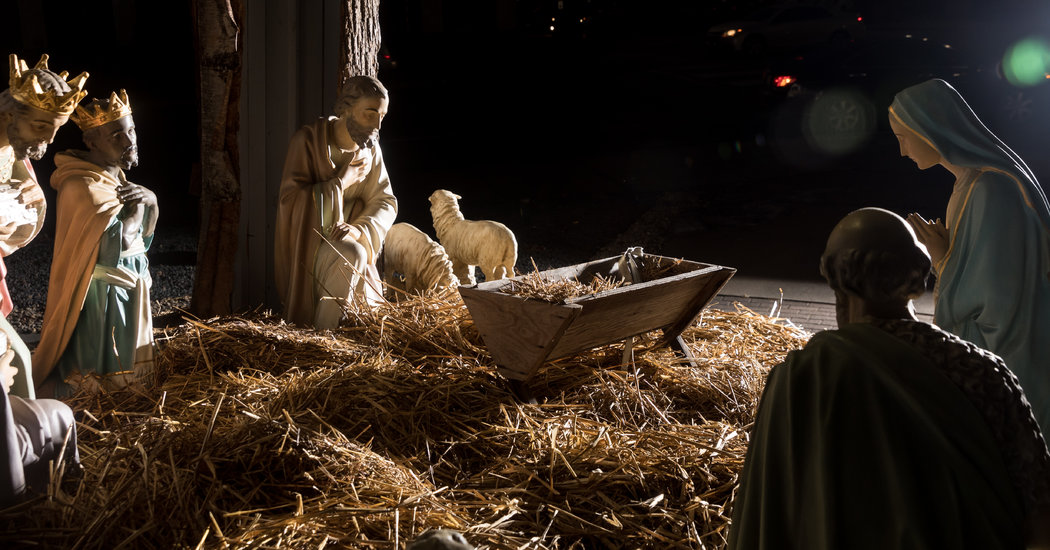
As the holiday season unfolds, nativity scenes appear in homes, churches, and public spaces, offering a timeless reminder of the story of Christmas. These simple yet profound displays help center our focus on the birth of Christ, grounding us in the deeper meaning of the season as we navigate the hustle and bustle of holiday shopping and Christmas activities.

A nativity scene represents a story of humility and hope. A manger in Bethlehem becomes the setting for God’s love made flesh, reminding us that unrelenting grace often appears in the most unexpected places. Each figure—the holy family, shepherds, wise men, and even the animals—invites us to reflect on our role in this sacred narrative.

For families, nativity scenes can serve as a tangible way to teach children about the core message of Christmas. As young hands arrange the figures, they begin to understand that Christmas isn’t merely about gifts and festivities but about God’s greatest gift to humanity.

In a broader sense, nativity scenes inspire unity and peace. Regardless of cultural, political, or theological differences, the image of Christ’s birth resonates as a symbol of hope for all. The nativity narrative beckons us to pause, reflect, and rekindle the light of hope, peace, joy, and love.

The refrain to “The Manger” resounds with the good news of the season:

From the highest of the high to the lowest of the low
That stable tells a story of the distance you will go

For the lonely and the lost, there’s no sinner too far gone
To find a Savior lyin’ in the manger.

This Christmas, as you set up or encounter a display of the nativity, take a moment to ponder its message. Let it remind you of the simple, profound truth at the heart of the holiday: For there is born to you this day in the city of David a Savior, who is Christ the Lord. (Luke 2:11 NKJV)

(Barry Howard is a retired pastor who serves as a leadership coach and columnist with the Center for Healthy Churches. He and his wife live on Cove Lake in northeast Alabama.)

Taking the Scenic Route to Bethlehem

Although plans for a federal highway system were underway as early as the 1930s, construction of the Interstate Highway System was officially authorized by the Federal Highway Aid Act of 1956. By the time I-20 opened between Atlanta and Birmingham in the 1970s, the residents of my hometown eagerly anticipated faster travel along this new freeway.

For years, my family had driven to Birmingham from Anniston on old Highway 78, a winding two-lane road that meandered across the Coosa River at Lake Logan Martin and over the mountains near Chula Vista. When I-20 finally opened, I was thrilled to accompany my grandparents on our annual Christmas trip to Birmingham’s Eastwood Mall. Our itinerary included shopping, visiting “the real Santa,” riding the escalator in Pizitz Department Store, and dining at Morrison’s Cafeteria.

To my surprise, my grandfather preferred the old two-lane highway over the new expressway. He often remarked, “The freeway is for people in a rush. The scenic route is for those who want to enjoy the trip.”

At the time, I didn’t know anything about Advent, but now I see how it invites us to take the scenic route to Bethlehem. The ethos of our economy pushes us toward Christmas in the fast lane, where the season seems defined by shopping, spending, and acquiring. John Jensen’s quip comes to mind: “The trouble with life in the fast lane is that you get to the other end in an awful hurry.” Advent, in contrast, encourages us to slow down and savor the scenery on the way to the manger.

As a young pastor, I was introduced to the colors and candles of Advent, and my journey toward Christmas changed forever. Now more than ever, I believe that as mission-driven Christians living in a market-driven culture, we need the reflective practices of Advent to help us resist the stealthy influences of materialism, busyness, and greed—forces that obscure the true message of the season and replace it with superficial slogans and commercial clichés.

Advent invites us to listen for a truth bigger than words and to long for a gift beyond material things. It reconnects us with the heart of the Christmas story, challenging us to reject cultural portrayals of a Jesus who promises prosperity, success, and self-fulfillment. Instead, it calls us to follow the biblical Jesus, who offers forgiveness, models simplicity, and teaches self-denial.

For Jesus followers and spiritual seekers alike, Advent is a scenic journey that begins with the promises of the prophets and culminates in the nativity. It’s a season of growing expectation that peaks when the Christ candle is lit and the Christmas star shines over Bethlehem.

Taking the scenic route to Bethlehem means revisiting the timeless stories of the prophets, Mary and Joseph’s journey, and the shepherds in the fields. It means pausing to notice the beauty of God’s work in the world and in our own lives.

By choosing this unhurried path, we open our hearts to both the joyful songs of angels and the mournful cries of a broken world. We make room for God to work in us, preparing us not just for the celebration of Christmas but for a life of following Jesus.

When we choose the scenic route to Bethlehem, avoiding the fast-paced cultural expressway, we create space to hear the still, small voice calling us to follow Jesus. By taking this road less traveled, we just might discover that the journey is every bit as meaningful as the destination.

(Revised article from 2017)

(Barry Howard is a retired pastor who currently serves as a leadership coach and columnist with the Center for Healthy Churches.)

Embarking on Your Advent Journey: 10 Good Options for Online Devotionals

Advent is a sacred invitation to pause, reflect, and prepare our hearts for the coming of Christ, the Light that overcomes darkness and the promised One who brings everlasting hope. As we prepare for a meaningful Advent journey, a reflective series of Advent devotional readings can guide and encourage us along the way.

In a fast-paced and highly commercialized culture, it can be difficult to slow down and focus on the reason for the season. As someone wisely advised, “Let’s approach Christmas with an expectant hush, rather than a last-minute rush.”

Advent summons us to choose an intentional, more contemplative route to Christmas, which includes devotional reading, prayer, and reflection. If you prefer online devotional readings during Advent, there are many inspiring and convenient resources available.

A few years ago, I decided to go “paperless” in my devotional time choosing to utilize online Bible apps and a variety of e-resources for my devotional time. Online resources are especially helpful during holiday travels because the resources can be accessed on any internet computer or digital device. 

In preparation for Advent this year, I previewed several respected online resources to use in my own devotional time and to recommend to friends. I searched for resources that are easily accessible, theologically sound, and culturally relevant.

Like other online devotional resources, Advent E-Devotions may be created by churches, colleges and universities, missional organizations, or individuals. A few of the devotional sites invite you to register your email address and they will send a daily devotional directly to your inbox. Other sites have corresponding “apps” that you can download making access easier on your mobile devices. And all online sites can be bookmarked or added to your favorites list for ease of access.

Here are 10 online Advent devotional options that you might find helpful:

  • The Advent Conspiracy provides a unique approach to the season, focusing on Worship Fully, Spend Less, Give More, and Love All. Engage with their daily devotionals that challenge the consumerist Christmas narrative and encourage a more intentional celebration. The devotionals for adults and youth, as well as children’s resources, are available at The Advent Conspiracy Movement Homepage.

  • Sacred Space is an online prayer site provided by the Irish Jesuits. They provide a guided Advent devotional series and an Advent Retreat option at www.sacredspace.ie.

  • Kate Bowler, a popular Duke professor, podcaster, and author whose mission is “giving you permission to feel human” offers a variety of Advent resources on her personal web site. You can find her reflections at Free Seasonal Devotionals for Advent – Kate Bowler.
  • D365.org offers daily devotionals designed specifically for youth and young adults. These engaging reflections include scripture, prayer, and interactive elements, making it a perfect choice for individuals or families seeking a dynamic Advent experience. (http://d365.org/)

  • Buckner International is a faith-based social service organization based in Dallas that serves hundreds of thousands of people each year across the United States and around the globe. Their Advent guide, written by assorted authors, can be downloaded at 2024 Buckner Advent Guide.
  • Bread for the World is an organization committed to pursuing a world where everyone has food security. Join Bread for the World in observing this Advent season as we reflect on the coming of Christ — Immanuel, God with us, the one who brings hope, peace, joy, and love to our broken world. You may sign up for devotionals at this link: Advent 2024: Seeking Peace in this Advent Season – Bread for the World

  • Pittsburgh Theological Seminary provides an Advent Devotional W-Book written by members of the seminary community. This e-book offers a read option and an audio option, and can be downloaded at http://www.pts.edu/devotional_1.

  • The United Methodist Church provides daily Advent devotionals that are grouped under the themes represented by the four Advent candles: Hope, Peace, Joy, and Love. You can access these resources at Daily Advent devotions: Hope, Peace, Joy and Love | UMC.org.

  • The Advent Project is an online devotional resource provided by the Center for Christianity, Culture and the Arts from Biola University. Each day, there’s a work of visual art to contemplate, a scripture passage, a devotional, a poem, and a piece of music. In all of the variety, there’s sure to be something that speaks to your heart. The Advent Project 

Whether you are new to the practice of a daily devotional experience or a long-time practitioner, you may discover that a daily devotional can guide you on a meaningful Advent journey, helping you to pause, ponder, and prepare for a fresh engagement with the Christmas story.

(Barry Howard is a retired pastor who currently serves as a leadership coach and columnist with the Center for Healthy Churches.)