
I grew up in Alabama at the height of the Civil Rights Movement. Like many people of my generation, I knew the name of Dr. Martin Luther King Jr., but mostly as a headline in The Anniston Star or a grainy image on the evening news—watched on one of our three channels on a black-and-white television. I knew a good bit about the Civil Rights Movement. I did not know much about the man. That changed in 1982.
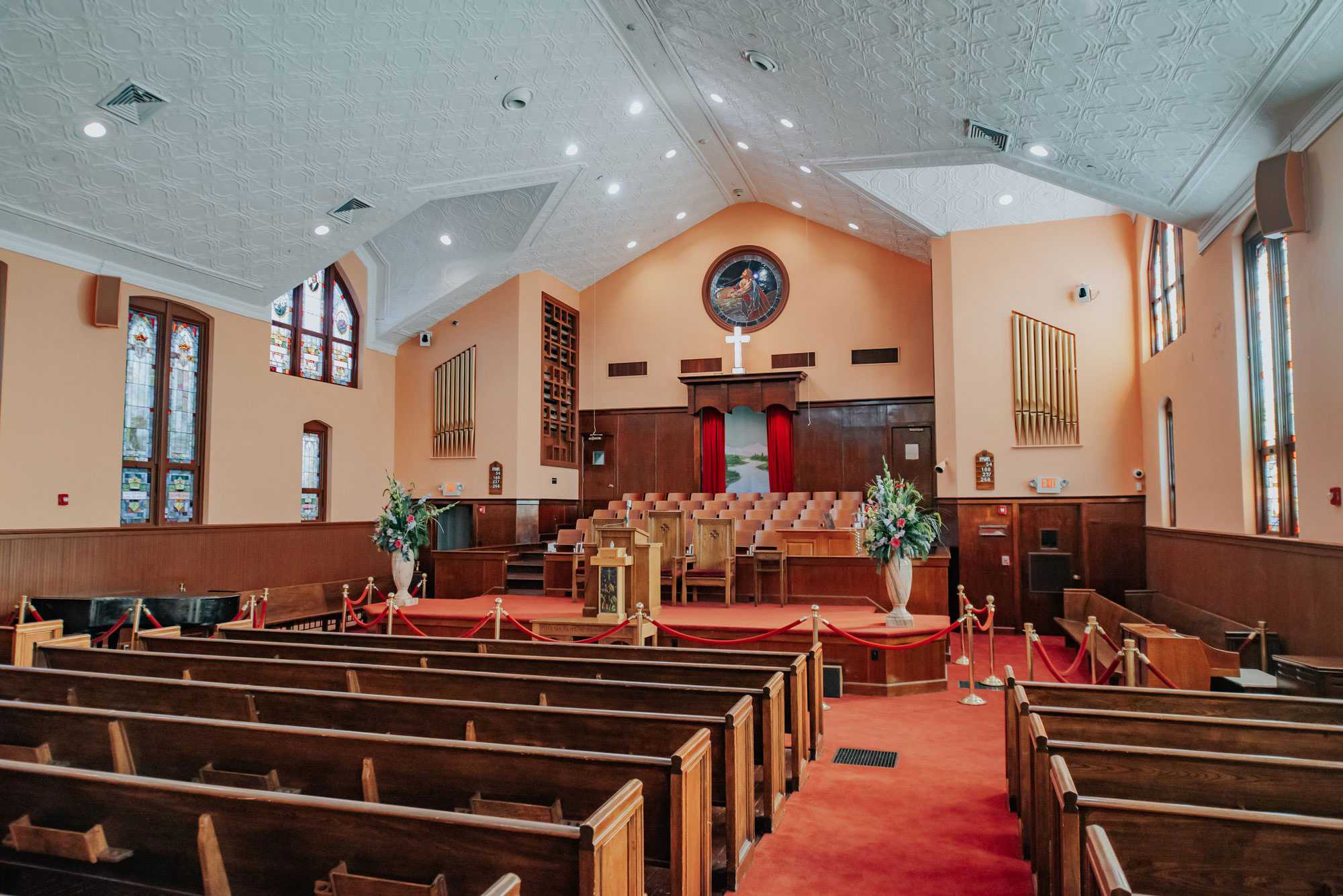
During my senior year at Jacksonville State University, I traveled with the Sociology Club on a field trip to Atlanta. Our itinerary included places of cultural and historical significance, including the U.S. Penitentiary, Grady Hospital, the King Center, and Ebenezer Baptist Church. While touring the sanctuary of Ebenezer, another student and I briefly stepped behind the pulpit where Dr. King once preached. A hostess quickly reprimanded us, asking us to step away as she explained that only ministers were permitted behind the sacred desk.
When our professor shared with her that we were both young ministers, her tone shifted. She asked a few questions about our knowledge of Dr. King and then invited us to follow her through a set of double doors into what appeared to be a warehouse or storage area. The area was marked Authorized Personnel Only. What awaited us was an expansive room filled with shelves and boxes—hundreds of them.
She opened several boxes and allowed us to examine Dr. King’s personal sermon notes, correspondence, and speeches that were still being processed for archival preservation. Many of the notes were handwritten on hotel stationery, napkins, envelopes, and scraps of paper. It was immediately obvious that while many speakers labor meticulously over manuscripts, Dr. King possessed a remarkable gift for shaping powerful words from simple notes that served as cues for what he wanted to say.
Only years later did I fully realize what a sacred privilege that moment had been—to literally hold the working thoughts of one of the most influential voices in American history.
Dr. King should first be remembered as a passionate Baptist minister. Following seminary, he pastored Dexter Avenue Baptist Church in Montgomery before succeeding his father at Ebenezer Baptist Church in Atlanta. His faith was not ornamental; it was foundational. His preaching carried theological depth, prophetic courage, and pastoral compassion.
He should also be remembered as a disciplined scholar. After graduating from Morehouse College, he pursued theological studies at Crozer Seminary and earned his doctorate in systematic theology from Boston University. Dr. King’s ability to blend biblical conviction, philosophical reasoning, personal passion, and moral clarity gave his voice uncommon credibility across racial, religious, and political lines.
And of course, Dr. King is remembered as a courageous civil rights leader. He championed nonviolent resistance not as a tactic of weakness, but as a discipline of moral strength. He believed injustice could be confronted without surrendering dignity or humanity. He frequently declared, “Injustice anywhere is a threat to justice everywhere.”
That single sentence explains why his legacy refuses to remain confined to history books. It speaks to every community, every generation, and every season when fairness is tested, and human rights are violated.
In 1964, Dr. King was named Time Magazine’s Man of the Year and later that same year received the Nobel Peace Prize. In spite of his flaws, he was a memorable communicator and a catalyst for cultural transformation. Four years later, he was assassinated in Memphis, Tennessee. Yet death did not silence his influence. His vision helped reshape laws, expand voting rights, challenge segregation, and awaken the moral conscience of a nation.
More than that, Dr. King helped America wrestle honestly with its own contradictions—the promise of liberty alongside the reality of inequality. His dream pushed the nation closer to its founding ideals, even when doing so was uncomfortable.
Although the Civil Rights Movement encountered numerous setbacks, Dr. King remained convinced that “The arc of the moral universe is long, but it bends toward justice.” Progress is rarely fast or smooth, but history consistently affirms that courageous truth-tellers leave permanent marks.
As a young college student, I could not have known how deeply that quiet moment among dusty boxes would stay with me. After years of pastoral ministry, I understand more clearly that movements are shaped not only by speeches but by the daily practice of spiritual conviction, disciplined thought, and tenacious courage.
Dr. King’s life reminds us that real change begins in the heart, takes shape in the mind, and finds expression in courageous action. He was not merely a dreamer; he was a visionary. He was not just an orator; he was a doer. He was not merely a leader; he was a servant.
As we remember Dr. King this January, may we do more than quote his words. May we carry his commitment to justice, reconciliation, human rights, and unvanquished hope into our neighborhoods, churches, and everyday conversations.
And every time I think back to those brief moments standing behind the pulpit at Ebenezer where Dr. King once stood, I am reminded that it will take all of us working together to ensure that his vision becomes our reality.
(This is a revision of a column first written in 2003.)
 Cove Creek Reflections