
Bruised But Not Broken: Clinging to Hope Through Tough Times

Life brings its share of losses—some expected, others blindsiding. But when hope fades, everything else can unravel. Without hope, even the strongest faith can feel as stagnant as swamp water.

During difficult seasons, hope is the energy source that fuels perseverance and ignites determination. Theologian Emil Brunner captured this truth well: “What oxygen is to the lungs, such is hope to the meaning of life.” Without it, we suffocate in despair.

Micah, a prophet called to speak during one of Israel’s darkest times, refused to let despair take hold. Surrounded by corruption, injustice, and looming disaster, Micah declared:

“But as for me, I watch in hope for the LORD, I wait for God my Savior; my God will hear me.” (Micah 7:7)

More than 2,500 years later, our hope in Christ remains our most reliable source for spiritual strength and courage. No matter how uncertain the circumstances, we work for positive change, we advocate for the underserved and underprivileged, and we lean into the promise that “with God all things are possible.” (Matthew 19:26)

Hope Is Not Naive

We live in an era saturated with gloom and pessimism. Division and discontent dominate the national conversation. And perhaps most troubling, this sense of despair has seeped into the church—a place meant to be a beacon of hope.

If the church, called to be the light of the world and the salt of the earth (Matthew 5:13), surrenders to hopelessness, we risk rushing toward an apocalyptic future of our own making.

But real hope—the kind we see in Micah—is neither blind nor naive. It does not ignore reality. Instead, true hope compels us to rise above despair, face challenges with faith, and respond with wisdom and action.

The Arrogance of Despair

Years ago, pastor John Claypool had a sobering conversation with an elderly rabbi, a friend and fellow advocate in the civil rights movement. After a particularly frustrating meeting, Claypool sighed, “I think it’s hopeless. The problem is too deep, too complex. There’s simply no way out.”

The rabbi paused and then said something profound:

“Humanly speaking, despair is presumptuous. It assumes we know the future, but we don’t. Think of the times you thought something was hopeless, only to be surprised when unseen forces shifted everything. If God can create something out of nothing, if He can bring life from death, who are we to place limits on what He can do?”

That wisdom still speaks today. We do not have the luxury of declaring a situation hopeless because we are not the authors of the story.

The Rekindling of Hope

In the movie Hope Floats, the main character, Birdee Pruitt, describes hope this way:

“Beginnings are scary. Endings are usually sad. But it’s the middle that counts the most. Just give hope a chance to float up.”

Even when you think you’ve lost it, hope can emerge after a season of dormancy. Like stirring warm embers to rekindle a fire, real hope can be revived. It is nurtured when we commit to “act justly, love mercy, and walk humbly with our God” (Micah 6:8)—even when the path is difficult, even when we can’t yet see the way forward.

Hope is not an emotion. It’s a decision. And when we choose hope, we align ourselves with the God who makes the impossible possible.

(Barry Howard is a retired pastor who currently serves as a leadership coach and consultant with the Center for Healthy Churches.)


Before You Cross the Finish Line

The first time I heard this oft-told story, it was shared by Wayne Grubbs, then pastor at Lakeview Baptist Church in Oxford, Alabama. The story goes something like this:

Near the end of a sermon about heaven, the pastor asked the congregation, “How many of you want to go to heaven?” Every hand in the church shot up—except for one little boy on the front row. Curious, the pastor turned to him and asked, “Son, don’t you want to go to heaven?” The boy quickly responded, “Yes sir! When I die. But I thought you were gettin’ up a trip right now.”

A few of us may feel like we’re getting ready for that final journey sooner rather than later, but most of us live under the illusion that the finish line is far in the distance. Although none of us knows when our journey will be complete, we are inspired by Paul’s words, “I have fought a good fight, I have finished the race, I have kept the faith (II Timothy 4:7).

Regardless of our age or stage in life, the truth remains: we must be ready to cross that line—by maximizing our time here and finishing well.

What Do You Need to Do Before You Finish the Race?

I recently celebrated my 65th birthday. During the two weeks following, I had the sacred privilege of delivering the eulogy for 3 dear friends who had crossed the finish line just a few days apart. The strange juxtaposition of these two events—a birthday and a series of funerals—prompted deep reflection:

“What does God want to accomplish in and through my life before I cross the finish line?”

Thomas Jefferson wisely advised, “Never put off till tomorrow what you can do today.” Yet, so often, we let good intentions replace real action. If you knew your time was short, what would you make a priority? What do you need to do before you finish your race?

1. Go where you need to go. Visit the friend or family member you keep meaning to see. Take that family vacation. Sign up for that mission trip. Step out of your comfort zone and embrace a new experience.

2. Do what needs to be done. Get to know your neighbors and build community. Volunteer for that service project you’ve been considering. Share your faith intentionally and non-judgmentally.

3. Say what needs to be said. Tell your family how much you love them. Plant that tree that will bear fruit and offer shade after you are gone. Pass down the stories that hold your legacy. Offer forgiveness where wounds remain unhealed.

4. Give what needs to be given. Honor God with your financial resources, supporting your local church and kingdom work. Pass along that cherished heirloom to the next generation. Invest in a cause that will continue making a difference long after you’re gone.

5. Plan what needs to be planned. Get your affairs in order: wills, life insurance, power of attorney, and advanced directives. Communicate your memorial wishes with loved ones. Leave behind not just memories, but a roadmap for those who will carry on.

Live Today with Finish Line in Mind

James 4:14 reminds us that “life is a vapor that appears for a little time and then vanishes away.” In the grand scheme of eternity, our days are fleeting and unpredictable. The best way to prepare for the end is to live each day with intention—treasuring relationships, embracing opportunities, and deepening our faith.

For me, that means not only trusting Jesus as my Savior but also following Jesus daily in my attitudes and actions—serving, growing, and faithfully running the race set before me.

Mother Teresa reminded us, “At the end of life we will not be judged by how many diplomas we have received, how much money we have made, how many great things we have done. We will be judged by ‘I was hungry, and you gave me something to eat, I was naked and you clothed me. I was homeless, and you took me in.’”

I sure hope to celebrate several more birthdays, but I also know that one day, sooner or later, someone will stand and share a eulogy for me. Since I don’t know when that day will come, I want to make every moment count.

Like Irma Bombeck avowed, “When I stand before God at the end of my life, I would hope that I would not have a single bit of talent left, and could say, ‘I used everything you gave me.’”

(Barry Howard is a retired pastor who serves as a leadership coach and consultant with the Center for Healthy Churches.)
Navigating Your Internal Dialogue

Our minds are never truly silent. At any given moment, we are engaged in an internal dialogue—a constant stream of thoughts, reflections, and self-talk. Not all the voices are friendly. Some voices push us forward with encouragement, while others hold us back with doubt and fear.

Individuals of all ages must learn to navigate the voices within. No one is exempt. Left unchecked, some of these voices can be troubling, taunting, or in some cases traumatizing. Learning to sort through these voices is essential for emotional, mental, and spiritual well-being.

The voices in our internal dialogue can be tenacious and argumentative. How do we know which ones to listen to? Erwin McManus asked, “Who do we become when we stop allowing all the voices in our head to crowd out the one voice we must hear to come to life?”

We all have competing voices in our minds—some shaped by past experiences, some influenced by culture, and others rooted in our deepest anxieties and insecurities. You may hear the voice of self-doubt that whispers, “You’re not good enough.” Some hear the voice of fear that warns, “What if everything goes wrong?” There’s the voice of condemnation that says, “You are not worthy.” Others hear the voice of pride that insists, “You don’t need help.” And then there’s the voice of God, the still, small voice that speaks truth, peace, and direction.

As you discern between the multiple voices in your head, be aware that the loudest is seldom the most trustworthy, the harshest is seldom the most truthful, and the most accusative is seldom the most accurate. It is best to give attention to the still small voice. And though you cannot evict the competing voices, you can turn down the volume.

So how do we amplify the right voice—the one that speaks truth, grace, and wisdom?

  1. Reject the voices of condemnation and accusation. God convicts, but God does not condemn. If a voice is drowning you in shame, it’s not from the Holy One. (Romans 8:1)
  2. Filter your thoughts through the teaching of scripture. The Bible is the north star for discerning truth. If a thought contradicts God’s teaching, it doesn’t deserve a microphone in your mind. (Philippians 4:8)
  3. Spend time in stillness. The world is noisy, but God often speaks in whispers. Make time for quiet reflection and prayer. (1 Kings 19:11-12)
  4. Surround yourself with honest friends. Wise counsel from trusted friends and mentors can help clarify which voices to trust. (Proverbs 11:14)
  5. Speak life-giving words to yourself Words have power, even when spoken internally. Be intentional about reminding yourself of God’s grace and love. (Proverbs 18:21)
  6. Get regular rest. Shelly Miller reminds us, “Rest provides fine-tuning for hearing God’s messages amidst the static of life.” (Psalm 127:2)
  7. Put what you already know into practice. If we want to learn more from God, we must be faithful in what God has already taught us. When we walk in obedience, our spiritual ears become sharper. (Luke 16:10)

Your internal dialogue shapes your perspective, your emotions, and ultimately, your life. Choose which voices you allow to take center stage. When self-doubt, fear, and intimidation threaten to overwhelm you, lean into the voice that speaks life, love, and purpose.

As you navigate the voices in your head, be positive and proactive, “For God has not given us a spirit of fear and timidity, but of power, love, and self-discipline.” (II Timothy 1:7)

(Barry Howard is a retired pastor who serves as a leadership coach and consultant with the Center for Healthy Churches.)

When the Unseen Choir Sings

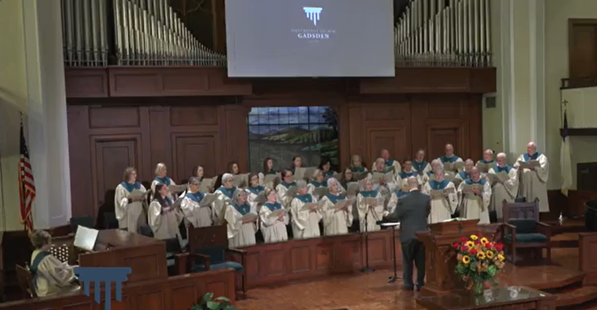
Last Sunday in church, the choir sang a beautiful rendition of one of my all-time favorite hymns, “Great Is Thy Faithfulness” arranged by Dan Forrest. The choir isn’t huge, but their sound is excellent and inspiring.

As I adjust to a more relaxed Sunday schedule following my recent retirement, my wife and I enjoy visiting our friends at the First Baptist Church in Gadsden for worship on the Sundays when we are not traveling. Nathan Edwards serves as Minister of Music and does a great job leading in worship and directing the choir.

As the choir began the anthem, I was reminded never to underestimate the power of a song, especially a song presented in multi-part harmony by a devoted and spirit-infused church choir. On the very first stanza, I noticed to my right a senior adult widow, who sits on the same row with the same friend each Sunday, as she mouthed the words “There is no shadow of turning with thee; Thou changest not, thy compassions they fail not, As thou hast been thou forever will be,” and there seemed to be a tear forming in her eye as though she was being reassured that the God of this universe was not intimidated by the problems in her life.

Just beyond her in the center section I saw a senior couple I assumed were husband and wife. He may have been nearly 90 years old and still had a farmer’s tan. She appeared to be a year or so younger than him yet weathered by the seasons of life. They were both nodding as though in agreement as the choir sang, “Summer and winter and noontime and harvest, Sun moon and stars in their courses above, Join with all nature in manifold witness To thy great faithfulness, mercy, and love.”

A couple of rows ahead of us was a dad seated beside his middle school son. Other than standing for the hymns and bowing his head for the prayers, the student had been completely still the entire service, somewhat tuned out, looking as though he was there because he had to be and not because he wanted to be. But during this choral anthem, I noticed that he began lightly tapping his foot and patting his knee, never taking his eyes off the choir as he kept perfect time with the beat of the song. I wonder if somehow the words of this powerful hymn were being planted in his subconscious and would one day sprout like a seed that would help him to become rooted and grounded in his faith.

Prior to the service I had noted a young adult as she was seated a few rows ahead of us in our section on the piano side. She sat alone and looked around as if she was in a new environment which made me think she might be a visitor, so I was glad to see several regulars greet her and sit near her. I don’t know her story but I was glad she was there. She sang the words to the congregational hymns without looking at the hymnal which indicated to me that this wasn’t her first church experience. As the choir sang, I caught her whispering along, “Strength for today and bright hope for tomorrow, Blessings all mine with ten thousand beside.”

These I’ve mentioned are only a few examples of the lips moving, heads nodding, and spirits being lifted across the congregation as the choir in the loft blended their voices melodiously. For some reason, more than listening to the robed choir, today I found myself looking and listening for the unseen choir. The choir in the loft was infusing the congregation with a song, thereby creating an antiphonal effect with the unseen choir silently singing, nodding, and toe-tapping the anthem in reflexive spiritual response.

Rich Mullins wrote a song popularized by Amy Grant titled “Sing Your Praise to the Lord.” The song was inspired by verse like Psalm 95:1 which says, “Oh come, let us sing to the Lord; Let us make a joyful noise to the rock of our salvation!”  It is certainly appropriate and biblical to sing to the Lord.

However, Ephesians 5:19 also encourages us to “Speak to one another with psalms, hymns, and spiritual songs.” There is something about congregational singing that creates a spiritual bond among people of faith as they sing to one another. Moreso there is something about a church choir singing with a disposition of worship that applies a balm to a wounded heart, that transmits energy to a weary soul, that conveys hope to those steeped in despair, and that plants seeds of faith in fertile minds.

The purpose of a choir is not to impress but to inspire. A church choir is not a show choir to entertain the congregation but rather a “flow” choir who, by immersing themselves in the spirit and message of worship, overflows onto the congregation with God-vibes and good news and contagious song.

Dietrich Bonhoeffer contended, “It is the voice of the Church that is heard in singing together. It is not you that sings, it is the Church singing, and you, as a member of the Church, may share in its song.”

Following the anthem, Pastor Mat Alexander’s well-prepared, well-delivered sermon from Matthew 12:1-21 encouraged us to “Love God, pursue righteousness, and find rest in the Lord.”

After the benediction, as we walked to our car, as the cart driver passed us as he transported a few folks to their cars I heard him humming the tune to “Great Is Thy Faithfulness.”

I wonder if Irving Berlin had the unseen choir in mind when he composed, “The song has ended, but the melody lingers on.”

Yes, it does! I’ve been humming that tune all week long.

(Barry Howard is a retired pastor who serves as a leadership coach and consultant with the Center for Healthy Churches.)
I Think I Will Give Up Worry for Lent!

(Revised from 2020)

This year, I think I’ll give up worry for Lent.

Yesterday, I watched news footage from the Fat Tuesday celebrations in New Orleans—a day when many indulge in gluttonous feasting and revelry. Today is Ash Wednesday, marking the beginning of the season of Lent, a time of intentional preparation for Easter. During this sacred season, believers focus on self-examination, reflection, and repentance.

Traditionally, Christians choose to give up something significant to them during Lent. I have friends who forego their favorite indulgences—chocolate, coffee, sugar, or soft drinks—as a form of spiritual discipline. But since I seem to have a genetic predisposition to worry, I think I’ll try giving that up instead—for at least 40 days.

The Burden of Worry

I don’t actually like to worry. In fact, I know it’s not constructive. Worry is like spam or junk mail—it clutters my mind, taking up valuable space needed for creative thinking, planning, visioning, and problem-solving. I function far better when I’m not weighed down by excessive worry.

And yet, worry is persistent. Each time I try to kick it out the front door of my mind, it sneaks around and slips back in through the back.

Years ago, a friend of mine had a giant poster mounted above his desk that read:

“Don’t tell me worry doesn’t help. Half the things I worry about never happen.”

Erma Bombeck humorously captured the futility of worry when she said, “Worry is like a rocking chair: it gives you something to do but never gets you anywhere.”

An Inherited Habit?

I sometimes wonder if worry can be inherited. I watched the wear and tear of worry in my parents and grandparents and have noticed that many of their offspring—including me—struggle with this same mental distraction.

And I’m not alone. Over coffee, I’ve listened to CEOs, ministers, business owners, attorneys, physicians, and educators share their struggles with worry. It’s no surprise—there’s always something to be anxious about:

  • Our businesses
  • Our families
  • Our investments
  • Terrorism
  • The economy
  • Political turmoil
  • Wars and rumors of wars
  • Friends losing their jobs
  • Health concerns
  • The future…

The list seems endless.

A Better Way

Perhaps I’m not the only one who should give up worry for Lent. Since this is a season of intentional preparation for Easter, maybe we should all listen again to the words of Jesus:

“Therefore I tell you, do not worry about your life, what you will eat or drink; or about your body, what you will wear. Is not life more important than food, and the body more important than clothes? Look at the birds of the air; they do not sow or reap or store away in barns, and yet your heavenly Father feeds them. Are you not much more valuable than they? Who of you by worrying can add a single hour to his life?”Matthew 6:25-27

As we begin our Lenten journey, I’m trying to give up worry for at least 40 days. Maybe—hopefully—even longer.

Would you like to join me?

(Barry Howard is a retired pastor who currently serves as a leadership coach and columnist for the Center for Healthy Churches. He and his wife reside on Cove Lake in northeast Alabama.)

What Is Lent and Why Do We Observe It?

Each year, as winter begins to fade and the hope of spring draws near, the Christian calendar marks a sacred season: Lent. But what exactly is Lent? Lent is a 40-day season of reflection, repentance, and preparation leading up to Easter. It begins on Ash Wednesday and ends on Holy Saturday, the day before Easter Sunday. Traditionally observed by many Christian faith communities, Lent is a time for spiritual self-evaluation, often marked by prayer, fasting, and acts of charity.

What is the purpose of Lent? Pope Francis suggests, “Lent comes providentially to awaken us, to shake us from our lethargy.”

Lent is a deeply personal and spiritual journey. It is a time set apart to reflect, reevaluate, repent, refrain, and refocus.

Lent is a time to reflect. Life moves fast, and it’s easy to get caught up in the day-to-day without pausing to consider where we are spiritually. Lent provides a unique opportunity to slow down and reflect. It invites us to ask, How is my relationship with God? Where are my priorities? Is my lifestyle consistent with my faith? Through reflection, we gain clarity about our faith and recognize areas where we need growth.

Lent is a time to reevaluate. In the stillness of reflection, we are led to reevaluate our priorities. The world constantly pulls us in different directions, often distracting us from what truly matters. Lent challenges us to examine our choices, our commitments, and our daily habits. Are we devoting our time and energy to things that nourish our souls? Are we living in a way that aligns with God’s purpose for our lives? This season gives us the space to make adjustments and realign our lives with His purposes.

Lent is a time to repent. At the heart of Lent is repentance—a turning away from sin and a turning toward God. It is a time to be honest about our shortcomings, not with shame, but with a desire for transformation. Scripture reminds us, “Repent, then, and turn to God, so that your sins may be wiped out, that times of refreshing may come from the Lord” (Acts 3:19). Repentance is not about dwelling on our failures; it is about embracing God’s grace and asking God to renew our hearts.

Lent is a time to refrain. One of the most well-known Lenten practices is fasting—giving up something as a way of drawing closer to God. Whether it’s food, social media, entertainment, or another comfort, fasting teaches us discipline and dependence on God rather than earthly things. Refraining is not just about sacrifice; it’s about making space for something greater. When we let go of distractions, we create room for God’s presence to fill our lives in new ways. As we think about the things we might give up for Lent, Amanda Jobs reminds us, “It is not just about giving up our favorite food but it’s about going further and giving up things like hatred and unforgiveness.”

Lent is a time to refocus. Ultimately, Lent is about refocusing our hearts and minds on Christ. It is a season to strip away what is unnecessary and center our lives on what truly matters. As we journey through these 40 days, we prepare ourselves to embrace the joy and victory of the resurrection. By shifting our focus from the temporary to the eternal, we deepen our faith and draw closer to the one who teaches us how to “act justly, love mercy, and walk humbly with God” (Micah 6:8).

The faithful observance of Lent can be both uncomfortable and hopeful. Kate Bowler cautions, “Lent is full of hard truths. And it is a perfect moment for spiritual honesty. We can look on this tragicomedy with love and bemusement as we wait for the someday that will be God’s promised future.”

Lent is not about obligation—it is an invitation. An invitation to reflect, to reevaluate, to repent, to refrain, and to refocus. It is a journey that leads us deeper into God’s love and prepares us for a more meaningful celebration of Christ’s resurrection.

(Barry Howard is a retired pastor who currently serves as a leadership coach and columnist with the Center for Healthy Churches. He and his wife reside on Cove Lake in northeast Alabama.)

Press On! Navigating Life and Faith During Challenging Seasons

Have you ever just wanted to give up? Will Rogers quipped, “The road to success is dotted with many tempting parking spaces.” 

A few years ago, after several consecutive days of conversations with friends and fellow church members who felt their world was unraveling, I sensed the weight of the many concerns entrusted to me. As is my pastoral practice, I withdrew to my study to pray, reflect, and seek wisdom for those navigating difficult seasons.

Many members of my community had suffered from the destruction of property due to storms, the loss of business due to an oil spill, the loss of family members due to a tragedy, or the loss of hope due to a toxic political divisiveness.

While I was honored to listen to their stories—privately and confidentially—I found myself wishing I could gather all of them in the same room and say, “You are not alone. Others in this room are also struggling. You can help each other through this.” And most of all, “In the toughest moments, do not give up. Press on!”

Since I could not bring such a group together, I recorded in my journal the words I wished I could say to them, weaving in real-life dilemmas shared with me (anonymously, of course). The following Sunday, I included those words at the end of my sermon and later shared them in our church newsletter.

Now, we find ourselves in another season where hardship weighs heavily on many, both in our community and around the world. Once again, I feel a deep, cumulative heaviness in my soul. As I lift these concerns in prayer, I realize that the struggles that send us into emotional or spiritual tailspins haven’t changed much. Life is still challenging. Storms still come. Divisiveness still threatens to undo us. Fear and anxiety continue to creep in.

But in every hardship and every circumstance, we are called to press on—with patience, perseverance, and faith.

The words I shared then are still as relevant today as they were years ago. May they encourage you in your journey:

Life is a fragile gift—often unfair, frequently unpredictable, and mostly uphill.
The journey requires faith, courage, and determination.
There will be moments when your commitment is tested and your motivation wavers.

When you are tempted to give up or give in—press on!
When life throws you a curveball and the unexpected happens—press on!
When you are weighed down by sadness or battling deep depression—press on!
When frustration rises because of the incompetence of a neighbor or colleague—press on!
When you stand at the foot of the mountain, facing the long climb of recovery—press on!
When you begin a treatment regimen that weakens your body but must strengthen your health—press on!
When exhaustion settles in, and you are tired of being tired—press on!
When your friends are difficult to deal with, or your family is hard to live with—press on!
When you move to a new town or start at a new school, feeling like a stranger—press on!
When loneliness lingers, even in a crowd—press on!
When the news is filled with gloom and doom—press on!
When your workplace is dominated by chaos or conflict—press on!
When you are tempted to settle for mediocrity or risk losing your integrity—press on!
When death or disease takes away someone you love, in the power of the Spiritpress on!
When life gets turned upside down, steady your nerve and stay the course—press on!

Circumstances can change quickly and none of us are exempt. The Apostle Paul reminds us in Philippians 3:14, “I press on toward the goal to win the prize for which God has called me heavenward in Christ Jesus.”

Maya Angelou counseled, “You may encounter many defeats, but you must not be defeated. Please remember that your difficulties do not define you. They simply strengthen your ability to overcome.”

LL Cool J advises, “When adversity strikes, that’s when you have to be the most calm, take a step back, stay strong, stay grounded and press on.”

Pressing on doesn’t mean ignoring the pain or pretending everything is fine. It means choosing to keep moving, even when the path is difficult. It means holding onto faith when answers seem distant, leaning on the strength of God when our own runs out, and trusting that even the hardest seasons can be navigated with wisdom and courage.

No matter what you face today, know this: You are not alone. The valley will not last forever.

So take a deep breath, lift your head, and press on!

(Barry Howard is a retired pastor who serves as a leadership coach and columnist with the Center for Healthy Churches. He and his wife reside on Cove Lake in northeast Alabama.)

Reflections on Turning 65: 10 Things I Am Still Learning About Life

Today I turn 65 years old, and I’m proud of it. Kevan Manwaring suggests, “A birthday is a time to reflect, to take stock and to look ahead.”

Ms. Bertha Boozer, our long-time neighbor in the Williams Community who lived to be 107, always told me, “I don’t understand my friends who complain when they have a birthday. Do they not understand the alternative?” Then she added, “I think every birthday is a blessing.” Amen to that!

I’ve enjoyed most of my birthdays. This year, however, as I celebrate 65 years of life, it feels a little different, a little more contemplative, a little more like a shifting of gears. At age 55 I received my AARP card. As I approached 65 I received my Medicare card. Plus, I’ve retired (again) recently, so I guess this an occasion to reflect on the journey so far, the lessons learned, and the wisdom gained along the way. So, here are some thoughts as I process this milestone birthday:

1. Faith is more of a sail to be raised than an anchor to be dropped. I certainly understand the metaphor of faith as an anchor, but that analogy is best understood in the context of a storm-tossed sea where faith keeps us from being tossed to and fro. Faith is active in the sense that it is continually growing, and we are constantly being re-shaped and “transformed by the renewing of our minds.” Faith is not about staying in one place but about moving forward, trusting the wind of the Spirit to help us navigate life’s uncertainties with confidence and grace.

2. Relationships are more important than stuff. As I’ve aged, it’s become clearer that material possessions pale in comparison to the value of deep, meaningful relationships. I can identify with Jimmy Carter’s assessment that “Earlier in my life I thought the things that mattered were the things that you could see, like your car, your house, your wealth, your property, your office. But as I’ve grown older, I’ve become convinced that the things that matter most are the things that you can’t see — the love you share with others, your inner purpose, your comfort with who you are.” People bring joy and purpose to life in a way things never can.

3. Choose the scenic route rather than the interstate. When possible, choose the backroads rather than the turnpike. Pace yourself and enjoy the scenery. Through the years I’ve even noticed that detours often turn out to be better than the route we originally chose. Life rarely goes as planned, but some of the best experiences and lessons come from unexpected changes in direction. Taking the scenic route and navigating detours has led me to places I never knew I needed to go.

4. Worry is a waste of time and brain cells. Worrying has never solved a problem or changed an outcome. Erma Bombeck was right on target: “Worry is like a rocking chair: it gives you something to do but I never gets you anywhere.” Letting go of worry frees us mental and emotional bandwidth so that we can think creatively, focus on solutions, and do effective problem-solving.

5. The most significant things we do in life we are seldom aware of when we do them. I have been blessed to have opportunities to stand before a handful of people  and to more than a thousand to preach sermons, offer eulogies, or officiate weddings. Yet I think the most significant things I’ve done in life were not in the public eye. Some of our greatest impacts on others come from simple, unintentional acts of kindness. It’s humbling to know that what feels small to us may be life-changing for someone else.

6. Time is the real currency of life and we are wise to spend it thoughtfully and intentially. Art Buchwald said “Whether it’s the best of times or the worst of times, it’s the only time we’ve got.” At 65, I’ve learned that time is far more valuable than money. How we choose to spend our time—and with whom—defines the quality of our lives.

7. Mistakes are opportunities for growth. My friend and encourager, Dr. John Harris, a retired pastor from Louisianna who served as a pastoral counselor in Birmingham, continually reminded me, “Never waste a mistake.” Mistakes are not failures; they are stepping stones to greater understanding and strength. Each one teaches us something valuable if we’re willing to learn.

8. Our self-worth is much more than the value of our bank accounts at any given time. True worth is found in character, kindness, and the love we share with others. Money can never define who we are or how much we matter. Adam Grant reminds us, “A stable sense of self-worth stems from putting identity above image: worrying less about what others think of us than what we think of ourselves.”

9. Health is a gift never to be taken for granted. Good health is one of life’s greatest blessings. Denis Waitley underscored, “Time And health are two precious assets that we don’t recognize and appreciate until they have been depleted.” Taking care of our bodies and minds allows us to fully enjoy the time we have and the people we share it with.

10. We discover our purpose as we are engaged in serving. Purpose is discovered in action, not in waiting. I’ve seen it over and over again. Students who are engaged in service projects or who serve on mission trips seem to awaken more to their life’s passion or their sense of calling in life than those who simply make career choices based on projected income. By stepping up to help and serve others, we find deeper meaning and fulfillment in life.

Turning 65 has been a time of reflection and growth. These lessons have shaped who I am and continue to guide me as I embrace the years ahead.

Despite a lifetime of experience, I am not really an expert in anything, but I am an avid student of life. As popular musician David Bowie grew older he observed, “Aging is an extraordinary process where you become the person you always should have been.”

Here’s to continuing the journey with faith, purpose, and gratitude for all that has been and all that is yet to come.

Servant Leadership: 10 Traits Pastors and Others Can Glean from Jimmy Carter

Across the course of his life, Jimmy Carter exemplified servant leadership. The 39th President of the United States is celebrated even more for his post-presidential humanitarian work than his time in office. As a devout Christian, Sunday school teacher, and global advocate for peace and justice, Carter’s life was all about serving God by serving others.

Carter often said, “I have one life and one chance to make it count for something… My faith demands that I do whatever I can, wherever I am, whenever I can, for as long as I can with whatever I have to try to make a difference.”

His example offers a wealth of lessons for pastors, whose roles also demand faith, resilience, and a commitment to serving others. Here are 10 leadership traits pastors can glean from Jimmy Carter to enhance their ministry and reflect Christ’s love more fully:

1. Lead and serve from the wellspring of a rooted and grounded faith. Carter’s faith was the bedrock of his leadership, shaping his decisions and actions throughout his life. Carter claimed, “For me, faith is not just a noun, but also a verb.” Whether navigating the complexities of the presidency or building houses with Habitat for Humanity, Carter approached every role with a Christ-centered perspective. For pastors, staying rooted in faith is critical to leading authentically, purposefully, and with spiritual integrity.

2. Maintain a regular devotional practice. Despite a demanding schedule, Carter consistently carved out time for prayer, Bible study, and quiet reflection. This discipline provided him with resilience and clarity during challenging times. Pastors, too, must prioritize their spiritual health, remembering that effective ministry flows from a strong and active relationship with God.

3. Cultivate an attitude of humility. Carter referred to himself as a “citizen servant,” embracing leadership as an opportunity to serve others rather than seeking personal glory. For pastors, humility means leading with a heart focused on God’s glory and the well-being of others, rather than seeking personal accolades or recognition.

4. Become comfortable in your own skin. Carter was remarkably genuine. Although he was known all over the world, he was neither prideful nor pretentious. He embraced his Southern roots, Christian values, and even his imperfections, allowing his authenticity to shine through. Similarly, pastors lead most effectively when they are genuine and transparent, which enables them to better connect with others.

5. Be a bridgebuilder and peacemaker. Carter’s peacemaking legacy, epitomized by the Camp David Accords, demonstrated his ability to bring opposing sides together. Especially in this era of extreme divisiveness, pastors are called to build bridges within their congregations and communities, fostering unity and reconciliation.

6. Make decisions based on conviction, not popularity. Carter’s moral compass guided him to make decisions based on conviction rather than public opinion, even when those choices were unpopular. Pastors, too, must prioritize God’s calling and biblical teaching over human approval, standing firm in their convictions despite external pressures.

7. Read widely and regularly. Carter’s love of reading broadened his knowledge and deepened his understanding of history, culture, and faith. Pastors can benefit greatly from cultivating a habit of reading, which not only enriches their sermons but also equips them to address a wide range of issues with wisdom and insight.

8. Find a hobby that revitalizes you. Carter found joy and balance in woodworking, a creative outlet that recharged him. He also enjoyed playing tennis and built a tennis court in the backyard of his home in Plains. Pastors, who often face high demands and emotional strain, need hobbies, pastimes, or recreational outlets that refresh their minds and spirits. These pursuits can help prevent burnout and keep them energized for ministry.

9. Learn names. Carter’s remarkable ability to remember people’s names left a lasting impression on those he met. Carter insisted, “You only have to have two loves in your life: for God, and for the person in front of you at any particular time.” For pastors, the simple act of learning names is a powerful gesture that communicates care and value, allowing a pastor to build deeper connections with members of their congregation.

10. Address critical issues head-on. Carter was proactive in addressing the priority concerns. His lifelong commitment to human rights and poverty alleviation reflected his understanding of the gospel’s call to action. Pastors are uniquely positioned to lead their congregations in tackling issues like injustice, inequality, and poverty, demonstrating Christ’s love in practical, transformative ways.

Jimmy Carter’s life serves as a compelling example of servant leadership rooted in faith, humility, and a deep sense of purpose. His servant leadership style resonated with pastoral overtones. He proposed, “Let us learn together and laugh together and work together and pray together, confident that in the end, we will triumph together in the right.”  

Carter’s leadership reminds us that true greatness lies not in status or power, but in service. His example inspires pastors to lead with grace, courage, and unwavering faith as they navigate the sacred calling of shepherding God’s people.

(Barry Howard is a retired pastor who serves as a leadership coach and columnist with the Center for Healthy Churches.)

Comfort and Joy: 10 Christmas Carol Lyrics That Speak into Our Grief

Christmas is often a season of joy, but for many, it can also bring waves of grief as we remember loved ones who are no longer with us. Often their absence speaks more loudly at Christmas.

Perhaps you can identify with the person who said, “I see you in the lights on the tree and the ornaments we used to hang each year. I hear you in the carols we loved to listen to together. I miss you so much this year, but I feel you all around.” 

If you are feeling a heavy sense of loss this Christmas season, lines from these 10 carols can remind you of God’s presence and promises even as you navigate your grief:

1. “The thrill of hope, a weary world rejoices.” (from O Holy Night) In moments of weariness and grief, these words remind us that hope can restore and renew our spirits. The birth of Christ is a beacon of renewal, bringing joy even to heavy hearts.

2. “Be near me, Lord Jesus; I ask Thee to stay close by me forever, and love me, I pray.” (from Away in a Manger) A tender prayer for God’s nearness, this stanza offers reassurance that Jesus is with us, even in our deepest sorrow.

3. “Peace on earth and mercy mild, God and sinners reconciled.” (from Hark! The Herald Angels Sing) These words proclaim peace—not just in the world, but in our hearts. They remind us that God’s grace sustains us, offering comfort when grief feels overwhelming.

4. “O rest beside the weary road and hear the angels sing.” (from It Came Upon the Midnight Clear) This carol reminds us to pause and find rest for our weary souls. In our grief, we can find comfort in the message of peace and hope proclaimed by the angels.

5. “The hopes and fears of all the years are met in thee tonight.” (from O Little Town of Bethlehem) Grief often amplifies our anxiety about the future, but this lyric reminds us that Christ’s birth intersects with our hopes and our fears, offering peace and reassurance.

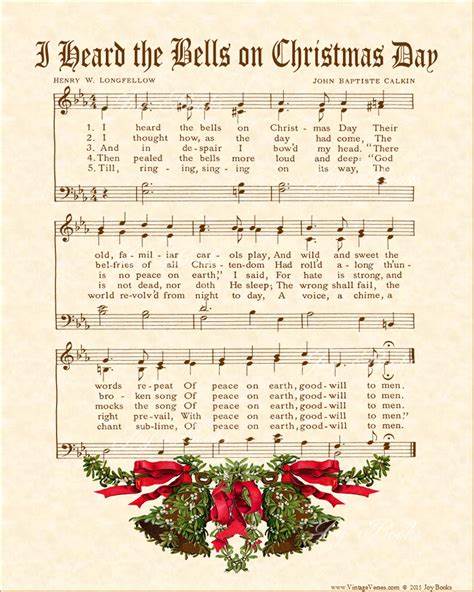
6. “Then pealed the bells more loud and deep: ‘God is not dead, nor doth He sleep.'” (from I Heard the Bells on Christmas Day) Written during a time of personal sorrow, this carol especially speaks to those who feel abandoned in their grief. It reminds us that God is present and actively working for our good.

7. “Silent night, holy night, all is calm, all is bright.” (from Silent Night) The serene imagery of this carol invites us to embrace stillness, trusting in the calm and brightness that God’s presence brings, even in the midst of pain.

8. “Let every heart prepare Him room.” (from Joy to the World) Grief can leave an emptiness in our hearts, but this stanza invites us to make room for Christ, who fills us with peace, hope, and joy.

9. “Born to set Thy people free; from our fears and sins release us, let us find our rest in Thee.” (from Come Thou Long Expected Jesus) This carol expresses a deep longing for freedom from life’s burdens and rest in Christ’s presence.

10. “Rejoice! Rejoice! Emmanuel shall come to thee, O Israel.” (from O Come, O Come, Emmanuel) This ancient carol speaks directly to those in sorrow, promising that God is with us. Emmanuel—God with us—is a powerful reminder that we are never alone.

Christmas carols are not just songs of celebration; they are also prayers, petitions, and promises of God’s love and presence. For those grieving, these words offer a unique blend of comfort and hope, pointing us to the truth that Christ came to bring peace and healing to a broken world.

Don’t hide during the holidays. Light the candles, prepare the meal, and sing the caorls. Alan Wolfelt suggests, “During your time of grief, the very rituals of the holidays can help you survive them.”

This Christmas, may the timeless words of these songs bring you comfort, reminding you that Christ’s light often shines brightest in the shadows.

(Barry Howard is a retired pastor who serves as a leadership coach and columnist with the Center for Healthy Churches. He and his wife reside on Cove Creek in northeast Alabama.)