
Before You Cross the Finish Line

The first time I heard this oft-told story, it was shared by Wayne Grubbs, then pastor at Lakeview Baptist Church in Oxford, Alabama. The story goes something like this:

Near the end of a sermon about heaven, the pastor asked the congregation, “How many of you want to go to heaven?” Every hand in the church shot up—except for one little boy on the front row. Curious, the pastor turned to him and asked, “Son, don’t you want to go to heaven?” The boy quickly responded, “Yes sir! When I die. But I thought you were gettin’ up a trip right now.”

A few of us may feel like we’re getting ready for that final journey sooner rather than later, but most of us live under the illusion that the finish line is far in the distance. Although none of us knows when our journey will be complete, we are inspired by Paul’s words, “I have fought a good fight, I have finished the race, I have kept the faith (II Timothy 4:7).

Regardless of our age or stage in life, the truth remains: we must be ready to cross that line—by maximizing our time here and finishing well.

What Do You Need to Do Before You Finish the Race?

I recently celebrated my 65th birthday. During the two weeks following, I had the sacred privilege of delivering the eulogy for 3 dear friends who had crossed the finish line just a few days apart. The strange juxtaposition of these two events—a birthday and a series of funerals—prompted deep reflection:

“What does God want to accomplish in and through my life before I cross the finish line?”

Thomas Jefferson wisely advised, “Never put off till tomorrow what you can do today.” Yet, so often, we let good intentions replace real action. If you knew your time was short, what would you make a priority? What do you need to do before you finish your race?

1. Go where you need to go. Visit the friend or family member you keep meaning to see. Take that family vacation. Sign up for that mission trip. Step out of your comfort zone and embrace a new experience.

2. Do what needs to be done. Get to know your neighbors and build community. Volunteer for that service project you’ve been considering. Share your faith intentionally and non-judgmentally.

3. Say what needs to be said. Tell your family how much you love them. Plant that tree that will bear fruit and offer shade after you are gone. Pass down the stories that hold your legacy. Offer forgiveness where wounds remain unhealed.

4. Give what needs to be given. Honor God with your financial resources, supporting your local church and kingdom work. Pass along that cherished heirloom to the next generation. Invest in a cause that will continue making a difference long after you’re gone.

5. Plan what needs to be planned. Get your affairs in order: wills, life insurance, power of attorney, and advanced directives. Communicate your memorial wishes with loved ones. Leave behind not just memories, but a roadmap for those who will carry on.

Live Today with Finish Line in Mind

James 4:14 reminds us that “life is a vapor that appears for a little time and then vanishes away.” In the grand scheme of eternity, our days are fleeting and unpredictable. The best way to prepare for the end is to live each day with intention—treasuring relationships, embracing opportunities, and deepening our faith.

For me, that means not only trusting Jesus as my Savior but also following Jesus daily in my attitudes and actions—serving, growing, and faithfully running the race set before me.

Mother Teresa reminded us, “At the end of life we will not be judged by how many diplomas we have received, how much money we have made, how many great things we have done. We will be judged by ‘I was hungry, and you gave me something to eat, I was naked and you clothed me. I was homeless, and you took me in.’”

I sure hope to celebrate several more birthdays, but I also know that one day, sooner or later, someone will stand and share a eulogy for me. Since I don’t know when that day will come, I want to make every moment count.

Like Irma Bombeck avowed, “When I stand before God at the end of my life, I would hope that I would not have a single bit of talent left, and could say, ‘I used everything you gave me.’”

(Barry Howard is a retired pastor who serves as a leadership coach and consultant with the Center for Healthy Churches.)


Navigating Your Internal Dialogue

Our minds are never truly silent. At any given moment, we are engaged in an internal dialogue—a constant stream of thoughts, reflections, and self-talk. Not all the voices are friendly. Some voices push us forward with encouragement, while others hold us back with doubt and fear.

Individuals of all ages must learn to navigate the voices within. No one is exempt. Left unchecked, some of these voices can be troubling, taunting, or in some cases traumatizing. Learning to sort through these voices is essential for emotional, mental, and spiritual well-being.

The voices in our internal dialogue can be tenacious and argumentative. How do we know which ones to listen to? Erwin McManus asked, “Who do we become when we stop allowing all the voices in our head to crowd out the one voice we must hear to come to life?”

We all have competing voices in our minds—some shaped by past experiences, some influenced by culture, and others rooted in our deepest anxieties and insecurities. You may hear the voice of self-doubt that whispers, “You’re not good enough.” Some hear the voice of fear that warns, “What if everything goes wrong?” There’s the voice of condemnation that says, “You are not worthy.” Others hear the voice of pride that insists, “You don’t need help.” And then there’s the voice of God, the still, small voice that speaks truth, peace, and direction.

As you discern between the multiple voices in your head, be aware that the loudest is seldom the most trustworthy, the harshest is seldom the most truthful, and the most accusative is seldom the most accurate. It is best to give attention to the still small voice. And though you cannot evict the competing voices, you can turn down the volume.

So how do we amplify the right voice—the one that speaks truth, grace, and wisdom?

  1. Reject the voices of condemnation and accusation. God convicts, but God does not condemn. If a voice is drowning you in shame, it’s not from the Holy One. (Romans 8:1)
  2. Filter your thoughts through the teaching of scripture. The Bible is the north star for discerning truth. If a thought contradicts God’s teaching, it doesn’t deserve a microphone in your mind. (Philippians 4:8)
  3. Spend time in stillness. The world is noisy, but God often speaks in whispers. Make time for quiet reflection and prayer. (1 Kings 19:11-12)
  4. Surround yourself with honest friends. Wise counsel from trusted friends and mentors can help clarify which voices to trust. (Proverbs 11:14)
  5. Speak life-giving words to yourself Words have power, even when spoken internally. Be intentional about reminding yourself of God’s grace and love. (Proverbs 18:21)
  6. Get regular rest. Shelly Miller reminds us, “Rest provides fine-tuning for hearing God’s messages amidst the static of life.” (Psalm 127:2)
  7. Put what you already know into practice. If we want to learn more from God, we must be faithful in what God has already taught us. When we walk in obedience, our spiritual ears become sharper. (Luke 16:10)

Your internal dialogue shapes your perspective, your emotions, and ultimately, your life. Choose which voices you allow to take center stage. When self-doubt, fear, and intimidation threaten to overwhelm you, lean into the voice that speaks life, love, and purpose.

As you navigate the voices in your head, be positive and proactive, “For God has not given us a spirit of fear and timidity, but of power, love, and self-discipline.” (II Timothy 1:7)

(Barry Howard is a retired pastor who serves as a leadership coach and consultant with the Center for Healthy Churches.)

Press On! Navigating Life and Faith During Challenging Seasons

Have you ever just wanted to give up? Will Rogers quipped, “The road to success is dotted with many tempting parking spaces.” 

A few years ago, after several consecutive days of conversations with friends and fellow church members who felt their world was unraveling, I sensed the weight of the many concerns entrusted to me. As is my pastoral practice, I withdrew to my study to pray, reflect, and seek wisdom for those navigating difficult seasons.

Many members of my community had suffered from the destruction of property due to storms, the loss of business due to an oil spill, the loss of family members due to a tragedy, or the loss of hope due to a toxic political divisiveness.

While I was honored to listen to their stories—privately and confidentially—I found myself wishing I could gather all of them in the same room and say, “You are not alone. Others in this room are also struggling. You can help each other through this.” And most of all, “In the toughest moments, do not give up. Press on!”

Since I could not bring such a group together, I recorded in my journal the words I wished I could say to them, weaving in real-life dilemmas shared with me (anonymously, of course). The following Sunday, I included those words at the end of my sermon and later shared them in our church newsletter.

Now, we find ourselves in another season where hardship weighs heavily on many, both in our community and around the world. Once again, I feel a deep, cumulative heaviness in my soul. As I lift these concerns in prayer, I realize that the struggles that send us into emotional or spiritual tailspins haven’t changed much. Life is still challenging. Storms still come. Divisiveness still threatens to undo us. Fear and anxiety continue to creep in.

But in every hardship and every circumstance, we are called to press on—with patience, perseverance, and faith.

The words I shared then are still as relevant today as they were years ago. May they encourage you in your journey:

Life is a fragile gift—often unfair, frequently unpredictable, and mostly uphill.
The journey requires faith, courage, and determination.
There will be moments when your commitment is tested and your motivation wavers.

When you are tempted to give up or give in—press on!
When life throws you a curveball and the unexpected happens—press on!
When you are weighed down by sadness or battling deep depression—press on!
When frustration rises because of the incompetence of a neighbor or colleague—press on!
When you stand at the foot of the mountain, facing the long climb of recovery—press on!
When you begin a treatment regimen that weakens your body but must strengthen your health—press on!
When exhaustion settles in, and you are tired of being tired—press on!
When your friends are difficult to deal with, or your family is hard to live with—press on!
When you move to a new town or start at a new school, feeling like a stranger—press on!
When loneliness lingers, even in a crowd—press on!
When the news is filled with gloom and doom—press on!
When your workplace is dominated by chaos or conflict—press on!
When you are tempted to settle for mediocrity or risk losing your integrity—press on!
When death or disease takes away someone you love, in the power of the Spiritpress on!
When life gets turned upside down, steady your nerve and stay the course—press on!

Circumstances can change quickly and none of us are exempt. The Apostle Paul reminds us in Philippians 3:14, “I press on toward the goal to win the prize for which God has called me heavenward in Christ Jesus.”

Maya Angelou counseled, “You may encounter many defeats, but you must not be defeated. Please remember that your difficulties do not define you. They simply strengthen your ability to overcome.”

LL Cool J advises, “When adversity strikes, that’s when you have to be the most calm, take a step back, stay strong, stay grounded and press on.”

Pressing on doesn’t mean ignoring the pain or pretending everything is fine. It means choosing to keep moving, even when the path is difficult. It means holding onto faith when answers seem distant, leaning on the strength of God when our own runs out, and trusting that even the hardest seasons can be navigated with wisdom and courage.

No matter what you face today, know this: You are not alone. The valley will not last forever.

So take a deep breath, lift your head, and press on!

(Barry Howard is a retired pastor who serves as a leadership coach and columnist with the Center for Healthy Churches. He and his wife reside on Cove Lake in northeast Alabama.)

Reflections on Turning 65: 10 Things I Am Still Learning About Life

Today I turn 65 years old, and I’m proud of it. Kevan Manwaring suggests, “A birthday is a time to reflect, to take stock and to look ahead.”

Ms. Bertha Boozer, our long-time neighbor in the Williams Community who lived to be 107, always told me, “I don’t understand my friends who complain when they have a birthday. Do they not understand the alternative?” Then she added, “I think every birthday is a blessing.” Amen to that!

I’ve enjoyed most of my birthdays. This year, however, as I celebrate 65 years of life, it feels a little different, a little more contemplative, a little more like a shifting of gears. At age 55 I received my AARP card. As I approached 65 I received my Medicare card. Plus, I’ve retired (again) recently, so I guess this an occasion to reflect on the journey so far, the lessons learned, and the wisdom gained along the way. So, here are some thoughts as I process this milestone birthday:

1. Faith is more of a sail to be raised than an anchor to be dropped. I certainly understand the metaphor of faith as an anchor, but that analogy is best understood in the context of a storm-tossed sea where faith keeps us from being tossed to and fro. Faith is active in the sense that it is continually growing, and we are constantly being re-shaped and “transformed by the renewing of our minds.” Faith is not about staying in one place but about moving forward, trusting the wind of the Spirit to help us navigate life’s uncertainties with confidence and grace.

2. Relationships are more important than stuff. As I’ve aged, it’s become clearer that material possessions pale in comparison to the value of deep, meaningful relationships. I can identify with Jimmy Carter’s assessment that “Earlier in my life I thought the things that mattered were the things that you could see, like your car, your house, your wealth, your property, your office. But as I’ve grown older, I’ve become convinced that the things that matter most are the things that you can’t see — the love you share with others, your inner purpose, your comfort with who you are.” People bring joy and purpose to life in a way things never can.

3. Choose the scenic route rather than the interstate. When possible, choose the backroads rather than the turnpike. Pace yourself and enjoy the scenery. Through the years I’ve even noticed that detours often turn out to be better than the route we originally chose. Life rarely goes as planned, but some of the best experiences and lessons come from unexpected changes in direction. Taking the scenic route and navigating detours has led me to places I never knew I needed to go.

4. Worry is a waste of time and brain cells. Worrying has never solved a problem or changed an outcome. Erma Bombeck was right on target: “Worry is like a rocking chair: it gives you something to do but I never gets you anywhere.” Letting go of worry frees us mental and emotional bandwidth so that we can think creatively, focus on solutions, and do effective problem-solving.

5. The most significant things we do in life we are seldom aware of when we do them. I have been blessed to have opportunities to stand before a handful of people  and to more than a thousand to preach sermons, offer eulogies, or officiate weddings. Yet I think the most significant things I’ve done in life were not in the public eye. Some of our greatest impacts on others come from simple, unintentional acts of kindness. It’s humbling to know that what feels small to us may be life-changing for someone else.

6. Time is the real currency of life and we are wise to spend it thoughtfully and intentially. Art Buchwald said “Whether it’s the best of times or the worst of times, it’s the only time we’ve got.” At 65, I’ve learned that time is far more valuable than money. How we choose to spend our time—and with whom—defines the quality of our lives.

7. Mistakes are opportunities for growth. My friend and encourager, Dr. John Harris, a retired pastor from Louisianna who served as a pastoral counselor in Birmingham, continually reminded me, “Never waste a mistake.” Mistakes are not failures; they are stepping stones to greater understanding and strength. Each one teaches us something valuable if we’re willing to learn.

8. Our self-worth is much more than the value of our bank accounts at any given time. True worth is found in character, kindness, and the love we share with others. Money can never define who we are or how much we matter. Adam Grant reminds us, “A stable sense of self-worth stems from putting identity above image: worrying less about what others think of us than what we think of ourselves.”

9. Health is a gift never to be taken for granted. Good health is one of life’s greatest blessings. Denis Waitley underscored, “Time And health are two precious assets that we don’t recognize and appreciate until they have been depleted.” Taking care of our bodies and minds allows us to fully enjoy the time we have and the people we share it with.

10. We discover our purpose as we are engaged in serving. Purpose is discovered in action, not in waiting. I’ve seen it over and over again. Students who are engaged in service projects or who serve on mission trips seem to awaken more to their life’s passion or their sense of calling in life than those who simply make career choices based on projected income. By stepping up to help and serve others, we find deeper meaning and fulfillment in life.

Turning 65 has been a time of reflection and growth. These lessons have shaped who I am and continue to guide me as I embrace the years ahead.

Despite a lifetime of experience, I am not really an expert in anything, but I am an avid student of life. As popular musician David Bowie grew older he observed, “Aging is an extraordinary process where you become the person you always should have been.”

Here’s to continuing the journey with faith, purpose, and gratitude for all that has been and all that is yet to come.

Comfort and Joy: 10 Christmas Carol Lyrics That Speak into Our Grief

Christmas is often a season of joy, but for many, it can also bring waves of grief as we remember loved ones who are no longer with us. Often their absence speaks more loudly at Christmas.

Perhaps you can identify with the person who said, “I see you in the lights on the tree and the ornaments we used to hang each year. I hear you in the carols we loved to listen to together. I miss you so much this year, but I feel you all around.” 

If you are feeling a heavy sense of loss this Christmas season, lines from these 10 carols can remind you of God’s presence and promises even as you navigate your grief:

1. “The thrill of hope, a weary world rejoices.” (from O Holy Night) In moments of weariness and grief, these words remind us that hope can restore and renew our spirits. The birth of Christ is a beacon of renewal, bringing joy even to heavy hearts.

2. “Be near me, Lord Jesus; I ask Thee to stay close by me forever, and love me, I pray.” (from Away in a Manger) A tender prayer for God’s nearness, this stanza offers reassurance that Jesus is with us, even in our deepest sorrow.

3. “Peace on earth and mercy mild, God and sinners reconciled.” (from Hark! The Herald Angels Sing) These words proclaim peace—not just in the world, but in our hearts. They remind us that God’s grace sustains us, offering comfort when grief feels overwhelming.

4. “O rest beside the weary road and hear the angels sing.” (from It Came Upon the Midnight Clear) This carol reminds us to pause and find rest for our weary souls. In our grief, we can find comfort in the message of peace and hope proclaimed by the angels.

5. “The hopes and fears of all the years are met in thee tonight.” (from O Little Town of Bethlehem) Grief often amplifies our anxiety about the future, but this lyric reminds us that Christ’s birth intersects with our hopes and our fears, offering peace and reassurance.

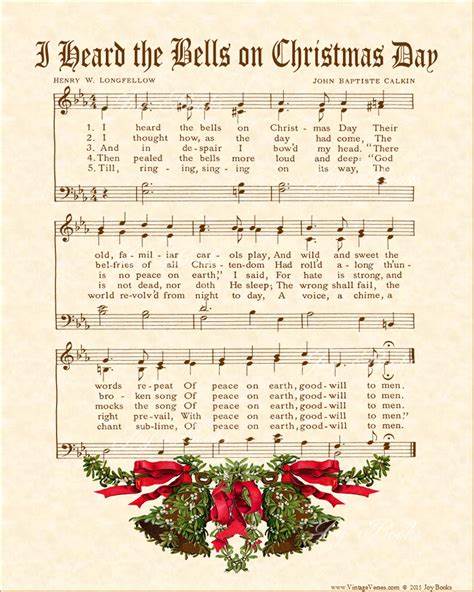
6. “Then pealed the bells more loud and deep: ‘God is not dead, nor doth He sleep.'” (from I Heard the Bells on Christmas Day) Written during a time of personal sorrow, this carol especially speaks to those who feel abandoned in their grief. It reminds us that God is present and actively working for our good.

7. “Silent night, holy night, all is calm, all is bright.” (from Silent Night) The serene imagery of this carol invites us to embrace stillness, trusting in the calm and brightness that God’s presence brings, even in the midst of pain.

8. “Let every heart prepare Him room.” (from Joy to the World) Grief can leave an emptiness in our hearts, but this stanza invites us to make room for Christ, who fills us with peace, hope, and joy.

9. “Born to set Thy people free; from our fears and sins release us, let us find our rest in Thee.” (from Come Thou Long Expected Jesus) This carol expresses a deep longing for freedom from life’s burdens and rest in Christ’s presence.

10. “Rejoice! Rejoice! Emmanuel shall come to thee, O Israel.” (from O Come, O Come, Emmanuel) This ancient carol speaks directly to those in sorrow, promising that God is with us. Emmanuel—God with us—is a powerful reminder that we are never alone.

Christmas carols are not just songs of celebration; they are also prayers, petitions, and promises of God’s love and presence. For those grieving, these words offer a unique blend of comfort and hope, pointing us to the truth that Christ came to bring peace and healing to a broken world.

Don’t hide during the holidays. Light the candles, prepare the meal, and sing the caorls. Alan Wolfelt suggests, “During your time of grief, the very rituals of the holidays can help you survive them.”

This Christmas, may the timeless words of these songs bring you comfort, reminding you that Christ’s light often shines brightest in the shadows.

(Barry Howard is a retired pastor who serves as a leadership coach and columnist with the Center for Healthy Churches. He and his wife reside on Cove Creek in northeast Alabama.)

10 Things We Need to Know About Joy

Joy is one of the most sought-after qualities in life, yet it often feels elusive.

Romans 15:13 requests, “May the God of hope fill you with all joy and peace in believing, so that by the power of the Holy Spirit you may abound in hope.”

The Bible speaks of joy as something much deeper than momentary happiness—it’s a fruit of the Spirit, a gift from God that sustains us through all circumstances. Here are ten things we need to know about joy:

1. Joy is a gift from God. True joy is not something we manufacture on our own. It comes from a deep relationship with God, flowing from our awareness of God’s presence in our lives.

2. Joy is not dependent on circumstances. Happiness can change based on our situation, but joy remains steadfast. It’s possible to have joy even in difficult seasons because it comes from knowing God’s love and grace.

3. Joy and gratitude go hand in hand. A thankful heart cultivates joy. When we focus on what we have rather than what we lack, we experience a greater sense of joy.

4. Joy is a choice. While joy is a gift, it also requires intentionality. We can choose to focus on God’s goodness and place our trust in God, even when life feels uncertain.

5. Joy energizes us. Nehemiah 8:10 tells us that “the joy of the Lord is your strength.” Joy gives us the inner strength to endure trials and challenges with hope.

6. Joy is contagious. When we live with joy, it impacts those around us. A joyful spirit lifts others and creates an atmosphere of encouragement and positivity.

7. Joy comes through serving others. One of the greatest sources of joy is found in giving to and serving others. When we focus on the needs of others, we experience the joy that comes from living selflessly.

8. Joy and peace are connected. Joy and peace often go hand in hand. When we rest in God’s peace, it paves the way for joy to take root in our hearts.

9. Joy reflects our trust in God. When we trust that God has a plan for our lives and is working in us and through us to accomplish good, we can experience joy, even in uncertain times.

10. Joy is frequently found in the simple things. It’s often the little things and the routine things in life that bring the most joy. Max Lucado reminds us, “Find joy in the ordinary things.”  Likewise, Brene Brown suggests, “We risk missing out on joy when we get too busy chasing down the extraordinary.”

Rather than being a fleeting or situational emotion, joy is an attitude with which we proactively approach life. Joy is a disposition, a mindset that precedes and supersedes the highs and lows of our life experiences.

Henri Nouwen advised, “Joy does not simply happen to us. We have to choose joy and keep choosing it every day.”

(Barry Howard serves as the pastor at the Church at Wieuca in North Atlanta. He also serves as a leadership coach and columnist with the Center for Healthy Churches.)
Remembering September 11, 2001: Finding Faith, Hope, and Resilience in the Face of Tragedy

On September 11, I always take the day off. I want to be in a peaceful quiet place praying. It is a day I both mourn and celebrate.Genelle Guzman-McMillan, 9/11 Survivor

Where were you on September 11, 2001?

Every year on the anniversary of this catastrophic day, my mind goes back to that day when much about the world changed forever. I was sitting with a church member in her home, planning a memorial service for her husband, who had passed the night before. As we discussed details, a family member asked me to step into the kitchen, where she tearfully pointed to the TV. I watched in disbelief as the first plane crashed into the World Trade Center. My heart sank. I returned to the family, led them in prayer, and included our nation in my pleas, not yet aware of the unfolding catastrophe.

I hurried back to the church, where our staff had gathered in my study. Together, we watched as the second plane struck. After a few moments of shock and sorrow, we shifted into ministry mode, strategizing ways to support our congregation and community. As news continued to break, we learned of church members with family in New York or Washington, travelers in the affected areas, and those serving in the armed forces. We were all connected in some way to this tragedy, bound together in grief and prayer.

Twenty-three years later, the memories are still vivid and painful. We remember the fear, the uncertainty, the overwhelming sense of loss. But as followers of Christ, we also remember the source of our strength: our faith in God. Psalm 46:1 reminds us that “God is our refuge and strength, a very present help in trouble.” Though faith doesn’t shield us from tragedy, it guides us through it, giving us hope in a world that so often feels broken.

What can we learn as we navigate the crossroads of our haunting memories and our persistent faith? How do we move forward as followers of Jesus in a post-9/11 world?

  1. Our security is found in God. Our faith serves as an anchor. Psalm 46:1 reminds us that God is our refuge and strength, especially in times of trouble. Even amid disaster, we can trust in God’s sustaining presence.

  2. Refuse to live in fear.  II Timothy 1:7 reminds us that “God has not given us a spirit of fear, but of power, love, and a sound mind.” Fear shouldn’t dictate our actions or hold us back from fulfilling God’s call.

  3. Avoid responding to violence with violence. We cannot allow acts of terror to provoke us into hateful responses. Jesus teaches us to love our enemies and be peacemakers in a world full of conflict.

  4. Express gratitude for first responders. The bravery of firefighters, police officers, and paramedics on 9/11 gave us a new appreciation for those who run toward danger to save others. They remind us of the importance of selfless service.

  5. Learn about other faiths.  As we strive to be salt and light, it’s crucial to distinguish between radicals who commit violence and those of faith groups who reject terror and promote peace.

  6. Resist xenophobia. Fear of people from other countries or cultures only divides us further. We are called to love our neighbors, regardless of their background.Sandy Dahl, wife of Flight 93 pilot Jason Dahl pleads, “If we learn nothing else from this tragedy, we learn that life is short and there is no time for hate.”

  7. Pray for our local, state, and national leaders. Navigating the complexities of terrorism and international relations is no easy task. Let us remember to pray for wisdom and discernment for those in authority.

In the years since 9/11, the world has changed, and we continue to process its impact. But as we remember that day, may we emerge more grateful for the heroes, more respectful of each other, and more grounded in our faith.

A year after the 9/11 attacks, I was asked by reporter, “How has the world changed since September 11, 2001?” The response I gave in 2002 is still relevant in 2020:

I believe the world has changed in so many ways that the majority of those changes are still being realized and processed.   From my perspective, it seems that our nation is going through the various stages of grief (shock, denial, depression, panic, guilt, resentment, and hope), and like any normal family system, not everyone is in the same stage.   Because the assault on 9/11 was a multi-dimensional attack on the spiritual, social, psychological, and economic fabric of our country, our sense of loss is more complex. Not only were thousands of lives lost, but so were many of our presuppositions, especially those regarding personal safety, economic security, and religious superiority. I hope and pray that we will emerge as individuals who are more circumspect, more patient, less acquisitive, and more spiritually grounded than we have previously demonstrated.

A Few Life Lessons from the Olympics

Hebrews 12:1-2 includes this encouraging word to those who have begun a spiritual journey: “And let us run with perseverance the race marked out for us, fixing our eyes on Jesus, the pioneer and perfecter of faith.”

The Olympics celebrate human strength, determination, and the spirit of competition. The ancient games included the Panathenaic Games in Athens, the Isthmian Games in Corinth, and the early Olympics in Olympia. The modern Olympic games began in 1896 in Athens.

There are at least 7 places in the New Testament that utilize analogies from the ancient games to illustrate principles about life, most of them written by the Apostle Paul and the anonymous author of Hebrews. These texts draw parallels between these athletic competitions and the journey through life.

Here are a few of the life lessons from the Olympics:

1. Learn the value of unity and teamwork. The Olympics bring together people from diverse backgrounds and cultures, united by a common goal. In the same way, the body of Christ is made up of diverse members, each with unique gifts and talents. Ephesians 4:15-16 says, “Instead, speaking the truth in love, we will grow to become in every respect the mature body of him who is the head, that is, Christ. From him, the whole body, joined and held together by every supporting ligament, grows and builds itself up in love, as each part does its work.”

2. Train with rigorous discipline. Just as athletes discipline their bodies and minds, those who follow Jesus are called to a life of focus and discipline. Things like prayer, Bible study, worship, service, and advocacy are basic ways to fortify our faith and stay focused on our mission. World champion figure skater, Kristi Yamaguchi, contends, “Focus, discipline, hard work, goal setting and, of course, the thrill of finally achieving your goals. These are all lessons in life.”

3. Demonstrate perseverance in dealing with challenges and hurdles. Olympic athletes face numerous obstacles, from injuries to setbacks in competition. Yet, they persevere, driven by their passion and determination. Challenges and hurdles are the norm in life, not the exception. Hebrews 12:1 begins, “Therefore, since we are surrounded by such a great cloud of witnesses, let us throw off everything that hinders and the sin that so easily entangles.” Olympian Carrie Johnson reminds us, “Falling in life is inevitable – staying down is optional.”

4. Athletes of all ages can participate. In the Olympic games there are no age limits. This year there are two 16-year-olds, and one 59-year-old participating. The oldest Olympian on record is Oscar Schwan of Sweden who was 72 when he participated in the shooting competition in the 1920 Olympics. You are neither too young or too old to make a valuable contribution.

5. Keep your eyes on the prize. Athletes train and compete with the goal of winning a medal, a prize that honors their hard work and dedication. Paul reminds us in Philippians 3:13-14, “Brothers and sisters, I do not consider myself yet to have taken hold of it. But one thing I do: Forgetting what is behind and straining toward what is ahead, I press on toward the goal to win the prize for which God has called me heavenward in Christ Jesus.”

Mary Lou Retton, 5-time Olympic medalist in Gymnastics, advises, “As simple as it sounds, we all must try to be the best person we can: by making the best choices, by making the most of the talents we’ve been given.”

As we watch the Olympics this year and marvel at the dedication, perseverance, unity, and joy of the athletes, let their example inspire us to integrate these same values into our lives.


7 Biblical References to the Ancient Games

(The Olympic Rings from 2014 Olympic. Photo credit: David Davies/PA Wire.)

As I watched the athletes parading via a variety of boats down the Seine River during the opening ceremonies of the 2024 Olympics in Paris, I was thinking about the history and origin of the games, and reflecting on the many passages in the bible that utilize athletic metaphors to describe the values and priorities of life.

This week as the world watches the excitement and drama of the Olympic Games unfold, it’s a good time to explore how these ancient competitions inspired one of the Bible’s most influential figures. The Apostle Paul, a missionary and evangelist known for his passionate letters and profound theological insights, frequently used the imagery of the ancient games to illustrate spiritual truths. These metaphors resonate across the ages, reminding us to approach our faith with the same determination and discipline as Olympic athletes.

Although what we know as the modern Olympic games started almost two centuries after the ministry of Paul, he would have been acquainted with the ancient games played in Olympia, Athens, and other cities across Greece. Since Paul spent considerable time in Corinth, he may have attended the Isthmian Games that were held there every two years in the spring. The early games included footraces, chariot races, wrestling, boxing, discus throwing, javelin throwing, long jump, poetry reading, and singing.

His acquaintance with these events certainly influenced Paul’s own sense of discipline and determination. Here are 7 examples of scriptures where Paul, and perhaps others, drew upon the rich symbolism of the games to convey his message:

1. 1 Corinthians 9:24-25: “Do you not know that in a race all the runners run, but only one gets the prize? Run in such a way as to get the prize. Everyone who competes in the games goes into strict training. They do it to get a crown that will not last, but we do it to get a crown that will last forever.” Paul compares the Christian life to a race, urging believers to run with the goal of winning at the things that matter most. Just as athletes undergo rigorous training for a temporary crown, we are called to dedicate ourselves to causes that make an everlasting impact.

2. 1 Corinthians 9:26-27: “Therefore I do not run like someone running aimlessly; I do not fight like a boxer beating the air. No, I strike a blow to my body and make it my slave so that after I have preached to others, I myself will not be disqualified for the prize.” In these verses, Paul emphasizes purposeful and disciplined living. Like a focused runner or a precise boxer, our efforts in faith must be intentional and controlled, ensuring we remain steadfast and true to our calling.

3. Philippians 3:13-14: “Brothers and sisters, I do not consider myself yet to have taken hold of it. But one thing I do: Forgetting what is behind and straining toward what is ahead, I press on toward the goal to win the prize for which God has called me heavenward in Christ Jesus.” Paul encourages us to forget past failures and focus on the future, pressing forward with determination toward the ultimate prize of God’s call to a covenant lifestyle.

4. 2 Timothy 2:5: “Similarly, anyone who competes as an athlete does not receive the victor’s crown except by competing according to the rules.” Here, Paul reminds us that just as athletes must compete according to the rules to win, we too must live our lives according to God’s moral and spiritual guidance to receive the ultimate reward.

5. 2 Timothy 4:7-8: “I have fought the good fight, I have finished the race, I have kept the faith. Now there is in store for me the crown of righteousness, which the Lord, the righteous Judge, will award to me on that day—and not only to me, but also to all who have longed for his appearing.” In his final letter, Paul reflects on his life using the imagery of a race well-run and a fight well-fought, confident in the reward awaiting him. This serves as an encouragement for us to persevere in our faith and finish strong.

6. Galatians 5:7 “You were running a good race. Who cut in on you to keep you from obeying the truth?” Paul uses the metaphor of a race to address the Galatians’ deviation from the truth, urging them to remain steadfast and not be hindered by false teachings.

7. Hebrews 12:1-2: “Therefore, since we are surrounded by such a great cloud of witnesses, let us throw off everything that hinders and the sin that so easily entangles. And let us run with perseverance the race marked out for us, fixing our eyes on Jesus, the pioneer and perfecter of faith.” Though the authorship of Hebrews is debated, this passage aligns with Paul’s athletic imagery, encouraging believers to run their race with perseverance and focus on Jesus.

World champion figure skater Kristi Yamaguchi, who won the gold at the 1992 Olympics, contends “Focus, discipline, hard work, goal setting and, of course, the thrill of finally achieving your goals. These are all lessons in life.”

As we cheer for our favorite athletes this Olympic season, may we be inspired to run our spiritual race with the same dedication and zeal. Let us strive for excellence by living with a Jesus worldview and keeping our eyes fixed on the One who is the ultimate victor.

(Barry Howard serves as the pastor of the Church at Wieuca in north Atlanta. He also serves as a leadership coach and columnist with the Center for Healthy Churches. You can follow him on social media at @BarrysNotes.)

A Pastor’s Prayer for Our Nation- July 14, 2024

(This pastoral prayer was offered in worship at the Church at Wieuca on Sunday July 14, 2024, the day following the attempted assassination of our former president.)

O God of truth, compassion, and eternal justice, we approach your throne of grace today with heavy hearts, seeking comfort and strength in the wake of the recent shooting that has rattled our nation.

We lift up to you our former president and pray for his quick and thorough recovery, and for his physical and spiritual wellness. And we pray for all those affected by the recent assassination attempt. Administer your healing touch to those who were injured and your comfort to those who lost loved ones, and surround them with your peace that surpasses all understanding.

Lord, in this time of shock and uncertainty, we ask for your divine guidance and protection for our nation. Guard us from further atrocities and unite us in solidarity and compassion. Give wisdom and discernment to national and local leaders as they navigate this crisis and strive to ensure safety and security for all who gather in public spaces.

As we attempt to apply your words to life and to live by faith as we hold to your promise of a better future, we confess that our anger and grief from this event are not nearly resolved, and that a sense of despair and deep concern incubates deep within us.

Rather than being consumed by our grief, controlled by our fears, and riddled by our anxieties, help us set our minds to addressing the injustice and disunity that precipitates hate and hostility. Let us direct our souls to living out our faith in our actions and attitudes, and let us turn our minds to addressing issues rather than attacking people, not with partisanship and fear, but with a responsible and courageous exercise of freedom.

O God we confess our ongoing need of your life-changing and culture-shaping grace. Strengthen our resolve, O God, to stand firm against fear and division, and empower us to work together towards a future of peace and harmony.

Lord, we affirm our trust in your unfailing love and mercy. Guide us through these troubled times with your mighty hand. May your grace abound in us and may the light of your love shine through us.

Above all, teach us to love one another again. And though it swims against the current of our deepest instincts, enable us to love those who think differently than we do, even those who may be considered our adversaries.

Although we have many perspectives, truly make us one nation under God, indivisible, with liberty and justice for all. We offer our prayer in the name of the One who aims to unite us all in faith, hope, and love.  Amen

(Barry Howard serves as the pastor of the Church at Wieuca in North Atlanta. He also serves as a leadership coach and columnist with the Center for Healthy Churches. You can follow him on social media at @BarrysNotes.)