Holiday Cacti 101: How to Tell If You Have a Thanksgiving or Christmas Cactus

Throughout the years, my grandmother gave us cuttings or babies derived from several of her houseplants, including a philodendron, a pencil cactus, and a Thanksgiving cactus. My wife and I have tended the philodendron and Thanksgiving cactus across the 40-plus years of our marriage, and the pencil cactus didn’t survive the journey.

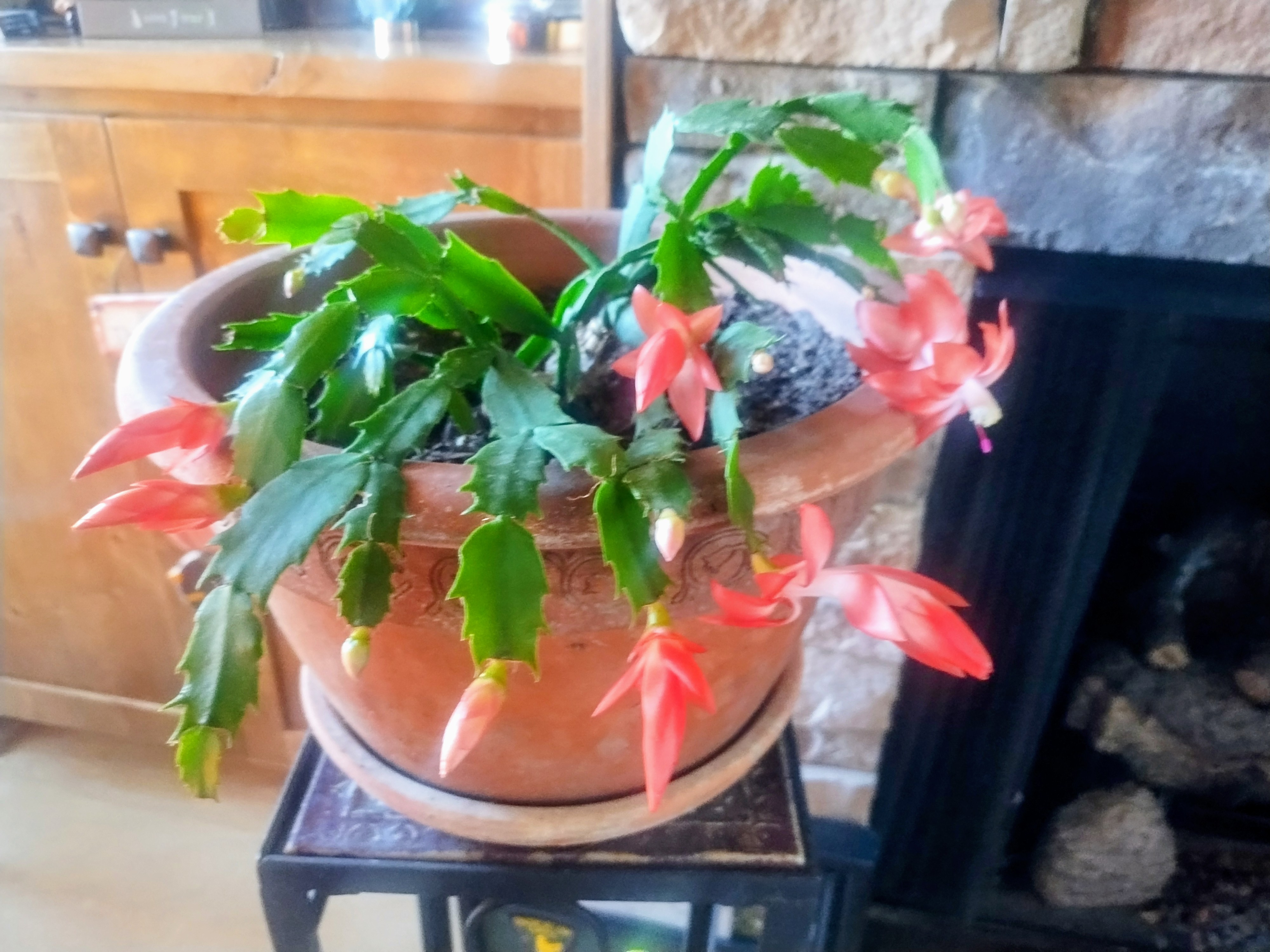
Yesterday, the buds on our Thanksgiving cactus began to open. This morning, the plant is almost in full bloom. As I gazed at the salmon color, I began reflecting on the history and morphology of the plant.

Every year as the holidays approach, you can find various colors of these holiday cacti for sale at your local garden center or grocery store.. They’re often lumped together under the name “Christmas cactus,” but not all holiday cacti celebrate Christmas. Some arrive a full month early, bursting into bloom right around Thanksgiving.

If you’ve ever wondered what kind of cactus you actually own, or why it blooms when it does, here are a few tips:

1. Start With the Leaves: The Easiest Way to Tell Them Apart

Holiday cacti don’t have traditional leaves. Instead, they have flattened segments called phylloclades, and their shapes reveal their identity.

Thanksgiving Cactus (Schlumbergera truncata)

  • Edges are pointed, like little hooks or claws.
  • Segments look more jagged and angular.
  • Sometimes called the “claw cactus.”

Christmas Cactus (Schlumbergera × buckleyi)

  • Edges are smooth and scalloped, with a rounded shape.
  • The overall look is softer, gentler, and less spiky.

If your cactus looks like it’s growing tiny crab claws, it’s probably a Thanksgiving cactus, even if the label said “Christmas.”

2. Bloom Time: What the Calendar Can Tell You

Bloom time is the next biggest giveaway.

Thanksgiving Cactus: Late October through November

These are the early bloomers of the holiday cactus world. They often hit their peak just in time to sit next to the giblet gravy.

Christmas Cactus: Mid-December through January

These bloom closer to Christmas and sometimes even keep going into the New Year.

That said, bloom times aren’t locked in stone. Light and temperature play a huge role, so a Christmas cactus may bloom early—or a Thanksgiving cactus may bloom twice.

3. How the Blooms Look and Grow

Beyond timing, the flowers themselves offer clues.

Thanksgiving Cactus Blooms

  • Grow more horizontally, sticking out like little trumpets.
  • Look slightly more pointed and dramatic.

Christmas Cactus Blooms

  • Tend to hang downward, bell-like and delicate.
  • Appear fuller and more symmetrical.

Either way, holiday cactus blossoms are stunning—long-lasting, vibrant, and perfectly timed to bring color to shorter days.

4. Why Your Cactus Blooms When It Does

Holiday cacti are photoperiod plants, meaning they respond to:

  • Long nights
  • Shorter days
  • Cooler temperatures

Give them 12–14 hours of uninterrupted darkness and temps around 55–65°F, and they’ll start forming buds. A plant near a warm lamp may bloom late; one in a cool, darker room may bloom early.

Sometimes they even surprise you with a bonus bloom in spring.

Whether yours blooms at Thanksgiving or Christmas—or both—it’s one of the few houseplants that comes decorated right out of the box. Understanding their subtle differences helps you appreciate the unique beauty each brings to the season.

So next time you see a holiday cactus, take a closer look. You might just discover whether you have a Thanksgiving cactus showing up early, or a Christmas cactus right on time. Whether you bought your cactus this year or you have an heirloom edition, you have a living plant adding its color to your holiday décor.

(This article is curated from a variety of sources.)
Just Hanging Around: The Brown Bat on Our Front Porch

(Stock photo)
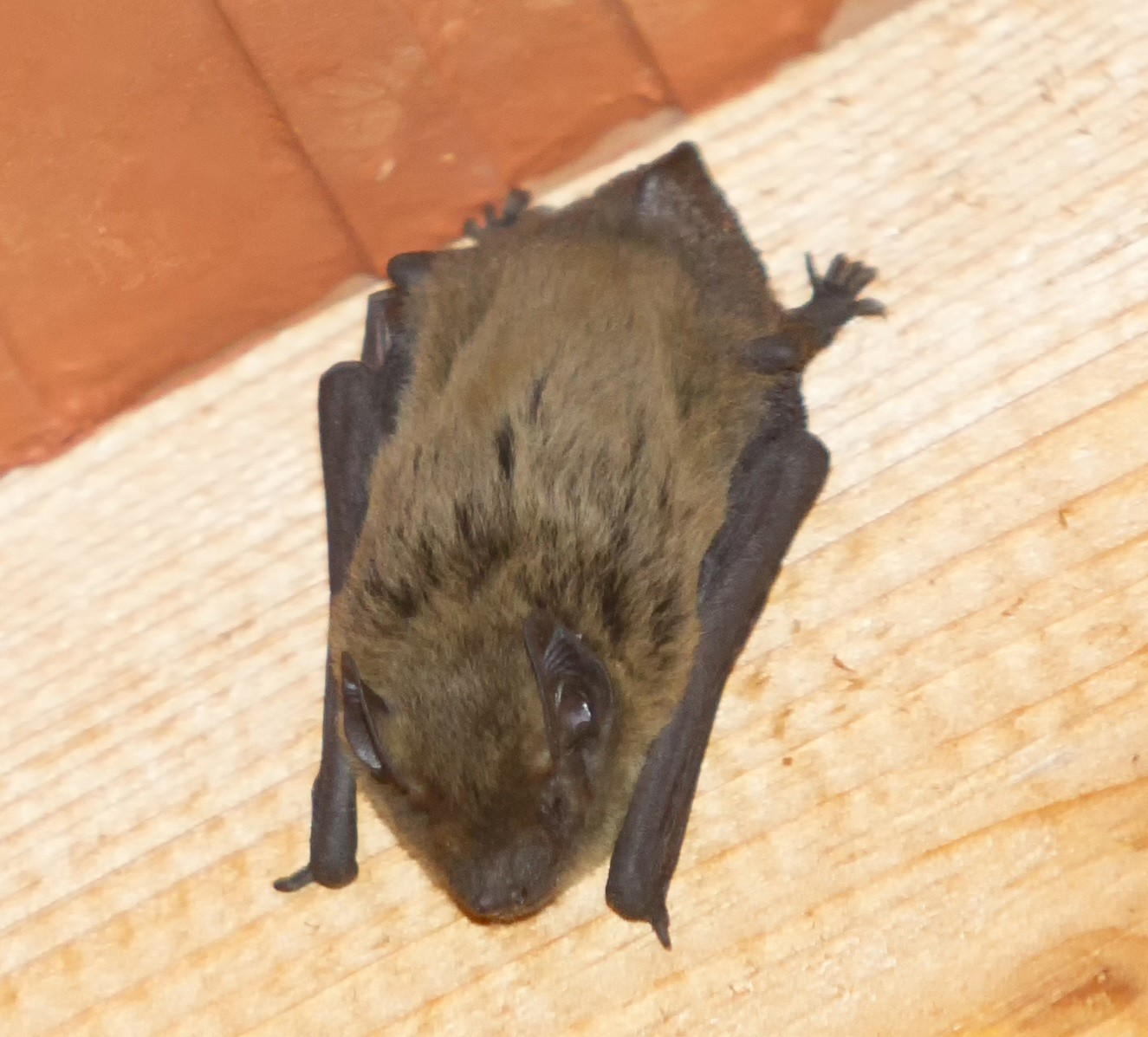
A couple of months ago, a family member noticed a brown bat hanging on our front porch. Since then, our new friend has made frequent appearances. But over the past week, the bat has been there almost every afternoon, resting quietly in the shade just above the door. At first, we weren’t sure what to make of this tiny visitor. Was it lost? Was it dangerous? Or was it simply taking a break from its nightly rounds?

Curiosity soon turned into fascination. So, I did what any curious person would do — I looked it up. That’s when I took a deeper dive into chiropterology — the scientific study of bats. It comes from the Greek words cheir (hand) and pteron (wing), meaning “hand-winged.” And it’s an apt description. A bat’s wing is really a modified hand, with long, finger-like bones stretched out under a thin layer of skin. The more I read, the more amazed I became at these misunderstood creatures.

The brown bat on our porch, I learned, is probably an Eastern small brown bat, a species common throughout much of North America. Far from being pests, these bats are actually helpful neighbors. Each night, a single brown bat can eat hundreds of mosquitoes, moths, and beetles, serving as nature’s pest control service, free of charge.

In the 1920s, the Texas farmer Charles Campbell discovered how bats could protect crops from insect infestations. He built the first “bat tower,” inviting bats to roost nearby so they could feast on pests at night. His experiment was successful, and ever since, people have come to view bats not as villains of the night, but as quiet allies in the balance of nature.

Today, bats are even finding a role in technology. Modern scientists study how bats navigate with sonar to improve drone guidance systems and medical imaging. What once seemed mysterious is now inspiring innovation, a reminder that creation itself holds lessons awaiting our discovery.

Still, bats tend to get a bad reputation. They’re often linked with darkness, caves, and spooky stories, unfair associations that miss their real purpose. Watching our little brown bat tuck itself into the same quiet apex of our porch ceiling each afternoon has reminded me that even the most misunderstood creatures have a place in God’s plan.

As one biologist observed, “To study bats is to see beauty where most see only shadows.” God’s creation is full of surprises, and sometimes, the reminder of divine creativity is right at your door.

So now, when I step out on the porch and look up, I’m grateful for our tiny tenant. Bats are stealthy creatures, yet they remind us that there’s fascination in things we often overlook, and purpose in things we often misunderstand, even the eerie things.

Rather than wishing our bat would stay away, we want our friend to hang around a while and feast on our lakeside mosquito population so that they do not feast on us.

A Tall Tale: A Brief History of Bell Mountain

Tyler Knott insists, “Mountains know secrets we need to learn. That it might take time, it might be hard, but if you just hold on long enough, you will find strength to rise up.”

This year we are spending Labor Day weekend in a cabin in Hiawassee, which is one of our favorite places to visit. Our cabin is high on Bell Mountain, just below the historic park and overlook.

Perched high above Lake Chatuge in the Blue Ridge Mountains, Bell Mountain offers one of the most breathtaking views in North Georgia. But its story is about more than scenery—it’s about scars, preservation, and a community that saw beauty where others saw only rock.

Nowadays, Bell Mountain provides one of the most scenic overlooks in the Appalachian chain. When most travelers think of the peaks of North Georgia, they automatically think of Brasstown Bald, which boasts the highest elevation in the Peach State. However, Bell Mountain, which looms above Lake Chatuge and overlooks the valley to Brasstown Bald, offers a panoramic postcard view of the lake and the North Georgia and Western North Carolina mountainscape.

In the 1960s, Bell Mountain was targeted by the Hiawassee Stone Company, which blasted away at the peak in search of quartzite. The mountain’s once-smooth crown was left jagged and scarred, leading some locals to call it an “eyesore.” Yet others believed that even broken landscapes could hold meaning and purpose.

One such believer was Hal Herrin, a local businessman and conservationist. In 1971, he purchased the mountain and willed it to Towns County so it could be preserved for future generations. For decades, access remained limited, but Herrin’s gift ensured that Bell Mountain would not be lost to industry. In 2016, the county developed the Bell Mountain Park and Historic Site, complete with observation decks and interpretive signs.

Today, visitors can stand where dynamite once shattered stone and instead experience serenity—watching the sun dip behind the peaks or the mist roll across Lake Chatuge. The graffiti that now covers the rock face has become a kind of cultural quirk: while controversial, it is also a reminder of how humans leave their marks, both destructive and creative.

Bell Mountain’s story is one of transformation: what was once blasted and scarred has become a place of reflection and wonder. Standing there, I am reminded that mountains, like people, even wounded ones, still rise to inspire.

Cold Mountain: Where History, Folklore, and Storytelling Meet

It’s been almost 20 years since my first visit to Springdale Golf Course. On my first trip there, the starter pointed toward a nearby mountain peak and said, “That’s Cold Mountain.” Then he cast his hand across the panorama of the community and added, “And this is where the story took place.”

Yesterday, I joined a group of friends at what is now the Springdale Golf Resort. I recalled my first introduction to Cold Mountain, and I revisited the progression of how the story, the novel, and the movie evolved.

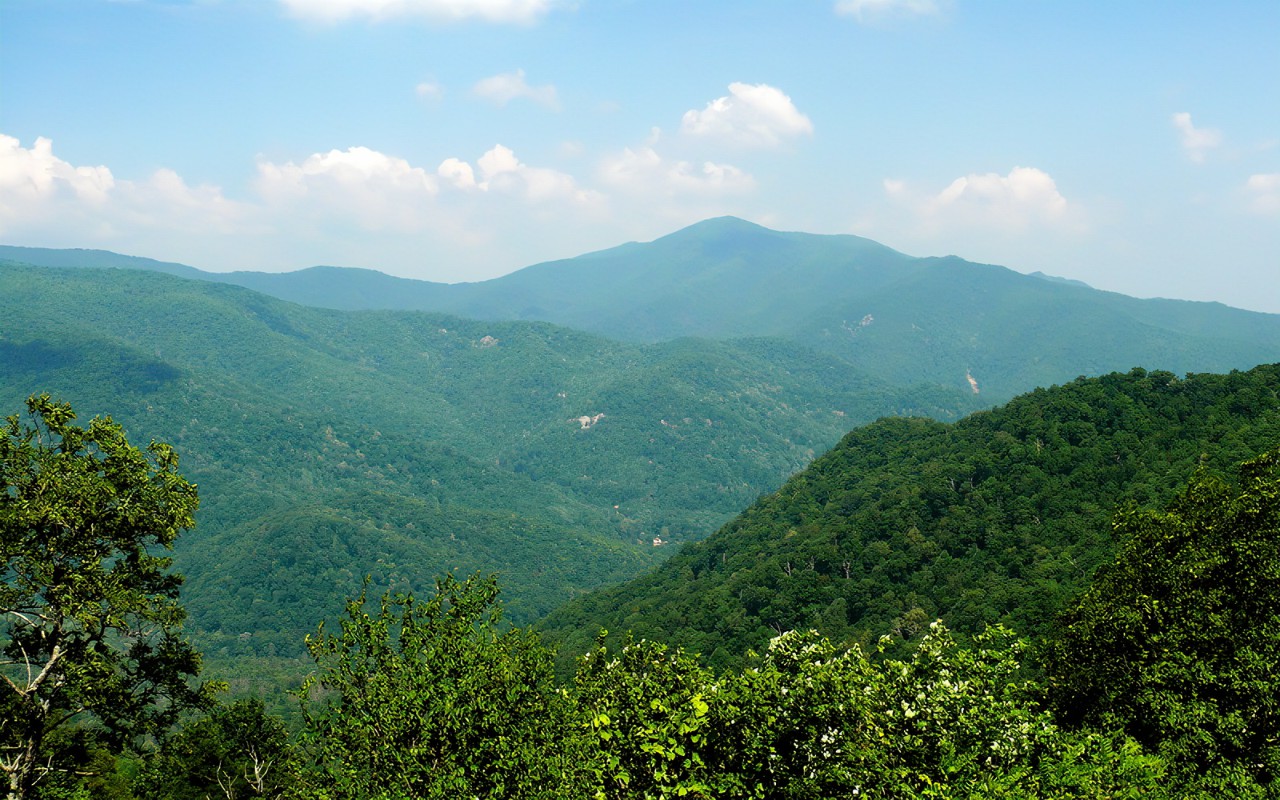
Rising over 6,000 feet in the Pisgah National Forest of western North Carolina, Cold Mountain is a peak rich with both natural beauty and cultural significance. Located about 15 miles southeast of Waynesville, its rugged slopes have watched over centuries of Appalachian life. Long before it became famous in literature and film, Cold Mountain was home to Cherokee hunters, later to pioneer families who farmed its foothills, and eventually to soldiers who marched off to fight in the Civil War.

It was that Civil War heritage that inspired Charles Frazier’s 1997 novel, Cold Mountain. Frazier, a native of the region, based the story loosely on family history and local lore. His tale follows W.P. Inman, a wounded Confederate soldier who deserts the battlefield and makes a dangerous trek homeward. His journey mirrors the experiences of many disillusioned soldiers of the time, while his beloved Ada Monroe, left behind to manage her late father’s farm, embodies the resilience of Appalachian women. The novel, steeped in historical detail and place-based authenticity, went on to win the National Book Award and cemented Cold Mountain’s place in American literary imagination.

Hollywood soon took notice. In 2003, director Anthony Minghella adapted the novel into the film Cold Mountain, starring Jude Law, Nicole Kidman, and Renée Zellweger. While the story is set in Haywood County, North Carolina, the filmmakers chose Romania as the primary shooting location. Why Romania? Its unspoiled landscapes better resembled the 19th-century Appalachians than the modernized North Carolina mountains, and the cost of filming abroad was considerably lower. Still, the production team worked hard to capture the spirit of the Blue Ridge, consulting historians and even drawing on Appalachian music traditions for the soundtrack, which featured performances by Alison Krauss and Jack White.

The film proved a success, grossing over $173 million worldwide and receiving seven Academy Award nominations. Renée Zellweger won the Oscar for Best Supporting Actress for her unforgettable role as the feisty Ruby Thewes. Beyond the accolades, the movie rekindled interest in the real Cold Mountain, drawing visitors from around the world who wanted to glimpse the peak that inspired the novel and film.

Today, Cold Mountain remains a powerful symbol. It can be summited only by a strenuous 10.6-mile hike via the Art Loeb Trail, but it can also be admired from overlooks along the Blue Ridge Parkway. Whether encountered on foot, in the pages of Frazier’s novel, on the silver screen, or viewed from the nearby golf course, Cold Mountain continues to evoke themes of perseverance, homecoming, and hope. It is both a real place and an inspiring narrative, a reminder that local folks in local communities have some of the best stories to tell.