
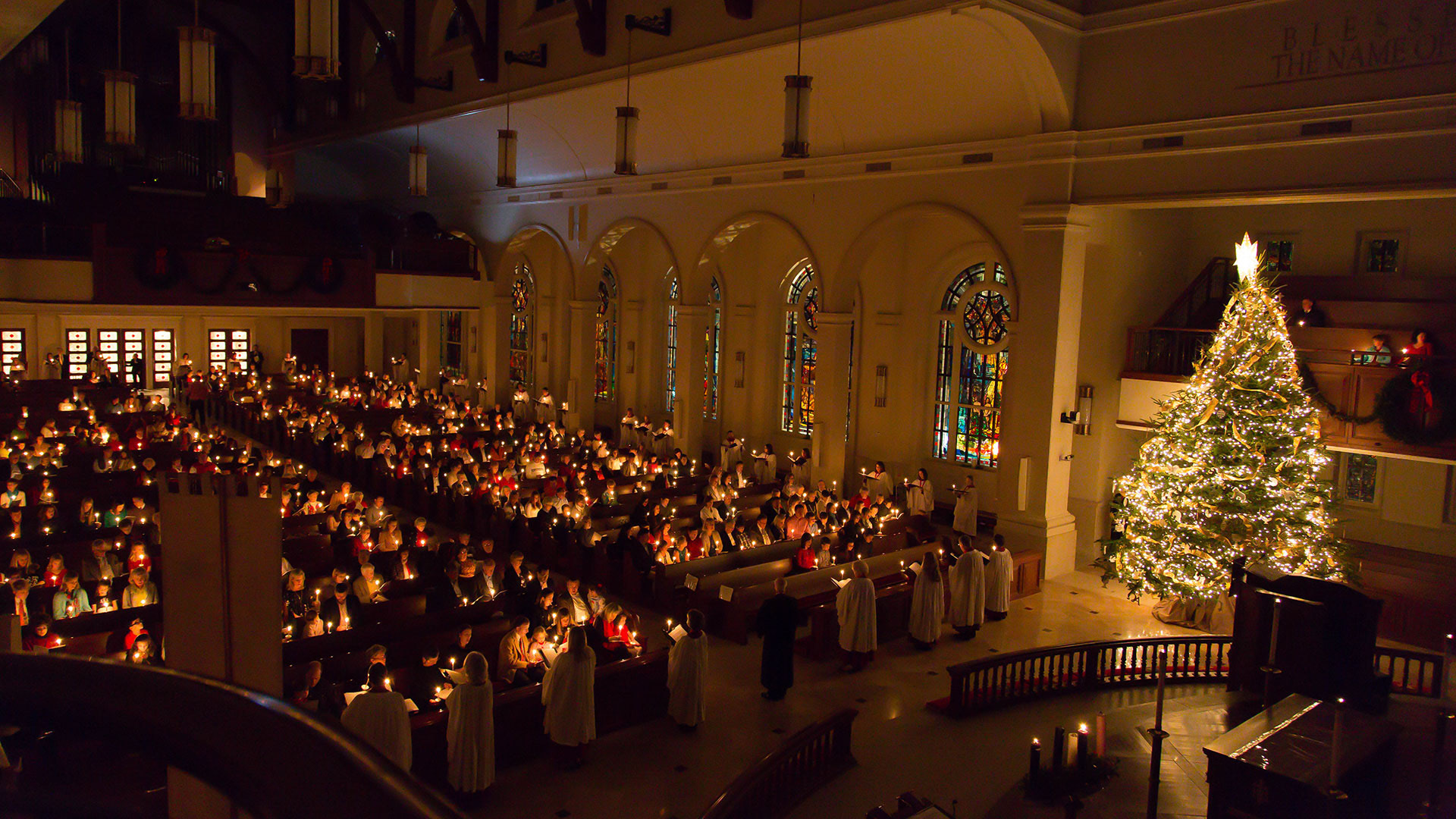
Christmas Eve is one of my favorite services of the year. As a pastor, I’ve had a few more verbal gaffes than I care to admit. It’s a busy season for everyone, including church staff.
For some, in addition to getting ready for one of the most well-attended services of the year, the service falls on a day when the church office is closed, meaning that your usual team of workers is not present to assist with the preparations. And it’s the final week of the church year, which for most churches means it’s the highest “giving” week of the year.
In my experience, Christmas Eve services have the feel of a family reunion because so many former members, extended family members, and new family members are back home.
Yet Christmas Eve worship is also a sacred time. It is one of the few times each year when the sanctuary is filled with longtime members, occasional attenders, visitors, skeptics, children, and people quietly carrying grief or other heavy emotions. Candles glow, carols summon treasured memories, poinsettias adorn sanctuaries and chapels, and souls arrive with high expectations. Because the moment matters so much, words matter, perhaps more than on any other night of the church year.
With that in mind, here are 12 things a pastor should probably not say at a Christmas Eve service. I offer these from a wellspring of experience, a pastoral heart, and deep respect for the moment.
- “I see a lot of unfamiliar faces tonight.” Visitors don’t want to be called out or singled out; they simply prefer to be welcomed. Christmas Eve is about hospitality, creating a place and space where everyone is welcomed like family.
- “I promise this sermon will be short… well, shorter than usual.” This is not the night to preach a lengthy message. Let your sermon be well-prepared and appropriately brief, without commentary about the brevity.
- “You all know the words to these carols, so you won’t need your hymnals.”
Familiarity varies, and carols are meant to invite participation, not test memory. If you have attendees who are new to the church, new to the faith, and perhaps even new to the celebration of Christmas, consider that a gift. You may also have a few members with memory issues. Don’t make them uncomfortable by making them feel like they don’t belong if they don’t know all the words to the songs. - “I didn’t have much time to prepare.” Even if this is true, this confession doesn’t belong in a holy moment. Christmas Eve deserves thoughtful preparation. And from my experience, if you didn’t prepare well, your congregation will know it soon enough.
- “You all know the story of Jesus’ birth so well that there’s no need to read the scripture tonight.” The story never grows old, and scripture never becomes optional, especially on this night. When I prepare for sermons, I read the text from a variety of translations. But on Christmas Eve, I read the Christmas story from the translation most familiar to the congregation.
- “On this very night, 2,025 years ago, Jesus was born in a manger.” Most worshippers are aware that December 25 is the date designated to celebrate Jesus’ birth, and not the actual date of Jesus’ birth. Most scholars and historians suggest that Jesus was likely born in the spring. Regardless, there is not suggestion of a date for the birth of the Christ child in scripture. Intellectual integrity matters. Christmas Eve celebrates mystery and meaning, not questionable calendaring.
- “Kids, you need to know that Jesus is real and Santa is not.” Christmas Eve is not the time to resolve cultural debates, or to risk breaking tender trust. How parents deal with the legend of St. Nicolas and stories of toys being delivered should be left to them, and not a pastor with an impulse to set the record straight.
- “I won’t mention politics… but since I brought it up…” Some nights are meant to be mercifully politics-free. This is one of them. We live in an age where almost anything, including “love your neighbor,” can be perceived as political. But partisan political jabs do not communicate “good news of great joy which shall be for all the people” (Luke 2:10).
- “This is my favorite service, except for Easter.” Ranking holy days is unnecessary. Each has its own meaning and its own place in the story. It may be more helpful to say, “This is one of my favorite times of the year.”
- “I sure wish we had a nursery tonight because the kids are making too much noise.” Children are not interruptions to worship; they are signs of life within it. As many churches lament the lack of children and young families, one of the worst things a pastor can do is to complain about the presence of children.
- “Some of you are behind on your giving, and tonight is a great opportunity to catch up.” Because the Christmas Eve service occurs during the opportune season for “end-of-the-year giving,” pastors can be tempted to be highly proactive in promoting this stewardship moment. While it’s okay to remind the congregation of giving opportunities, it’s not okay to make your Christmas Eve service sound like an infomercial for the church budget. I prefer to put an end-of-the-year giving promo in the printed program, and not to mention it during the service.
- “I’ll see some of you next Sunday, and some of you I probably won’t see until Easter.” Christmas Eve is not the time for guilt trips. Gratitude is always a better invitation. Plan the quality of your service and calibrate your words so that less frequent attenders will be inspired, even compelled, to participate more frequently, without being belittled.
Christmas Eve worship is not about perfection; it’s about presence. It is about creating space for wonder, for mystery, for memory, for hope, and for good news that is like light breaking into the darkness. The best Christmas Eve services allow the story itself to do the heavy lifting, through scripture, song, silence, and candlelight.
After all, the most important words spoken on Christmas Eve were not delivered from a pulpit at all, but whispered through angels and sung into the night: “Do not be afraid… for unto you is born this day a Savior, which is Christ the Lord.”
And really, that is more than enough to say.
(Barry Howard is a retired pastor who serves as a leadership coach and columnist for the Center for Healthy Churches. He and his wife reside on Cove Lake in northeast Alabama.)
 Cove Creek Reflections