
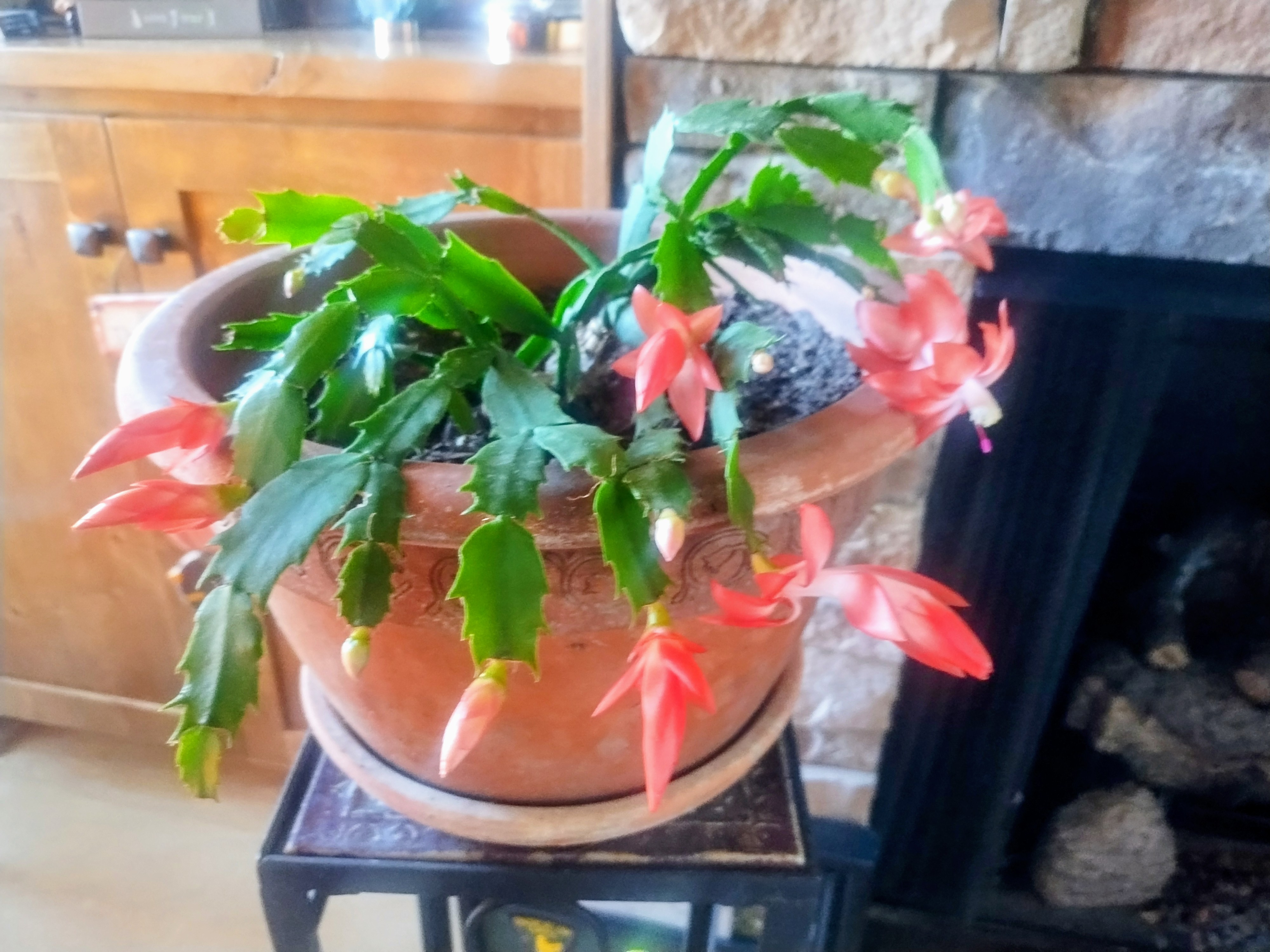
Throughout the years, my grandmother gave us cuttings or babies derived from several of her houseplants, including a philodendron, a pencil cactus, and a Thanksgiving cactus. My wife and I have tended the philodendron and Thanksgiving cactus across the 40-plus years of our marriage, and the pencil cactus didn’t survive the journey.
Yesterday, the buds on our Thanksgiving cactus began to open. This morning, the plant is almost in full bloom. As I gazed at the salmon color, I began reflecting on the history and morphology of the plant.
Every year as the holidays approach, you can find various colors of these holiday cacti for sale at your local garden center or grocery store.. They’re often lumped together under the name “Christmas cactus,” but not all holiday cacti celebrate Christmas. Some arrive a full month early, bursting into bloom right around Thanksgiving.
If you’ve ever wondered what kind of cactus you actually own, or why it blooms when it does, here are a few tips:
1. Start With the Leaves: The Easiest Way to Tell Them Apart
Holiday cacti don’t have traditional leaves. Instead, they have flattened segments called phylloclades, and their shapes reveal their identity.
Thanksgiving Cactus (Schlumbergera truncata)
- Edges are pointed, like little hooks or claws.
- Segments look more jagged and angular.
- Sometimes called the “claw cactus.”
Christmas Cactus (Schlumbergera × buckleyi)
- Edges are smooth and scalloped, with a rounded shape.
- The overall look is softer, gentler, and less spiky.
If your cactus looks like it’s growing tiny crab claws, it’s probably a Thanksgiving cactus, even if the label said “Christmas.”
2. Bloom Time: What the Calendar Can Tell You
Bloom time is the next biggest giveaway.
Thanksgiving Cactus: Late October through November
These are the early bloomers of the holiday cactus world. They often hit their peak just in time to sit next to the giblet gravy.
Christmas Cactus: Mid-December through January
These bloom closer to Christmas and sometimes even keep going into the New Year.
That said, bloom times aren’t locked in stone. Light and temperature play a huge role, so a Christmas cactus may bloom early—or a Thanksgiving cactus may bloom twice.
3. How the Blooms Look and Grow
Beyond timing, the flowers themselves offer clues.
Thanksgiving Cactus Blooms
- Grow more horizontally, sticking out like little trumpets.
- Look slightly more pointed and dramatic.
Christmas Cactus Blooms
- Tend to hang downward, bell-like and delicate.
- Appear fuller and more symmetrical.
Either way, holiday cactus blossoms are stunning—long-lasting, vibrant, and perfectly timed to bring color to shorter days.
4. Why Your Cactus Blooms When It Does
Holiday cacti are photoperiod plants, meaning they respond to:
- Long nights
- Shorter days
- Cooler temperatures
Give them 12–14 hours of uninterrupted darkness and temps around 55–65°F, and they’ll start forming buds. A plant near a warm lamp may bloom late; one in a cool, darker room may bloom early.
Sometimes they even surprise you with a bonus bloom in spring.
Whether yours blooms at Thanksgiving or Christmas—or both—it’s one of the few houseplants that comes decorated right out of the box. Understanding their subtle differences helps you appreciate the unique beauty each brings to the season.
So next time you see a holiday cactus, take a closer look. You might just discover whether you have a Thanksgiving cactus showing up early, or a Christmas cactus right on time. Whether you bought your cactus this year or you have an heirloom edition, you have a living plant adding its color to your holiday décor.
(This article is curated from a variety of sources.)
 Cove Creek Reflections