Building Bridges Across the Great Divide

http://www.rarehistoricalphotos.com

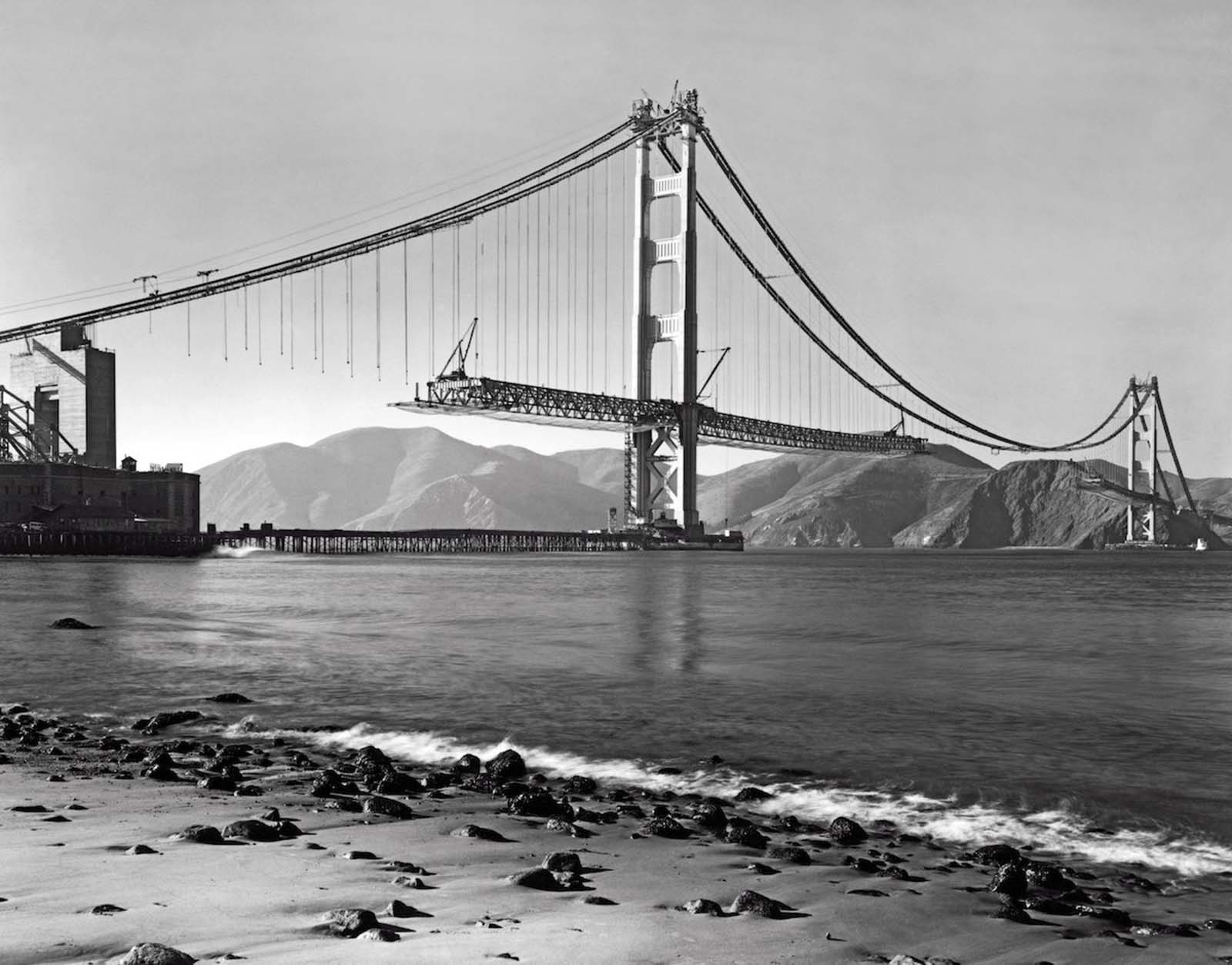
When construction began on the Golden Gate Bridge in 1933, skeptics said it couldn’t be done. The winds were too fierce. The fog too dense. The span too long. But through grit, innovation, and vision, workers united across trades and backgrounds to connect two shores that had long been separated. Against enormous odds, the bridge was completed in 1937 and still stands today. It is not just as an engineering marvel, but a symbol of what’s possible when people work together to span what divides them.

Our nation needs that kind of bridge-building again, not with steel and cables, but with courage, empathy, and dialogue.

We are living in a time when division feels more visible and more visceral than ever. Political debates become personal battles. Social media threads unravel into shouting matches. Families gather around dinner tables, uncertain about how to talk about the world without tearing each other apart.

We are, in many ways, a nation of silos, more comfortable in our echo chambers than in conversations that challenge us. But if we want to build a better future, we cannot afford to remain divided. The health of our democracy and the well-being of our families and communities depend on our ability to build bridges across the great divide.

A wise person once remarked, “Unity is not the absence of differences but the presence of mutual respect in the midst of them.”

Division is not new, but it has been amplified. Fueled by polarized media, ideological entrenchment, and the fast-paced spread of misinformation and disinformation, we’ve drifted into a mindset that sees those who disagree with us not as fellow citizens but as threats. That’s a dangerous place for any society to be.

As the late Senator John McCain once warned, “We weaken our greatness when we confuse patriotism with tribal rivalries that have sown resentment and hatred and violence across all the corners of the globe.” Civility isn’t cowardice. It’s a form of courage. And dialogue isn’t defeat; it’s a doorway to understanding.

After the Civil War, President Abraham Lincoln worked not only to reunite the nation politically but to heal it relationally. When criticized for showing kindness to Confederate sympathizers, Lincoln replied, “Do I not destroy my enemies when I make them my friends?” His commitment to unity, even amidst deep division, laid a foundation for national healing, one conversation and one gesture at a time

Recently, I read about a local church and a nearby civic group who hosted a community roundtable with people from across the political spectrum. The conversation was slow and awkward at times, but also honest, respectful, and hopeful. Participants left not with total agreement, but with mutual appreciation and a shared desire to keep the conversation going.

That’s where healing begins: not in uniformity, but in humility and respect.

A shared future requires shared values. Most of us, regardless of political leanings, want similar things: safe communities, healthy families, meaningful work, a stable economy, and a sense of dignity and belonging for all people. When we begin with the values we hold in common, we can face what divides us with greater grace.

To live in unity does not require uniformity of thought, perspective, or conviction. It does require that we build on our common values, even when we don’t share the exact same viewpoint. Rick Warren wisely reminds us, “We don’t have to see eye to eye to walk hand in hand.”

The work of bridge-building is not glamorous. It won’t trend on social media. But it is deeply necessary. It happens in quiet conversations, in community service projects, in choosing curiosity over caricature.

If we want to leave a better world for our children and grandchildren, we must begin not by shouting louder, but by listening deeper. We must become savvy builders who construct bridges, cultivate relationships, and collaborate as problem-solvers. And we must dare to believe that across even the widest divide, bridges can still be built.

Let us be those who build them.

(Barry Howard is a retired pastor who now serves as a leadership coach and consultant with the Center for Healthy Churches. He and his wife live on Cove Lake in northeast Alabama.)

Celebrate Religious Liberty by Exercising Your Freedom to Worship

Fire up the grill. Churn the homemade ice cream. Enjoy the fireworks as you hum a little John Philip Sousa. It’s the Fourth of July weekend.

For many, this holiday brings the joy of parades, cookouts, and patriotic music. But amid the celebration, it’s worth remembering that Independence Day is about more than national pride—it’s about preserving and practicing the freedoms that define us. Among the most vital—and perhaps most often overlooked—is religious liberty.

More Than a Constitutional Clause

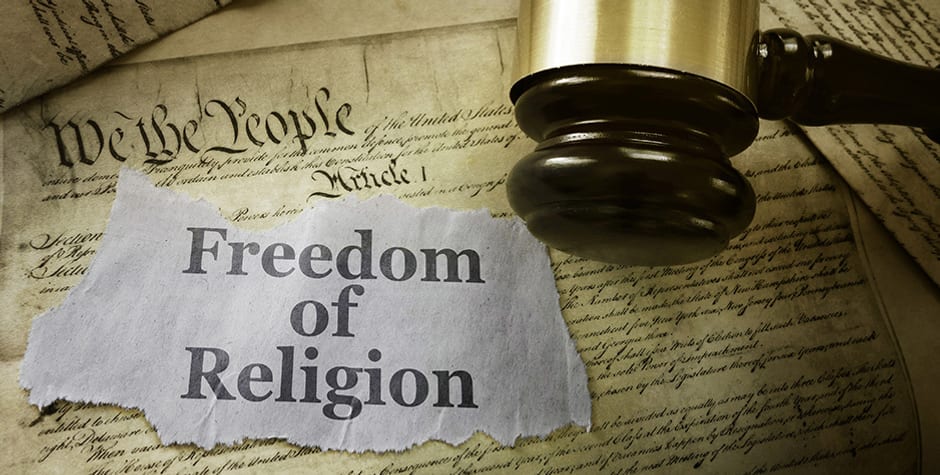
Religious liberty means we are free to worship without fear of persecution, and equally free from government coercion into religious activity. This freedom protects our right to attend the church of our choice—or no church at all. And it also ensures that faith remains a matter of personal conscience, not political control.

The founders of our nation recognized the harm caused when religion and government become entangled. They established, with care and foresight, a “wall of separation” between church and state—not to marginalize faith, but to guard its integrity.

As Isaac Backus, a prominent Baptist minister during the American Revolution, once wrote:  “When Church and State are separate, the effects are happy… but where they have been confounded together, no tongue nor pen can fully describe the mischiefs that have ensued.”

Worship Is a Freedom Worth Using

While many of us will mark Independence Day with fireworks and festivities, I hope we’ll also celebrate by exercising the freedom that sets us apart: the freedom to worship.

Our Baptist ancestors were instrumental in shaping the First Amendment, not only to protect their own practices but to advocate for the religious freedom of all. They believed—deeply and rightly—that no government should compel belief or interfere with the exercise of faith. That principle still holds today.

“Congress shall make no law respecting an establishment of religion, or prohibiting the free exercise thereof…”  –First Amendment to the U.S. Constitution

But freedom requires stewardship. It’s not just a right to defend, but a gift to live out.

A Global Perspective

As we gather for worship this weekend, may we remember the millions around the world who do so in secret, risking their safety for the sake of their convictions. May their courage remind us never to take our freedom for granted.

In my years as a pastor, I’ve seen how worship shapes lives—it forms character, builds community, and fuels compassion. When we gather to pray, sing, listen, and serve, we become more than attendees—we become active participants in the liberty we’ve been given.

That’s why Hebrews 10:25 challenges us: “Some people have gotten out of the habit of meeting for worship, but we must not do that. We should keep on encouraging each other…” (CEV)

To neglect worship is to risk trivializing the hard-fought right to gather without fear or restriction.

More Than a Celebration—A Commitment

So yes—enjoy your celebration. Wave the flag. Cheer the parade. Light the fireworks. But let’s also take time to reflect. Give thanks for the freedoms we enjoy. Pray for those who are still waiting to worship freely. And most importantly, exercise your freedom to worship—not just this weekend, but consistently, gratefully, and respectfully.

Because if even one group loses their right to worship, religious liberty is in jeopardy for us all.

(Barry Howard is a retired pastor who now serves as a leadership coach and consultant with the Center for Healthy Churches. He and his wife live on Cove Lake in northeast Alabama.)

(This is an updated column from 2016.)

Rediscovering Our Belief in “Liberty and Justice for All” — and Living into It

When I was in the 3rd grade, long before our coal-heated elementary school had an intercom, I remember Mrs. Pirkle, our teacher, would lead us to stand at attention, face the flag, and recite the Pledge of Allegiance. For many Americans, these words roll off the tongue as familiar as the melody of the national anthem: “…with liberty and justice for all.”

We often recite this phrase at school assemblies, civic ceremonies, and public gatherings. Yet in a time when division is deep, and trust is fractured, we must ask ourselves: Do we still believe those words? And more importantly, are we truly living into them?

“Liberty and justice for all” is more than a tagline; it’s a guiding principle. It reflects the highest aspirations of a nation committed to freedom, not just for the privileged, but for every citizen. It is both a pledge we recite and a promise we must embody.

The social contract that binds us together as citizens of these United States is based on the common good of the community, and not the advancement of one individual over another, one class of people over another, or one ethnicity of people over another. Woodrow Wilson contended, “America is not anything if it consists of each of us. It is something only if it consists of all of us.”

To reclaim this belief is to recommit ourselves to a shared vision: a society where opportunity is not determined by zip code, and dignity is not dictated by skin tone, belief system, portfolio size, or political affiliation.

“Liberty and justice for all” is more than a theory; it is an ongoing pursuit. One historical moment that illustrates this pursuit is the courageous action of Fannie Lou Hamer, a Mississippi sharecropper who became a powerful voice in the civil rights movement. After being denied the right to vote and facing brutal opposition, Hamer famously testified before the 1964 Democratic National Convention: “I’m sick and tired of being sick and tired.”

Her words ignited the conscience of a nation. Hamer didn’t ask for special treatment. She asked that the promise of “liberty and justice for all” include her, too. Her story reminds us that liberty requires vigilance, and justice demands action.

Justice is more than a courtroom verdict; it is a spiritual mandate. Amos 5:24 demands, “But let justice roll on like a river, righteousness like a never-failing stream.” Justice isn’t confined to verdicts and legislation. It is manifest in the way we provide food, clothing, housing, education, and healthcare to the “least of these.” Justice insists that all people deserve to be seen, heard, and respected, especially the disadvantaged and the underprivileged.

Likewise, liberty is not simply the absence of ethical and moral restraint, but the presence of opportunity coupled with a call to responsibility. It’s the freedom to speak, worship, and live without fear of marginalization.

Coretta Scott King insisted, “Freedom is never really won. You earn it and win it in every generation.”

“Liberty and justice for all” doesn’t end with us; it starts with us. Rediscovering liberty and justice involve both public policy and personal practice. It begins in our homes, our churches, our voting booths, and our daily conversations. It starts when we examine our assumptions, expand our circles, and speak out when the voices of others are silenced.

It begins when a teacher advocates for underserved students. When a community leader ensures fair access to resources. When a neighbor stands up for the rights of an immigrant neighbor. When a local church hosts a refugee family. When your Bible study group or small group gets involved in prison ministry. Or when your mission group sponsors and supports victims of human trafficking.

It continues when we advocate for fair and just legislation to protect and preserve the rights of all individuals, even those with whom we disagree. And when some of our representatives and leaders from both sides of the aisle suffer from rapid-onset constitutional amnesia, we need to vigorously and vehemently remind them that, since we were children, before we knew the difference between a Democrat or Republican, we pledged to pursue liberty and justice for all.

By the way, in the middle of my 3rd grade year, schools in Alabama were integrated. It was a tense time, especially in the Deep South. However, I cannot imagine a teacher doing a better job of introducing new friends of color into our classroom. Although some of us had been cautioned at home about getting too close to our new friends, once we got to school, Mrs. Pirkle led us all in starting the day with the Pledge of Allegiance.

Across the years, I have preached that we all stand on level ground before the cross, a core belief that determines how I treat others. While buses were being burned and churches were being bombed across my home state, in our little classroom, Mrs. Pirkle helped us understand that we all stand on level ground before the flag, because we are a nation that believes in “liberty and justice for all.”

Independence Day calls us to more than celebration. It calls us to conviction. It calls us to remember that our work is not done when the fireworks fade. We are called to build a future where the final words of our pledge aren’t just recited—they are realized.

And if we are bold enough to believe in “liberty and justice for all,” we must also be brave enough to live and serve in ways that make it true.

(Barry Howard is a retired pastor who currently serves as a leadership coach and consultant with the Center for Healthy Churches. He and his wife live on Cove Lake in northeast Alabama

Love, Faith, and Simplicity: Remembering Our Visit in the Home of President and Mrs. Carter

What is it like to visit the home and the church of a former president?

In the spring of 2012, my wife and I were blessed to spend a week in Plains, Georgia, where I had been invited to lead in revival services at the Maranatha Baptist Church. Their most famous members, Jimmy and Rosalynn Carter, were present in every service.

I first met Governor Jimmy Carter in 1975 when I was a sophomore in high school and he was the featured speaker for the Alabama State FFA Convention in Montgomery. Interestingly the delegates at those conventions were seated in alphabetical order according to the school they represented, and since I served as a delegate from Alexandria High School, I had a front row seat.

Then in 2004, Amanda and I made the pilgrimage to Maranatha to attend President Carter’s Sunday School class and to stand in line with the other worshippers to have a photo taken with the 39th president. On that particular Sunday, Mrs. Carter was traveling internationally with an initiative related to the Carter Center.

Never would I have guessed in 1975 that I would become a pastor and someday preach in President Carter’s home church. After the first service in 2012, the worshippers formed a line to greet the guest preacher and his wife and welcome them to Maranatha. The Carters stood in line like every other member, and when they greeted us, Mrs. Carter welcomed us and commended the sermon, while President Carter shook my hand and kissed my wife on the cheek. She was so in awe of President Carter she quipped, “I may never wash my face again.”

The tradition at Maranatha is for the guest preacher to have lunch with the Carter’s during the revival week. We met the Carter’s at Dylan’s Diner on Wednesday, and then accompanied them to their home for dessert and conversation.

Before departing the restaurant, President Carter took me to every table in the restaurant, asked the patrons where they were from, introduced me as the guest evangelist for their revival, and invited every person in the diner to attend the final service that night. Then he added to his invitation, “If you come, you can sit with me and Rosalynn.” That night the attendance peaked, and the Carters were surrounded by the guests he invited from the restaurant.

The Carter’s home is modest and welcoming. President Carter built most of the furniture. We talked about his upbringing in Plains, his career in the Navy, his visits with world leaders, his work with Habitat for Humanity, his love for the Gulf Coast, and the well-being of several of our mutual friends. It was remarkable to hear stories of his recent conversations with Fidel Castro, and I was particularly interested in his recollections of Israeli Prime Minister Menachem Begin and Egyptian President Anwar Sadat.

Mrs. Carter, who insisted that we call her Rosalynn, had prepared sugar-free banana pudding for our dessert. She served it in a Corningware dish much like my grandmother’s. When I went to the kitchen to assist her with the coffee, I noted that she used a white older model Mr. Coffee coffeemaker, just like the one we use at home. Our visit was rich in simplicity and authenticity.

After we finished dessert, President Carter gave us a tour of his study, where he gave us an overview of some of his newest commentaries, followed by a tour of his workshop, where he showed us a few of his paintings and samples of his woodworks.

Then he said to Amanda, an avid tennis player, “Would you like to see our tennis court?” After he shared a few tennis stories, he said, “We normally take a photo of the guest minister on the front porch, but since Amanda loves tennis, we can take a photo of the four of us here on the tennis court.” Then he requested that one of the Secret Service Agents take the picture, a photo that we will continue to treasure for the remainder of our days.

After the photoshoot, we returned to the house to retrieve a few books he had signed for us, and then they walked us to our car, so we could return to the Plains Inn to freshen up before the evening service.

On the casual walk to our vehicle, as the two of them held hands, they shared with us that their home had been given to the National Park Service so that visitors could continue to visit Plains for years to come. Then Mrs. Carter pointed to a gardenesque area in the front yard and said, “And this is where we will be buried.” And President Carter squeezed her hand and said, “But not yet, Rosie. Not yet.”

In his book, A Full Life, President Carter confessed, “Earlier in my life I thought the things that mattered were the things that you could see, like your car, your house, your wealth, your property, your office. But as I’ve grown older I’ve become convinced that the things that matter most are the things that you can’t see — the love you share with others, your inner purpose, your comfort with who you are.”

Before our visit, we knew the Carters were faithful servants and influential advocates for the poor, the persecuted, and the underserved. During our visit, we learned they were gracious, down to earth, and comfortable in their own skin.

Nearly two years ago, the world learned President Carter was beginning hospice care at home, rather than continuing to go back and forth to the local hospital. And then, surprisingly, Rosalyn died before him.

This past week, as President Carter’s completed his journey, I can imagine that his beloved Rosie was there to squeeze his hand and say, “Welcome home, Jimmy! Welcome home!”.

(Barry Howard serves is a retired pastor who serves as a leadership coach and columnist with the Center for Healthy Churches. He and his wife, Amanda, currently reside on Cove Creek in northeast Alabama.)

7 Reasons to Respect and Protect Religious Liberty

The First Amendment to the Constitution of the United States confirms that Congress shall make no law respecting an establishment of religion, or prohibiting the free exercise thereof; or abridging the freedom of speech, or of the press; or the right of the people peaceably to assemble, and to petition the Government for a redress of grievances.”

As the primary author of the First Amendment, James Madison argued, “The religion then of every man must be left to the conviction and conscience of every man; and it is the right of every man to exercise it as these may dictate.”

Religious liberty, the freedom to practice one’s faith without intimidation or persecution, is a cornerstone of democratic societies around the world. Our Baptist ancestors were among the many who contended for this liberty for persons of all faiths or no faith.

Religious freedom stands as a beacon of individual and collective rights, fostering diversity, tolerance, and the flourishing of vibrant communities. Here are 7 reasons why I believe we should celebrate and preserve religious liberty:

  • Ensures freedom of worship. Religious liberty guarantees the freedom to practice one’s faith openly, both individually and collectively. It encompasses the freedom to worship, assemble for religious purposes, and engage in religious rituals and observances. Whether it is gathering for worship services, participating in religious ceremonies, or contributing to religious organizations, individuals must have the freedom to express their faith in a manner consistent with their beliefs. This liberty is essential for the spiritual well-being individually and corporately.

  • Safeguards freedom of conscience. Religious liberty protects freedom of conscience, recognizing that true faith is a matter of sincere conviction. One of our historic Baptist principles involves “the soul competency of the individual.” Religious liberty makes certain that individuals are free to explore, question, and embrace their spiritual beliefs without fear of retribution or societal pressure. This freedom of conscience extends beyond religious beliefs to include moral and ethical convictions

  • Welcomes diversity. Religious liberty celebrates the richness of human diversity and supports the coexistence of various faith traditions. It creates an environment where individuals can freely express their religious convictions, contributing to a vibrant tapestry of cultural and spiritual heritage. Diversity enriches communities by fostering mutual respect, understanding, and social cohesion.
  • Protects against persecution and discrimination. Religious liberty serves as a safeguard against discrimination, ensuring that no individual or group faces prejudice based on their religious beliefs. It upholds the principle of equal treatment under the law, promoting a just and inclusive society. Thomas Paine cautioned, “Persecution is not an original feature in any religion; but it is always the strongly marked feature of all religions established by law. By protecting against discrimination, religious liberty fosters social justice and equality for all.”

  • Advances social justice. Religious liberty plays a vital role in promoting social justice and defending the rights of marginalized and vulnerable populations. It empowers individuals and religious organizations to advocate for justice, speak out against oppression, and provide resources to the underserved. Spiritual communities play an active role in addressing social issues, including poverty, inequality, and human rights abuses. By protecting religious liberty, we empower individuals and religious organizations to fulfill their calling to serve and work for the common good.

  • Inspires moral and ethical living. Religious liberty provides individuals with the freedom to follow moral and ethical frameworks guided by their faith. For example, teachings like those of Jesus shape personal conduct, inspire acts of kindness, and promote values such as justice, forgiveness, and love. By allowing individuals to live out their values, religious liberty encourages the development of a cohesive and compassionate society.

  • Safeguards against extremism: History is filled with instances of religious wars and conflicts that led to division and violence. Religious liberty acts as a safeguard against extremism and radicalization. When individuals are free to practice their faith peacefully, they are less likely to resort to violence in the name of religion. Religious liberty and robust interfaith dialogue promote understanding and unity, countering the forces of contempt and hatred.

Baptists have historically championed religious freedom for all religious groups, believing that if one group loses religious freedom, we will all lose our religious freedom. George Truett emphasized, Baptists have one consistent record concerning liberty throughout all their long and eventful history. They have never been a party to oppression of conscience. They have forever been the unwavering champions of liberty, both religious and civil.”

As we champion religious liberty, we affirm the importance of respecting and protecting the rights of every individual to practice their faith freely, contributing to a more inclusive, compassionate, and harmonious world.

As citizens of these United States, we enjoy more comprehensive freedoms than any other nation on earth. On this 4th of July week, let us remember that “with great freedom comes great responsibility.”

(Barry Howard serves as the pastor at the Church at Wieuca in North Atlanta. He also serves as a leadership coach and columnist for the Center for Healthy Churches.) Top of Form