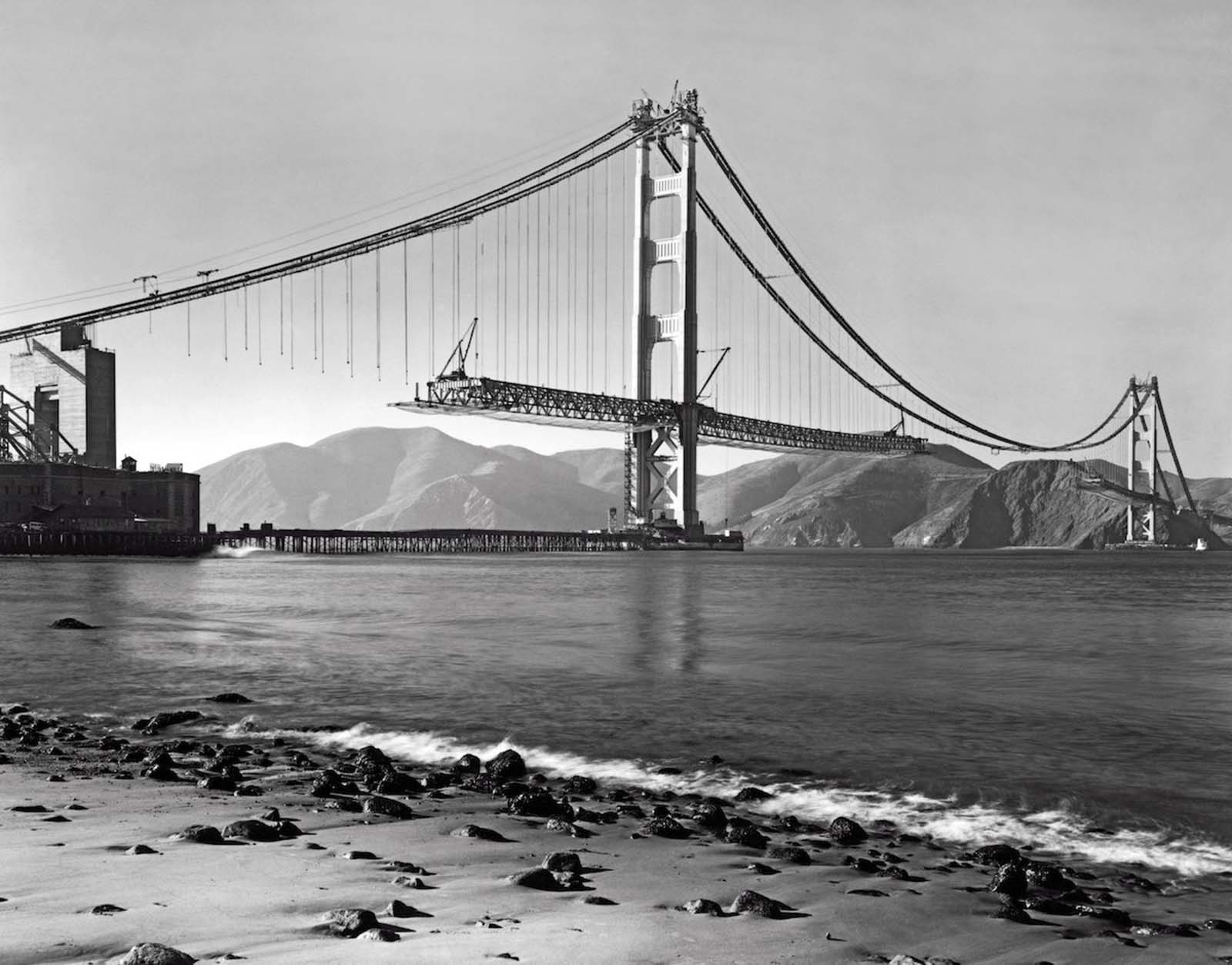
Building Bridges Across the Great Divide

http://www.rarehistoricalphotos.com

When construction began on the Golden Gate Bridge in 1933, skeptics said it couldn’t be done. The winds were too fierce. The fog too dense. The span too long. But through grit, innovation, and vision, workers united across trades and backgrounds to connect two shores that had long been separated. Against enormous odds, the bridge was completed in 1937 and still stands today. It is not just as an engineering marvel, but a symbol of what’s possible when people work together to span what divides them.

Our nation needs that kind of bridge-building again, not with steel and cables, but with courage, empathy, and dialogue.

We are living in a time when division feels more visible and more visceral than ever. Political debates become personal battles. Social media threads unravel into shouting matches. Families gather around dinner tables, uncertain about how to talk about the world without tearing each other apart.

We are, in many ways, a nation of silos, more comfortable in our echo chambers than in conversations that challenge us. But if we want to build a better future, we cannot afford to remain divided. The health of our democracy and the well-being of our families and communities depend on our ability to build bridges across the great divide.

A wise person once remarked, “Unity is not the absence of differences but the presence of mutual respect in the midst of them.”

Division is not new, but it has been amplified. Fueled by polarized media, ideological entrenchment, and the fast-paced spread of misinformation and disinformation, we’ve drifted into a mindset that sees those who disagree with us not as fellow citizens but as threats. That’s a dangerous place for any society to be.

As the late Senator John McCain once warned, “We weaken our greatness when we confuse patriotism with tribal rivalries that have sown resentment and hatred and violence across all the corners of the globe.” Civility isn’t cowardice. It’s a form of courage. And dialogue isn’t defeat; it’s a doorway to understanding.

After the Civil War, President Abraham Lincoln worked not only to reunite the nation politically but to heal it relationally. When criticized for showing kindness to Confederate sympathizers, Lincoln replied, “Do I not destroy my enemies when I make them my friends?” His commitment to unity, even amidst deep division, laid a foundation for national healing, one conversation and one gesture at a time

Recently, I read about a local church and a nearby civic group who hosted a community roundtable with people from across the political spectrum. The conversation was slow and awkward at times, but also honest, respectful, and hopeful. Participants left not with total agreement, but with mutual appreciation and a shared desire to keep the conversation going.

That’s where healing begins: not in uniformity, but in humility and respect.

A shared future requires shared values. Most of us, regardless of political leanings, want similar things: safe communities, healthy families, meaningful work, a stable economy, and a sense of dignity and belonging for all people. When we begin with the values we hold in common, we can face what divides us with greater grace.

To live in unity does not require uniformity of thought, perspective, or conviction. It does require that we build on our common values, even when we don’t share the exact same viewpoint. Rick Warren wisely reminds us, “We don’t have to see eye to eye to walk hand in hand.”

The work of bridge-building is not glamorous. It won’t trend on social media. But it is deeply necessary. It happens in quiet conversations, in community service projects, in choosing curiosity over caricature.

If we want to leave a better world for our children and grandchildren, we must begin not by shouting louder, but by listening deeper. We must become savvy builders who construct bridges, cultivate relationships, and collaborate as problem-solvers. And we must dare to believe that across even the widest divide, bridges can still be built.

Let us be those who build them.

(Barry Howard is a retired pastor who now serves as a leadership coach and consultant with the Center for Healthy Churches. He and his wife live on Cove Lake in northeast Alabama.)

Let the Sunshine In: Reflections on the Summer Solstice

Margaret Atwood writes, “This is the solstice, the still point of the sun, its cusp and midnight, the year’s threshold and unlocking, where the past lets go of and becomes the future; the place of caught breath, the door of a vanished house left ajar…”

A part of the mystery and majesty of God’s great big, wonderful world is the circuitous rhythm of the sun, moon, and stars suspended in space.

The summer solstice highlights the incredible cadence and beauty of God’s creation. It occurs when one of the earth’s poles has its maximum tilt toward the sun. It happens twice yearly, once in each hemisphere. Occurring between June 20 and 22 in the Northern Hemisphere, the summer solstice is the day with the longest daylight and a day that marks the official start of summer. This year, the summer solstice happens on June 20, which is the earliest occurrence since 1796.

This annual event invites us to reflect on the light, warmth, and example that nature provides, physically, emotionally, and spiritually.

Here are a few pastoral reflections on the summer solstice:

  • The rhythm of God’s creation is inspiring. The summer solstice is a testament to the meticulous design of God’s creation. The earth’s tilt and orbit around the sun result in varying amounts of daylight throughout the year, and on this day, we experience the maximum daylight. It’s a time to marvel at the natural world, from the vibrant blooms in our gardens to the extended daylight that allows us to enjoy God’s creation longer each day.
  • Summer is a season of light. Light is a powerful symbol in our faith. In John 8:12, Jesus says, “I am the light of the world. Whoever follows me will never walk in darkness, but will have the light of life.” As we enjoy the abundant sunlight of the summer solstice, we can also reflect on the spiritual light that Jesus brings into our lives. His light guides us, dispels the darkness, and brings clarity and hope.

  • Growth is necessary to sustain life. Summer is often a time of growth and renewal in the natural world. Gardens flourish, trees are full of leaves, and the earth teems with life. This season of growth can serve as a metaphor for our spiritual journey. Just as plants need sunlight, water, and nutrients to grow, we need the nourishment of God’s love, the refreshment of God’s presence, and the fellowship of God’s people to thrive in our faith.

  • Tempo is part of God’s design. The summer solstice also provides us with opportunities to slow down and reflect. Longer days mean more time to enjoy the beauty of creation, spend time with loved ones, and engage in activities that rejuvenate our spirits. It’s a wonderful time to connect with God through outdoor activities, a scenic drive, or simply sitting in nature and meditating on God’s goodness and grace.

  • We are called to be joyful and responsible stewards of creation. As we appreciate the beauty and abundance of summer, let us also be reminded of our role as caretakers of God’s world. Genesis 2:15 tells us, “The Lord God took the man and put him in the Garden of Eden to work it and take care of it.” We are called to care for the earth, ensuring that its resources are preserved and its beauty is maintained for future generations.

The summer solstice showcases the divine rhythm and meticulous design of God’s world. And the extended days of summer invite us to slow down and savor the beauty around us.

It’s a fitting season to reflect on God’s goodness and grace, and to let the sunshine in.

(Barry Howard serves as the pastor of the Church at Wieuca in North Atlanta. He also serves as a leadership coach and columnist with the Center for Healthy Churches. You can follow him on Twitter at @BarrysNotes.)