
Dancing with the Mystery: 5 Reflections on the Trinity

C.S. Lewis proposed, “In Christianity God is not a static thing … but a dynamic, pulsating activity, a life, almost a kind of drama — almost, if you will not think me irreverent, a kind of dance.”

Every year, the first Sunday after Pentecost invites Christians to linger over the greatest known unknown of the faith: God who is Father, Son, and Holy Spirit. In the church of my upbringing, as we affirmed the holiness of God, we sang, “God in three persons, blessed Trinity!”

1. The word Trinity never appears in Scripture, yet the biblical story keeps naming a tri-personal God who creates, redeems, and indwells the world. The pattern of God’s threefold nature emerges from the core of the biblical message:

  • At creation, God speaks the world into being, the Spirit hovers over the waters, and together they bring life (Gen 1:1–2, 26).
  • At Jesus’ baptism, the heavens open, the Father speaks, the Spirit descends, and the Son stands in the water—an unmistakable picture of divine community (Matt 3:16–17).
  • At the Great Commission, Jesus sends his followers out in the name—not names—of the Father, Son, and Holy Spirit (Matt 28:19).

So while the term came later, the concept of a triune God was there from the beginning.

2. From the beginning, God is introduced as intra-communal in nature. Genesis does more than recount cosmic origins; it unveils a God who is relationship itself. Before mountains were sculpted or stars ignited, Father, Son, and Spirit shared eternal fellowship. Theologian Cornelius Plantinga once put it this way: “The persons within God exalt each other, commune with each other, and defer to one another. Each harbors the others at the center of their being.” In other words, God is a perfect community of mutual love and unity.

3. Metaphors give us a point of reference for the Trinity but are insufficient to fully capture the essence of God’s being. Stories help us speak about the unspeakable, yet every image has limits. Saint Patrick, so legend says, plucked a shamrock to illustrate “three in one” for the Irish clans. It was a winsome start, but the plant cannot convey the depth of divine personhood. Water (steam, liquid, ice) risks modalism; the sun (star, light, heat) flirts with subordinationism. Good metaphors open doors; they are not blueprints of the mystery.

4. The Trinity is best contemplated in the rich diversity of perspectives, not a singularly authoritative definition. Western theology tends to speak of one essence in three persons (think Augustine and the Athanasian Creed); Eastern writers prefer the word perichoresis—an eternal, mutual inter-dwelling. Both vocabularies circle the same fire from different sides.

5. The persons of the Trinity have different roles but one mission. Since the notion of Trinity refers to the intra-communal nature of God, the roles and objectives assumed by the members of the Trinity do not counter of contradict the other. Within the Trinity, the Father creates, the Son redeems, and the Spirit empowers, but they are never in conflict. Every movement of God throughout history flows from one divine source, with each person of the Trinity working in perfect harmony toward the restoration of all things.

In his book, Thinking About God: An Introduction to Christian Theology, Fisher Humphreys concludes his chapter on the Trinity with this summary:

In some wonderful and mysterious way, the one, true, living God is eternally Father, Son, and Holy Spirit. These Three Persons live a life of knowing and being known, of speaking and listening, of trusting and being trusted, of loving and being loved. As astonishing as it may seem, we human beings are called to share in their eternal life. We have already begun to share in the love of the Father, Son, and Spirit, and we will be enfolded in their life and love throughout eternity.

Trinity Sunday is about recognizing that the deepest truths of God are relational, mysterious, and gloriously beyond containment. The Trinity is not a diagram to be drawn, but a mystery to be received.

Let us dance with that mystery, even though we cannot fully comprehend the choreography.

(Barry Howard is a retired pastor who now serves as a leadership coach and consultant with the Center for Healthy Churches. He and his wife live on Cove Lake in northeast Alabama.)
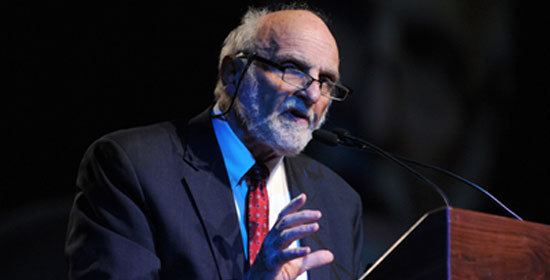
Walter Brueggemann Challenged My Assumptions and Deepened My Faith: Reflections from a Former Student

On June 5, 2025, the world lost one of its most provocative and prophetic theological voices. Walter Brueggemann, Old Testament scholar, preacher, teacher, and esteemed theologian, passed away at the age of 92. His death leaves a significant void in the landscape of biblical scholarship and the life of the Church, but his influence will resonate for generations to come.

My own journey with Brueggemann began in a seminary classroom—not at Columbia Seminary, but at the New Orleans Baptist Theological Seminary in a course on Preaching from the Psalms taught by Dr. Harold Bryson. One of the textbooks for the course was Israel’s Praise, Brueggemann’s exposition on the theological weight of worship. That course was the first of many times Walter would challenge my assumptions, stir my imagination, and deepen my faith.

A few years later in 1995, I ventured outside of the Baptist world and enrolled in the Doctor of Ministry program at Columbia Theological Seminary for one reason: I wanted to study with Brueggemann. I completed the program in 1998. Several other Baptist minister friends also pursued their postgraduate work at Columbia as well, including John Pierce, Elizabeth Thompson, Greg DeLoach, Ron Wilson, Courtney Krueger, and Don Gordon. Each of us was drawn to this doctoral program by the gravitational pull of Walter’s prophetic intellect.

My first class with Brueggemann was listed on the course description “Old Dangerous Texts for New Dangerous Times.” His lecture notes from this course became the foundation for his book, “Theology of the Old Testament: Testimony, Dispute, Advocacy.”

Walter had a warm and humorous demeanor outside the classroom. Occasionally after class, my friend Ron Wilson and I, who Brueggemann fondly referred to as his little Baptist friends, would go to a local pub, grab a bite, and watch Braves baseball while unpacking the theological freight of the day’s lectures. Walter could be spotted at a baseball game now and then, and later would share stories and analogies that were conceived at the ballpark.

Years after my graduation, I invited Walter to lead a pastor’s workshop at First Baptist Church of Pensacola, where I was serving at the time. He was gracious and kind, not only in person but in follow-up. After the event, he sent me a brief yet meaningful note: “Thanks for the invitation. It was great to be in your shop.”

When I published my first book—a collection of call stories from a rich variety of pastors—Walter emailed me an endorsement, specifically emphasizing, “The recovery of a notion of call is urgent among us and your book should help that recovery along.” His words gave affirmation to my work and underscored his constant encouragement of emerging voices in ministry.

Walter had a great appreciation for our Baptist heritage. On one occasion in class, he remarked, “It’s good to have the Baptists here with us. None of us would be here if it were not for the Baptists. They were the freedom fighters who contended for religious freedom for all faith groups because they believed ‘if one of us loses our religious freedom, we all lose our religious freedom.’”

Even into his nineties, Walter remained intellectually vibrant, curious, and connected. In our last correspondence on his 91st birthday in 2024, he responded:  “Dear Barry: I am glad to hear from you and thanks for your kind words. I hope all is well for you. It’s good work to be a bridge builder. I just turned 91 and am hanging in and taking stock. With much appreciation, Walter.”

Though deeply academic, his writing was marked by poetic rhythm and prophetic urgency. His sermons and lectures could unsettle the comfortable and comfort the unsettled, sometimes in the same sentence.

Walter loved the scriptures and encouraged his students to “live in the tension of the text.” When addressing various questions about biblical criticism or historicity, he would often quip, “The text is what we have. Deal with it!” Whether he was teaching at Columbia Theological Seminary or speaking to a room full of pastors and leaders, Brueggemann courageously addressed the juxtaposition of scripture and culture head-on.

While I’m grateful for all of Walter’s writing—from his groundbreaking work on the prophets and Psalms to his cultural critique and homiletical insights—I’m especially thankful for his prayers. In Awed to Heaven, Rooted in Earth and Prayers of a Privileged People, his words become devotional guideposts, grounding us in faith while drawing us into action. One line from his prayer, “No More Sinking Sand,” seems especially fitting as we honor his life and witness:

          God of heavens, Lord of earth,
          hear our resolve, heal our unresolve,
          that we may finish in sure trust and in glad obedience.
          We already know what to do by our careful pondering of you. Amen.

Walter Brueggemann completed his journey in “sure trust” and “glad obedience.” Now it is up to us—those who studied with him, read him, or were influenced by his prophetic voice—to keep pondering, to continue proclaiming, and to work toward the kind of world Brueggemann’s theology dared us to imagine.

(Barry Howard is a retired pastor who now serves as a leadership coach and consultant with the Center for Healthy Churches. He and his wife live on Cove Lake in northeast Alabama.)