
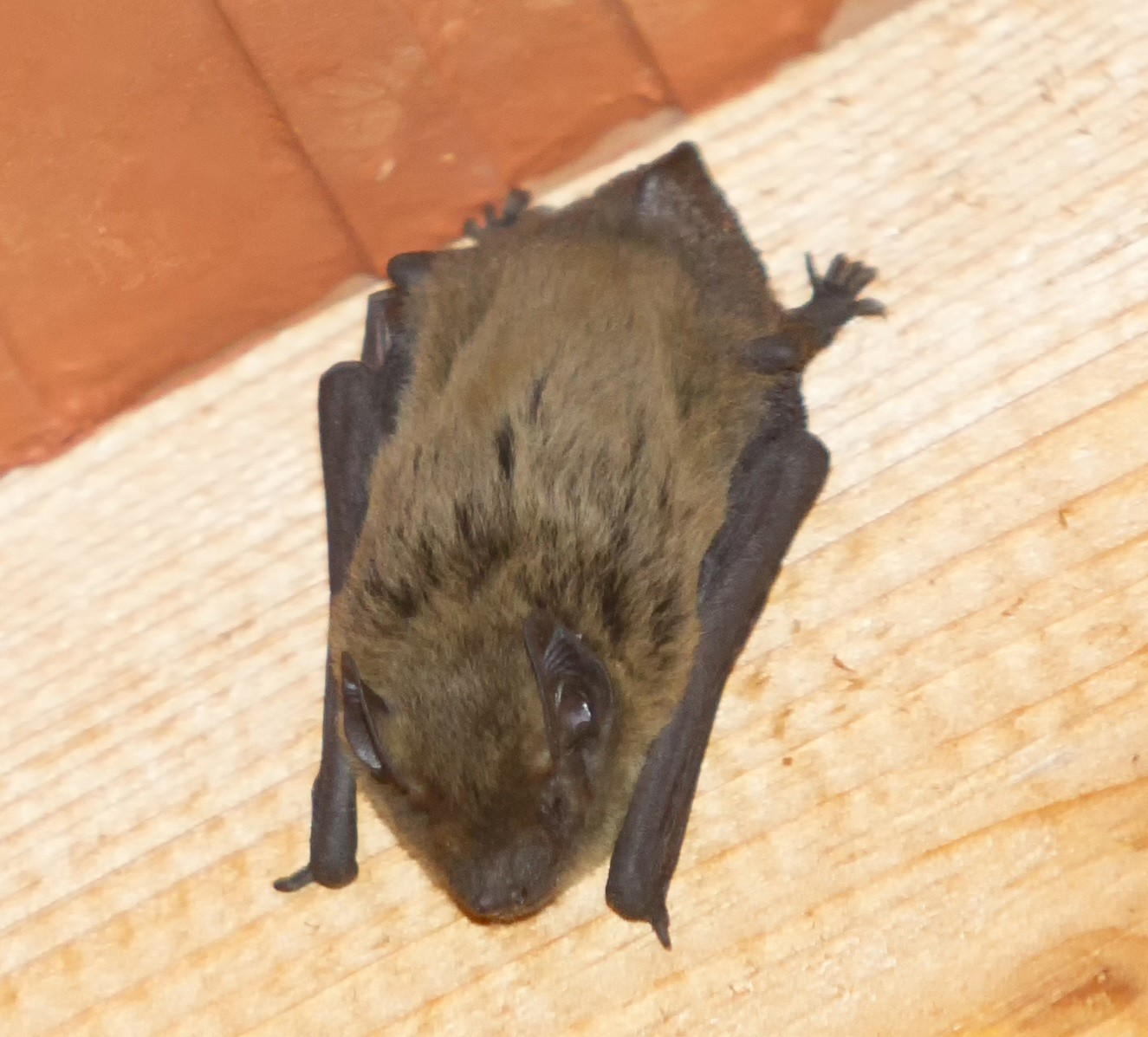
Just Hanging Around: The Brown Bat on Our Front Porch

(Stock photo)
A couple of months ago, a family member noticed a brown bat hanging on our front porch. Since then, our new friend has made frequent appearances. But over the past week, the bat has been there almost every afternoon, resting quietly in the shade just above the door. At first, we weren’t sure what to make of this tiny visitor. Was it lost? Was it dangerous? Or was it simply taking a break from its nightly rounds?

Curiosity soon turned into fascination. So, I did what any curious person would do — I looked it up. That’s when I took a deeper dive into chiropterology — the scientific study of bats. It comes from the Greek words cheir (hand) and pteron (wing), meaning “hand-winged.” And it’s an apt description. A bat’s wing is really a modified hand, with long, finger-like bones stretched out under a thin layer of skin. The more I read, the more amazed I became at these misunderstood creatures.

The brown bat on our porch, I learned, is probably an Eastern small brown bat, a species common throughout much of North America. Far from being pests, these bats are actually helpful neighbors. Each night, a single brown bat can eat hundreds of mosquitoes, moths, and beetles, serving as nature’s pest control service, free of charge.

In the 1920s, the Texas farmer Charles Campbell discovered how bats could protect crops from insect infestations. He built the first “bat tower,” inviting bats to roost nearby so they could feast on pests at night. His experiment was successful, and ever since, people have come to view bats not as villains of the night, but as quiet allies in the balance of nature.

Today, bats are even finding a role in technology. Modern scientists study how bats navigate with sonar to improve drone guidance systems and medical imaging. What once seemed mysterious is now inspiring innovation, a reminder that creation itself holds lessons awaiting our discovery.

Still, bats tend to get a bad reputation. They’re often linked with darkness, caves, and spooky stories, unfair associations that miss their real purpose. Watching our little brown bat tuck itself into the same quiet apex of our porch ceiling each afternoon has reminded me that even the most misunderstood creatures have a place in God’s plan.

As one biologist observed, “To study bats is to see beauty where most see only shadows.” God’s creation is full of surprises, and sometimes, the reminder of divine creativity is right at your door.

So now, when I step out on the porch and look up, I’m grateful for our tiny tenant. Bats are stealthy creatures, yet they remind us that there’s fascination in things we often overlook, and purpose in things we often misunderstand, even the eerie things.

Rather than wishing our bat would stay away, we want our friend to hang around a while and feast on our lakeside mosquito population so that they do not feast on us.
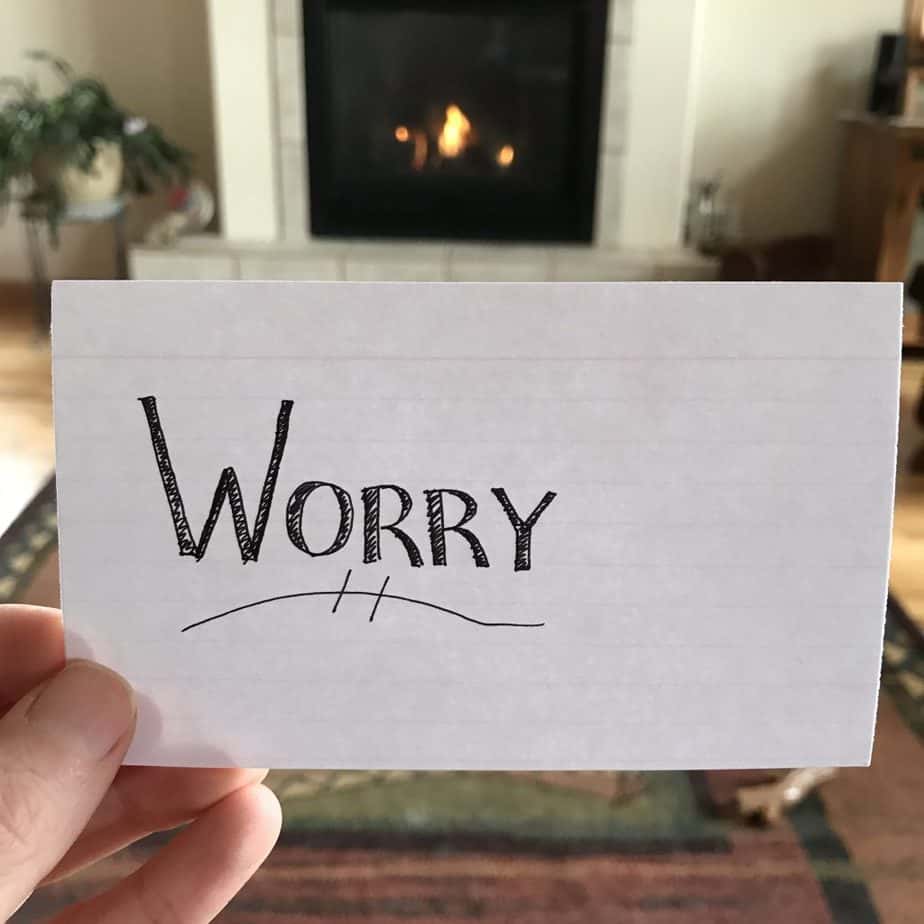
I Think I Will Give Up Worry for Lent!

(Revised from 2020)

This year, I think I’ll give up worry for Lent.

Yesterday, I watched news footage from the Fat Tuesday celebrations in New Orleans—a day when many indulge in gluttonous feasting and revelry. Today is Ash Wednesday, marking the beginning of the season of Lent, a time of intentional preparation for Easter. During this sacred season, believers focus on self-examination, reflection, and repentance.

Traditionally, Christians choose to give up something significant to them during Lent. I have friends who forego their favorite indulgences—chocolate, coffee, sugar, or soft drinks—as a form of spiritual discipline. But since I seem to have a genetic predisposition to worry, I think I’ll try giving that up instead—for at least 40 days.

The Burden of Worry

I don’t actually like to worry. In fact, I know it’s not constructive. Worry is like spam or junk mail—it clutters my mind, taking up valuable space needed for creative thinking, planning, visioning, and problem-solving. I function far better when I’m not weighed down by excessive worry.

And yet, worry is persistent. Each time I try to kick it out the front door of my mind, it sneaks around and slips back in through the back.

Years ago, a friend of mine had a giant poster mounted above his desk that read:

“Don’t tell me worry doesn’t help. Half the things I worry about never happen.”

Erma Bombeck humorously captured the futility of worry when she said, “Worry is like a rocking chair: it gives you something to do but never gets you anywhere.”

An Inherited Habit?

I sometimes wonder if worry can be inherited. I watched the wear and tear of worry in my parents and grandparents and have noticed that many of their offspring—including me—struggle with this same mental distraction.

And I’m not alone. Over coffee, I’ve listened to CEOs, ministers, business owners, attorneys, physicians, and educators share their struggles with worry. It’s no surprise—there’s always something to be anxious about:

  • Our businesses
  • Our families
  • Our investments
  • Terrorism
  • The economy
  • Political turmoil
  • Wars and rumors of wars
  • Friends losing their jobs
  • Health concerns
  • The future…

The list seems endless.

A Better Way

Perhaps I’m not the only one who should give up worry for Lent. Since this is a season of intentional preparation for Easter, maybe we should all listen again to the words of Jesus:

“Therefore I tell you, do not worry about your life, what you will eat or drink; or about your body, what you will wear. Is not life more important than food, and the body more important than clothes? Look at the birds of the air; they do not sow or reap or store away in barns, and yet your heavenly Father feeds them. Are you not much more valuable than they? Who of you by worrying can add a single hour to his life?”Matthew 6:25-27

As we begin our Lenten journey, I’m trying to give up worry for at least 40 days. Maybe—hopefully—even longer.

Would you like to join me?

(Barry Howard is a retired pastor who currently serves as a leadership coach and columnist for the Center for Healthy Churches. He and his wife reside on Cove Lake in northeast Alabama.)