
Many years ago, Charles Haddon Spurgeon, the influential pastor from England, preached, “Don’t rely too much on labels, for too often they are fables.”
These days we are wise to remember his warning. Labels are often misleading.
My wife, a true child of the South, loves sweet tea. I, on the other hand, prefer mine unsweetened with a slice of lime or lemon.
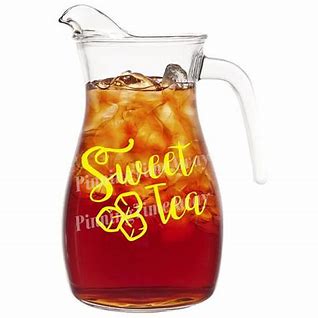
At least twice recently, while dining out, our server refilled my wife’s sweet tea glass with unsweetened tea. In both cases, when we pointed it out, the server confidently assured us that the label on the pitcher clearly said “sweet tea.” We suggested that somewhere along the way someone had mistakenly poured the wrong tea into the labeled pitcher.
Both times, the servers were visibly surprised. They had placed complete trust in the label without ever verifying the contents.
In the days that followed, I couldn’t shake that moment. I started noticing how often things are mislabeled—and even more concerning, how frequently people assign misleading or limiting labels to others.
A few years ago as we were preparing to move, we spent weeks sorting, decluttering, and packing. As I was cleaning out a junk box, I came across an old Dymo Label Maker—the kind that embosses letters onto colored plastic tape. I hadn’t used one in years, but just holding it brought back memories of labeling school lunch boxes, storage bins, and light switches.
That little device got me thinking about the way we use labels, not just on objects, but on people. Labels serve a purpose when they help us organize or identify things. But when applied to people, they can be limiting, misleading, and even harmful.
If we’re not careful, we can end up trusting the labels we’ve assigned—or received—without ever questioning whether they truly reflect what’s inside. In the current environment, labels can prompt us to dismiss or oppose certain people simply because of the tag we or others have assigned to them.
Here are a few best practices for using labels—both from my Dymo Label Maker and from life:
- Label things, not people. As author Philip Pullman once said, “People are too complicated to have simple labels.” No single word or phrase can fully capture someone’s identity, character, or journey.
- Only label your own stuff. When packing, we didn’t let the moving company decide which box was labeled “books” and which one was marked “kitchenware.” In the same way, we should be cautious about the labels others assign. People should define their own identities, rather than having them imposed by someone else.
- The contents define the label, not the other way around. Just because a pitcher is labeled “sweet tea” doesn’t mean it contains sweet tea. Likewise, a person’s true character, values, and actions should be what defines them—not the assumptions of others.
- Old labels don’t always apply. Some of our moving boxes were marked “Christmas decorations” from a previous move, but we repurposed them to store dishes. In life, people grow, change, and evolve. The labels of the past may no longer be accurate.
- Labels don’t always stick. The adhesive on most labels is temporary. Likewise, the labels we give or receive—whether negative or positive—don’t have to define us forever.
- Labels can be used to intentionally mislead. If you own valuable jewelry, storing it in a box labeled “Expensive Jewelry” isn’t a wise move. You may choose to write “Hand-me-downs” or such to throw off any robbers or thieves. In a more manipulative way, political, religious, and social labels can be used to misrepresent or mislead others—sometimes intentionally, sometimes carelessly. Some ruthless leaders attach labels to opponents as a way of attacking them, a deceitful ploy to keep the public from knowing the treasure inside.
- Jesus defied labels, and maybe we should too. Throughout his ministry, Jesus refused to be confined by political, cultural, or religious labels. He welcomed sinners, dined with tax collectors, and challenged the status quo. Instead of trying to fit into a particular category, perhaps our goal should be to live so faithfully that our actions speak for themselves.
In a polarized culture, those from both extremes tend to label others according to their own biases rather than to reflect the character of the one being labeled. Labeling others is often an expression of our naivete. Adam Jones cautions, “I think putting labels on people is just an easy way of marketing something you don’t understand.”
In our house, after some debate, we decided to part ways with our old Dymo Label Maker. In this season of life, we’re striving to use fewer labels, not more of them.
And maybe, just maybe, the world would be a better place if we all used fewer labels—and handled the ones we do apply with extreme care
(Barry Howard is a retired pastor who currently serves as a leadership coach and columnist for the Center for Healthy Churches. He and his wife live on Cove Creek in northeast Alabama.)
 Cove Creek Reflections
This is excellent! Timely for me, as I’ve been working on not labeling relationships or situations. Interestingly, Tripp, who has been labeled his entire life, doesn’t label others. I’m determined to prove you can teach an old dog new tricks!