
Fire up the grill. Churn the homemade ice cream. Enjoy the fireworks as you hum a little John Philip Sousa. It’s the Fourth of July weekend.
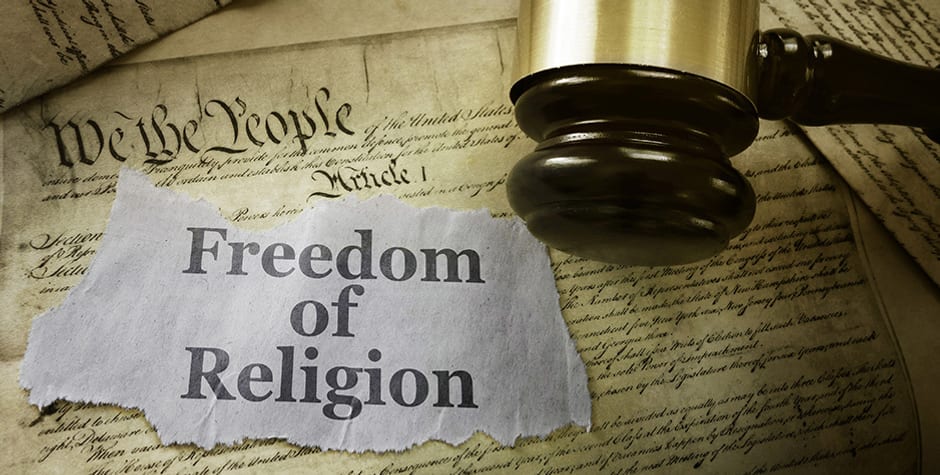
For many, this holiday brings the joy of parades, cookouts, and patriotic music. But amid the celebration, it’s worth remembering that Independence Day is about more than national pride—it’s about preserving and practicing the freedoms that define us. Among the most vital—and perhaps most often overlooked—is religious liberty.
More Than a Constitutional Clause
Religious liberty means we are free to worship without fear of persecution, and equally free from government coercion into religious activity. This freedom protects our right to attend the church of our choice—or no church at all. And it also ensures that faith remains a matter of personal conscience, not political control.
The founders of our nation recognized the harm caused when religion and government become entangled. They established, with care and foresight, a “wall of separation” between church and state—not to marginalize faith, but to guard its integrity.
As Isaac Backus, a prominent Baptist minister during the American Revolution, once wrote: “When Church and State are separate, the effects are happy… but where they have been confounded together, no tongue nor pen can fully describe the mischiefs that have ensued.”
Worship Is a Freedom Worth Using
While many of us will mark Independence Day with fireworks and festivities, I hope we’ll also celebrate by exercising the freedom that sets us apart: the freedom to worship.
Our Baptist ancestors were instrumental in shaping the First Amendment, not only to protect their own practices but to advocate for the religious freedom of all. They believed—deeply and rightly—that no government should compel belief or interfere with the exercise of faith. That principle still holds today.
“Congress shall make no law respecting an establishment of religion, or prohibiting the free exercise thereof…” –First Amendment to the U.S. Constitution
But freedom requires stewardship. It’s not just a right to defend, but a gift to live out.
A Global Perspective
As we gather for worship this weekend, may we remember the millions around the world who do so in secret, risking their safety for the sake of their convictions. May their courage remind us never to take our freedom for granted.
In my years as a pastor, I’ve seen how worship shapes lives—it forms character, builds community, and fuels compassion. When we gather to pray, sing, listen, and serve, we become more than attendees—we become active participants in the liberty we’ve been given.
That’s why Hebrews 10:25 challenges us: “Some people have gotten out of the habit of meeting for worship, but we must not do that. We should keep on encouraging each other…” (CEV)
To neglect worship is to risk trivializing the hard-fought right to gather without fear or restriction.
More Than a Celebration—A Commitment
So yes—enjoy your celebration. Wave the flag. Cheer the parade. Light the fireworks. But let’s also take time to reflect. Give thanks for the freedoms we enjoy. Pray for those who are still waiting to worship freely. And most importantly, exercise your freedom to worship—not just this weekend, but consistently, gratefully, and respectfully.
Because if even one group loses their right to worship, religious liberty is in jeopardy for us all.
(Barry Howard is a retired pastor who now serves as a leadership coach and consultant with the Center for Healthy Churches. He and his wife live on Cove Lake in northeast Alabama.)
(This is an updated column from 2016.)
 Cove Creek Reflections