7 Ways AI Can Assist Pastors in Their Work

A recent discussion with young professionals in our community turned to artificial intelligence and I was asked, “What do you think of AI and how are you using it in your work as a pastor?” I had not given much thought to how pastors can benefit from the resources of AI, so I decided to explore that question more intentionally.

Global leader in AI, Andrew Ng, insists, “It is difficult to think of a major industry that AI will not transform. This includes healthcare, education, transportation, retail, communications, and agriculture. There are surprisingly clear paths for AI to make a significant difference in all of these industries.”

AI is becoming an integral part of today’s world, transforming various industries and revolutionizing the way we live and work. While AI is often associated with technological advancements in business and healthcare, AI has also started to make its mark in religious communities, offering new possibilities and opportunities for pastors to enhance their ministry. Primarily, I am interested in exploring the ways in which AI can assist pastors and contribute to their vital role in guiding and supporting their congregations.

Here are 7 ways AI pastors may utilize AI to enrich their ministry:

  • Sermon Preparation: Crafting inspiring and relevant sermons that resonate with the congregation’s needs and interests is one of the most crucial aspects of pastoral ministry. AI-powered tools can aid pastors in researching and organizing relevant content, scriptures, and historical context. With the assistance of AI pastors can access vast databases, theological texts, and commentaries to enhance their biblical knowledge and ensure reliable interpretations. AI can even help in generating sermon outlines based on chosen themes or biblical passages, providing valuable insights and fresh perspectives. AI shouldn’t prepare the sermon for you, but it can be a valuable tool when used appropriately.

  • Writing and Editing: In addition to sermon preparation, most pastors write newsletter articles, blog columns, devotionals, reference letters, emails, and social media posts. AI can assist in generating ideas, doing research on specific topics, providing templates for correspondence, finding relevant illustrations, and proofreading your work. When using AI to generate ideas and assist with proofreading, no citation or attribution is necessary. However, when using AI to generate the bulk of your content, a citation is appropriate. The MLA Handbook now includes a way to cite an AI-generated source. When using AI to contribute to content in one of my columns, I include an endnote that says, “This article has been written with the assistance of AI.”

  • Pastoral Care and Counseling: AI has the potential to significantly enhance the provision of pastoral care and support services. Virtual assistants, driven by AI algorithms, can quickly locate and generate resources to assist the pastor in ministering to those seeking spiritual guidance or counseling. Such resources may include scriptural references, prayers, counseling services, healthcare referrals, and grief support. These resources can be made accessible even when the minister is not available.
  • Community Engagement and Outreach: AI can play a crucial role in connecting pastors with their congregations and facilitating community engagement. Social media monitoring tools can help pastors understand the concerns, interests, and questions of their community members, enabling them to tailor their messages and programs to address these needs effectively.

  • Data Analytics for Decision-Making: AI’s ability to process and analyze vast amounts of data can assist pastors in making informed decisions and strategic planning. By examining demographic information, attendance records, and engagement metrics, pastors can gain insights into the needs and preferences of their congregation. This data-driven approach allows pastors to adapt their ministry, identify areas that require attention, and implement strategies that align with their community’s evolving dynamics.
  • Language Translation and Interpretation: In an increasingly multicultural world, pastors often face the challenge of delivering messages to congregants with different language backgrounds. AI-powered language translation tools can assist pastors in presenting their sermons, written or oral, in multiple languages. These translation tools can also help pastors communicate effectively with non-English-speaking individuals during counseling sessions or hospital visits, ensuring that no one is deprived of pastoral care due to language limitations. For example, I am currently providing a printed translation of my sermons each week for a family our church is hosting from Ukraine.
  • Administrative assistance: Employing AI to accomplish routine administrative tasks can free up a pastor’s time to focus on more meaningful interactions and activities within their communities. In some churches, whether due to budget cuts or personnel realignment, administrative support has shifted from administrative staff members to the minister. Having a virtual assistant can enable a pastor to minimize administrative tasks and major on ministry initiatives.

As with any technology, including the internet, smart devices, and social media, AI has positive and negative potential, according to how the resource is used. AI offers the capacity to increase the effectiveness of pastors as spiritual leaders and caregivers. By harnessing the power of AI, pastors can enhance their sermon preparation, improve their writing skills, provide personalized pastoral care, engage with their communities effectively, make data-driven decisions, and overcome language barriers. It is essential for pastors and religious leaders to embrace technology responsibly and integrate AI tools thoughtfully into their ministries, ensuring that the human connection, spiritual insight, and relational empathy remain at the core of their pastoral work.

Tim Cook, CEO of Apple, cautions, “What all of us have to do is to make sure we are using AI in a way that is for the benefit of humanity, not to the detriment of humanity.”

As pastors, what we want to do is to make sure we are using AI for the enrichment of the church and for advancement of God’s mission in the world.

(Barry Howard serves as the pastor of the Church at Wieuca in North Atlanta. He also serves as a leadership consultant and columnist for the Center for Healthy Churches. He and his wife, Amanda, currently reside in Brookhaven, Georgia.)

* This column first appeared in Nurturing Faith Journal.

Honest Conversations About Grief: Navigating the Journey of Loss

Grief is an inevitable part of the human experience, an emotional upheaval that comes hand in hand with loss. Whether it be the passing of a loved one, the end of a cherished relationship, or even the loss of a job or a dream, grief manifests in various forms throughout our lives. Orson Scott Card contends, “Life is full of grief, to exactly the degree we allow ourselves to love other people.”

Despite being a universal emotion, it is often one of the most difficult to discuss openly. In a society that tends to avoid uncomfortable topics, having honest conversations about grief becomes essential in fostering healing and understanding for those who are navigating through the depths of sorrow.

Grief is a multifaceted and complex emotion. It can be unpredictable, chaotic, and different for each individual. Therefore, the grieving process varies based on personality and circumstance. Some may experience intense emotions immediately, while others may take longer to process their feelings. There is no timetable for healing, and individuals should feel free to grieve at their own pace without judgment or pressure.

Call on the resources of your faith and faith community. Although faith does not exempt us from grief, faith does equip us to grieve in healthy ways. Grief is tremendously tough for those who are grounded in their faith. Grief can be devastating to those with no faith foundation and no community of support.

Acknowledge your grief. Do not keep it bottled up deep inside. Society has ingrained the idea that grieving should be done privately, behind closed doors, making it challenging for those experiencing grief to share their pain with others. This lack of open dialogue can lead to isolation, feelings of loneliness, and a reluctance to seek support. It is crucial to encourage open conversations about grief and break the silence surrounding it. Richard Rohr advises, “As any good therapist will tell you, you cannot heal what you do not acknowledge, and what you do not consciously acknowledge will remain in control of you from within, festering and destroying you and those around you.”

Empathy and respect are essential. To engage in honest conversations about grief, empathy is the key. Understanding and acknowledging the pain of others without judgment allows for a deeper connection and a more supportive environment. Grief can be overwhelming, and simply having someone listen and validate one’s feelings can make a significant difference in the healing process.

Empathy also involves avoiding clichés and platitudes, as they can unintentionally invalidate the grieving person’s experience. Phrases like “time heals all wounds” or “they are in a better place” may be well-intentioned, but they can be dismissive of the individual’s pain. Instead, offering a listening ear, a shoulder to cry on, and a simple “I’m here for you” can provide immeasurable comfort.

Provide grace and space for others to grieve. This is one of the greatest gifts you can give to a grieving friend or family member. Honest conversations about grief create safe spaces for people to express their feelings without fear of judgment or criticism. It encourages active listening and genuine engagement, enabling the bereaved to share their stories openly. Such safe spaces can be formal, like support groups or counseling sessions, or informal, among close friends and family.

Help destigmatize grief. The societal expectation to “stay strong” and “move on” often leads to the stigmatization of grief. Honest conversations about grief help break down these barriers and create a supportive environment for those who are suffering. When people feel comfortable sharing their experiences, they find solace in knowing they are not alone, reducing the burden of their grief.

Encourage professional help when needed. While conversations with friends and family are essential, some individuals may require professional help to process their grief fully. Honest discussions about grief can also include gentle encouragement for seeking counseling or therapy. Trained professionals can offer specialized support and tools to navigate the challenging terrain of grief,

Offer support, not advice or explanation. Supporting someone going through grief is not about trying to fix their pain; rather, it is about being a compassionate presence. Here are some ways to be supportive:

  1. Be present: Offer your presence and companionship without judgment. Sometimes, a silent presence can be more comforting than words.
  2. Listen actively: Give the bereaved person space to talk about their feelings, memories, and experiences. Listen attentively and avoid interrupting or imposing your own opinions.
  3. Validate their emotions: Let them know that their feelings are valid and that it is okay to grieve.
  4. Offer practical help: Assist with daily tasks, such as preparing meals or running errands, as grief can be emotionally and physically exhausting.
  5. Avoid imposing timelines: Not all friends and family members grieve at the same pace. Recognize that grief is a personal journey and allow the individual to process their emotions at their own pace.

Honest conversations about grief are essential for promoting healing and understanding among those experiencing loss. Breaking the silence and providing a safe space for individuals to share their pain can help dispel the stigma around grieving and foster a supportive community. Empathy and active listening play a crucial role in supporting the bereaved during their journey through grief. By embracing the reality of grief and offering a compassionate presence, we can help those who are grieving feel seen, heard, and supported as they navigate the complexities of loss.

Sarah Bessen suggests, “Grief can be a burden, but also an anchor. You get used to the weight, how it holds you in place.” That is the goal of healthy grief, to gradually lead us from the emotional tumult toward a place of stability.

(Barry Howard serves as the pastor at the Church at Wieuca in North Atlanta. He also serves as a leadership coach and columnist with the Center for Healthy Churches. He and his wife, Amanda, currently live in Brookhaven, Georgia.)

12 Things to Remember When Aiming for Healthy Church Growth: Wise Words from Carey Nieuwhof

I read a lot of different authors, especially those who speak truth and wisdom about the challenges and opportunities facing churches. Robert Creech released a book in 2019 about Family Systems and Congregational Life. One of my favorites is Philip Yancey’s book, Church: Why Bother? Several years ago Bill Hybels released a book titled, Just Walk Across the Room, about creative ways to build connections. I was glad to contribute to the recent Center for Healthy Churches book which addresses the question, What Is a Healthy Church? Before her passing, journalist Phyllis Tickle gifted us with The Great Emergence: How Christianity Is Changing and Why. And I continue to be inspired by Bishop Michael Curry’s book, Crazy Christians: A Call to Follow Jesus.

Recently I read Carey Nieuwhof’s book Lasting Impact: 7 Powerful Conversations That Will Help Your Church Grow. Nieuwhof’s message is painful, helpful, and encouraging. At times it almost seems like Nieuwhof has been reading my mail, although the truths he shares are applicable to most congregations.

Here are 12 excerpts from Nieuwhof’s recent books that can help us navigate the challenges and opportunities knocking at our church door:

  • Remember, it’s not your programs or methods as a church that are sacred; it’s your mission.
  • We’re leading people to Jesus, not to ourselves or to our awesome church. Keeping the focus on Christ ensures that genuine life change happens and lasts.
  • Churches in decline often think in terms of what they can get from people—money, time, growth, etc. Churches that will make an impact on the future will be passionate about what they want for people—financial balance, generosity, the joy of serving, healthier families, and of course, Christ at the center of everyone’s life.
  • The staggering truth is that 40 to 50 percent of students who are active in the church in their senior year of high school will drift away from the church as young adults. Did you catch that? Not 40 to 50 percent of kids, but 40 to 50 percent of kids who are active in their final year of high school will walk away.
  • If your church is a museum of 1950 or even 2012, the likelihood of reaching the next generation diminishes with every passing day.
  • Many individual congregations and some entire denominations won’t survive the next ten years. The difference between those who make it and those who don’t will be the difference between those who cling to the mission and those who cling to the model. When you go through a cultural shift as deep as the present shift, the mission survives but the model changes.
  • People need to be reached. The love of Jesus was designed to spill far beyond the walls of the church, not be contained within them.
  • Talk to people you disagree with, not about them.
  • A B-plus plan brilliantly executed beats an A-plus plan that never gets implemented, every single time.
  • If the change inside the church isn’t equal to or greater than the change outside our walls, greater irrelevance is inevitable.
  • The challenge is not to resist change but to learn how to thrive in the midst of it.
  • The remarkable part of Christianity is not that we have a Savior who came to deliver us but that we have a Savior who sees us for who we really are and loves us anyway.

As God continues to do a “new thing” in our churches, let us treasure the past yet embrace the future. Let us be faithful and flexible. Let us be prepared to change our methods of ministry to accomplish our mission. And let us always prioritize God’s plan more than our preferences.

(Barry Howard serves as pastor of the Church at Wieuca in North Atlanta. He also serves as a leadership coach and columnist for the Center for Healthy Churches. He and his wife Amanda currently reside in Brookhaven, Georgia.)

Job Description of a Church Member: 12 Ways to Enrich and Energize Your Spiritual Community

These days many have departed or disconnected from the local church. Some are burned out and some have just been burned by the messiness created by mean-spirited or misdirected church people. However, many other members and non-members are thinking in fresh ways about the positive role of the church as they address their need for spiritual community and their desire to serve in ways that make a difference.

Why connect with church in the first place? Popular author Philip Yancey, who readily confesses his own struggles with the church, ultimately affirmed, “I go to church as an expression of my need for God and God’s family.”

A few years ago, a young military couple approached me after a worship service and said, “We would like talk to you about joining the church.” I invited them to my study and began the conversation by saying, “Tell me a little about your faith journey and church background.” They looked at each other and said, “We don’t have a church background, so we want you to start at the beginning.”

I proceeded to talk with them about what it means to be a follower of Jesus, what it means to be baptized, and the importance of being connected to a spiritual community. They indicated that they were ready to start their journey of following Jesus and they wanted to be baptized. But then they added, “Before we join the church, we need to ask, what are the responsibilities of a church member?”

That is a great question. I’ve discovered that there are many individuals who have been church members for years who have not given much thought to their responsibilities as members of a congregation. These days some churches refer to their congregants as participants rather than members. I understand their reasons and I heartily endorse the emphasis on participation. However, congregational churches that are not a part of a diocese, presbytery, or adjudicatory, need to emphasize the importance of membership for both spiritual and legal reasons.

Micah 6:8 challenges all of us “to act justly, to love mercy, and to walk humbly with God.” In Matthew 16:19-20, Jesus commissions his early followers to “go and make disciples of all nations, baptizing them in the name of the Father and of the Son and of the Holy Spirit,and teaching them to obey everything I have commanded you.”

Together, these two provide a missional objective for all of God’s children. What kinds of things can church members do to inspire and energize each other around this core mission? Here are 12 things that could be included in the job description of a church member:

  • Be a faithful participant in worship. Gathering with others to worship is a spiritual practice that sets the heartbeat of a church. It is so vitally important that Hebrews 10:25 urges us “not to give up meeting together as some are in the habit of doing.” Streaming is a “Godsend” to those who are not able to attend on site because of health challenges, caregiving, or work schedule. However, gathering in person is even more meaningful, enabling us to experience the presence of God as we see and feel the presence of other worshippers.

  • Pray for one another. We have the privilege of praying for each other through all the seasons of life including times of tribulation and occasions of celebration. James 5:16 is one of many scriptures that encourage us to “pray for one another.”

  • Encourage one another. I Thessalonians 5:11 reminds us to “Encourage one another and build one another up.” In a time when many are discouraged and disheartened about their future, one of the most needed ministries of the church can be a ministry of encouragement.

  • Prioritize a personal devotional time. Whether you call it “quiet time” or your “daily devotional,” a time for personal prayer, Bible reading, and reflection keeps us centered on God’s directives for our life. In the gospels, we learn that Jesus regularly withdrew to a quiet place.

  • Give generously and cheerfully. Whether your method of giving involves storehouse tithing (Malachi 3:10) or first fruits giving (Proverbs 3:9-10), church members have the privilege of supporting missions and ministries through their systematic stewardship. I Corinthians 9:7 advises, “Each of you should give what you have decided in your heart to give, not reluctantly or under compulsion, for God loves a cheerful giver.”

  • Invite and welcome others into the life of the church. In Luke 14:23 Jesus urged his disciples, “Go out…and compel them to come in, so that my house may be full.” Jesus’ method of reaching people was highly relational. It involved one friend influencing another to discover the path to God’s grace and forgiveness.

  • Use your gifts and talents to serve God by serving others. Every individual is endowed with spiritual gifts and talents. And no one person or minister has the full package of gifts and talents needed to make a church effective. Therefore, I Peter 4:10 proposes, “Each of you should use whatever gift you have received to serve others, as faithful stewards of God’s grace in its various forms.”

  • Participate in the decision-making process of the church. In addressing some conflict in the early church in I Corinthians 14:40, Paul taught them, “Let all things be done decently and in order.” One of the best ways to preserve harmony and promote God’s mission is for each member to participate in the process.

  • Be a consensus builder. Ephesians 4:3 emphasizes, “Make every effort to keep the unity of the spirit in the bond of peace.” These days it seems that individuals and organizations more easily devolve into conflictual and adversarial postures. However, if we adhere to the teachings of Jesus and follow the leadership of the Holy Spirit, we will become bridgebuilders and peacemakers.

  • Pray for and partner with your church staff. Hebrews 13:7 instructs us to “Remember your leaders, who spoke the word of God to you. Consider the outcome of their way of life and imitate their faith.” Let us pray not only for our ministers, but for all who serve on our church staff.

  • Share your faith journey with others. In my experience, many of those who are not connected to a church or who do not have a meaningful faith commitment are open to conversations about faith. So, a big part of fulfilling the Great Commission is learning to share your faith story with others without being condescending or judgmental. Your story is powerful. I Peter 3:15 (MSG) suggests, “Be ready to speak up and tell anyone who asks why you’re living the way you are, and always with the utmost courtesy.”

  • Invest your time and energy working for just and worthy causes. Just as individuals have different spiritual gifts, different followers of Jesus will become passionate about specific causes and concerns such as world hunger, poverty, peacemaking, human trafficking, the persecuted church, human equality, unreached people groups, and many more. Not every Jesus follower can work toward every cause, but every Jesus follower can work toward addressing at least one concern about which you are passionate.

Despite its imperfections, I believe in the ministry of the local church in its many iterations including traditional church, house church, online church, and fresh expressions, for example. The church or spiritual community is the place where I see and sense the Spirit is most at work to accomplish God’s mission in the world. Be assured the local church is most effective when each member does their part.

Philip Yancey admits, “I rejected the church for a time because I found so little grace there. I returned because I found grace nowhere else.”

As we fulfill our role as church members and followers of Jesus, may we create communities where those who feel disconnected or discouraged can discover a generous supply of grace and more.

(Barry Howard serves as the pastor at the Church at Wieuca in North Atlanta. He also serves as a leadership coach and columnist for the Center for Healthy Churches. He and his wife, Amanda, currently reside in Brookhaven, Georgia. You can follow him on Twitter at @BarryNotes.)

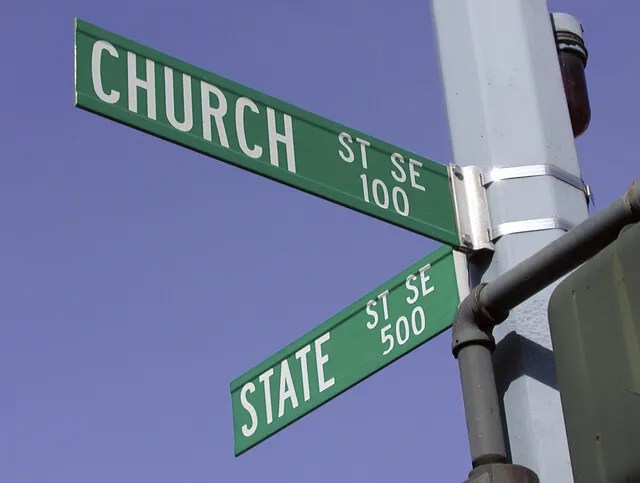
5 Reasons Separation of Church and State Is Essential

The first amendment to the Constitution of the United States confirms that Congress shall make no law respecting an establishment of religion, or prohibiting the free exercise thereof; or abridging the freedom of speech, or of the press; or the right of the people peaceably to assemble, and to petition the Government for a redress of grievances.

In the freedom-loving spirit of early Baptists, John Leland declared, “Let every man speak freely without fear, maintain the principles that he believes, worship according to his own faith, either one God, three Gods, no God, or twenty Gods; and let government protect him in doing so.”

The separation of church and state is a fundamental principle that has been at the core of many democratic societies around the world. It defends against religious discrimination, preserves individual freedom, and calls for governmental neutrality. Here are 5 reasons why the separation of church and state is essential for fostering a diverse, inclusive, and harmonious society:

  • Preserves religious freedom: One of the primary reasons for the separation of church and state is to safeguard religious freedom for all citizens. By ensuring that government institutions do not promote or favor any particular religion, citizens are free to practice their faith or beliefs without fear of persecution or discrimination. This protects the rights of minorities and prevents the dominance of any one religious group, fostering an environment of tolerance and respect. Rick Warren contends, “A truly free society protects all faiths, and true faith protects a free society.”  
  • Prevents religious coercion: When church and state are entwined, there is a risk of religious coercion, where the government may impose religious beliefs or practices on its citizens. This undermines personal autonomy and can lead to the marginalization of those who hold different beliefs. By keeping religion separate from government, individuals can make their own choices about their faith, free from the influence of the state.

  • Promotes respect and diversity: Separation of church and state fosters a society that embraces pluralism and diversity. By preventing the establishment of a state religion, it allows for the coexistence of different faith traditions, beliefs, and practices. This creates an environment where individuals can engage in interfaith dialogue, learn from one another, and celebrate the richness of diverse religious expressions. A society that values and respects diverse religious perspectives is more likely to cultivate respect, understanding, and social harmony.

  • Protects religious communities: Separation of church and state also safeguards the autonomy and integrity of religious organizations and spiritual communities. By keeping government interference at bay, religious communities can freely carry out their religious duties, practices, and teachings without external influences. They are better equipped to fulfill their spiritual mission and address the needs of their respective communities without being subject to political pressures or manipulation.
  • Provides a path for rational decision-making: Government decisions should be based on reason, evidence, and the common good of all citizens, not on the religious dogma of a specific group. Separation of church and state provides a path for policies and legislation to be formulated through a rational and democratic process, driven by the needs and objectives of the entire population. This strengthens the foundation of good governance and encourages leaders to make informed choices that benefit our nation.

The principle of separation of church and state is not an attack on religion but a protection of religious freedom and individual rights. By maintaining this distinction, we uphold the values of democracy and equality. Early American Baptist clergyman Isaac Backus argued, “Religious matters are to be separated from the jurisdiction of the state not because they are beneath the interests of the state, but, quite to the contrary, because they are too high and holy and thus are beyond the competence of the state.” 

Thomas Jefferson insisted, “Erecting a wall of separation between church and state is absolutely essential in a free society.”  The separation of church and state allows for a diverse and harmonious society where individuals are free to practice their faith and beliefs without fear, and where governance should be guided by reason, fairness, and the best interests of the people. Embracing the separation of church and state is vital for the well-being of our communities and the flourishing of democratic values in our world.

(Barry Howard serves at the pastor of the Church at Wieuca in North Atlanta. He also serves as a columnist for the Center for Healthy Churches. He and his wife, Amanda, currently live in Brookhaven, Georgia.)

7 Reasons Why Religious Liberty Matters

Religious liberty, the freedom to practice one’s faith without intimidation or persecution, is a cornerstone of democratic societies around the world. Our Baptists ancestors were among the many who contended for this liberty for persons of all faiths or no faith.

The First Amendment to the Constitution of the United States confirms that Congress shall make no law respecting an establishment of religion, or prohibiting the free exercise thereof; or abridging the freedom of speech, or of the press; or the right of the people peaceably to assemble, and to petition the Government for a redress of grievances.

Religious freedom stands as a beacon of individual and collective rights, fostering diversity, tolerance, and the flourishing of vibrant communities. Here are seven reasons why I believe religious liberty is of paramount importance in an ever-changing world:

  • Ensures Freedom of Worship: Religious liberty guarantees the freedom to practice one’s faith openly, both individually and collectively. It encompasses the freedom to worship, assemble for religious purposes, and engage in religious rituals and observances. Whether it is gathering for worship services, participating in religious ceremonies, or contributing to religious organizations, individuals must have the freedom to express their faith in a manner consistent with their beliefs. This liberty is essential for the spiritual well-being and growth of individuals and communities.

  • Safeguards Freedom of Conscience: Religious liberty protects freedom of conscience, recognizing that true faith is a matter of sincere conviction. One of our historic Baptist principles involves “the soul competency of the individual.” Religious liberty makes certain that individuals are free to explore, question, and embrace their spiritual beliefs without fear of retribution or societal pressure. This freedom of conscience extends beyond religious beliefs to encompass moral and ethical convictions as well.

  • Welcomes Pluralism and Diversity: Religious liberty celebrates the richness of human diversity and supports the coexistence of various faith traditions. It creates an environment where individuals can freely express their religious convictions, contributing to a vibrant tapestry of cultural and spiritual heritage. Pluralism enriches societies, fostering mutual respect, understanding, and social cohesion.
  • Protects Against Persecution and Discrimination: Religious liberty serves as a safeguard against discrimination, ensuring that no individual or group faces prejudice based on their religious beliefs. It upholds the principle of equal treatment under the law, promoting a just and inclusive society. Thomas Paine cautioned, “Persecution is not an original feature in any religion; but it is always the strongly marked feature of all religions established by law. By protecting against discrimination, religious liberty fosters social justice and equality for all.”

  • Promotes Social Justice: Religious liberty plays a vital role in promoting social justice and defending the rights of marginalized and vulnerable populations. It empowers individuals and religious organizations to advocate for justice, speak out against oppression, and provide resources to the underserved. Spiritual communities play an active role in addressing social issues, including poverty, inequality, and human rights abuses. By protecting religious liberty, we empower individuals and religious organizations to fulfill their calling to serve and work for the common good.

  • Inspires Moral and Ethical Living: Religious liberty provides individuals with the freedom to follow moral and ethical frameworks guided by their faith. For example, teachings like those of Jesus shape personal conduct, inspire acts of kindness, and promote values such as justice, forgiveness, and love. By allowing individuals to live out their values, religious liberty encourages the development of a cohesive and compassionate society.

  • Safeguards Against Extremism: History is filled with instances of religious wars and conflicts that led to division and violence. Religious liberty acts as a safeguard against extremism and radicalization. When individuals are free to practice their faith peacefully, they are less likely to resort to violence in the name of religion. Religious liberty, coupled with robust interfaith dialogue, promotes understanding and unity, countering the inciting forces of contempt and hatred.

Baptists have historically championed religious freedom for all religious groups, believing that if one group loses religious freedom, we will all lose our religious freedom. George Truett emphasized, Baptists have one consistent record concerning liberty throughout all their long and eventful history. They have never been a party to oppression of conscience. They have forever been the unwavering champions of liberty, both religious and civil.”

Religious freedom is a basic right that respects autonomy, celebrates diversity, and encourages the pursuit of “liberty and justice for all.” As we champion religious liberty, we affirm the importance of respecting and protecting the rights of every individual to practice their faith freely, contributing to a more inclusive, compassionate, and harmonious world.

As citizens of these United States, we enjoy more comprehensive freedoms than any other nation on earth. On this 4th of July week, let us remember that with great freedom comes great responsibility.

(Barry Howard serves as the pastor at the Church at Wieuca in North Atlanta. He also serves as a leadership coach and columnist for the Center for Healthy Churches. He and his wife, Amanda, reside in Brookhaven, Georgia.) Top of Form

7 Things We Need to Know About Spiritual Gifts

There have been times in my ministry where I have understated the importance of spiritual gifts. My approach was partly because of the way some spoke of such gifts with an air of spiritual elitism, and partly because I didn’t want to mislead church members into thinking they should only serve in areas where they are specifically gifted. I readily identify with Andy Stanley who urged, “When the house is on fire, don’t tell me what your spiritual gift is. Just grab a hose and put out the fire.”

However, so long as we are not legalistic or elitist with our gifts, I am convinced that a deeper understanding of spiritual endowments can help a local church become more missional and less conflictual.

In I Corinthians 12:1, as Paul urges the believers to serve and grow, he writes, “Now about the gifts of the Spirit, brothers and sisters, I do not want you to be uninformed.” Unfortunately, there are many long-time church attenders who are uninformed or misinformed about the gifts of the Spirit.

What is a spiritual gift? A spiritual gift is a God-given potential or ability distributed to individual Christians by the Holy Spirit that enables the individuals to work and serve as a team to help the church execute its mission on earth.

In I Corinthians 12:7 Paul continues, “Now to each one the manifestation of the Spirit is given for the common good.” The Greek word for grace is karis which means gift. Paul proposed that every believer is endowed with spiritual gifts or grace gifts. Here are few things every church member should know about spiritual gifts:

  • Every Jesus follower is given at least one spiritual gift. Everybody has one, and some have two or three. Some gifts are not as obvious, and some gifts surface later in life. Know this for sure: whatever your age or stage in life, you are a gifted follower of Jesus.

  • Spiritual gifts usually come with “some assembly required.” Most spiritual gifts are given to us in raw form and need to be refined.Some spiritual gifts are like the Christmas gifts we get for our children, and we have to spend time “putting the parts together.” Other spiritual gifts are like precious metal or blown glass, and they need to go through the refiner’s fire to reach their full potential.

  • There are a variety of gifts. Paul specifically mentions the gift of being an apostle, prophet, evangelist, or pastor/teacher. In other passages the spiritual gifts of leadership, compassion, encouragement, intercession, and service are mentioned. I think the biblical list is exemplary and not exhaustive. There may even be gifts given just for our era in time which could include things like peacemaking, worship planning, consensus building, social connectivity, missional innovation, and technology management. These may be new gifts or perhaps even subsets of the examples Paul identifies.
  • No spiritual gift is more important or less important than the other gifts.
    Spiritual gifts are not given to create a class system but to generate a community system. Gifts are not given to entertain the church but to encourage and equip the church. Gifts are not given to rank the saints but to retool the saints.
  • Spiritual gifts are best used in a spirit of teamwork. Whatever our spiritual gift, our gift is best used alongside other believers with compatible and complementary gifts. Teams who work cooperatively and collaboratively make better decisions and engage in more effective ministry initiatives than any one individual on those teams.  Brené Brown reminds us, “You don’t have to do all of it alone. You were never meant to.”
  • Ministers also have one or more spiritual gifts. Some church members mistakenly think that those who are called to serve as ministers have all the spiritual gifts. However, ministers, like other church members, have one or two, maybe three spiritual gifts. This means that when a church calls a minister, they should consider how the spiritual gifts of the minister correspond to the needs and gifts of the congregation. For effective ministry to happen, the spiritual gifts of the members must be activated and leveraged in concert with their minister or ministerial staff in order to maximize the giftedness of the congregation.
  • Spiritual gifts are given for the equipping of the church and the advancement of God’s kingdom. Spiritual gifts are actually given to the church, and we as individual believers are simply the human conduit God uses to deliver the gifts. Spiritual gifts are not given to advocate for a personal agenda but to advance our God-given mission. One litmus test that determines whether we are using our spiritual gift appropriately is whether we are equipping and encouraging the church. If our efforts or influence creates division in the church, it is likely that we are not using our spiritual gifts as God intended.

Rick Warren urges us to remember, “Your spiritual gifts were not given for your own benefit but for the benefit of others, just as other people were given gifts for your benefit.” 

What is your spiritual gift? Some of us need to discover our spiritual gifts while others of us need to recover our spiritual gifts. If you have not completed a spiritual gift assessment recently, I encourage you to visit one of the following web sites and complete an evaluation to help you discover and develop your spiritual gifts: Spiritual Gifts Assessment or Free Spiritual Gifts Test & Assessment (lifethrive.com).

Recently, while making a cup of coffee in my Keurig, I put the coffee pod in, made sure the water level was full, and hit the button for a large cup. Just one problem. In my busyness, I forgot to put the cup under the dispenser. Like a chocolate fountain at a banquet or like a spring in the countryside, the coffee maker was dispensing, even though there was no container there to receive it. God’s spirit is pouring out gifts on the church in this generation. Make sure your cup is there to receive it, then use your gifts wisely.

John Maxwell proposes, “When you find your spiritual gift, God will give you an opportunity to use it.”

(Barry Howard serves as pastor of the Church at Wieuca in North Atlanta. He also serves as a leadership coach with the Center for Healthy Churches. He and his wife, Amanda, live in Brookhaven, Georgia.)

Healthy Self Care Is an Essential Practice for a Pastor

In his book, Surviving the Stained-Glass Jungle, veteran pastor Dr. Bill Self contended that, “Self-care is not destructive self-indulgence, but rather it is being a steward of some rather special gifts— the human body and soul, along with the capacity to bring joy to others as well as to experience it.”

Recent studies indicate that stress, burnout, and mental fatigue are becoming more intensive among clergy, leading even come of the most devout ministers to leave ministry. And while no one knows the exact percentage of ministers who experience depression, one Baylor University professor to suggest, “The likelihood is that one out of every four ministers is depressed.”

It is tremendously tough for those who care for the souls of others to take care of themselves. But proactive self-care is essential for ministers. Self-care includes developing and maintaining healthy practices that promote and preserve good physical, spiritual and mental well-being.

While these three areas of wellness are intertwined and inseparable, in my own life and the experience of many of my colleagues, I recognize that more attention has been given to physical and spiritual health, and mental health is often neglected, often resulting in the diminishment of all three.

Mental health includes our emotional, psychological, and social well-being.  Every human being experiences highs and lows in mental health.  Although some forms of mental illness are serious and require the ongoing care of a therapist, general variations in mental health may be related to circumstances or body chemistry, and may be preemptively avoided or proactively addressed by practicing good mental hygiene.

A common, but naïve misconception is that pastors, or persons with strong religious faith, are exempt from mental distress. The Apostle Paul is noted for his courageous ministry but he confessed, “Besides everything else, I face daily the pressure of my concern for all the churches” (II Corinthians 11:28 NIV).

Those in every vocation experience varying levels of stress, distress, and duress. However, because the pastoral task requires remarkable investment in the lives of others, a pastor who neglects mental hygiene can gradually slip into a state of melancholy or emotional chaos, and then compound the dilemma by ignoring the symptoms for fear of stigmatizing his or her ministry.

As a pastor I can identify at least five areas that commonly place stress on a pastor’s mental and emotional health:

  • Unrealistic expectations- These expectations can be real or perceived, and they can be generated by vocal congregants or be self-imposed by a minister with a “messiah complex.” Most congregations have ambivalent expectations that fluctuate between market-driven goals (e.g., attendance, budgets, awards) and mission-driven goals (e.g., participation, stewardship, life transformation).  The wider the gap between these two categories, the more intense the stress on the minister.
  • Perpetual preparation– The task of perpetual preparation can be a mentally exhausting chore. Many professional public speakers have 4-5 well-rehearsed speeches that they give over and over to different groups.  Professors and teachers have lectures and lesson plans that are updated and revised from semester to semester but they usually follow a core curriculum.  A preaching pastor is unique in that he or she is generally expected to prepare and deliver 40-50 different Sunday sermons per year to virtually the same group of people, in addition to providing devotionals, Bible studies, and speeches for community events.
  • Diverse emotional encounters- A minister deals with grief, grace, and everything in between on a daily basis. Perhaps more than any other vocation, a pastor regularly moves in and out of situations with polarizing and intense emotions such as birth and death, marriage and divorce, perversion and conversion, and conflict and resolution. If a pastor is not careful, the residual emotions from these encounters will linger and intermingle creating either emotional apathy or spiritual neuropathy.
  • Problem people- Not to be confused with people with problems, problem people are unusually high maintenance individuals who consume an exorbitant amount of a pastor’s time with an unnecessary complaint or unconstructive criticism. Marshall Shelley refers to these “well-intentioned dragons” as “sincere, well-meaning saints, but they leave ulcers, strained relationships, and hard feelings in their wake.”
  • Confidentiality cache- Because the pastoral role is not only prophetic but also priestly, a pastor is entrusted with a lot of confidential information that is locked away into a pastor’s mental storage. The volume of this information can become a heavy emotional weight if it remains in a pastor’s mental inbox and is not appropriately archived.

In light of these and other areas of pastoral stress, to preserve good health and promote longevity in ministry, how can a pastor practice good mental and emotional hygiene?

Each pastor has to identify and adopt hygienic habits that fit his or her context and personality. Here are some practices I am finding to be helpful in my own pastoral routine:

  • Establish and maintain a consistent prayer and devotional life.
  • Maintain friendship with a trustworthy conversation partner, perhaps even another pastor, outside of your church.
  • Convene a small accountability group, establish a confidentiality covenant with them, and meet with them monthly.
  • Read regularly in multiple genres including biography, history, and fiction.
  • Pay attention to diet, especially limiting intake of sugar, caffeine, and other foods that can trigger emotional swings.
  • Develop a regimen of moderate physical exercise.
  • Follow a consistent routine for sleep and rest.
  • Periodically disconnect from the work of the church, especially from mental labor (problem solving, conflict management), cellphone calls, and social media.
  • Have an annual physical examination, as well as eye examination and dermatology screening.
  • Participate in a peer network of pastors who convene with a covenant of confidentiality, and who vent and vision together.

Be alert to seasons when your mental distress leads to dysfunction, manifested by ongoing and overwhelming symptoms of depression, chronic anxiety, paranoia, and/or insomnia. Immediately enlist the care of a medical professional.  To procrastinate getting care prolongs the process of recovery.

Life in the stained-glass jungle has unique rewards and challenges.  Self-care is absolutely essential.  Bill Self reminded us that, “It takes courage to take care of yourself. One of the hallmarks of a professional is the ability to keep healthy— physically, emotionally, and spiritually. You must take responsibility for yourself and not expect others to take the initiative to care for you.”

Practicing good self-care can empower a pastor to be mentally sharp, emotionally balanced, and spiritually perceptive in all seasons.

(Barry Howard currently serves as pastor at the Church at Wieuca in North Atlanta. He also serves as a leadership coach and columnist with the Center for Healthy Churches.)

Faith and Friendship Can Add Quality and Longevity to Life

Faith and friendship are two of the most pivotal factors in determining quality of life. Just as the Bible encourages that ” we live by faith, not by sight” (II Corinthians 5:7 NIV), it also extols the virtues of friendship, even suggesting that “A sweet friendship refreshes the soul” (Proverbs 27:9 MSG).

Who is your friend and why is friendship important? Elbert Hubbard proposes, “A friend is someone who knows you and loves you just the same.”

Not everyone enjoys the blessing of companionship and friendship. In 2018, CIGNA Healthcare surveyed 20,000 U.S. adults and discovered that 46% sometimes or always feel alone. As churches seek to address the needs of their communities, they will discover that loneliness is a significant concern and a major ministry opportunity.

Through the years I have often concluded my prayers, sermons, and newsletter columns by saying, “May we continue to grow in faith and friendship.” I use those words intentionally because I believe faith and friendship have a symbiotic relationship.

I am intrigued and perplexed at times by the vast diversity of denominations and sects within the Christian family. One of the most fascinating groups to me are the Quakers. I admire their emphasis on the love of God, their passion for justice and equality, and their conviction that the light of God can be seen in each human being. But I especially like their name: Society of Friends.

In Jesus’ conversation with his disciples in John 15:15, he specifically states, “But I have called you friends.” I am convinced that church is first and foremost a community of friends. Church at its best is not a religious institution or a brick-and-mortar campus, but a spiritual community that thrives on being friends with Jesus and being friends with others who are friends with Jesus.

Friends can help you celebrate good times and provide support during bad times. Friends prevent isolation and loneliness and give you a chance to offer needed companionship, too.

Researchers at Mayo Clinic have identified five ways that friends make life better (www.mayoclinic.org ):

  • Increase your sense of belonging and purpose.
  • Boost your happiness and reduce your stress.
  • Improve your self-confidence and self-worth.
  • Help you cope with traumas, such as divorce, serious illness, job loss or the death of a loved one.
  • Encourage you to change or avoid unhealthy lifestyle habits, such as excessive drinking or lack of exercise.

In my experience, faith and friendship are forged and nurtured in the shared life of a healthy congregation. Ryan Burge, a political scientist and research analyst from Eastern Illinois University, notes that “In obituaries where a religious community was mentioned, the person lived an average 5.5 years longer.”

Multiple times in John’s gospel we are told that Jesus came to show us the way to a “full and meaningful life.” Faith and friendship are two of the most important dynamics in embracing an “abundant life.”

May we grow in faith and friendship!

10 Things Churches Can Learn from The Masters

The first time I walked onto the grounds at Augusta National in 2002, I was in awe of the aura and the ambiance. I better understand why Nick Faldo said, “This is the The Masters. It’s got the beauty, it’s got the color, it’s got the sound and the breezes. Everything together makes this place special.”

I have been privileged to attend The Masters several times through the years, and on each visit, I am inspired when I step foot on this immaculately manicured acreage, which is a rare combination of botanical gardens, nature preserve, and golf course. 

During my years as a pastor, I have gleaned valuable insights about life, business, and ministry from innovative organizations that strive for excellence, companies like Disney, Amazon, Chick-fil-A, and Apple.

Last weekend as I watched the golf tournament on TV and recalled my previous visits to the property, I began to reflect on the lessons the church could learn from The Masters. Here are a few things worth considering:

  • Hospitality is welcoming and winsome. From the parking attendants to the ticket takers, to the groundskeepers, Augusta National evokes a friendly vibe as staff members greet patrons with “Welcome to the Masters!” and a hearty smile.  A hospitable sense of welcome is a trademark of a healthy congregation.

  • Not everything has to be high tech. Technology is important. I utilize a smart phone, a laptop, and a tablet. And I served churches through the years that embraced technology, striving to have the most recent computers, the most up-to-date audio technology, the most cutting-edge video screens, and the most elaborate lighting. I am not anti-technology, but it is sort of nice to see thousands of patrons staring at a low-tech manual scoreboard manned by volunteers, which happens to be one of the most iconic scoreboards in the world of golf. Churches should remember that technology is one tool in the toolbox, and if we become co-dependent on technology, it can become a liability rather than an asset in ministry.

  • Appreciate silence and celebration. The aura of Augusta alternates between the roar of the crowd and a holy hush. I am always amazed that thousands of golf enthusiasts can cheer with loud enthusiasm, and yet a few moments later they can stand still in focused silence as a golfer is about to putt.  A healthy church appreciates and makes space for silent meditation and jubilant celebration.

  • Simplicity and excellence often work in tandem. The kitchen staff at Augusta has mastered the art of making egg salad and pimento cheese sandwiches. Nothing fancy. Just a simple sandwich. Excellence in the local church doesn’t require glitz and glamour, but often emerges in doing the simple things well.

  • Spectators cheer for the golfers, not against them. In other sports, and even at other tournaments, fans may boo or jeer the opposing team or their least favorite golfer. Church is a place to “encourage one another” without prejudice.

  • Golf has a discipleship program that is called “drive, chip, and putt.” This catechism is designed to teach basic skills and disciplines.  Healthy churches emphasize and exemplify the basic tenets of the faith, giving opportunities for the next generation to practice “on the course.”

  • Bad things happen to good golfers. Good putts lip out. The false front causes the ball to release and trickle into Rae’s Creek. Wind direction changes and weather is unpredictable. Yet the best golfers are required to be disciplined enough to put the last shot behind them and focus on the next shot.  Likewise, healthy churches help others to put the past behind them and the future before them, and to “press toward the mark of the high calling of God in Christ Jesus.”

  • New terms, new rules, and new norms take some getting used to. Did it sound a little different to hear the announcers referring to “patrons” instead of “fans,” and “penalty areas” instead of “hazards”? Or are you still adjusting to seeing players putt with the pin “in” the hole? Were you surprised when no penalty was assessed for knocking the ball off the tee during a practice swing?  In church we like to say that our message is timeless, but our methodology is always changing. Churches must exercise patience as our “patrons” adjust to our evolving nomenclature and a rapidly changing culture.

  • Treasure and maximize diversity. At Augusta National, no two holes are identical. At many golf courses, the trademark characteristic might be big greens or postage stamp greens, lots of undulation or no undulation, elevated greens or elevated tee boxes. However, at Augusta National, the rich diversity of landscape, elevation, and undulation is a part of the appeal. Churches often struggle at the task of navigating diversity. But healthy congregations perceive diversity as a strength, and they find ways to leverage their diversity for missional purposes.

  • Everyone loves a good redemption story. Sometimes the tournament is won by one of the most popular golfers. On other years the winner is someone who has fallen to the wayside, and yet through hard work has rebuilt his game and his reputation. Among many other things, church is a place of spiritual redemption, a place where the prodigal is welcomed home, a place where grace covers a multitude of sins, a place where we celebrate recovery, and a place where all stand on level ground before the cross.

The golf club at Augusta National is not a religious place, but in their quest for excellence in facilities and engagement with their patrons, their hospitality, simplicity, and adaptivity is a good model for faith communities to emulate.

(Barry Howard currently serves at the pastor at the Church at Wieuca in North Atlanta. He also serves as a leadership coach and columnist with the Center for Healthy Churches. He and his wife, Amanda, reside in Brookhaven, Georgia.)