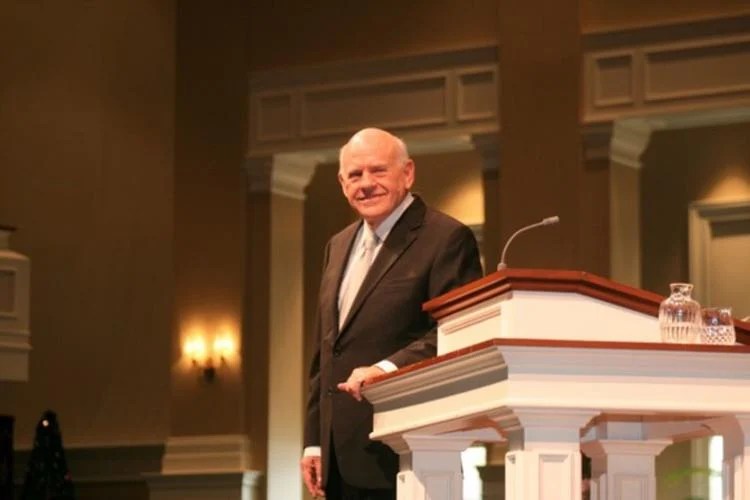

The Basics: What Does It Mean to Be a Christian?

(This the first column in a 5-part series on The Basics.)

In 1966, Peter Scholtes, who served as a parish priest and choral conductor, composed a hymn that declares, “And they’ll know we are Christians by our love, by our love, yes, they’ll know we are Christians by our love.

Love is one of the many distinguishing characteristics of a Christian. Acts 11:26 tells us, “The disciples were first called Christians at Antioch.” But what does it truly mean when we refer to someone as a Christian? In this series of pastoral reflections, I am revisiting the fundamental tenets of our faith, developing responses to questions I am frequently asked about the meaning and mission of Christianity.

So, let’s start at the very beginning with the question: What does it mean to be a Christian? Different people hold various interpretations of what it means to be a Christian, making it important to clarify what we mean by this terminology. In doing so, we not only gain a deeper understanding of our identity as Christians but also equip ourselves to invite others into this transformative journey.

  • A Christian is a follower of Jesus. At its core, being a Christian revolves around a commitment to follow Jesus. The various ways people describe becoming a Christian all lead to this central point. It’s an allegiance to the teachings, values, and path set by Christ. It’s living in such a way that we resemble Jesus.
  • The word “Christian” means “little Christ” or “like Christ.” The disciples were called Christians at Antioch because they resembled Jesus. It is worth noting that in the Bible, the disciples did not refer to themselves as Christians but were called Christians by others who observed the lifestyle of the disciples.
  • Jesus used a variety of metaphors to describe the beginning of the Christian walk. A few examples of the common phrases used in the gospels to describe how one embraces the Christian way of life is to be “born again” (John 3:3), to be “saved” (John 10:9), to drink “Living Water” (John 4:10), to enter “the Door” (John 10:9), and to abide in “the Vine” (John 15:5). Perhaps Jesus used a variety of descriptions because he meets people at their point of need and he communicates in ways they can best understand.
  • There are many cultural expressions that may describe one’s initial Christian commitment. Across the ages, a variety of idioms have been used to describe how one becomes a follower of Jesus. More recently these include “accepting Jesus,” “asking Jesus into your heart,” “being converted,” “making a profession of faith,” or “giving your life to Jesus.” In more liturgical traditions, a candidate for baptism may go through catechism or confirmation to announce their faith commitment. These descriptors may be helpful to us in articulating our commitment, but they should never be used legalistically or superimposed on others who do not understand their frame of reference.
  • Gospel is the word we use to describe the Good News Jesus came to deliver. We must remember that the Gospel is good news. Jesus came to offer forgiveness of sin (Mark 11:25) and to offer us “abundant life” here and now, as stated in John 10:10. While the assurance of heaven after this life is comforting, it is notable that Jesus did not use the promise of heaven to compel others to follow him. Jesus met individuals at their point of need and offered the gift of a full and meaning-filled life. As we invite others to the Christian life, it is important to keep the good news good. It is also important that we invite others not just to believe in the existence of Jesus, but that we invite them to follow Jesus, to learn from Jesus, and to serve Jesus by serving others, especially the “least of the these,” which was Jesus’ reference to the underserved individuals in the community.
  • Jesus assured his followers they would have a home in heaven after this life is over. Jesus told his disciples he was going away to prepare a place for them (John 14:1-6). He even told the thief on the cross, “This day you will be with me in paradise.” Interestingly, Jesus did not use heaven as a lure to entice others to follow him. Jesus invited others to follow him because of the life he offers here and now. In describing the Christian experience to others, we too should focus on the life Jesus gives us in the present, which prepares us for the life hereafter.
  • There are many good ways to describe Christianity to others. A non-Christian is not likely to understand a lot of our coded church language about Christianity. Like Jesus, it is important to talk with others in ways they can understand. When talking to a non-Christian, an inquirer, or a skeptic, I begin with a simple explanation: “To become a Christian is to commit your life to following Jesus.” Then I add, “And we may best learn to follow Jesus by studying his teachings, imitating his lifestyle, and surrounding ourselves with others (small group/church) who have made a similar commitment.”

The common denominator for the variety of descriptions and definitions is that a Christian is committed to following Jesus. In examining the gospel narrative, we find that those who came to follow Jesus, even his first disciples, had unique stories of how they were drawn into a relationship with Jesus. This is still true today. Those from around the globe who embrace Christianity may have differing testimonies but they share a common faith.

The chorus that many of us sang on youth retreats and at church camps during our growing-up years is still valid and relevant in describing the essence of the Christian journey: “I have decided to follow Jesus. I have decided to follow Jesus. I have decided to follow Jesus. No turning back. No turning back.” This timeless refrain still holds true and encapsulates the essence of our Christian journey. We decide to follow Jesus, to be like Christ, and to freely share with others the love and grace we’ve received.

If you are thinking about becoming a follower of Jesus, please contact me or a minister in your community who can provide guidance and encouragement.

(Barry Howard serves as the pastor at the Church at Wieuca in North Atlanta. He also serves as a leadership coach and columnist with the Center for Healthy Churches. He and his wife, Amanda, currently reside in Brookhaven, Georgia.)

Praying for the Situation in Israel and Gaza

Over the past few days, we have been heartbroken and outraged by the terrorist attacks in Israel by Hamas. Throughout the week, reports have revealed that the attacks were even more brutal and inhumane than we can imagine.

No matter what our political views are regarding the Middle East, we all agree that such attacks on innocent families, the elderly, young adults, children, and babies are horrific and barbaric, and must not be tolerated by the world community.

Many of us have friends in the region. Some of us even have relatives in the area. Whatever happens in the Middle East eventually affects the entire world.

Over the years, I have become friends with many Palestinian Christians, and I have developed a growing appreciation for their plight and their heritage. Several years ago, I became friends with the directors of the Baptist Village in Jerusalem and many other missionaries and students who have served there. Additionally, as I have served in a variety of communities as a pastor, I have become friends with many rabbis who helped me better understand Jewish perspectives and traditions. This week I have reached out to my rabbinical colleagues to assure them of our prayers.

Furthermore, as we process the events of the past week, there is the potential for a severe and significant escalation of hostilities.

As people of faith, how should we respond to this crisis? I want to suggest a few things we can do as we process our shock, anger, and grief:

  • Pray for the people of Israel and Gaza.

  • Support humanitarian efforts. Consider givingto one of the many groups that are providing aid to those affected by this tragedy. Baptist World Alliance, World Vision, and World Relief are just a few examples of such agencies.

  • Read and study the biblical and historical accounts of the conflicts in this region of the world, and how this region plays into the history of many of the world’s major religions, including the history of Christianity.

  • Engage in age-specific discussions with your children and respond to their questions to the best of your ability.

  • Stay informed. This crisis will not be resolved overnight. It’s essential to stay informed and engaged over the long term. Reading and watching the news during times of war and conflict can be disturbing, but it is important to stay informed about current events without being consumed by them.

The Baptist World Alliance has issued a call to prayer for the people of Israel and the Palestinian Territories. The BWA offered the following prayer points to guide our prayers:

• Pray for a quick end to the conflict and the prevention of escalation into a larger war in the region.

• Pray for the God of all comfort to be with those who are grieving the loss of their loved ones.

• Pray for those who have been wounded during the conflict and for those providing medical assistance to them.

• Pray for the safety and liberation of hostages, and pray for mediators to facilitate their release.

• Pray for wisdom and discernment for the leaders, that they may make decisions that lead to lasting peace and alleviate suffering.

• Pray that Christians from around the world will unite in prayer for peace, demonstrating the love of Christ to all peoples.

• Pray for safety of local followers of Jesus and that they will be shielded from extremism and hatred, especially young people.

• Pray for God to utilize our churches as effective witnesses during this challenging time, through the power of the Holy Spirit, including the Baptist church in Gaza and its ongoing ministry.

• Pray that Christians around the world will give generously as our Baptist family across this area seeks to holistically minister in this critical time of suffering.

• Pray for peace, hope, and security for the entire region, and that the sun of righteousness will rise with healing in its rays so that Israelis and Palestinians will experience life lived in peace and freedom with one another.

We understand that the complexities of this situation defy easy solutions, yet our faith calls us to be ambassadors of peace and justice. Let us continue to pray, learn, advocate, and work for a world where conflicts are resolved through dialogue, mediation, and, above all, the transformative power of God’s love.

Psalm 121:1 declares, “I lift up my eyes to the hills. From where does my help come? My help comes from the Lord, who made heaven and earth.”

10 Benefits of Being in a Pastor Peer Group

In the realm of spiritual leadership, pastors shoulder a weighty responsibility of guiding, supporting, and nurturing their congregations. The demands of the role can be both deeply rewarding and incredibly demanding, often leading to isolation and burnout. During this journey, one invaluable resource that can serve as a lifeline is a pastor peer group.

I spent three days this week with my pastor peer group in the North Carolina mountains near Lake Junaluska. Over the last 45 years, I have been a part of four pastor peer groups. These groups, comprised of fellow pastors who gather regularly for mutual support and growth, offer a wealth of benefits that can significantly enrich a pastor’s personal and professional life.

Also, peer groups are helpful to all pastors, not just senior pastors.  Youth pastors, children’s pastors, discipleship pastors, and worship pastors, just to name a few examples, can all find value by participating in a minister’s peer group.

Here are 10 ways that being in a pastor peer group can enrich the life and ministry of a pastor:

1. Spiritual vitality and rejuvenation. Serving as a spiritual guide can sometimes feel draining, leaving pastors in need of their own spiritual renewal. Peer groups create a sacred space where pastors can receive spiritual nourishment, engage in meaningful discussions, and reconnect with their own faith.

2. Pastoral empathy and collegiality. Only those who have traveled the pastoral path truly understand its complexities. Within a pastor peer group, individuals can freely express their struggles, doubts, and joys without fear of judgment. The empathetic ears of peers who have faced similar challenges provide validation and comfort, reminding pastors that they are not alone on their journey.

3. Mutual encouragement. The role of a pastor often involves offering encouragement to others, but even spiritual leaders need encouragement themselves. Peer groups offer a space where pastors can receive uplifting words, prayer, and reminders of their own worth and impact. This mutual encouragement can reignite passion and purpose in times of fatigue.

4. Safe space for vulnerability. Vulnerability is a powerful tool for growth and healing. In a pastor peer group, individuals can share their vulnerabilities openly, leading to personal growth, self-discovery, and the breaking down of emotional barriers. This safe space fosters authenticity and builds trust among members.

5. Diverse pastoral and theological perspectives. Pastor peer groups encompass a variety of backgrounds, experiences, and theological viewpoints. Engaging with diverse perspectives challenges pastors’ thinking, stimulates creativity, and broadens their understanding of the complexities within the faith community.

6. Personal and professional accountability. Just as pastors guide their congregants, peer groups can guide pastors toward personal and professional growth. Members can set goals, share progress, and hold each other accountable for commitments. This supportive structure promotes continuous development and learning.

7. Sharing best practices. Pastors often face unique challenges that require thoughtful problem-solving. A peer group serves as a think tank, providing a wealth of collective wisdom and innovative ideas for overcoming obstacles and seizing opportunities.

8. Prevention of burnout.  Burnout is a real risk in pastoral ministry due to its demanding nature. A peer group helps pastors recognize signs of burnout in themselves and their peers, providing the necessary support and resources to prevent its onset.

9. Problem-solving and brainstorming: Stepping out of the regular pastoral routine to form a think tank with colleagues can provide objective ideas, insights, and potential solutions to pastoral dilemmas. Hearing from others how they have addressed similar issues can stimulate healthy scenarios for addressing the predicaments you are encountering in your context.  

10. Enduring friendships. The connections formed in a pastor peer group often transcend professional boundaries, leading to deep and lasting friendships. These bonds provide a sense of community and camaraderie that can extend beyond the group’s formal meetings.

Most of those who serve as pastors have a genuine desire to serve, nurture, and guide their congregation. However, this challenging mission must be balanced with self-care, growth, and support.

A pastor peer group provides a micro-community where spiritual leaders can find inspiration, encouragement, and personal enrichment. As pastors come together, sharing their experiences and wisdom, they build a network of support that sharpens their pastoral skills and ultimately enriches the church community they serve.

(Barry Howard serves as the pastor at the Church at Wieuca in North Atlanta. He also serves as a leadership coach and columnist with the Center for Healthy Churches. He and his wife, Amanda, currently live in Brookhaven, Georgia.)

A Cocoon of Doubt: Navigating a Crisis of Faith

In shadows deep, where doubts take hold,
A crisis of faith, a story unfolds,
A tempest brews within the soul,
A journey through uncertainty exacts a toll.

Questions arise like thunder roars,
Shaking foundations thought secure before,
The path once clear, now shrouded in mist,
A searching heart, a clenched fist.

Yet in this storm, opportunity knocks,
To seek the truth within paradox,
A cocoon of doubt where wings unfurl,
Emerging stronger, transforming our world.

With courage as your guiding star,
You face the doubts that lurk afar,
Exploring beliefs, both old and new,
Finding a path that speaks to you.

Through deep reflection, prayers, and tears,
You navigate the inner fears,
A journey inward, a quest for light,
To mend the fractures, reunite.

So let the crisis shape your view,
A catalyst for growth anew,
For in the struggle you will find,
A deeper faith, more richly defined.

(Barry Howard serves as the pastor at the Church at Wieuca in North Atlanta. He also serves as a columnist and leadership coach with the Center for Healthy Churches. He and his wife Amanda currently live in Brookhaven, Georgia.)

Make the Most of Today

As the sun rises, a gift therein,
A canvas blank, a new day begins.
With every heartbeat, a chance anew,
To paint your dreams in vibrant hue.

Let worries fade like stars at morn,
Embrace the day, where hope is born.
For time’s swift river will not delay,
Rise up and make the most of today.

In simple joys, let your heart sing,
Chase passions wild, let laughter ring.
The seconds dance, swift as a stream,
Live out your purpose, let your spirit beam.

Illuminate the darkness with kindness and grace,
Greet those who are hurting with a friendly embrace.
It is in giving, we find our way,
Rise up and make the most of today.

When shadows fall, and night draws near,
Reflect on memories, hold them dear.
Treasure the moments, take them in,
The symphony of hours is your friend.

With open arms, embrace the day,
Seize opportunities, don’t delay.
In this present moment, find a way,
Rise up and make the most of today.

7 Ways AI Can Assist Pastors in Their Work

A recent discussion with young professionals in our community turned to artificial intelligence and I was asked, “What do you think of AI and how are you using it in your work as a pastor?” I had not given much thought to how pastors can benefit from the resources of AI, so I decided to explore that question more intentionally.

Global leader in AI, Andrew Ng, insists, “It is difficult to think of a major industry that AI will not transform. This includes healthcare, education, transportation, retail, communications, and agriculture. There are surprisingly clear paths for AI to make a significant difference in all of these industries.”

AI is becoming an integral part of today’s world, transforming various industries and revolutionizing the way we live and work. While AI is often associated with technological advancements in business and healthcare, AI has also started to make its mark in religious communities, offering new possibilities and opportunities for pastors to enhance their ministry. Primarily, I am interested in exploring the ways in which AI can assist pastors and contribute to their vital role in guiding and supporting their congregations.

Here are 7 ways AI pastors may utilize AI to enrich their ministry:

  • Sermon Preparation: Crafting inspiring and relevant sermons that resonate with the congregation’s needs and interests is one of the most crucial aspects of pastoral ministry. AI-powered tools can aid pastors in researching and organizing relevant content, scriptures, and historical context. With the assistance of AI pastors can access vast databases, theological texts, and commentaries to enhance their biblical knowledge and ensure reliable interpretations. AI can even help in generating sermon outlines based on chosen themes or biblical passages, providing valuable insights and fresh perspectives. AI shouldn’t prepare the sermon for you, but it can be a valuable tool when used appropriately.

  • Writing and Editing: In addition to sermon preparation, most pastors write newsletter articles, blog columns, devotionals, reference letters, emails, and social media posts. AI can assist in generating ideas, doing research on specific topics, providing templates for correspondence, finding relevant illustrations, and proofreading your work. When using AI to generate ideas and assist with proofreading, no citation or attribution is necessary. However, when using AI to generate the bulk of your content, a citation is appropriate. The MLA Handbook now includes a way to cite an AI-generated source. When using AI to contribute to content in one of my columns, I include an endnote that says, “This article has been written with the assistance of AI.”

  • Pastoral Care and Counseling: AI has the potential to significantly enhance the provision of pastoral care and support services. Virtual assistants, driven by AI algorithms, can quickly locate and generate resources to assist the pastor in ministering to those seeking spiritual guidance or counseling. Such resources may include scriptural references, prayers, counseling services, healthcare referrals, and grief support. These resources can be made accessible even when the minister is not available.
  • Community Engagement and Outreach: AI can play a crucial role in connecting pastors with their congregations and facilitating community engagement. Social media monitoring tools can help pastors understand the concerns, interests, and questions of their community members, enabling them to tailor their messages and programs to address these needs effectively.

  • Data Analytics for Decision-Making: AI’s ability to process and analyze vast amounts of data can assist pastors in making informed decisions and strategic planning. By examining demographic information, attendance records, and engagement metrics, pastors can gain insights into the needs and preferences of their congregation. This data-driven approach allows pastors to adapt their ministry, identify areas that require attention, and implement strategies that align with their community’s evolving dynamics.
  • Language Translation and Interpretation: In an increasingly multicultural world, pastors often face the challenge of delivering messages to congregants with different language backgrounds. AI-powered language translation tools can assist pastors in presenting their sermons, written or oral, in multiple languages. These translation tools can also help pastors communicate effectively with non-English-speaking individuals during counseling sessions or hospital visits, ensuring that no one is deprived of pastoral care due to language limitations. For example, I am currently providing a printed translation of my sermons each week for a family our church is hosting from Ukraine.
  • Administrative assistance: Employing AI to accomplish routine administrative tasks can free up a pastor’s time to focus on more meaningful interactions and activities within their communities. In some churches, whether due to budget cuts or personnel realignment, administrative support has shifted from administrative staff members to the minister. Having a virtual assistant can enable a pastor to minimize administrative tasks and major on ministry initiatives.

As with any technology, including the internet, smart devices, and social media, AI has positive and negative potential, according to how the resource is used. AI offers the capacity to increase the effectiveness of pastors as spiritual leaders and caregivers. By harnessing the power of AI, pastors can enhance their sermon preparation, improve their writing skills, provide personalized pastoral care, engage with their communities effectively, make data-driven decisions, and overcome language barriers. It is essential for pastors and religious leaders to embrace technology responsibly and integrate AI tools thoughtfully into their ministries, ensuring that the human connection, spiritual insight, and relational empathy remain at the core of their pastoral work.

Tim Cook, CEO of Apple, cautions, “What all of us have to do is to make sure we are using AI in a way that is for the benefit of humanity, not to the detriment of humanity.”

As pastors, what we want to do is to make sure we are using AI for the enrichment of the church and for advancement of God’s mission in the world.

(Barry Howard serves as the pastor of the Church at Wieuca in North Atlanta. He also serves as a leadership consultant and columnist for the Center for Healthy Churches. He and his wife, Amanda, currently reside in Brookhaven, Georgia.)

* This column first appeared in Nurturing Faith Journal.

Honest Conversations About Grief: Navigating the Journey of Loss

Grief is an inevitable part of the human experience, an emotional upheaval that comes hand in hand with loss. Whether it be the passing of a loved one, the end of a cherished relationship, or even the loss of a job or a dream, grief manifests in various forms throughout our lives. Orson Scott Card contends, “Life is full of grief, to exactly the degree we allow ourselves to love other people.”

Despite being a universal emotion, it is often one of the most difficult to discuss openly. In a society that tends to avoid uncomfortable topics, having honest conversations about grief becomes essential in fostering healing and understanding for those who are navigating through the depths of sorrow.

Grief is a multifaceted and complex emotion. It can be unpredictable, chaotic, and different for each individual. Therefore, the grieving process varies based on personality and circumstance. Some may experience intense emotions immediately, while others may take longer to process their feelings. There is no timetable for healing, and individuals should feel free to grieve at their own pace without judgment or pressure.

Call on the resources of your faith and faith community. Although faith does not exempt us from grief, faith does equip us to grieve in healthy ways. Grief is tremendously tough for those who are grounded in their faith. Grief can be devastating to those with no faith foundation and no community of support.

Acknowledge your grief. Do not keep it bottled up deep inside. Society has ingrained the idea that grieving should be done privately, behind closed doors, making it challenging for those experiencing grief to share their pain with others. This lack of open dialogue can lead to isolation, feelings of loneliness, and a reluctance to seek support. It is crucial to encourage open conversations about grief and break the silence surrounding it. Richard Rohr advises, “As any good therapist will tell you, you cannot heal what you do not acknowledge, and what you do not consciously acknowledge will remain in control of you from within, festering and destroying you and those around you.”

Empathy and respect are essential. To engage in honest conversations about grief, empathy is the key. Understanding and acknowledging the pain of others without judgment allows for a deeper connection and a more supportive environment. Grief can be overwhelming, and simply having someone listen and validate one’s feelings can make a significant difference in the healing process.

Empathy also involves avoiding clichés and platitudes, as they can unintentionally invalidate the grieving person’s experience. Phrases like “time heals all wounds” or “they are in a better place” may be well-intentioned, but they can be dismissive of the individual’s pain. Instead, offering a listening ear, a shoulder to cry on, and a simple “I’m here for you” can provide immeasurable comfort.

Provide grace and space for others to grieve. This is one of the greatest gifts you can give to a grieving friend or family member. Honest conversations about grief create safe spaces for people to express their feelings without fear of judgment or criticism. It encourages active listening and genuine engagement, enabling the bereaved to share their stories openly. Such safe spaces can be formal, like support groups or counseling sessions, or informal, among close friends and family.

Help destigmatize grief. The societal expectation to “stay strong” and “move on” often leads to the stigmatization of grief. Honest conversations about grief help break down these barriers and create a supportive environment for those who are suffering. When people feel comfortable sharing their experiences, they find solace in knowing they are not alone, reducing the burden of their grief.

Encourage professional help when needed. While conversations with friends and family are essential, some individuals may require professional help to process their grief fully. Honest discussions about grief can also include gentle encouragement for seeking counseling or therapy. Trained professionals can offer specialized support and tools to navigate the challenging terrain of grief,

Offer support, not advice or explanation. Supporting someone going through grief is not about trying to fix their pain; rather, it is about being a compassionate presence. Here are some ways to be supportive:

  1. Be present: Offer your presence and companionship without judgment. Sometimes, a silent presence can be more comforting than words.
  2. Listen actively: Give the bereaved person space to talk about their feelings, memories, and experiences. Listen attentively and avoid interrupting or imposing your own opinions.
  3. Validate their emotions: Let them know that their feelings are valid and that it is okay to grieve.
  4. Offer practical help: Assist with daily tasks, such as preparing meals or running errands, as grief can be emotionally and physically exhausting.
  5. Avoid imposing timelines: Not all friends and family members grieve at the same pace. Recognize that grief is a personal journey and allow the individual to process their emotions at their own pace.

Honest conversations about grief are essential for promoting healing and understanding among those experiencing loss. Breaking the silence and providing a safe space for individuals to share their pain can help dispel the stigma around grieving and foster a supportive community. Empathy and active listening play a crucial role in supporting the bereaved during their journey through grief. By embracing the reality of grief and offering a compassionate presence, we can help those who are grieving feel seen, heard, and supported as they navigate the complexities of loss.

Sarah Bessen suggests, “Grief can be a burden, but also an anchor. You get used to the weight, how it holds you in place.” That is the goal of healthy grief, to gradually lead us from the emotional tumult toward a place of stability.

(Barry Howard serves as the pastor at the Church at Wieuca in North Atlanta. He also serves as a leadership coach and columnist with the Center for Healthy Churches. He and his wife, Amanda, currently live in Brookhaven, Georgia.)

12 Things to Remember When Aiming for Healthy Church Growth: Wise Words from Carey Nieuwhof

I read a lot of different authors, especially those who speak truth and wisdom about the challenges and opportunities facing churches. Robert Creech released a book in 2019 about Family Systems and Congregational Life. One of my favorites is Philip Yancey’s book, Church: Why Bother? Several years ago Bill Hybels released a book titled, Just Walk Across the Room, about creative ways to build connections. I was glad to contribute to the recent Center for Healthy Churches book which addresses the question, What Is a Healthy Church? Before her passing, journalist Phyllis Tickle gifted us with The Great Emergence: How Christianity Is Changing and Why. And I continue to be inspired by Bishop Michael Curry’s book, Crazy Christians: A Call to Follow Jesus.

Recently I read Carey Nieuwhof’s book Lasting Impact: 7 Powerful Conversations That Will Help Your Church Grow. Nieuwhof’s message is painful, helpful, and encouraging. At times it almost seems like Nieuwhof has been reading my mail, although the truths he shares are applicable to most congregations.

Here are 12 excerpts from Nieuwhof’s recent books that can help us navigate the challenges and opportunities knocking at our church door:

  • Remember, it’s not your programs or methods as a church that are sacred; it’s your mission.
  • We’re leading people to Jesus, not to ourselves or to our awesome church. Keeping the focus on Christ ensures that genuine life change happens and lasts.
  • Churches in decline often think in terms of what they can get from people—money, time, growth, etc. Churches that will make an impact on the future will be passionate about what they want for people—financial balance, generosity, the joy of serving, healthier families, and of course, Christ at the center of everyone’s life.
  • The staggering truth is that 40 to 50 percent of students who are active in the church in their senior year of high school will drift away from the church as young adults. Did you catch that? Not 40 to 50 percent of kids, but 40 to 50 percent of kids who are active in their final year of high school will walk away.
  • If your church is a museum of 1950 or even 2012, the likelihood of reaching the next generation diminishes with every passing day.
  • Many individual congregations and some entire denominations won’t survive the next ten years. The difference between those who make it and those who don’t will be the difference between those who cling to the mission and those who cling to the model. When you go through a cultural shift as deep as the present shift, the mission survives but the model changes.
  • People need to be reached. The love of Jesus was designed to spill far beyond the walls of the church, not be contained within them.
  • Talk to people you disagree with, not about them.
  • A B-plus plan brilliantly executed beats an A-plus plan that never gets implemented, every single time.
  • If the change inside the church isn’t equal to or greater than the change outside our walls, greater irrelevance is inevitable.
  • The challenge is not to resist change but to learn how to thrive in the midst of it.
  • The remarkable part of Christianity is not that we have a Savior who came to deliver us but that we have a Savior who sees us for who we really are and loves us anyway.

As God continues to do a “new thing” in our churches, let us treasure the past yet embrace the future. Let us be faithful and flexible. Let us be prepared to change our methods of ministry to accomplish our mission. And let us always prioritize God’s plan more than our preferences.

(Barry Howard serves as pastor of the Church at Wieuca in North Atlanta. He also serves as a leadership coach and columnist for the Center for Healthy Churches. He and his wife Amanda currently reside in Brookhaven, Georgia.)

Job Description of a Church Member: 12 Ways to Enrich and Energize Your Spiritual Community

These days many have departed or disconnected from the local church. Some are burned out and some have just been burned by the messiness created by mean-spirited or misdirected church people. However, many other members and non-members are thinking in fresh ways about the positive role of the church as they address their need for spiritual community and their desire to serve in ways that make a difference.

Why connect with church in the first place? Popular author Philip Yancey, who readily confesses his own struggles with the church, ultimately affirmed, “I go to church as an expression of my need for God and God’s family.”

A few years ago, a young military couple approached me after a worship service and said, “We would like talk to you about joining the church.” I invited them to my study and began the conversation by saying, “Tell me a little about your faith journey and church background.” They looked at each other and said, “We don’t have a church background, so we want you to start at the beginning.”

I proceeded to talk with them about what it means to be a follower of Jesus, what it means to be baptized, and the importance of being connected to a spiritual community. They indicated that they were ready to start their journey of following Jesus and they wanted to be baptized. But then they added, “Before we join the church, we need to ask, what are the responsibilities of a church member?”

That is a great question. I’ve discovered that there are many individuals who have been church members for years who have not given much thought to their responsibilities as members of a congregation. These days some churches refer to their congregants as participants rather than members. I understand their reasons and I heartily endorse the emphasis on participation. However, congregational churches that are not a part of a diocese, presbytery, or adjudicatory, need to emphasize the importance of membership for both spiritual and legal reasons.

Micah 6:8 challenges all of us “to act justly, to love mercy, and to walk humbly with God.” In Matthew 16:19-20, Jesus commissions his early followers to “go and make disciples of all nations, baptizing them in the name of the Father and of the Son and of the Holy Spirit,and teaching them to obey everything I have commanded you.”

Together, these two provide a missional objective for all of God’s children. What kinds of things can church members do to inspire and energize each other around this core mission? Here are 12 things that could be included in the job description of a church member:

  • Be a faithful participant in worship. Gathering with others to worship is a spiritual practice that sets the heartbeat of a church. It is so vitally important that Hebrews 10:25 urges us “not to give up meeting together as some are in the habit of doing.” Streaming is a “Godsend” to those who are not able to attend on site because of health challenges, caregiving, or work schedule. However, gathering in person is even more meaningful, enabling us to experience the presence of God as we see and feel the presence of other worshippers.

  • Pray for one another. We have the privilege of praying for each other through all the seasons of life including times of tribulation and occasions of celebration. James 5:16 is one of many scriptures that encourage us to “pray for one another.”

  • Encourage one another. I Thessalonians 5:11 reminds us to “Encourage one another and build one another up.” In a time when many are discouraged and disheartened about their future, one of the most needed ministries of the church can be a ministry of encouragement.

  • Prioritize a personal devotional time. Whether you call it “quiet time” or your “daily devotional,” a time for personal prayer, Bible reading, and reflection keeps us centered on God’s directives for our life. In the gospels, we learn that Jesus regularly withdrew to a quiet place.

  • Give generously and cheerfully. Whether your method of giving involves storehouse tithing (Malachi 3:10) or first fruits giving (Proverbs 3:9-10), church members have the privilege of supporting missions and ministries through their systematic stewardship. I Corinthians 9:7 advises, “Each of you should give what you have decided in your heart to give, not reluctantly or under compulsion, for God loves a cheerful giver.”

  • Invite and welcome others into the life of the church. In Luke 14:23 Jesus urged his disciples, “Go out…and compel them to come in, so that my house may be full.” Jesus’ method of reaching people was highly relational. It involved one friend influencing another to discover the path to God’s grace and forgiveness.

  • Use your gifts and talents to serve God by serving others. Every individual is endowed with spiritual gifts and talents. And no one person or minister has the full package of gifts and talents needed to make a church effective. Therefore, I Peter 4:10 proposes, “Each of you should use whatever gift you have received to serve others, as faithful stewards of God’s grace in its various forms.”

  • Participate in the decision-making process of the church. In addressing some conflict in the early church in I Corinthians 14:40, Paul taught them, “Let all things be done decently and in order.” One of the best ways to preserve harmony and promote God’s mission is for each member to participate in the process.

  • Be a consensus builder. Ephesians 4:3 emphasizes, “Make every effort to keep the unity of the spirit in the bond of peace.” These days it seems that individuals and organizations more easily devolve into conflictual and adversarial postures. However, if we adhere to the teachings of Jesus and follow the leadership of the Holy Spirit, we will become bridgebuilders and peacemakers.

  • Pray for and partner with your church staff. Hebrews 13:7 instructs us to “Remember your leaders, who spoke the word of God to you. Consider the outcome of their way of life and imitate their faith.” Let us pray not only for our ministers, but for all who serve on our church staff.

  • Share your faith journey with others. In my experience, many of those who are not connected to a church or who do not have a meaningful faith commitment are open to conversations about faith. So, a big part of fulfilling the Great Commission is learning to share your faith story with others without being condescending or judgmental. Your story is powerful. I Peter 3:15 (MSG) suggests, “Be ready to speak up and tell anyone who asks why you’re living the way you are, and always with the utmost courtesy.”

  • Invest your time and energy working for just and worthy causes. Just as individuals have different spiritual gifts, different followers of Jesus will become passionate about specific causes and concerns such as world hunger, poverty, peacemaking, human trafficking, the persecuted church, human equality, unreached people groups, and many more. Not every Jesus follower can work toward every cause, but every Jesus follower can work toward addressing at least one concern about which you are passionate.

Despite its imperfections, I believe in the ministry of the local church in its many iterations including traditional church, house church, online church, and fresh expressions, for example. The church or spiritual community is the place where I see and sense the Spirit is most at work to accomplish God’s mission in the world. Be assured the local church is most effective when each member does their part.

Philip Yancey admits, “I rejected the church for a time because I found so little grace there. I returned because I found grace nowhere else.”

As we fulfill our role as church members and followers of Jesus, may we create communities where those who feel disconnected or discouraged can discover a generous supply of grace and more.

(Barry Howard serves as the pastor at the Church at Wieuca in North Atlanta. He also serves as a leadership coach and columnist for the Center for Healthy Churches. He and his wife, Amanda, currently reside in Brookhaven, Georgia. You can follow him on Twitter at @BarryNotes.)

5 Reasons Separation of Church and State Is Essential

The first amendment to the Constitution of the United States confirms that Congress shall make no law respecting an establishment of religion, or prohibiting the free exercise thereof; or abridging the freedom of speech, or of the press; or the right of the people peaceably to assemble, and to petition the Government for a redress of grievances.

In the freedom-loving spirit of early Baptists, John Leland declared, “Let every man speak freely without fear, maintain the principles that he believes, worship according to his own faith, either one God, three Gods, no God, or twenty Gods; and let government protect him in doing so.”

The separation of church and state is a fundamental principle that has been at the core of many democratic societies around the world. It defends against religious discrimination, preserves individual freedom, and calls for governmental neutrality. Here are 5 reasons why the separation of church and state is essential for fostering a diverse, inclusive, and harmonious society:

  • Preserves religious freedom: One of the primary reasons for the separation of church and state is to safeguard religious freedom for all citizens. By ensuring that government institutions do not promote or favor any particular religion, citizens are free to practice their faith or beliefs without fear of persecution or discrimination. This protects the rights of minorities and prevents the dominance of any one religious group, fostering an environment of tolerance and respect. Rick Warren contends, “A truly free society protects all faiths, and true faith protects a free society.”  
  • Prevents religious coercion: When church and state are entwined, there is a risk of religious coercion, where the government may impose religious beliefs or practices on its citizens. This undermines personal autonomy and can lead to the marginalization of those who hold different beliefs. By keeping religion separate from government, individuals can make their own choices about their faith, free from the influence of the state.

  • Promotes respect and diversity: Separation of church and state fosters a society that embraces pluralism and diversity. By preventing the establishment of a state religion, it allows for the coexistence of different faith traditions, beliefs, and practices. This creates an environment where individuals can engage in interfaith dialogue, learn from one another, and celebrate the richness of diverse religious expressions. A society that values and respects diverse religious perspectives is more likely to cultivate respect, understanding, and social harmony.

  • Protects religious communities: Separation of church and state also safeguards the autonomy and integrity of religious organizations and spiritual communities. By keeping government interference at bay, religious communities can freely carry out their religious duties, practices, and teachings without external influences. They are better equipped to fulfill their spiritual mission and address the needs of their respective communities without being subject to political pressures or manipulation.
  • Provides a path for rational decision-making: Government decisions should be based on reason, evidence, and the common good of all citizens, not on the religious dogma of a specific group. Separation of church and state provides a path for policies and legislation to be formulated through a rational and democratic process, driven by the needs and objectives of the entire population. This strengthens the foundation of good governance and encourages leaders to make informed choices that benefit our nation.

The principle of separation of church and state is not an attack on religion but a protection of religious freedom and individual rights. By maintaining this distinction, we uphold the values of democracy and equality. Early American Baptist clergyman Isaac Backus argued, “Religious matters are to be separated from the jurisdiction of the state not because they are beneath the interests of the state, but, quite to the contrary, because they are too high and holy and thus are beyond the competence of the state.” 

Thomas Jefferson insisted, “Erecting a wall of separation between church and state is absolutely essential in a free society.”  The separation of church and state allows for a diverse and harmonious society where individuals are free to practice their faith and beliefs without fear, and where governance should be guided by reason, fairness, and the best interests of the people. Embracing the separation of church and state is vital for the well-being of our communities and the flourishing of democratic values in our world.

(Barry Howard serves at the pastor of the Church at Wieuca in North Atlanta. He also serves as a columnist for the Center for Healthy Churches. He and his wife, Amanda, currently live in Brookhaven, Georgia.)