
Holy Trinity: Reflecting on the Character and Mission of God in the World

While visiting the United Kingdom a few years ago, my wife and I were privileged to attend mass in several churches, mostly Anglican but a few Catholic. Although I was generally acquainted with both liturgical traditions, I was surprised at the numerous variations of the “Gloria Patri.” 

Because I was raised in a region heavily influenced by Sandy Creek Tradition, the first time I heard the “Gloria Patri” sung in a Baptist church, I was the pastor, and it was included in worship at my request. The tune to this “new doxology” was unfamiliar to most in our little congregation, but the words affirmed the long-standing Baptist doctrine of the Trinity: “Glory be to the Father, and to the Son, and to the Holy Ghost.”

Explaining in sermon or writing how God revealed God’s self as one God with three manifestations has always proved to be a challenge for me. The triune mystery tends to overload my capacity to comprehend. I identify with Anne Lamott who contends, “I didn’t need to understand the hypostatic unity of the Trinity; I just needed to turn my life over to whoever came up with redwood trees.”

As Jesus attempted to explain his pending departure to his disciples prior to his death, burial, and resurrection, he confessed to them, “I have much more to say to you, more than you can now bear” (John 16:12). This encourages me to assimilate spiritual lessons gradually.

A few years ago an unusual story from the Everglades received international coverage. A Burmese python had tried to swallow a six-foot alligator. As a fan of the National Geographic Channel, I have observed footage of large serpents swallowing other prey like rabbits or a small deer. But I was unaware that even a python would attempt to ingest something so humongous. The photo revealed that as the python attempted to swallow the gator, the python actually exploded and neither creature survived.

That picture has become a parable for me as I grapple with perplexing concepts. While some truths may be simple and easy to understand, other realties are deep and rich in mystery, requiring the wisdom and discernment born in an ongoing daily walk of faith. As we aim to grow in wisdom, which was among God’s first creative works, “formed long ages ago, at the very beginning, when the world came to be” (Proverbs 8:23), we are not alone in the task. For Jesus also promised, “When he, the Spirit of truth, comes, he will guide you into all the truth” (John 16:23b).

Although the word “trinity” is not found in the canon of scripture, most folks influenced by the Christian tradition  are well-versed in the language of the Father, the Son, and the Holy Spirit. While a few have argued that the notion of Trinity leads to a polytheism entailing three different deities, most scholars note the unique solidarity of character and mission among the Father, Son, and Spirit.

Describing this transcendent, yet personal God can be problematic. In a prayer at the beginning a workshop at Columbia Seminary, I recall Walter Brueggemann addressing God as “One who is other than us.”  In the ensuing class lecture Brueggemann referred to God as the divine “Other” for whom we have no comprehensive description or corresponding reality, only a wealth of similes and metaphors.

For this reason, the canon speaks of God anthropomorphically, for human terminology provides our only vocabulary of reference.  While we recognize that God’s realm of being supersedes human emotion and anatomy, we describe the indescribable God in the language we know, even though we confess that God is greater than the confines of our diction. Nevertheless, we probe and we pray and we dig deeper, believing that a more intimate acquaintance with God emerges from a contiguous journey of faith, and not in a single epiphany.

Perhaps it is helpful to think of these three manifestations of God as divine roles. In The Meaning of Jesus, as Marcus Borg addressed the concept of Trinity he explains, “In both Greek and Latin, the word translated ‘person’ means a mask, such as worn by an actor in a theatre—not as a means of concealment, but as a way of playing different roles.  Applying this to the notion of God, the one God is known in three primary ways: as the God of Israel, as the Word and Wisdom of God in Jesus, and as the abiding Spirit.”

Since it is one personality behind the masks, these divine roles are completely correlated and almost synonymic within the Trinity. Romans 5:1-5 emphasizes the three roles of this divine drama: We are justified by faith in Jesus, which enables us to have peace with God, and results in God’s love being infused into our lives by the Spirit. The roles are neither individualistic nor competitive, but interactive toward the Trinitarian goal of life transformation.

The root of the word “trinity” is unity. As I continue to explore what it means to worship and relate to our triune God, I find myself thinking of God as one, manifest in all three roles, without contradiction. I think of God the Father as the divine parent, beyond human gender, who birthed and nurtured all of creation. I think of God the Son, the historical Jesus, as the human portrait of God. I think of the Holy Spirit as the personality of God, both Father and Son, present and interactive in the world today. 

Richard Rohr suggests, “If the mystery of the Trinity is the template of all reality, what we have in the Trinitarian God is the perfect balance between union and differentiation, autonomy and mutuality, identity and community.”

Within this mystery, I continue to discover that the love of God, the grace of God, and the joy of God are all synchronized in the Trinity. The notion of a God who is three in One is more than I can swallow all at once. But it is a concept that I comprehend more and more as God’s story intersects with my life and my world.

(Barry Howard serves as the pastor of the Church at Wieuca in North Atlanta. He also serves as a leadership coach and consultant with the Center for Healthy Churches. He and his wife, Amanda, live in Brookhaven, Georgia.)
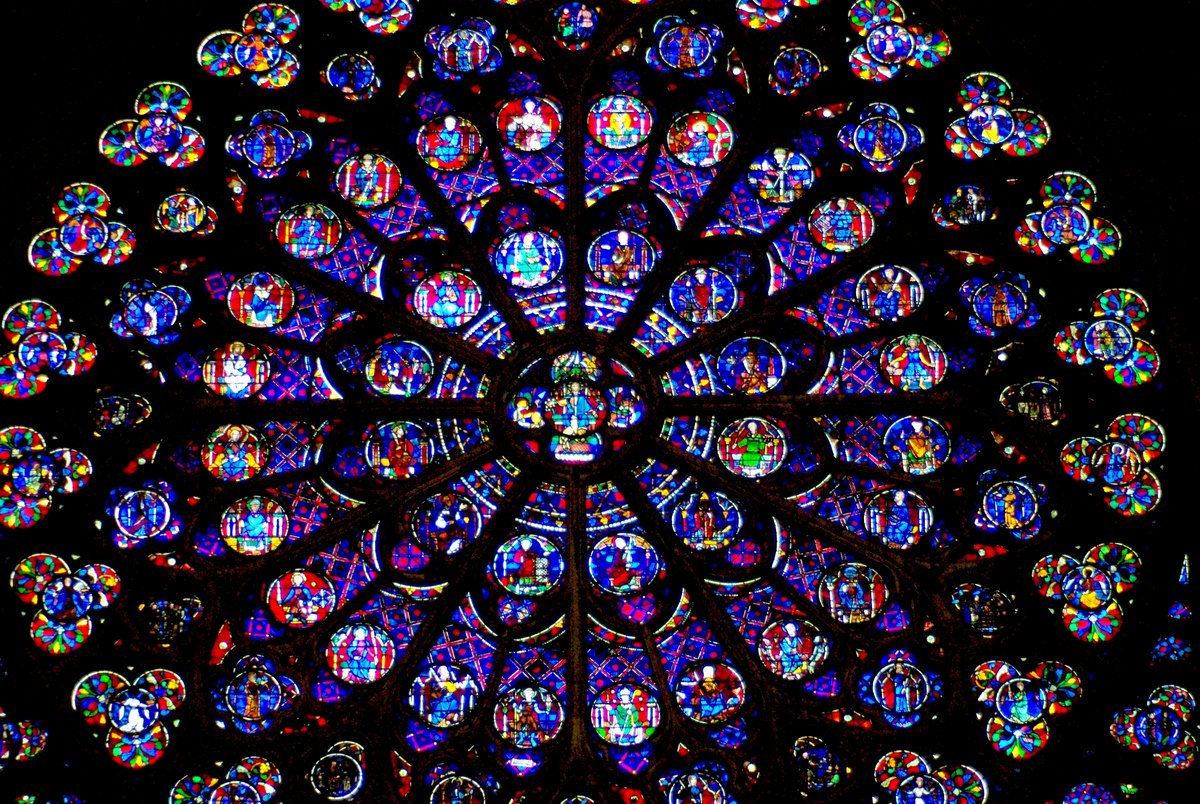

God in Three Persons, Blessed Trinity

Although I would not make a good Jeopardy! contestant and I seldom win at Trivial Pursuit, I tend to remember unusual things about movies. A few facts stick in my mind like where the movie was made, whether the movie was based on a book I’ve read, and who played in the starring role.

I also remember a few movies where a lead actor played in more than one role. Of course, it’s easy to recognize a face when one actor plays the role of twins, as Lindsey Lohan did in The Parent Trap. Eddie Murphy’s face appeared prominently in The Nutty Professor, a movie in which Murphy played seven different characters. Not as obvious is the face that appeared in dual roles in the popular movie Forrest Gump. Sally Fields plays a leading role as Forrest’s mother, but also a minor role as a reporter who asked Forrest a question during his cross-country run.

Recently, as I was channel surfing, partly out of curiosity and partly for nostalgic reasons, I paused to watch a little of Back to the Future II, especially since the future date to which Marty McFly traveled in the movie was 2015, a year now gone by. What I had forgotten about the movie was that the young Michael J. Fox played three characters, all within the same family: Marty McFly, Marty McFly Jr., and Marlene McFly.

In the new TV mini-series, “Moon Knight,” Oscar Isaac stars in a trio of roles including Mark Spector, Steven Grant, and Jake Lockley.

In the biblical drama, perhaps God also engaged in the simultaneous roles of Father, Son, and Spirit. And in each of those roles, which were in the script prior to creation, God gradually appeared on the stage of history.

While there is no literal mention of the Trinity in scripture, the biblical narrative certainly develops the characters of the Father, Son, and Holy Spirit. Since childhood, many of us have lifted our voices in praise to “God in three persons, blessed Trinity.”

In his book Reaching for the Invisible God, Philip Yancey observes that, “God’s image shines through us most clearly in the act of creation – comprising the three stages of Idea, Expression, and Recognition – and by reproducing this act we may begin to grasp, by analogy, the Trinity.”

If the voice of God sounds familiar, perhaps you’ve heard it before in a whirlwind or in a whisper. Or, if the face of God seems familiar, perhaps you’ve seen it before, in a garden called Eden, on a mount called Sinai, or on a cross called Calvary. And if neither the voice nor the face are familiar, maybe it would be worth your time to explore the story again.

(Barry Howard serves as pastor at the Church at Wieuca in North Atlanta. He also serves as a leadership coach and columnist with the Center for Healthy Churches. He and his wife, Amanda, live in Brookhaven, Georgia.)

Translating Groanings Too Deep for Words

The well-spoken prayers of others inspire me. For example, I am deeply moved by the reflective prayers of Walter Brueggemann, the contemplative prayers of Richard Rohr, and the reactive prayers of Nadia Boltz-Weber. Yet the transport of a prayer is not ultimately determined by syntax or intonation. Sometimes the most effective prayers are the ones that go unpronounced.

Back in the dark ages of the 20th century, before the advent of mobile phones and internet search engines, I remember an ad for the Yellow Pages, an antiquated hard print directory of business phone numbers, that urged, “Let your fingers do the walking.”  Nowadays, since texting has surpassed both the phone call and email as a preferred means of communication, it seems our fingers actually do the talking.

I have been thinking about the complexity of communication with God, especially the challenge of praying at times when words are hard to come by. Whether the cause is shock, trauma, doubt, depression, or attention-deficit, there are moments that we cannot find the words to articulate our prayers. In response to such a dilemma, I think Paul’s correspondence to the Romans was something more like “let the Spirit do the talking.”  

The Bible includes a variety of encounters wherein individuals engage in dialogue with God. Whether these encounters are prototypical or literal, that is a topic for another discussion. My point is that in these conversations, God speaks and understands the language of the people.

The Pentecost story emphasizes that language barriers were at least momentarily bridged or suspended. In a miracle attributed to the Spirit, the historian records that “each one heard their own language being spoken” (Acts 2:6).

Writing to the Romans, Paul addresses a unique communication dilemma, a topic I do not see specifically considered by other biblical writers. What happens when you are at a loss for words to formulate your prayer to God?  Paul asserts, “Likewise the Spirit helps us in our weakness; for we do not know how to pray as we ought, but that very Spirit intercedeswith sighs too deep for words” (Romans 8:26 RSV).

What if my grief is so profound, my anxiety is so high, or my depression is so deep that I lose the capacity to speak my prayer to God? Paul proposes that the Spirit bypasses the Broca’s area and the vocal chords and interprets our deepest groanings, translating those groanings into prayers.

In 2005 when my wife and I visited China, our traveling companions brought a digital language translator. We would speak a word in English and the digital device would automatically translate the word into Chinese. The device would also translate into specific dialects including, Mandarin or Cantonese, which enabled us to order meals, ask for directions, and communicate with cab drivers.

As Pentecost approaches and there is so much to pray about, among other things, I am encouraged to know that the Spirit is fluent in my inner dialect and can translate my unspoken prayers with pinpoint precision.

(Barry Howard serves as the pastor at the Church at Wieuca in North Atlanta. He also serves as a leadership coach and consultant with the Center for Healthy Churches. He and his wife, Amanda, live in Brookhaven, Georgia.)

More Than a Million Reasons to Remember

barrysnotes's avatarCove Creek Reflections

For 30 of my 40-plus years as a pastor, I have had the privilege of serving in two distinguished military communities: Anniston (former home of Fort McClellan) and Pensacola (home of Pensacola Naval Air Station). I continue to share life with those who currently serve or have valiantly served our country. Over the past three years I have enjoyed conversations with multiple military chaplains, officiated a wedding for a naval aviator, presided over the memorial service of a World War II veteran, shared a eulogy for a retired colonel, and listened to the career story of a former navy pilot, now in his eighties.

In each of the communities where I have served, an extraordinarily large number of residents have lost a son, daughter, father, mother, brother, sister, friend or neighbor on the field of battle. During my tenure in Pensacola, I shared over one hundred eulogies at the Barrancas…

View original post 405 more words

Navigating the Dark Side of Your Thoughts and Emotions

On any given day the best and the brightest among us can find ourselves enshrouded in whirlwind of emotional turbulence or bombarded by thoughts of darkness and despair. Our motivation may wane, fatigue may set in, and our sense of direction may become uncertain.

May is Mental Health Awareness Month. I am a student, not an expert, of mental, emotional, and spiritual health. I have spent 44 years in ministry. During two of those years, I served as a Pastoral Counselor in a private practice.

Mental health involves the interrelationship of the mind, body, and spirit. We have the capacity to experience joy, peace, happiness, and gratification. But we also have the capacity to experience sadness, melancholy, depression, grief, and anxiety. Sometimes our thoughts and emotions are shaped by life’s circumstances and dilemmas. At other times our thoughts and emotions are affected by changes in our body chemistry or our medications.

On November 10 of last year I received the tragic news that the 35-year-old son of one of my best friends took his own life. This past Monday, I stood with my friend at his son’s graveside as he shared his pain and asked, “What would cause him to do something like this?”

Over the years I have a presided at more than two dozen funerals precipitated by a self-inflicted death. And I have walked alongside hundreds of friends, fellow church members, and ministers as they have navigated the clouds of despair.

Those who struggle with mental and emotional health are in good company. Many years ago, C.S. Lewis observed, “Mental pain is less dramatic than physical pain, but it is more common and also more hard to bear. The frequent attempt to conceal mental pain increases the burden: it is easier to say ‘My tooth is aching’ than to say ‘My heart is broken.’”

The psalmist confessed, “In my distress I called upon the Lord and cried unto my God” (Psalm 18:6), and “Why, my soul, are you downcast? Why so disturbed within me?” (Psalm 45:5). 

Here are few facts to consider as we focus on improving our mental and emotional health:

  • 1 in 4 American adults experience some type of mental illness in a given year.
  • Depression is the leading cause of disability worldwide and one of the largest healthcare expenses.
  • Each year depression affects 5 – 8 percent of adults in the U.S.
  • 13.6 million adults in the U.S. live with a serious mental illness such as schizophrenia, major depression, or bipolar disorder.
  • 50% of all chronic mental illness begins by age 14.
  • 75% of all chronic mental illness begins by age 24.
  • People want to talk about mental illness. Family members (65%) and those with mental illness (59%) agree their church should talk openly about mental illness, so the topic will not be taboo.
  • Men are 4 times more likely than women to commit suicide.
  • 1 million – the number of Americans who receive treatment for suicidal thoughts, behaviors or attempts on a yearly basis.
  • 66% of senior pastors seldom speak to their congregation about mental illness.
  • Each year suicide claims approximately 40,000 lives in America.
  • Suicide is the 10th leading cause of death in the U.S. (more common than homicide).
  • Among young people aged 15 to 24 suicide is the third leading cause of death.

Here are a few pastoral observations about our mental and spiritual health:

  • Most people of faith, including ministers, experience depression, anxiety, or chronic worry for a season, and sometimes longer.
  • Our mental health and spiritual health are not identical, yet they inevitably influence each other.
  • The pandemic and the war in Ukraine have adversely affected the mental health of individuals of all ages including the experiences of heightened anxiety and deeper depression.
  • If we experience prolonged symptoms of anxiety or depression (more than 4-6 weeks) we should talk with our family physician or schedule an appointment with a counselor or therapist.
  • Seeing a physician or counselor is a sign of strength, not weakness. We should think of it the same way we think of seeing a mechanic for our car or a dentist to care for our teeth.
  • Medication for our mental health may be needed to restore balance to our body chemistry. Medication should never be thought of as unspiritual but as one of God’s instruments of healing.
  • Proactively caring for our mental health is one of the many ways we honor God.

Because we cannot always know which of our friends, co-workers, classmates, neighbors, and fellow church members are contending with the darker emotions of the mental health spectrum, let us extend a little extra grace and space to each other as we proactively address the challenges of life.

(Barry Howard serves as the pastor at the Church at Wieuca in North Atlanta. He also serves as a leadership coach and columnist for the Center for Healthy Churches. He and his wife, Amanda, live in Brookhaven, Georgia.)

“A Mother’s Day Story: You Don’t Bring Me Flowers Anymore”

Pastors face an assortment of unexpected dilemmas which are not covered in seminary course work. Most of these dilemmas are not about theology, scripture, or parliamentary procedure, but about practice or precedence. For me, one such challenge flared up on Mother’s Day.

In my first pastorate, I inherited that southern tradition I call “the Mother’s Day Flower Awards.” This tradition, which occurred during the morning worship service, called for the pastor to wish all mothers a “Happy Mother’s Day,” and then to recognize the oldest mother, the youngest mother, and the mother with the most children. Those mothers would come forward and the Mother’s Day Committee, an ad hoc committee appointed by the pastor, would pin a corsage on each of these distinguished mothers for them to wear the remainder of the day.

This tradition was not without its complications.  Much informal debate surrounded the eligibility of the award-winning mothers. For example, if the oldest mother was a visitor and not a church member, was she eligible? Or, what if the youngest mother was not married?  Was the award to the mother with most children to be presented to the mother who bore the most children or the mother with the most children present in the worship service? These questions often generated more lively and passionate discussion than the virgin birth, the trinity, or the second coming.

On the second Mother’s Day at my inaugural pastorate, I was duly fulfilling my pastoral obligation to preside over the Mother’s Day Flower Awards when a bit of a controversy erupted. The Oldest Mother corsage was presented to a 96-year-old matriarch. The Youngest Mother corsage was presented to a 21-year-old newlywed just prior to her first anniversary. But the mother with the Most Children corsage was presented under protest.

The method of determining the mother with the most children entailed an interesting process of elimination. Following the tradition forged by my pastoral ancestors, I would ask all the mothers to stand. Then I would ask mothers with two or more children to remain standing. Those with less than the stated number of children would be seated as they were eliminated from contention for this prestigious honor. Then I would count upwards, three or more children, four or more children, and so forth, until only one or two mothers remained standing. Then I would ask, how many children do you have? And the winner would be determined. 

In my orientation to the rules of the Mother’s Day Flower Awards, I learned that on occasions there is a tie for Mother with the Most Children. Therefore, the committee, who always had an extra corsage on hand, would bestow the honor on both mothers.

However, no one had prepared me for the dilemma I faced on that second Mother’s Day. There were two mothers left standing once the count reached eight or more children. So, I asked each mother, “How many children do you have?” and the first replied, “Nine.”  When I asked the second mother, she replied, “Eleven.”  I spontaneously said to this mother of eleven, “Wow! Congratulations. Come on down to receive your corsage.” 

As she was coming forward, another mother who was obviously rooting for the mother with nine children to win, said, “That’s not right. Those are not all her kids!”  And another mother, who happened to be a former member of the Mother’s Day Flower Awards committee said, “Pastor, we usually don’t count the husband’s children from a previous marriage. Those eleven kids aren’t all hers.”

What a dilemma! There I stood, alone in the pulpit, a young pastor in the middle of a congregational debate in worship about which mother should get the “most children” corsage. In the heat of the moment I made a Solomonic decision. I simply said, “Since we are blessed to have two mothers with such a large number of children, I am going to ask both mothers to come forward and be recognized with a corsage.”

Thankfully, both mothers smiled, the congregation applauded. And I preached an inspiring Mother’s Day sermon while inwardly pledging never to give Mother’s Day Flower Awards again.

Nowadays, I simply wish all mothers, grandmothers, stepmothers, soon-to-be mothers, wanna-be mothers, and other mother figures a “Happy Mother’s Day” during the welcome prior to worship. Then we worship God with gratitude for all motherly influences without pinning a flower on any mother or putting the pastor on the hot seat.

(Barry Howard serves as the pastor at the Church at Wieuca in North Atlanta. He also serves as a leadership coach and columnist with the Center for Healthy Churches.)

A Reflection on Friendship

C.S. Lewis asserted, “A friend is someone who knows the song in your heart and can sing it back to you when you have forgotten the words.”

Trusted and treasured friendships certainly add joy and stability to life’s adventures. Mark Twain quipped, “Good friends, good books, and a sleepy conscience: this is the ideal life.”

Some folks are mere acquaintances, but some acquaintances become dear friends. The ancient wisdom writer pre-supposes that for most of life, human beings are going to be engaged in dynamic human relationships. In The Message, Proverbs 18:24 is translated, “Friends come and friends go, but a true friend sticks by you like family.”

What is a friend? C. Raymond Beran described friendship like this:
Friends are people with whom you dare to be yourself. Your soul can be naked with them. They ask you to put on nothing, only to be what you are. They do not want you to be better or worse. When you are with them, you feel as a prisoner feels who has been declared innocent. You do not have to be on your guard. You can say what you think, as long as it is genuinely you. Friends understand those contradictions in your nature that lead others to misjudge you. With them you breathe freely. You can avow your little vanities and envies and hates and vicious sparks, your meannesses and absurdities, and in opening them up to friends, they are lost, dissolved on the white ocean of their loyalty. They understand. You do not have to be careful. You can abuse them, neglect them, tolerate them. Best of all, you can keep still with them. It makes no matter. They like you. They are like fire that purges to the bone. They understand. You can weep with them, sing with them, laugh with them, pray with them. Through it all–and underneath–they see, know, and love you. A friend? What is a friend? Just one, I repeat, with whom you dare to be yourself.

In a highly competitive world where individuals are dominated by self-interest, how do you keep relationships healthy and growing? Sustainable friendship is a gift from God.

Churches are built on both faith and friendship. Members of a congregation are diverse friends from a variety of backgrounds who stick together in tough times, who bring out the best in each other, and who collaborate in missional initiative, despite their differences, to live out a common faith conviction.

Maybe the Quakers have it right in referring to their faith community as “The Society of Friends.”

During these days of learning to bring out the best in others, treasure the friendships you have, and look forward to making new friends in the days ahead. Robert Louis Stevenson once wrote, “So long as we are loved by others, I would almost say that we are indispensable; and no man is useless while he has a friend.”

Maintaining a good friendship requires grace, mercy, patience, and perseverance. E.C. McKenzie observed that “some people make enemies instead of friends because it is less trouble.”  I, for one, contend that true friendship is worth the hassle.

(Barry Howard serves as the pastor of the Church at Wieuca in North Atlanta. He also serves as a columnist and leadership coach with the Center for Healthy Churches.)

Why I Am Leery of Labels, and You Should Be Too!

My wife, a true child of the south, loves sweet tea. I, on the other hand, prefer unsweet tea with fresh lime or lemon.

At least twice recently, as we were dining out, our server refilled my wife’s sweet tea glass with unsweetened iced tea. In both cases, when we called it to the server’s attention, each server insisted that the label on the pitcher read “sweet tea.”  We suggested that “unsweet tea” had mistakenly been poured into the pitcher designated for “sweet tea.”

The servers seemed shocked that such an atrocity could have happened. They assumed that the label correctly identified the contents.

In the days following these two incidents, I couldn’t help but note how many things in life are mislabeled. And I began to observe more and more individuals trying to attach a pejorative label to other individuals.

As we were preparing to move a couple of years ago, we were sorting, culling, and discarding things from our drawers and closets as we packed. Among the nostalgic things I discovered was a vintage Dymo Label Maker. I don’t mean the label software we use to create and print file folder labels or barcodes. I mean the manual handheld label maker into which we fed bright color label tape and embossed letters or numbers to place on cabinet doors, boxes, storage containers, light switches, and school lunch boxes and other items to identify their owners, state their contents, or indicate their function.

The discovery of our old label maker caused me to reflect more deeply about the appropriate use of labels. Labels have been around a long time, and until recent years there has been an unspoken etiquette regarding there usage. Here are a few best practices we should remember regarding labels:

  • Label things, not people. Philip Pullman contended, “People are too complicated to have simple labels.”
  • Attach labels to your own stuff, not someone else’s. As we continued packing, we didn’t actually create vintage labels. Rather, we used a Sharpie to identity the contents of the box or the room where it should go. No one else, not even the moving company, could do that for us.
  • Remember that the contents determine the label; the label does not determine the contents. Just like the pitcher labeled “sweet tea,” the contents of “unsweet tea” superseded whatever was on the label.
  • Look for the newest label on the box and disregard the old labels. Like our moving boxes, some of our repurposed boxes had markings that read “books,” but we marked through old label and wrote “dishes.” Contents change. And so does character.
  • Labels lose their sticktuitiveness. The adhesive of most labels is more like masking tape than duct tape. And masking tape is for short-term, not long-term use.
  • Labels can be intentionally deceitful. If you have expensive jewelry, for example, do not keep it in a jewelry box on your dresser so that it can be easily found during a break-in. Likewise, political and religious labels can be used to misdirect or manipulate the reputation or character of another human being to create a perceived advantage for the labeler and a disadvantage for the one being labeled.
  • Jesus lived in a way that defied labels and likely expects his followers to do the same. Rather than trying to decide which political label, cultural label, doctrinal label, or religious label to wear, what if we lived in a way that defied labels? Maybe our calling is to be so focused on emulating the way of Jesus that our lifestyle aligns with his values and teachings.

As we were determining which items to keep and which to discard, despite the nostalgia, we opted to dispose of the vintage Dymo Label Maker. We are at a stage of life where we hope to use fewer labels, not more of them.

And maybe, just maybe, the world would be a better place if we all used fewer labels, and that we are extremely careful with the ones we do use.

(Barry Howard serves as pastor of the Church at Wieuca in North Atlanta. He also serves as a columnist and leadership coach with the Center for Healthy Churches. He and his wife currently live in Brookhaven, Georgia.)

10 Life Lessons from Holy Week

Our reflective Lenten journey is complete and our celebrative journey into Eastertide has begun. But before we leave Holy Week too quickly, there are a few takeaways from the stories we encountered we need to bookmark, a few lessons for daily living that may help us follow Jesus more effectively.

The overarching message of God’s love and forgiveness is demonstrated through the death, burial, and resurrection of Jesus. However, the passion narrative is actually a composite of individual episodes that contribute to the central plot which reaches its apex with the cross and the empty tomb.

As I look back on the events that occurred during Jesus’ pivotal week in Jerusalem, here are a few lessons about life and faith that I want to remember:  

  • Every temple needs cleansing now and then. This includes those built of brick and mortar, and those composed of flesh and blood.

  • Parables prompt us to stop and think. Rather than telling us what to think, the stories of Jesus stimulate us to think more deeply about the intersection of life and faith.

  • Servants lead and leaders serve. Taking up the towel and basin is simultaneously an act of service and an expression of leadership.
  • Commands are non-negotiable. A mandate is different than a prerogative or a preference. For example, “Love one another” is a command to be obeyed, not an option to be considered.
  • Table time is treasured time. Breaking bread around the table with friends…those are occasions to be remembered.
  • Pray the prayer of holy indifference. Jesus prayed “Not my will, but your will be done” once. I must pray the words of this prayer continually because my will is so blatantly self-oriented.
  • Beware of those who kiss up to you. They either have an agenda of their own, or they are in cahoots with those plotting a coup.
  • Avoid judging others. In fact, be careful not to judge Judas, for we too may be tempted to betray Jesus, but for much less than 30 pieces of silver.
  • Going along with the crowd is always a risky venture. Crowds seldom make wise decisions. The will of God is rarely determined by popular vote.
  • Death does not have the final word. The resurrection declares that life conquers death and hope prevails over despair.

Each of the daily stories that comprise the big story of Holy Week has something to teach us about bringing faith to life. These lessons from the life of Jesus inspire us to be more faithful followers and they equip us to be better disciples.

How in the World Is the Date for Easter Chosen?

Christmas is always on December 25. Why is Easter not on the same date every year?

Last year Easter was on April 4. This year we will celebrate Easter on April 17. Next year Easter comes on April 9, just as the redbuds, dogwoods, and azaleas are beginning to bloom. In other years, Easter has arrived in late March when the weather is still wintry. 

Why does the date vary? Since the date of Easter is not an actual anniversary of the resurrection, when is the most appropriate time to celebrate?

That very question caused considerable debate and controversy in the early church. A quarrel broke out in the middle of the second century between church leaders in Rome and those in Asia Minor regarding the appropriate date for celebrating Easter. The practice in the East was to observe Easter according to the moon, regardless of the day of the week the observance fell on. The practice in Rome was to wait until the following Sunday. 

Bishop Polycarp, who was a disciple of the apostle John, represented the East, and Bishop Anicetus represented the West. Since they could not agree on the date, each continued to observe Easter according to his own conviction. The controversy became so intense that it threatened the harmony of the Christian world. 

Councils were called in Rome and Palestine to debate the merits of both arguments. Most of the participants generally favored celebrating Easter on Sunday. When the Bishop from Ephesus and many of the churches in Asia Minor refused to change their practice, they were declared “excommunicated” from the church by Bishop Victor of Rome.

Later, the Council of Nicaea, convened by Augustine in A.D.325, affirmed the calculation used to determine the official date of Easter and that calculation is still used today. Easter is celebrated on the Sunday following the first full moon falling on or after March 21. Therefore, Easter cannot come before March 22 or after April 25.

Even though the name, “Easter,” is packed with spiritual connotation, the term is derived from a pagan spring festival. Some believe it was named after the Teutonic god or goddess of spring. However, the name was seized by Christian believers and converted to a day of worship and feasting to celebrate the resurrection of Christ. 

Regardless of when it appears on the calendar, in March or in April, Easter is a high and holy day, a designated occasion to affirm and proclaim the foundation of the Christian gospel: Christ is risen! Christ is risen indeed!

(Barry Howard serves as pastor of the Church at Wieuca in North Atlanta. He also serves as a leadership coach and columnist with the Center for Healthy Churches. He resides in Brookhaven, Georgia. You can follow him on Twitter @BarrysNotes.)