Reading Sharpens the Mind and Nourishes the Soul

Joseph Addison contends, “Reading is to the mind what exercise is to the body.”

For me, reading has become a crucial life discipline—one that sharpens the mind and nourishes the soul. Each year, I intentionally select a variety of books—fiction and nonfiction—to complement my study of Scripture, theology, and devotional literature. This habit has not only deepened my understanding but has also kept my mind engaged, my creativity alive, and my spirit refreshed.

Reading brings mental focus in an age of distraction. We live in an era of constant digital stimulation. With screens at our fingertips, it’s easy to settle for passive entertainment—whether through television, social media, or endless scrolling. But merely watching does not stretch or challenge the great mental muscle that God has given us. Reading, on the other hand, requires active engagement. It forces us to think, process, reflect, and imagine in ways that visual media rarely can.

In Luke 10:27, Jesus commands us to love God with all our heart, soul, strength, and mind. To love God with our minds means keeping them sharp, alert, and active—not allowing them to grow dull through neglect.

An inquiring mind needs nourishment. I have noticed a direct correlation between my reading habits and my mental sharpness. During seasons when my schedule interrupts my regular reading routine, I can feel my mind becoming “hungry”—undernourished and sluggish. When I neglect reading, my memory weakens, my creativity fades, and my ability to think deeply diminishes. But when I prioritize time for study and reading, I find that my mind is sharper, my memory is stronger, and my ability to teach and preach is far more effective.

Acquiring a love for reading can be a journey. I wasn’t always a disciplined reader. In high school, working an after-school job left me with little time for required reading, so I often relied on summaries rather than diving into the books themselves. It wasn’t until midway through my university years that I truly discovered the joy of reading. An English professor encouraged me to read multiple books at once, engaging with them as if I were in conversation with different voices and perspectives. This approach transformed my reading habits, and to this day, I often find myself reading several books alternately until I’ve completed them.

For me, reading is a spiritual discipline. For those aiming to grow deeper in their faith, reading should be considered more than just a pastime—it should be recognized as a spiritual discipline. Alongside prayer, Bible study, meditation, worship, and stewardship, reading enriches the soul by expanding our understanding of God’s world and the people in it.

Engaging with a wide variety of genres—novels, biographies, history, poetry, and theological works—broadens our perspective, deepens our wisdom, and helps us see the world through different lenses. Reading cultivates empathy, insight, and a greater appreciation for the richness of God’s creation.

Reading contributes to a healthy life. Several key disciplines contribute to my physical, spiritual, and emotional health:

  • My prayer and devotional life
  • A balanced diet and regular exercise
  • Meaningful time spent with friends and family
  • And, just as important—the ongoing discipline of reading

Reading is not just an academic exercise—it is a lifelong habit that strengthens the mind and enriches the soul. It feeds our intellect, fuels our imagination, and fortifies our faith.

I concur with Holbrook Jackson who reminds us, “ Never put off till tomorrow the book you can read today.”

(Barry Howard is a retired pastor who now serves as a leadership coach and columnist with the Center for Healthy Churches.)


From the “Octopus” to the “Not-So-Secret Secret”: 25 Books I Plan to Read in 2025

A wise person once observed, “We lose ourselves in books. We find ourselves there too.” Some people live to read. I think I read to live. Embarking on a journey through an engaging book is a soul-nurturing, mind-stretching adventure.

My appreciation for reading was slow to develop. But when it emerged, it surged. As a teenager, I perceived reading to be a nuisance and somewhat of a necessary evil to attain decent grades in school. However, at some point early in my college experience, I learned to value the gift of reading, not just for assignments or entertainment, but for personal growth and development.

As a pastor, I needed to read widely to stay current and to speak with fresh relevance on a variety of topics. Now that I am retired, I need books like I need food, to satisfy my cognitive hunger and to probe intellectual curiosity. Books stimulate my thinking, exercise my memory muscles, and challenge my presuppositions. They keep me hono

Once again this year, my reading list will include a variety of genres including fiction, spirituality, theology, history, and biography. Typically, I keep from three to five books going at the same time, a practice that was recommended by Opal Lovett, one of the most influential faculty members at Jacksonville State from my college years. This approach invites a panel of authors to be conversation partners in my internal dialogue.

I also intentionally read books I don’t agree with. Rather than making me combative, the practice of reading opposing viewpoints challenges me to test my assumptions and it familiarizes me with a variety of perspectives. This discipline equips me to converse and debate intelligibly, and not just emotively.

Here are 25 books I plan to read in 2025:

Fiction & Thrillers:

  1. Strangers in Time– David Baldacci
  2. Think Twice- Harlan Coben
  3. The Waiting– Michael Connelly
  4. The President’s Shadow- James Patterson
  5. The Life Cycle of the Common Octopus- Emma Knight

Spirituality & Theology:

  1. God Has a Name: What You Believe About God Will Shape Who You Become– John Mark Comer
  2. The Tears of Things: Prophetic Wisdom for an Age of Outrage– Richard Rohr
  3. The Word of a Humble God: The Origins, Inspiration, and Interpretation of Scripture- Karen Keen
  4. De-sizing the Church: How Growth Became a Science, Then an Obsession, and What’s Next- Karl Vaters
  5.  The Widening of God’s Mercy- Christopher Hays and Richard Hays

Personal Growth & Leadership:

  1. The Gifts of Imperfection: Let Go of Who You Think You’re Supposed to Be and Embrace Who You Are– Brené Browne
  2. Steps: A Guide to Transforming Your Life When Willpower Isn’t Enough- John Ortberg
  3. Culture Is the Way: How Leaders at Every Level Build an Organization for Speed, Impact, and Excellence- Matt Mayberry
  4. Strengthening the Soul of Your Leadership: Seeking God in the Crucible of Ministry- Ruth Haley Barton
  5. Wrestling with Doubt, Finding Faith- Adam Hamilton

Memoirs & Essays:

  1. Hope: The Autobiography- Pope Francis
  2. Dusk, Night, Dawn: On Revival and Courage– Anne Lamott
  3. Democracy Awakening: Notes on the State of America- Heather Cox Richardson
  4. I Guess I Haven’t Learned That Yet– Shauna Niequist
  5. The Most They Ever Had- Rick Bragg

Church & Ministry:

  1. The American Religious Landscape: Facts, Trends, and the Future- Ryan P. Burge
  2. Reappearing Church: The Hope for Renewal in the Rise of our Post-Christian Culture- Mark Sayers
  3. Creating Healthy Church Systems- Brad Ransom
  4. The (Not-So-Secret) Secret to Reaching the Next Generation– Kevin DeYoung
  5. How to Lead When You Don’t Know Where You’re Going– Susan Beaumont

Life would not be as rich without a treasure trove of books. Regarding the importance of reading, I identify with Anne Lamott who said, “For some of us, books are as important as almost anything else on earth. What a miracle it is that out of these small, flat, rigid squares of paper unfolds world after world after world, worlds that sing to you, comfort and quiet or excite you. Books help us understand who we are and how we are to behave. They show us what community and friendship mean; they show us how to live and die.”

I hope the books you choose to read in 2025 enrich your life and enlarge your world!

(Barry Howard is a retired pastor who now serves as a columnist and leadership coach with the Center for Healthy Churches. He and his wife live on Cove Creek in northeast Alabama.)

Reflections on Turning 65: 10 Things I Am Still Learning About Life

Today I turn 65 years old, and I’m proud of it. Kevan Manwaring suggests, “A birthday is a time to reflect, to take stock and to look ahead.”

Ms. Bertha Boozer, our long-time neighbor in the Williams Community who lived to be 107, always told me, “I don’t understand my friends who complain when they have a birthday. Do they not understand the alternative?” Then she added, “I think every birthday is a blessing.” Amen to that!

I’ve enjoyed most of my birthdays. This year, however, as I celebrate 65 years of life, it feels a little different, a little more contemplative, a little more like a shifting of gears. At age 55 I received my AARP card. As I approached 65 I received my Medicare card. Plus, I’ve retired (again) recently, so I guess this an occasion to reflect on the journey so far, the lessons learned, and the wisdom gained along the way. So, here are some thoughts as I process this milestone birthday:

1. Faith is more of a sail to be raised than an anchor to be dropped. I certainly understand the metaphor of faith as an anchor, but that analogy is best understood in the context of a storm-tossed sea where faith keeps us from being tossed to and fro. Faith is active in the sense that it is continually growing, and we are constantly being re-shaped and “transformed by the renewing of our minds.” Faith is not about staying in one place but about moving forward, trusting the wind of the Spirit to help us navigate life’s uncertainties with confidence and grace.

2. Relationships are more important than stuff. As I’ve aged, it’s become clearer that material possessions pale in comparison to the value of deep, meaningful relationships. I can identify with Jimmy Carter’s assessment that “Earlier in my life I thought the things that mattered were the things that you could see, like your car, your house, your wealth, your property, your office. But as I’ve grown older, I’ve become convinced that the things that matter most are the things that you can’t see — the love you share with others, your inner purpose, your comfort with who you are.” People bring joy and purpose to life in a way things never can.

3. Choose the scenic route rather than the interstate. When possible, choose the backroads rather than the turnpike. Pace yourself and enjoy the scenery. Through the years I’ve even noticed that detours often turn out to be better than the route we originally chose. Life rarely goes as planned, but some of the best experiences and lessons come from unexpected changes in direction. Taking the scenic route and navigating detours has led me to places I never knew I needed to go.

4. Worry is a waste of time and brain cells. Worrying has never solved a problem or changed an outcome. Erma Bombeck was right on target: “Worry is like a rocking chair: it gives you something to do but I never gets you anywhere.” Letting go of worry frees us mental and emotional bandwidth so that we can think creatively, focus on solutions, and do effective problem-solving.

5. The most significant things we do in life we are seldom aware of when we do them. I have been blessed to have opportunities to stand before a handful of people  and to more than a thousand to preach sermons, offer eulogies, or officiate weddings. Yet I think the most significant things I’ve done in life were not in the public eye. Some of our greatest impacts on others come from simple, unintentional acts of kindness. It’s humbling to know that what feels small to us may be life-changing for someone else.

6. Time is the real currency of life and we are wise to spend it thoughtfully and intentially. Art Buchwald said “Whether it’s the best of times or the worst of times, it’s the only time we’ve got.” At 65, I’ve learned that time is far more valuable than money. How we choose to spend our time—and with whom—defines the quality of our lives.

7. Mistakes are opportunities for growth. My friend and encourager, Dr. John Harris, a retired pastor from Louisianna who served as a pastoral counselor in Birmingham, continually reminded me, “Never waste a mistake.” Mistakes are not failures; they are stepping stones to greater understanding and strength. Each one teaches us something valuable if we’re willing to learn.

8. Our self-worth is much more than the value of our bank accounts at any given time. True worth is found in character, kindness, and the love we share with others. Money can never define who we are or how much we matter. Adam Grant reminds us, “A stable sense of self-worth stems from putting identity above image: worrying less about what others think of us than what we think of ourselves.”

9. Health is a gift never to be taken for granted. Good health is one of life’s greatest blessings. Denis Waitley underscored, “Time And health are two precious assets that we don’t recognize and appreciate until they have been depleted.” Taking care of our bodies and minds allows us to fully enjoy the time we have and the people we share it with.

10. We discover our purpose as we are engaged in serving. Purpose is discovered in action, not in waiting. I’ve seen it over and over again. Students who are engaged in service projects or who serve on mission trips seem to awaken more to their life’s passion or their sense of calling in life than those who simply make career choices based on projected income. By stepping up to help and serve others, we find deeper meaning and fulfillment in life.

Turning 65 has been a time of reflection and growth. These lessons have shaped who I am and continue to guide me as I embrace the years ahead.

Despite a lifetime of experience, I am not really an expert in anything, but I am an avid student of life. As popular musician David Bowie grew older he observed, “Aging is an extraordinary process where you become the person you always should have been.”

Here’s to continuing the journey with faith, purpose, and gratitude for all that has been and all that is yet to come.

Servant Leadership: 10 Traits Pastors and Others Can Glean from Jimmy Carter

Across the course of his life, Jimmy Carter exemplified servant leadership. The 39th President of the United States is celebrated even more for his post-presidential humanitarian work than his time in office. As a devout Christian, Sunday school teacher, and global advocate for peace and justice, Carter’s life was all about serving God by serving others.

Carter often said, “I have one life and one chance to make it count for something… My faith demands that I do whatever I can, wherever I am, whenever I can, for as long as I can with whatever I have to try to make a difference.”

His example offers a wealth of lessons for pastors, whose roles also demand faith, resilience, and a commitment to serving others. Here are 10 leadership traits pastors can glean from Jimmy Carter to enhance their ministry and reflect Christ’s love more fully:

1. Lead and serve from the wellspring of a rooted and grounded faith. Carter’s faith was the bedrock of his leadership, shaping his decisions and actions throughout his life. Carter claimed, “For me, faith is not just a noun, but also a verb.” Whether navigating the complexities of the presidency or building houses with Habitat for Humanity, Carter approached every role with a Christ-centered perspective. For pastors, staying rooted in faith is critical to leading authentically, purposefully, and with spiritual integrity.

2. Maintain a regular devotional practice. Despite a demanding schedule, Carter consistently carved out time for prayer, Bible study, and quiet reflection. This discipline provided him with resilience and clarity during challenging times. Pastors, too, must prioritize their spiritual health, remembering that effective ministry flows from a strong and active relationship with God.

3. Cultivate an attitude of humility. Carter referred to himself as a “citizen servant,” embracing leadership as an opportunity to serve others rather than seeking personal glory. For pastors, humility means leading with a heart focused on God’s glory and the well-being of others, rather than seeking personal accolades or recognition.

4. Become comfortable in your own skin. Carter was remarkably genuine. Although he was known all over the world, he was neither prideful nor pretentious. He embraced his Southern roots, Christian values, and even his imperfections, allowing his authenticity to shine through. Similarly, pastors lead most effectively when they are genuine and transparent, which enables them to better connect with others.

5. Be a bridgebuilder and peacemaker. Carter’s peacemaking legacy, epitomized by the Camp David Accords, demonstrated his ability to bring opposing sides together. Especially in this era of extreme divisiveness, pastors are called to build bridges within their congregations and communities, fostering unity and reconciliation.

6. Make decisions based on conviction, not popularity. Carter’s moral compass guided him to make decisions based on conviction rather than public opinion, even when those choices were unpopular. Pastors, too, must prioritize God’s calling and biblical teaching over human approval, standing firm in their convictions despite external pressures.

7. Read widely and regularly. Carter’s love of reading broadened his knowledge and deepened his understanding of history, culture, and faith. Pastors can benefit greatly from cultivating a habit of reading, which not only enriches their sermons but also equips them to address a wide range of issues with wisdom and insight.

8. Find a hobby that revitalizes you. Carter found joy and balance in woodworking, a creative outlet that recharged him. He also enjoyed playing tennis and built a tennis court in the backyard of his home in Plains. Pastors, who often face high demands and emotional strain, need hobbies, pastimes, or recreational outlets that refresh their minds and spirits. These pursuits can help prevent burnout and keep them energized for ministry.

9. Learn names. Carter’s remarkable ability to remember people’s names left a lasting impression on those he met. Carter insisted, “You only have to have two loves in your life: for God, and for the person in front of you at any particular time.” For pastors, the simple act of learning names is a powerful gesture that communicates care and value, allowing a pastor to build deeper connections with members of their congregation.

10. Address critical issues head-on. Carter was proactive in addressing the priority concerns. His lifelong commitment to human rights and poverty alleviation reflected his understanding of the gospel’s call to action. Pastors are uniquely positioned to lead their congregations in tackling issues like injustice, inequality, and poverty, demonstrating Christ’s love in practical, transformative ways.

Jimmy Carter’s life serves as a compelling example of servant leadership rooted in faith, humility, and a deep sense of purpose. His servant leadership style resonated with pastoral overtones. He proposed, “Let us learn together and laugh together and work together and pray together, confident that in the end, we will triumph together in the right.”  

Carter’s leadership reminds us that true greatness lies not in status or power, but in service. His example inspires pastors to lead with grace, courage, and unwavering faith as they navigate the sacred calling of shepherding God’s people.

(Barry Howard is a retired pastor who serves as a leadership coach and columnist with the Center for Healthy Churches.)

Love, Faith, and Simplicity: Remembering Our Visit in the Home of President and Mrs. Carter

What is it like to visit the home and the church of a former president?

In the spring of 2012, my wife and I were blessed to spend a week in Plains, Georgia, where I had been invited to lead in revival services at the Maranatha Baptist Church. Their most famous members, Jimmy and Rosalynn Carter, were present in every service.

I first met Governor Jimmy Carter in 1975 when I was a sophomore in high school and he was the featured speaker for the Alabama State FFA Convention in Montgomery. Interestingly the delegates at those conventions were seated in alphabetical order according to the school they represented, and since I served as a delegate from Alexandria High School, I had a front row seat.

Then in 2004, Amanda and I made the pilgrimage to Maranatha to attend President Carter’s Sunday School class and to stand in line with the other worshippers to have a photo taken with the 39th president. On that particular Sunday, Mrs. Carter was traveling internationally with an initiative related to the Carter Center.

Never would I have guessed in 1975 that I would become a pastor and someday preach in President Carter’s home church. After the first service in 2012, the worshippers formed a line to greet the guest preacher and his wife and welcome them to Maranatha. The Carters stood in line like every other member, and when they greeted us, Mrs. Carter welcomed us and commended the sermon, while President Carter shook my hand and kissed my wife on the cheek. She was so in awe of President Carter she quipped, “I may never wash my face again.”

The tradition at Maranatha is for the guest preacher to have lunch with the Carter’s during the revival week. We met the Carter’s at Dylan’s Diner on Wednesday, and then accompanied them to their home for dessert and conversation.

Before departing the restaurant, President Carter took me to every table in the restaurant, asked the patrons where they were from, introduced me as the guest evangelist for their revival, and invited every person in the diner to attend the final service that night. Then he added to his invitation, “If you come, you can sit with me and Rosalynn.” That night the attendance peaked, and the Carters were surrounded by the guests he invited from the restaurant.

The Carter’s home is modest and welcoming. President Carter built most of the furniture. We talked about his upbringing in Plains, his career in the Navy, his visits with world leaders, his work with Habitat for Humanity, his love for the Gulf Coast, and the well-being of several of our mutual friends. It was remarkable to hear stories of his recent conversations with Fidel Castro, and I was particularly interested in his recollections of Israeli Prime Minister Menachem Begin and Egyptian President Anwar Sadat.

Mrs. Carter, who insisted that we call her Rosalynn, had prepared sugar-free banana pudding for our dessert. She served it in a Corningware dish much like my grandmother’s. When I went to the kitchen to assist her with the coffee, I noted that she used a white older model Mr. Coffee coffeemaker, just like the one we use at home. Our visit was rich in simplicity and authenticity.

After we finished dessert, President Carter gave us a tour of his study, where he gave us an overview of some of his newest commentaries, followed by a tour of his workshop, where he showed us a few of his paintings and samples of his woodworks.

Then he said to Amanda, an avid tennis player, “Would you like to see our tennis court?” After he shared a few tennis stories, he said, “We normally take a photo of the guest minister on the front porch, but since Amanda loves tennis, we can take a photo of the four of us here on the tennis court.” Then he requested that one of the Secret Service Agents take the picture, a photo that we will continue to treasure for the remainder of our days.

After the photoshoot, we returned to the house to retrieve a few books he had signed for us, and then they walked us to our car, so we could return to the Plains Inn to freshen up before the evening service.

On the casual walk to our vehicle, as the two of them held hands, they shared with us that their home had been given to the National Park Service so that visitors could continue to visit Plains for years to come. Then Mrs. Carter pointed to a gardenesque area in the front yard and said, “And this is where we will be buried.” And President Carter squeezed her hand and said, “But not yet, Rosie. Not yet.”

In his book, A Full Life, President Carter confessed, “Earlier in my life I thought the things that mattered were the things that you could see, like your car, your house, your wealth, your property, your office. But as I’ve grown older I’ve become convinced that the things that matter most are the things that you can’t see — the love you share with others, your inner purpose, your comfort with who you are.”

Before our visit, we knew the Carters were faithful servants and influential advocates for the poor, the persecuted, and the underserved. During our visit, we learned they were gracious, down to earth, and comfortable in their own skin.

Nearly two years ago, the world learned President Carter was beginning hospice care at home, rather than continuing to go back and forth to the local hospital. And then, surprisingly, Rosalyn died before him.

This past week, as President Carter’s completed his journey, I can imagine that his beloved Rosie was there to squeeze his hand and say, “Welcome home, Jimmy! Welcome home!”.

(Barry Howard serves is a retired pastor who serves as a leadership coach and columnist with the Center for Healthy Churches. He and his wife, Amanda, currently reside on Cove Creek in northeast Alabama.)

Navigating Life on the Island of Misfit Toys: 7 Ways to Deal with Loneliness at Christmas

For those of us who grew up watching Rudolph the Red-Nosed Reindeer, the Island of Misfit Toys has become a symbol of being different, overlooked, or left out. Although the toys were not broken, they were misunderstood and longing for a place where they belonged.

For many individuals, the holidays can feel like that island—a season where everyone else seems to have a place, a purpose, and people to share it with, while loneliness leaves us feeling adrift. In a recent Harvard study, 21 percent of adults indicated they have experienced serious feelings of loneliness.

If you’re feeling like life on the “island” is your reality this Christmas, take heart. Loneliness, though difficult, does not have the final word. Here are some ways to find meaning, connection, and even joy during the holidays, no matter your circumstances:

1. Own your uniqueness. On Rudolph’s journey, Charlie-in-the-Box insisted, “Being a misfit means that you are special. Embrace your uniqueness and celebrate who you are.” Loneliness can stem from feeling out of place or like you don’t measure up to others’ holiday experiences. But the beauty of Christmas is that God didn’t choose perfection to carry out his plan. God chose a humble manger, ordinary shepherds, and a small, overlooked town. Lean into who you are, and remember that you are uniquely and wonderfully made.

2. Come to terms with your feelings. It’s okay to admit that the holidays are hard. Whether you’re grieving a loss, facing a season of change, or simply feeling the ache of solitude, naming those emotions can be a powerful first step toward healing. Even Jesus experienced loneliness and sorrow. He knows your pain and he is near to you, offering comfort and peace.

3. Look for fellow “misfits.” The Misfit Toys didn’t stay isolated. They found each other. Seek out others who may also feel disconnected during this season. Attend a community event, reach out to a friend, or visit a local church. Many people long for connection but don’t know how to take the first step. Your initiative could be a gift not only to you but to someone else.

4. Find joy in serving. One of the most powerful antidotes to loneliness is serving others. Volunteer at a shelter, bake cookies for your neighbors, or send handwritten notes to people who might also be feeling alone. When we shift our focus outward, we often discover new connections and purpose in the process.

5. Lean into the Christmas story. At its core, Christmas is not about parties, gifts, or picture-perfect moments. The Christmas story is about God stepping into our messy, lonely world to be with us. The birth of Christ is a profound reminder that we are never truly alone. Emmanuel, “God with us,” means God is present in your quiet moments, your tears, your laughter, your challenges, and your joys.

6. Create your own traditions. If old traditions bring more pain than joy, don’t be afraid to start new ones. Hermey the Elf advises, “Follow your passion and dreams, even if they don’t fit into the mold. Be true to yourself and find joy in pursuing what you love.” Write a poem, start a jigsaw puzzle, try the new recipe, dance by the light of the tree, or take a peaceful walk under the stars. Simple, meaningful actions can help you reclaim the season.

7. Give yourself the gift of grace. It’s okay to feel lonely, and it’s normal to experience melancholy during the holidays. Don’t be too hard on yourself if your emotions feel a little chaotic. The first Christmas night wasn’t filled with jubilant celebration but with quiet humility. Let yourself rest in the peace of the season, know that your self-worth isn’t determined by how festive you feel.

The story of the Misfit Toys didn’t end with them being forgotten. Rudolph and his friends ensured they were found, loved, and given purpose. Christmas is a reminder that we are never truly left behind. God sees us, loves us, and has a purpose for us—even when at times we feel like misfits.

Dare to step outside your comfort zone this Christmas. As Yukon Cornelius wisely observes, “Adventure awaits those who are willing to take risks. Embrace the unknown and discover the wonders of the world.”

(Barry Howard is a retired pastor who serves as a leadership coach and columnist with the Center for Healthy Churches. He and his wife reside on Cove Creek in northeast Alabama.)

Comfort and Joy: 10 Christmas Carol Lyrics That Speak into Our Grief

Christmas is often a season of joy, but for many, it can also bring waves of grief as we remember loved ones who are no longer with us. Often their absence speaks more loudly at Christmas.

Perhaps you can identify with the person who said, “I see you in the lights on the tree and the ornaments we used to hang each year. I hear you in the carols we loved to listen to together. I miss you so much this year, but I feel you all around.” 

If you are feeling a heavy sense of loss this Christmas season, lines from these 10 carols can remind you of God’s presence and promises even as you navigate your grief:

1. “The thrill of hope, a weary world rejoices.” (from O Holy Night) In moments of weariness and grief, these words remind us that hope can restore and renew our spirits. The birth of Christ is a beacon of renewal, bringing joy even to heavy hearts.

2. “Be near me, Lord Jesus; I ask Thee to stay close by me forever, and love me, I pray.” (from Away in a Manger) A tender prayer for God’s nearness, this stanza offers reassurance that Jesus is with us, even in our deepest sorrow.

3. “Peace on earth and mercy mild, God and sinners reconciled.” (from Hark! The Herald Angels Sing) These words proclaim peace—not just in the world, but in our hearts. They remind us that God’s grace sustains us, offering comfort when grief feels overwhelming.

4. “O rest beside the weary road and hear the angels sing.” (from It Came Upon the Midnight Clear) This carol reminds us to pause and find rest for our weary souls. In our grief, we can find comfort in the message of peace and hope proclaimed by the angels.

5. “The hopes and fears of all the years are met in thee tonight.” (from O Little Town of Bethlehem) Grief often amplifies our anxiety about the future, but this lyric reminds us that Christ’s birth intersects with our hopes and our fears, offering peace and reassurance.

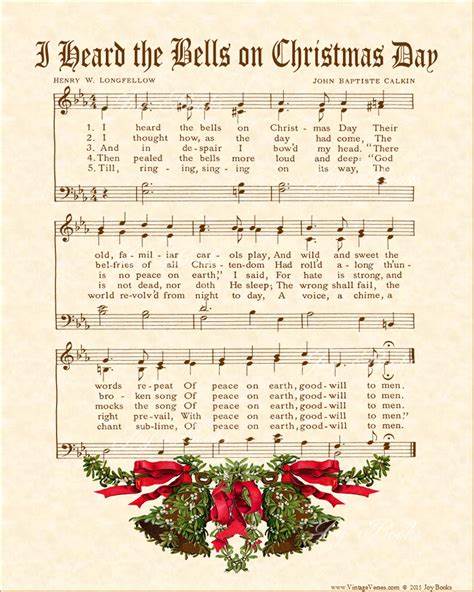
6. “Then pealed the bells more loud and deep: ‘God is not dead, nor doth He sleep.'” (from I Heard the Bells on Christmas Day) Written during a time of personal sorrow, this carol especially speaks to those who feel abandoned in their grief. It reminds us that God is present and actively working for our good.

7. “Silent night, holy night, all is calm, all is bright.” (from Silent Night) The serene imagery of this carol invites us to embrace stillness, trusting in the calm and brightness that God’s presence brings, even in the midst of pain.

8. “Let every heart prepare Him room.” (from Joy to the World) Grief can leave an emptiness in our hearts, but this stanza invites us to make room for Christ, who fills us with peace, hope, and joy.

9. “Born to set Thy people free; from our fears and sins release us, let us find our rest in Thee.” (from Come Thou Long Expected Jesus) This carol expresses a deep longing for freedom from life’s burdens and rest in Christ’s presence.

10. “Rejoice! Rejoice! Emmanuel shall come to thee, O Israel.” (from O Come, O Come, Emmanuel) This ancient carol speaks directly to those in sorrow, promising that God is with us. Emmanuel—God with us—is a powerful reminder that we are never alone.

Christmas carols are not just songs of celebration; they are also prayers, petitions, and promises of God’s love and presence. For those grieving, these words offer a unique blend of comfort and hope, pointing us to the truth that Christ came to bring peace and healing to a broken world.

Don’t hide during the holidays. Light the candles, prepare the meal, and sing the caorls. Alan Wolfelt suggests, “During your time of grief, the very rituals of the holidays can help you survive them.”

This Christmas, may the timeless words of these songs bring you comfort, reminding you that Christ’s light often shines brightest in the shadows.

(Barry Howard is a retired pastor who serves as a leadership coach and columnist with the Center for Healthy Churches. He and his wife reside on Cove Creek in northeast Alabama.)

Reflecting on the Nativity: Finding Meaning in the Manger


One of the first Christmas songs I heard on the radio this year was Anne Wilson’s “The Manger.” Sung as a duet with Josh Turner, the song begins with a story:

They’re putting decorations up in front of my old church
The shepherds and the Wise Men and the hay
There’s Joseph and his Mary lookin’ down at Heaven’s birth
And the angel’s saying don’t you be afraid.

Right after Thanksgiving, my wife began putting up our decorations. A couple of days later, I rose early to savor my first cup of coffee and begin my morning reading, I experienced an unusual sensation: I felt as though I was being watched.

While the coffee brewed, I opened my laptop to check the news headlines. As my eyes scanned the screen, the feeling persisted—an awareness of other eyes observing my every move. After a few moments spent praying for guidance, expressing gratitude, and remembering the poor, the homeless, and those grieving during the holidays, I decided to investigate further. I surveyed the room more thoroughly, and then I saw them: Mary, Joseph, and the baby Jesus—everywhere I turned, they were watching me.

My wife, Amanda, is a Christmas enthusiast. She transforms our home into a holiday wonderland every year. Four themed Christmas trees light up our spaces, battalions of angels stand at attention, and a Dickens-style village invites us to step into another era. Two fluffy stockings, one red and the other green, hang from the mantle beneath wooden block letters that spell out J-O-Y and N-O-E-L. On the entertainment cabinet, other wooden blocks declare M-E-R-R-Y C-H-R-I-S-T-M-A-S!

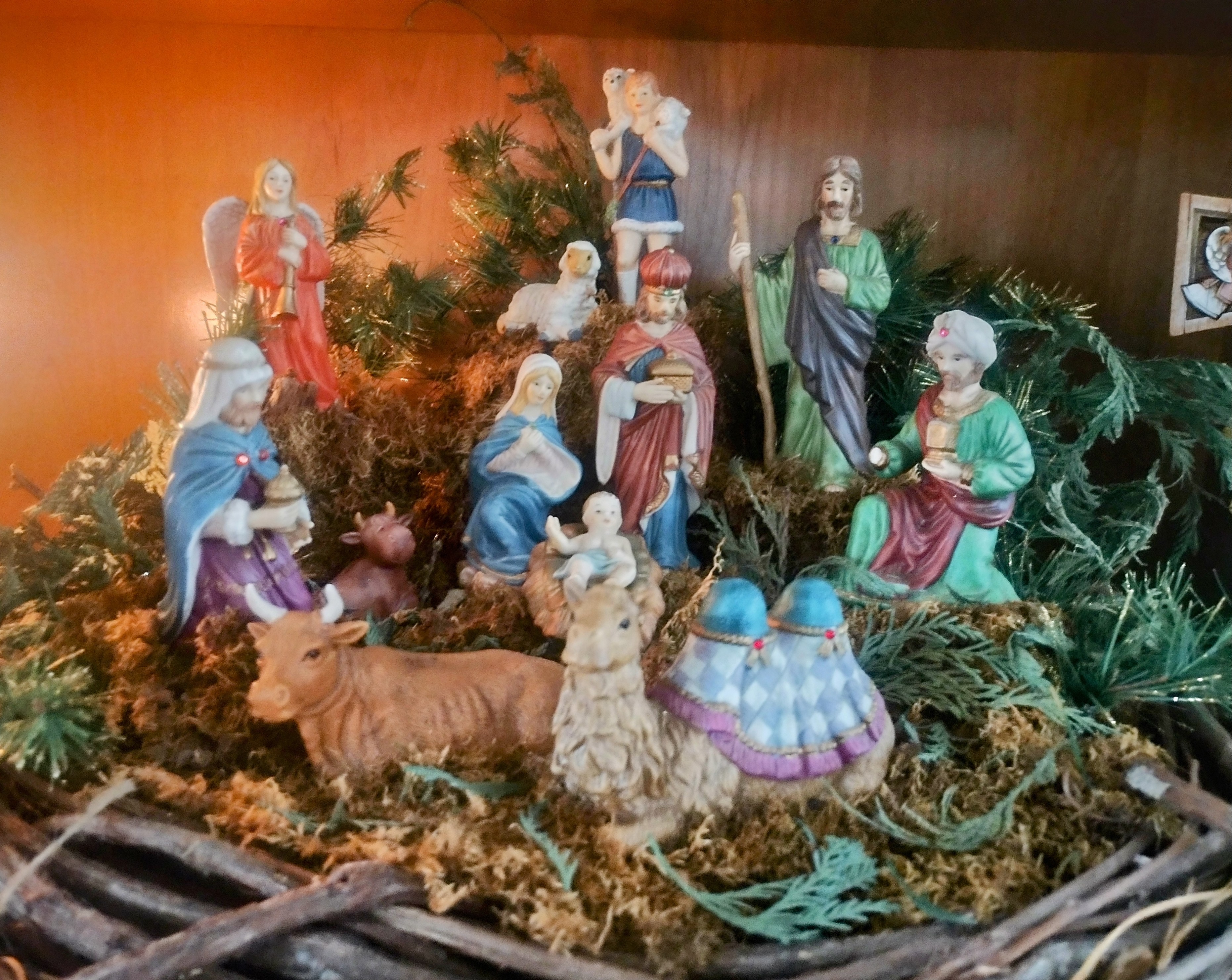
The central theme of our holiday decor is the nativity. In the quiet of the morning, as I surveyed our home to uncover the source of that watching presence, I counted 24 manger sceneseach offering a unique perspective on the true meaning of Christmas. Among them are a delicate blown-glass nativity, a hand-carved wooden set gifted to us by a Jewish craftsman in Birmingham, a camel-bone nativity from Egypt, and a ceramic crèche lovingly crafted by Amanda’s mother and painted by Amanda’s sister, Michele.

Everywhere I look, I am reminded of the Christmas story—24 renditions of the babe-in-the-manger throughout our home.

Why are nativity scenes such an important part of our Christmas celebration?   What message do they convey to us?

As the holiday season unfolds, nativity scenes appear in homes, churches, and public spaces, offering a timeless reminder of the story of Christmas. These simple yet profound displays help center our focus on the birth of Christ, grounding us in the deeper meaning of the season as we navigate the hustle and bustle of holiday shopping and Christmas activities.

A nativity scene represents a story of humility and hope. A manger in Bethlehem becomes the setting for God’s love made flesh, reminding us that unrelenting grace often appears in the most unexpected places. Each figure—the holy family, shepherds, wise men, and even the animals—invites us to reflect on our role in this sacred narrative.

For families, nativity scenes can serve as a tangible way to teach children about the core message of Christmas. As young hands arrange the figures, they begin to understand that Christmas isn’t merely about gifts and festivities but about God’s greatest gift to humanity.

In a broader sense, nativity scenes inspire unity and peace. Regardless of cultural, political, or theological differences, the image of Christ’s birth resonates as a symbol of hope for all. The nativity narrative beckons us to pause, reflect, and rekindle the light of hope, peace, joy, and love.

The refrain to “The Manger” resounds with the good news of the season:

From the highest of the high to the lowest of the low
That stable tells a story of the distance you will go

For the lonely and the lost, there’s no sinner too far gone
To find a Savior lyin’ in the manger.

This Christmas, as you set up or encounter a display of the nativity, take a moment to ponder its message. Let it remind you of the simple, profound truth at the heart of the holiday: For there is born to you this day in the city of David a Savior, who is Christ the Lord. (Luke 2:11 NKJV)

(Barry Howard is a retired pastor who serves as a leadership coach and columnist with the Center for Healthy Churches. He and his wife live on Cove Lake in northeast Alabama.)

When the Holidays Hurt: Navigating Grief During a Season of Joy

The holiday season is often described as “the most wonderful time of the year.” It’s a time for festive décor, family gatherings, and joyful celebrations. But for those who are grieving, this season can feel like a sharp reminder of what–or who–is missing. The colorful lights, cheerful music, and holiday gatherings can be bittersweet, amplifying the ache of loss.

Grief is challenging to deal with at any time of the year, but during the holidays, grief can be deeper, darker, and more unpredictable than at other times. Why does grief seem to turn up the volume during the holiday season?

I think there are at least three reasons that grief is more amplified from Thanksgiving through Christmas. First, the nostalgia surrounding the holidays and other special occasions prompts us to recall memories more readily. Second, these events tend to frame the absence of our loved ones. For example, a chair that was occupied at the family table may be vacant this year. And third, we tend to be more emotive during the holidays. Our sensory capacity is thrust into high gear.

Richard Kauffman suggests, “There is no right or wrong way to handle the holidays. You are in complete control of your plans as to what you will do during this time of the year.”

Since grief is more pronounced during the holiday season, how can we best deal with it? Too often our human tendency is to repress grief under the guise of being strong. However, repressed grief becomes toxic and can lead to depression or illness. It’s better to confront grief head-on. Here are ten helpful ways to navigate holiday grief:

  • Proactively prepare for holiday grief. Don’t avoid it or deny it. Engage it. The best therapy for grief is to grieve. Give yourself permission to feel your emotions, whether it’s sadness, anger, or even moments of unexpected joy. Ignoring grief won’t make it go away, but naming it can help you process it.
  • Do a soft re-set on your holiday traditions. Determine which traditions to keep and which to eliminate. And start at least one new tradition. Since grief has a way of reconfiguring life, relationships, and family, embrace a new configuration by beginning at least one new tradition.
  • Highlight a favorite event or experience of your loved one. Choose something that was a favorite food, game, song, or activity of your departed loved one, and find a way to highlight it during the holidays. For example, if they loved driving around to see Christmas lights, do it this year in memory of them. If they loved coconut cake, make one and have everyone try a bite.
  • Be creative in “work arounds.” Let’s say that Grandpa always read the Christmas story after dinner from his recliner. It may be too emotional for the family to have someone else read the Christmas story from Grandpa’s recliner. Consider having one or more of the grandchildren read the Christmas story before dinner around the dinner table.
  • Plan a strategic holiday memorial gift. For example, if Grandma was in a mission group and supported the Christmas Mission Offering, plan for the family to each give a gift to the mission offering in her memory. If Grandpa served on the Properties Committee at church, consider a gift toward campus improvement in his memory. Plan the gift to correspond to one of the passions of your departed loved one.
  • Tell lots of stories. For years I’ve encouraged families to continue “to treasure the memories and tell the stories” as a way to process grief. Stories are therapeutic, for sure. But they are also formational and nurturing. One reason genealogies are included in the Bible is because stories of our ancestors help shape our identities.
  • Write a letter to your departed loved one. In the letter tell them what you are feeling during the holidays. Then read the letter aloud as though the departed friend or family member is in the room with you. We think and we speak with different sides of the brain. To reflect, write, and then speak what you have written is healthier and more holistic than simply writing it down. It’s your choice whether to keep the letter confidential or to share it with other family members.
  • Continue the conversation. Most of us tend to continue an internal dialogue with our departed loved ones after they are gone. Sometimes it involves a gut-wrenching confession such as, “Daddy, there are so many things I wish I had told you.” Much of the time it is something as simple as, “I sure do miss you.” And of course, such a dialogue may include good humor such as, “The lights at the top of the tree have gone out again, and I suspect you may have had something to do with that.” It is important during the holidays to keep the conversation going, and maybe even rev it up a bit.
  • Designate moments for quiet and solitude. Be careful not to withdraw into a cocoon of isolation. But likewise, be careful not to bury your grief in a flurry of holiday events and activities.
  • Participate in holiday services at your church. The Christmas story itself is one of hope born in the midst of hardship. The birth of Christ is a reminder that God is with us, even in our darkest times. Emmanuel–“God with us”–is a powerful promise for those who are grieving. Lean into the deeper meaning of the season, finding comfort in the assurance that God understands your sorrow and walks with you through it.

Healthy expressions of grief include finding the right balance of tears and laughter, of connecting and disconnecting, and of lamentation and celebration. And remember, not every member of the family grieves in the same way or at the same pace. Allow space for family members to grieve in their own way.

There’s no doubt the weight of grief can be heavier during the holidays. But the holidays also present great opportunities for finding positive and proactive ways to deal with your grief.

Dr. Alan Wolfelt cautions, “Don’t assume that your holidays will be totally miserable this year. Yes, if you are actively mourning, you will experience pain and sadness. But if you spend time in the company of people you love, you may also experience moments of great joy and hope.”

Grieving during the holidays is never easy, but it’s a journey you don’t have to walk alone. Be gentle with yourself, embrace the support of others, and look for ways to honor both your grief and the hope of the season. Even in a time of sorrow, there is room for moments of hope, peace, joy, and love.

This year, as you navigate the holidays, you may discover that you can experience grief and hope simultaneously, and that the light of Christ shines brightest in our seasons of darkness.

(Barry Howard is a retired pastor who currently serves as a leadership coach and columnist with the Center for Healthy Churches. He and his wife reside on Cove Creek in northeast Alabama.)

Taking the Scenic Route to Bethlehem

Although plans for a federal highway system were underway as early as the 1930s, construction of the Interstate Highway System was officially authorized by the Federal Highway Aid Act of 1956. By the time I-20 opened between Atlanta and Birmingham in the 1970s, the residents of my hometown eagerly anticipated faster travel along this new freeway.

For years, my family had driven to Birmingham from Anniston on old Highway 78, a winding two-lane road that meandered across the Coosa River at Lake Logan Martin and over the mountains near Chula Vista. When I-20 finally opened, I was thrilled to accompany my grandparents on our annual Christmas trip to Birmingham’s Eastwood Mall. Our itinerary included shopping, visiting “the real Santa,” riding the escalator in Pizitz Department Store, and dining at Morrison’s Cafeteria.

To my surprise, my grandfather preferred the old two-lane highway over the new expressway. He often remarked, “The freeway is for people in a rush. The scenic route is for those who want to enjoy the trip.”

At the time, I didn’t know anything about Advent, but now I see how it invites us to take the scenic route to Bethlehem. The ethos of our economy pushes us toward Christmas in the fast lane, where the season seems defined by shopping, spending, and acquiring. John Jensen’s quip comes to mind: “The trouble with life in the fast lane is that you get to the other end in an awful hurry.” Advent, in contrast, encourages us to slow down and savor the scenery on the way to the manger.

As a young pastor, I was introduced to the colors and candles of Advent, and my journey toward Christmas changed forever. Now more than ever, I believe that as mission-driven Christians living in a market-driven culture, we need the reflective practices of Advent to help us resist the stealthy influences of materialism, busyness, and greed—forces that obscure the true message of the season and replace it with superficial slogans and commercial clichés.

Advent invites us to listen for a truth bigger than words and to long for a gift beyond material things. It reconnects us with the heart of the Christmas story, challenging us to reject cultural portrayals of a Jesus who promises prosperity, success, and self-fulfillment. Instead, it calls us to follow the biblical Jesus, who offers forgiveness, models simplicity, and teaches self-denial.

For Jesus followers and spiritual seekers alike, Advent is a scenic journey that begins with the promises of the prophets and culminates in the nativity. It’s a season of growing expectation that peaks when the Christ candle is lit and the Christmas star shines over Bethlehem.

Taking the scenic route to Bethlehem means revisiting the timeless stories of the prophets, Mary and Joseph’s journey, and the shepherds in the fields. It means pausing to notice the beauty of God’s work in the world and in our own lives.

By choosing this unhurried path, we open our hearts to both the joyful songs of angels and the mournful cries of a broken world. We make room for God to work in us, preparing us not just for the celebration of Christmas but for a life of following Jesus.

When we choose the scenic route to Bethlehem, avoiding the fast-paced cultural expressway, we create space to hear the still, small voice calling us to follow Jesus. By taking this road less traveled, we just might discover that the journey is every bit as meaningful as the destination.

(Revised article from 2017)

(Barry Howard is a retired pastor who currently serves as a leadership coach and columnist with the Center for Healthy Churches.)