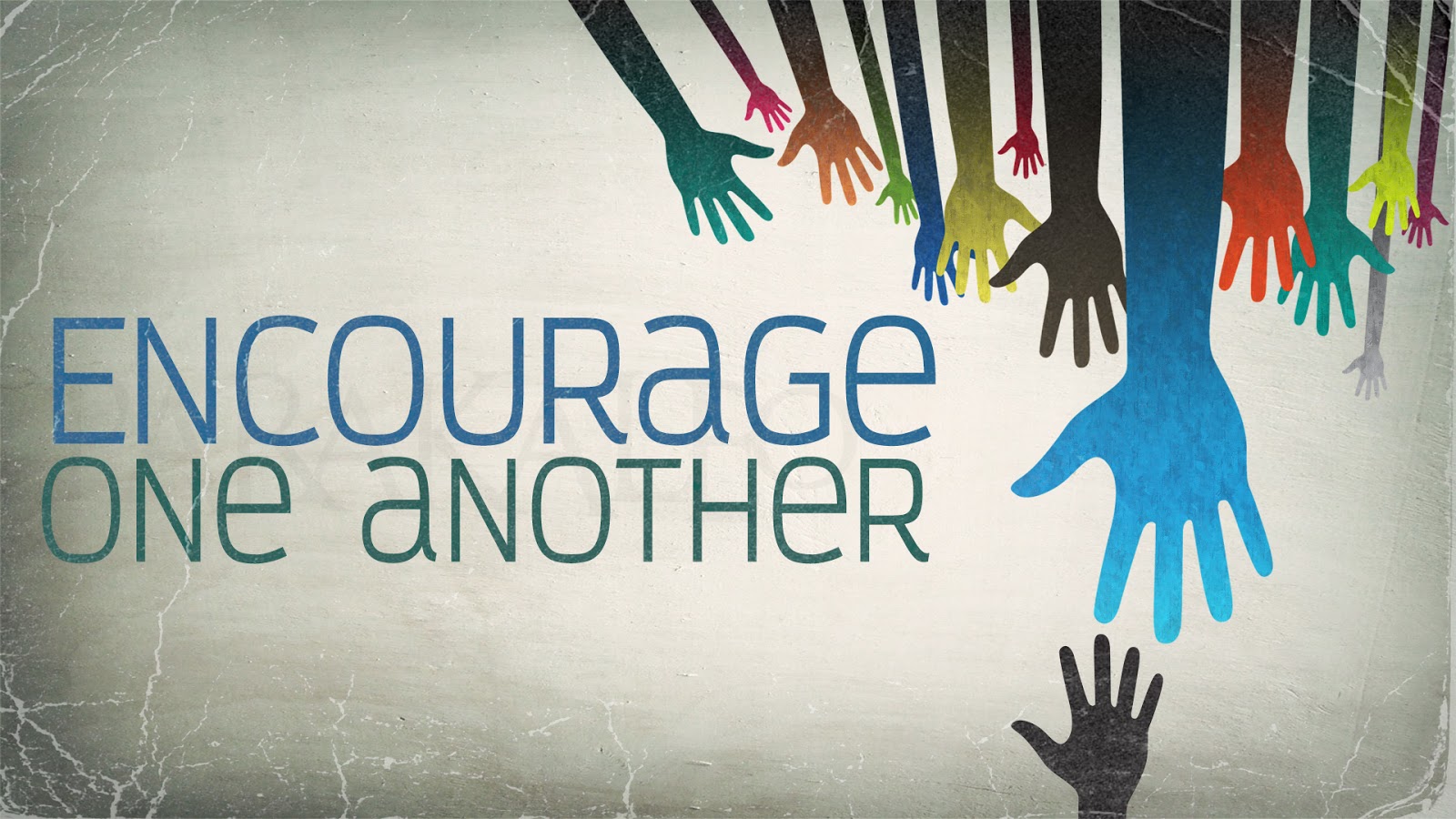
Building Up the Body: 10 Ways to Encourage One Another

People are hungry for encouragement. Life can be extremely discouraging at times.

During this season of wars and rumors of wars, of turbulent and toxic discourse, it’s not the TikTokers or the Tweeters, not the pop culture icons or the politicians, but the encouragers who are the most significant influencers.

William Arthur Ward “Flatter me, and I may not believe you. Criticize me, and I may not like you. Ignore me, and I may not forgive you. Encourage me, and I will not forget you.”

As followers of Jesus, we are called to build each other up and encourage one another daily (I Thessalonians 5:11). In a world filled with challenges, a word of encouragement can brighten someone’s day, restore their hope, or strengthen their faith. Here are 10 practical ways you can encourage those around you:

  1. Pray for each other. One of the most powerful ways to encourage is to pray. Let someone know you’re praying for them and lift them up regularly before God.

  2. Offer a listening ear. Sometimes the best way to encourage someone is simply to listen without judgment or interruption. Let them feel heard and valued.

  3. Speak words of affirmation.  A kind word can go a long way. Affirm someone’s strengths, character, or faithfulness. Proverbs 16:24 reminds us, “Gracious words are a honeycomb, sweet to the soul and healing to the bones.”

  4. Send an encouraging note. Whether it’s a handwritten card, a text message, or an email, a small note of encouragement can brighten someone’s day and remind them that they are loved and appreciated.

  5. Share an inspiring verse of scripture. The Bible is filled with promises and encouragement. Share a meaningful verse that can uplift someone during a difficult time.

  6. Celebrate the accomplishments of others. Acknowledge the milestones and victories in someone’s life, no matter how small. Celebrating with others brings joy and motivation.

  7. Be present. Sometimes just showing up when someone is going through a tough time is the most encouraging thing you can do. Your presence can speak volumes when words aren’t enough.

  8. Be available to provide assistance. Practical support in the form of running errands, providing meals, or lending a hand can encourage someone who is overwhelmed or struggling.

  9. Be patient and forgiving. Encouragement often comes through offering grace and understanding. Be patient with others, knowing we all go through seasons where we need extra kindness.

  10. Speak the truth in love. Encourage others by speaking truthfully but with compassion. Sometimes the most loving thing you can do is help someone see a situation with clarity, rooted in love and grace.

Never underestimate the power and importance of encouragement. George M. Adams writes, “Encouragement is the oxygen of the soul.”

In a world where criticism, negativity, and hopelessness abound, encouragement can be a breath of fresh air. When we offer a word or gesture of encouragement, we may just resuscitate the spirit of one who is on the verge of despair.


Remembering September 11, 2001: Finding Faith, Hope, and Resilience in the Face of Tragedy

On September 11, I always take the day off. I want to be in a peaceful quiet place praying. It is a day I both mourn and celebrate.Genelle Guzman-McMillan, 9/11 Survivor

Where were you on September 11, 2001?

Every year on the anniversary of this catastrophic day, my mind goes back to that day when much about the world changed forever. I was sitting with a church member in her home, planning a memorial service for her husband, who had passed the night before. As we discussed details, a family member asked me to step into the kitchen, where she tearfully pointed to the TV. I watched in disbelief as the first plane crashed into the World Trade Center. My heart sank. I returned to the family, led them in prayer, and included our nation in my pleas, not yet aware of the unfolding catastrophe.

I hurried back to the church, where our staff had gathered in my study. Together, we watched as the second plane struck. After a few moments of shock and sorrow, we shifted into ministry mode, strategizing ways to support our congregation and community. As news continued to break, we learned of church members with family in New York or Washington, travelers in the affected areas, and those serving in the armed forces. We were all connected in some way to this tragedy, bound together in grief and prayer.

Twenty-three years later, the memories are still vivid and painful. We remember the fear, the uncertainty, the overwhelming sense of loss. But as followers of Christ, we also remember the source of our strength: our faith in God. Psalm 46:1 reminds us that “God is our refuge and strength, a very present help in trouble.” Though faith doesn’t shield us from tragedy, it guides us through it, giving us hope in a world that so often feels broken.

What can we learn as we navigate the crossroads of our haunting memories and our persistent faith? How do we move forward as followers of Jesus in a post-9/11 world?

  1. Our security is found in God. Our faith serves as an anchor. Psalm 46:1 reminds us that God is our refuge and strength, especially in times of trouble. Even amid disaster, we can trust in God’s sustaining presence.

  2. Refuse to live in fear.  II Timothy 1:7 reminds us that “God has not given us a spirit of fear, but of power, love, and a sound mind.” Fear shouldn’t dictate our actions or hold us back from fulfilling God’s call.

  3. Avoid responding to violence with violence. We cannot allow acts of terror to provoke us into hateful responses. Jesus teaches us to love our enemies and be peacemakers in a world full of conflict.

  4. Express gratitude for first responders. The bravery of firefighters, police officers, and paramedics on 9/11 gave us a new appreciation for those who run toward danger to save others. They remind us of the importance of selfless service.

  5. Learn about other faiths.  As we strive to be salt and light, it’s crucial to distinguish between radicals who commit violence and those of faith groups who reject terror and promote peace.

  6. Resist xenophobia. Fear of people from other countries or cultures only divides us further. We are called to love our neighbors, regardless of their background.Sandy Dahl, wife of Flight 93 pilot Jason Dahl pleads, “If we learn nothing else from this tragedy, we learn that life is short and there is no time for hate.”

  7. Pray for our local, state, and national leaders. Navigating the complexities of terrorism and international relations is no easy task. Let us remember to pray for wisdom and discernment for those in authority.

In the years since 9/11, the world has changed, and we continue to process its impact. But as we remember that day, may we emerge more grateful for the heroes, more respectful of each other, and more grounded in our faith.

A year after the 9/11 attacks, I was asked by reporter, “How has the world changed since September 11, 2001?” The response I gave in 2002 is still relevant in 2020:

I believe the world has changed in so many ways that the majority of those changes are still being realized and processed.   From my perspective, it seems that our nation is going through the various stages of grief (shock, denial, depression, panic, guilt, resentment, and hope), and like any normal family system, not everyone is in the same stage.   Because the assault on 9/11 was a multi-dimensional attack on the spiritual, social, psychological, and economic fabric of our country, our sense of loss is more complex. Not only were thousands of lives lost, but so were many of our presuppositions, especially those regarding personal safety, economic security, and religious superiority. I hope and pray that we will emerge as individuals who are more circumspect, more patient, less acquisitive, and more spiritually grounded than we have previously demonstrated.

7 Biblical References to the Ancient Games

(The Olympic Rings from 2014 Olympic. Photo credit: David Davies/PA Wire.)

As I watched the athletes parading via a variety of boats down the Seine River during the opening ceremonies of the 2024 Olympics in Paris, I was thinking about the history and origin of the games, and reflecting on the many passages in the bible that utilize athletic metaphors to describe the values and priorities of life.

This week as the world watches the excitement and drama of the Olympic Games unfold, it’s a good time to explore how these ancient competitions inspired one of the Bible’s most influential figures. The Apostle Paul, a missionary and evangelist known for his passionate letters and profound theological insights, frequently used the imagery of the ancient games to illustrate spiritual truths. These metaphors resonate across the ages, reminding us to approach our faith with the same determination and discipline as Olympic athletes.

Although what we know as the modern Olympic games started almost two centuries after the ministry of Paul, he would have been acquainted with the ancient games played in Olympia, Athens, and other cities across Greece. Since Paul spent considerable time in Corinth, he may have attended the Isthmian Games that were held there every two years in the spring. The early games included footraces, chariot races, wrestling, boxing, discus throwing, javelin throwing, long jump, poetry reading, and singing.

His acquaintance with these events certainly influenced Paul’s own sense of discipline and determination. Here are 7 examples of scriptures where Paul, and perhaps others, drew upon the rich symbolism of the games to convey his message:

1. 1 Corinthians 9:24-25: “Do you not know that in a race all the runners run, but only one gets the prize? Run in such a way as to get the prize. Everyone who competes in the games goes into strict training. They do it to get a crown that will not last, but we do it to get a crown that will last forever.” Paul compares the Christian life to a race, urging believers to run with the goal of winning at the things that matter most. Just as athletes undergo rigorous training for a temporary crown, we are called to dedicate ourselves to causes that make an everlasting impact.

2. 1 Corinthians 9:26-27: “Therefore I do not run like someone running aimlessly; I do not fight like a boxer beating the air. No, I strike a blow to my body and make it my slave so that after I have preached to others, I myself will not be disqualified for the prize.” In these verses, Paul emphasizes purposeful and disciplined living. Like a focused runner or a precise boxer, our efforts in faith must be intentional and controlled, ensuring we remain steadfast and true to our calling.

3. Philippians 3:13-14: “Brothers and sisters, I do not consider myself yet to have taken hold of it. But one thing I do: Forgetting what is behind and straining toward what is ahead, I press on toward the goal to win the prize for which God has called me heavenward in Christ Jesus.” Paul encourages us to forget past failures and focus on the future, pressing forward with determination toward the ultimate prize of God’s call to a covenant lifestyle.

4. 2 Timothy 2:5: “Similarly, anyone who competes as an athlete does not receive the victor’s crown except by competing according to the rules.” Here, Paul reminds us that just as athletes must compete according to the rules to win, we too must live our lives according to God’s moral and spiritual guidance to receive the ultimate reward.

5. 2 Timothy 4:7-8: “I have fought the good fight, I have finished the race, I have kept the faith. Now there is in store for me the crown of righteousness, which the Lord, the righteous Judge, will award to me on that day—and not only to me, but also to all who have longed for his appearing.” In his final letter, Paul reflects on his life using the imagery of a race well-run and a fight well-fought, confident in the reward awaiting him. This serves as an encouragement for us to persevere in our faith and finish strong.

6. Galatians 5:7 “You were running a good race. Who cut in on you to keep you from obeying the truth?” Paul uses the metaphor of a race to address the Galatians’ deviation from the truth, urging them to remain steadfast and not be hindered by false teachings.

7. Hebrews 12:1-2: “Therefore, since we are surrounded by such a great cloud of witnesses, let us throw off everything that hinders and the sin that so easily entangles. And let us run with perseverance the race marked out for us, fixing our eyes on Jesus, the pioneer and perfecter of faith.” Though the authorship of Hebrews is debated, this passage aligns with Paul’s athletic imagery, encouraging believers to run their race with perseverance and focus on Jesus.

World champion figure skater Kristi Yamaguchi, who won the gold at the 1992 Olympics, contends “Focus, discipline, hard work, goal setting and, of course, the thrill of finally achieving your goals. These are all lessons in life.”

As we cheer for our favorite athletes this Olympic season, may we be inspired to run our spiritual race with the same dedication and zeal. Let us strive for excellence by living with a Jesus worldview and keeping our eyes fixed on the One who is the ultimate victor.

(Barry Howard serves as the pastor of the Church at Wieuca in north Atlanta. He also serves as a leadership coach and columnist with the Center for Healthy Churches. You can follow him on social media at @BarrysNotes.)

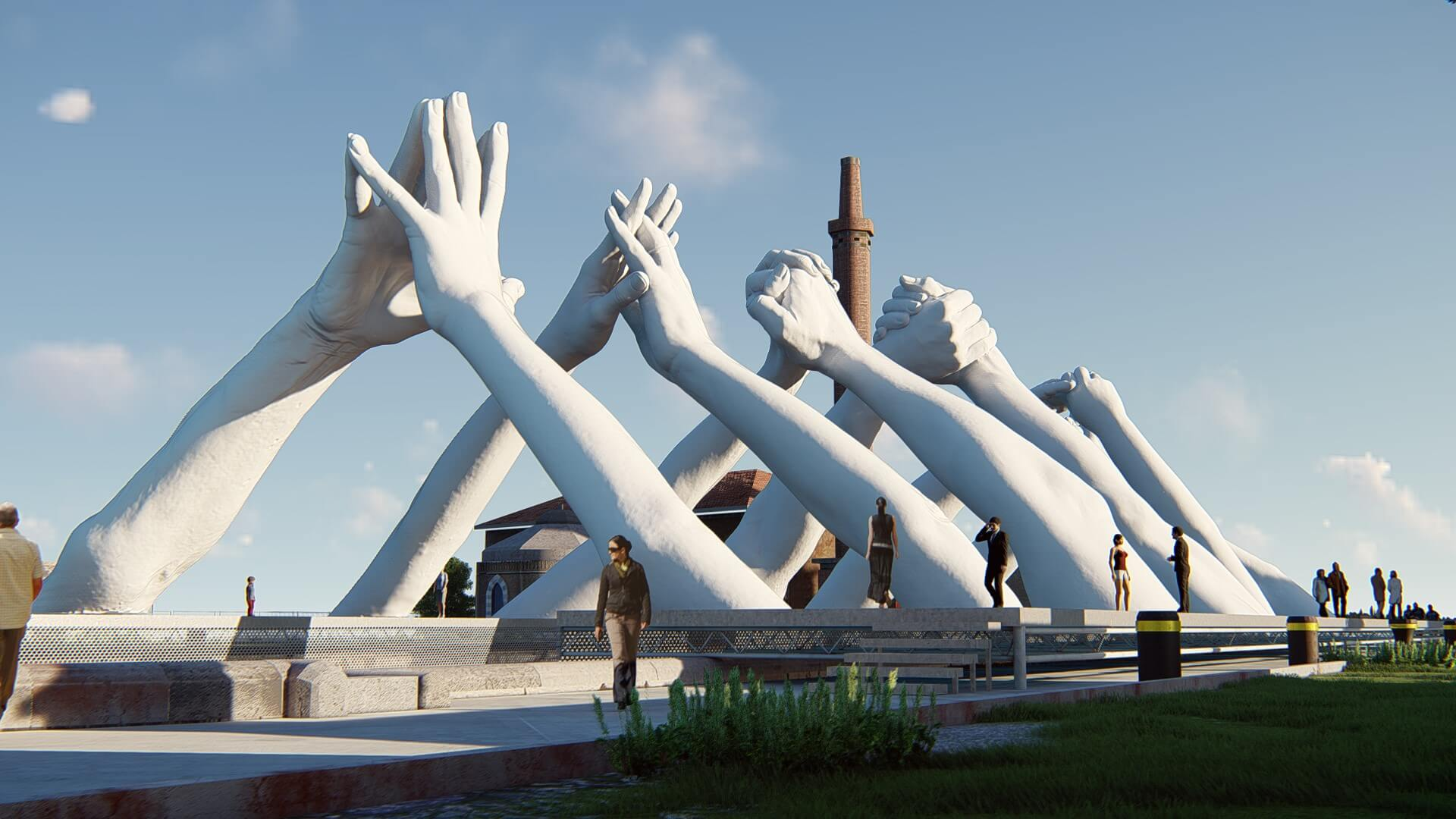
7 Ways to Build Bridges Over the Great Divide

In a world that feels dangerously divided, followers of Jesus can be proactive and intentional about building bridges over the chasm of our differences. Our faith calls us to be peacemakers, to love our neighbors, and to cultivate unity in our churches and communities.

The Greek philosopher Aesop was the first of many to declare, “United we stand, divided we fall.”

Divisiveness seems to be the primary tool in the arsenal of the adversary. A sports team that is divided seldom wins. A nation that is divided internally is at risk of falling prey to external enemies. A church that is divided diminishes its effectiveness.

How can we bridge the cultural, spiritual, and political rifts that divide us? Here are a few ways we can foster understanding and harmony within our community:

1. Listen actively and attentively. Listening is a powerful act of love. By listening carefully to each other’s stories, we gain insight into different thoughts and experiences that have shaped the other person’s perspective. This requires us to listen without interrupting or preparing a clever retort. It means that we listen to learn and to seek a better understanding of their viewpoint. Empathetic listening can dissolve barriers and foster deeper connections.

2. Respect diversity. Our differences are not just to be tolerated but respected. Each person brings unique gifts and perspectives that enrich our community. Treasure the diverse backgrounds, cultures, and viewpoints within our church, recognizing that diversity reflects the beautiful tapestry of God’s creation. My long-time friend and neighbor, Dow Birkhimer, a retired Lieutenant Colonel, often said to me, “If you and I agree on everything, one of us is not needed.”

3. Engage in open and honest conversations. Creating a safe space for open dialogue is essential. Encouraging honest discussions about our differences, whether they be cultural, theological, or personal, allows us to address misunderstandings and misconceptions. Unity of spirit does not require uniform agreement on every issue. Approach these conversations with an open mind, a spirit of humility, and a willingness to learn.

4. Look for common ground. While differences can sometimes be front page news, it is helpful to focus on the common ground we share. Our faith in Jesus Christ, our commitment to love and serve others, and our commitment to work for the common good are powerful unifying factors. Focusing on these shared values can strengthen our bonds.

5. Practice grace and forgiveness. We all make mistakes and sometimes say or do things that hurt others. Practicing forgiveness and extending grace are crucial in maintaining unity. Be quick to forgive and generous with grace, reflecting the love that Jesus has demonstrated for us.

6. Serve together. Working side by side in service to others can break down walls and build bridges. Whether it is through local outreach programs, mission trips, or community projects, serving together helps us see beyond our differences and unite in our common goal of spreading God’s love. When we serve together, our souls tend to bond, enabling us to trust each other’s motives, even when we think differently about many issues.

7. Pray for unity. Prayer is a powerful tool in bridging divides. Commit to praying for unity within your church and beyond. Ephesians 4:3 urges us to “Make every effort to keep the unity of the Spirit through the bond of peace.” Pray for God to soften hearts, open minds, and guide us in building relationships that are seasoned with grace and love.

Divisiveness is a tool of the enemy, not a fruit of the Spirit. As we become rooted and grounded in our faith, we are not an easy target for the tempter’s snare.

In John 17:21, Jesus prayed, “that all of them may be one, Father, just as you are in me and I am in you. May they also be in us so that the world may believe that you have sent me.”

Jimmy Carter hit the nail on the head when he said, “The bond of our common humanity is stronger than the divisiveness of our fears and prejudices.”

In our attitudes and actions, we are either building bridges or driving wedges. Don’t join the demolition crew! Build more bridges!

For more information about building bridges, contact the Center for Healthy Churches to learn about R12, a new set of tools designed to help congregations understand, assess, and respond to political and cultural polarization. (www.chchurches.org)

(Barry Howard serves as the pastor of the Church at Wieuca in North Atlanta. He also serves as a leadership coach and columnist with the Center for Healthy Churches. You can follow him on Twitter at @BarrysNotes.)