
Just a Swinging: 7 Good Reasons to Have a Porch Swing

My grandparents had one. My parents had one. And we have one. Actually, we just got a new one. A porch swing that is. There’s something about a porch swing that seems to slow time down.

I grew up with porch swings. Those swings held laughter, conversations, quiet moments, and the gentle rhythm of life. Amanda and I had a porch swing during the first eight years of our marriage, and now we’ve had one again for the past six years. Just this month, we added a new swing to our pavilion overlooking the lake—and I have to say, it is the most scenic view we’ve ever had from a swing.

The porch swing became popular in America in the late 1800s, especially during the Victorian era. As front porches became central to home life, swings were added as a place for rest, conversation, and connection. Before air conditioning, families would gather on porches in the evening to catch a breeze, share stories, and simply be together.

The swing wasn’t just furniture—it was a gathering place. A sanctuary. A slowing-down space. There are many benefits to having a porch swing. Here are 7 good reasons:

1. Spending time on a porch swing forces us to slow down. A porch swing doesn’t rush. It rocks. In a world addicted to speed, the swing invites us into a different rhythm.  Someone wisely said, “Sometimes the most productive thing you can do is rest.”

2. A porch swing creates space for conversation. Some of the best conversations don’t happen around conference tables—they happen side by side, gently swinging. There’s something disarming about a porch swing. It invites honesty. I suspect many meaningful family moments over the years began with, “Let’s sit in the swing.”

3. A porch swing encourages good mental health. The gentle, repetitive motion of a swing has a calming effect on the mind and body. Mental health experts often note that rhythmic movement can reduce stress, lower anxiety, and improve. Or as one therapist put it: “Calm often comes through rhythm.”

4. A porch swing connects generations. Porch swings are one of the few places where generations naturally overlap. Grandparents, parents, children—everyone fits. Somewhere between the creak of the chains and the sway of the seat, stories are told, wisdom is passed down, and memories are made.

5. A porch swing keeps us grounded in the present. A swing doesn’t go anywhere—and that’s the point. In a culture obsessed with “what’s next,” the porch swing whispers, “Be here now.” Missionary Jim Eliot said, “Wherever you are, be all there.”

6. Sitting in a porch swing turns ordinary moments into meaningful ones. You don’t need a special occasion to sit on a porch swing. Morning coffee tastes better. Bird songs sound more cheerful. Sunsets feel richer. Even silence feels full. A simple swing can transform a routine day into a memorable moment.

7. A porch swing is good for the soul. At the end of the day, life is not measured in miles traveled or tasks completed—it’s measured in moments shared. A porch swing is a good place for prayer, reflection, relationship-building, problem-solving, and storytelling.

If we’re not careful, our lives become like endless scrolling—fast, distracted, and forgettable.

The porch swing is the opposite.

Where the smartphone speeds us up, the swing slows us down.
Where the phone distracts, the swing centers.
Where the phone isolates, the swing connects.

One pulls us away from life. The other gently rocks us back into it.

Looking out over the lake from our new swing, I’m reminded that while the scenery may change over the years, the purpose of the swing never does.

It is still a place to rest. Still a place to reflect. Still a place to connect.

And maybe that’s the real gift of a porch swing—it doesn’t just move back and forth… it brings us back to what matters most.

Sometimes life is better when you take time to sit and just swing.

The Resurrection Factor: 5 Ways the Message of Easter Impacts Us

(An Easter Sermon based on John 20:1-18 shared at the First Baptist Church of Pensacola on April 5, 2015)

Early on that first Easter morning, while it was still dark, Mary Magdalene made her way to the tomb. What she expected to find was death. What she discovered instead was life.

And everything changed.

That’s the power of what I want to call today “The Resurrection Factor.” It is the defining difference-maker of the Christian faith. It is not just something we believe happened—it is something that continues to happen in us and through us.

As Will Willimon once said, “We spend so much time trying to explain the resurrection, when in reality, the resurrection explains us.”

The Gospel of Johntells us it was still dark. That detail matters. Because resurrection often begins in the dark—when hope feels buried, when prayers seem unanswered, when life doesn’t make sense.

Mary came looking for a body, but she encountered a risen Savior.

And that is what the resurrection does—it interrupts our assumptions and replaces them with God’s reality.

What difference does Easter really make? Here are five ways the resurrection impacts us:

1. Forgiveness becomes our reality.

Jesus bore the weight of our sins and guilt on the cross.

“If we confess our sins, he is faithful and just and will forgive us our sins…” (1 John 1:9)

Some of us are still carrying guilt like extra baggage—dragging it from one season of life to another. But the resurrection declares: you don’t have to carry that anymore.

As Max Lucado said, “God loves you just the way you are, but He refuses to leave you that way.”

The resurrection lifts the weight of guilt and replaces it with grace.

2. Hope becomes our perspective.

Let’s be honest—the resurrection doesn’t eliminate every problem. It doesn’t promise that life will always be easy. But it does change how we see everything.

As Victor Hugo wrote, “Even the darkest night will end and the sun will rise.”

Because of Easter, we live with hope:

  • Hope for healing
  • Hope for restoration
  • Hope for second chances
  • Hope that God is still at work

We may not always feel optimistic—but we can always be hopeful.

3. Serving becomes our mission.

The resurrection is not just about life after death—it’s about life before death.

As N. T. Wright reminds us, God’s plan is not to snatch people out of earth, but to bring the life of heaven into it.

We are saved for something.

Resurrection people are called to:

  • Love boldly
  • Serve faithfully
  • Live purposefully

As Walter Brueggemann puts it, resurrection life is about aligning ourselves with God’s newness and purpose.

4. Heaven becomes our home.

Jesus said, “I go to prepare a place for you.”

The resurrection reminds us that death is not the end—it is a doorway.

It teaches us not only how to live, but how to face the end of life with faith instead of fear.

There is a quiet confidence that comes from Easter:
A confidence that says, “This world is not all there is.”

Because of the resurrection, we can live under the governance of heaven here and now, and there and then.

5. Jesus becomes personal to us…not just me, but all of us.

Mary didn’t recognize Jesus at first. She thought He was the gardener.

But then He spoke her name: “Mary.”

And in that moment, everything changed.

The resurrection is not just theological—it is personal. Jesus still calls names. He still meets us in our grief. He still turns confusion into clarity.

The resurrection factor means this: the risen Christ knows you, sees you, and calls you by name.

Brennan Manning once said, “The most radical demand of Christian faith is to say yes to the present risenness of Jesus Christ.”  I like that term “present risenness.” Not just in history—but in your life.

The resurrection transformed life on this planet more than any other event or experience in history.

It changes how we see our past (forgiven),
our present (purposeful),
and our future (secure).

So let me ask you:
Why linger outside the tomb, looking for what used to be?
What in this world could keep you from stepping into the resurrection life?

Because the stone has been rolled away.
The tomb is empty.
And Jesus is alive.

And that changes everything.

Remembering the First Moon Walk: 7 Ways Lunar Space Exploration Improved Life on Earth

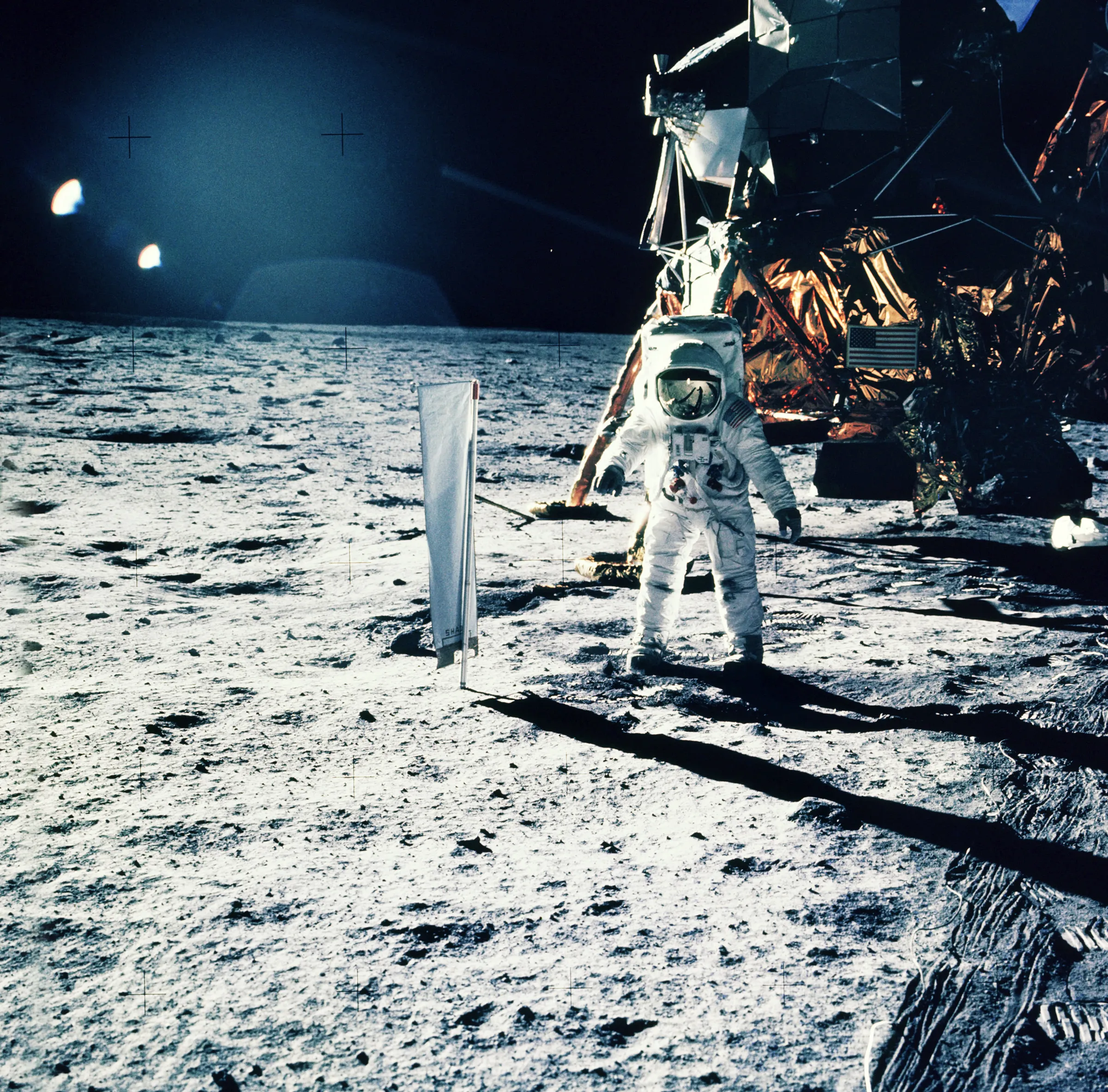
I was 9 years old and visiting my aunt, uncle, and their family in Athens, Alabama, when Apollo 11 landed on the moon on July 20, 1969. Like so many others, we were glued to the television, watching in awe as human beings took their first steps on the lunar surface. Recently, the liftoff of Artemis II has brought back a flood of those memories—moments that felt larger than life, even if I didn’t fully understand them at the time.

My uncle worked for Redstone Arsenal in Huntsville, so for our family, the space program wasn’t just something happening far away—it was personal. There was a sense of pride in knowing that the work being done nearby was helping send astronauts into space.

As kids, though, our imaginations took us in different directions. My cousins and I joked about someday going to the moon ourselves—to eat Moon Pies and Moon-cicles, and to dance the moonwalk long before we knew what that even meant culturally. We wondered aloud whether there might be life on the moon. It was all part of the wonder.

Because we were kids, we were excited about the moon landing and about men setting foot on the moon, but we didn’t fully grasp how that moment—and the many missions that followed—would transform life here on Earth.

Looking back, it’s clear that lunar space exploration did far more than plant a flag. It sparked innovations that continue to shape our everyday lives. Here are seven ways that lunar space exploration has improved life on this planet:

1. Advanced Communication Technology- The need to communicate with astronauts across vast distances accelerated the development of satellite communications. Today, everything from GPS navigation to live global broadcasts traces its roots to space exploration.

2. Medical Innovations- Monitoring astronauts’ health led to breakthroughs in medical imaging and remote monitoring. Technologies like portable heart monitors and improved diagnostic tools owe much to space research.

3. Improved Materials and Safety Gear- The development of heat-resistant materials for spacecraft contributed to better firefighting equipment, protective clothing, and even safer building materials.

4. Computer and Microchip Advancements- The Apollo missions required powerful yet compact computers, helping drive the miniaturization of electronics. The smartphones and laptops we use today stand on that foundation.

5. Water and Air Purification Systems- Keeping astronauts alive in space required efficient recycling of air and water. These innovations now help provide clean drinking water and air filtration systems around the world.

6. Enhanced Transportation and Engineering- The precision required for space travel improved engineering standards and contributed to safer, more efficient transportation systems here on Earth.

7. Inspiration and Educational Growth- Perhaps the most immeasurable impact is inspiration. The moon landing ignited curiosity, leading generations into careers in science, engineering, and exploration. It reminded humanity of what is possible when we dream big.

At the time, the moon landing felt like a grand achievement—like planting a flag in unfamiliar soil. But in many ways, it was more like planting seeds.

Seeds don’t reveal their full impact immediately. They take time to grow, to spread roots, and to bear fruit.

The technologies we now depend on—the ones we barely think about—are the fruit of seeds planted during those early missions.

As Artemis II prepares to carry humans farther into space once again, we are reminded that exploration is never just about the destination. It’s about discovery, innovation, and enriching life back home.

The same curiosity that led us to ask, “Is there life on the moon?” now leads us to deeper questions about our universe and our future.

We may not fully understand today how future missions will shape tomorrow’s world. But history suggests this: when we reach beyond what is known, we often bring back more than we ever imagined.

Today’s Artemis mission reminds us of what human beings can accomplish when we work together on a common goal.

So here’s to the next generation of explorers, and to the continued journey of discovery that lifts not just rockets, but all of humanity, including the human spirit.