
12 Things We All Need to Hear on Christmas Eve

Christmas Eve Services are sacred and joyful occasions. Churches and chapels fill with familiar carols and flickering candles, but they also fill with people carrying complex stories—joy and grief, gratitude and loss, faith and questions. On this holy night, words matter. What people hear can steady a weary heart or open a door to hope.

Over the years, I’ve been a part of dozens of Christmas Eve services, most of which have been inspiring and encouraging. I’ve also been to a few that were…Well, let’s just say they were lacking.

Here are twelve things people need to hear on Christmas Eve—truths that echo from the original Christmas story and still speak powerfully today.

1. You are welcome here. Christmas Eve is not a private gathering for insiders. It is a wide-open invitation. Whether someone comes weekly or once a year, confident or uncertain, hopeful or hurting, the message is the same: You belong.

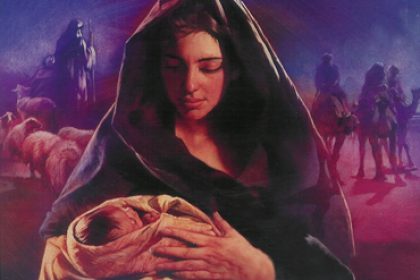
2. “Unto us a child is born.” Most importantly, we need to hear the scripture story. The Christ who was born in Bethlehem is God’s gift for you, for me, and for all of us. The good news is not for a select group of people, but for all people from all nations, all races, and all walks of life.

3. “Fear not!” The first words spoken by the angel on the first Christmas were not instructions or expectations—they were reassurance. Fear not. Those words still matter in a world anxious about health, relationships, finances, violence, and the future. Christmas begins with comfort.

4. Christmas brings good news…tidings of great joy. This joy of Christmas is not shallow cheer or forced happiness. It is good news that God has not abandoned the world. Joy is possible even when circumstances are difficult because God has “become flesh and moved into the neighborhood” (John 1:14 MSG)

5. It’s okay to feel joy and sorrow at the same time. For many, Christmas is layered with grace and grief. Christmas Eve gives permission to hold both realities at once. You don’t have to choose between honesty and hope. The manger holds space for both.

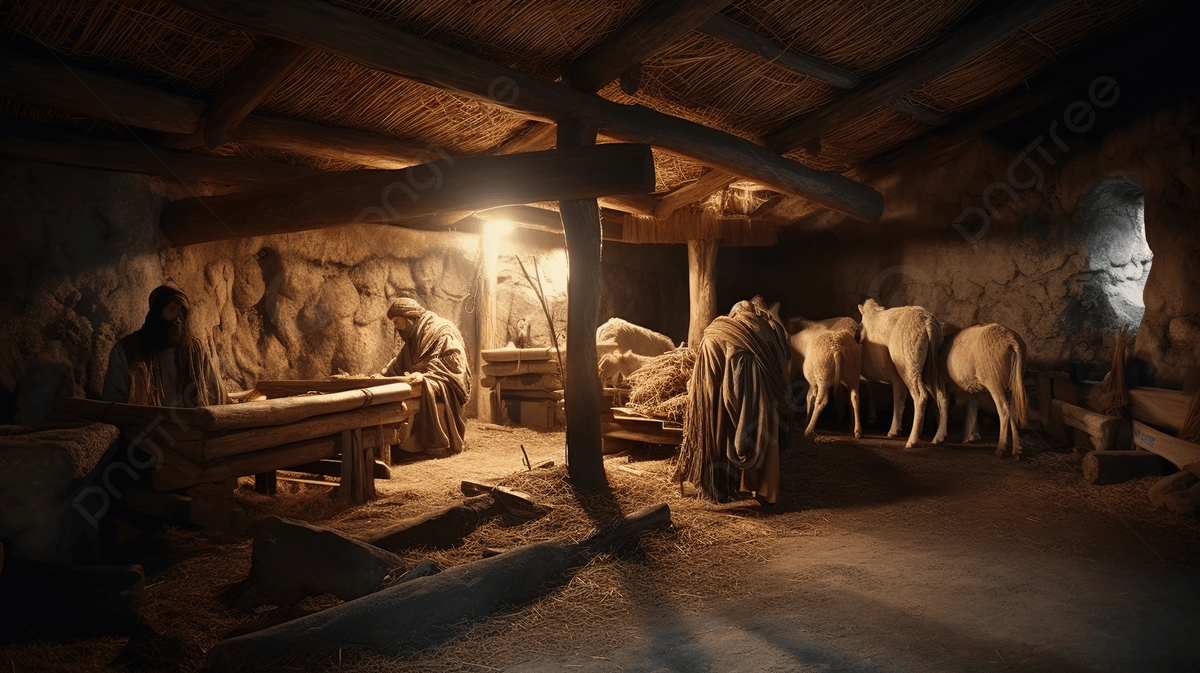
6. God meets us exactly where we are. The Christmas story unfolds not in a palace, but in borrowed space. God did not wait for ideal conditions. In the same way, God meets us not where we wish we were, but right where we are.

7. You are not alone. Emmanuel means “God with us.” Christmas is the announcement that God has chosen presence over distance. Emmanuel is not an abstract idea; it is a promise that we are accompanied through all of life, including uncertainty, grief, joy, and change.

8. God comes near to us, even in messy and uncertain circumstances. The birth of Jesus happened amid disruption, displacement, and danger. That should comfort us. God is not deterred by our chaos. Divine love enters the world as it is, not as we wish it to be.

9. You can experience the peace of Christ, even if every conflict isn’t resolved. Peace does not require that everything be fixed. The peace Christ brings is deeper than resolution—it is the steady assurance of God’s nearness in the midst of unresolved tensions.

10. The darkness will not have the final word. The Christmas star that guided those seeking the Christ child reminds us that night may surround the nativity, but it does not overcome it. Christmas declares that light shines in the darkness, and the darkness cannot extinguish it. This is not denial of hardship; it is defiance of despair.

11. The birth narrative is just the beginning. The story does not end at the manger. It continues through the life, death, and resurrection of Jesus, and it continues still. God is at work in the world and in our lives, shaping a story not yet finished.

12. Like Mary, we can ponder and treasure these things in our hearts. Christmas Eve does not demand immediate understanding or action. It invites reflection. Wonder. Quiet trust. Sometimes the holiest response is simply to hold the mystery close and let it work on us over time.

Christmas Eve is not about having all the answers. It is about receiving a gift. A child born in humility. A love that embraces us unconditionally. A light that shines gently but persistently into the darkest places.

These are the things people need to hear, not just on Christmas Eve, but in the days that follow as the Light of Christmas helps to navigate the daily grind of life.

Curious About Christmas: 10 Things You Might Want to Know

Christmas is one of the most beloved and most familiar celebrations in the world. However, some wonder about the cultural and spiritual reasons behind the various traditions we embrace during this season.

Throughout my years of serving as a pastor, I’ve been asked quite a few questions about Christmas. Some were mentioned out of mere curiosity, and others were asked with a profound sense of theological inquiry. I readily knew the answer to a few of the questions, and others I had to investigate.

Here are ten of the more common Christmas questions, with answers that may surprise you.

1. What is the most popular Christmas carol? Across cultures and denominations, “Silent Night” is widely regarded as the most beloved Christmas carol in the world. First sung in 1818 in a small Austrian church, it has been translated into hundreds of languages and is cherished for its simplicity, reverence, and peaceful theology. Its enduring appeal lies in how poetically it tells the Christmas story.

2. When did the celebration of Christmas first begin in the United States? The first Christmas celebration in the US occurred in 1539 in Tallahassee, Florida at Mission San Luis. Christmas was not widely celebrated in early America. In fact, Puritans in New England actively opposed it, viewing it as unbiblical and overly indulgent. Christmas gradually gained acceptance in the 1800s and became a federal holiday in 1870, thanks in part to changing cultural attitudes and waves of European immigrants.

3. When did our current representation of Santa Claus begin? The modern image of Santa Claus emerged in the 19th century. Clement Clarke Moore’s 1823 poem “A Visit from St. Nicholas” (better known as “’Twas the Night Before Christmas”) shaped Santa as a jolly, gift-giving figure. Later, illustrator Thomas Nast and 20th-century advertising (especially Coca-Cola campaigns) cemented the red-suited Santa we recognize today.

4. Are Christmas trees evil? How did the Christmas tree become a part of the celebration? No. Christmas trees are not evil or satanic. The tradition of decorating evergreen trees began in Germany during the 16th century. German immigrants brought the custom to America in the 1800s. Evergreens symbolized life in the midst of winter, which celebrates hope and light entering a dark world.

5. What is the highest-grossing Christmas movie of all time? The highest grossing Christmas movie of all time:  When the Grinch Stole Christmas at $260 million.  (Jim Carrey version).  2nd is Polar Express at $183 million.

6. When was Jesus born? It is highly unlikely that Jesus was born on December 25. The Bible does not give an exact date for Jesus’ birth. Most scholars agree that Jesus was likely born between 6 and 4 B.C. Jesus was more likely born in the spring. The December 25 celebration developed later, which was a way to emphasize Christ as the “Light of the World” rather than pinpointing a historical date.

7. How many wise men were there? Many assume that there were 3 Wise Men since there were 3 gifts, but the Bible doesn’t provide the number of Wise Men who made the journey.  The Wise Men did not see the “babe in a manger” because they arrived after he was presented in the temple…anywhere from 13 days to about 2 years following the birth of Jesus.

8. Why was Jesus born in Bethlehem? Bethlehem was the city of King David, giving the story messianic significance. The prophet Micah foretold that a ruler would come from Bethlehem (Micah 5:2). Jesus’ birth there highlights God’s tendency to work through humble places to accomplish divine purposes.

9. Why do some people use “Xmas” instead of “Christmas”? “Xmas” is not a modern attempt to remove Christ from Christmas. The “X” comes from the Greek letter Chi, the first letter in Christos (Christ). Early Christians used it as a sacred abbreviation long before it appeared on greeting cards.

10. What does the word “holiday” actually mean? The word “holiday” is a good and positive word that comes from holy day. It originally referred to days set apart for religious observance. While the meaning has broadened, Christmas remains a true holy day, a festive occasion marked by carols and candles, worship and wonder, generosity and joy.

Christmas is more than a season of tradition. Our celebration of Christmas originates from a story of good news layered with history, meaning, and mystery. Asking questions doesn’t diminish the celebration. Rather, questions deepen our appreciation and understanding.

And at the heart of every answer is the same enduring truth: “The Word became flesh and moved into the neighborhood.” (John 1:14 MSG)

(This column is a revision of a Wednesday night devotional I shared at the First Baptist Church of Pensacola in December 2015.)

Fear Not: Anxiety Doesn’t Get the Final Word


Advent Devotional

Scripture: Isaiah 41:10

In 1933, at the height of the Great Depression, President Franklin D. Roosevelt offered words that steadied a shaken nation: “The only thing we have to fear is fear itself.” Those words did not end the economic crisis, but they did something equally important—they reminded people that fear must not be allowed to paralyze the soul.

Centuries earlier, God spoke a remarkably similar message through the prophet Isaiah to a people who were discouraged, displaced, and afraid. To them, the Lord said: “I am the Lord, your God, who grasp your right hand; it is I who say to you, ‘Fear not, I will help you.’” These are not the words of a distant deity issuing commands from afar. They are the words of a God who draws near—who takes people by the hand like a loving parent guiding a frightened child through the dark.

Isaiah goes on to paint vivid images of renewal and restoration. He describes deserts transformed into lush gardens, rivers flowing through dry land, and barren places bursting with life. These are not merely poetic flourishes; they are promises. They testify to what God can do when hope feels exhausted and the landscape of our lives seems stripped bare. God specializes in bringing life where we see only loss.

We catch glimpses of that promise in our own time. After hurricanes or tornadoes, entire neighborhoods can appear devastated…homes flattened, trees uprooted, familiar landmarks erased. At first, the destruction feels overwhelming. Yet slowly, almost imperceptibly, rebuilding begins. New houses rise. Trees are replanted. Life returns. What once looked like total ruin becomes a place of renewal and hope. This is the kind of transformation Isaiah envisions when God promises to make “rivers flow on the bare heights.”

The spiritual writer Thomas Merton once observed, “Hope is not something that comes with proof. It is not seen. It is given in the dark, when everything else is doubtful.” Isaiah’s words are precisely that kind of hope—a gift offered not when circumstances are ideal, but when fear and uncertainty press in most heavily.

Advent is a season that meets us in that very space. It does not deny the darkness of the world or the weight we carry. Instead, it announces that God has not abandoned us. God is still grasping our hand. God is still turning deserts into gardens. God is still at work, quietly and faithfully, even when we cannot yet see the results.

So whatever burdens or anxieties you carry today, hear this ancient promise as if it were spoken directly to you: “Fear not, I will help you.” This assurance is not just for Israel long ago. It is for us here and now, as we wait and watch for the coming of Christ—our Emmanuel, God-with-us.

Prayer:
Gracious God, when fear grips our hearts, anxiety invades our thoughts, and the future feels uncertain, remind us that you are near. Take us by the hand, steady our steps, and renew our hope as we wait for the coming of your Son. Help us trust your presence in the darkness and your promise of new life. We place our fears in your care and rest in your unfailing love. Amen.

The Ongoing Challenge of Learning Contentment

Of all the spiritual disciplines, I think that contentment may be the toughest to learn. The challenge is ongoing.

It isn’t that I don’t want to be content—I do. It’s that we live in a world wired to keep us restless. A consumerist economy whispers that the next upgrade, the newest version, or the latest device will finally deliver satisfaction. At the same time, my own temperament nudges me toward constant evaluation: fix what is broken, mend what is fractured, restore what has fallen apart. Those instincts aren’t wrong, but they can easily pull my soul out of rhythm.

That’s why the apostle Paul’s words feel both comforting and challenging: “I have learned to be content whatever the circumstances” (Philippians 4:11). Contentment, Paul reminds us, is something learned—not instantly acquired, not naturally absorbed, but gradually shaped through trust and practice.

G. K. Chesterton observed, “True contentment is a real, active virtue—not a passive or timid acceptance of things as they are.” His words help me remember that contentment isn’t complacency. It is the courageous decision to embrace this moment with gratitude rather than wait for the perfect one.

Many people now take pictures with their phones using filters—adjusting brightness, warmth, and contrast to create a more polished version of reality. Contentment works in the opposite direction. Instead of filtering our lives to hide imperfections, contentment allows us to see clearly, without distortion. It shifts the focus from what is missing to what is meaningful, helping us recognize beauty in what we already have.

At its core, contentment is a commitment to simplicity. It rearranges my priorities so that my mission becomes primary, and the tangible resources in my portfolio become tools rather than trophies—means rather than measurements. When I practice contentment, life no longer feels like an expanding inventory but an emerging story.

Something transformative happens in that shift. Relationships rise to the forefront, while possessions return to their rightful place. People become essential; stuff becomes expendable. My life becomes more like a conduit than a reservoir—a channel through which blessings flow freely into the lives of others, not a storage unit where blessings are archived, counted, and guarded.

To live with contentment, I must return again and again to one foundational truth: my self-worth is neither inflated nor deflated by my net worth. My value does not hinge on what I own, what I accomplish, or what others think of me. My identity is rooted in something deeper and more enduring—worth that was instilled and endowed by my Creator.

Contentment, then, is not resignation. It is not passive acceptance. It is the steady confidence that God’s grace is sufficient in this moment, this season, this chapter—whatever it may hold. It is the quiet courage to trust that I already have what I need to live gratefully and faithfully today.

I’m still learning this discipline. Perhaps you are, too. But each day offers a new lesson, a fresh reminder, and a renewed opportunity to loosen our grip on accumulation and tighten our embrace of gratitude.

“Be Near Me, Lord Jesus”: 10 Christmas Carol Lyrics That Speak into Our Grief

Christmas is often a season of joy, but for many, it can also bring waves of grief as we remember loved ones who are no longer with us. Often their absence speaks more loudly at Christmas.

Perhaps you can identify with the grieving individual who said, “I see you in the lights on the tree and the ornaments we used to hang each year. I hear you in the carols we loved to listen to together. I miss you so much this year, but I feel you all around.” 

Music radiates a therapeutic quality. For those who are grieving, Christmas carols go a step further. These enduring songs can speak comfort, hope, and peace to an aching soul.

If you are feeling a heavy sense of loss this Christmas season, lines from these 10 carols can remind you of God’s presence and promises even as you navigate your grief:

1. “The thrill of hope, a weary world rejoices.” (from O Holy Night) In moments of weariness and grief, these words remind us that hope can restore and renew our spirits. The birth of Christ is a beacon of renewal, bringing joy even to heavy hearts.

2. “Be near me, Lord Jesus; I ask Thee to stay close by me forever, and love me, I pray.” (from Away in a Manger) A tender prayer for God’s nearness, this stanza offers reassurance that Jesus is with us, even in our deepest sorrow.

3. “Peace on earth and mercy mild, God and sinners reconciled.” (from Hark! The Herald Angels Sing) These words proclaim peace—not just in the world, but in our hearts. They remind us that God’s grace sustains us, offering comfort when grief feels overwhelming.

4. “The hopes and fears of all the years are met in thee tonight.” (from O Little Town of Bethlehem) Grief often amplifies our anxiety about the future, but this lyric reminds us that Christ’s birth intersects with our hopes and our fears, offering peace and reassurance.

5. “O rest beside the weary road and hear the angels sing.” (from It Came Upon the Midnight Clear) This carol reminds us to pause and find rest for our weary souls. In our grief, we can find comfort in the message of peace and hope proclaimed by the angels.

6. “Then pealed the bells more loud and deep: ‘God is not dead, nor doth He sleep.'” (from I Heard the Bells on Christmas Day) Written during a time of personal sorrow, this carol especially speaks to those who feel abandoned in their grief. It reminds us that God is present and actively working for our good.

7. “Silent night, holy night, all is calm, all is bright.” (from Silent Night) The serene imagery of this carol invites us to embrace stillness, trusting in the calm and brightness that God’s presence brings, even in the midst of pain.

8. “Let every heart prepare Him room.” (from Joy to the World) Grief can leave an emptiness in our hearts, but this stanza invites us to make room for Christ, who fills us with peace, hope, and joy.

9. “Born to set Thy people free; from our fears and sins release us, let us find our rest in Thee.” (from Come Thou Long Expected Jesus) This carol expresses a deep longing for freedom from life’s burdens and rest in Christ’s presence.

10. “Rejoice! Rejoice! Emmanuel shall come to thee, O Israel.” (from O Come, O Come, Emmanuel) This ancient carol speaks directly to those in sorrow, promising that God is with us. Emmanuel—God with us—is a powerful reminder that we are never alone.

Christmas carols are not just songs of celebration; they are also prayers, petitions, and promises of God’s love and presence. For those grieving, these words offer a unique blend of comfort and hope, pointing us to the truth that Christ came to bring peace and healing to a broken world.

Don’t hide during the holidays. Light the candles, prepare the meal, and sing the carols. Alan Wolfelt suggests, “During your time of grief, the very rituals of the holidays can help you survive them.”

This Christmas, may the timeless words of these carols bring you comfort, reminding you that light often shines brightest in the shadows.

(Barry Howard is a retired pastor who now serves as a leadership coach and columnist with the Center for Healthy Churches. He and his wife live on Cove Creek in northeast Alabama.)

Even Toys Have a Story to Tell at Christmas

Music is a central part of our Christmas celebration. Carols, concerts, chorales, and cantatas all enhance our journey to the manger. But there’s something extraordinarily uplifting about hearing the voices of children singing.

On Sunday morning, the First Kids Choir of First Baptist Church of Gadsden brought sparkle, color, and childlike joy to the sanctuary as they presented The Carol of the Toys: A Christmas Story, a delightful musical written and published by Semsen Music. With lively melodies, playful characters, and a meaningful storyline, the presentation filled the room with both laughter and reverence.

The sole purpose of the church isn’t to have fun. The church exists to worship God, share the good news, nurture faith, build community, and serve God by serving others. But sometimes we need to be reminded that doing the work of the church—and sharing the good news—can also be a lot of fun.

This musical was fun. It imagines a world where toys come to life—dolls, stuffed animals, candy canes, a robot, a racecar, and more—and each one joins a whimsical search for the true meaning of Christmas. Their journey leads them far beyond the wrapping paper and bows as they search for the missing member of their menagerie: the baby Jesus.

One upbeat number featured the toys realizing there must be more to Christmas than decorations, tapping out the cheerful line, “We’re searching for the meaning—something bright, something true!” Another musical moment offered a gentle reminder as the chorus softly sang, “Follow the star… it will lead you to the King.” These brief refrains helped guide the toys—and the congregation—toward the heart of the nativity story.

Threaded throughout the musical was a theme simple enough for children to grasp yet profound enough for adults to ponder: Even toys have a story to tell at Christmas.

And what a story they told. Through their colorful costumes, energetic voices, and spirited dancing (yes, these Baptists can dance), the children conveyed a message that resonated far beyond the stage. Their performance reminded us that the Christmas story is not bound to a single age group, culture, or generation. It speaks through Scripture and song and—even more delightfully—through a cast of animated toys brought to life by children who believe in the story they’re telling.

The musical reached its apex when the holy family arrived, one by one. First came a melodious Mary, also searching for the baby Jesus. Then a jiving Joseph entered, whose dance steps could put the most devout Pentecostal to shame, joining Mary and the children in their search. When the Christ child finally appeared in a tethered gift box—symbolizing that he had been lost or overlooked in the hustle and bustle of Christmas—the toys celebrated that the child had been found and the nativity was complete.

The musical concluded with the toys gathered around the manger, singing that Christmas is ultimately about God’s love made visible in Jesus. The final moments echoed with wonder as the children sang about the joy found “in a tiny child who changes everything.”

In a season often crowded with shopping lists and schedules, The Carol of the Toys offered a refreshing reset—an invitation to slow down, listen, and rediscover the miracle at the center of it all. It also issued a gentle reminder not to leave Jesus behind in the clutter.

This Christmas, may we remember that even toys have a story to tell—and every good Christmas story leads us to Jesus.

At the First Baptist Church of Gadsden, it was the joyful voices of children who pointed us all toward that hope, that light, and that love.

(Barry Howard is a retired pastor who now serves as a leadership coach and columnist with the Center for Healthy Churches. He and his wife live on Cove Lake in northeast Alabama.)

Parable of the Stolen Baby Jesus

Every year, families, churches, and communities across the country set up nativity scenes in homes, along roadsides, in front of churches, and in town squares. These displays serve as seasonal reminders of the Christmas story, which includes the journey to Bethlehem, the birth of baby Jesus, and the presence of the angels and shepherds.

During my first Christmas serving as pastor of First Baptist Church in Pensacola, I learned that Eliot and Frances Dobelstein, long-time members of the congregation, had faithfully displayed a nativity scene on the southwest corner of the church lawn every Advent since 1972.

One afternoon, Eliot and Frances stopped by my office to share the story behind the display and the challenges they faced in maintaining it. Because the manger scene sat along a busy street, it often became an easy target for mischief. Over the years, various characters were defaced, rearranged, or occasionally went missing. Shepherds and wise men would disappear, only to be discovered days later in odd places. But the most frequent victim was the baby Jesus. More than once, someone had plucked the baby from the manger, leaving only an empty trough between Mary and Joseph.

Despite these frustrations, Eliot never gave up. Whenever a piece went missing, he replaced it. He secured the figures as best he could and made extra trips past the display to discourage would-be pranksters.

But in 2007, to prevent the baby Jesus from being taken yet again, Eliot decided enough was enough. Determined to prevent another “messianic kidnapping,” he wrapped a sturdy chain around the baby Jesus and fastened it with a padlock. To conceal the chain, he draped a worn blanket over the figure, giving the appearance of swaddling clothes.

“No one’s taking Jesus this year,” he thought confidently.

But he was wrong.

A few days before Christmas, Eliot walked into the church office looking more discouraged than I had ever seen him. The baby Jesus was gone—again.

Sam Solomon, our maintenance supervisor, and I followed Eliot to the scene. There, in the empty manger, lay the broken remains of the chain. Someone had come with bolt cutters, snipped through the links, and made off with Jesus once more.

For the first time, Eliot looked genuinely defeated. He sighed heavily and shook his head. “I don’t know what else to do,” he said.

Still unwilling to leave the manger completely empty, he placed a small bundle of hay in the trough and covered it with the same blanket—creating the impression that the baby Jesus was still there. But Eliot, Sam, and a few staff members knew the truth: this year, the manger held no Christ child.

Yet the story wasn’t over.

When Sam arrived at church early on January 2—the first day the office reopened after the New Year’s holiday—he noticed something propped against the glass doors of the atrium. He left it there for me to see when I arrived a short time later.

At first glance, it looked like a forgotten doll. Perhaps a child had dropped it or a neighborhood dog had dragged it there. Maybe one of our homeless friends had slept by the door and left it behind.

But as I approached, I recognized it immediately. It was the missing baby Jesus, with a folded note was taped to its chest.

Scrawled in uneven handwriting were these words:

“I took this before Christmas, and I have not been able to sleep much since then. I am sorry. I shouldn’t have done it. So I am bringing it back home.”

I stood there for a moment, letting the words sink in. I hadn’t expected that.

I hated that Jesus had been stolen, especially after all of Eliot’s efforts to secure the display. Yet somehow, I found comfort in the return of that simple plastic figure—the one meant to represent the Savior of the world.

After sharing the news with our staff, I called Eliot.

“I thought you’d want to know,” I said. “The stolen baby Jesus has been returned.”

I could hear the relief in his voice.

Later that day, as I reflected on what had happened, I found myself wrestling with an unexpected question: What do you do with a stolen Jesus?

And then it struck me. The only thing you can do with a misplaced Jesus is bring him back to his rightful place in your life story.

Perhaps you have mis-taken Jesus, and you need to bring Jesus home to where he belongs.

Or maybe, you are the one who has wandered away, and this year, you are the one who needs to come home.

Wonder as You Wander the Road to Bethlehem

Every December, the world starts rushing as seasonal lights go up, calendars fill up quickly, and Christmas playlists spill from department store speakers before the Thanksgiving leftovers have even cooled. There is a cultural trend to rush in and rush through the holiday season.

But Advent invites a different rhythm. It invites us not to hurry, but to wonder.

Advent beckons us to wander slowly, thoughtfully, hopefully down the long road toward Bethlehem. And somewhere along that road, if we allow it, wonder begins to rise inside us like a sacred warmth.

The old Appalachian Christmas carol “I Wonder as I Wander” captures this spirit fittingly. Its haunting melody and simple lyrics invite us into a posture of awe as we contemplate the mystery of Christ stepping into our world. The song itself echoes Advent’s message: as we wander toward Bethlehem, it is the wondering that prepares our hearts and minds to welcome the Christ child, yet again.

Over a century ago, when crowds gathered in Kitty Hawk, North Carolina, waiting for news of the Wright brothers’ first flight, they lived in a moment thick with anticipation. Before anyone saw an airplane lift off the ground, people gazed at the horizon, holding their breath, wondering if something extraordinary was about to break into the ordinary. That is Advent. It is the pause before the miracle.

Wonder cultivates the fertile soil of our minds, readying us to learn and grow. As Socrates reasoned, “Wonder is the beginning of wisdom.”

Advent isn’t a day trip. It is a progressive journey. Think of Advent as the “loading bar” on your computer or phone. It moves slowly from 6%…to 28%…to 75%. You can’t rush it, and you can’t ignore it. That little bar is doing important behind-the-scenes work—downloading, preparing, aligning things so the device can function as it should.

Advent does the same for the human heart. It prepares us, steadies us, and positions us to receive Christ not with fatigue but with awe.

We are not the first ones to travel this path. Scripture is full of wanderers whose journey shapes our own:

  • The prophets wandered with hope (Isaiah 9:2–7).
  • Mary wandered toward Bethlehem with courage (Luke 1:38).
  • Joseph wandered with obedience (Matthew 1:20–24).
  • The shepherds wandered with expectancy (Luke 2:8–15).

They did not rush. They wandered faithfully, trusting that God would help them navigate the journey.

And so do we.

In December of 1941, with the world engulfed in war, Winston Churchill stood beside President Franklin Roosevelt on the White House lawn for a Christmas Eve service. The future felt frightening, the headlines heavy. Yet together they read John 1:5: “The light shines in the darkness, and the darkness has not overcome it.”

That night, in the shadow of conflict, nations heard a reminder that has anchored believers for centuries: even in the world’s darkest winters, God’s light shines in the dark places and spaces of life, a message we need to hear resoundingly this year.

Perhaps we must learn to wonder again. Advent prompts us to slow down enough to see grace glowing at the edges of our days, sort of like candlelight in a dark sanctuary, gentle yet unignorable.

This season is not about racing toward a date on the calendar. It is about traveling with intention and a spirit of inquiry. About noticing God’s presence in the challenges, in the questions, in the silences, and in the small mercies. It is about recapturing the holy wonder that first stirred in Bethlehem, a holy curiosity that echoes the humble, searching tone of “I Wonder as I Wander.”

Isaiah invites us to walk this road with hope: “The people walking in darkness have seen a great light” (Isaiah 9:2). Mark calls us to prepare the way (Mark 1:3). Mary teaches us to magnify the Lord (Luke 1:46).

As you wander the road to Bethlehem this year, may wonder rise in you again, wonder that steadies your spirit, softens your pace, and opens your heart and mind to the One who is coming.

Don’t rush there. Wander. And wonder.

Because those who wander the road to Bethlehem with wonder do not merely celebrate Christmas—they are ready to welcome the Christ child when they arrive, and then to follow him from the manger to the cross and beyond.

(Barry Howard is a retired pastor who now serves as a leadership coach and consultant with the Center for Healthy Churches. He and his wife live on Cove Lake in northeast Alabama.)

Let the Church Be the Church!

(This past Sunday, I was privileged to share the homecoming sermon at the First Baptist Church of Williams on the occasion of their 175th anniversary, a church I was blessed to serve from 1987-1995, and a church that is like family to us. Today’s column is the message I shared.)

Good morning, friends! What a blessing and an honor it is to be here with you as we celebrate the 175th anniversary of First Baptist Church, Williams.

Think about that for a moment — 175 years! Generations have been baptized here, taught here, married here, and sent out from here. Families have rejoiced together, grieved together, prayed together, and walked with Christ together in this place.

Today we stand on holy ground — not because of bricks or mortar, but because of the faith that has grounded us here for nearly two centuries. Yet, this anniversary is not simply a moment for nostalgia. It’s a moment to remember why this church exists and to recommit ourselves to the mission of God’s church for the future.

On this occasion, and in the days ahead, I encourage you to treasure the past, embrace the present, and prepare for the future.

Let us begin with the scripture reading from Matthew 16:13-18:

13 When Jesus came to the region of Caesarea Philippi, he asked his disciples, “Who do people say the Son of Man is?”
14 They replied, “Some say John the Baptist; others say Elijah; and still others, Jeremiah or one of the prophets.”
15 “But what about you?” he asked. “Who do you say I am?”
16 Simon Peter answered, “You are the Messiah, the Son of the living God.”
17 Jesus replied, “Blessed are you, Simon son of Jonah, for this was not revealed to you by flesh and blood, but by my Father in heaven.
18 And I tell you that you are Peter, and on this rock I will build my church, and the gates of Hades will not overcome it.”  

In this exchange between Jesus and his disciples, Jesus not only promises to build his church on a solid foundation, but he goes further and declares that the Gates of Hades will not prevail against his church.

Let me share a little background on that last phrase: In the first century, Caesarea Philippi, where Jesus spoke these words, was known for its pagan temples and shrines, including a notable cave dedicated to the false god Pan. Ancient sources referred to the cave’s chasm as the “Gates of Hades,” symbolizing a doorway to the netherworld. For Jesus’ disciples, his declaration carried distinct imagery that conveyed the message that even in the face of what many viewed as a literal entrance to the underworld, God’s kingdom would stand strong.

For us today, it means that realities such as principalities and powers, evil motives, conspiracy theories, and deceitful or manipulative political systems are no match for the Church as long as the Church stays focused on Jesus and does not co-opt with them.

By the way, you may have heard that since we retired across the mountain in Hokes Bluff, Mike Duncan, Bruce Boozer, Alan Boozer, and I play golf together at the Twin Bridges Golf Course in Gadsden. What a great group of guys!

At Twin Bridges, there is a senior golf group notoriously known as the “Saints and Sinners.” The group is so well known that when Mike went for his doctor’s visit in Birmingham, his doctor asked him where he plays golf in Gadsden. When Mike told him he plays at Twin Bridges, the doctor asked, “Are you a part of the Saints and Sinners?”

A few weeks later, one of the Saints and Sinners invited us to join their group. We were honored to be asked, but we politely declined. Afterward, as we were preparing to tee off, I asked Mike, “If we had joined the group, which would you be… a saint or a sinner?” I’ve known Mike for over 50 years, and that’s the first time I’ve ever seen him speechless. Just kidding! As the conversation continued, we discussed how there is a little bit of saint and sinner in all of us.

Retired pastor and social worker, Bob Lockhart, was a member at the First Baptist Church of Corbin where I served following my tenure here. Bob was sort of the Will Campbell of Kentucky. Will Campbell, who wrote Brother to a Dragonfly was a minister, civil rights activist, and outspoken advocate for the “least of these.” 

During one of Bob’s sermons at First Baptist Church of Corbin, Kentucky, where I served after my tenure at Williams, as he was talking about Paul’s description of the “spiritual man” versus “the carnal man,” Bob offered this poignant illustration:  I think that inside of me there are at least 10 voices that are voting members on everything I do. I became a Christian when at least 6 of those voting members formed a majority, leading me to commit my life to Jesus. But I’ve never known a person whose inner constituents voted unanimously to follow Jesus at the same time. In the beginning, it’s almost always a simple majority. However, after our baptism, we spend the remainder of our days convincing the other internal voices and motives to align with Jesus. And we backslide and get in trouble when the prodigal voices within compel one or more of the committed voices to vote with them, which is why even Christians are capable of choosing the wrong path again.

I’ve never forgotten that illustration. If Bob is right, then discipleship is all about getting inner voices and motives in line and in tune with what Jesus teaches. And the work of the church is about inviting people to follow Jesus, and loving them through all the seasons of life as they continue to be transformed into the Jesus way of life..

As we think about the work of First Baptist Church of Williams, let us treasure the memories of the past.

For me and Amanda, some of our best memories are from this church and this community. When I think about the Williams community, I can’t help but smile at the memories that have shaped me, encouraged me, and that continue to inspire me.

  • I remember Aunt Johnnie’s homemade rolls and her communion bread made from homemade pie crust.
  • I remember early morning coffee at E.L.’s store with a few grounds still in the bottom of every cup.
  • I remember Candlelight Christmas Eve services where you could almost hear the baby cry and the angels sing.
  • I remember a familiar rugged two-tone 1972 Dodge Ram driven by Ralph Green.
  • I remember Reuben Boozer’s articulate and heartfelt prayers.
  • I remember Phoebe Birkhimer’s handwritten notes of encouragement, and her sending me a thank-you note for sending her a thank-you note.
  • I remember outdoor baptisms at Hammonds Farm.
  • I remember youth mission trips to New Orleans and youth retreats to Gatlinburg.
  • I remember the Williams Travel Group going to Niagara Falls and the Grand Canyon.
  • I remember Harold Wallace tickling the keys of the piano with an old gospel classic.
  • I remember Bob McLeod strumming his guitar as he shared one of his homespun tunes about Green’s Store, missing dentures, or a simple man called Jesus.
  • I remember Pascal Hamby and Lamar Denkins verbally sparring as they walked around the new track.
  • I remember the trucks and buses that pulled up to the church cemetery to film an episode of the TV show “Unsolved Mysteries.”
  • I remember Hubert and Herman telling me for the umpteenth time how they installed these durable ceiling tiles here in the sanctuary.
  • I remember convincing George McKerley to fill in for us on the organ for a couple of Sundays, and he never departed until his health prohibited him from continuing.
  • I remember Roy Barker, who Pat still says was the best bass singer to come from the Barker family, defeating almost all the youth and college students in ping pong.
  • I remember Dean Norton teaching a well-prepared and grammatically correct Sunday School lesson to her professional women’s class.
  • I remember Ralph Langley’s passionate and personal revival sermons.
  • I remember Perry Green taking my rough drawings of the proposed new fellowship hall and educational wing, and enlisting one of his students to make a complete architectural design on Auto-Cad.
  • And I remember Butch Welch, John English, Kevon Green, Ty Green, and so many of you working day in and day out to make that dream a reality.
  • And the list goes on.

Each memory tells a story — of faith, friendship, laughter, and love. This church has been a place where saints and sinners have gathered side-by-side, learning to follow Jesus and practice his teachings.

We give thanks for those who have gone before us — the faithful men and women who built this church, taught its children, prayed through its challenges, and dreamed of its future. Their faithfulness is the foundation on which we now stand.

As Hebrews 12 reminds us, “Since we are surrounded by so great a cloud of witnesses, let us run with perseverance the race set before us.”

On this momentous anniversary, let us embrace the challenges and opportunities of the present. A church is not just an institution but a community of people sharing life as they better learn to follow Jesus. Jesus didn’t say, “Come, join an organization.” He said, “Follow me.”

The Book of Acts gives us a model of this in the early church: “They devoted themselves to the apostles’ teaching, to fellowship, to the breaking of bread, and to prayer.” They weren’t perfect, but they were learning together what it meant to love God and neighbor.

That’s what this congregation has been for 175 years — a group of disciples who are learning, growing, stumbling, forgiving, and pressing on together. Jesus teaches us to love the Lord with all of our heart, soul, mind, and strength. Here at Williams, we have been taught through the years that intellectual integrity, emotional maturity, physical energy, and biblical fidelity are co-laborers and not adversaries in building God’s kingdom.

Bishop Michael Curry, author of Crazy Christians: A Call to Follow Jesus, wrote, “Let us build a house where love can dwell and all can safely live… built of hopes and dreams and visions, rock of faith and vault of grace. Here the love of Christ shall end divisions: all are welcome, all are welcome, all are welcome in this place.”

Our community needs a church that loves deeply, welcomes broadly, and stands firmly on the teachings of Christ. Our nation needs a church that embodies the grace, truth, and love of Jesus. And our world needs a church that is authentic, compassionate, and proactive.

As we look ahead, let us prepare for a future where God is doing a new thing.  Our God does not tend to give repeat performances. Isaiah 43 says, “See, I am doing a new thing! Now it springs up; do you not perceive it?”

I don’t know what the future of the church looks like — but I know it doesn’t look exactly like the past. God is always doing something new. Our loyalty is not to structures or systems, but to the living Lord.

My friend Reggie McNeal, author of Missional Renaissance, persuasively contends, “The Spirit of God is at work doing a new thing in the world, and it’s the job of the church to get on the same page with the Spirit — not the job of the Spirit to get on the same page with the church.”

For 175 years, this church has been the hands and feet of Jesus in this community. As St. Teresa of Ávila observed, “Christ has no body now but yours, no hands, no feet on earth but yours.”

That means the mission continues — but with new tools, new creativity, and new courage.

Here is the good news: God has sent you a minister with a pastor’s heart and a scholar’s mind named Ryan Linkous, who is just the right person for a time such as this.

Ryan, I want you to know that all of us who have served this community (Floyd, Tad, Lamar, me, Mike, and Chris) have all planted and cultivated this pastoral soil to the best of our ability. Now you have inherited the same fertile soil we have tilled. You not only have our support. You have our respect, our admiration, and our prayers. May you and this congregation continue to enjoy a fruitful partnership. You are already nurturing a healthier family of faith in this great community.

I am passionate about helping churches become healthier. A healthy church in the next century will reflect traits like these:

  • A healthy church embraces and utilizes the full giftedness of both men and women.
  • A healthy church leverages diversity as a kingdom asset.
  • A healthy church teaches all ages to love God with heart, mind, and strength.
  • A healthy church prays, “Not my will, but yours be done.”
  • A healthy church employs multiple ways to invite people to follow Jesus, and then teaches them how by example.
  • A healthy church is faithful to the gospel message while being flexible in method.
  • And yes — a healthy church treasures the past, embraces the present, and prepares for the future.

God is not nearly finished with this church yet. Your reach goes wider and farther than you’ve ever imagined.

Here is just one example: Many of you remember Mike and K.T. Jack. They moved here in the early 1990s and lived on New Liberty Road. K.T. was a drill sergeant at Fort McClellan, and Mike was a contractor. They had one daughter when they arrived here and soon had another on the way. They joined First Baptist Williams soon after moving, and K.T. was baptized at Hammonds Farm.  K.T. ran on the track here at the church regularly. In fact, she was seen running just a few days before the birth of their second daughter, and back on the track just a few days after. She was tough. None of us were surprised when she was selected to be the first woman to lead the 4th Regiment of Cadets at West Point.

Near the end of her first year, tragedy struck. Mike called me early on the Saturday after Labor Day in 1996 to report that K.T. had been involved in a motorcycle accident on the base, and she was killed instantly. We were in shock. Later that morning. Chaplain Sonny Moore from West Point called to ask me if I could speak at K.T.’s memorial service in the Chapel at West Point. He further explained that 3 cadets had died earlier in the year, and the West Point community was experiencing compounded grief. Then he added that most of K.T.’s friends and those in her office had seen the photo of me baptizing K.T., a photo which hung proudly above her desk. It was a story she told frequently and a story about First Baptist Williams that I shared at her service.

And there are more stories of grace, influence, and witness to come as we move forward into the future. But we must move forward.

Back in the 1980s and 90s, Ralph Green served as church custodian. Ralph was loyal, good-hearted, and always on time. One morning, as I arrived and was parking, I noticed Ralph pulling up to the stop sign at the store — backward. He came through the intersection and pulled into the church parking lot going in a forward position with the tailgate first, and he had done so all the way from home. When I said, “What’s going on with the truck, Ralph?” he explained that his transmission had locked up, and reverse was the only gear that worked! Then he added, “And I wasn’t about to miss work.”

To this day, Ralph is the only man I’ve ever seen move forward by going backward. But in over thirty years of ministry, I’ve seen a lot of churches try to do the same thing — trying to move forward while looking backward. It just doesn’t work. And when we try, it ends in calamity.

As a church, your transmission still works, and you have multiple gears, so press on toward the high calling of God in Christ Jesus.

So, as we celebrate this 175th anniversary, the call is clear: Let the church be the church.

When storms arise and fears dismay — let the church be the church.
When the fields are white unto harvest and the laborers are few — let the church be the church.
When politics divides, and friends deride — let the church be the church.
When others ridicule you and say unkind things about you — let the church be the church.
When tragedy strikes or death invades — let the church be the church.
When life throws you a curveball and the unexpected happens — let the church be the church.
When times are tough, let the church be tougher — let the church be the church.

The church is not a building, or a program, or an institution. Always remember, the church is the resilient, determined, courageous people of God, redeemed by Christ, empowered by the Spirit, and sent into the world to share the light and love of the Creator of the universe.

This is my word of blessing for you: “As you move forward in faith, may your resolve be clear and your mission sure: Let the church be the church — for the glory of God, for the good of this community, and for the hope of the world. Amen!

When Life Throws You a Curveball

Baseball legend Yogi Berra once said, “Baseball is ninety percent mental and the other half is physical.” His humorous math aside, Yogi was right about one thing—life, like baseball, tests not just your skill but your mindset.

If you’ve ever stood at the plate waiting for a pitch that suddenly veered in a direction you didn’t expect, you know what it’s like to face a curveball. There are fastballs, knuckleballs, curveballs, and sliders. However, a curveball is challenging because it looks like it’s going one way at first, then it breaks, leaving you off balance, uncertain, and struggling to adjust.

Life does that too. One day everything feels steady; the next, something changes—a diagnosis, a loss, a financial setback, or a relationship that takes a painful turn. The pitch looked straight, but it curved.

Psalm 46:1 teachers, “God is our refuge and strength, an ever-present help in trouble.”

Romans 8:37 also reminds us, “In all these things we are more than conquerors through him who loved us.”

So, what do you do when life throws you a curveball? Here are five timeless lessons that can help you stay grounded and faithful when the unexpected comes your way.

  • Be still! Take time to get your bearings.

When life takes a sudden turn, our instinct is to panic or overreact. But the psalmist offers better advice: “Be still, and know that I am God” (Psalm 46:10).

Stillness doesn’t mean inaction—it means spiritual calm. It’s the posture of trust that says, “God, even when I don’t understand what’s happening, I trust that You are still in control.”

During World War II, British citizens gathered daily in bomb shelters while air raids shook the city. On one of those shelters, someone scribbled a simple phrase: “I believe in the sun even when it isn’t shining. I believe in love even when I don’t feel it. I believe in God even when He is silent.”

That kind of faith is forged in stillness, not in noise.

When life throws you a curve, take a breath. Be still. Listen for God’s whisper. God may not change the situation immediately, but God can shape your mindset and guide your steps as you deal with it.

  • Be attentive! Adversity can be a wise teacher.

Curves aren’t just interruptions; they can also be instructions.

In baseball, a good hitter studies the pitcher’s habits—his arm angle, his release, his spin—learning how to anticipate the break. Likewise, wise people learn from life’s challenges rather than running from them.

When Thomas Edison was asked how he felt about failing thousands of times while inventing the lightbulb, he replied, “I have not failed. I’ve just found 10,000 ways that won’t work.”

Adversity has a way of teaching us what comfort cannot. It humbles us, sharpens us, and clarifies what truly matters. There is an old African proverb that says, “Smooth seas do not make skillful sailors.”

When facing one of life’s curveballs, ask, “What can I learn from this?” That question doesn’t erase the pain, but it transforms the experience.

  • Be flexible! God doesn’t work according to our timetable or expectations.

When the curve breaks differently than you expected, rigidity doesn’t help—you have to adjust.

Flexibility in life is a form of faith. It means trusting that even when plans change, God can still accomplish God’s purpose. Romans 8:28 reminds us, “In all things God works for the good of those who love Him.”

When the Apollo 13 mission was launched in 1970, no one expected it to become a near-tragedy. An onboard explosion crippled the spacecraft, forcing NASA engineers to improvise new life-support systems on the fly. Against all odds, the crew returned safely to Earth.

Their mission patch later bore the Latin words Ex Luna, Scientia—“From the Moon, Knowledge.” What could have been a disaster became one of NASA’s finest hours.

God can work that way, too. What begins as disappointment can become discovery. What feels like chaos can become creativity.

There’s a folk beatitude that says, “Blessed are the flexible, for they shall not be bent out of shape.”

  • Be thankful! Grit, grace, and gratitude equip us to deal with life’s challenges.

Gratitude doesn’t change your circumstances, but it changes how you see them.

Even in the darkest seasons, choosing to be thankful keeps you anchored in God’s goodness. It reminds you that the story isn’t over yet.

After losing both her husband and her sight in a tragic accident, Fanny Crosby could have given up. Instead, she wrote over 8,000 hymns, including “Blessed Assurance” and “To God Be the Glory.” When asked how she could write about joy while living in darkness, she replied, “The first face I’ll ever see will be the face of Jesus.”

That’s gratitude rooted in faith, not circumstance.

When life throws you a curve, thank God for guidance, comfort, courage, and for the people who stand beside you.

  • Be hopeful! This season will not last forever.

The best hitters don’t walk away after missing a curveball—they step back up to the plate.

In the same way, hope keeps us stepping forward, believing that God calls us to be overcomers even when we face what looks like defeat.

When Abraham Lincoln lost election after election before finally becoming President, a friend once told him, “You’ve failed at everything you’ve tried.” Lincoln replied, “My concern is not whether God is on our side; my greatest concern is to be on God’s side.”

Hope doesn’t deny pain; it declares that pain doesn’t have the final word. The cross was not the end of the Jesus story—resurrection was.

Whatever curve life throws your way, keep your eyes on the One who never misses a pitch.

Curveballs come to everyone—no one gets through life without a few surprises. But as people of faith, we face them with confidence that God is still at work, even when the path bends in unexpected directions.

So when the next curve comes, and it will, remember: the God who guided you through yesterday’s storms will still be with you in tomorrow’s surprises.

When life throws you a curve, step up to the plate and give it your best swing.

(from the sermon “When Life Throws You a Curveball” preached at FBC Pensacola in 2010.)