
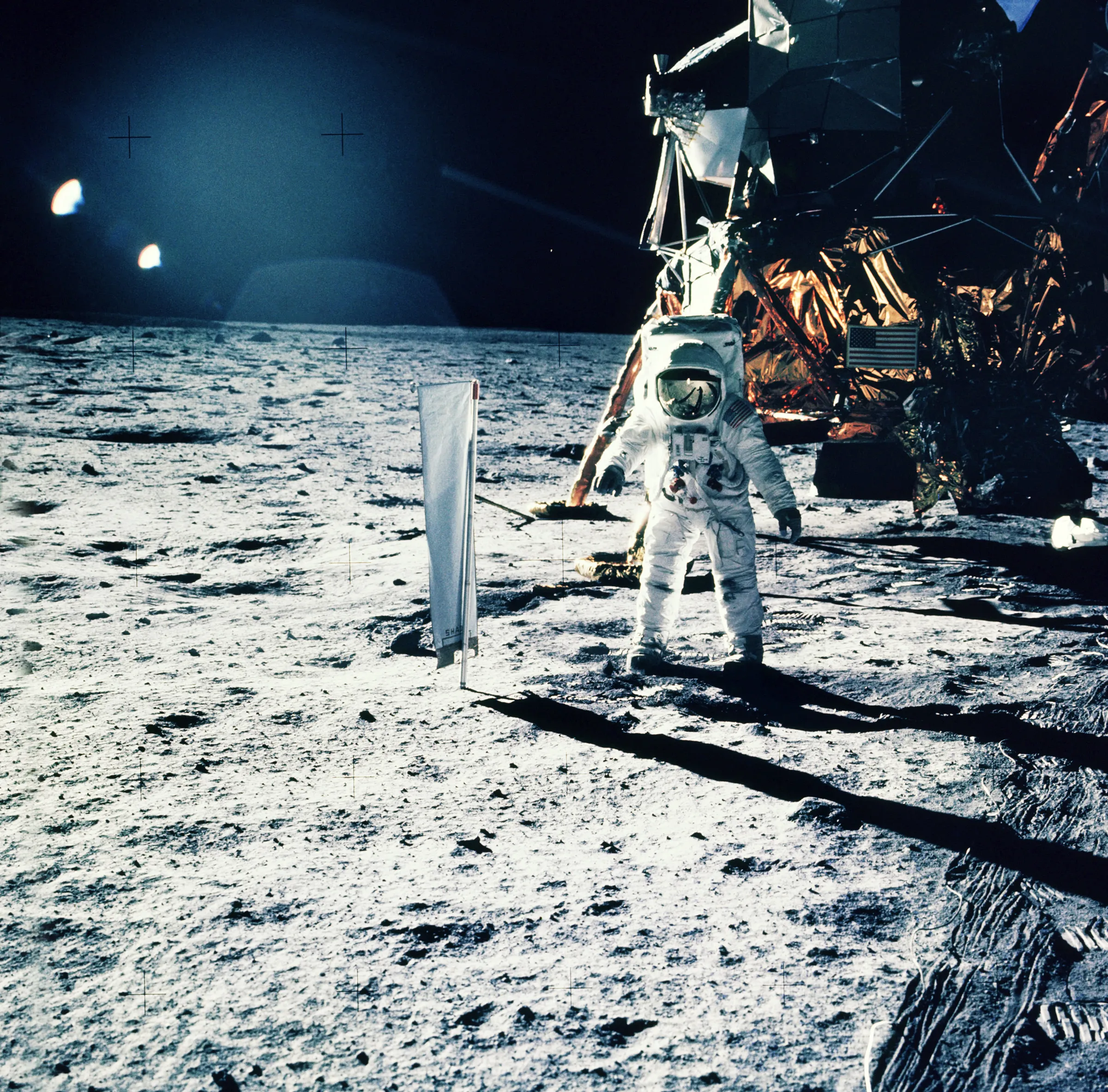
I was 9 years old and visiting my aunt, uncle, and their family in Athens, Alabama, when Apollo 11 landed on the moon on July 20, 1969. Like so many others, we were glued to the television, watching in awe as human beings took their first steps on the lunar surface. Recently, the liftoff of Artemis II has brought back a flood of those memories—moments that felt larger than life, even if I didn’t fully understand them at the time.
My uncle worked for Redstone Arsenal in Huntsville, so for our family, the space program wasn’t just something happening far away—it was personal. There was a sense of pride in knowing that the work being done nearby was helping send astronauts into space.
As kids, though, our imaginations took us in different directions. My cousins and I joked about someday going to the moon ourselves—to eat Moon Pies and Moon-cicles, and to dance the moonwalk long before we knew what that even meant culturally. We wondered aloud whether there might be life on the moon. It was all part of the wonder.
Because we were kids, we were excited about the moon landing and about men setting foot on the moon, but we didn’t fully grasp how that moment—and the many missions that followed—would transform life here on Earth.
Looking back, it’s clear that lunar space exploration did far more than plant a flag. It sparked innovations that continue to shape our everyday lives. Here are seven ways that lunar space exploration has improved life on this planet:
1. Advanced Communication Technology- The need to communicate with astronauts across vast distances accelerated the development of satellite communications. Today, everything from GPS navigation to live global broadcasts traces its roots to space exploration.
2. Medical Innovations- Monitoring astronauts’ health led to breakthroughs in medical imaging and remote monitoring. Technologies like portable heart monitors and improved diagnostic tools owe much to space research.
3. Improved Materials and Safety Gear- The development of heat-resistant materials for spacecraft contributed to better firefighting equipment, protective clothing, and even safer building materials.
4. Computer and Microchip Advancements- The Apollo missions required powerful yet compact computers, helping drive the miniaturization of electronics. The smartphones and laptops we use today stand on that foundation.
5. Water and Air Purification Systems- Keeping astronauts alive in space required efficient recycling of air and water. These innovations now help provide clean drinking water and air filtration systems around the world.
6. Enhanced Transportation and Engineering- The precision required for space travel improved engineering standards and contributed to safer, more efficient transportation systems here on Earth.
7. Inspiration and Educational Growth- Perhaps the most immeasurable impact is inspiration. The moon landing ignited curiosity, leading generations into careers in science, engineering, and exploration. It reminded humanity of what is possible when we dream big.
At the time, the moon landing felt like a grand achievement—like planting a flag in unfamiliar soil. But in many ways, it was more like planting seeds.
Seeds don’t reveal their full impact immediately. They take time to grow, to spread roots, and to bear fruit.
The technologies we now depend on—the ones we barely think about—are the fruit of seeds planted during those early missions.
As Artemis II prepares to carry humans farther into space once again, we are reminded that exploration is never just about the destination. It’s about discovery, innovation, and enriching life back home.
The same curiosity that led us to ask, “Is there life on the moon?” now leads us to deeper questions about our universe and our future.
We may not fully understand today how future missions will shape tomorrow’s world. But history suggests this: when we reach beyond what is known, we often bring back more than we ever imagined.
Today’s Artemis mission reminds us of what human beings can accomplish when we work together on a common goal.
So here’s to the next generation of explorers, and to the continued journey of discovery that lifts not just rockets, but all of humanity, including the human spirit.
 Cove Creek Reflections