
Although plans for a federal highway system were underway as early as the 1930s, construction of the Interstate Highway System was officially authorized by the Federal Highway Aid Act of 1956. By the time I-20 opened between Atlanta and Birmingham in the 1970s, the residents of my hometown eagerly anticipated faster travel along this new freeway.
For years, my family had driven to Birmingham from Anniston on old Highway 78, a winding two-lane road that meandered across the Coosa River at Lake Logan Martin and over the mountains near Chula Vista. When I-20 finally opened, I was thrilled to accompany my grandparents on our annual Christmas trip to Birmingham’s Eastwood Mall. Our itinerary included shopping, visiting “the real Santa,” riding the escalator in Pizitz Department Store, and dining at Morrison’s Cafeteria.
To my surprise, my grandfather preferred the old two-lane highway over the new expressway. He often remarked, “The freeway is for people in a rush. The scenic route is for those who want to enjoy the trip.”
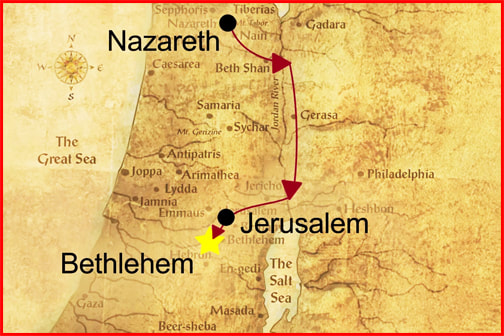
At the time, I didn’t know anything about Advent, but now I see how it invites us to take the scenic route to Bethlehem. The ethos of our economy pushes us toward Christmas in the fast lane, where the season seems defined by shopping, spending, and acquiring. John Jensen’s quip comes to mind: “The trouble with life in the fast lane is that you get to the other end in an awful hurry.” Advent, in contrast, encourages us to slow down and savor the scenery on the way to the manger.
As a young pastor, I was introduced to the colors and candles of Advent, and my journey toward Christmas changed forever. Now more than ever, I believe that as mission-driven Christians living in a market-driven culture, we need the reflective practices of Advent to help us resist the stealthy influences of materialism, busyness, and greed—forces that obscure the true message of the season and replace it with superficial slogans and commercial clichés.
Advent invites us to listen for a truth bigger than words and to long for a gift beyond material things. It reconnects us with the heart of the Christmas story, challenging us to reject cultural portrayals of a Jesus who promises prosperity, success, and self-fulfillment. Instead, it calls us to follow the biblical Jesus, who offers forgiveness, models simplicity, and teaches self-denial.
For Jesus followers and spiritual seekers alike, Advent is a scenic journey that begins with the promises of the prophets and culminates in the nativity. It’s a season of growing expectation that peaks when the Christ candle is lit and the Christmas star shines over Bethlehem.
Taking the scenic route to Bethlehem means revisiting the timeless stories of the prophets, Mary and Joseph’s journey, and the shepherds in the fields. It means pausing to notice the beauty of God’s work in the world and in our own lives.
By choosing this unhurried path, we open our hearts to both the joyful songs of angels and the mournful cries of a broken world. We make room for God to work in us, preparing us not just for the celebration of Christmas but for a life of following Jesus.
When we choose the scenic route to Bethlehem, avoiding the fast-paced cultural expressway, we create space to hear the still, small voice calling us to follow Jesus. By taking this road less traveled, we just might discover that the journey is every bit as meaningful as the destination.
(Revised article from 2017)
(Barry Howard is a retired pastor who currently serves as a leadership coach and columnist with the Center for Healthy Churches.)
 Cove Creek Reflections