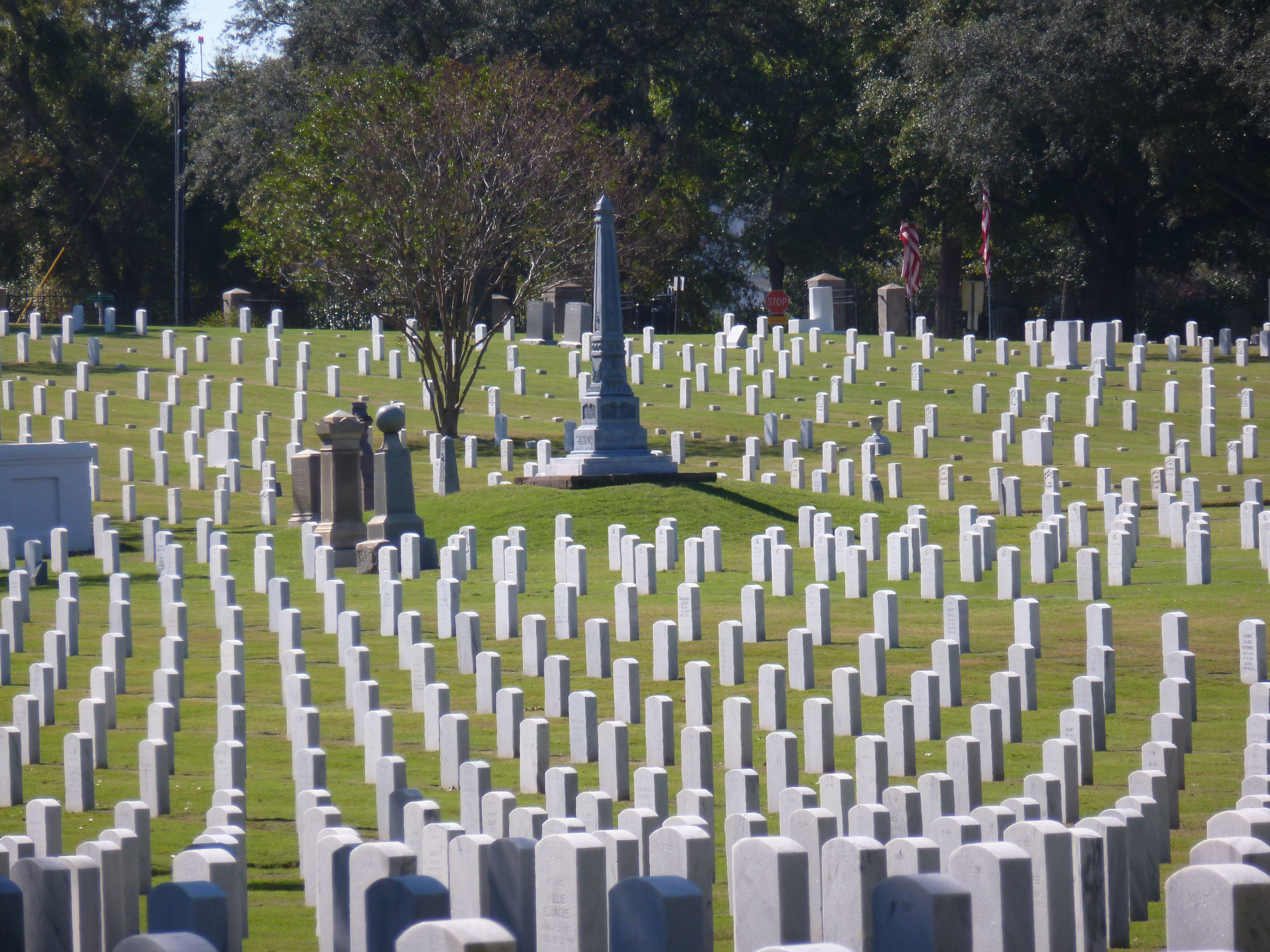
(photo of Barrancas National Cemetery at NAS Pensacola)
Memorial Day is more than a Monday holiday bookended by backyard cookouts and summer travel. It is a sacred summons that encourages us to stop long enough to ask, “What did our freedom cost?” and “Who paid the price?”
Freedom is among the most beloved words in the American vocabulary. We speak of it freely, sing about it proudly, and assume it instinctively. But freedom has never been free. It has always been purchased at great cost, with courage, with sacrifice, and with blood. The men and women memorialized on this day knew that cost intimately, and they paid it anyway.
In a culture addicted to comfort and allergic to cost, we need Memorial Day more than ever. Not merely as a ceremony, but as a confrontation, a kind of holy interruption that calls us back to what truly matters. As President Calvin Coolidge once said, “The nation which forgets its defenders will be itself forgotten.”
This Memorial Day, consider these reflections on the price of freedom:
- Freedom was secured by ordinary people who did extraordinary things. We tend to mythologize our heroes, polishing their stories until they gleam. But most of those who gave their lives were not statues or monuments. They were sons and daughters, husbands and wives, neighbors and friends who chose duty over self. In the struggle to preserve and protect our freedom, ordinary men and women rose to stand in the gap. We owe them our remembrance.
- The cost of freedom is written in Scripture as well as in history. The ancient world understood that great things are purchased at great cost. The prophet Isaiah spoke of the servant who would be “wounded for our transgressions” and “crushed for our iniquities” (Isaiah 53:5). The Apostle Paul, writing from a Roman prison, urged believers to stand firm in “the freedom with which Christ has set us free” (Galatians 5:1), knowing that such freedom was not theoretical—it was paid for. Whether the arena is spiritual or civic, freedom requires a sacrifice.
- Gratitude is the only worthy response to sacrifice. John F. Kennedy said, “As we express our gratitude, we must never forget that the highest appreciation is not to utter words, but to live by them.” Wearing a flag pin or posting a patriotic meme is easy. But genuine gratitude is more demanding. It asks us to live with integrity, to vote with conscience, to serve our communities, and to refuse to squander what others died to give us. Gratitude, rightly practiced, is not just a feeling. Rather, it is a discipline.
- Grief and honor belong together on this day. For thousands of Gold Star families, Memorial Day is not a celebration, but an anniversary of loss. An empty chair at the dinner table. A folded flag on the mantel. A name etched in marble. We honor them best not by turning away from that grief but by standing in it with them. The Psalmist wrote, “Precious in the sight of the Lord is the death of His faithful servants” (Psalm 116:15). What is precious to God should not be passed over lightly by us.
- The next generation must learn the cost or will never know the value. Ronald Reagan warned with prophetic clarity: “Freedom is never more than one generation away from extinction. It must be fought for, protected, and handed on for them to do the same.” Our children will not inherit a passion for freedom by accident. They will inherit it from us or they will not inherit it at all. Take them to a veterans’ cemetery. Read them the letters of soldiers who wrote home from the front. Tell the stories. Sing the hymns. Show them that some things are worth dying for, precisely because they are worth living for.
There is an old hymn of the faith that begins, “When I survey the wondrous cross.” Isaac Watts understood that remembering a sacrifice—truly beholding its cost—changes the one who remembers. This Memorial Day, may we survey what has been given on our behalf. May it humble us. May it move us. May it change us.
This Memorial Day, let us do more than enjoy a 3-day weekend. Let us pause at a grave marker. Let us speak the names. Let us teach our children that the flag flying over their school and their town square was purchased by men and women who chose to stand between danger and those they loved. Let us recommit ourselves to a life lived in appreciation for that gift.
Freedom is not free. But it is ours. May we never take it for granted.
(Barry Howard is a retired pastor who currently serves as a leadership coach and consultant with the Center for Healthy Churches. He and his wife reside on Cove Lake in northeast Alabama.)