
Everyone Loves a Good Mystery

Everyone loves a good mystery. The twists, turns, and the ultimate revelation can be thrilling.

One morning several years ago, I received a call from the popular TV show “Unsolved Mysteries” asking permission to film an episode on our church campus. At first, I thought the call was a hoax, but as I listened to the inquiry, I realized the caller was referring to a mystery involving a member of our community who had disappeared at sea many years ago while serving in the Navy.

Interestingly, when I saw the episode eventually produced by “Unsolved Mysteries,” I noted that the program did not solve the mystery; they only explored the mystery.

In Colossians 1:27, Paul probed a different kind of mystery, one that had been hidden for ages but is now being fleshed out in God’s people: “Christ in you, the hope of glory.” This mystery is not an unsolved riddle but an evolving reality of God’s plan to bring life transformation to all through Christ.

As followers of Jesus, why is our relationship with God a mystery? Perhaps it’s a mystery because the mechanics of how faith brings individuals to life cannot be fully explained. It could be considered a mystery because the work of the Spirit is hidden to the naked eye. Or maybe it’s called a mystery because we are a work in progress, still learning, growing, and maturing, and not yet complete.

In Colossians 2:6-7, Paul urges believers to “walk in him, rooted and built up in him and established in the faith.”We are invited to probe this mystery and live out of the wellspring of our relationship with Jesus each day.

A life rooted and grounded in Christ is not easily shaken. Brenning Manning reminds us, “The more rooted we are in the love of God, the more generously we will live out our faith.”

Take a deeper dive… Where do you sense the mystery of Christ at work in your life? What are some steps we can take to become more rooted and grounded in our faith?

Prayer: We thank you for the incredible mystery that you are at work in us and through us. As we journey through life, may we always be in tune with your Spirit, who is shaping us into your likeness. Root us deeply in your truth and unite us in your love. Amen.

(This first appeared in “Reflections Daily Devotional Guide.)

7 Organizational Pitfalls That Keep Churches Stuck

A veteran airline pilot once told me, “Even the most advanced aircraft won’t go anywhere without regular course corrections.” The same is true of churches. While rooted in timeless truth, churches must constantly assess whether they’re still aligned with their mission or drifting off course.

Too often, congregations settle into familiar rhythms, mistaking comfort for health and routine for faithfulness. Meanwhile, the world outside their walls changes rapidly.

Churches are meant to be living, breathing reflections of the Kingdom of God—places where faith deepens, lives are changed, and the gospel is shared with enthusiasm and positivity. Yet even vibrant churches can get stuck.

Sometimes it’s slow and subtle. Other times, it’s an abrupt leadership conflict, a cultural shift, or simply a loss of momentum. The good news is that getting stuck isn’t the end of the story. In fact, it may be the beginning of renewal if we’re willing to reflect, reimagine, and respond.

Here are seven organizational pitfalls that can quietly derail even the most faithful of congregations—and what to do about them:

1. Prioritizing tradition over mission.

In 1967, the Swiss watch industry controlled over 80% of the global market. But when electronic watches were introduced (most notably by Seiko), the Swiss dismissed them as a passing fad. Within a decade, they had lost their dominance to competitors who embraced innovation.

The church can fall into the same trap when it values tradition over mission. When beloved customs become untouchable, they may obscure rather than illuminate the Good News.

Respect tradition, but regularly ask: “Does this still serve our mission, or just our memories?”

2. Lack of clear decision-making structures.

Churches often run on trust and familiarity—until a crisis hits. Without defined leadership roles and transparent processes, confusion and paralysis set in. Decision-making by consensus sounds inclusive, but in practice it can result in chronic indecision and burnout.

Clarify roles and lines of accountability. Empower leaders to lead and communicate decisions with transparency and grace. Structure doesn’t stifle Spirit. Rather, it provides space and channels through which the Spirit can move.

3. Avoiding conflict instead of addressing it.

A pastor once said, “In some churches, the goal is not peace—it’s the appearance of peace.” Many congregations avoid conflict to preserve harmony, only to find resentment simmering below the surface.

Thomas Crum cautions, “Conflict avoided is conflict multiplied.”

Encourage a culture where tough conversations happen in love. Teach that healthy conflict—done with grace and truth—is not division but discipleship.

4. Failing to adapt to changing realities.

Imagine a church that prints paper maps of their campus to hand out to first-time visitors, only to discover that no one under 40 uses paper maps anymore. They use electronic navigation through their smart device. Whether it’s communication, worship style, or outreach, churches often cling to outdated methods while the needs around them shift dramatically.

Learn to be faithful and flexible. Stay rooted in Christ, but flexible in your strategies. Evaluate regularly. Innovate prayerfully. Be ready to pivot when the moment calls for it.

5. Neglecting leadership development.

It’s been said that Moses may have led the Israelites out of Egypt, but Jethro’s advice (Exodus 18) kept him from burning out. Churches that rely on a few overextended leaders while neglecting to raise up others risk long-term dysfunction. Churches are wise to nurture and cultivate the young leaders who will become the next Joshua, the next Phoebe, the next Barnabas, or the next Timothy.

Identify and invest in emerging leaders. Offer mentoring, training, and real responsibility. A healthy church plans for the next generation before it’s desperate for one.

6. Measuring the wrong things.

Success in the church is not just about attendance and offerings. It’s about lives transformed, relationships deepened, and love lived out in the community.

William Bruce Cameron reminds us, “Not everything that counts can be counted.”

Don’t let the numbers define the narrative. Reorient your scorecard to emphasize missional engagement, spiritual formation, community influence, and kingdom impact

7. Ineffective internal and external communication.

Even vibrant churches can stall when communication breaks down. Internally, assumptions breed confusion. Externally, outdated websites, unclear signage, or inconsistent messaging can send mixed signals.

Good communication is ministry. Prioritize clarity in announcements, press releases, digital presence, and community relationships. Say what matters and say it well.

Churches are not immune to organizational drift. And while the Spirit of God moves in mysterious ways, the systems we build can either support or suppress that movement. By recognizing and addressing these common pitfalls, we free the church to do what it was always meant to do: live out the Gospel boldly, joyfully, and effectively.

Because when a church gets unstuck, the congregation gains traction and begins to move forward, outward, and upward.

(Barry Howard is a retired pastor who now serves as a leadership coach and consultant with the Center for Healthy Churches. He and his wife reside on Cove Lake in northeast Alabama.)

Celebrate Religious Liberty by Exercising Your Freedom to Worship

Fire up the grill. Churn the homemade ice cream. Enjoy the fireworks as you hum a little John Philip Sousa. It’s the Fourth of July weekend.

For many, this holiday brings the joy of parades, cookouts, and patriotic music. But amid the celebration, it’s worth remembering that Independence Day is about more than national pride—it’s about preserving and practicing the freedoms that define us. Among the most vital—and perhaps most often overlooked—is religious liberty.

More Than a Constitutional Clause

Religious liberty means we are free to worship without fear of persecution, and equally free from government coercion into religious activity. This freedom protects our right to attend the church of our choice—or no church at all. And it also ensures that faith remains a matter of personal conscience, not political control.

The founders of our nation recognized the harm caused when religion and government become entangled. They established, with care and foresight, a “wall of separation” between church and state—not to marginalize faith, but to guard its integrity.

As Isaac Backus, a prominent Baptist minister during the American Revolution, once wrote:  “When Church and State are separate, the effects are happy… but where they have been confounded together, no tongue nor pen can fully describe the mischiefs that have ensued.”

Worship Is a Freedom Worth Using

While many of us will mark Independence Day with fireworks and festivities, I hope we’ll also celebrate by exercising the freedom that sets us apart: the freedom to worship.

Our Baptist ancestors were instrumental in shaping the First Amendment, not only to protect their own practices but to advocate for the religious freedom of all. They believed—deeply and rightly—that no government should compel belief or interfere with the exercise of faith. That principle still holds today.

“Congress shall make no law respecting an establishment of religion, or prohibiting the free exercise thereof…”  –First Amendment to the U.S. Constitution

But freedom requires stewardship. It’s not just a right to defend, but a gift to live out.

A Global Perspective

As we gather for worship this weekend, may we remember the millions around the world who do so in secret, risking their safety for the sake of their convictions. May their courage remind us never to take our freedom for granted.

In my years as a pastor, I’ve seen how worship shapes lives—it forms character, builds community, and fuels compassion. When we gather to pray, sing, listen, and serve, we become more than attendees—we become active participants in the liberty we’ve been given.

That’s why Hebrews 10:25 challenges us: “Some people have gotten out of the habit of meeting for worship, but we must not do that. We should keep on encouraging each other…” (CEV)

To neglect worship is to risk trivializing the hard-fought right to gather without fear or restriction.

More Than a Celebration—A Commitment

So yes—enjoy your celebration. Wave the flag. Cheer the parade. Light the fireworks. But let’s also take time to reflect. Give thanks for the freedoms we enjoy. Pray for those who are still waiting to worship freely. And most importantly, exercise your freedom to worship—not just this weekend, but consistently, gratefully, and respectfully.

Because if even one group loses their right to worship, religious liberty is in jeopardy for us all.

(Barry Howard is a retired pastor who now serves as a leadership coach and consultant with the Center for Healthy Churches. He and his wife live on Cove Lake in northeast Alabama.)

(This is an updated column from 2016.)

Rediscovering Our Belief in “Liberty and Justice for All” — and Living into It

When I was in the 3rd grade, long before our coal-heated elementary school had an intercom, I remember Mrs. Pirkle, our teacher, would lead us to stand at attention, face the flag, and recite the Pledge of Allegiance. For many Americans, these words roll off the tongue as familiar as the melody of the national anthem: “…with liberty and justice for all.”

We often recite this phrase at school assemblies, civic ceremonies, and public gatherings. Yet in a time when division is deep, and trust is fractured, we must ask ourselves: Do we still believe those words? And more importantly, are we truly living into them?

“Liberty and justice for all” is more than a tagline; it’s a guiding principle. It reflects the highest aspirations of a nation committed to freedom, not just for the privileged, but for every citizen. It is both a pledge we recite and a promise we must embody.

The social contract that binds us together as citizens of these United States is based on the common good of the community, and not the advancement of one individual over another, one class of people over another, or one ethnicity of people over another. Woodrow Wilson contended, “America is not anything if it consists of each of us. It is something only if it consists of all of us.”

To reclaim this belief is to recommit ourselves to a shared vision: a society where opportunity is not determined by zip code, and dignity is not dictated by skin tone, belief system, portfolio size, or political affiliation.

“Liberty and justice for all” is more than a theory; it is an ongoing pursuit. One historical moment that illustrates this pursuit is the courageous action of Fannie Lou Hamer, a Mississippi sharecropper who became a powerful voice in the civil rights movement. After being denied the right to vote and facing brutal opposition, Hamer famously testified before the 1964 Democratic National Convention: “I’m sick and tired of being sick and tired.”

Her words ignited the conscience of a nation. Hamer didn’t ask for special treatment. She asked that the promise of “liberty and justice for all” include her, too. Her story reminds us that liberty requires vigilance, and justice demands action.

Justice is more than a courtroom verdict; it is a spiritual mandate. Amos 5:24 demands, “But let justice roll on like a river, righteousness like a never-failing stream.” Justice isn’t confined to verdicts and legislation. It is manifest in the way we provide food, clothing, housing, education, and healthcare to the “least of these.” Justice insists that all people deserve to be seen, heard, and respected, especially the disadvantaged and the underprivileged.

Likewise, liberty is not simply the absence of ethical and moral restraint, but the presence of opportunity coupled with a call to responsibility. It’s the freedom to speak, worship, and live without fear of marginalization.

Coretta Scott King insisted, “Freedom is never really won. You earn it and win it in every generation.”

“Liberty and justice for all” doesn’t end with us; it starts with us. Rediscovering liberty and justice involve both public policy and personal practice. It begins in our homes, our churches, our voting booths, and our daily conversations. It starts when we examine our assumptions, expand our circles, and speak out when the voices of others are silenced.

It begins when a teacher advocates for underserved students. When a community leader ensures fair access to resources. When a neighbor stands up for the rights of an immigrant neighbor. When a local church hosts a refugee family. When your Bible study group or small group gets involved in prison ministry. Or when your mission group sponsors and supports victims of human trafficking.

It continues when we advocate for fair and just legislation to protect and preserve the rights of all individuals, even those with whom we disagree. And when some of our representatives and leaders from both sides of the aisle suffer from rapid-onset constitutional amnesia, we need to vigorously and vehemently remind them that, since we were children, before we knew the difference between a Democrat or Republican, we pledged to pursue liberty and justice for all.

By the way, in the middle of my 3rd grade year, schools in Alabama were integrated. It was a tense time, especially in the Deep South. However, I cannot imagine a teacher doing a better job of introducing new friends of color into our classroom. Although some of us had been cautioned at home about getting too close to our new friends, once we got to school, Mrs. Pirkle led us all in starting the day with the Pledge of Allegiance.

Across the years, I have preached that we all stand on level ground before the cross, a core belief that determines how I treat others. While buses were being burned and churches were being bombed across my home state, in our little classroom, Mrs. Pirkle helped us understand that we all stand on level ground before the flag, because we are a nation that believes in “liberty and justice for all.”

Independence Day calls us to more than celebration. It calls us to conviction. It calls us to remember that our work is not done when the fireworks fade. We are called to build a future where the final words of our pledge aren’t just recited—they are realized.

And if we are bold enough to believe in “liberty and justice for all,” we must also be brave enough to live and serve in ways that make it true.

(Barry Howard is a retired pastor who currently serves as a leadership coach and consultant with the Center for Healthy Churches. He and his wife live on Cove Lake in northeast Alabama

Learning the Unforced Rhythms of Grace

In a world that praises hustle and rewards burnout, Jesus offers something profoundly countercultural: rest. Not the kind of rest you squeeze in between meetings or tack onto the end of an overbooked week, but real rest—the kind that restores the soul, quiets the mind, and invites us back into wholeness.

In Matthew 11:28–30 (The Message), Jesus extends an invitation: “Are you tired? Worn out? Burned out on religion? Come to me… Walk with me and work with me—watch how I do it. Learn the unforced rhythms of grace.”

These words, so aptly paraphrased by Eugene Peterson, feel less like a command and more like a gentle hand on the shoulder, drawing us toward something better than exhaustion: grace.

Learning to Rest Is a Strength, Not a Weakness

In her book Invitation to Silence and Solitude, Ruth Haley Barton writes, “Because we do not rest, we lose our way… Poisoned by the hypnotic belief that good things come only through unceasing determination and tireless effort, we can never truly rest.”

It’s easy to assume that if we stop, we’ll fall behind. But Jesus flips the script—he teaches that rest is not an interruption to spiritual formation; it is spiritual formation. It’s how we learn to hear his voice above the noise.

A Gentle Yoke in a Demanding World

Jesus invites us to “take his yoke”—a farming tool once used to link animals for shared work. But his yoke isn’t burdensome. It’s custom-fit, gentle, and shared. We don’t pull alone. We’re yoked with Christ, walking in step with his grace.

Years ago, I met a retired pastor who had served faithfully for five decades. When I asked him his secret to longevity, he said simply, “I finally learned to walk at God’s pace.” That’s what Jesus means by unforced rhythms—it’s grace that moves in time with heaven, not the chaos of the calendar.

Grace for the Weary and Wounded

In times of loss, confusion, or fatigue, grace meets us quietly and consistently. It is:

  • An antidote for anxiety
  • A remedy for restlessness
  • Decompression for depression
  • Antivenom for sin

Grace is what saves us when we can’t save ourselves. It guides when we’re lost, comforts when we’re hurting, and encourages when the odds are stacked against us. It even carries us when we don’t know the way forward.

How Do We Learn These Rhythms?

  • Come to Jesus—not just once, but daily
  • Take his yoke—release the burdens you were never meant to carry alone
  • Learn from him—observe his gentleness, humility, and wisdom
  • Rest in him—receive the peace that only grace can give

This isn’t just self-care. It’s soul care. It’s a way of life Jesus modeled—and a way of life he still invites us to follow.

John Mark Comer reminds us, “Transformation is possible if we are willing to arrange our lives around the practices, rhythms, and truths that Jesus himself did, which will open our lives to God’s power to change.”

So today, let grace interrupt your hurry.
Let grace reframe your expectations.
Let grace teach you how to breathe again.

Because in Christ, we’re not called to hustle harder—we’re called to finish the race at the speed of grace.

(Barry Howard is a retired pastor who now serves as a leadership coach and consultant with the Center for Healthy Churches. He and his wife live on Cove Lake in northeast Alabama.)

(This post is a summary of a sermon I shared in 2023.)

Walter Brueggemann Challenged My Assumptions and Deepened My Faith: Reflections from a Former Student

On June 5, 2025, the world lost one of its most provocative and prophetic theological voices. Walter Brueggemann, Old Testament scholar, preacher, teacher, and esteemed theologian, passed away at the age of 92. His death leaves a significant void in the landscape of biblical scholarship and the life of the Church, but his influence will resonate for generations to come.

My own journey with Brueggemann began in a seminary classroom—not at Columbia Seminary, but at the New Orleans Baptist Theological Seminary in a course on Preaching from the Psalms taught by Dr. Harold Bryson. One of the textbooks for the course was Israel’s Praise, Brueggemann’s exposition on the theological weight of worship. That course was the first of many times Walter would challenge my assumptions, stir my imagination, and deepen my faith.

A few years later in 1995, I ventured outside of the Baptist world and enrolled in the Doctor of Ministry program at Columbia Theological Seminary for one reason: I wanted to study with Brueggemann. I completed the program in 1998. Several other Baptist minister friends also pursued their postgraduate work at Columbia as well, including John Pierce, Elizabeth Thompson, Greg DeLoach, Ron Wilson, Courtney Krueger, and Don Gordon. Each of us was drawn to this doctoral program by the gravitational pull of Walter’s prophetic intellect.

My first class with Brueggemann was listed on the course description “Old Dangerous Texts for New Dangerous Times.” His lecture notes from this course became the foundation for his book, “Theology of the Old Testament: Testimony, Dispute, Advocacy.”

Walter had a warm and humorous demeanor outside the classroom. Occasionally after class, my friend Ron Wilson and I, who Brueggemann fondly referred to as his little Baptist friends, would go to a local pub, grab a bite, and watch Braves baseball while unpacking the theological freight of the day’s lectures. Walter could be spotted at a baseball game now and then, and later would share stories and analogies that were conceived at the ballpark.

Years after my graduation, I invited Walter to lead a pastor’s workshop at First Baptist Church of Pensacola, where I was serving at the time. He was gracious and kind, not only in person but in follow-up. After the event, he sent me a brief yet meaningful note: “Thanks for the invitation. It was great to be in your shop.”

When I published my first book—a collection of call stories from a rich variety of pastors—Walter emailed me an endorsement, specifically emphasizing, “The recovery of a notion of call is urgent among us and your book should help that recovery along.” His words gave affirmation to my work and underscored his constant encouragement of emerging voices in ministry.

Walter had a great appreciation for our Baptist heritage. On one occasion in class, he remarked, “It’s good to have the Baptists here with us. None of us would be here if it were not for the Baptists. They were the freedom fighters who contended for religious freedom for all faith groups because they believed ‘if one of us loses our religious freedom, we all lose our religious freedom.’”

Even into his nineties, Walter remained intellectually vibrant, curious, and connected. In our last correspondence on his 91st birthday in 2024, he responded:  “Dear Barry: I am glad to hear from you and thanks for your kind words. I hope all is well for you. It’s good work to be a bridge builder. I just turned 91 and am hanging in and taking stock. With much appreciation, Walter.”

Though deeply academic, his writing was marked by poetic rhythm and prophetic urgency. His sermons and lectures could unsettle the comfortable and comfort the unsettled, sometimes in the same sentence.

Walter loved the scriptures and encouraged his students to “live in the tension of the text.” When addressing various questions about biblical criticism or historicity, he would often quip, “The text is what we have. Deal with it!” Whether he was teaching at Columbia Theological Seminary or speaking to a room full of pastors and leaders, Brueggemann courageously addressed the juxtaposition of scripture and culture head-on.

While I’m grateful for all of Walter’s writing—from his groundbreaking work on the prophets and Psalms to his cultural critique and homiletical insights—I’m especially thankful for his prayers. In Awed to Heaven, Rooted in Earth and Prayers of a Privileged People, his words become devotional guideposts, grounding us in faith while drawing us into action. One line from his prayer, “No More Sinking Sand,” seems especially fitting as we honor his life and witness:

          God of heavens, Lord of earth,
          hear our resolve, heal our unresolve,
          that we may finish in sure trust and in glad obedience.
          We already know what to do by our careful pondering of you. Amen.

Walter Brueggemann completed his journey in “sure trust” and “glad obedience.” Now it is up to us—those who studied with him, read him, or were influenced by his prophetic voice—to keep pondering, to continue proclaiming, and to work toward the kind of world Brueggemann’s theology dared us to imagine.

(Barry Howard is a retired pastor who now serves as a leadership coach and consultant with the Center for Healthy Churches. He and his wife live on Cove Lake in northeast Alabama.)

Preparing for a Fresh Wind of the Spirit: A Reflection for Pentecost

Reggie McNeal, author of Missional Renaissance, proposes, “The Spirit is a work in the world, and it’s the job of the church to get on the same page as the Spirit, not the job of the Spirit to get on the same page as the church.”

As we navigate the chaos of a changing world, including fluctuating church metrics, shifting cultural norms, and contentious political allegiances, a fresh wind of the Spirit is blowing. Are you willing to risk raising your sails?

My earliest notions of the spirit world weren’t shaped by the Bible but by a mysterious little book titled Thirteen Alabama Ghosts and Jeffrey, a collection of Southern folklore by Kathryn Tucker Windham and Margaret Gillis Figh. Among the eerie tales was the story of Jeffrey, a mischievous spirit who took up residence in the Windham home in 1966. According to legend, Jeffrey would stomp down hallways, rock in empty chairs, startle the family cat, and move heavy furniture when no one was looking.

I was so captivated by the stories that I gave a fourth-grade book report on them in Mrs. Gibson’s class. Even now, when I pass through some of those quiet Alabama towns, I glance toward the courthouse windows, half-expecting to see a face staring back.

Growing up in the Bible Belt, it was only natural for a kid to conflate the “ghost in the courthouse” with the “Holy Ghost in the church house.” Visiting evangelists would shout from revival pulpits: “Have you received the Holy Ghost?” followed quickly by “Beware of quenching the Holy Ghost!”—as if this divine specter might invade your body or condemn your soul depending on your response.

Over the years, I’ve grown—both theologically and spiritually—in my understanding of the Holy Spirit. I still value my “Bapticostal” upbringing, but I’ve had to unlearn a few ghost stories along the way. I now prefer the term “Holy Spirit” over “Holy Ghost.” The former suggests holiness and intimacy. The latter, at least in childhood, sounded more like a spiritual haunting.

When I brush aside those folkloric impressions, I find that Scripture provides much-needed clarity. In John 14, as Jesus prepared for his departure, he told his disciples:

“I will not leave you as orphans. I will come to you” (John 14:18).

Though he would no longer be with them in the flesh, Jesus promised that his presence would remain with them in Spirit. He said,

“I will ask the Father, and he will give you another Advocate to help you and be with you forever—the Spirit of truth” (John 14:16–17).

I take comfort in knowing that even Jesus’ disciples didn’t fully understand at first. Like them, I’ve wrestled with anxiety over God’s nearness, especially in seasons of uncertainty. Jesus had been their mentor, their Rabbi. He had given them a new way to live—grounded in grace, not legalism. So when he spoke of leaving, their obvious question was: What happens now? Who will lead us?

That’s where the Holy Spirit comes in.

The Spirit is not some distant, disembodied force. The Spirit is God’s very presence among us—our comforter, guide, and encourager. As Paul writes,

“The Spirit himself testifies with our spirit that we are God’s children” (Romans 8:16).

I now understand the Spirit not as a showy performer or a supernatural invader, but as the presence of God dwelling within human hearts. The same Spirit that hovered over the waters at creation now inhabits our daily lives, whispering truth, nudging us toward grace, and empowering us to live with simplicity and service.

When I invited Walter Brueggemann—my teacher and friend—to lead a workshop at our church, he once told me that the Spirit doesn’t put on exhibitions. “The Spirit prefers to work quietly,” he said, “always prompting people toward God and the Jesus-kind-of-life.” I’ve found that to be true.

Pentecost reminds us that God’s Spirit is a wind we cannot summon or control—but one we can respond to. As Luke puts it in Acts 2, the Spirit arrived like “a mighty rushing wind.” Living on the coast, I’m familiar with wind: it’s invisible, powerful, and unpredictable. We can’t manufacture it—but we can raise our sails.

And just as we cannot recreate the resurrection or re-enact the ascension, we cannot stage a Pentecost encore. God is not in the business of repeat performances. The Spirit is endlessly creative, constantly innovating, and persistently at work. Perhaps even now, the Spirit is initiating a new story within you.

In his book Thinking About God, Fisher Humphreys wrote:

“The Spirit brings life and vitality into the experience of the Christian and the church. He vivifies us. He makes Christian living dynamic as well as decent.”

Indeed, the Spirit’s work is to foster unity—not division; to inspire creativity—not suppress it; and to re-vision the future—not simply preserve the past.

So this Pentecost, I pray we become more aware of the Spirit’s movement—less haunted by our ghosts, more filled with God’s penchant for creativity, and more responsive to the Spirit prompting us toward unity.

Come, Holy Spirit.
Blow where you will.
Bridge the chasms of division.
Prepare us for a season of adventure.
We’re ready to raise our sails.

(Barry Howard is a retired pastor who now serves as a leadership coach and consultant with the Center for Healthy Churches. He and his wife live on Cove Lake in northeast Alabama.)

Where Is God When the Bad Stuff Happens?

Where is God when bad things happen?

Across the ages, this question has perplexed and haunted those weighed down by grief, suffering, and pain. Theologians and philosophers have wrestled with scripture and reason in search of understanding. Pastors and counselors still search for words that offer hope to hearts broken by tragedy.

The Bible doesn’t sugarcoat the harshness of life. In Psalm 13:1–2, the psalmist gives voice to what it feels like to be forsaken in moments of anguish:

How long, Lord? Will you forget me forever?
How long will you hide your face from me?
How long must I wrestle with my thoughts
and day after day have sorrow in my heart?
How long will my enemy triumph over me?

Chaos wears many faces. A hurricane flattens homes and lives. An earthquake strikes without warning. A disease creeps in uninvited. A drunk driver kills an innocent teenager. And every time, the question echoes again: Where is God in this?

Some respond with platitudes. But trite clichés often feel hollow—or even offensive—to those walking through the valley of sorrow. Answering this question too casually can seem dismissive. But ignoring it would leave too many stranded in silence.

So I won’t pretend to offer a one-size-fits-all answer. Instead, I’ll share what I’ve come to believe—hoping that even a flicker of light might help someone see more clearly in a dark place.

1. Life is not fair.

I used to believe that if I prayed, obeyed, and lived faithfully, God would shield me from life’s storms. But life doesn’t follow that formula. God is good, yes—but God never promised that life would be fair. Life is hard. And faith isn’t an escape hatch—it’s an anchor.

As beloved author Frederick Buechner suggested, “Here is the world. Beautiful and terrible things will happen. Don’t be afraid.”

Faith helps us face the beautiful and the terrible with courage.

2. Suffering does not discriminate.

No one is immune. Tornadoes don’t skip homes based on church attendance. Illness doesn’t scan for spiritual résumés. We live in a world still scarred by sin, and its consequences touch the just and the unjust alike. Faith doesn’t exempt us—it equips us.

3. God is present in the chaos.

God does not orchestrate suffering as punishment or test. God is not the author of chaos, but the Redeemer within it. The Holy Spirit—God’s presence—lives within us to comfort, convict, and guide. God also shows up through the Church—when we bring love, healing, and hope to others.

Holocaust survivor and psychiatrist Viktor Frankl observed, “When we are no longer able to change a situation, we are challenged to change ourselves.”

Faith doesn’t always change our circumstances—but it transforms our response.

4. God invites us to walk by faith, not by sight.

Why do bad things happen to good people? Why are some healed and others not? Why did Jesus raise Lazarus, but not everyone? Maybe those moments of healing are glimpses—previews—of what God will one day do fully and finally. Even Lazarus died again. Earthly healing is temporary. Eternal hope is permanent.

I still believe in prayer. I believe in hope, medicine, community, and grace. But there are no formulas—only an invitation to walk by faith with courage and perseverance.

5. God is at work, but not always in ways we can see or evaluate.

Romans 8:28 assures us, “In all things God works for the good of those who love him.”

God doesn’t cause all things—but God works within all things. Often, God works through us. We are Christ’s hands and feet in a hurting world. When we show up with compassion, we reflect the God who never leaves us.

So, where is God when the bad stuff happens?

God is present. Not with easy answers or magical fixes—but with sustaining grace, resilient hope, and a faithful presence that never lets go.

Especially in the seasons when I wrestle with the unknowns, I hold to the promise that God is here. And even the smallest glimpse of God’s presence encourages me to keep pressing on.

(Barry Howard is a retired minister who currently serves as a leadership coach and consultant with the Center for Healthy Churches. He and his wife reside on Cove Lake in northeast Alabama.)

(This column is taken from a message I shared at FBC Pensacola after the community experienced multiple hurricanes, a catastrophic oil spill, and more than a few unexpected deaths.)

“My Head Hurts, My Feet Stink, and I Don’t Love Jesus”

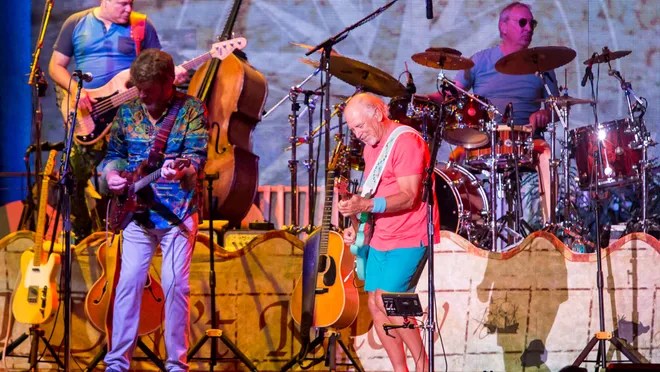
One of Jimmy Buffett’s more unusual song titles has always struck me as confessional:“ My Head Hurts, My Feet Stink, and I Really Don’t Love Jesus.”

At first glance, that may feel jarring—even offensive. But sometimes, brutal honesty says what softer words can’t.

Long before moving to the coast of Florida, I loved the music of Jimmy Buffett. Though many of the lyrics are not Sunday morning pulpit material, I think Buffett may have given voice to something that a lot of people quietly feel: life is overwhelming, I’m exhausted, and if this is what religion is, I’m not buying it.

There’s a sobering passage in the Bible that feels strangely modern. It comes from Paul’s second letter to Timothy, chapter 3, verses 1–9 (The Message):

“Don’t be naive. There are difficult times ahead. As the end approaches, people are going to be self-absorbed, money-hungry, self-promoting, stuck-up, profane, contemptuous of parents, crude, coarse, dog-eat-dog, unbending, slanderers, impulsively wild, savage, cynical, treacherous, ruthless, bloated windbags, addicted to lust, and allergic to God. They’ll make a show of religion, but behind the scenes they’re animals. Stay clear of these people… They get exploited every time and never really learn… But nothing will come of these latest impostors. Everyone will see through them…”

Paul paints a picture of a society unraveling—where people are self-absorbed, cynical, addicted to chaos, and allergic to God. He warns of those who put on a show of religion but live like animals behind the curtain.

And then Paul says: “Stay clear of these people.”

Now that’s a hard line. But maybe it’s not about avoiding people in pain. Maybe it’s about being wise enough to walk away from shallow religion so we can offer something real.

Because here’s the truth: people are hurting. And they’re not looking for performance—they’re looking for peace.

When Your Head Hurts: Life Can Be Heavy

We live in an age of anxiety, distraction, and noise. People are overwhelmed—mentally, emotionally, and spiritually. Church clichés don’t help. Quoting verses out of context doesn’t help. What people long for is honest faith that doesn’t pretend to have all the answers but still clings to hope.

We all know someone (maybe it’s you) who’s tired of the game—tired of pretending everything’s okay. Maybe faith has become foggy. Maybe the pain has been too heavy. And in those moments, the last thing people need is shallow religion.

What they need is a Savior who doesn’t flinch at the truth.

When Your Feet Stink: The journey can be exhausting.

“Feet stink” is just a gritty way of saying: I’m worn out.
Life has been a long journey. Some people are exhausted from walking it alone—or worse, walking it while being judged by those who say they follow Jesus.

But here’s the beauty of the real gospel: Jesus doesn’t keep his distance from the dirty. He kneels. He washes feet. He welcomes the weary. And he still does.

What if the church looked more like a basin and towel, and less like a stage?

“I Really Don’t Love Jesus”: Honest confession is a good place to start.

This may be the most painful line in the song—but also the most honest. Some people don’t feel any affection for Jesus because the version they were shown was twisted, manipulative, or weaponized.

But often, when people say they don’t love Jesus, what they really mean is:
“I’ve never met the real One.”

And that’s where we come in—not to argue or defend, but to embody Christ.
To show them a Jesus who is full of grace and truth. A Jesus who welcomes doubt, heals wounds, confronts injustice, and never stops loving.

Staying Clear and Staying Compassionate

Paul’s warning to “stay clear” wasn’t about cutting off the brokenhearted. It was about stepping away from religious performance—from counterfeit faith that values appearance over authenticity.

Because in a world addicted to the fake, authenticity is the most powerful witness.

Let’s be real. Let’s be honest. Let’s be kind.

So yes—some people’s heads hurt. Some are worn out. And some aren’t sure they love Jesus at all.

But what if they haven’t been rightly introduced? What if their view has been blocked by loud religion and quiet hypocrisy?

Let’s be the ones who live with humble faith.
Let’s create space for hard questions and honest searching.
Let’s love people right where they are.

Because when someone meets the real Jesus—not the bumper-sticker version, not the political mascot, but the crucified and risen Savior—they just might find that their headache eases, their feet find rest, and their heart begins to soften.

And maybe, just maybe, they will grow to genuinely love and follow Jesus.

As the Winds of Time Blow: 10 Ways to Navigate the Changing Seasons of Life

Life is full of seasons—some bright and full of joy, others challenging and uncertain. Just as nature moves from spring to summer, fall to winter, we also experience transitions in relationships, careers, health, and faith.

Ecclesiastes 3:1 affirms, “To everything there is a season, A time for every purpose under heaven.”

Change is inevitable, but how we navigate these shifts can shape our growth and resilience. Marie Dee cautions, “If you stay stuck in the past season or fixated on the future season, you will miss the one you’re in.”

Whether you’re entering a season of renewal or walking through a time of hardship, here are 10 ways to navigate life’s changing seasons with wisdom and grace:

1. Learn to be faithful and flexible. Faithfulness and adaptability are not mutually exclusive. Change is constant, and it can be uncomfortable at times. However, resisting it only makes the transition harder. Accepting that life moves in seasons allows us to adapt with greater peace and confidence. Trust that each new chapter holds purpose, even if you can’t see it yet.

2. Lean into your faith. Uncertainty can feel overwhelming, but God is constant. Seek God’s guidance through prayer, Scripture, and quiet reflection. Faith does not exempt us from change, but it can serve as a compass to help us navigate change.

3. Let go of what you no longer need. Not everything (or everyone) is meant to journey with you into the next season. Holding onto outdated habits, practices, relationships, or relics can keep you from growing into who you are meant to be. Just as trees shed their leaves in autumn, sometimes we must release the past to make room for the future.

4. Stay rooted in gratitude. In seasons of uncertainty, gratitude shifts our focus from what we lack to what we have. Take time each day to acknowledge the blessings around you. Even in difficult times, there is always something to be thankful for.

5. Stay connected to spiritual community. Life’s transitions are easier when you’re surrounded by supportive people who offer encouragement and wisdom. Seek out mentors, trusted friends, or faith leaders who can help you navigate unfamiliar territory with clarity and perspective.

6. Continue learning and growing. Each season—whether joyful or challenging—teaches us something valuable. Instead of asking, “Why is this happening to me?” shift the question to, “What is this season teaching me?” Growth happens when we are willing to learn from the experiences life brings our way.

7. Prioritize self-care. Transitions can be exhausting, so take good care of your body, mind, and spirit. Eat well, rest, exercise, and nurture your spiritual life. A well-cared-for heart and mind will help you face change with greater strength.

8. Be patient with yourself and others. Adjusting to a new season takes time. Don’t rush the process or compare your journey to others. Give yourself grace, knowing that transitions are part of life’s unfolding story. And exercise the same patience toward others who may be struggling to adjust to a new season as well.

9. Find joy in the present moment. It’s easy to focus on what’s ahead or dwell on what’s behind, but true peace and joy are always found in the here and now. Look for moments of joy, laughter, and beauty, even in uncertain times. Henri Nouwen reminds us, “Joy does not simply happen to us. We have to choose joy and keep choosing it every day.”

10. Keep moving forward with hope. No season lasts forever. If you’re in a difficult one, live as though brighter days areahead. If you’re in a season of joy, cherish it fully. With faith, resilience, and an open mind, you can step into each new chapter with confidence.

In addressing the impact of cultural shifts and societal changes, Malcolm Gladwell, author of The Tipping Point, contends, “You need to have the ability to gracefully navigate the world.”  

Navigating the changing seasons of life isn’t always easy, but it is always possible—with faith, wisdom, and courage. No matter what season you find yourself in today, make the most of that season, and you will be better prepared to navigate the seasons yet to come.

(Barry Howard is a retired pastor who currently serves as a leadership coach and columnist for the Center for Healthy Churches. He and his wife reside on Cove Lake in northeast Alabama.)