Sometimes you hear a song and it keeps playing in your head long after you have heard it. Such was the case around 2015 when I heard our choir sing the anthem “Press On.” At that time these words were especially relevant for me and other members of our congregation who had experienced grief, extra stress, job loss, property damage from storms, and/or family fragmentation.
The lyrics begin like this:
When the valley is deep When the mountain is steep When the body is weary When we stumble and fall
When the choices are hard When we’re battered and scarred When we’ve spent our resources When we’ve given our all
In Jesus’ name, we press on In Jesus’ name, we press on Dear Lord, with the prize, clear before our eyes We find the strength to press on.
Through the years I have practiced the discipline of writing prayers, including personal prayers, prayers for worship, and prayers for weddings, funerals, celebrations, dedications, and other special occasions. Most of my prayers are brief, primarily because I think God is a fast listener and doesn’t need to hear me wax on at length, except on those occasions where I need to unload and God willingly lends an ear for as I long as I need to lament, confess, or seek God’s counsel.
The morning after first hearing the anthem, I was still hearing the anthem. So during my devotional time, I scribbled down a prayer for me, my congregation, my friends, and my family to find the strength to press on.
This week as we have been dealing with yet another surge of virus-related risks and as my phone has been buzzing with news of friends who are sick and others who have passed to the other side, I have pulled out this prayer and reclaimed it as my prayer for all of us to find strength for the living of these days:
A Prayer to Press On
“As we navigate the twists and turns of life grant us the wisdom to press on. As we seize opportunities and confront obstacles grant us to courage to press on. As we deal with the grind of daily decision-making grant us the insight to press on. As we aim to live with passion and purpose grant us the energy to press on. When we encounter difficult people and difficult situations grant us the savvy to press on. When we experience worry and anxiety grant us the peace to press on. When we are perplexed and concerned about the future grant us the vision to press on. When the unexpected revises our plans grant us the patience to press on. When doubts arise and fears dismay grant us the stability to press on. As we practice justice and mercy grant us the courage to press on. Wherever our journey takes us In the overcoming power of your Spirit empower us to press on.”
In the good times and the tough times let us “press toward the mark of the high calling of God in Christ Jesus” (Philippians 4:13).
(Barry Howard serves as pastor of the Church at Wieuca in north Atlanta. He also serves as a leadership coach and columnist with the Center for Healthy Churches.)
The prophet Amos, who served in the Northern Kingdom of Israel during the 8th century BC, became acutely passionate about justice. During a time of great prosperity, Amos observed the rise of corruption, the decline of morality, and the increasing neglect of the poor. As he confronted these inequities Amos declared, “But let justice roll on like a river, righteousness like a never-failing stream! (Amos 5:24 NIV).
During Vacation Bible School a few years ago I observed our students standing attentively as they belted out, “I pledge allegiance to the flag…”. We often recite these words in classrooms and at civic gatherings. When we pronounce the pledge, it is more than a mere obligatory ritual. Since it is a pledge or commitment, it is imperative that we listen attentively to all of the words and take them seriously. The last words of the pledge are perhaps some of the most counter-cultural words of commitment we can speak: “…with liberty and justice for all.”
Our ancestors envisioned a nation wherein liberty and justice would be for all people. For some, however, “liberty” has been reduced to a license for self-centeredness and “justice” has been diminished to mere retaliatory or punitive action.
Although dictionaries routinely define liberty as “the state of being free,” liberty involves much more. The historical American concept of liberty is not that one is free to do as one pleases without accountability for the consequences of one’s actions. Rather, our heritage of liberty means that we are not owned or enslaved by another person or power. We enjoy individual and corporate freedom within the boundaries of ethical and moral responsibility. True liberty calls on us to express ourselves with civility, and to respect the rights of those who think differently to do the same.
Justice is commonly perceived as “the assignment of merited rewards or punishment.” But the Old Testament prophets, especially Amos, knew that justice is much more than being affirmed for right behavior or punished for bad behavior. Justice strives to create viable opportunities for all persons to succeed economically, vocationally, and socially. Real justice seeks to create opportunities for the disadvantaged. The Bible gives us many examples of the disadvantaged: the poor, widows, orphans, the sick, strangers, the hungry, the homeless, and those in prison.
In our “Pledge of Allegiance” we commit our lives to the pursuit of “liberty and justice for all.” The phrase “for all” is inclusive, not discriminatory. “For all” means we aim to provide and protect liberty and justice for all individuals regardless of gender, race, economic status, political ideology, or religious background. To preserve liberty and justice for the privileged few is indicative of a shallow theology and an uninformed patriotism.
While you and I are blessed to enjoy the privileges of freedom, many around our world still live under tyranny and can only dream of liberty and justice. Therefore, on July 4th we celebrate our independence, even as we pledge ourselves to continue to work for liberty and justice for all persons in the future.
Liberty and justice are not just political ideals. They are social tenets which affirm intrinsic human worth, and spiritual values which reflect the image of our Creator, ultimately experienced through the liberty we find in Christ. John 8:32 declares, “You will know the truth and the truth will set you free.” And Amos 5:24 urges, “Let justice roll on like a river.”
In order to truly “let freedom ring,” we must work together to “let justice roll!”
(Barry Howard serves as pastor at the Church at Wieuca in Atlanta, Georgia. He also serves as a leadership coach and columnist for the Center for Healthy Churches.)
For 30 of my 40-plus years as a pastor, I have had the privilege of serving in two distinguished military communities: Anniston (former home of Fort McClellan) and Pensacola (home of Pensacola Naval Air Station). I continue to share life with those who currently serve or have valiantly served our country. Over the past three years I have enjoyed conversations with multiple military chaplains, officiated a wedding for a naval aviator, presided over the memorial service of a World War II veteran, shared a eulogy for a retired colonel, and listened to the career story of a former navy pilot, now in his eighties.
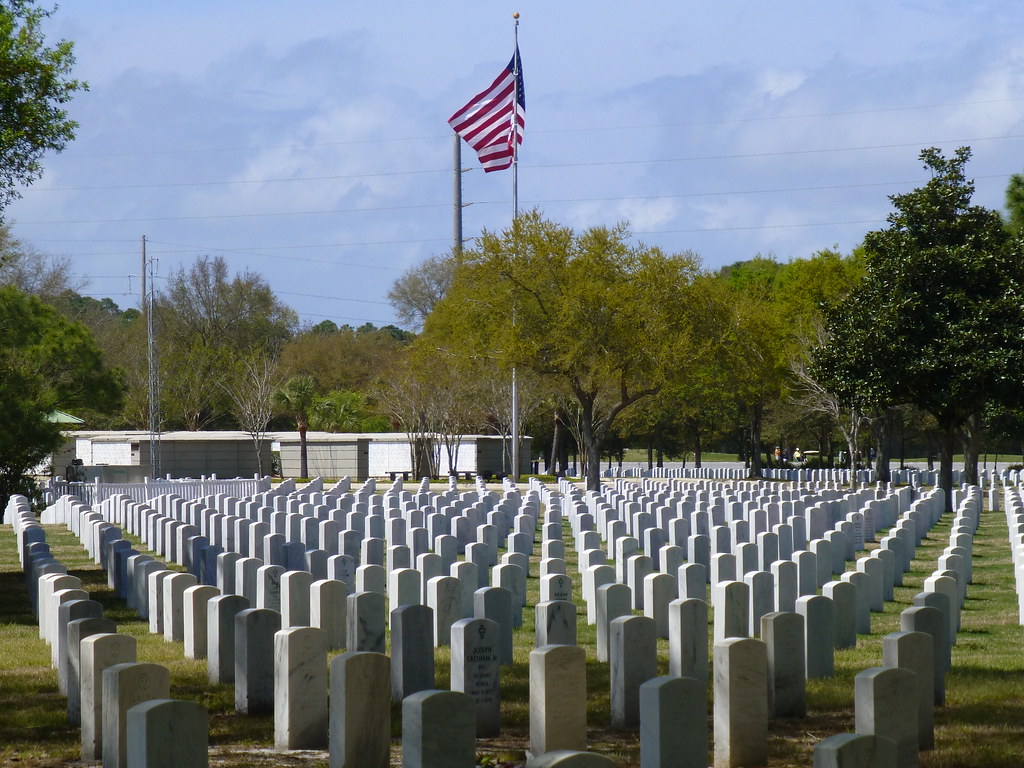
In each of the communities where I have served, an extraordinarily large number of residents have lost a son, daughter, father, mother, brother, sister, friend or neighbor on the field of battle. During my tenure in Pensacola, I shared over one hundred eulogies at the Barrancas National Cemetery, where over 32,000 veterans and their family members are interred.
No one knows for sure the exact number of men and women who have lost their lives in service of our country, but most veteran’s service agencies agree the number is 1.2 million or higher.
For this reason, Memorial Day evokes in me more of a sense of somber observance than of celebration. On this one weekend of the year, in the words of Aaron Kilbourne, “The dead soldier’s silence sings our national anthem.”
Although the final Monday in May can often become a holiday marking the beginning of summer, we should be careful that the meaning of this day does not become lost in the busyness of our activities. Memorial Day is not just another day off from work but a day to remember those who have lost their lives in the military service of our country.
A nation that fails to remember the sacrifices of those who came before us will inevitably succumb to a convenient amnesia, a loss of corporate memory that eventually robs succeeding generations of appreciation for our national heritage. To fail to remember creates a contagious apathy that leads to a neglect of both our freedom and our citizenship. To fail to remember can produce a false sense of security and an inaccurate perception that we are exempt from future warfare. If for no other reason, we should remember in order to guard against what George Washington called “the impostures of pretended patriotism.”
Perhaps our virtual reality world is becoming too much of a fantasy world. When we mute the self-serving and accusative political rhetoric, remembering our unabridged heritage can stir in us both a gut check and a reality check. The kind of remembering we need to do on Memorial Day is an uncomfortable but necessary discipline, a practice that forges vision from memory and distills wisdom from history.
As we observe Memorial Day, let us take time to remember the women and men who served with extraordinary courage to establish and preserve our freedom. We have over a million reasons to remember. By remembering our history, may we be better prepared to engage the enemies of our day with the weapons of peace, not war.
(Barry Howard is the pastor of the Church at Wieuca in North Buckhead near Atlanta. Additionally, he serves as a leadership coach and columnist for the Center for Healthy Churches.)
Second-Ponce de Leon Baptist Church in Atlanta birthed a vision in 1946 to plant a church in North Buckhead.
The congregation saw this area as a mission field and a hub of future growth on the north side of Atlanta.
Second-Ponce purchased property in 1947 on Wieuca Road with the vision of starting the new church, and the first service was eventually held on May 9, 1954.
Wieuca Road Baptist quickly flourished under the leadership of pastors like J.T. Ford and Bill Self.
The remarkable increase in membership was mostly attributed to expansive growth in the primarily residential community, and the decision to televise their worship services around the region.
However, in 1991, the church began to experience a 30-year decline in membership and participation.
Opinions vary, but it seems that rapidly changing demographics, a couple of internal schisms, a national decline in church participation, and a significantly high attrition rate all played into the decline.
In recent years, the church considered a variety of options to address its dilemma, including relocation, merger with another congregation and selling the campus with proceeds to fund a missions endowment.
All of these are viable options for churches to consider, but Wieuca discovered another option that it is currently pursuing.
In 2019, as the church contemplated the call of a new pastor, they contracted with The Center for Healthy Churches to work with them in exploring their best options moving forward.
Bill Wilson, executive director of CHC, served as Wieuca’s congregational coach and consultant.
After months of prayer, dialogue and spiritual discernment, the congregation decided to “put everything on the table,” remain in their current location and, in the spirit of their founders, to become a mission church again.
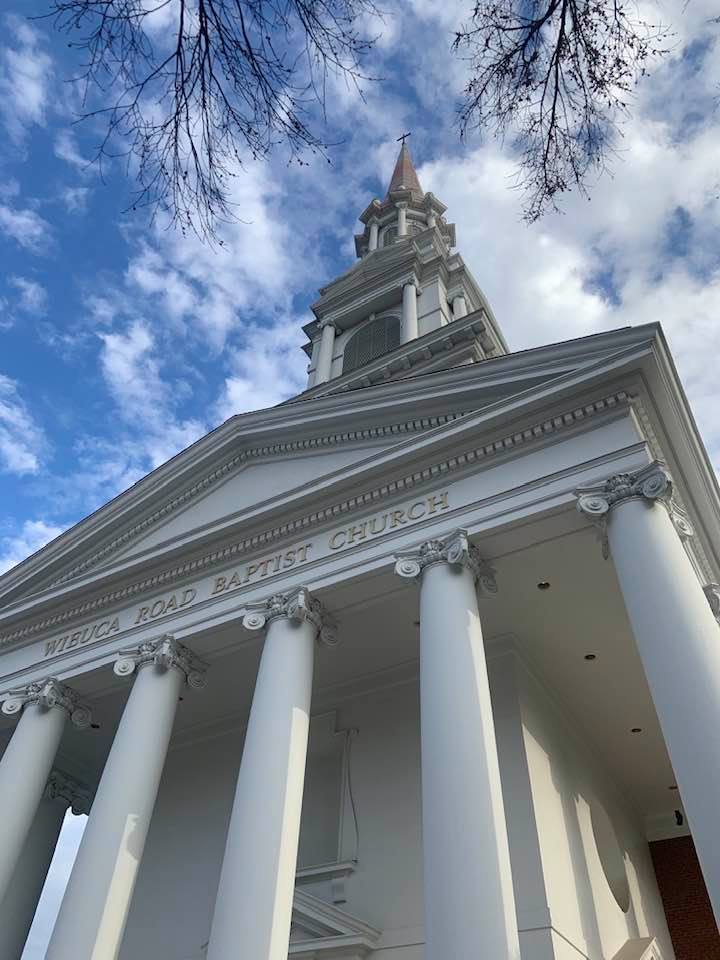
How does a big steeple church become a mission church? A mission church is a church started by another church or agency to address an identified set of needs in a specific community. In this case, Wieuca is re-launching as a mission church using resources from its own ancestry.
The transition is not easy. In fact, it would be much easier to relocate or merge with another congregation.
However, with a mindset of spiritual spunk and determination, Wieuca is on a journey to become a new kind of faith community for the neighborhood in which they were originally planted.
During this season of transition, I have been invited to serve alongside the congregation at Wieuca as their pastor. Therefore, I am highly engaged in this missional work.
The transformation of Wieuca is a work in progress, and there are many moving parts.
Considering the global pandemic, every church needs to rethink their future and re-envision with mission. Because this journey at Wieuca began pre-pandemic, Wieuca simply has a head start.
Wieuca is working through the following steps as they activate and integrate their new sense of mission and these may be helpful to other churches as we all navigate emerging cultural realities and new missional opportunities.
Revisit your history.
At the onset of the discernment process, Bill Wilson led the church in recreating a historical timeline. This process enables the church to celebrate their high moments, to own their low moments, and to dream about writing the next chapter.
Re-evaluate your strengths and resources.
No church has all strengths, no weaknesses and unlimited resources. So, it is imperative for a congregation to analyze their human resources and their financial resources and envision their future through the lenses of those resources.
Revise your mission statement and/or missional objectives.
Every church should update their mission statement every few years.
The Great Commission never changes, but the way a local congregation fulfills the Great Commission in their context is ever-changing. In light of the pandemic, it is imperative that every church update their mission and vision.
Re-calibrate your thinking from “surviving” to “thriving.”
In most congregations, this requires a monumental culture shift. Such a shift in thinking does not happen instantly or easily, but over a prolonged period.
Churches can only persist in survival mode for a season. A thriving mindset requires a recalibration of attitude and action most often generated by a renewed sense of mission.
Realign your staffing and key leadership with the new mission and vision.
Whether reassigning existing staff or commissioning new staff, the staff assignments and the staffing paradigm must correlate to the new missional objectives.
Restructure your administrative policies and operating procedures to fit the vision.
Update your policies and procedures to empower your mission. Otherwise, the mission may be limited, restrained or derailed by outdated guidelines.
Re-engage with your community.
Re-introduce yourself to your neighbors. Share your vision. Rather than hoping the community will come to church, discover new ways to be church to the community.
Re-design your campus and rethink your utilization of space.
Think creatively about your stewardship of space. Re-think, right-size and retrofit your space in ways that correspond to your mission. Be prepared to gracefully acknowledge and deal with a few sacred cows along the way.
Reconsider ancillary partnerships.
Target partnerships that invite others to utilize your campus and to join your church in the mission of enriching life in the community.
Church campuses may be ideal space for workshops, college classes, community meetings and concert venues. Space-sharing also means cost-sharing, which may allow a church to spend fewer dollars on campus maintenance and more dollars on ministry and missions.
Revitalize your approach to worship.
Prioritize engagement and participation in worship. Focus on life-transformation, not attendance.
De-emphasize style and focus on hospitality, messaging and life application. Consider weekday options and off-campus options, and interactive online options.
Throughout this adventure of refreshing the missional heartbeat of Wieuca, I am continually reminding our church family that we will encounter unexpected obstacles and opportunities.
Although we have a core mission and vision to guide us, the trek is not scripted, and the outcome is not guaranteed. Therefore, we must be faithful and flexible as we navigate the twists and turns of the journey.
On the most encouraging days and the most discouraging days, these words from Philippians 1:6 enhance our focus: “Being confident of this, that he who began a good work in you will carry it on to completion until the day of Christ Jesus.”
(Barry Howard serves as the pastor at the Church at Wieuca in Atlanta. Additionally, he serves as a leadership coach and columnist with the Center for Healthy Churches.)
Walt Disney suggested, “There is more treasure in books than in all the pirate’s loot on Treasure Island.” Making the journey through a good book is a soul-nurturing adventure.
My love for reading was slow to develop. But when it emerged, it flourished. During my teenage years, I perceived reading to be a nuisance and somewhat of a necessary evil to get decent grades. At some point during my college years, however, I learned to appreciate the gift of reading, not just for assignments or entertainment, but for personal growth.
In my work as a pastor, I need to read widely to stay current and relevant. More importantly, I need books like I need food, to satisfy cognitive hunger and to probe intellectual curiosity. Books stimulate my thinking, exercise my memory muscles, and challenge my presuppositions.
These days I find reading to be relaxing, educational, and often inspirational.
Typically, I read a variety of genres including fiction, spirituality, theology, history, and biography. And I usually keep from three to five books going at the same time, a discipline that was recommended by Opal Lovett, one of the most influential faculty members from my college years. This practice invites a variety of authors to be conversation partners in my internal dialogue.
I also intentionally read books I disagree with. Rather than making me combative, the practice of reading opposing viewpoints challenges me to test my assumptions and it familiarizes me with a variety of perspectives. This discipline equips me to dialogue and debate intelligibly, and not just emotively.
For the past several years, around the first of January, I make a list of books that I plan to read during the coming year. While I hope to read 40-50 books this year, I have already compiled a list of twenty-one books I want to be sure to read in 2021:
1. Tempered Resilience: How Leaders Are Formed in the Crucible of Change by Tod Bolsinger. 2. A Place to Belong: Learning to Love the Local Church by Megan Hill. 3. Where I Come From: Stories from the Deep South by Rick Bragg. 4. The Daughters of Kobani: A Story of Rebellion, Courage, and Justice by Gayle Tzemach Lemmon. 5. Truth-telling as Subversive Obedience by Walter Brueggemann. 6. Not Now Lord, I’m Eating Lunch by David Gilmore. 7. Dusk, Night, Dawn: On Revival and Courage by Anne Lamott 8. The Law of Innocence by Michael Connelly. 9. Diary of a Pastor’s Soul: The Holy Moments in a Life of Ministry by M. Craig Barnes. 10. Paul and the Language of Faith by Nijay Gupta. 11. Broken Signposts: How Christianity Makes Sense of the World by N.T. Wright. 12. The Church Recovery Guide: How Your Congregation Can Adapt and Thrive after a Crisis by Karl Vaters. 13. The Deeply Formed Life: Five Transformative Values to Root Us in the Way of Jesus by Rich Villodas. 14. Strengthening the Soul of Your Leadership: Seeking God in the Crucible of Ministry by Ruth Haley Barton. 15. Sermon on the Mount: A Beginner’s Guide to the Kingdom of Heaven by Amy-Jill Levine. 16. Stories by Will Willimon. 17. Good Apple: Tales of a Southern Evangelical in New York by Elizabeth Passarella. 18. Southernmost: A Novel by Silas House. 19. Saving Freedom: Truman, the Cold War and the Fight for Western Civilization by Joe Scarborough. 20. His Truth Is Marching On: John Lewis and the Power of Hope by Jon Meacham. 21. Do What You’re Best at When You’re at Your Best: How to Get Time, Energy, and Priorities Working in Your Favor by Carey Nieuwhof.
Whether you are a fast reader or a slow reader, a hard print reader or an e-book reader, read for quality, not quantity. This year I invite you to join me in adopting the philosophy of Fran Lebowitz: “Think before you speak. Read before you think.”
Enjoy a great year of reading in 2021!
(Barry Howard serves as the pastor of the Church at Wieuca in Atlanta. He also serves as a columnist and leadership coach with the Center for Healthy Churches.)
Every year, my wife and I give a few gifts at the end of the year to non-profits, mission centers, and ministry groups with whom we have a close connection. And although we give regularly to our church throughout the year, we usually give an end-of-the-year gift to our church.
This year we are giving a little extra to our church and here are ten reasons why:
We believe that the local church is where the action is. While all the ministries to which we contribute are doing good work, the local church is the hub of ministering to the community. The local church has local boots on the ground and through the years we have observed the local church going to extraordinary lengths to be the presence of Christ during tough times.
Giving has been down for most churches. Whether it is due to furloughs, layoffs or temporary closures, offerings are down between 10-40% at churches around the country. For those of us who have the capacity to give a little extra, our additional contributions may provide a huge boost to the ministry of the church. As one of my friends said recently, “If you have been saving for a rainy day, this is it.”
Expenses are up. Some may wonder why expenses are up when many churches are mostly online. The building still must be cleaned. And this year, most churches have gone the extra mile to perform a “deep clean,” to have their building fogged, or to regularly apply disinfectant. Churches have purchased masks, hand sanitizers, and new signage to help communicate guidelines and to keep us safe. And many congregations have purchased cameras, microphones, and other equipment to provide a livestreaming option.
The church has been busy helping others. Our church has adopted neighboring businesses for whom we are providing care packages, notes of encouragement, and snack bags for the staff. Our church has given extra to our local mission center to assist the homeless, the unemployed, and others in transition. Our church has continued to provide support for missionaries around the world during a time when their support is being minimized.
A percentage of every gift to our church reaches beyond our church. Most church budgets operate with a formula wherein a percentage of every gift goes toward missions beyond the local church. So, each time we give to the church, we are actually giving through the church to outside organizations.
Our gift is given in honor of faithful givers who cannot give at this time. I am aware of many faithful givers who for years have invested in the mission and ministries of the local church through their consistent giving, and now they find themselves unemployed. Most of these persons are tithers, but ten percent of zero is still zero. So, we are giving a little extra to help cover their portion of giving until a time in the near future when they can resume their faithful giving.
There is much work to be done in the year ahead. There will be much work to be done in the year ahead. We are not going to reach a point where someone in leadership declares, “The pandemic is over,” and then we return to the way we did life and church prior to the pandemic. Those days are gone. Churches, like all groups, will need to recalibrate for the next season of life and ministry. We want our gift to help the church retool and reequip for the next chapter.
This is a great week to convey a gift of appreciated investments. Of course, this is not the primary reason we give. But since the stock market is up significantly during these closing days of 2020, this is a great opportunity to give a gift of appreciated stock to your local church.
Our giving is a testimony of hope. Many wonder when the pandemic will end. Others are concerned about whether their church will survive. We do not give so that our church will simply survive. We give in hopes of helping our church thrive. But to thrive, a church must survive the global pandemic. Our giving is a declaration that we believe the work of the church will be needed more than ever in the days ahead.
Our end-of-year gift is an act of thanksgiving. We are blessed to have a steady income. We are blessed to have a comfortable home. We are blessed to be in generally good health. We are blessed to serve in a supportive and encouraging congregation. We are blessed to have a creative and innovative staff team that have implemented safety protocols and adapted their ministry methods for an unprecedented year of ministry. And we believe that we are blessed to be a blessing to others. We are giving a little extra this year as an expression of gratitude for the blessings that have sustained us through a tough season.
The Bible teaches us to give of the first fruits of our income (Proverbs 3:9), to give generously (II Corinthians 9:6), and to give cheerfully (II Corinthians 9:7). For us, giving is a joyful act of hospitality.
We recognize that not everyone is able to give a little extra. Some of us are barely hanging on, and we should not feel guilty because we cannot give an additional gift. The foundation of Christian giving is that we give in proportion to our income. However, many of us have been tremendously blessed, and this year it is our privilege to give an extra gift.
As you think about your end of year giving, we invite you to join us in giving a little extra to the church this year. A little extra in 2020 can make a huge impact in ministry for 2021.
(Barry Howard serves as pastor of the Church at Wieuca in Atlanta, Georgia. He also serves as a columnist and leadership coach for the Center for Healthy Churches.)
In our secret yearnings we wait for your coming, and in our grinding despair we doubt that you will. And in this privileged place we are surrounded by witnesses who yearn more than do we and by those who despair more deeply than do we. Look upon your church and its pastors in this season of hope which runs so quickly to fatigue and in this season of yearning which becomes so easily quarrelsome. Give us the grace and the impatience to wait for your coming to the bottom of our toes, to the edges of our fingertips. We do not want our several worlds to end. Come in your power and come in your weakness in any case and make all things new. Amen. — Walter Brueggemann
The quest for peace is universal, whether it be peace in our land or peace in our soul. As a nation we are weary of terrorist threats, campus shootings, human trafficking, schoolyard bullying, workplace conflict, family fragmentation, political turmoil, global pandemic concerns, overall and heightened anxiety. We have a deep longing for peace.
Weary of disputes, the prophet Isaiah envisioned a future wherein war would be eradicated, and peace would prevail:
He will judge between the nations and will settle disputes for many peoples. They will beat their swords into plowshares and their spears into pruning hooks. Nation will not take up sword against nation, nor will they train for war anymore. (Isaiah 2:4 NIV)
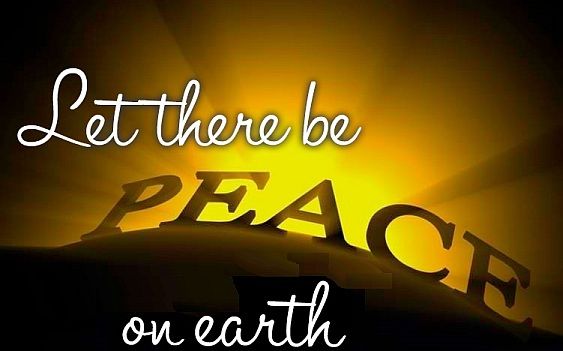
Since childhood, I have been singing and praying, “Let there be peace on earth.” But this prayer has not been fully answered…at not yet. To date, we cannot identify an era in human history when the world was completely devoid of conflict or warfare.
Early in the book of Genesis, the paradise called Eden is contaminated by sin, and then a couple of pages later, a fatal conflict erupts between Cain and Abel. The notion of war is born.
In the Old Testament, not only is there regional conflict between the Israelites and a variety of enemies, but there is also internal conflict between Israel and Judah. This civil war eventually led to the establishment, at least for a few years, of the Southern Kingdom and the Northern Kingdom, often referred to as the Divided Kingdom. That’s what war does. It rouses suspicion, ramps us rhetoric, breeds hostility, and divides people into adversarial camps like the North and the South.
Fast forward to our time: According to various news agencies there are at least 10 active wars and more than 30 armed conflicts ongoing in the world this year. The most lethal war is the civil war in Syria, an ancient biblical land, where it is reported that over 500,000 have been killed.
But the promise of scripture is that there will come a day when the lion will lay down beside the lamb. Just not yet! There is coming a day when the nations will transform their instruments of war into tools for agriculture. Just not yet!
Until then we cannot recline in naïveté. In a world where systemic evil exists, when efforts at negotiation and arbitration have failed, military initiative is often an unfortunate but necessary option to destabilize tyrants, to rescue hostages, or to thwart terrorism. But even then, for civilized nations, the goal is to be protective, not vindictive.
In one of his most well-known sermons, Jesus proclaimed, “Blessed are the peacemakers, for they will be called the children of God” (Matthew 5:9). Especially in these days of escalated fear, let us pray for peace, let us work for peace, let us practice peace-making, and let us keep singing:
“Let there be peace on earth And let it begin with me. Let there be peace on earth The peace that was meant to be.” -Jill Jackson Miller and Sy Miller
In one of his most well-known sermons, Jesus proclaimed, “Blessed are the peacemakers, for they will be called the children of God” (Matthew 5:9). Especially in these days of escalated fear and heightened anxiety, let us pray for peace, let us work for peace, let us practice peace-making, and let us keep singing: “Let there be peace on earth and let it begin in me.”
(Barry Howard serves as pastor at the Church at Wieuca in Atlanta. He also serves as a leadership coach and columnist with the Center for Healthy Churches.)
If today seems even darker than usual, it should. Today is the darkest day of the year.
For those of us who live in the northern hemisphere, the shortest day of the year, the Winter Solstice, usually occurs on December 21. The solstice, which literally means “the sun stood still,” officially marks the beginning of winter. More notably, with the shortest day also comes the longest period of darkness. The Earth’s axial tilt is at its furthest point from the sun, allowing the least amount of daylight to reach the earth.
While it may be merely coincidental that the darkest day arrives just prior to our customary celebration of Christmas, from my experience as a pastor, I am aware that holidays can be dark days emotionally for many of us. While there are a variety of events, experiences, and emotions that cast dark shadows over our lives, some even bleak enough to obscure the joy of Christmas, a prominent culprit is grief.
Grief comes in many shapes and sizes. In the human experience, we grieve over the death of friends and loved ones. We grieve over disintegration of a marriage. We grieve over friction within the family. We grieve over the loss of a job. We grieve over tragic events around the globe. At times we may even grieve over our diminishing health, the loss of our dreams, or the fading of opportunities.
Let me be quick to affirm that grieving is healthy so long as we are progressing through the grief process as opposed to becoming stuck in our grief. The Bible never tells us not to grieve, but it does counsel us not to grieve “as those who have no hope” (I Thessalonians 4:13).
Be aware that the empty chair at the Christmas dinner table, the Christmas card labeled “return to sender,” or the empty pillow on the other side of the bed can all trigger a seemingly overwhelming sense of darkness, loneliness, or grief.
Unprocessed grief is unhealthy and can lead to anger, depression, or even physical illness. During the holidays, rather than being dominated by the darkness of grief, look your grief in the eye and call it by name. Don’t deny it or ignore it. And certainly, don’t let grief dictate or dominate the mood or conversation of your holiday celebration.
I am convinced that because we are “fearfully and wonderfully made” (Psalm 139:14), our faith gives us the capacity to experience the pangs of grief and the peace of God simultaneously. Although our faith does not exempt us from the darkness, our faith does equip us to deal with our grief with deep-seeded hope.
Hinting at what life will be like when the promised Messiah comes, Isaiah 9:2 envisions that, “The people walking in darkness have seen a great light; on those living in the land of deep darkness a light has dawned.”
Walk through the darkness with courage. Just don’t take up residence in the shadows. Grief does not have the final word. After the long night of darkness, then comes the light.
Don’t let the darkness extinguish the Light of Christmas.
(Barry Howard serves as pastor of the Church at Wieuca in Atlanta, Georgia. He also serves as a leadership coach and columnist for the Center for the Healthy Churches.)
Every year on September 11, my mind returns to where I was when the tragic news broke on this date in 2001.
On September 11, 2001 I was sitting in the home of one of our members meeting with a widow to plan a memorial service for her husband who had passed away the previous evening. As we were finalizing the date and time for the service, a family member interrupted us and asked me to step into the kitchen. There she pointed to the television and began to cry as she said, “I thought you needed to know what is happening in New York.”
My heart sank as I watched the replay of the first plane crashing into the tower one. I returned to the living room, led the family in prayer, and prayed for our nation, not knowing that more attacks were looming.
I quickly made my way back to our church campus, which was only a couple of blocks away. I found our entire staff gathered around the tv in my study, and the second tower was hit just as I entered. After a few moments of shock and tears, our team kicked into ministry mode, shared an emotional time of prayer, and began strategizing about ways we could minister to our church and community in light of these events.
Like every community around the country, members of our congregation had family members and friends who lived in New York or Washington, or who were traveling in that area, or who were serving in the armed forces who would eventually be responding to these horrid acts of terror. Eventually, it seemed that everyone was connected by friendship or kinship to someone directly affected by the attacks of that fateful day.
Although those events occurred nineteen years ago today, our individual and collective memories are still vivid and painful. We remember where we were when we heard the news. We remember bystanders fleeing from the scene and first responders rushing toward the scene. We remember gathering in churches, chapels, temples, and synagogues to pray. We remember the anger, the grief, the anger, and the uncertainty.
What have we learned about ourselves and our world since 9/11? In particular, as followers of Jesus, what are the proactive steps we can take to be “salt” and “light” in a post 9/11 world?
Our greatest security is grounded in our faith in God. Psalm 46:1 teaches us that, “God is our refuge and strength, a very present help in our time of trouble.” Our faith doesn’t exempt us from tragedy, disaster, or even acts of terrorism. But our faith does serve as a compass to help us navigate the most difficult and challenging circumstances of life.
Refuse to live in fear. We cannot allow fear to dissuade us from fulfilling our mission. One of the goals of terrorism is to invoke a life-disrupting fear. II Timothy 1:7 reminds us that “God has not given us a spirit of fear, but of power and of love and of a sound mind.” Obviously we need to be wise, savvy, and circumspect at home and abroad. However, we cannot let the fear of the unknown keep us from going where we are called to go and doing what we are called to do.
Avoid responding to terrorism with terrorism. We cannot allow terrorists to provoke us into behaving like terrorists. In other words, you cannot defeat terrorism by conducting acts of terrorism. Followers of Jesus are called to respond to adversaries with the spirit of Jesus.
Express gratitude to first responders. The events of 9-11 gave to many of us a deeper appreciation for the valiant service of firemen, police officers, paramedics, and other first responders. As a pastor and community leader, I want to affirm those who serve as first responders and to encourage others to consider these vocational tracks as honorable career opportunities.
Learn the basic tenets of other faiths like Islam. A huge challenge for those unfamiliar with the religions of the world is learning to distinguish between radical Islamic groups, Jihadists for example, and mainstream Muslims who not only reject methods of terrorism, but who also must contend with it. Just like radical “Christian” groups such as the Branch Davidians and the Peoples Temple do not represent the majority of Christians, members of Al Queda, ISIS, and Boka Haram do not represent the vast majority of the Islamic world.
Be careful not to become xenophobic. Xenophobia is the fear of people from different countries, cultures, or ethnicities. Just because most of the terrorists of 9/11 were from the Middle East does not mean that everyone who wears the traditional wardrobe of a Middle Easterner, such as a burka or a turban, is to be suspected of terrorism.
Pray for our president and national leaders. The task of making decisions during turbulent times is stressful and tedious. No military or political leader in history has faced the type or magnitude of threat posed by terrorist groups. No matter your preferred political party, it is imperative that people of faith pray for those who lead our nation to exercise wisdom and discernment in navigating international relations.
One year following the 9/11 attacks, I was asked by a local newspaper reporter, “How has the world changed since September 11, 2001?” The response I gave in 2002 is still relevant in 2020:
I believe the world has changed in so many ways that the majority of those changes are still being realized and processed. From my perspective, it seems that our nation is going through the various stages of grief (shock, denial, depression, panic, guilt, resentment, and hope), and like any normal family system, not everyone is in the same stage. Because the assault on 9/11 was a multi-dimensional attack on the spiritual, social, psychological, and economic fabric of our country, our sense of loss is more complex. Not only were thousands of lives lost, but so were many of our presuppositions, especially those regarding personal safety, economic security, and religious superiority. I hope and pray that we will emerge as individuals who are more circumspect, more patient, less acquisitive, and more spiritually grounded than we have previously demonstrated.
(Barry Howard serves at pastor of Wieuca Road Baptist Church in Atlanta, and is a leadership coach with the Center for Healthy Churches.)








 Cove Creek Reflections