Etched in Granite, Towering with Hope: Remembering Our Visit to Ground Zero

Early that Sunday morning, we discovered the quietest spot in what must be our nation’s loudest city.

In 2017, just after I retired as pastor of the First Baptist Church of Pensacola, we visited New York City to attend the U.S. Open.

Since our visit was on the weekend of the anniversary of September 11, Amanda and I made our way to Ground Zero. It was my first visit to the memorial. It was her second. Typically, on a Sunday morning, we are in church. But on our final day in New York, we found ourselves in a different kind of sanctuary, one built not of stained glass and pews, but of granite, water, and names.

We read the names, like so many others there, looking for the name of the one from our hometown, and we thought about his mother and his family. And we remembered how life changed on that fateful day for families from large cities and small towns all around our country.

In the news footage of September 11, 2001, alongside the horrifying images of collapsing towers, I vividly remember the masses of people moving away from that site, desperate to escape. On this quiet Sunday morning, sixteen years later, I watched masses of people moving toward that same site — not to escape anything, but to remember and reflect.

Where the Twin Towers once stood, One World Trade Center now rises, crowned with an observatory that seems to keep watch over the city below. At its base rests a reflective pool, water descending endlessly into what feels like the basement of memory itself. Standing there, in the solemnness of that unexpectedly quiet corner of Manhattan, I found myself observing several things I haven’t been able to shake since.

A Congregation of Every Kind of American

The crowd that had gathered represented the vast diversity of our country. Multiple races and ethnicities filled that plaza. I’m sure some were international visitors, taking in the memorial as part of a holiday itinerary. But the vast majority, it seemed, were Americans — Americans of different backgrounds, different religious traditions, and undoubtedly different political convictions. And yet, on that morning, in that place, we were simply Americans. No hyphens. No labels. Just people standing shoulder to shoulder in shared grief and shared gratitude.

Dr. Martin Luther King Jr. preached, “Darkness cannot drive out darkness; only light can do that.”

Whatever darkness gathered over that site on September 11, what we witnessed on this Sunday morning was light — the light of ordinary people extending quiet dignity to one another as they remembered, reflected, prayed, and commemorated together.

Every Name, Equally Important

Every life lost that day was memorialized as equally important. From the firefighter, to the business executive, to the custodian, to the mother and child — the names inscribed around the reflective pools appear in the same font, the same size, with no suggested hierarchy of importance or privilege. No title before a name. No epitaph elevating one story above another.

There is something profoundly spiritual about that. It reminded me that in the eyes of God, every life bears equal worth — not measured by title, income, or accomplishment, but by the simple fact of being made in God’s image. Ground Zero, without necessarily intending to, underscores that truth in granite.

A Living Memorial

At the reflective pools, memories seemed to move in two directions at once — water descending into the depths, and grief, somehow, rising back up to meet the light. It’s an odd sensation to describe, but standing there, I felt as though the memorial itself understood something about grief that we often miss: that mourning is never a one-way street. What descends into sorrow can still rise again into hope.

I was struck, too, by how many families had brought young children with them — children born well after 2001, hearing this story perhaps for the very first time from a parent’s own lips. I watched mothers and fathers kneel beside sons and daughters, pointing to a name on the wall, offering a brief and tender history lesson right there on sacred ground. It gave new perspective to a phrase we often hear associated with 9/11: “Remember, and never, ever forget.”

But standing there, I realized that remembering is not meant to be a motif for vengeance. It is meant to be a motivating force for building a better world. Elie Wiesel, who knew more about memory and atrocity than perhaps anyone of his generation, put it this way: “To forget the dead would be akin to killing them a second time.”

Every parent kneeling beside a child at that wall was passing along not just a historical fact, but a sacred responsibility — to remember well, so that memory might do some good in the world.

Hope Rising Out of Rubble

Perhaps what moved me most was simply looking up. Where wreckage and ash once filled the skyline, a tower now stands — not identical to what was lost, but new, resilient, and unmistakably reaching toward the sky. The construction of that tower, and the entire redevelopment around it, testifies to something stubborn and beautiful in the human spirit: our capacity to hope for the future even in the shadow of unimaginable loss.

I couldn’t help but think of Fred Rogers, who famously recalled his mother’s advice for facing frightening news: look for the helpers. On this ground, I didn’t have to look far. I saw them in the volunteers guiding visitors. I saw them in the security personnel greeting people with quiet patience. I saw them in the parents becoming, for a moment, historians and pastors to their own children.

And I thought of President George W. Bush’s words spoken in the rubble of that very site, not long after the towers fell: “I can hear you. The rest of the world hears you. And the people who knocked these buildings down will hear all of us soon.”

Sixteen years later, what I heard on that plaza wasn’t defiance. It was something quieter and, in some ways, more powerful: resolve. The resolve to remember rightly. The resolve to grieve honestly. And the resolve to keep building — towers, yes, but also communities, families, and a nation still capable of standing shoulder to shoulder as one people.

Chimes in the Silence

Our time at Ground Zero passed far too quickly. As we made our way to catch the bus back to our hotel, the silence of the morning was broken by the resonating chimes of a nearby church. It felt like a benediction — as if that quietest spot in the loudest city was being gently released back into the noise and rhythm of ordinary life, but not without first leaving something behind in us.

I have preached in a lot of sanctuaries over the years. But that memorial plaza in lower Manhattan is uniquely inspiring — a sanctuary built out of tragedy, sustained by memory, and quietly insistent that even our deepest grief can become fertile soil for hope.

As the poet and civil rights icon Maya Angelou wrote: “History, despite its wrenching pain, cannot be unlived, but if faced with courage, need not be lived again.”

May we keep facing it with courage. May we keep remembering well. And may we keep building — towers, friendships, communities, and a world — worthy of the names etched in that granite.

(Barry Howard is a retired pastor who now serves as leadership coach and consultant with the Center for Healthy Churches. He and his wife, Amanda, live on Cove Lake in Northeast Alabama.)

Just a Swinging: 7 Good Reasons to Have a Porch Swing

My grandparents had one. My parents had one. And we have one. Actually, we just got a new one. A porch swing that is. There’s something about a porch swing that seems to slow time down.

I grew up with porch swings. Those swings held laughter, conversations, quiet moments, and the gentle rhythm of life. Amanda and I had a porch swing during the first eight years of our marriage, and now we’ve had one again for the past six years. Just this month, we added a new swing to our pavilion overlooking the lake—and I have to say, it is the most scenic view we’ve ever had from a swing.

The porch swing became popular in America in the late 1800s, especially during the Victorian era. As front porches became central to home life, swings were added as a place for rest, conversation, and connection. Before air conditioning, families would gather on porches in the evening to catch a breeze, share stories, and simply be together.

The swing wasn’t just furniture—it was a gathering place. A sanctuary. A slowing-down space. There are many benefits to having a porch swing. Here are 7 good reasons:

1. Spending time on a porch swing forces us to slow down. A porch swing doesn’t rush. It rocks. In a world addicted to speed, the swing invites us into a different rhythm.  Someone wisely said, “Sometimes the most productive thing you can do is rest.”

2. A porch swing creates space for conversation. Some of the best conversations don’t happen around conference tables—they happen side by side, gently swinging. There’s something disarming about a porch swing. It invites honesty. I suspect many meaningful family moments over the years began with, “Let’s sit in the swing.”

3. A porch swing encourages good mental health. The gentle, repetitive motion of a swing has a calming effect on the mind and body. Mental health experts often note that rhythmic movement can reduce stress, lower anxiety, and improve. Or as one therapist put it: “Calm often comes through rhythm.”

4. A porch swing connects generations. Porch swings are one of the few places where generations naturally overlap. Grandparents, parents, children—everyone fits. Somewhere between the creak of the chains and the sway of the seat, stories are told, wisdom is passed down, and memories are made.

5. A porch swing keeps us grounded in the present. A swing doesn’t go anywhere—and that’s the point. In a culture obsessed with “what’s next,” the porch swing whispers, “Be here now.” Missionary Jim Eliot said, “Wherever you are, be all there.”

6. Sitting in a porch swing turns ordinary moments into meaningful ones. You don’t need a special occasion to sit on a porch swing. Morning coffee tastes better. Bird songs sound more cheerful. Sunsets feel richer. Even silence feels full. A simple swing can transform a routine day into a memorable moment.

7. A porch swing is good for the soul. At the end of the day, life is not measured in miles traveled or tasks completed—it’s measured in moments shared. A porch swing is a good place for prayer, reflection, relationship-building, problem-solving, and storytelling.

If we’re not careful, our lives become like endless scrolling—fast, distracted, and forgettable.

The porch swing is the opposite.

Where the smartphone speeds us up, the swing slows us down.
Where the phone distracts, the swing centers.
Where the phone isolates, the swing connects.

One pulls us away from life. The other gently rocks us back into it.

Looking out over the lake from our new swing, I’m reminded that while the scenery may change over the years, the purpose of the swing never does.

It is still a place to rest. Still a place to reflect. Still a place to connect.

And maybe that’s the real gift of a porch swing—it doesn’t just move back and forth… it brings us back to what matters most.

Sometimes life is better when you take time to sit and just swing.

7 Ways to Minimize Family Drama at Your Thanksgiving Gathering (Or at Least Contain It to Manageable Levels)

Over the years, I have observed that family gatherings during the holidays, especially at Thanksgiving, can be a great opportunity for the family to visit, share highlights of the previous year, and to enjoy a delicious meal. But I have also noted that such occasions can serve as a potential theatre for family drama.

Thanksgiving can be a glorious blend of turkey, dressing, sweet potato casserole, and pecan pie. But Turkey Day can also serve as the annual reminder that every family has at least one person who stirs the pot—literally and figuratively. If your family gatherings resemble a cross between a Norman Rockwell painting and Family Feud, this list is for you.

Here are 7 ways to minimize family drama at Thanksgiving,or at least keep it to the level that doesn’t require professional referees or emergency pie rations:

1. Strategically assign seating like you are planning the Geneva Convention.

Whether your family includes the nephew who loves to “just play devil’s advocate,” or the sister who lives up north and believes every conversation is a debate tournament, strategic seating is essential.

  • Put peaceful people together.
  • Put calmer personalities in the middle
  • Seat the jokester between potentially rival factions.

This is a diplomatic summit, and not just dinner. Think of your table like a diplomatic summit. Your mission is to prevent World War III between those who prefer gravy and those who opt for cranberry sauce.

2. Declare a pre-meal politics ban.

Make a gentle announcement: “Friends, family, and beloved relatives who may or may not test my sanctification… this is a politics-free zone.”

If someone starts drifting in that direction, have a few pre-approved diversion lines ready:

  • “Speaking of election results, did anyone bring dessert?”
  • “Fascinating—pass the gravy!”
  • “Let’s save that conversation for Arbor Day.”

If diversions fail, distract with pie. Pie always wins.

3. Give everyone a job—preferably a safe one.

Idle hands are the playground of unnecessary opinions. Assign tasks.

  • The person who can’t cook? Napkin duty.
  • The one who always shows up late? Butter the rolls—they may still be warm.
  • The family perfectionist? Organize the drink station. And let them color-coordinate to their heart’s content.

A busy family is a calm family.

4. Preemptively hide the board games that cause trouble.

Every family has that game. You know the one.

  • Monopoly: ruins relationships.
  • Phase 10: awakens competitive spirits not seen since the Colosseum in Ancient Rome.
  • Uno: historically responsible for more wars than Europe.

This year, choose something cooperative, like a puzzle. Or a walk. Or staring peacefully at the wall.

5. Establish a “drama-free zone” table rule.

It can be a simple set of guidelines.

  • No gossip.
  • No passive-aggressive comments.
  • No discussing who is “still single,” “still unemployed,” “still gluten-free,’ “still unwed,” or “still without child.”
  • No family wagers on which school Lane Kiffin is going to.

The turkey deserves better than that.

6. Prepare preemptive conversation starters.

Keep a short list of prompting, harmless questions on standby:

  • “What’s one thing you’re thankful for this year?”
  • “What’s a favorite Thanksgiving memory?”
  • “What is the best book, movie, or TV show you’ve enjoyed this year?

These are mostly safe questions.

7. Have at least three emergency exit lines ready.

You’re not fleeing the family—you’re strategically preserving your sanity.

Try:

  • “Excuse me, I think the sweet potatoes are calling my name.”
  • “Hold that thought—I need to check the oven.”
  • “Did someone hear a knock at the door? Let me double-check.”

Gracefully step away. Return with pie.

For almost every family, Thanksgiving gatherings are a blend of gratitude and quirks, tradition and chaos, sweetness and spice, and not just on the dessert table. Family drama may not disappear entirely, but with humor, grace, and a few strategic decisions, you can minimize the meltdowns and maximize the moments worth remembering.

And if all else fails, just keep passing the rolls. People have a hard time arguing when their mouths are full.

Flour Sifters, Ceramic Bowls, Rolling Pins, and Family Traditions: The Legacy of a Hot Buttered Biscuit

This past weekend, my wife baked homemade biscuits for our houseguests. The warm, buttery aroma drifting from the kitchen stirred up a flood of memories. As we gathered to enjoy biscuits, bacon, and eggs, someone commented that many of our grandmothers used to bake biscuits daily—and how some even had a dedicated “biscuit drawer” to store the extras.

That simple observation took me back.

I remember that my Grandmother Howard had a kitchen cupboard with a built-in flour sifter that matched her yellow Formica table—the very heart of her kitchen. Countless stories and meals were shared around that table. Mawmaw, as we called her, made what we jokingly called “choke biscuits” using Gold Medal flour, buttermilk, and lard. Her biscuits were hearty, rustic, and unforgettable.

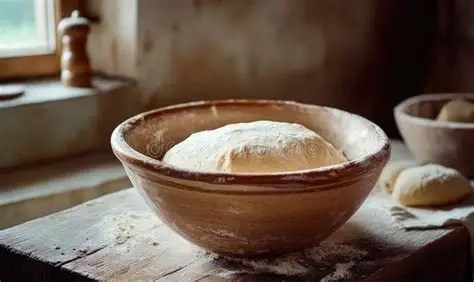
Grandmother Ginn—Big Mama—made hers in a large ceramic bowl with White Lily flour, buttermilk, and Crisco oil. She cut them with a round metal cutter, her motions quick and confident. Neither of my grandmothers had a biscuit drawer, though—because there were rarely any leftovers worth saving.

My grandfather had a deep love for biscuits, often paired with either red-eye gravy or sorghum syrup. He bought syrup in a tin from a mill near Waldo, just outside Talladega, or picked up a jar at Collinsville Trade Day on Saturdays. His red-eye gravy was a Southern classic—made from ham drippings and the last few tablespoons of Red Diamond coffee in the percolator.

History tells us that biscuits weren’t just comfort food—they were survival food. During the Civil War, soldiers often carried “hardtack” biscuits, dry and long-lasting, though lacking flavor. Back home, families learned to stretch their resources, using flour, lard, and buttermilk to make tender biscuits that became a symbol of home and hope. In kitchens across the South, biscuits became both a daily ritual and an expression of care.

When Big Mama later transferred from the Blue Mountain Cotton Mill to the Anniston Army Depot, she started buying Butter-Me-Not biscuits from the IGA on Quintard Avenue. They were okay, but never as good as homemade.

When I reached sixth grade, Big Mama decided it was time I learned the craft. She had me sift flour into a mound, press my finger into the center to form a crater, then fill it with Crisco oil and pour in the buttermilk. I stirred with a fork, kneaded the dough gently on wax paper dusted with flour, flattened it with a rolling pin, and cut out the biscuits. Into the oven they went—350 degrees for 15–20 minutes—rising to golden perfection.

As Rick Bragg reflected on his momma’s biscuits, he reasoned, “Every biscuit does not have to be perfect or uniform on the outside. It was the chemistry not the aesthetics, that mattered. If you had good flour and fresh ingredients and took the biscuits from the oven at just the perfect time, well, ‘it didn’t make much difference if you had a ragged biscuit or two in the batch.’”

It’s been 53 years since those early lessons. Since then, I’ve made thousands of biscuits and even taught a few others how to make them.

These days, when I enjoy a biscuit from Jack’s or the 278 Restaurant—or even from Cracker Barrel, where nostalgia is served alongside sausage gravy—I can’t help but reflect on the sacredness of that biscuit tradition. Food culture has changed, but the hunger for connection and comfort remains the same.

And for me, the best biscuit still comes from Big Mama’s cast iron skillet, topped with either local honey or my wife’s homemade strawberry freezer jam.

Now that’s a feast—and a legacy—worth savoring and passing along.

(Barry Howard is a retired pastor who now serves as a leadership coach and consultant with the Center for Healthy Churches. He and his wife live on Cove Lake in northeast Alabama.)