Pancakes, Pizza, or Pintos: 10 of Our Favorite Places to Eat When Visiting the Great Smoky Mountains

One of the highlights of every trip to the Great Smoky Mountains is deciding where we’re going to eat. Amanda and I have been traveling to the Pigeon Forge, Gatlinburg, and Sevierville area for more than forty years. Through the years, we’ve watched restaurants come and go. Some of our longtime favorites have sadly closed their doors, while many newer establishments have opened that we have not yet had the opportunity to try.

One thing hasn’t changed: we generally prefer locally owned restaurants over national chains. We enjoy discovering places with personality, history, and friendly service. Mountain hospitality is still alive and well in East Tennessee, and we’ve experienced it time and time again around the dinner table.

Here are ten of our favorite places to eat (in no particular order) near the Great Smoky Mountains:

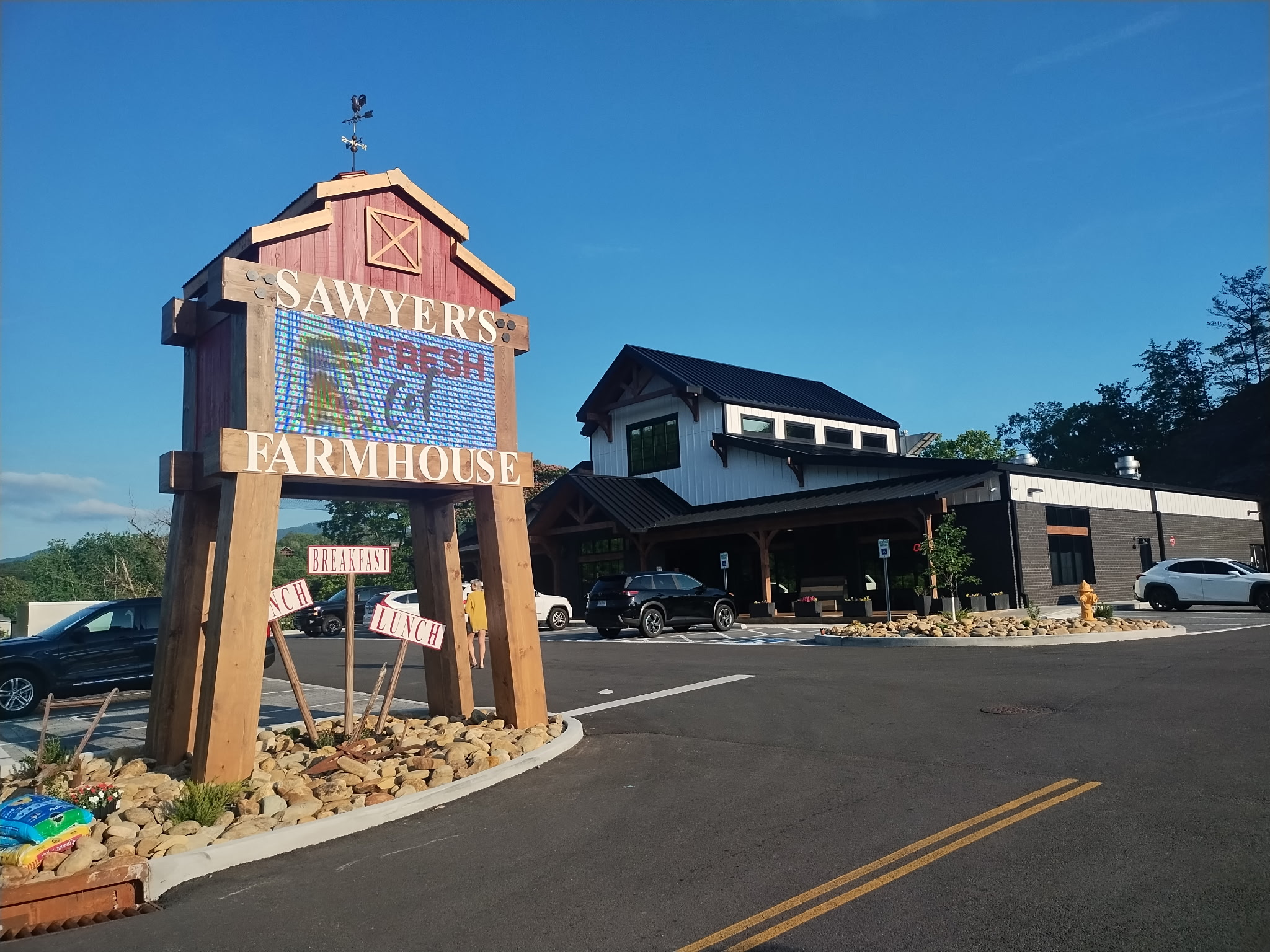
  • Sawyer’s Farmhouse Restaurant (Pigeon Forge)

If you’re looking for breakfast, this is our favorite place to start the day. The pancakes are legendary, the portions are generous, and the service is consistently excellent. This week we visited Sawyer’s new location on Wear’s Valley Road, which offers the same good food and service as the location on the Parkway. Whether you prefer a hearty country breakfast or a short stack of pancakes, Sawyer’s is dependably delicious.

  • Best Italian Café & Pizzeria (Gatlinburg)

When we’re craving Italian food, this is usually our first choice. Nestled among the shops on the south end of Gatlinburg, Best Italian offers delicious pizza, pasta, garlic rolls, and a relaxed atmosphere. After a day of walking around town, or after returning from a scenic drive in park, Best Italian is a great stop for dinner.

  • The Old Mill Restaurant (Pigeon Forge)

No list of Smoky Mountain favorites would be complete without The Old Mill. The historic setting, Southern cooking, homemade breads, and old-fashioned charm make this one of the most iconic dining experiences in the region. We especially enjoy introducing first-time visitors to this Smoky Mountain tradition.

  • Owens Restaurant (Dandridge)

Located in Tennessee’s second-oldest town, Owens Restaurant offers excellent food in a comfortable setting. Their lunch menu includes daily “meat and three” specials. They also feature multiple flavors of fried pies in addition to other desserts. Owens may not receive as much attention as some of the restaurants in Pigeon Forge and Gatlinburg, but that’s part of its appeal. It’s one of those places that locals know and visitors are glad they discovered.

  • Captain’s Galley Seafood Restaurant (Dandridge)

Whenever we’re in the mood for seafood, Captain’s Galley is a dependable choice. The portions are generous, the food is consistently good, and the atmosphere is welcoming. We could make meal just off the basket of homemade hushpuppies they bring to every table upon your arrival. Captain’s Galley has become one of our regular stops when we’re passing through Dandridge.

  • The Peddler Steakhouse (Gatlinburg)

For a special meal, it’s hard to beat The Peddler. The riverside location, outstanding steaks, and excellent service make it one of Gatlinburg’s signature restaurants. Their salad bar is bountiful and their bread is served hot out of the oven. It remains one of our favorite places to celebrate a special occasion.

  • Applewood Farmhouse Restaurant (Sevierville)

Applewood combines great food with a unique experience. Every meal begins with their famous apple fritters and apple butter. The country atmosphere and consistent quality keep us coming back year after year.

  • Mel’s Diner (Pigeon Forge)

Sometimes you’re simply looking for comfort food and nostalgia. Mel’s Diner delivers both. The classic diner atmosphere, burgers, sandwiches, and milkshakes make it a fun place to enjoy a casual meal.

  • El Paso Mexican Restaurant (Sevierville)

When Mexican food is on the menu, El Paso is one of our favorite choices. The service is friendly, the portions are generous, and the menu offers something for everyone. I tend to favor their fiesta fajitas.

  • The Diner (Sevierville)

The Diner has become another of our favorite stops. The extensive menu means everyone can find something they enjoy, and the classic diner-style atmosphere makes for a relaxed and enjoyable meal. Their daily special might include a specialty burger, a spaghetti platter, or fish and chips.

Part of the joy of traveling is discovering great places to eat. While there are certainly many excellent restaurants throughout the Smoky Mountain region, these ten are just a few of our personal favorites over the years.

What we appreciate most isn’t just the food. It’s the friendly faces, warm hospitality, and local character that make each visit memorable. After more than forty years of visiting the Smokies, we’ve learned that some of the best vacation memories are made around the table.

And who knows? Perhaps on our next trip we’ll discover a new favorite to add to the list.
A Tall Tale: A Brief History of Bell Mountain

Tyler Knott insists, “Mountains know secrets we need to learn. That it might take time, it might be hard, but if you just hold on long enough, you will find strength to rise up.”

This year we are spending Labor Day weekend in a cabin in Hiawassee, which is one of our favorite places to visit. Our cabin is high on Bell Mountain, just below the historic park and overlook.

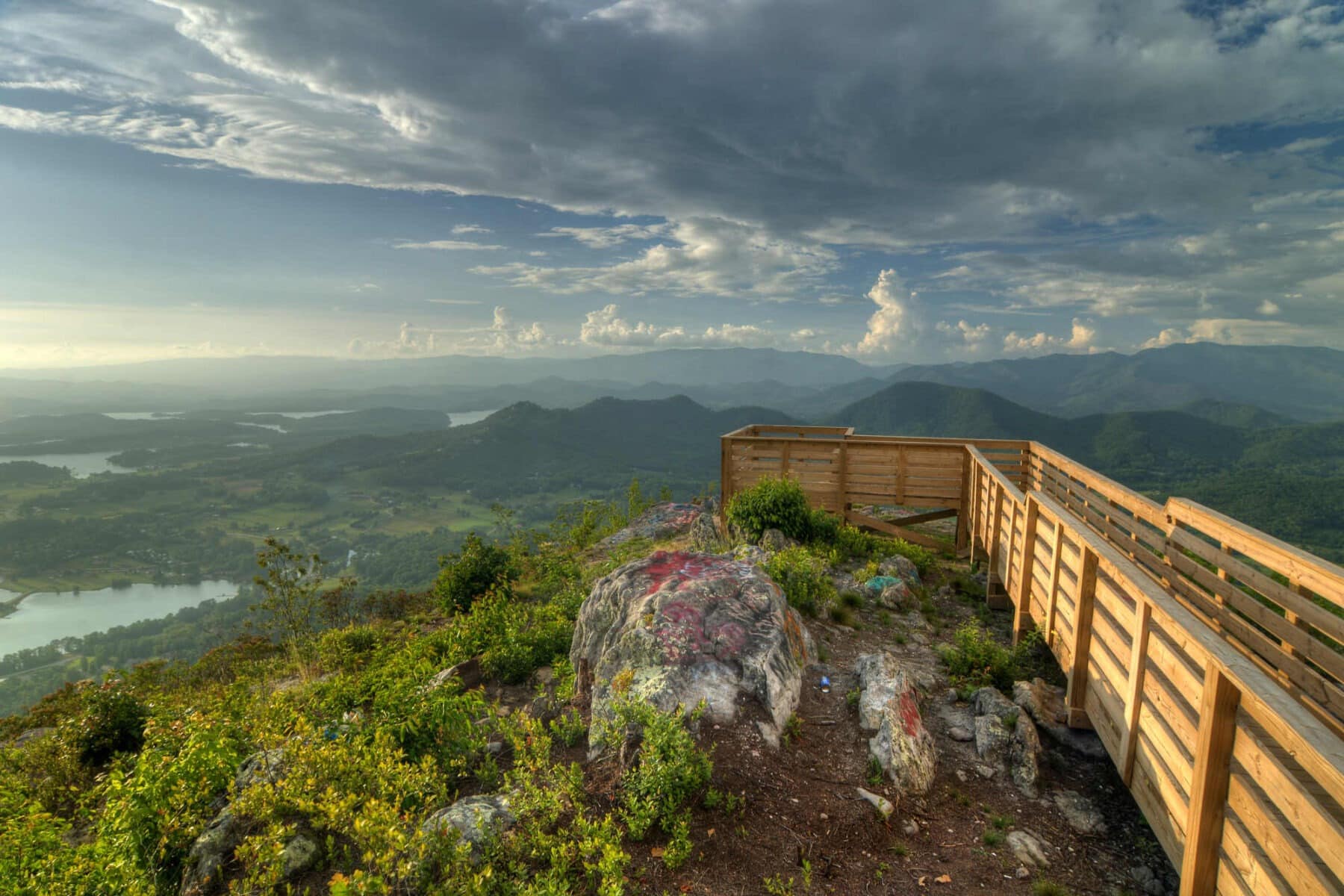
Perched high above Lake Chatuge in the Blue Ridge Mountains, Bell Mountain offers one of the most breathtaking views in North Georgia. But its story is about more than scenery—it’s about scars, preservation, and a community that saw beauty where others saw only rock.

Nowadays, Bell Mountain provides one of the most scenic overlooks in the Appalachian chain. When most travelers think of the peaks of North Georgia, they automatically think of Brasstown Bald, which boasts the highest elevation in the Peach State. However, Bell Mountain, which looms above Lake Chatuge and overlooks the valley to Brasstown Bald, offers a panoramic postcard view of the lake and the North Georgia and Western North Carolina mountainscape.

In the 1960s, Bell Mountain was targeted by the Hiawassee Stone Company, which blasted away at the peak in search of quartzite. The mountain’s once-smooth crown was left jagged and scarred, leading some locals to call it an “eyesore.” Yet others believed that even broken landscapes could hold meaning and purpose.

One such believer was Hal Herrin, a local businessman and conservationist. In 1971, he purchased the mountain and willed it to Towns County so it could be preserved for future generations. For decades, access remained limited, but Herrin’s gift ensured that Bell Mountain would not be lost to industry. In 2016, the county developed the Bell Mountain Park and Historic Site, complete with observation decks and interpretive signs.

Today, visitors can stand where dynamite once shattered stone and instead experience serenity—watching the sun dip behind the peaks or the mist roll across Lake Chatuge. The graffiti that now covers the rock face has become a kind of cultural quirk: while controversial, it is also a reminder of how humans leave their marks, both destructive and creative.

Bell Mountain’s story is one of transformation: what was once blasted and scarred has become a place of reflection and wonder. Standing there, I am reminded that mountains, like people, even wounded ones, still rise to inspire.

Cold Mountain: Where History, Folklore, and Storytelling Meet

It’s been almost 20 years since my first visit to Springdale Golf Course. On my first trip there, the starter pointed toward a nearby mountain peak and said, “That’s Cold Mountain.” Then he cast his hand across the panorama of the community and added, “And this is where the story took place.”

Yesterday, I joined a group of friends at what is now the Springdale Golf Resort. I recalled my first introduction to Cold Mountain, and I revisited the progression of how the story, the novel, and the movie evolved.

Rising over 6,000 feet in the Pisgah National Forest of western North Carolina, Cold Mountain is a peak rich with both natural beauty and cultural significance. Located about 15 miles southeast of Waynesville, its rugged slopes have watched over centuries of Appalachian life. Long before it became famous in literature and film, Cold Mountain was home to Cherokee hunters, later to pioneer families who farmed its foothills, and eventually to soldiers who marched off to fight in the Civil War.

It was that Civil War heritage that inspired Charles Frazier’s 1997 novel, Cold Mountain. Frazier, a native of the region, based the story loosely on family history and local lore. His tale follows W.P. Inman, a wounded Confederate soldier who deserts the battlefield and makes a dangerous trek homeward. His journey mirrors the experiences of many disillusioned soldiers of the time, while his beloved Ada Monroe, left behind to manage her late father’s farm, embodies the resilience of Appalachian women. The novel, steeped in historical detail and place-based authenticity, went on to win the National Book Award and cemented Cold Mountain’s place in American literary imagination.

Hollywood soon took notice. In 2003, director Anthony Minghella adapted the novel into the film Cold Mountain, starring Jude Law, Nicole Kidman, and Renée Zellweger. While the story is set in Haywood County, North Carolina, the filmmakers chose Romania as the primary shooting location. Why Romania? Its unspoiled landscapes better resembled the 19th-century Appalachians than the modernized North Carolina mountains, and the cost of filming abroad was considerably lower. Still, the production team worked hard to capture the spirit of the Blue Ridge, consulting historians and even drawing on Appalachian music traditions for the soundtrack, which featured performances by Alison Krauss and Jack White.

The film proved a success, grossing over $173 million worldwide and receiving seven Academy Award nominations. Renée Zellweger won the Oscar for Best Supporting Actress for her unforgettable role as the feisty Ruby Thewes. Beyond the accolades, the movie rekindled interest in the real Cold Mountain, drawing visitors from around the world who wanted to glimpse the peak that inspired the novel and film.

Today, Cold Mountain remains a powerful symbol. It can be summited only by a strenuous 10.6-mile hike via the Art Loeb Trail, but it can also be admired from overlooks along the Blue Ridge Parkway. Whether encountered on foot, in the pages of Frazier’s novel, on the silver screen, or viewed from the nearby golf course, Cold Mountain continues to evoke themes of perseverance, homecoming, and hope. It is both a real place and an inspiring narrative, a reminder that local folks in local communities have some of the best stories to tell.