
If I Should Die Before I Wake: 10 Perspectives on Death as I Grow Older

Most of us learned the bedtime prayer long before we understood its meaning:

“Now I lay me down to sleep,
I pray the Lord my soul to keep.
If I should die before I wake,
I pray the Lord my soul to take.”

As children, we prayed those words without fear. As adults, they sound a little more sobering. That simple prayer confronts a reality we spend much of our lives trying to avoid — the fact that life is fragile, and death is certain.

The anonymous writer of Hebrews put it bluntly: “Just as people are destined to die once, and after that to face judgment” (Hebrews 9:27).

Facing our mortality is not morbid; it’s clarifying. As the philosopher Socrates once said, “The unexamined life is not worth living.” Facing death honestly helps us live more intentionally, more gratefully, and more faithfully.

Here are 10 reflections on mortality to help us live with hope and die with peace.

1. Life is a gift that should never be taken for granted. James 4:14 reminds us that life is “a vapor that appears for a little while and then vanishes.” Every sunrise is a gift, every breath a miracle.

Holocaust survivor Viktor Frankl observed that the difference between those who survived the concentration camps and those who didn’t was often the ability to find meaning, even in suffering. “When we are no longer able to change a situation,” he wrote, “we are challenged to change ourselves.”

Gratitude transforms survival into living. Don’t take the ordinary for granted; it’s where the extraordinary hides.

2. Death Is a certainty we should not fear. Emily Dickinson penned, “Because I could not stop for Death — He kindly stopped for me.” Her calm acceptance captures a truth many of us resist: death is inevitable, but not necessarily tragic.

The older I get, the less I fear death itself, and yet the more I want to avoid a prolonged dying process. While we don’t get to choose the way we depart this world, I often tell my wife, “If I don’t wake up tomorrow morning, I’ve had a good life. And you can say, ‘Thank you, Lord. That’s the way he wanted to go.’”

For followers of Christ, death is not the end of the story. As Paul wrote, “To live is Christ and to die is gain” (Philippians 1:21). Our hope isn’t in escaping death, but in trusting the One who conquered it.

3. The ultimate mortality rate Is 100%. Every generation learns the same lesson: no one gets out of this life alive. But that doesn’t have to sound grim. It can actually sharpen our focus.

Benjamin Franklin once quipped, “In this world nothing can be said to be certain, except death and taxes.” But even Franklin understood that certainty can bring clarity. Living with the end in mind helps us prioritize what truly matters.

4. You write your own eulogy each day that you live. Every decision, every conversation, every act of kindness or cruelty writes another line in your story. The question is — what will your story say?

The tombstone’s “dash” between birth and death represents your life. What fills that dash? Maya Angelou wrote, “People will forget what you said, people will forget what you did, but they will never forget how you made them feel.”

When you reach the end of your days, may people remember that your words healed, your presence mattered, and your faith endured.

5. Focus on things of eternal significance. Buford Green, a wise friend of mine, once said, “I’ve never seen a hearse pulling a U-Haul.” You can’t take it with you. But you can leave something behind—faith, love, integrity, and kindness.

Jesus taught us not to store up treasures on earth, but in heaven. Eternal investments look like compassion for the poor, forgiveness for the wounded, and service for the overlooked. The things that outlive us are usually the things we did for others.

6. The best way to prepare for death is to live every day to the maximum. The Latin phrase carpe diem—“seize the day”—was first written by the poet Horace more than 2,000 years ago. It still holds wisdom.

In our era of constant distraction, we can spend hours scrolling, comparing, and worrying. But as author Annie Dillard observed, “How we spend our days is, of course, how we spend our lives.”

Live fully present. Watch a sunrise. Call your mother. Forgive someone. Laugh often. Reggie McNeal once said, “The enemy of your soul whispers fear and worry all the time, and if you listen to that roar, you’ll never hear the Spirit speak.” Tune out the noise and tune in to the sacred.

7. Prepare for death spiritually and logistically. As Jesus said, “Love the Lord with all your heart, mind, and soul, and love your neighbor as your self.” Confess your sins regularly and receive God’s gift of forgiveness. But also make the practical plans. Writing a will, organizing your affairs, or discussing end-of-life wishes with family members isn’t pessimism—it’s love in practical form.

Years ago, a parishioner told me, “I don’t want my kids to have to guess about my funeral. I want them to be free to grieve, not to argue.” Her preparation became one of the greatest gifts she left beh

8. Live with a sense of mission and purpose. In other words, serve God by serving others, especially the disadvantaged and underserved. And live so that there’s no doubt about what you believe or who you follow. Dietrich Bonhoeffer, who faced death in a Nazi prison, said before his execution, “This is the end—for me, the beginning of life.”

Build your life around Christ’s teachings and compassion. The best way to prepare to die is to live each day as a gift to God and to others

9. Wake up before you die. The late preacher Tony Campolo told of a Buddhist monk who once said, “You Christians teach your children to pray all wrong. You teach them to say, ‘If I should die before I wake.’ It would be better if you taught them to pray, ‘If I should wake before I die.’”

Campolo explained that many people go through life half-awake—distracted, numb, and unaware of the sacred all around them. The tragedy isn’t dying before you wake up—it’s never waking up while you’re alive.

Take time to wake up to God’s love, to beauty, to laughter, to grace.

10. Let death catch you from behind, living generously and faithfully. You can’t control the timing of your death, but you can control the quality of your life. Live so that death finds you authentic in faith, generous in spirit, and awake to God’s presence.

Don’t sit around dreading death, or awaiting its arrival drearily. Whatever your limitations, live with a grateful heart and a positive spirit.

When I was a teenager, I once spent the night in a casket. A friend invited me to go camping behind his house. However, a storm rolled in unexpectedly. His stepfather worked in a funeral home and had shipping caskets in the storage barn. So when the rain began, we moved our campout to the barn and converted two of the shipping containers to beds. It was eerie but unforgettable. I agreed to this arrangement under one condition: That we leave the lids open. 

There will come a day when the casket lid will close on my life. But until then, I want to make every day count. As the writer of Romans reminds us, “Whether we live or die, we belong to the Lord” (Romans 14:8).

Someone once asked, “How do you know if God’s purpose with your life is complete?” The answer is, “If you have breath, God is not finished with you.”

We prayed the old bedtime prayer as children, but maybe, just maybe, we should also pray this prayer as adults:

“If I should die before I wake,
I pray the Lord my soul to take.
But if I should wake before I die,
I pray the Lord to teach me how to live.”

Life is short. Death is certain. As long as we have a pulse, may God give us the grace to be fully alive.


10 Things to Remember When You’re Having a Tough Day

Some days start fine and end hard. Other days seem tough from the first cup of coffee. Whether it’s the loss of a loved one, a financial setback, a work crisis, or just an accumulation of small frustrations, we all have days when our spirits feel heavy and our energy runs low. Those are the moments when we most need perspective, patience, and grace.

Here are 10 things to remember when you’re having a tough day—truths that can anchor your spirit when everything else feels uncertain:

1. This day will not last forever. When life feels like it’s closing in, it helps to remember that tough days don’t last forever. As Psalm 30:5 promises, “Weeping may last through the night, but joy comes with the morning.”

In the middle of a storm, it’s easy to believe the clouds are permanent. But even the longest storm eventually gives way to light. When you’re in a dark season, hold on to hope—it’s the bridge that carries you to the other side.

Albert Camus discovered, “In the depth of winter, I finally learned that within me there lay an invincible summer.”

2. You are not alone. When we struggle, isolation often follows. But even when you feel alone, God is near. God hasn’t gone silent; God does however invite us to lean in closer.

Sometimes comfort comes from others, such as a text from a friend, a prayer from a pastor, or a quiet reminder that you matter. Don’t hesitate to reach out. Connection can be holy medicine.

During the early months of the recent pandemic, when many people were struggling in solitude, I remember a church member saying, “I can’t fix everything that’s broken, but I can still pick up the phone.” That one call, that one connection, can change someone’s entire outlook.

3. You don’t have to have it all together all the time. There’s a lot of pressure to appear strong, capable, and composed. But pretending you are fine when you are not is exhausting.

As author Brené Brown reminds us, “Vulnerability is not weakness; it’s our greatest measure of courage.” God never asked us to be flawless—however, God does call us to be faithful. Even the Apostle Paul admitted, “When I am weak, then I am strong” (2 Corinthians 12:10).

4. Take one day at a time, one step at a time, and one issue at a time. When life feels overwhelming, break it down. You don’t have to solve everything today—take the next right step.

Think of marathon runners. They don’t conquer 26 miles all at once. They take it stride by stride, breath by breath. The same is true in life: progress comes through small, steady steps.

Lao Tzu surmised, “The journey of a thousand miles begins with a single step.”

5. Practice the pause. Even Jesus often withdrew to quiet places to pray (Luke 5:16). If he needed moments of rest and renewal, so do we.

A few deep breaths and a simple prayer, like “Lord, give me peace for this moment,” can steady your soul. Step outside, feel the sunlight, listen to the rhythm of creation. Sometimes that pause is not a break from real life; it’s the moment that helps you remember what’s real.

6. Gratitude changes perspective and clarifies our focus. Gratitude doesn’t erase hardship, but it transforms how we see it. When you start naming blessings, even small ones—a sunrise, a child’s laughter, a quiet cup of coffee—you begin to notice that goodness still surrounds you.

A Harvard study found that people who kept gratitude journals were happier and more resilient. Long before that, Scripture reminded us, “Give thanks in all circumstances” (1 Thessalonians 5:18). Gratitude doesn’t ignore pain—it redeems it.

7. It’s okay to ask for help. You’re not designed to carry everything alone. Seeking help from a counselor, a mentor, or a trusted friend is not weakness but wisdom.

During one of my toughest seasons in ministry, a friend reminded me, “Even shepherds need shepherding.” She was right. Asking for help is not a sign of failure; it’s a step toward healing.

There’s an old African proverb that advises, “If you want to go fast, go alone. If you want to go far, go together.”

8. Remind yourself of what is true, and not just how you feel in the moment.  Feelings are powerful, but they aren’t always accurate. When the noise of fear or disappointment gets loud, anchor yourself in what you know is true: God loves you, your life has purpose, and this struggle will not define you.

A wise therapist told me, “Your emotions are real, but you have to let them know they’re not the boss.” Let faith be the compass that steadies you when feelings fluctuate

9. Rest Is sacred. Fatigue makes small problems look like giants. God built rest into creation not as a luxury, but as a rhythm of grace. Sometimes the most spiritual thing you can do is take a nap, eat something healthy, or get outside.

Even Jesus took time to sleep in the middle of a storm (Mark 4:38). Rest is not giving up—it’s gearing up.

10. God is at work in seen and unseen ways. When life is chaotic, it’s hard to see God’s hand. But faith reminds us that even when we can’t trace God’s plan, we can trust God’s heart.

Romans 8:28 assures us that God works in all things for good—not that all things are good, but that God can bring good out of even the hardest experiences. Like a tapestry, the threads don’t make sense up close, but step back and you see the design.

Back in his day, Charles Spurgeon famously preached, “God is too wise to be mistaken, and too good to be unkind.”

Bad days happen. But they don’t have the final word. Every tough day offers a chance to rediscover grace, lean into faith, and grow in resilience.

So if today feels heavy, hang tough! Your story is not yet complete. And whether you have been bruised by the unfairness of life, stung by the cruelty of others, or wounded by self-inflicted mistakes, you can write a better chapter tomorrow than the one you are living today.

Top of Form

Bottom of Form

Resounding Gratitude: A Reflection on Psalm 138

Phoebe Birkhimer, a beloved church member and neighbor of ours during our years serving at the First Baptist Church of Williams, was known for her avid and personal note-writing. In 1992 when I had knee surgery, Phoebe baked cookies and sent them to our home as I was recovering. As an expression of gratitude, I sent hand-written notes to all who had provided food and flowers during my recuperation, including Phoebe. A few days later it happened…I received a “thank you” from Phoebe for the “thank you” note I had sent to her. Now that’s a lot of gratitude!

Psalm 138 is a song of praise and gratitude attributed to David. In The Message, “thanks” or “thank you” occurs six times. That’s a lot of gratitude. This resounds as a chorus of appreciation for God’s love, faithfulness, and strength. Then the psalmist proceeds to thank God for what God has done and for what God is going to do.

This psalm is a reminder that our relationship with God should be marked by gratitude and appreciation for God’s character and God’s actions on our behalf.

In seasons of trial or uncertainty, gratitude can be difficult, but it tends to be life-shaping in all kinds of circumstances.  When we shift our focus from our predicaments to God’s faithfulness, our hearts are infused with hope and courage. David’s experience reminds us that even when the path ahead seems daunting, God walks with us, providing the grace and strength we need to confront each challenge.

Take time to lift your voice in praise and gratitude to God. Alice Walker, author of The Color Purple, says, “’Thank you’ is the best prayer that anyone could say. I say that one a lot. Thank you expresses extreme gratitude, humility, understanding.”

A deeper dive…What are some specific things you want to thank God for? How has God shown steadfast love and faithfulness in your life?

Prayer for today… Thank you, O God, for your goodness and faithfulness in my life. I am grateful for your love, mercy, and grace that strengthen me on my journey. Thank you for hearing my prayers, guiding my steps, and providing for my needs. Now cultivate in me a heart of gratitude as I grow to trust you more. Amen.

(Barry Howard is a retired pastor who now serves as a leadership coach and consultant with the Center for Healthy Churches. He and his wife live on Cove Lake in northeast Alabama.)

(A version of this devotional was first published in Reflections Daily Devotional Guide.)


Everyone Loves a Good Mystery

Everyone loves a good mystery. The twists, turns, and the ultimate revelation can be thrilling.

One morning several years ago, I received a call from the popular TV show “Unsolved Mysteries” asking permission to film an episode on our church campus. At first, I thought the call was a hoax, but as I listened to the inquiry, I realized the caller was referring to a mystery involving a member of our community who had disappeared at sea many years ago while serving in the Navy.

Interestingly, when I saw the episode eventually produced by “Unsolved Mysteries,” I noted that the program did not solve the mystery; they only explored the mystery.

In Colossians 1:27, Paul probed a different kind of mystery, one that had been hidden for ages but is now being fleshed out in God’s people: “Christ in you, the hope of glory.” This mystery is not an unsolved riddle but an evolving reality of God’s plan to bring life transformation to all through Christ.

As followers of Jesus, why is our relationship with God a mystery? Perhaps it’s a mystery because the mechanics of how faith brings individuals to life cannot be fully explained. It could be considered a mystery because the work of the Spirit is hidden to the naked eye. Or maybe it’s called a mystery because we are a work in progress, still learning, growing, and maturing, and not yet complete.

In Colossians 2:6-7, Paul urges believers to “walk in him, rooted and built up in him and established in the faith.”We are invited to probe this mystery and live out of the wellspring of our relationship with Jesus each day.

A life rooted and grounded in Christ is not easily shaken. Brenning Manning reminds us, “The more rooted we are in the love of God, the more generously we will live out our faith.”

Take a deeper dive… Where do you sense the mystery of Christ at work in your life? What are some steps we can take to become more rooted and grounded in our faith?

Prayer: We thank you for the incredible mystery that you are at work in us and through us. As we journey through life, may we always be in tune with your Spirit, who is shaping us into your likeness. Root us deeply in your truth and unite us in your love. Amen.

(This first appeared in “Reflections Daily Devotional Guide.)

7 Organizational Pitfalls That Keep Churches Stuck

A veteran airline pilot once told me, “Even the most advanced aircraft won’t go anywhere without regular course corrections.” The same is true of churches. While rooted in timeless truth, churches must constantly assess whether they’re still aligned with their mission or drifting off course.

Too often, congregations settle into familiar rhythms, mistaking comfort for health and routine for faithfulness. Meanwhile, the world outside their walls changes rapidly.

Churches are meant to be living, breathing reflections of the Kingdom of God—places where faith deepens, lives are changed, and the gospel is shared with enthusiasm and positivity. Yet even vibrant churches can get stuck.

Sometimes it’s slow and subtle. Other times, it’s an abrupt leadership conflict, a cultural shift, or simply a loss of momentum. The good news is that getting stuck isn’t the end of the story. In fact, it may be the beginning of renewal if we’re willing to reflect, reimagine, and respond.

Here are seven organizational pitfalls that can quietly derail even the most faithful of congregations—and what to do about them:

1. Prioritizing tradition over mission.

In 1967, the Swiss watch industry controlled over 80% of the global market. But when electronic watches were introduced (most notably by Seiko), the Swiss dismissed them as a passing fad. Within a decade, they had lost their dominance to competitors who embraced innovation.

The church can fall into the same trap when it values tradition over mission. When beloved customs become untouchable, they may obscure rather than illuminate the Good News.

Respect tradition, but regularly ask: “Does this still serve our mission, or just our memories?”

2. Lack of clear decision-making structures.

Churches often run on trust and familiarity—until a crisis hits. Without defined leadership roles and transparent processes, confusion and paralysis set in. Decision-making by consensus sounds inclusive, but in practice it can result in chronic indecision and burnout.

Clarify roles and lines of accountability. Empower leaders to lead and communicate decisions with transparency and grace. Structure doesn’t stifle Spirit. Rather, it provides space and channels through which the Spirit can move.

3. Avoiding conflict instead of addressing it.

A pastor once said, “In some churches, the goal is not peace—it’s the appearance of peace.” Many congregations avoid conflict to preserve harmony, only to find resentment simmering below the surface.

Thomas Crum cautions, “Conflict avoided is conflict multiplied.”

Encourage a culture where tough conversations happen in love. Teach that healthy conflict—done with grace and truth—is not division but discipleship.

4. Failing to adapt to changing realities.

Imagine a church that prints paper maps of their campus to hand out to first-time visitors, only to discover that no one under 40 uses paper maps anymore. They use electronic navigation through their smart device. Whether it’s communication, worship style, or outreach, churches often cling to outdated methods while the needs around them shift dramatically.

Learn to be faithful and flexible. Stay rooted in Christ, but flexible in your strategies. Evaluate regularly. Innovate prayerfully. Be ready to pivot when the moment calls for it.

5. Neglecting leadership development.

It’s been said that Moses may have led the Israelites out of Egypt, but Jethro’s advice (Exodus 18) kept him from burning out. Churches that rely on a few overextended leaders while neglecting to raise up others risk long-term dysfunction. Churches are wise to nurture and cultivate the young leaders who will become the next Joshua, the next Phoebe, the next Barnabas, or the next Timothy.

Identify and invest in emerging leaders. Offer mentoring, training, and real responsibility. A healthy church plans for the next generation before it’s desperate for one.

6. Measuring the wrong things.

Success in the church is not just about attendance and offerings. It’s about lives transformed, relationships deepened, and love lived out in the community.

William Bruce Cameron reminds us, “Not everything that counts can be counted.”

Don’t let the numbers define the narrative. Reorient your scorecard to emphasize missional engagement, spiritual formation, community influence, and kingdom impact

7. Ineffective internal and external communication.

Even vibrant churches can stall when communication breaks down. Internally, assumptions breed confusion. Externally, outdated websites, unclear signage, or inconsistent messaging can send mixed signals.

Good communication is ministry. Prioritize clarity in announcements, press releases, digital presence, and community relationships. Say what matters and say it well.

Churches are not immune to organizational drift. And while the Spirit of God moves in mysterious ways, the systems we build can either support or suppress that movement. By recognizing and addressing these common pitfalls, we free the church to do what it was always meant to do: live out the Gospel boldly, joyfully, and effectively.

Because when a church gets unstuck, the congregation gains traction and begins to move forward, outward, and upward.

(Barry Howard is a retired pastor who now serves as a leadership coach and consultant with the Center for Healthy Churches. He and his wife reside on Cove Lake in northeast Alabama.)

Learning the Unforced Rhythms of Grace

In a world that praises hustle and rewards burnout, Jesus offers something profoundly countercultural: rest. Not the kind of rest you squeeze in between meetings or tack onto the end of an overbooked week, but real rest—the kind that restores the soul, quiets the mind, and invites us back into wholeness.

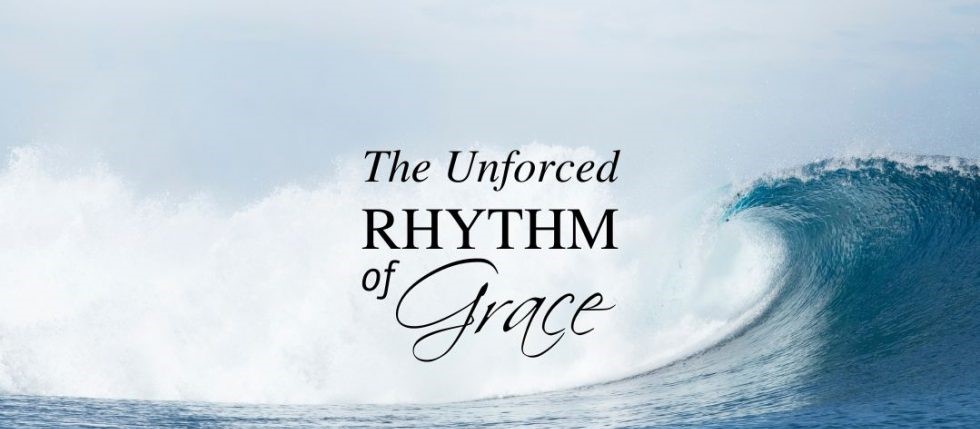
In Matthew 11:28–30 (The Message), Jesus extends an invitation: “Are you tired? Worn out? Burned out on religion? Come to me… Walk with me and work with me—watch how I do it. Learn the unforced rhythms of grace.”

These words, so aptly paraphrased by Eugene Peterson, feel less like a command and more like a gentle hand on the shoulder, drawing us toward something better than exhaustion: grace.

Learning to Rest Is a Strength, Not a Weakness

In her book Invitation to Silence and Solitude, Ruth Haley Barton writes, “Because we do not rest, we lose our way… Poisoned by the hypnotic belief that good things come only through unceasing determination and tireless effort, we can never truly rest.”

It’s easy to assume that if we stop, we’ll fall behind. But Jesus flips the script—he teaches that rest is not an interruption to spiritual formation; it is spiritual formation. It’s how we learn to hear his voice above the noise.

A Gentle Yoke in a Demanding World

Jesus invites us to “take his yoke”—a farming tool once used to link animals for shared work. But his yoke isn’t burdensome. It’s custom-fit, gentle, and shared. We don’t pull alone. We’re yoked with Christ, walking in step with his grace.

Years ago, I met a retired pastor who had served faithfully for five decades. When I asked him his secret to longevity, he said simply, “I finally learned to walk at God’s pace.” That’s what Jesus means by unforced rhythms—it’s grace that moves in time with heaven, not the chaos of the calendar.

Grace for the Weary and Wounded

In times of loss, confusion, or fatigue, grace meets us quietly and consistently. It is:

  • An antidote for anxiety
  • A remedy for restlessness
  • Decompression for depression
  • Antivenom for sin

Grace is what saves us when we can’t save ourselves. It guides when we’re lost, comforts when we’re hurting, and encourages when the odds are stacked against us. It even carries us when we don’t know the way forward.

How Do We Learn These Rhythms?

  • Come to Jesus—not just once, but daily
  • Take his yoke—release the burdens you were never meant to carry alone
  • Learn from him—observe his gentleness, humility, and wisdom
  • Rest in him—receive the peace that only grace can give

This isn’t just self-care. It’s soul care. It’s a way of life Jesus modeled—and a way of life he still invites us to follow.

John Mark Comer reminds us, “Transformation is possible if we are willing to arrange our lives around the practices, rhythms, and truths that Jesus himself did, which will open our lives to God’s power to change.”

So today, let grace interrupt your hurry.
Let grace reframe your expectations.
Let grace teach you how to breathe again.

Because in Christ, we’re not called to hustle harder—we’re called to finish the race at the speed of grace.

(Barry Howard is a retired pastor who now serves as a leadership coach and consultant with the Center for Healthy Churches. He and his wife live on Cove Lake in northeast Alabama.)

(This post is a summary of a sermon I shared in 2023.)

Dancing with the Mystery: 5 Reflections on the Trinity

C.S. Lewis proposed, “In Christianity God is not a static thing … but a dynamic, pulsating activity, a life, almost a kind of drama — almost, if you will not think me irreverent, a kind of dance.”

Every year, the first Sunday after Pentecost invites Christians to linger over the greatest known unknown of the faith: God who is Father, Son, and Holy Spirit. In the church of my upbringing, as we affirmed the holiness of God, we sang, “God in three persons, blessed Trinity!”

1. The word Trinity never appears in Scripture, yet the biblical story keeps naming a tri-personal God who creates, redeems, and indwells the world. The pattern of God’s threefold nature emerges from the core of the biblical message:

  • At creation, God speaks the world into being, the Spirit hovers over the waters, and together they bring life (Gen 1:1–2, 26).
  • At Jesus’ baptism, the heavens open, the Father speaks, the Spirit descends, and the Son stands in the water—an unmistakable picture of divine community (Matt 3:16–17).
  • At the Great Commission, Jesus sends his followers out in the name—not names—of the Father, Son, and Holy Spirit (Matt 28:19).

So while the term came later, the concept of a triune God was there from the beginning.

2. From the beginning, God is introduced as intra-communal in nature. Genesis does more than recount cosmic origins; it unveils a God who is relationship itself. Before mountains were sculpted or stars ignited, Father, Son, and Spirit shared eternal fellowship. Theologian Cornelius Plantinga once put it this way: “The persons within God exalt each other, commune with each other, and defer to one another. Each harbors the others at the center of their being.” In other words, God is a perfect community of mutual love and unity.

3. Metaphors give us a point of reference for the Trinity but are insufficient to fully capture the essence of God’s being. Stories help us speak about the unspeakable, yet every image has limits. Saint Patrick, so legend says, plucked a shamrock to illustrate “three in one” for the Irish clans. It was a winsome start, but the plant cannot convey the depth of divine personhood. Water (steam, liquid, ice) risks modalism; the sun (star, light, heat) flirts with subordinationism. Good metaphors open doors; they are not blueprints of the mystery.

4. The Trinity is best contemplated in the rich diversity of perspectives, not a singularly authoritative definition. Western theology tends to speak of one essence in three persons (think Augustine and the Athanasian Creed); Eastern writers prefer the word perichoresis—an eternal, mutual inter-dwelling. Both vocabularies circle the same fire from different sides.

5. The persons of the Trinity have different roles but one mission. Since the notion of Trinity refers to the intra-communal nature of God, the roles and objectives assumed by the members of the Trinity do not counter of contradict the other. Within the Trinity, the Father creates, the Son redeems, and the Spirit empowers, but they are never in conflict. Every movement of God throughout history flows from one divine source, with each person of the Trinity working in perfect harmony toward the restoration of all things.

In his book, Thinking About God: An Introduction to Christian Theology, Fisher Humphreys concludes his chapter on the Trinity with this summary:

In some wonderful and mysterious way, the one, true, living God is eternally Father, Son, and Holy Spirit. These Three Persons live a life of knowing and being known, of speaking and listening, of trusting and being trusted, of loving and being loved. As astonishing as it may seem, we human beings are called to share in their eternal life. We have already begun to share in the love of the Father, Son, and Spirit, and we will be enfolded in their life and love throughout eternity.

Trinity Sunday is about recognizing that the deepest truths of God are relational, mysterious, and gloriously beyond containment. The Trinity is not a diagram to be drawn, but a mystery to be received.

Let us dance with that mystery, even though we cannot fully comprehend the choreography.

(Barry Howard is a retired pastor who now serves as a leadership coach and consultant with the Center for Healthy Churches. He and his wife live on Cove Lake in northeast Alabama.)

Preparing for a Fresh Wind of the Spirit: A Reflection for Pentecost

Reggie McNeal, author of Missional Renaissance, proposes, “The Spirit is a work in the world, and it’s the job of the church to get on the same page as the Spirit, not the job of the Spirit to get on the same page as the church.”

As we navigate the chaos of a changing world, including fluctuating church metrics, shifting cultural norms, and contentious political allegiances, a fresh wind of the Spirit is blowing. Are you willing to risk raising your sails?

My earliest notions of the spirit world weren’t shaped by the Bible but by a mysterious little book titled Thirteen Alabama Ghosts and Jeffrey, a collection of Southern folklore by Kathryn Tucker Windham and Margaret Gillis Figh. Among the eerie tales was the story of Jeffrey, a mischievous spirit who took up residence in the Windham home in 1966. According to legend, Jeffrey would stomp down hallways, rock in empty chairs, startle the family cat, and move heavy furniture when no one was looking.

I was so captivated by the stories that I gave a fourth-grade book report on them in Mrs. Gibson’s class. Even now, when I pass through some of those quiet Alabama towns, I glance toward the courthouse windows, half-expecting to see a face staring back.

Growing up in the Bible Belt, it was only natural for a kid to conflate the “ghost in the courthouse” with the “Holy Ghost in the church house.” Visiting evangelists would shout from revival pulpits: “Have you received the Holy Ghost?” followed quickly by “Beware of quenching the Holy Ghost!”—as if this divine specter might invade your body or condemn your soul depending on your response.

Over the years, I’ve grown—both theologically and spiritually—in my understanding of the Holy Spirit. I still value my “Bapticostal” upbringing, but I’ve had to unlearn a few ghost stories along the way. I now prefer the term “Holy Spirit” over “Holy Ghost.” The former suggests holiness and intimacy. The latter, at least in childhood, sounded more like a spiritual haunting.

When I brush aside those folkloric impressions, I find that Scripture provides much-needed clarity. In John 14, as Jesus prepared for his departure, he told his disciples:

“I will not leave you as orphans. I will come to you” (John 14:18).

Though he would no longer be with them in the flesh, Jesus promised that his presence would remain with them in Spirit. He said,

“I will ask the Father, and he will give you another Advocate to help you and be with you forever—the Spirit of truth” (John 14:16–17).

I take comfort in knowing that even Jesus’ disciples didn’t fully understand at first. Like them, I’ve wrestled with anxiety over God’s nearness, especially in seasons of uncertainty. Jesus had been their mentor, their Rabbi. He had given them a new way to live—grounded in grace, not legalism. So when he spoke of leaving, their obvious question was: What happens now? Who will lead us?

That’s where the Holy Spirit comes in.

The Spirit is not some distant, disembodied force. The Spirit is God’s very presence among us—our comforter, guide, and encourager. As Paul writes,

“The Spirit himself testifies with our spirit that we are God’s children” (Romans 8:16).

I now understand the Spirit not as a showy performer or a supernatural invader, but as the presence of God dwelling within human hearts. The same Spirit that hovered over the waters at creation now inhabits our daily lives, whispering truth, nudging us toward grace, and empowering us to live with simplicity and service.

When I invited Walter Brueggemann—my teacher and friend—to lead a workshop at our church, he once told me that the Spirit doesn’t put on exhibitions. “The Spirit prefers to work quietly,” he said, “always prompting people toward God and the Jesus-kind-of-life.” I’ve found that to be true.

Pentecost reminds us that God’s Spirit is a wind we cannot summon or control—but one we can respond to. As Luke puts it in Acts 2, the Spirit arrived like “a mighty rushing wind.” Living on the coast, I’m familiar with wind: it’s invisible, powerful, and unpredictable. We can’t manufacture it—but we can raise our sails.

And just as we cannot recreate the resurrection or re-enact the ascension, we cannot stage a Pentecost encore. God is not in the business of repeat performances. The Spirit is endlessly creative, constantly innovating, and persistently at work. Perhaps even now, the Spirit is initiating a new story within you.

In his book Thinking About God, Fisher Humphreys wrote:

“The Spirit brings life and vitality into the experience of the Christian and the church. He vivifies us. He makes Christian living dynamic as well as decent.”

Indeed, the Spirit’s work is to foster unity—not division; to inspire creativity—not suppress it; and to re-vision the future—not simply preserve the past.

So this Pentecost, I pray we become more aware of the Spirit’s movement—less haunted by our ghosts, more filled with God’s penchant for creativity, and more responsive to the Spirit prompting us toward unity.

Come, Holy Spirit.
Blow where you will.
Bridge the chasms of division.
Prepare us for a season of adventure.
We’re ready to raise our sails.

(Barry Howard is a retired pastor who now serves as a leadership coach and consultant with the Center for Healthy Churches. He and his wife live on Cove Lake in northeast Alabama.)

Where Is God When the Bad Stuff Happens?

Where is God when bad things happen?

Across the ages, this question has perplexed and haunted those weighed down by grief, suffering, and pain. Theologians and philosophers have wrestled with scripture and reason in search of understanding. Pastors and counselors still search for words that offer hope to hearts broken by tragedy.

The Bible doesn’t sugarcoat the harshness of life. In Psalm 13:1–2, the psalmist gives voice to what it feels like to be forsaken in moments of anguish:

How long, Lord? Will you forget me forever?
How long will you hide your face from me?
How long must I wrestle with my thoughts
and day after day have sorrow in my heart?
How long will my enemy triumph over me?

Chaos wears many faces. A hurricane flattens homes and lives. An earthquake strikes without warning. A disease creeps in uninvited. A drunk driver kills an innocent teenager. And every time, the question echoes again: Where is God in this?

Some respond with platitudes. But trite clichés often feel hollow—or even offensive—to those walking through the valley of sorrow. Answering this question too casually can seem dismissive. But ignoring it would leave too many stranded in silence.

So I won’t pretend to offer a one-size-fits-all answer. Instead, I’ll share what I’ve come to believe—hoping that even a flicker of light might help someone see more clearly in a dark place.

1. Life is not fair.

I used to believe that if I prayed, obeyed, and lived faithfully, God would shield me from life’s storms. But life doesn’t follow that formula. God is good, yes—but God never promised that life would be fair. Life is hard. And faith isn’t an escape hatch—it’s an anchor.

As beloved author Frederick Buechner suggested, “Here is the world. Beautiful and terrible things will happen. Don’t be afraid.”

Faith helps us face the beautiful and the terrible with courage.

2. Suffering does not discriminate.

No one is immune. Tornadoes don’t skip homes based on church attendance. Illness doesn’t scan for spiritual résumés. We live in a world still scarred by sin, and its consequences touch the just and the unjust alike. Faith doesn’t exempt us—it equips us.

3. God is present in the chaos.

God does not orchestrate suffering as punishment or test. God is not the author of chaos, but the Redeemer within it. The Holy Spirit—God’s presence—lives within us to comfort, convict, and guide. God also shows up through the Church—when we bring love, healing, and hope to others.

Holocaust survivor and psychiatrist Viktor Frankl observed, “When we are no longer able to change a situation, we are challenged to change ourselves.”

Faith doesn’t always change our circumstances—but it transforms our response.

4. God invites us to walk by faith, not by sight.

Why do bad things happen to good people? Why are some healed and others not? Why did Jesus raise Lazarus, but not everyone? Maybe those moments of healing are glimpses—previews—of what God will one day do fully and finally. Even Lazarus died again. Earthly healing is temporary. Eternal hope is permanent.

I still believe in prayer. I believe in hope, medicine, community, and grace. But there are no formulas—only an invitation to walk by faith with courage and perseverance.

5. God is at work, but not always in ways we can see or evaluate.

Romans 8:28 assures us, “In all things God works for the good of those who love him.”

God doesn’t cause all things—but God works within all things. Often, God works through us. We are Christ’s hands and feet in a hurting world. When we show up with compassion, we reflect the God who never leaves us.

So, where is God when the bad stuff happens?

God is present. Not with easy answers or magical fixes—but with sustaining grace, resilient hope, and a faithful presence that never lets go.

Especially in the seasons when I wrestle with the unknowns, I hold to the promise that God is here. And even the smallest glimpse of God’s presence encourages me to keep pressing on.

(Barry Howard is a retired minister who currently serves as a leadership coach and consultant with the Center for Healthy Churches. He and his wife reside on Cove Lake in northeast Alabama.)

(This column is taken from a message I shared at FBC Pensacola after the community experienced multiple hurricanes, a catastrophic oil spill, and more than a few unexpected deaths.)

Come Monday: Finding Community in a Culture of Loneliness

“Come Monday, it’ll be all right/Come Monday, I’ll be holding you tight…” 

Those lyrics from Jimmy Buffett’s wistful ballad echo with a hope many of us carry. The song speaks of longing and loneliness, of waiting for that moment when things feel okay again—when presence replaces absence, and connection returns.

Believe it or not, Scripture echoes similar feelings. In Psalm 25:16, David writes,“Turn to me and be gracious to me, for I am lonely and afflicted.”

The mighty warrior and beloved leader knew what loneliness felt like. And he had the courage to say it out loud.

Mother Teresa insisted, “The most terrible poverty is loneliness, and the feeling of being unloved.”

In the spring of 2023, U.S. surgeon general Vivek Murthy placed a spotlight on America’s problem with loneliness when he declared the issue an epidemic.

In a recent Harvard study, 21% of those surveyed indicated they had serious feelings of loneliness.

Loneliness affects all ages. The Harvard study indicated widespread loneliness, especially among younger adults:

  • People between 30-44 years of age were the loneliest group — 29% of people in this age range said they were “frequently” or “always” lonely
  • Among 18–29-year-olds — the rate was 24%
  • For 45–64-year-olds, the rate was 20%
  • Adults aged 65 and older reported the lowest rate: 10% felt lonely

Loneliness Is Real—Even in a Crowded World

We live in a hyper-connected culture. Our phones buzz with messages, notifications, and endless content. But despite the noise, many people quietly struggle with a deep sense of disconnection.

You don’t have to be alone to feel lonely. It’s not about how many people are around you. It’s about whether anyone really sees you, knows you, or understands what you’re going through.

Loneliness can come in many forms: grief, life transitions, emotional exhaustion, or even just the slow drift away from relationships that once felt close. And it’s something that affects all ages, backgrounds, and life stages.

God Meets Us in Our Loneliness

When David cried out to God in Psalm 25, he wasn’t looking for a quick fix—he was seeking a Presence that could hold the weight of his heart.

“Relieve the troubles of my heart and free me from my anguish.” (v. 17)

In our loneliest moments, God doesn’t pull away. God draws near. The Bible reminds us again and again that the Lord is close to the brokenhearted (Psalm 34:18), that God is a refuge for the weary, and that God’s companionship is steady—even when human company isn’t.

And here’s the beautiful irony: naming our loneliness is often the first step toward overcoming it. David didn’t pretend. He openly sought God’s comfort and grace for his troubled spirit and his feelings of aloneness.

We Were Made for Connection

While God is with us in solitude, God also created us for community. From the very beginning, God said, “It is not good for man to be alone.” (Genesis 2:18)

That’s not just about marriage or friendship—it’s about belonging. And that’s what the Church is called to be: a place of welcome, honesty, and presence.

The early church wasn’t built on flashy programs or fancy buildings. It was built on people sharing life—breaking bread, praying, carrying one another’s burdens (Galatians 6:2). And that’s still the vision today.

So here’s the question: Are we building that kind of community in our churches, small groups, neighborhoods, and homes? Are we noticing the ones who might be quietly hurting?

Sometimes healing starts with a text. A coffee. A simple, “Hey, how are you—really?”

Serve Others. That’s a Great Place to Discover Community.

It might sound counterintuitive, but one of the most powerful ways to overcome loneliness is to look outward. When we serve others—when we step into someone else’s world—we often find healing for our own hearts.

Volunteering. Showing up for someone. Encouraging a neighbor. These small acts become lifelines, not just for them, but for us. They remind us that we’re still part of something bigger than ourselves.

In serving, we move from feeling invisible to feeling useful. We rediscover joy. And we start to experience what David prayed for—freedom from anguish, connection to something real, and hope for the days ahead.

“Come Monday, it’ll be all right,” Buffett sang. David, too, clung to hope in his song:

“My hope, Lord, is in you.” (Psalm 25:21)

Loneliness may visit, but it doesn’t have to stay. Community, companionships, and collegiality are blessings that have to be cultivated and nurtured.

Albert Einstein once said, “Although I am a typical loner in my daily life, my awareness of belonging to the invisible community of those who strive for truth, beauty, and justice has prevented me from feelings of isolation.”

What if we could help others find that same invisible community—and make it visible?

We can’t solve loneliness overnight. But we can foster healthy connections. We can be a friend to others. We can ask for help when needed. We can build a spirit of community. And we can nurture and grow in our relationship with God.

(This is an updated version of a sermon presented at the First Baptist Church of Pensacola in 2007 during our spring series “Changes in Latitude.”)