Memorial Day: Reflecting on the Cost of Freedom

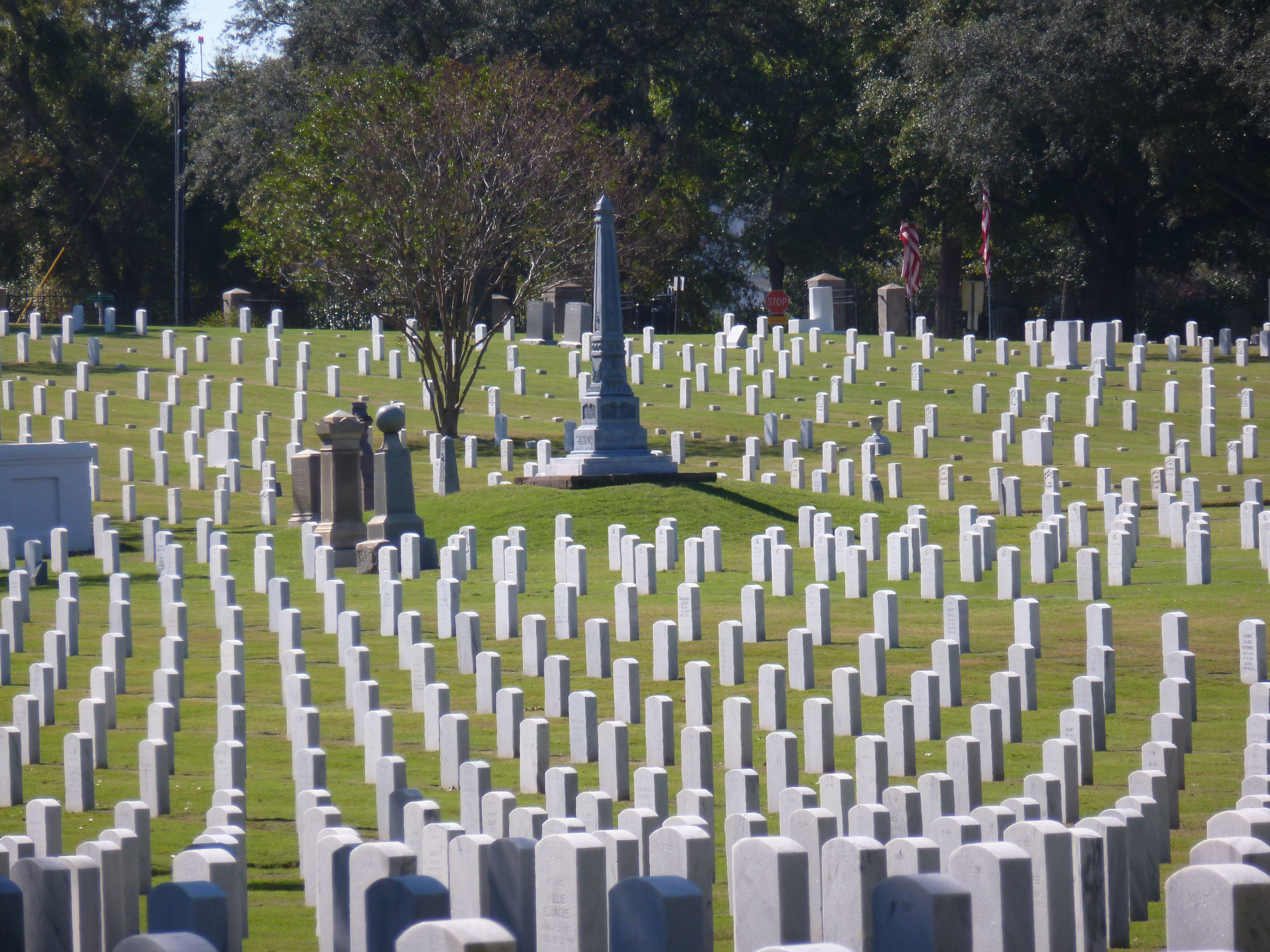
(photo of Barrancas National Cemetery at NAS Pensacola)

Memorial Day is more than a Monday holiday bookended by backyard cookouts and summer travel. It is a sacred summons that encourages us to stop long enough to ask, “What did our freedom cost?” and “Who paid the price?”

Freedom is among the most beloved words in the American vocabulary. We speak of it freely, sing about it proudly, and assume it instinctively. But freedom has never been free. It has always been purchased at great cost, with courage, with sacrifice, and with blood. The men and women memorialized on this day knew that cost intimately, and they paid it anyway.

In a culture addicted to comfort and allergic to cost, we need Memorial Day more than ever. Not merely as a ceremony, but as a confrontation, a kind of holy interruption that calls us back to what truly matters. As President Calvin Coolidge once said, “The nation which forgets its defenders will be itself forgotten.”

This Memorial Day, consider these reflections on the price of freedom:

  • Freedom was secured by ordinary people who did extraordinary things.  We tend to mythologize our heroes, polishing their stories until they gleam. But most of those who gave their lives were not statues or monuments. They were sons and daughters, husbands and wives, neighbors and friends who chose duty over self. In the struggle to preserve and protect our freedom, ordinary men and women rose to stand in the gap. We owe them our remembrance.
  • The cost of freedom is written in Scripture as well as in history.  The ancient world understood that great things are purchased at great cost. The prophet Isaiah spoke of the servant who would be “wounded for our transgressions” and “crushed for our iniquities” (Isaiah 53:5). The Apostle Paul, writing from a Roman prison, urged believers to stand firm in “the freedom with which Christ has set us free” (Galatians 5:1), knowing that such freedom was not theoretical—it was paid for. Whether the arena is spiritual or civic, freedom requires a sacrifice.
  • Gratitude is the only worthy response to sacrifice.  John F. Kennedy said, “As we express our gratitude, we must never forget that the highest appreciation is not to utter words, but to live by them.”  Wearing a flag pin or posting a patriotic meme is easy. But genuine gratitude is more demanding. It asks us to live with integrity, to vote with conscience, to serve our communities, and to refuse to squander what others died to give us. Gratitude, rightly practiced, is not just a feeling. Rather, it is a discipline.
  • Grief and honor belong together on this day.  For thousands of Gold Star families, Memorial Day is not a celebration, but an anniversary of loss. An empty chair at the dinner table. A folded flag on the mantel. A name etched in marble. We honor them best not by turning away from that grief but by standing in it with them. The Psalmist wrote, “Precious in the sight of the Lord is the death of His faithful servants” (Psalm 116:15). What is precious to God should not be passed over lightly by us.
  • The next generation must learn the cost or will never know the value.  Ronald Reagan warned with prophetic clarity: “Freedom is never more than one generation away from extinction. It must be fought for, protected, and handed on for them to do the same.”  Our children will not inherit a passion for freedom by accident. They will inherit it from us or they will not inherit it at all. Take them to a veterans’ cemetery. Read them the letters of soldiers who wrote home from the front. Tell the stories. Sing the hymns. Show them that some things are worth dying for, precisely because they are worth living for.

There is an old hymn of the faith that begins, “When I survey the wondrous cross.” Isaac Watts understood that remembering a sacrifice—truly beholding its cost—changes the one who remembers. This Memorial Day, may we survey what has been given on our behalf. May it humble us. May it move us. May it change us.

This Memorial Day, let us do more than enjoy a 3-day weekend. Let us pause at a grave marker. Let us speak the names. Let us teach our children that the flag flying over their school and their town square was purchased by men and women who chose to stand between danger and those they loved. Let us recommit ourselves to a life lived in appreciation for that gift.

Freedom is not free. But it is ours. May we never take it for granted.

(Barry Howard is a retired pastor who currently serves as a leadership coach and consultant with the Center for Healthy Churches. He and his wife reside on Cove Lake in northeast Alabama.)
Memorial Day: 5 Reasons Why Remembering Is Important

Memorial Day is more than a three-day weekend or the unofficial start of summer. It’s a sacred invitation to pause, reflect, and remember. In a culture that moves at the speed of a scrolling screen, practicing the discipline of remembering has become both countercultural and essential.

This day, set aside to honor those who have given their lives in service to our country, invites us into something deeper than nostalgia. It calls us to gratitude and beckons us to learn from the past.

When we fail to remember the sacrifices of those who came before us, we succumb to a convenient amnesia that gradually robs us of the freedoms we cherish. To fail to remember creates a contagious apathy that leads to a neglect of both our responsibility and our citizenship. To fail to remember can produce a false sense of security and an inaccurate perception that we are exempt from dictatorship and autocracy. If for no other reason, we should remember in order to guard against what George Washington called “the impostures of pretended patriotism.”

As we observe Memorial Day, here are five reflections about the importance of remembering:

  • Remembering is a sacred act. Throughout Scripture, God’s people are called to remember. “Remember the wonders He has done,” the psalmist writes (Psalm 105:5). Jesus, at the Last Supper, told his disciples, “Do this in remembrance of me.” Remembering anchors us. It shapes our identity. It gives context to our present and guidance for our future.

  • Remembering reminds us our freedom was not free. The liberties we enjoy come at a cost. Franklin D. Roosevelt cautioned, “Those who have long enjoyed such privileges as we enjoy forget in time that men have died to win them.”  Memorial Day reminds us that peace is preserved by those willing to risk—and sometimes give—their lives. Honoring the fallen should stir in us a sense of responsibility to live in a way that upholds the values they died defending.
  • Remembering evokes both grief and gratitude. For many, Memorial Day carries deep personal loss. It’s not just a day of flags and flowers—it’s a day when grief resurfaces. And yet, gratitude finds space there too. As one veteran said, “We don’t remember them because they died. We remember them because they lived.” Their stories of courage and selflessness inspire us to live with more purpose and compassion.
  • Remembering can shape us for the better. When we take the time to remember, we grow in empathy. We honor courage. We rediscover our shared humanity. And we are reminded that our freedom, our peace, and our way of life are built on the backs of those who stood in harm’s way for the sake of others. We are also inspired to protect and preserve freedom for those who come after us.
  • Remembering prompts us to pass the memories along to the next generation. Ronald Reagan cautioned, “Freedom is never more than one generation away from extinction. It must be fought for, protected, and handed on for them to do the same.” Our children and grandchildren won’t understand the meaning of Memorial Day unless we tell the stories. Visit a veterans’ cemetery, attend a memorial service, or share the history of someone in your family or community who served. Let them see remembrance in action.

This Memorial Day, let us do more than enjoy a day off. Let us pause. Let us give thanks. Let us reflect on the cost of the liberties we enjoy. Let us teach our children the stories of valor and sacrifice. And let us recommit ourselves to building a world worthy of the lives that were given.

John F. Kennedy insisted, “As we express our gratitude, we must never forget that the highest appreciation is not to utter words, but to live by them.”

Kennedy’s words seem even more relevant today. It’s not enough to say thank you—we must live in a way that honors the gift. Memorial Day challenges us to turn remembrance into action: by serving others, standing up for justice, and living with integrity.

(Barry Howard is a retired pastor who currently serves as a leadership coach and consultant with the Center for Healthy Churches. He and his wife reside on Cove Lake in northeast Alabama.)

A Day for Remembering

Elie Wiesel proposed, “Without memory, there is no culture. Without memory there would be no civilization, no future.

Today is Memorial Day. Because our military appreciation holidays have specific purposes, someone has clarified that Armed Forces Day honors those who are serving, Veterans Day honors those who have served, and Memorial Day commemorates those who died while serving.

No one knows for sure the exact number of men and women who have lost their lives in service of our country, but most veteran service agencies agree the number is 1.2 million or higher.

During my 46 years of ministry, I have been privileged to serve in two distinguished military communities: Anniston (former home of Fort McClellan) and Pensacola (home of Pensacola Naval Air Station). I continue to share life with those who currently serve or have valiantly served our country. Over the past three years I have enjoyed conversations with multiple military chaplains, officiated a wedding for a naval aviator, presided over the memorial service of a World War II veteran, and listened to the career story of a former navy pilot, now in his eighties.

In each of the communities where I have served, an extraordinarily large number of residents have lost a son, daughter, father, mother, brother, sister, friend or neighbor on the field of battle. During my tenure in Pensacola, I offered eulogies at the Barrancas National Cemetery, where over 32,000 are interred, for more than a hundred memorial services for veterans or their family members.

For this reason, Memorial Day evokes in me more of a sense of somber observance than of celebration. On this one weekend of the year, in the words of Aaron Kilbourne, “The dead soldier’s silence sings our national anthem.”

Although the final Monday in May can often become a holiday marking the beginning of summer, we should be careful that the meaning of this day does not become lost in the business of our activities. Memorial Day is not just another day off from work but a day to remember those who have lost their lives in the military service of our country.
HeH

A nation that fails to remember the sacrifices of those who came before us will inevitably succumb to a convenient amnesia, a loss of corporate memory that eventually robs succeeding generations of acquaintance with our national heritage. To fail to remember creates a contagious apathy that leads to a neglect of both our freedom and our citizenship. To fail to remember can produce a false sense of security and an inaccurate perception that we are exempt from future warfare. If for no other reason, we should remember in order to guard against what George Washington called “the impostures of pretended patriotism.”

Perhaps our virtual reality world is becoming too much of a fantasy world. When we mute the self-serving and accusative political rhetoric, remembering our unabridged heritage can stir in us both a gut check and a reality check. The kind of remembering we need to do on Memorial Day is an uncomfortable but necessary discipline, a practice that forges vision from memory and distills wisdom from history.

As we observe Memorial Day this year, it’s okay to grill the burgers and brats. It’s okay to watch the baseball game. It’s okay to play 18. And it’s okay to take a boat ride with the family. But whatever we do, let us take time to remember the women and men who served with extraordinary courage to establish and preserve our freedom to do all these activities and more. By remembering our history, may we be better prepared to engage the enemies of our day with the weapons of peace, not war.

(photo- Barrancas National Cemetery, Naval Air Station, Pensacola, Florida.)

(Barry Howard serves as pastor of the Church at Wieuca in North Atlanta. He also serves as a leadership coach and columnist with the Center for Healthy Churches. You can follow him on Twitter at @barrysnotes.)