Fear Not!

fear not 2

Fear can be antagonizing and paralyzing. It can affect our physical health, our emotional health, and our spiritual health. It causes us to make poor and uninformed decisions. And more importantly, fear can distract us from our God-given mission.

Perhaps the disruptive effect of fear prompted Paul to underscore, “For God has not given us a spirit of fear, but of power and of love and of a sound mind” (II Timothy 1:7).

There is an old German proverb that says, “Fear makes the wolf bigger than he is.”

Depending on the translation we are reading, over 100 times the Bible specifically urges us to “fear not.”

I don’t think this means that as believers we never feel a wave of fear. I think it means that we should never give into our fears or be dominated by our fears.

There are many things that strike a chord of fear in our world: the threat of war, the perils of financial collapse, or the risk of being exposed to a pandemic virus.

As with SARS, Bird Flu, and Ebola in the past, the coronavirus has certainly and rightly stirred concern with population groups around the world. Fears related to COVID-19 have adversely influenced world markets, have limited travel abroad, have restricted public gatherings, and have closed numerous schools and universities. While the virus has spread rapidly in China, Iran, and Italy, to this point there have only been a relatively small number of cases in the United States compared to flu and other viruses.

Our faith urges us to resist the temptation to give into fear. Rather, we should educate ourselves in the facts of the virus and we should take proactive precautions.
Here are a few practical suggestions:

• Prioritize prayer and refuse to panic. Pray for those infected, those who are working toward an effective vaccine, and those who live in more at-risk regions of the world. Dorothy Bernard proposes that “Courage is fear that has said its prayers.”

Practice proactive hygiene. The recommended precautions are similar to the precautions recommended for the flu. Switch from handshakes to fist bumps, and wash hands regularly and rigorously.

• Postpone travel to high risk areas. Don’t be afraid to take your family vacation but avoid the high-risk regions of the world.

• Proceed with your schedule and your daily responsibilities as normally as possible until advised to take additional precautions.

• Persist in maintaining a positive attitude. Fear makes us cranky and irritable. Some even suggests that fear and other negative emotions may compromise our immune systems. However, a positive attitude and an informed mind helps us to counter our fears and to be salt and light in our church and community.

Frederick W. Cropp surmised that, “There is much in the world to make us afraid. There is much more in our faith to make us unafraid.”

In any and every circumstance, refuse to be dominated by fear. Take courage, stay informed, and “fear not!”

(Barry Howard serves as the pastor of the Wieuca Road Baptist Church in Atlanta, Georgia.)

I Think I Will Give Up Worry for Lent

worry

This year I think I’ll give up worry for Lent. Earlier this week I watched news footage from the Fat Tuesday celebration in New Orleans, a day where many indulge in gluttonous feasting or revelry. Yesterday we observed Ash Wednesday, which marks the beginning of the season of Lent, a time of intentional preparation for Easter. During this season, believers focus on self-examination, reflection, and repentance.

Traditionally, Christians give up something of importance to them during Lent. I have friends who give up one or more of their favorite things such as chocolate, coffee, sugar, or soft drinks. But since I have a genetic predisposition to worry, I think I’ll try to give it up for at least 40 days.

I don’t really like to worry. In fact, it’s not constructive. Worry is like spam or junk mail. It just takes up valuable space in my mind, space needed for creative thinking, planning, visioning, and problem solving. And I know I function better when I am not weighted down with excessive worry. But each time I kick worry out the front door of my mind, it seems to sneak around and re-enter through the back door.

Years ago a friend of mind had a huge poster mounted on the wall over his desk that said, “Don’t tell me worry doesn’t help. Half of the things I worry about never happen.”

Erma Bombeck quipped that, “Worry is like a rocking chair: it gives you something to do but never gets you anywhere.”

I think worry can be inherited. I witnessed the wear and tear of worry in my parents and grandparents. I have noted that many of their offspring struggle with this mental distraction.

And I am in good company. I frequently have coffee with CEO’s, ministers, business owners, attorneys, physicians, and educators and they all tend to suffer from a similar dilemma. That is not surprising because there are so many things about which a person can worry… your business, your family, your investments, terrorism, the economy, the future. The list seems endless.

Perhaps my friends should give up worry for Lent also. Since Lent is a time of intentional preparation for Easter, maybe we should listen again to the words of Jesus who urged his followers to give up worry:

Therefore I tell you, do not worry about your life, what you will eat or drink; or about your body, what you will wear. Is not life more important than food, and the body more important than clothes? Look at the birds of the air; they do not sow or reap or store away in barns, and yet your heavenly Father feeds them. Are you not much more valuable than they? Who of you by worrying can add a single hour to his life? Matthew 6:25-27

As we begin our Lenten journey, I am going to try to give up worry for at least 40 days…and maybe, hopefully, longer.

(Barry Howard currently serves as the pastor of Wieuca Road Baptist Church in Atlanta.)

Preparing for Our Lenten Journey

lenten journey

In the bapti-costal church of my youth, we didn’t observe Lent. Our only preparation for Resurrection Sunday was dying Easter eggs and “laying out” our clothes for the five o’clock Sunrise service on Easter Sunday morning.

A few years later as a young pastor, through my affiliation with an ecumenical fellowship of ministers I grew to appreciate the season of Lent and the various services of Holy Week.

Across the years, I have come to value Lent as a season of preparation and consecration, and I look forward to Holy Week as a time to re-trace the steps of Jesus from Palm Sunday to Easter.

Early on I understood Lent to be a time to “give up” something significant to me, something like sweets, chocolates, or other cherished foods. While the temporary avoidance of specific items may be associated with this season, I now approach Lent more as a time of focus than of fasting.

Acclaimed theologian, N.T. Wright, proposes that “Lent is a time for discipline, for confession, for honesty, not because God is mean or fault- finding or finger-pointing but because he wants us to know the joy of being cleaned out, ready for all the good things he now has in store.”

This week we will begin our Lenten journey with the observance of Ash Wednesday. At my church we will sing and pray as we focus on Psalm 51 and I John 1:9-10. Then we receive the disposition of ashes as we depart. And our Lenten journey will begin.

Lent as a season for reflection. It is a time to focus on God’s purpose for our lives, which is the key to understanding our purpose on this planet. And many aspects about God’s will for our lives can be brought into clearer perspective as we contemplate the teachings of Jesus, including his sermons, his suffering, and his resurrection.

Lent is a season for repentance. When we repent, we confess our sins and forsake our sins. The Bible makes two things extremely clear: 1. We have all sinned and fall short of the glory of God. (Romans 3:10 NIV); 2. If we confess our sins, he is faithful and just and will forgive us our sins and purify us from all unrighteousness. (I John 1:9 NIV)

Lent is season for realignment. Lent is a time to refocus on what it means to be a follower of Jesus and to realign with God’s mission in the world today. In the course of daily living, our lives easily get out of tune. Lent is a time to tune the piano of our lives to correspond to the middle C of God’s initiatives. Or, it’s like realigning the tires on our car so that they are going precisely the same direction. Lent summons us to submit the divergent components within our self to the tailwinds of the Spirit.

By embarking on a slow and reflective Lenten journey, we are better prepared for a meaningful celebration of the resurrection on Easter Sunday morning.

(Barry Howard serves as the pastor of the Wieuca Road Baptist Church in Atlanta. You can follow his blog at http://www.barrysnotes.wordpress.com or on Twitter @barrysnotes.)

20 Books I Plan to Read in 2020

books
I love to read. I only wish I had learned to enjoy reading at an earlier age.

My affinity for reading was slow to develop. But when it emerged, it flourished. During my teenage years, I perceived reading to be a nuisance and somewhat of a necessary evil to get decent grades. At some point during my college years, however, I learned to appreciate the gift of reading, not just for assignments or entertainment, but for personal growth.

These days I find reading to be relaxing, educational, and often inspirational. Like Walt Disney, I have discovered that, “There is more treasure in books than in all the pirate’s loot on Treasure Island.”

In my work as a pastor, I need to read widely to stay current and relevant. More importantly, I need books like I need food, to satisfy cognitive hunger and to probe intellectual curiosity. Books stimulate my thinking, exercise my memory muscles, and challenge my presuppositions.

Typically, I read a variety of genres including fiction, spirituality, theology, history, and biography. And I usually keep from three to five books going at the same time, a discipline that was recommended by Opal Lovett, one of my favorite faculty members from Jacksonville State University. This practice invites a variety of authors to gather around the table in my internal chat room.

I also intentionally read books I disagree with. Rather than making me combative, the practice of reading opposing viewpoints challenges me to test my assumptions and it familiarizes me with a variety of perspectives. This discipline equips me to dialogue and debate intelligibly, and not just emotively.

For the past several years, around the first of January, I make a list of books that I plan to read during the coming year. While I hope to read 40-50 books this year, I have already compiled a list of twenty of the books I want to be sure to read in 2020:

1. The Church of Us vs Them by David Fitch
2. Talking to Strangers by Malcolm Gladwell
3. Anxious for Nothing by Max Lucado
4. Just Mercy by Bryan Stephenson
5. Preaching from the Old Testament by Walter Brueggemann
6. The Walk: Five Essential Practices of the Christian Life by Adam Hamilton
7. The Guardians by John Grisham
8. The Ruthless Elimination of Hurry by John Mark Comer and John Ortberg
9. Irresistable: Reclaiming the New That Jesus Unleashed for the World by Andy Stanley
10. A Time for Every Purpose by Doug Dortch
11. Pastor Paul by Scot McKnight
12. Truth and Hope: Essays for a Perilous Age by Walter Brueggemann and Louis Stallone
13. How Your Congregation Learns by Tim Shapiro
14. How to Lead When You Don’t Know Where You Are Going by Susan Beaumont
15. Uproar: Calm Leadership in Anxious Times by Peter Steinke
16. The New Testament in its World by N.T. Wright.
17. Quietly Courageous: Leading the Church in a Changing World by Gil Rendle
18. Embracing God’s Future Without Forgetting the Past by Michael K. Girlinghouse
19. Sold on a Monday by Kristina McMorris
20. Does God Really Like Me?: Discovering the God Who Wants to Be With Us by Cyd Holsclaw and Geoff Holsclaw

Whether you are a fast reader or a slow reader, a hard print reader or a e-book reader, read for quality, not quantity.

This year I invite you to join me in adopting the philosophy of Fran Lebowitz: “Think before you speak. Read before you think.”

Enjoy a soul-stirring and mind-bending year of reading in 2020!

(Barry Howard serves as the pastor of Wieuca Road Baptist Church in Atlanta. He enjoys reading, writing, and playing golf.)

What Simeon Says: A Sobering Baby Dedication

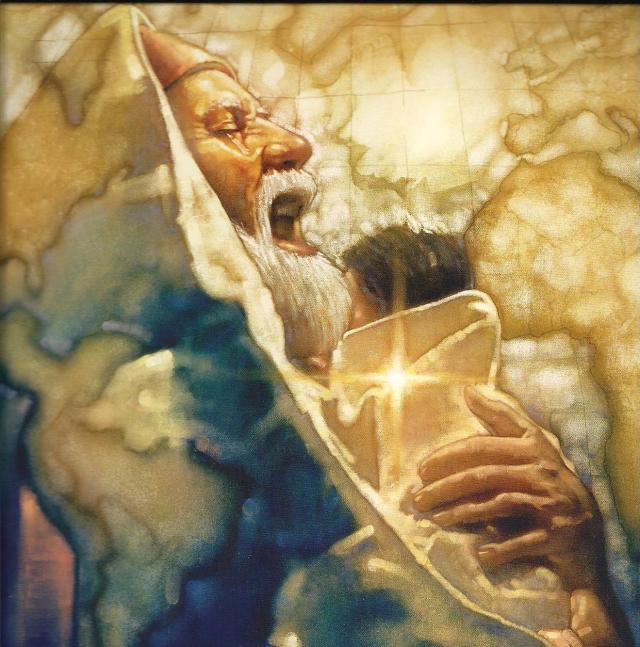
simeon-with-jesus

A few days after the birth of Jesus, Mary and Joseph made their way from Bethlehem to Jerusalem where they took the baby to the temple, as was the custom, to have him consecrated to the Lord. Historians believe the baby Jesus would have been 40 to 41 days old.

After offering their customary sacrifice, they encountered Simeon, a man who was “righteous and devout” and who was “waiting for the consolation of Israel.”  The account of this sobering baby dedication is told in Luke 2:25-35.

As Simeon was moved by the Spirit, he took the child in his arms and praised God, saying: “ For your eyes have seen your salvation, which you have prepared in the sight of all people, a light for revelation to the Gentiles and for glory to your people Israel.”

After the blessing, Joseph and Mary marveled. But Simeon continued, “This child is destined to cause the falling and rising of many in Israel, and to be a sign that will be spoken against, so that the thoughts of many will be revealed. And a sword that will pierce your own soul too.”

I love the old spiritual, “Sweet Little Jesus Boy.” But I am not sure that title fits the predictive blessing of Simeon. According to this wise old priest, the child born to Joseph and Mary will reveal God’s gift of salvation.  But in demonstrating this “light” and “glory,” he will also upset the status quo and inevitably confront significant opposition. And those who follow him may be called to do the same.

Unlike many of the myths of Christmas, salvation may involve more that deciding whether you are going to be naughty or nice. According to Luke, salvation involves “denying self” and “bearing the cross,” a summons for us to be determined and courageous in our following the one born in Bethlehem.

A life lived by faith still involves navigating the twists and turns we encounter on our journey, an unpredictable expedition winding between the peaks of good and evil, feast and famine, and blessing and injustice.

And depending on our own sense of calling and mission, our journey will be unique. Some of us are more likely to contend with the perils of prosperity, while others are more likely to experience the pangs of persecution.

Although the birth of Jesus is celebrated with hope, peace, joy, and love, this matter of following Jesus is risky business. It requires durable commitment, frequent forgiveness, and tenacious perseverance.

Like the shepherds and the wise men, we have followed the star to find the babe in the manger. As a new year begins, will we dare to follow him further?

(Barry Howard serves as a leadership coach and consultant with the Center for Healthy Churches. He and his wife, Amanda, live in Pensacola, Florida.)

How a Nativity Rekindled a Mother’s Hope

nativity

(The following article was first published in 2012.  It is re-posted in memory of Elliott and Frances Dobelstein.)

During the season of Christmas and Advent, a variety of nativity scenes are being displayed in home, churches, and communities around the world. At First Baptist Church of Pensacola, there is a small nativity scene in the window of the Paul Royal Recreation and Outreach Center that has a story to tell—a story of hope and a story of perseverance.

In 1972, Frances and Elliott Dobelstein purchased and displayed a rather large lighted outdoor nativity scene on the front lawn of our church campus. While many passersby enjoyed seeing the colorful manger scene atop Palafox Hill, the outdoor display became more difficult to maintain and to protect from vandals.

As the Dobelsteins grew older, they wanted to continue to sponsor the display but they could no longer perform the manual labor required to set up, take down, and store the display. It was then that Frances made an appointment with me to share a vision and a memory that together make a story worth telling:

On December 28, 1971, the Dobelsteins’ son, Wayne, was critically injured in a snorkeling accident while on a field trip with the diving club from his school. Wayne, who was 16 years old at the time, did not survive the accident. Devastated when they received the news, the Dobelstein family travelled to Marathon Key to bring their son home. When the family arrived in Marathon Key, the harsh reality of the loss of their son became almost impossible to bear. Frances, who had been a person of strong faith, says that she was at a breaking point. That night she took a walk outside their hotel room desperately praying for the strength to get through this dark night. Frances said, “I happened to pass a church, and on the front lawn I saw a nativity scene. It wasn’t fancy. It was old and appeared to be made of plastic.”

Frances doesn’t remember all she thought about that night as she stared at the manger, but she does recollect thinking, “God not only had a son, but God knows what it feels like to lose a son.” She said it was at that moment her resolve changed and a glimmer of hope emerged. “On the darkest night of my life, I had a quiet peace that God was with me in this tragedy and would help me to make it through.”

When the Dobelsteins returned to Pensacola, they asked Dr. Jim Pleitz, who served as their pastor at that time, if they could place a lighted nativity scene on the campus of First Baptist Church as a testimony of hope in the midst of the night.

Years later, in 2008 the Dobelsteins purchased a new small, table-top nativity that is now displayed in the window of the ROC, a scene reminiscent of the one Frances saw on that dark night in 1971. This year marks 40 years that the Dobelsteins have sponsored a nativity scene on our church campus.

When some folks gaze at the manger, they think about “good news of great joy which shall be to all people.” But for others, like Elliott and Frances Dobelstein, the sight of the babe wrapped in swaddling clothes brings hope that twinkles as bright as a Christmas star shining over Bethlehem on a dark desert night.


Advent Devotional: Getting Reacquainted with the Prince of Peace

peace candles

For to us a child is born,
to us a son is given,
and the government will be on his shoulders.
And he will be called
Wonderful Counselor, Mighty God,
Everlasting Father, Prince of Peace. Isaiah 9:6

At times life can be like a roller coaster with lots of ups and downs. At other times life is like a maze and you don’t know which direction to turn next.

In the creation narrative in Genesis, God is introduced as one who brings order out of chaos, as one who brings light into darkness.  But there may be tumultuous seasons along your journey where your order collapses into chaos,  or moments when it seems the light gives way to darkness. This is especially when there is an unexpected diagnosis, trauma, or death within your family or among your circle of friends.

Of all the names in the Bible that refer to the promised messiah, during the past few years the title “Prince of Peace” has taken on new meaning for our family. Across our years of marriage and ministry, we have been blessed with good health, supportive congregations, and encouraging friends. However, over the past twenty years, we have experienced the sickness and eventual death of multiple family members.

When a family member is being treated for a catastrophic illness, you learn to be extremely flexible. You learn to pray in deeper ways than you have prayed before. You learn not to panic when the phone rings in the middle of the night. You strive to keep all of your family members on the same page regarding care and treatment. You take time to treasure your phone calls and visits with friends and family members because you are more aware of the uncertainty of the future. Such circumstances tend to intensify your stress level and keep your emotions on edge.

God has promised never to leave us but to give us strength in times of adversity. The prophet Isaiah told of a coming messiah who would be an insightful counselor, a proactive God, a dependable parent, and an ambassador of peace. As Christians, we believe that these attributes describe the life, ministry, and disposition of Jesus.

The Apostle Paul encouraged believers to look to the Prince of Peace for strength in every season and every circumstance: Do not be anxious about anything, but in everything, by prayer and petition, with thanksgiving, present your requests to God. And the peace of God, which transcends all understanding, will guard your hearts and your minds in Christ Jesus. (Philippians 4:6-7)

When unexpected difficulties and challenges come your way, take time to get reacquainted with the Prince of Peace. He will help guide your decisions and guard your emotions as you navigate the twists and turns of life. It is his nature to bring order out of chaos.

Prayer: God of peace, thank you for promising to be with us in all of the seasons of life. Whether we are on the highest mountain or in the lowest valley, grant us inner peace through our companionship with Jesus, who is the ultimate Prince of Peace. Amen.

(Barry Howard serves as a leadership coach with the Center for Healthy Churches and a pastoral counselor with Faith and Hope Counseling Center. He and his wife Amanda reside in Pensacola, Florida.)

A Pastor’s Marriage: 10 Insights from 34 Years of Experience

church wedding

A few days ago, Amanda and I celebrated our 34th Anniversary. We were married on September 7, 1985 at the Post Oak Springs Baptist Church. Our wedding was simple but beautiful. The church was packed. And our journey together has been quite an adventure with lots of unexpected twists and turns, a journey that has enabled us to learn and grow, and to make quite a few friends along the way.

Our wedding party was small by design. Amanda’s mother served as her matron of honor and my youngest brother served as my best man. The front of the sanctuary was decorated with a lush garden of ferns. After we recited our vows and exchanged our rings, the officiating minister served communion to us and asked God’s blessings on our life and ministry. It was quite a memorable and worshipful occasion, which is the ultimate purpose of a Christian wedding.

After a reception (which in those days featured wedding cake, nuts, mints, and unspiked punch) in the Fellowship Hall we departed for our honeymoon and the real work of marriage began. The merging of two lives is never easy and is often messy. Amanda and I have been blessed. We have tasted both the “for better and for worse” experiences of life, and our relationship has grown stronger during all seasons.

When it comes to marriage, I chose wisely. I resonate with Churchill’s assessment: My most brilliant achievement was my ability to be able to persuade my wife to marry me.

Marriage is perhaps the most unique of all human relationships. The privilege of partnering with one person for life is a blessing and a challenge.

But for the pastor’s family, the challenges are unique. While every marriage has its challenges, a minister’s marriage is lived out in a distinctly translucent context which adds a few additional challenges:

• The glass house syndrome. A minister’s family life requires a little more transparency and is often scrutinized more publicly than the average marriage.
• The swinging pendulum of emotions. Because a minister deals with the emotion of everything in life from birth to death, a minister’s family is subject to lots of emotional fluctuation.
• The burden of confidentiality. A minister deals with sensitive confidential issues perpetually, and although a minister’s spouse is not privy to many of those issues, the duress of confidentiality often bleeds over into the minister’s home life.
• The flexibility challenge. A minister’s schedule is always tentative. Interruptions are a constant. Vacation plans change. Kid’s ball games and concerts are missed. A minister’s life demands extraordinary flexibility.
• The fatigue factor. Many ministers confess that they teeter on the brink of burnout or pastoral fatigue. A minister’s family must not only contend with a parent who is often physically or emotionally tired, but without a sense of balance and a time for refreshing, the weariness can drive the entire family toward “church burnout.”

According to Hebrews 13:4, “Marriage should be honored by all, and the marriage bed kept pure.” Although this admonition is for the entire faith community, it is especially important for ministers.

To build a healthy marriage, a minister and spouse cannot be naïve to the aforementioned stressors, but rather should take proactive steps to navigate these challenges with faith, discernment, and intentionality. As we have grown through 34 years of marriage, we have gained a few insights into what makes marriage work for us:

Embrace the uniqueness of the “ministry life.” Life for a minister’s family is not abnormal. It is just a different kind of normal. We try to live into the uniqueness rather than avoiding it or denying it.
• Avoid unrealistic expectations. You will likely encounter a few church members who have unrealistic or idealistic expectations for your work schedule, your preaching topics, and your family life. You will be a more effective minister and you will have a healthier family life if you live out of the wellspring of your gifts and convictions, and not the expectations of others.
• Schedule time for dates. There is a lot of demand on a pastor’s schedule. Calendaring can often be like doing triage. Across the years I learned to calendar appointments with Amanda for lunch dates, dinner dates, sporting events, and other fun activities. Otherwise, my schedule becomes full and we will miss spending quality time together.
• Avoid taking the stress and stories of work home. Usually when a pastor leaves the office, that pastor is still in ministry mode, making evening visits or phone calls, working on preparation for upcoming services, or processing the events of the day. And while I occasionally needed to decompress by discussing an extremely stressful situation, I always tried to avoid discussing the daily debris of ministry with my wife.
• Take your off days and your vacation. I wish I had been a better practitioner of this insight. Only a couple of times during our 34 years have I taken all of my allotted vacation time. However, the older I get, I find that it is more important to take time to rest, refocus, and rejuvenate, for my physical health, my spiritual health, and for the health of our marriage.
• Use extreme discretion in telling stories involving your marriage or family life. All of the congregations I served loved stories and they seemed receptive to illustrative stories from our personal experiences, such as our adventures in tennis, golf, or travels. However, I try to only tell stories that highlight and illustrate how our lives intersect with the application of the biblical text, and I avoid stories that are intimate or critical.
• Do ministry together occasionally. Amanda has her own passion for ministry, and she invests her time and energy in serving, just like any other member of our congregation. However, we occasionally enjoy making hospital visits together, engaging in mission projects together, and even reading and discussing the same books.
• Take care of your health. During our wedding, we pledged to be faithful to each other in sickness and in health. Obviously, we prefer to be healthy. We do a pretty good job of keeping up with our doctor’s visits and we are proactive in caring for our health. Monitoring and managing your health is a part of your stewardship of life.
• Learn when to say “yes” and when to say “no” to invitations. We enjoy being socially active, but there is no way to say yes to every invitation. It is a biblical imperative to “let your yes be yes and your no be no.”
Keep growing… together. I don’t think anyone, especially a minister and wife, ever reaches a point where you can put your marriage on cruise control. A healthy marriage requires ongoing nurture. There is a big difference in growing old together and getting old together. We want to grow old together by continuing to grow spiritually, intellectually, and intimately.

A healthy marriage may not necessarily make ministry easier, but an unhealthy marriage certainly makes ministry more difficult. If you neglect your marriage in order to preserve your ministry, you are likely to lose both.

I love being married. And I especially love being married to Amanda. We have shared a partnership in life and ministry for 34 years now. And I look forward to many more.

(Barry Howard is a retired pastor who now serves as a leadership coach with the Center for Healthy Churches. He and his wife Amanda reside in Pensacola, Florida.)

There’s More Than One Way to Call a Pastor

pastor call process

When I was a senior in high school, I was elected as the youth representative to the Pastor Search Committee at my home church. The congregation already knew of my call to ministry, so I found it to be an informative, inspiring experience to see firsthand how a Baptist call process worked.

Eight of us served on the committee, and after the first meeting I thought, “This crew will never come to an agreement on a pastoral candidate.” Yet, we began to gel as the search progressed and one Sunday after hearing a candidate preach, we sensed God’s spirit leading us to him more deeply. Within a few weeks, we recommended this candidate to our church as the next senior pastor. It was a rewarding experience.

This all took place prior to video sermons and internet sermon links. So, search committees would collect names and recommendations from church members and neighboring pastors, then get in the car Sunday after Sunday to hear a different preacher.

Most of the candidates our committee considered were just across town. As I recall, the farthest distance we traveled to hear a candidate was about an hour.

A lot of factors have changed since that first search process I participated in over 40 years ago. Here are just a few of the variables that have influenced the ways churches look for a new pastor:

• The internet has made candidates around the country more accessible.
• Churches are less likely to look for candidates in their local communities.
• Video conferencing tools such as Skype and Zoom have made it possible to conduct preliminary interviews without traveling to the candidate’s location.
• Confidentiality is exponentially more challenging due to the proliferation of communication devices.
• Committees tend to focus more on a candidate’s disposition toward the whole portfolio of pastoral responsibilities, not just the central task of preaching.
• Criminal and financial background checks are more readily available and, unfortunately, more necessary.
• References are usually easier to contact by cell phone and video chat.
• There is a greater realization of the need to call a pastor whose strengths are compatible with the potential and personality of a specific congregation.
• Many state conventions have minimized or eliminated minister relations staff members who once assisted in orienting and guiding churches in the pastor search process.
• Search teams tend to place more emphasis on the character, spiritual depth, and emotional intelligence (EQ) of the candidate than on demographic parameters such as age, experience, and education.

Calling a new pastor is one of the most important decisions a church will ever make. Among all the variables that have shifted across the years, there is at least one thing that hasn’t changed: A healthy process of due diligence and spiritual discernment is imperative to making a wise decision in calling your next minister.

There really is more than one way to discover, vet, and call your next pastor. Here are five models or paradigms that a church might consider for their pastor search process:

1. Traditional search model: In a traditional search, much like the search committee that I served on in high school, the church elects a search team that solicits resumes, conducts interviews, and nominates a candidate to the congregation. However, the search team will prayerfully utilize the best resources of communication and technology to research candidates, develop a short list, and then make site visits only to top two or three candidates during the final stages of their process.

2. Pastor-in-waiting model: In this model, a church will engage in a strategic plan to call a co-pastor or associate pastor who is pre-designated to be the next senior pastor upon the retirement or departure of the current senior pastor. This model provides continuity and provides the incoming pastor an opportunity to become more familiar with the day-to-day operations and the unique personality of the church before assuming the senior pastor role.

3. Pastor succession model: Some churches choose to adopt a direct succession model. In this paradigm, once the current pastor gives notice to the church of his or her pending retirement or transition, the search for the next pastor begins while the current pastor continues serving. The aim of this model is for the new pastor to immediately succeed the outgoing pastor without an interim season between. This model tends to only be effective in a healthy congregation where visioning and appreciative inquiry have been implemented effectively under the outgoing pastor’s leadership.

4. Employing a pastor search firm: In this approach, the church contracts with a pastor search firm such as Slingshot Group, Vanderbloemen Group, or Shepherd’s Staff to work with the church to establish search criteria, and then to bring the Pastor Search Committee a candidate or small group of candidates matching those criteria for consideration. Pastor search firms, which operate much like a religious “headhunting” service, are gaining popularity among some churches. While reviews are sometimes mixed regarding the effectiveness of search firms, churches who have experienced a successful search with a search firm are very affirming of the process. They are quick to highlight the importance of the firm providing a competent representative to oversee the search, and the intentionality of the Pastor Search Committee in exercising spiritual discernment when evaluating candidates brought by the search firm.

5. Advanced candidate search: This model, which the Center for Healthy Church (CHC) now offers, is a hybrid of the best of search practices, merging the positive attributes of a traditional candidate search with the wisdom of a veteran pastoral network. Using the tools of your congregational storyline, appreciative inquiry, and a strategic visioning process, a CHC coach will guide your church to create a representative church profile and a focused candidate profile. Then CHC will compile a short list of top tier candidates who match the candidate profile and have convictional congruence with the church profile. This list, along with accompanying biographical data and preaching links, will be presented to the Pastor Search Committee who will be able to begin deeper exploration into more serious candidates more quickly than in a traditional search model. Then, rather than beginning with a stack of 100 resumes, the search committee begins with approximately 10 prime candidates who have been identified because they have a remarkably high level of compatibility with the mission and profile of the congregation, and not because the candidate is simply looking to move.

The transitional season between pastoral tenures can be a time of growth and maturity for your congregation. If your church is beginning a search for a new pastor, never underestimate the leadership of the Spirit. Likewise, be assured that the Spirit uses multiple tools to empower the Pastor Search Committee and the congregation as they navigate the opportunities and obstacles on the road to calling a new pastor.

At the Center for Healthy Churches, we believe that “a healthy church is a community of Jesus followers with shared vision, thriving ministry, and trusted leadership.” Our team of coaches and consultants stand ready to assist your congregation as you affirm your vision for the future, as your congregation adopts the best practices of ministry, and as our congregation enters a season of pastoral transition.

(Dr. Barry Howard is the retired Senior Pastor of the First Baptist Church of Pensacola, Florida.  He currently serves as a coach and consultant with the Center for Healthy Churches.  Along with his wife, Amanda, he lives in Pensacola, Florida.)

Assisi: Walking in the Steps of St. Francis

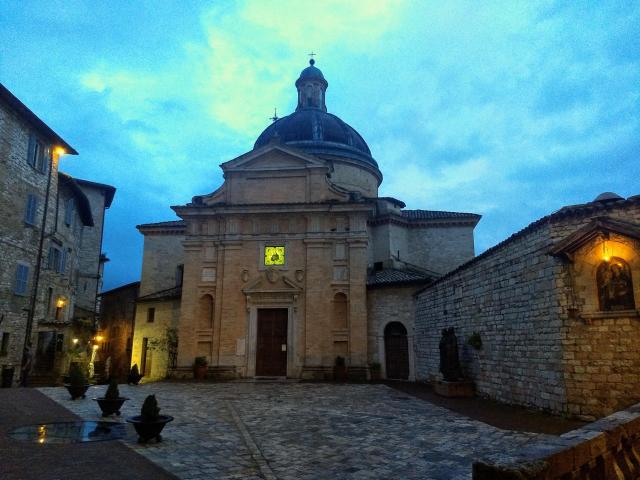
st francis birth church

As our train from Venice approached the Santa Maria degli Angeli station we could see the old town of Assisi sitting on the slope of an Umbrian butte with prominent castles and cathedrals visible from miles away. We headed to our hotel immediately after disembarking, and along the way we saw a few friars walking so routinely that few seemed to notice their presence. There was definitely a spiritual aura here, affirmed by a sense of peace and serenity not present in the larger cities we visited.

Assisi is known world-wide as the home of St. Francis, who was canonized by Pope Gregory IX on July 16, 1228. When I was in college, I took a few semesters of voice lessons, even though I was not a music major. My instructor chose the music I was to learn and since he knew that I was serving as a minister at a local church, one semester he chose “Lord, Make Me an Instrument of Thy Peace,” the prayer of St. Francis of Assisi, as one of the pieces I was to memorize.

The prayer was likely written long after the death of St. Francis in his honor. Later, the prayer was set to music by Sebastian Temple and published in 1967. This selection was also one of the pieces our church choir sang on their 2010 Tour in Italy. I still remember the words and occasionally sing them when no one else is around:

Lord, make me an instrument of your peace;
where there is hatred, let me sow love;
where there is injury, pardon:
where there is doubt, faith ;
where there is despair, hope
where there is darkness, light
where there is sadness, joy
O divine Master,
grant that I may not so much seek to be consoled as to console;
to be understood, as to understand;
to be loved, as to love;
for it is in giving that we receive,
it is in pardoning that we are pardoned,
and it is in dying that we are born to Eternal Life.
Amen

This experience in college marked my introduction to the prayer and my first acquaintance with St. Francis. Since that time I have read accounts of the life and ministry of St. Francis and I have often quoted him in sermons and columns. Little did I know that I would have the privilege of visiting his hometown not just once, but twice.

Once again this year many of the faithful from around the world are making a summer pilgrimage to this historic place. For some Catholics, making the journey to Assisi is as important, if not more so, than traveling to Rome. Assisi is also a popular destination for seekers and mystics who are exploring and probing their doubts and presuppositions. In other words, some travel to Assisi to re-enforce their spiritual beliefs while others travel to Assisi to discover a higher purpose or a more spiritual meaning to existence.

Last night we visited the central piazza for dinner. Today we will visit the Cathedral of San Rufino where St. Frances was baptized, the Patriarchal Basilica in Santa Maria delgi Agneli where St. Francis died, and the Basilica of St. Francis where St. Francis was buried. Now I can better see how the life and message St. Francis still inspires spiritual pilgrims today.

Volumes have been written about the life of St. Francis, but three emphases from his ministry stand out as particularly relevant to the challenge facing the Christian church, especially Baptists, in the 21st century:

St. Francis emphasized simplicity of lifestyle. In 1206, the young Giovanni Francesco di Bernardone, who would later be known as St. Francis, had a vision of Jesus Christ that transformed his life. A couple of years later he heard a sermon on Matthew 10:9-10, in which Christ tells his followers they should go forth and proclaim the kingdom of heaven, and “do not take along any gold or silver or copper in your belts. Take no bag for the journey, or extra tunic, or sandals, or a staff, for the worker is worth his keep.”

Francis took this literally and it inspired him to devote himself to a life of poverty and to begin preaching a message of repentance and hope. The message of Francis captured the hearts of young men from all over Italy who in turn wandered about preaching the Gospel to rich and poor alike. His message of non-materialism emphasized a love for God, a love of nature, and equality of humankind.

Desiring to share the good news with everyone, St. Francis ventured outside the walls of the church and took his message to the streets, preaching in the common language of the people, not in the traditional Latin of the church, so that all could understand. While some protested this new practice of St. Francis and the methods he employed, eventually the pope gave his blessing in 1223, and the Franciscan Order was included in the larger Catholic community.

Clare who at age 18 was captivated by the message of St. Francis. On the evening of Palm Sunday in 1212, she departed her father’s mansion without his permission, and headed to the valley below. Once there, friars escorted her to St. Francis who cut her hair, gave her a simple brown tunic, and commissioned her to a life of poverty. She spent the next forty years in the convent of San Damiano and was gradually joined by other women who heard the call to serve God. They became known as the Order of the Poor Clares.

One legendary story is told of Clare attempting to visit St. Francis when he was on his death bed. Since women were usually not permitted, when told by a friar that Clare had arrived to visit, St. Francis is said to have responded, “Then welcome Brother Clare.”

Much about St. Francis’ approach to ministry seems extraordinarily relevant for our time. To counter the materialistic impulses of our day, perhaps we need to re-emphasize the value of service, the beauty in nature, and the worth of each human being. Instead of waiting on people to “come to church,” perhaps we should also take the message to the streets, preaching through lifestyles and language a message of hope that the common people can understand. And perhaps we must find ways to affirm both the men and women that God calls to serve, recognizing that the spiritual passion and giftedness God places within a man or a woman supersedes the rules or traditions of the church or the culture.

In some ways, following the path of St. Francis in our time could be considered as radical as it was almost 800 years ago. But it is a path worth following to revitalize the church and advance the Good News.